
Many people love conventional plants and flowers, but they pay little attention to shrubs. This is kind of sad, considering how productive and beautiful shrubs can be in the garden.
Many times, shrubs are planted around the edges of the garden to grow tall and provide privacy, but invasive shrubs can totally ruin this dynamic.
In today’s article, I’ll be taking you through a carefully curated list of native, privacy shrubs that are non-invasive and super productive in the garden. Let’s dive right into it!
Why Native? Why Non-Invasive? Let’s See…

Most native, non-invasive shrub varieties offer tons of environmental benefits, such as supporting local ecosystems and pollinators. Also, most of these thrive in Zones 3 to 9, with a few exceptions noted.
In my experience, pollinators have always visited my mom’s garden and even her neighbors’ whenever there was some kind of native shrub growing and thriving. If you want to go deeper into the best blooms for bees, here’s a handy guide to flowering shrubs that attract bumblebees.
These shrubs are low-maintenance and well-adapted to local climate conditions, requiring much less care and attention than others.
Fast-Growing & Non-Invasive Privacy Shrubs
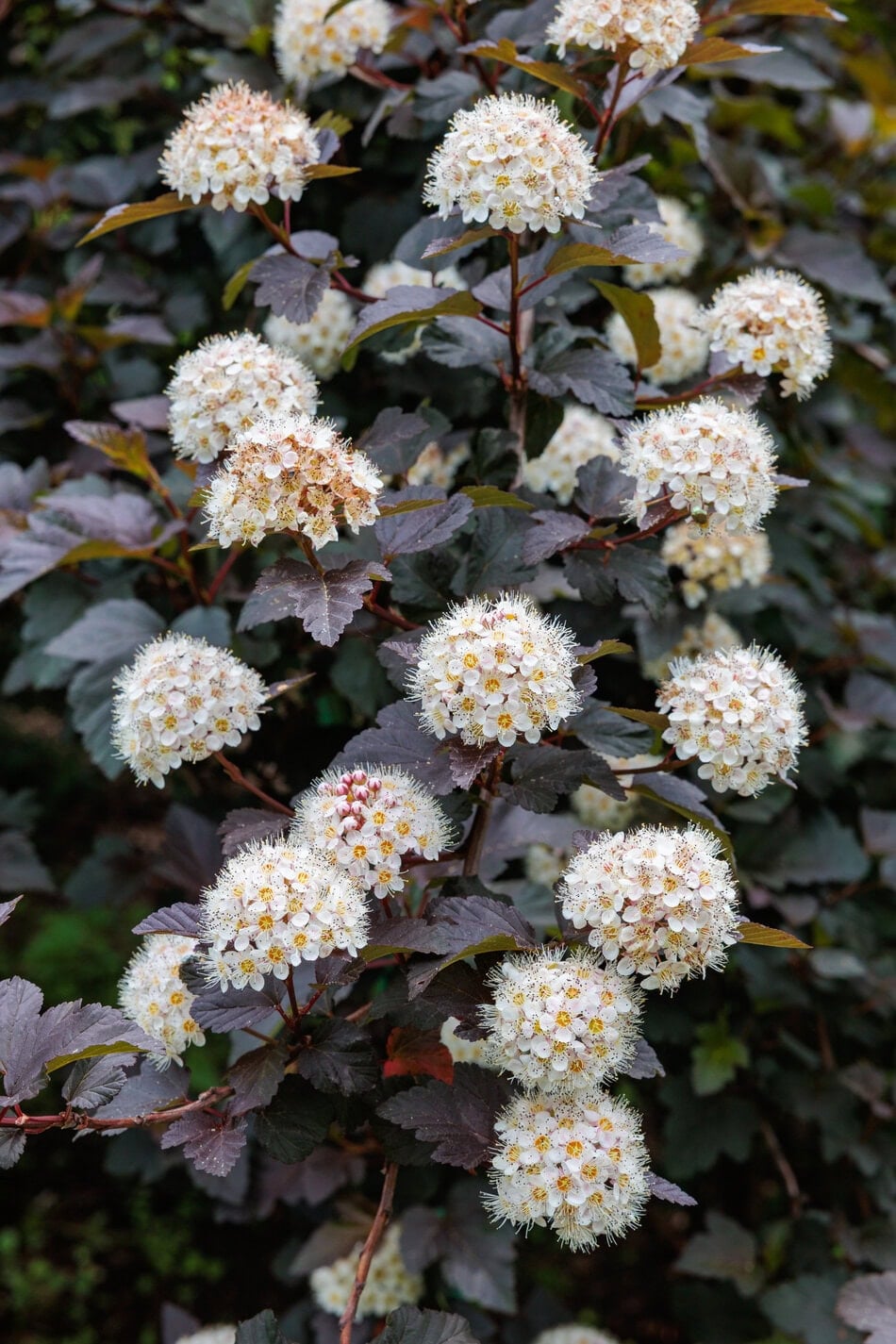
1: Red Twig Dogwood (Cornus Sericea) – Zones 2-7
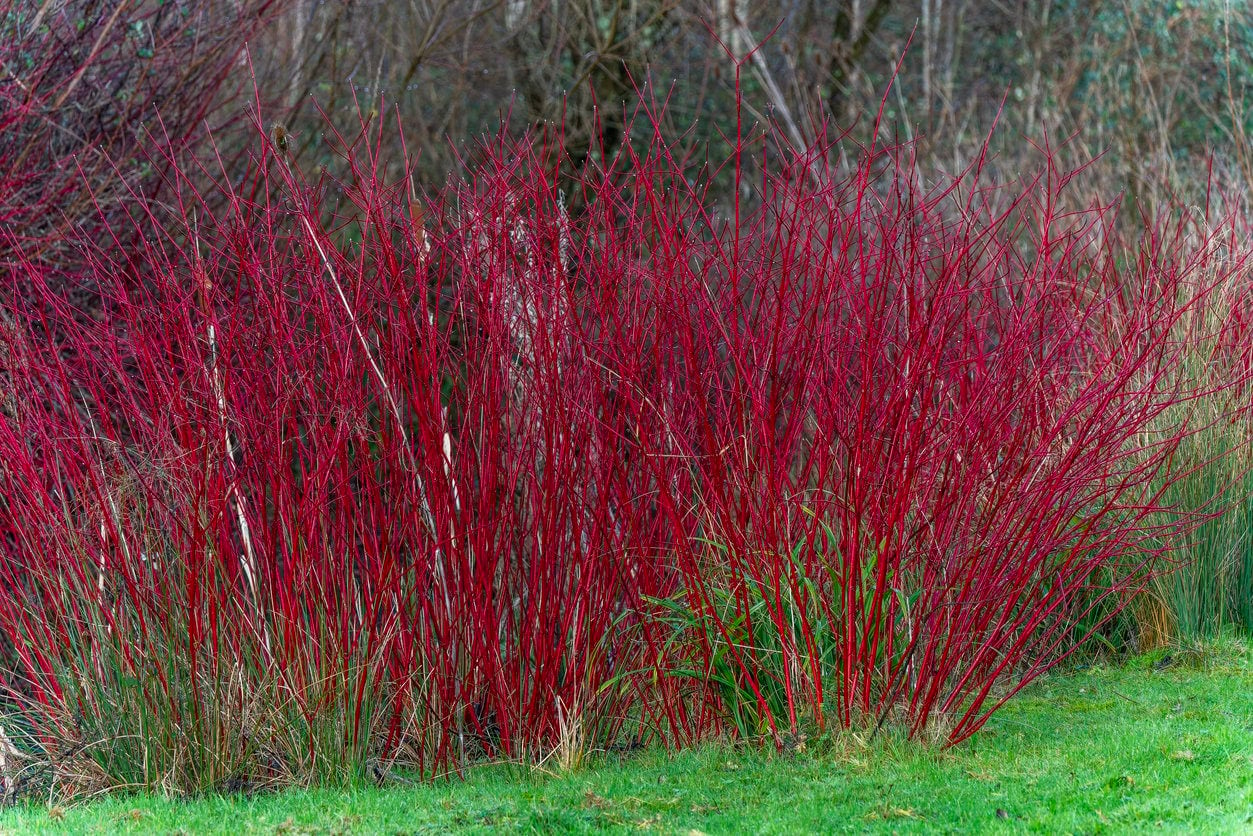
The red twig dogwood shrub is native to northern and western U.S. (Great Lakes, Pacific Northwest). It’s fast-growing, produces beautiful red stems in winter, and is naturally tolerant of wet soils and cold climates.
Prune it in late winter to keep those vibrant red stems at their brightest!
2: Buttonbush (Cephalanthus Occidentalis) – Zones 5-9

Buttonbush is native to eastern and southern U.S. (wetlands, riverbanks). It thrives in moist soils and attracts butterflies and bees with its unique spherical blooms.
In colder zones, buttonbush may die back to the ground, but don’t worry, it bounces right back the next season.
If you’re battling lawn-spreaders, check out this guide on native groundcovers that look better than the invasive spreaders!
3: Black Chokeberry (Aronia Melanocarpa) – Zones 3-8

Most black chokeberry varieties are native to the northeastern U.S. and the Great Lakes region. These are great to grow in rain gardens and borders.
They are tough, adaptable shrubs with glossy leaves, spring blooms, and edible berries. The tart berries are edible for us, but they’re also a favorite of songbirds, so be sure to share!
4: New Jersey Tea (Ceanothus Americanus) – Zones 4-8
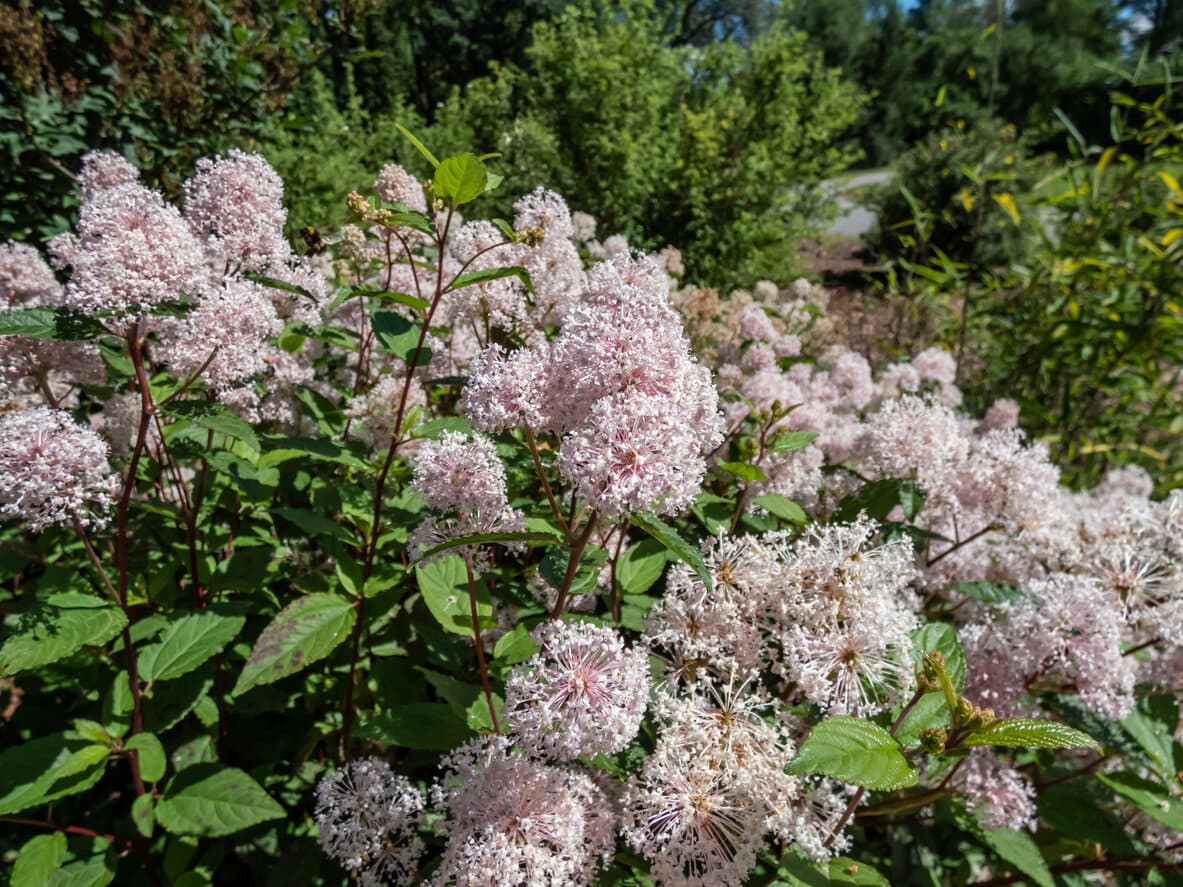
A non-invasive shrub variety native to eastern and central U.S. (including the Midwest and Appalachian regions). It’s compact, drought-tolerant, and offers nitrogen-fixing properties. Gardeners also plant New Jersey tea to attract pollinators like bees, butterflies, and hummingbirds.
5: American Beautyberry (Callicarpa Americana) – Zones 6-10

This beautiful shrub is native to the southeastern U.S, offering rapid growth and producing stunning purple berries in fall. It thrives in part shade but will also do well in full sun if the soil stays moist enough.
Also, this shrub is loved by birds and pollinators. If you want to attract pollinators to your garden, this one is a MUST!
6: Elderberry (Sambucus Canadensis) – Zones 3-9
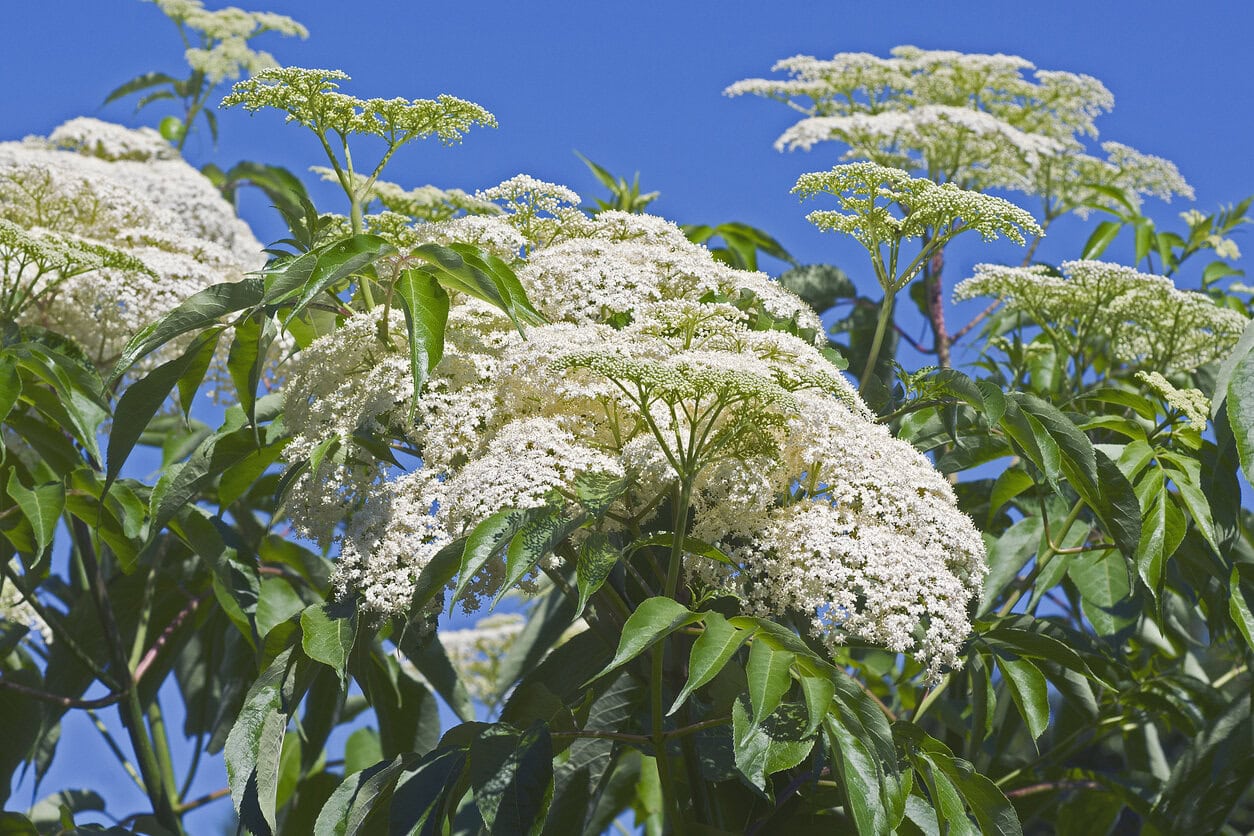
This hardy fruiting shrub is native to Eastern and Central North America. It grows quickly, produces edible berries, tolerates moist soils really well, and is perfect for wildlife gardens and hedgerows.
Quick tip: Don’t eat raw berries, as they can upset your stomach. They are best cooked before eating and make delicious syrups, wines, and jams, trust me!
And if you’re wondering about maintenance like pruning, this guide walks you through which shrubs need hard pruning before spring starts (and how to prune each one).
7: Arrowwood Viburnum (Viburnum Dentatum) – Zones 3-8
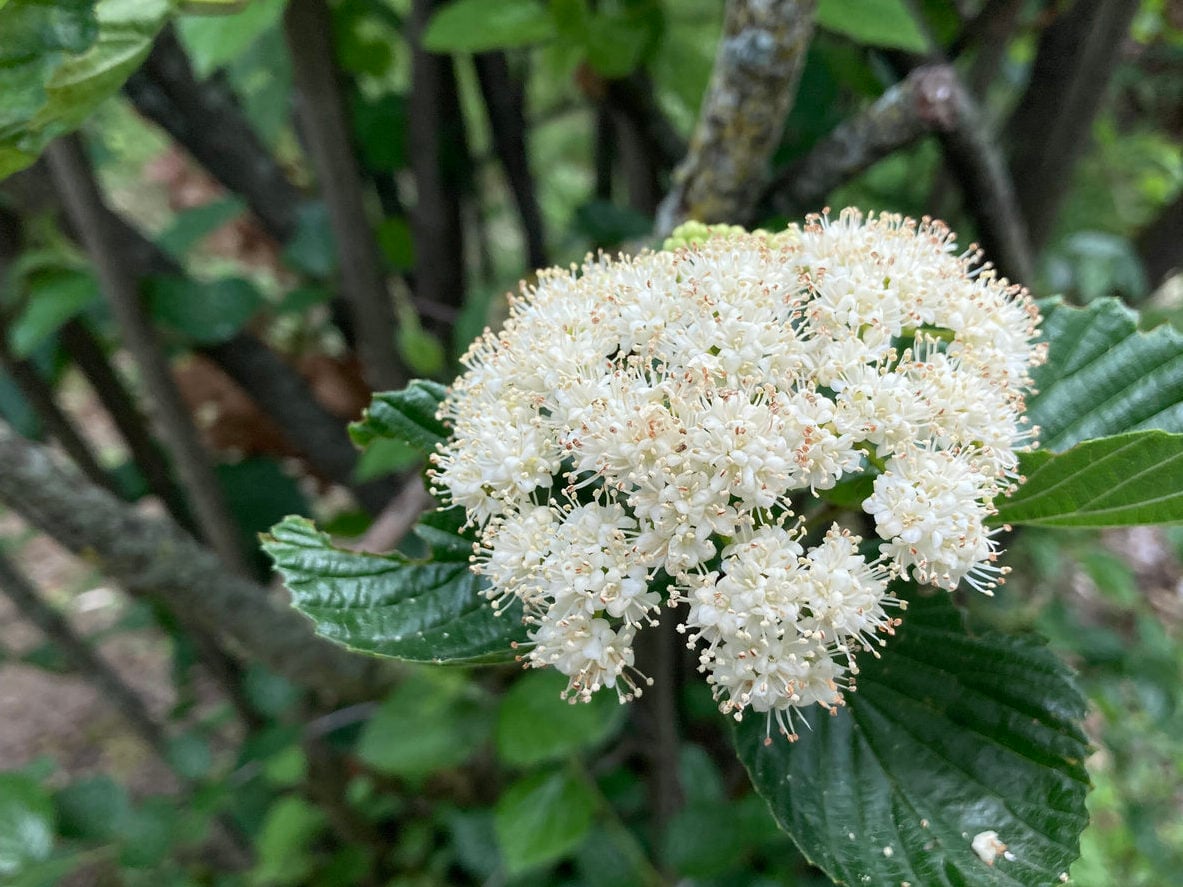
Arrowwood is a non-invasive shrub variety native to the eastern U.S., especially the southeast and midwest areas. Its dense foliage allows for privacy while the shrub produces white spring flowers and tart fall berries. Unsurprisingly, it can tolerate poor soil conditions very well.
8: Spicebush (Lindera Benzoin) – Zones 4-9
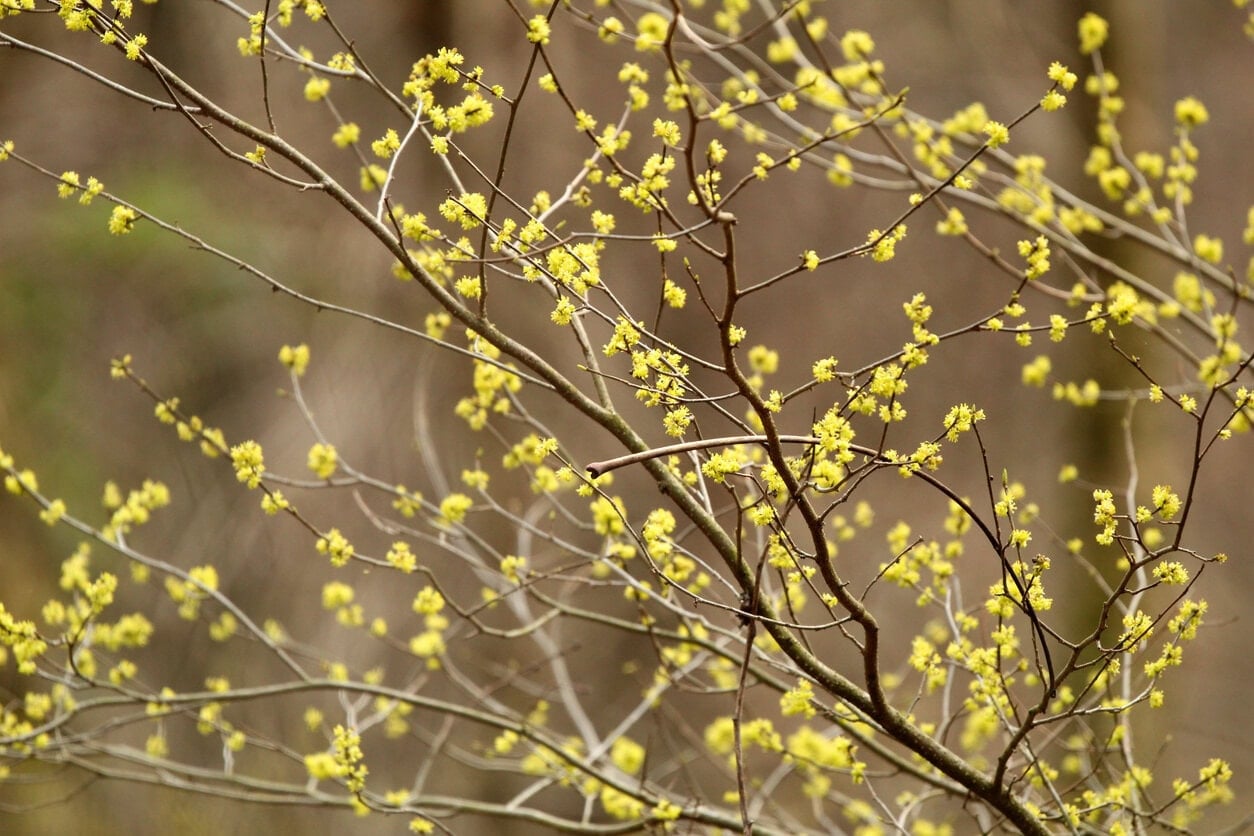
The spicebush is native to the eastern U.S. (woodlands and streambanks). It offers fragrant leaves, early yellow blooms, and is the host plant for the spicebush swallowtail butterfly. Plant your spicebush in partial shade for the best and safest growth.
If you want berries, you’ll need both a male and female plant, because spicebush is dioecious.
9: Ninebark (Physocarpus Opulifolius) – Zones 2-8

Ninebark is a northeastern and central U.S. native shrub variety. It’s known for its beautiful exfoliating bark, white spring flowers, and fast growth. This hardy shrub handles poor soil and urban conditions really well.
This is one of the toughest natives out there, it provides you with privacy, color, and wildlife all at once!
Planning fall cleanup? This roundup of shrubs that benefit from autumn pruning might give you ideas for after the season winds down.
Some Planting & Care Tips

Friendly reminder: shrubs like elderberry, chokeberry, and spicebush are also excellent for birds, so if you can, leave some berries for wildlife to enjoy.
If you’re also curious about native plants that attract pollinators in the Midwest, take a look at this guide.
Let’s Conclude

If your garden or front porch is open from all sides and there’s no privacy whatsoever, planting non-invasive shrubs can be a great way to close off the area and create boundaries.
Believe it or not, instead of having a fence, my grandma always had tall-growing shrubs around the edges of her garden to create separation in the area, and they worked just as well for the job! If you want more ideas for low-maintenance native blooms, here are some spring-blooming native plants.
If there are any non-invasive shrub varieties I’ve missed or that you’ve personally experimented with, let me and your fellow gardeners know in the comments below so that beginners can take advantage of the right knowledge coming from the right people.


How do I know what zone we are in we’re in Fall Branch Tennessee
Hi Tammy! 😊 According to the updated 2023 USDA zone map, Fall Branch, Tennessee falls in Zones 7a and 7b. But to be sure, just Google your ZIP code + “USDA zone” and it’ll show your exact planting zone! Knowing your zone helps a ton. 😊
I live in North Carolina USA and I’m wondering if there are any year-round foliage non-invasive fast-growing bushes/shrubs that can thrive in partial sunlight! My neighbor recently cut down a lot of trees and bushes and I’m trying to get my privacy back.
Hi! 😊 For North Carolina, some great year-round, non-invasive options for partial sun are Carolina allspice, shrubby St. John’s wort, and Aucuba japonica. Super reliable for privacy and low-maintenance too!
Hi Rita,
I love reading your blogs on gardening. You have giving me great ideas and provided much needed advise.
So I live in zone 6B in Nova Scotia, Canada.
My question is, I have a huge chrysanthemum plant in a pot.
I want to divide it and plant it in the ground. It is September and the evening have been cold but no frost yet, probably not for another month at least.
Can you advise me on how and if I should do this.
Hi Donna! 😊 Thanks so much for the kind words! 🫶
For your mum, you can divide and plant it now while the soil is still warm, just make sure to water it in well and add a good layer of mulch to protect it once frost hits. My mom did the same with hers in late September and it came back beautifully the next spring.