Orchids enjoy testing your patience. And if you have a tantrum-prone toddler AND a cat, too, you have my respect. However, it is possible to deal with them, rather easily. With orchids, that is.
Problem 1: Yellow foliage
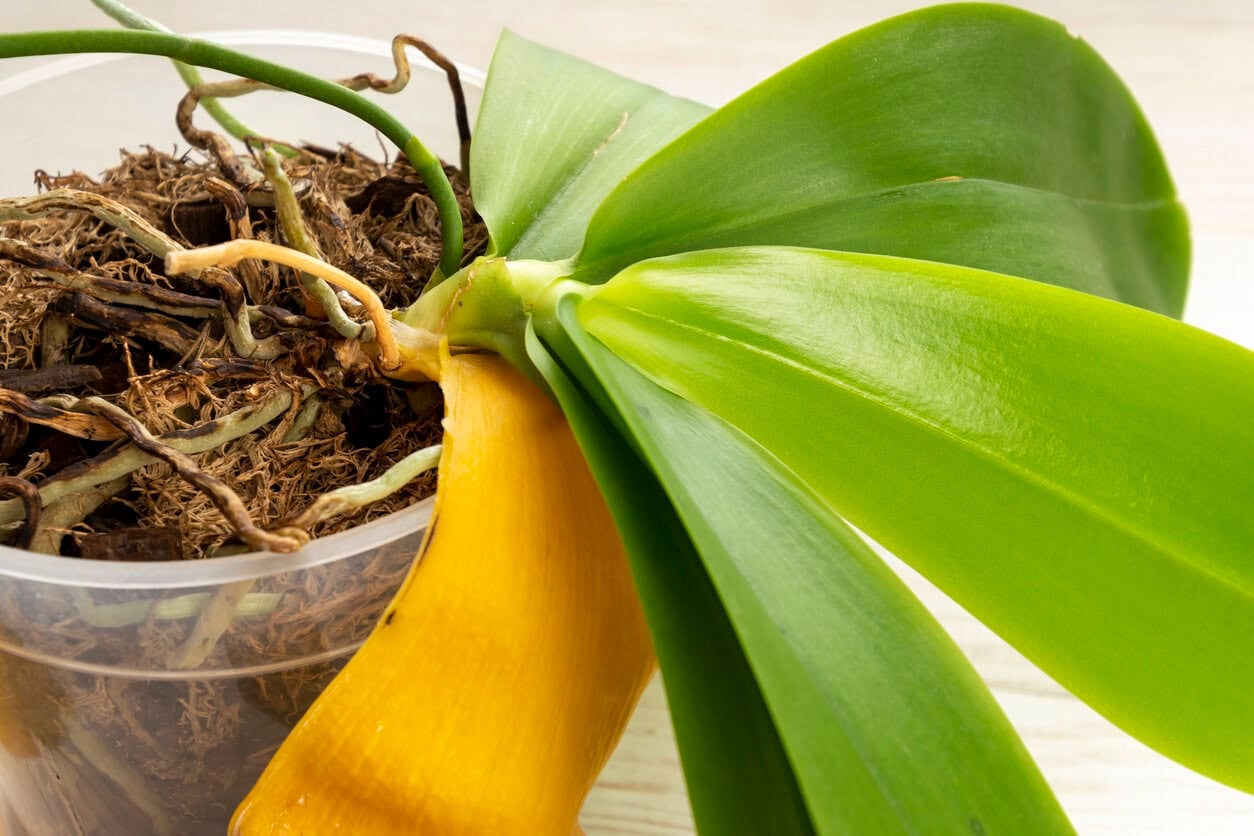
Yellowing happens because your orchid’s roots are struggling to breathe. You likely poured too much water into the pot recently or used a container without drainage.
Guilty? Soggy bark blocks oxygen, which in turn invites rot and slowly starves your plant.
Quick reminder: Keep in mind that orchids also shed their oldest leaves occasionally, so a single yellow leaf at the bottom isn’t always a problem.
Solution:
Correct this by stop watering until the medium dries out. Snip off any mushy roots and swap the old substrate for fresh bark, which usually solves the problem.
Problem 2: Wrinkled leaves
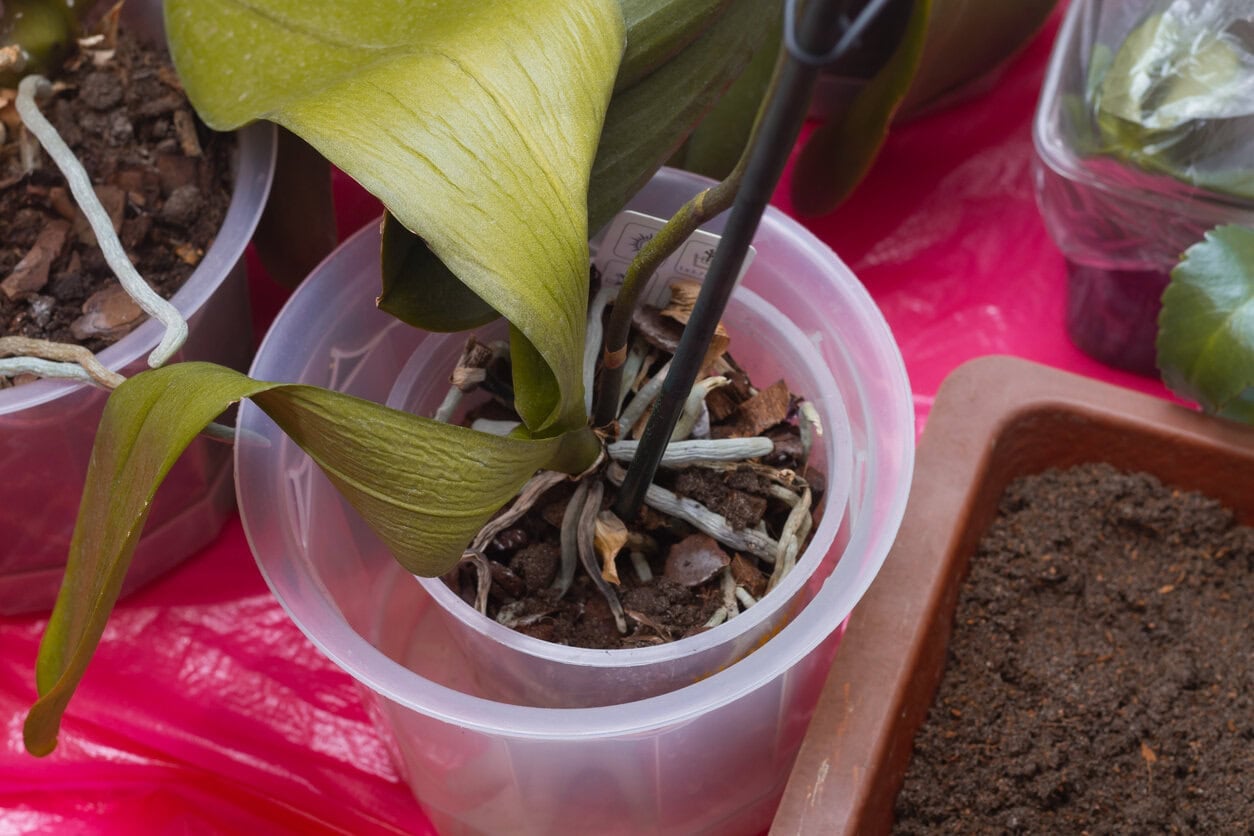
Your orchid looks like a tiny accordion because its thirsty cells have collapsed. This time, you either forgot to water it or used a substrate that drains too quickly.
Dry bark is hydrophobic, like most teens, so water just slides past the roots instead of soaking in.
Solution:
The fix is to submerge the entire pot in tepid water for twenty minutes and rehydrate the medium. Increase humidity with a pebble tray or humidifier to prevent these crinkles in the future.
Problem 3: Bud blast
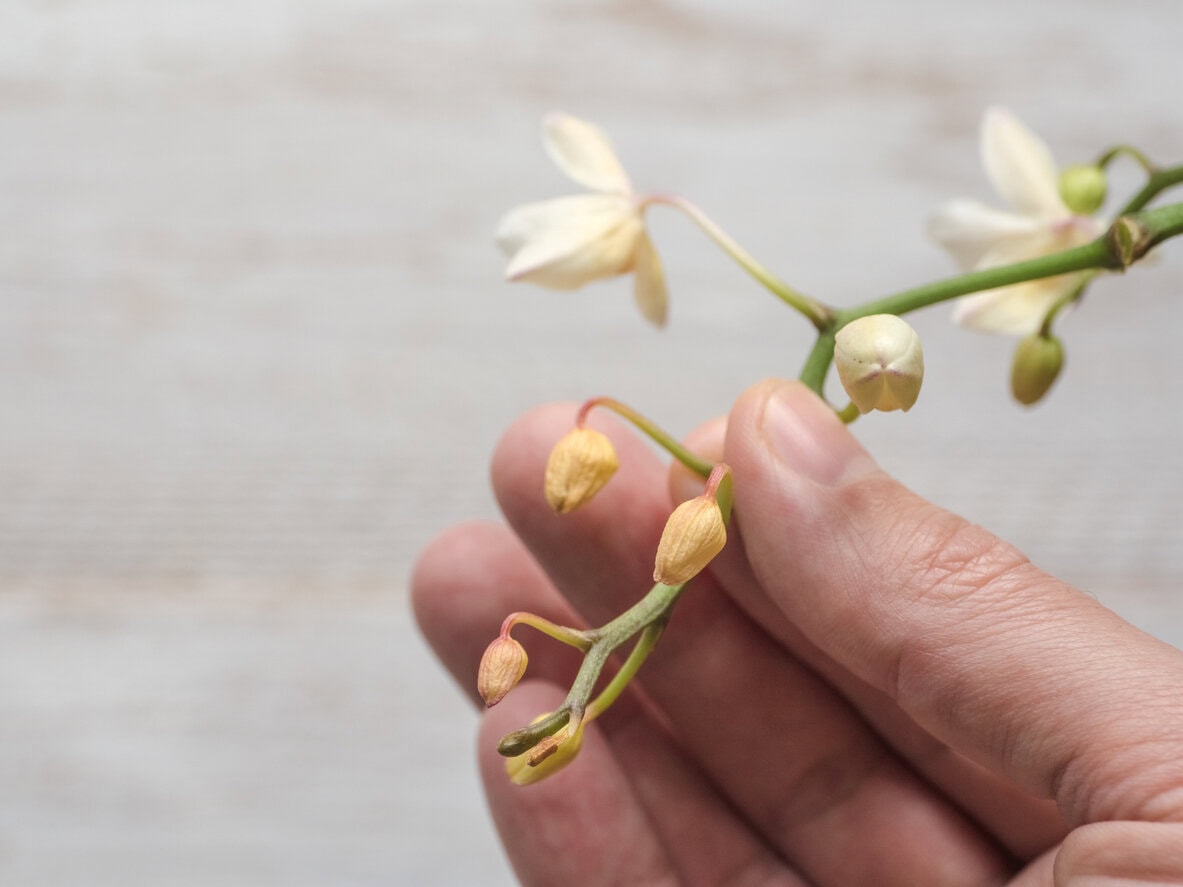
Orchids are incredibly sensitive to sudden temperature drops, dry air, and gases from ripening fruit, just like some of us. One of these is ethylene, an odorless gas that accelerates flower aging.
Apples and bananas (and sometimes poorly ventilated gas stoves) release this gas into the air. Once the orchid detects even tiny amounts, it usually drops its buds to conserve energy.
Solution:
How to solve this? Keep your fruit bowl in another room. Shield the plant from air vents and maintain stable humidity. And, just in case, give your gas stove a quick cleaning.
Problem 4: Mushy roots
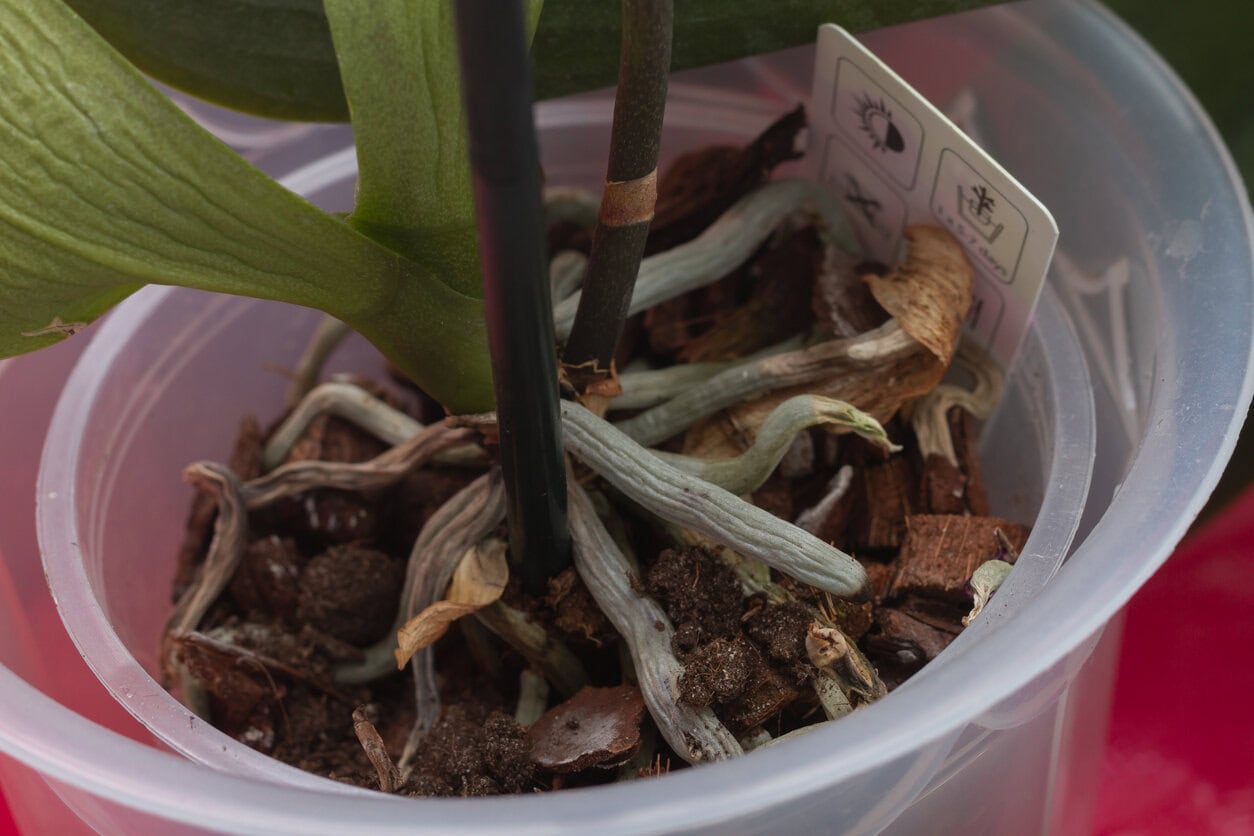
When you water the plant too frequently, the potting medium breaks down and traps moisture around the roots. The velamen (which is the spongy outer layer) then begins to rot, turning firm roots into slimy threads.
Mushy roots are the silent precursor to the yellow foliage mentioned earlier. Because compromised roots can no longer move water and nutrients upward, the leaves gradually lose their pigment.
Solution:
This is the moment to play hero. To rescue your brave survivor, trim away every soft strand with sterilized scissors and repot the orchid into fresh, chunky bark.
Problem 5: No blooms

Stingy orchids refuse to flower when life feels too predictable. Green leaves may look healthy, yet the plant lacks the environmental cue needed to produce a flower spike. It typically happens because the temperature inside your house stays the same day and night.
Solution:
Try placing the pot in a location that experiences about a 10°F drop in temperature during the evening hours. This thermal shift usually signals the plant that it’s time to bloom. Once the flower spike grows and develops tiny buds, return the plant to its stable home to prevent the bud blast I mentioned earlier.
Problem 6: Sticky sap
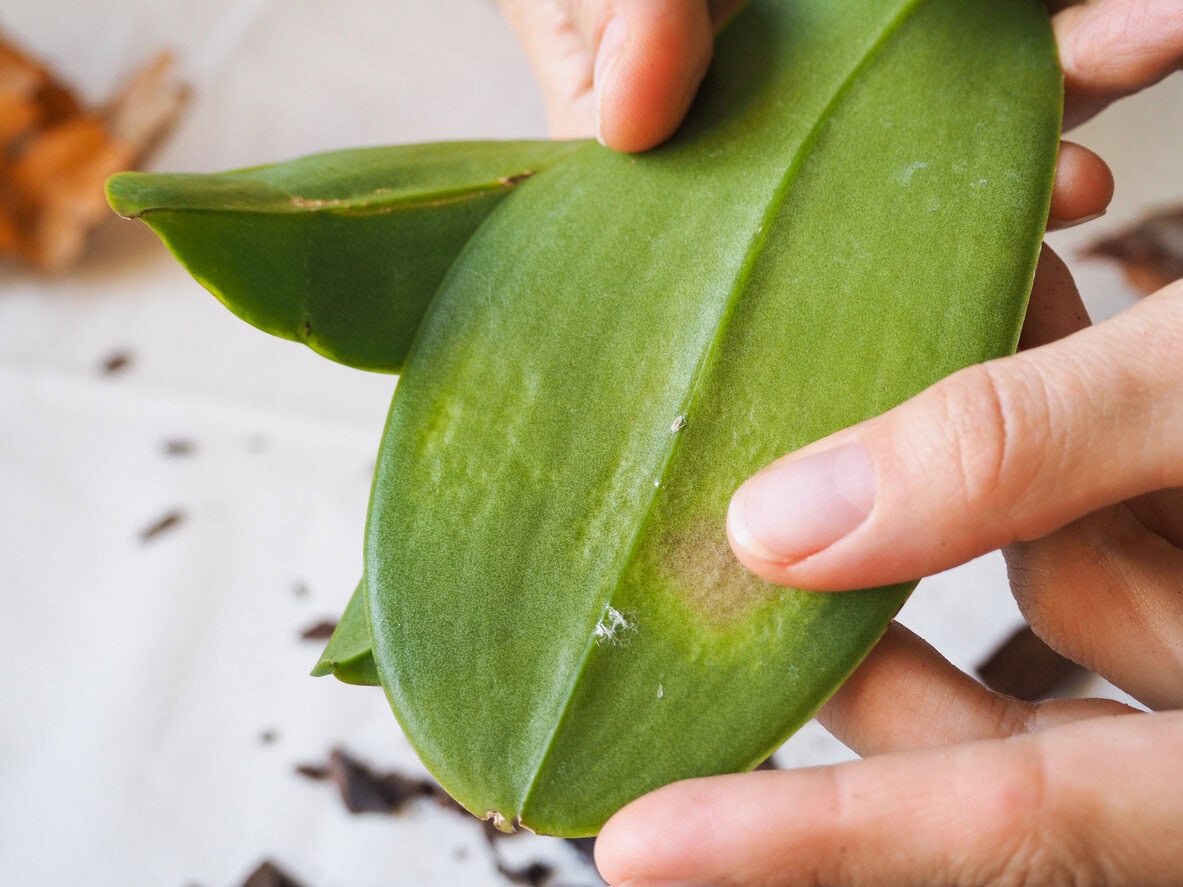
Glistening beads on stems or leaf undersides look like dew but taste like trouble. Honeydew suggests that aphids, scale insects, or mealybugs have arrived and are licking their chops.
Their leftover sugar is a magnet for sooty mold and wandering ants.
Quick note: Occasionally, a perfectly healthy plant produces “happy sap” from sheer vigor, but still assume bugs are the culprits until you prove otherwise with a magnifying glass.
Solution:
Clean the leaves with a damp cloth immediately, and then use a swab soaked in alcohol to wipe out any remaining insects hiding under their protective shells.
Problem 7: Sunburn
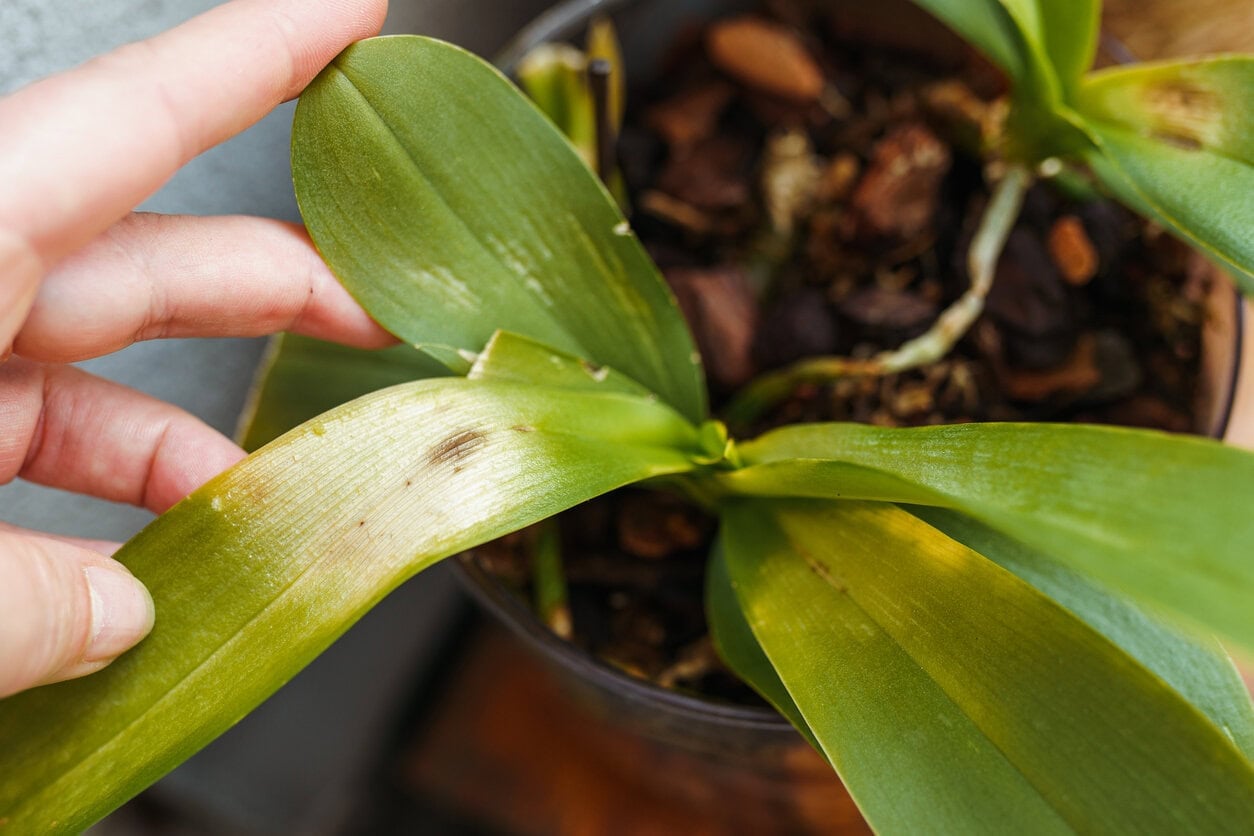
White patches or crispy spots prove that a stray sunbeam successfully fried your plant. Once sunlight chars the leaf surface, that section stays dead and brittle.
A useful secret involves using your own hand as a sensor. If the leaves feel warm, your orchid may be getting too much direct sun and is losing the battle against the rays.
Solution:
To filter out any harsh sunlight, nudge the pot away from the glass or pull a thin curtain across the window. And in the future, check the leaves’ color. A healthy orchid leaf should look like a Granny Smith apple, whereas a forest green suggests it’s starving for light.
Problem 8: Crown rot
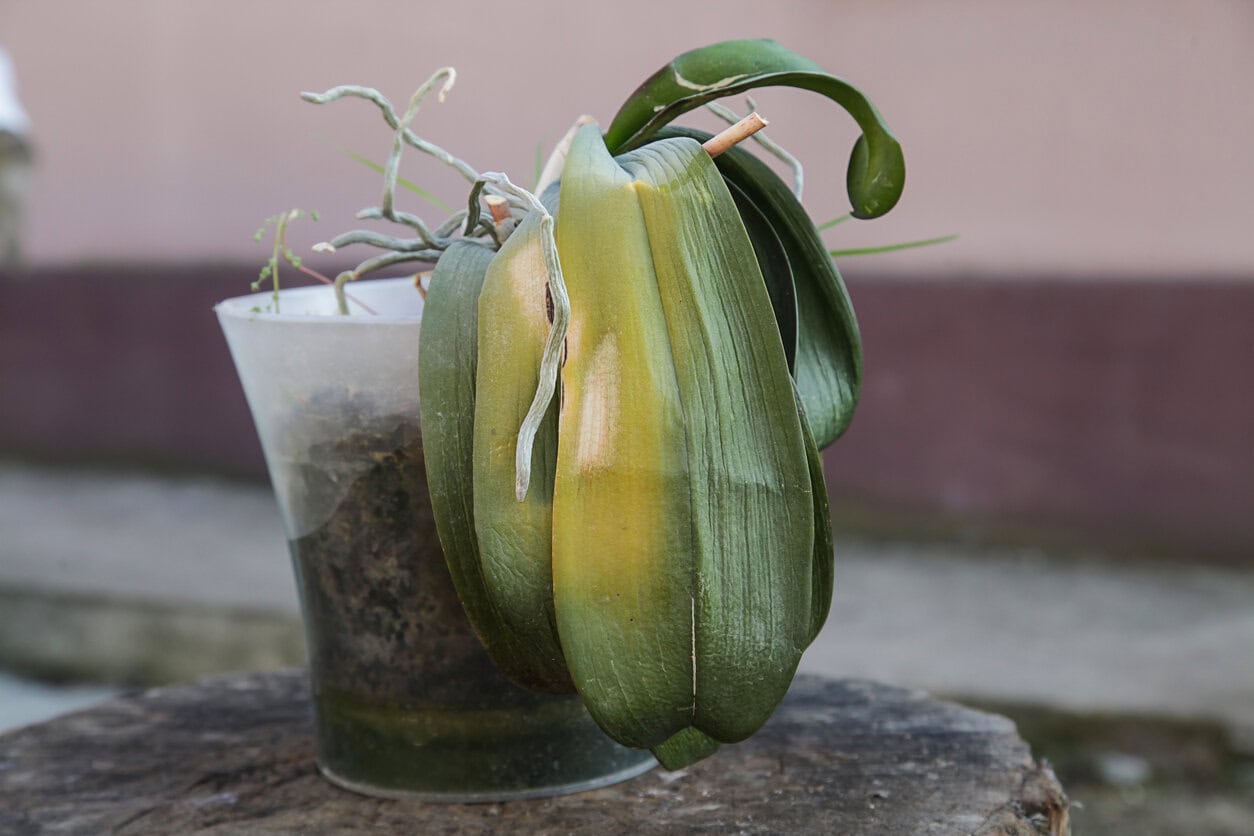
An orchid is a plant that manages to drown in a single spoonful of water. Yet stagnant droplets trapped in the crown are a serious problem.
They invite fungal pathogens to feast on the plant’s primary growing point. Within days, the center leaf might pull out with a gentle tug, revealing a foul-smelling base.
Solution:
Prevent this sad demise by watering the substrate directly and avoiding splashing water into the crown of the plant.
Problem 9: Spotted Petals
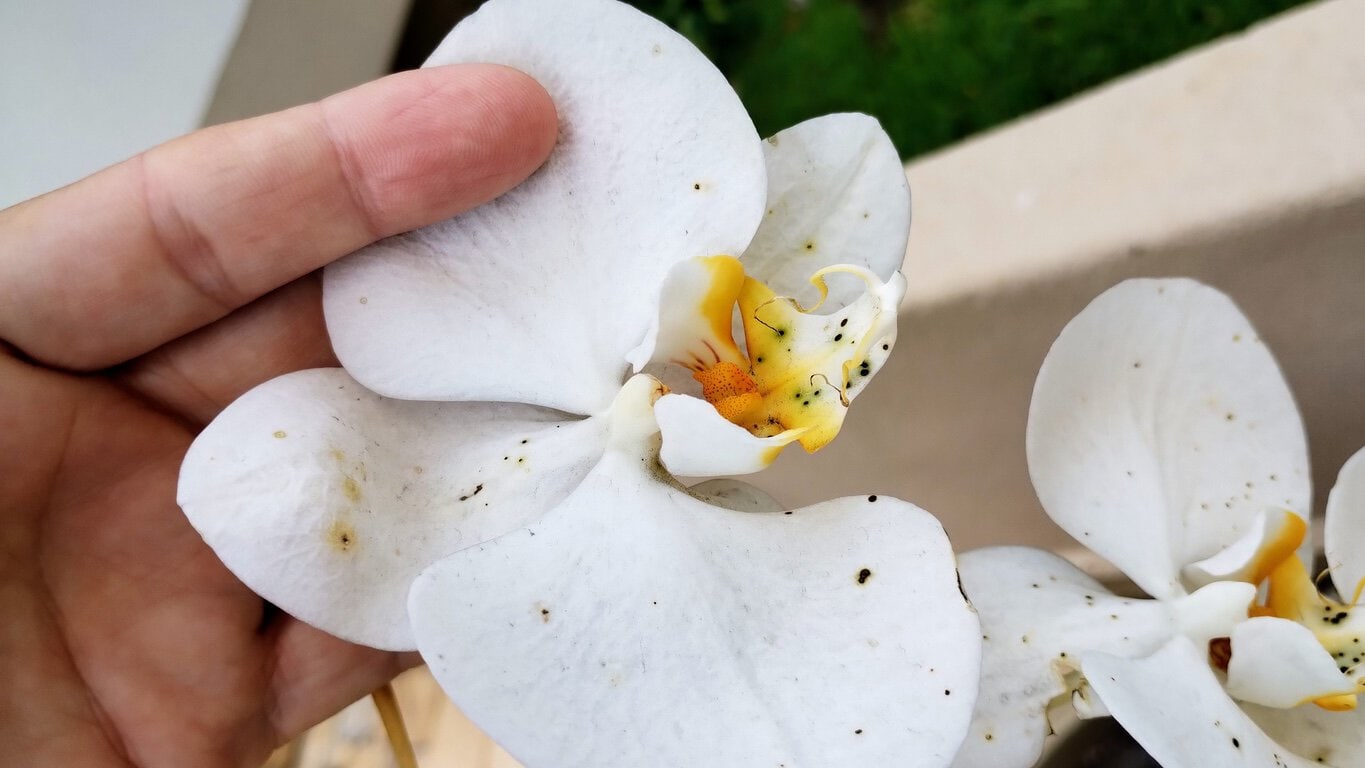
Botrytis spores appreciate a humid environment just as much as your orchid does. The only problem is that these fungi create circular freckles that ruin an otherwise perfect bloom. This usually means the air around your plant is too still.
Solution:
The secret lies in moving the air without chilling the plant. Also, stop misting the blossoms directly, because once the fungus takes hold, the blemish remains until the flower naturally drops.
Problem 10: Shriveled pseudobulbs
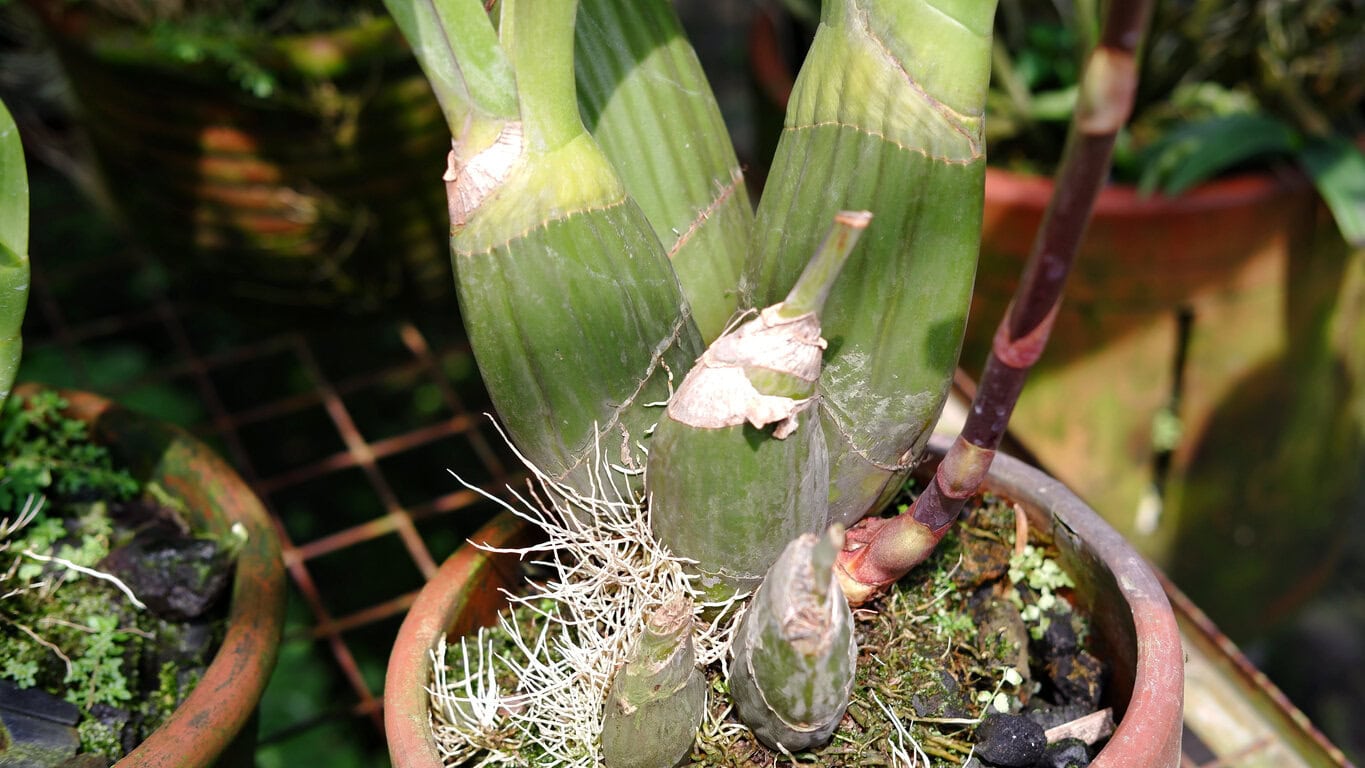
Consider the pseudobulb a portable hydration pack for your plant.
If the texture turns leathery and lined like a forgotten raisin, the internal reservoir is running dry. In a strange twist, too much water can also lead to the same shriveled texture.
You’ll know which culprit it is by checking the roots. If they feel firm and silver, the plant just needs a deep drink. If they’re slimy brown strands, you’re dealing with mushy roots.
Solution:
If the roots are firm and silver, place the pot in a water bath for ten minutes to fully saturate the thirsty bark. If they’re mushy, go back and read problem 4.
Problem 11: Stunted growth
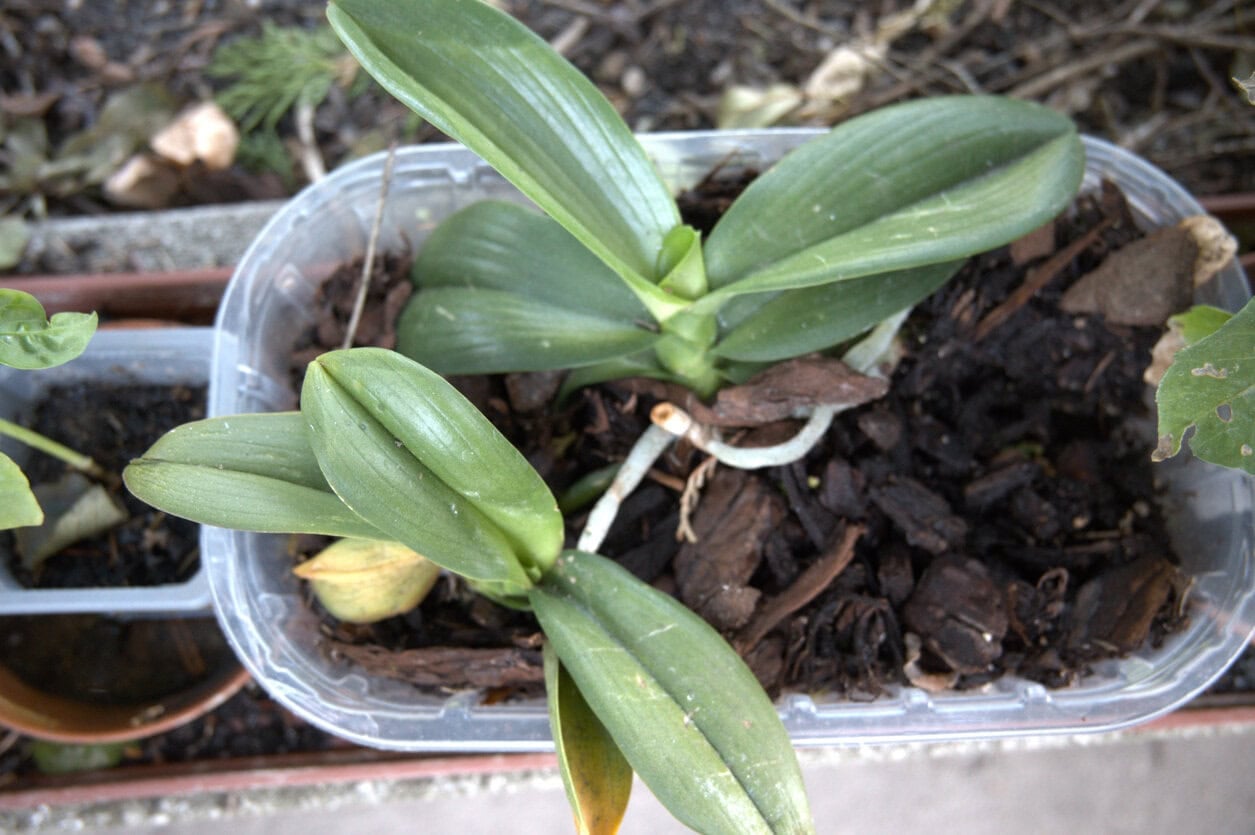
A stubborn orchid is often just a victim of a bad environment. Growth that hits a wall either signals a root emergency or a hunger strike.
In the first case, the plant is likely redirecting all its strength toward surviving root rot. You can’t expect a leaf to pop out when the roots are failing. Check the roots by gently lifting the plant from its pot.
If they’re firm and green or silver, the problem is likely meager light keeping the orchid stuck in a long pause. But if they’re mushy or brown, you’re dealing with root rot. Go back and read problem 4.
Solution:
If you have healthy roots, just refresh the bark and provide a proper light source to get the gears turning again.
No Orchid-inary Love
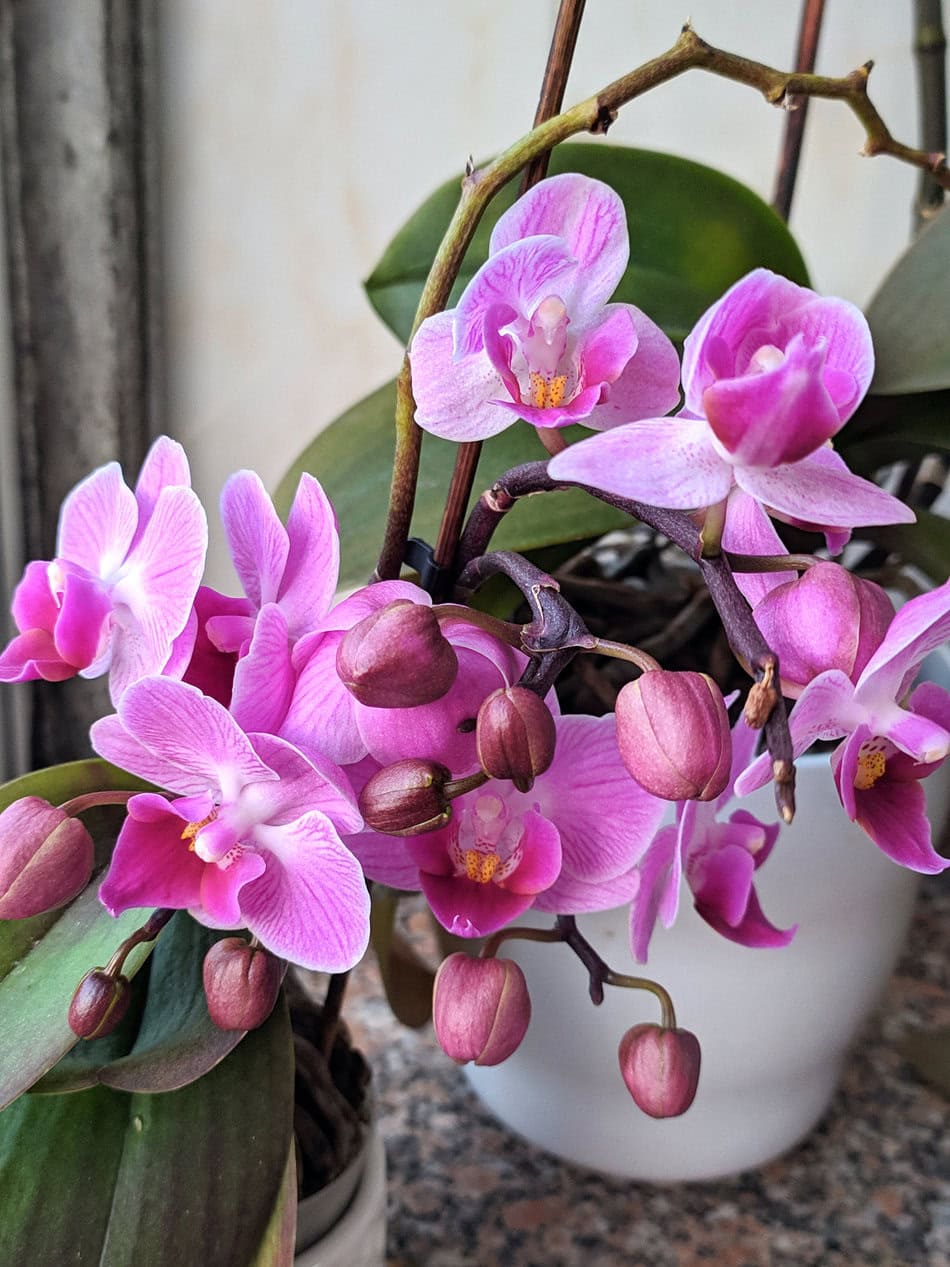
Every windowsill becomes a stage for your orchids. When you align the temperature shifts with proper feeding and good air circulation with proper drainage, a healthy flower spike is only a matter of time.