
You would’ve planted spinach, not hydrangeas, if you wanted leafy greens to take over in your backyard. Stop apologizing to the neighbors for your (absent) landscaping (skills).
Instead, let me explain how to transform your stubborn bushes into the showstoppers they’re meant to be!
1. Pruning Like a Blindfolded Barber

Are your hydrangeas, too, victims of bad timing with the pruners? You’re not the first to accidentally cut off next season’s flowers.
The key is knowing whether your hydrangea blooms on old wood (last year’s growth) or new wood (this year’s growth). That’s why it’s critical to identify your specific shrub before you make another cut.
Bigleaf,Mountain or Oakleaf Hydrangeas:

These set their flower buds on old wood. In my garden, I prune them right after the blooms fade in summer.
If you wait until fall or spring, you’ll likely remove next year’s flowers without realizing it and then wonder why nothing blooms. This is honestly the main reason I see so many people struggle with hydrangeas that produce nothing but leaves.
Panicle or Smooth Hydrangeas:
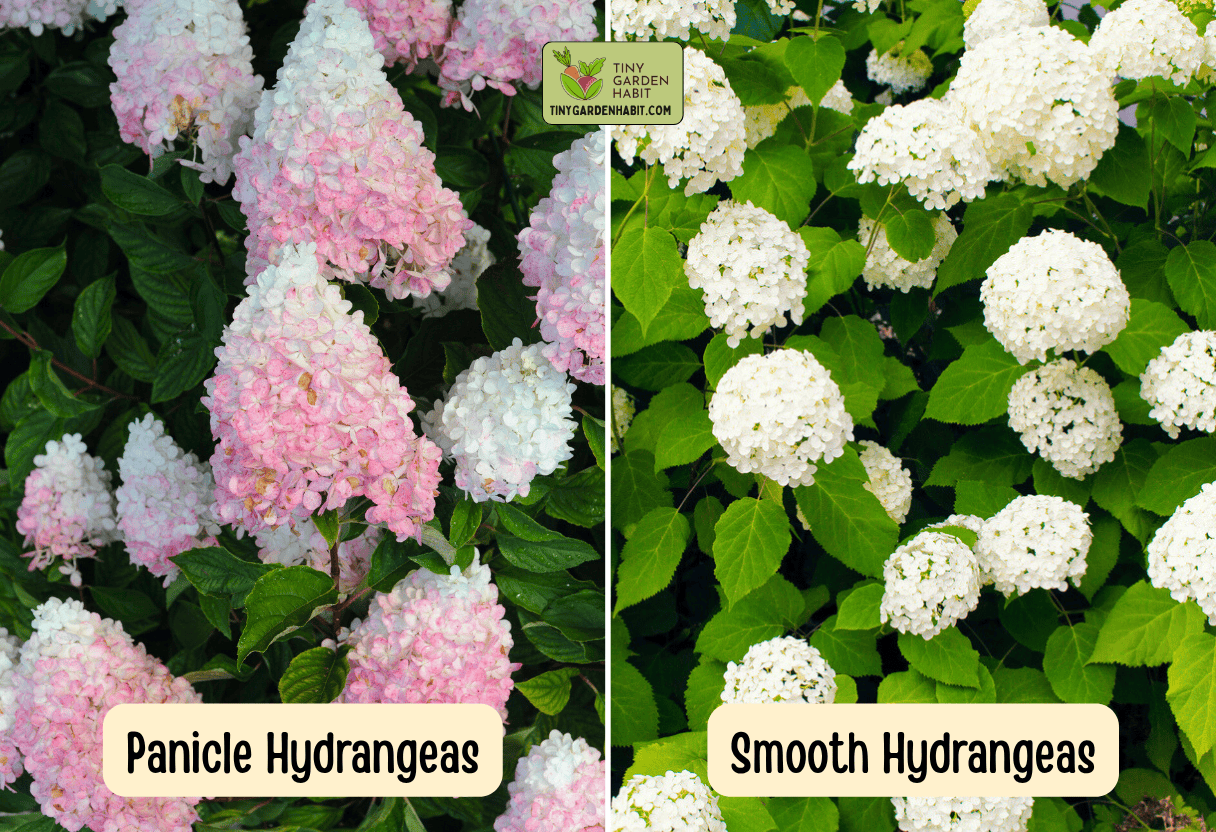
These bloom on new wood, so I save heavier pruning for late winter or early spring before new growth starts. These are the most forgiving types for beginners because even a hard cut won’t cost you the season’s flowers.
Quick tip: As you do it, use clean, sharp shears and make your cut just above a healthy bud or node. A slight angle is fine, but the most important thing is making a clean cut and not leaving a long stub.
If you’re unsure exactly when to prune in your area, we break it down by growing zone in this guide on when to prune hydrangeas.
2. Watering with a Thimble
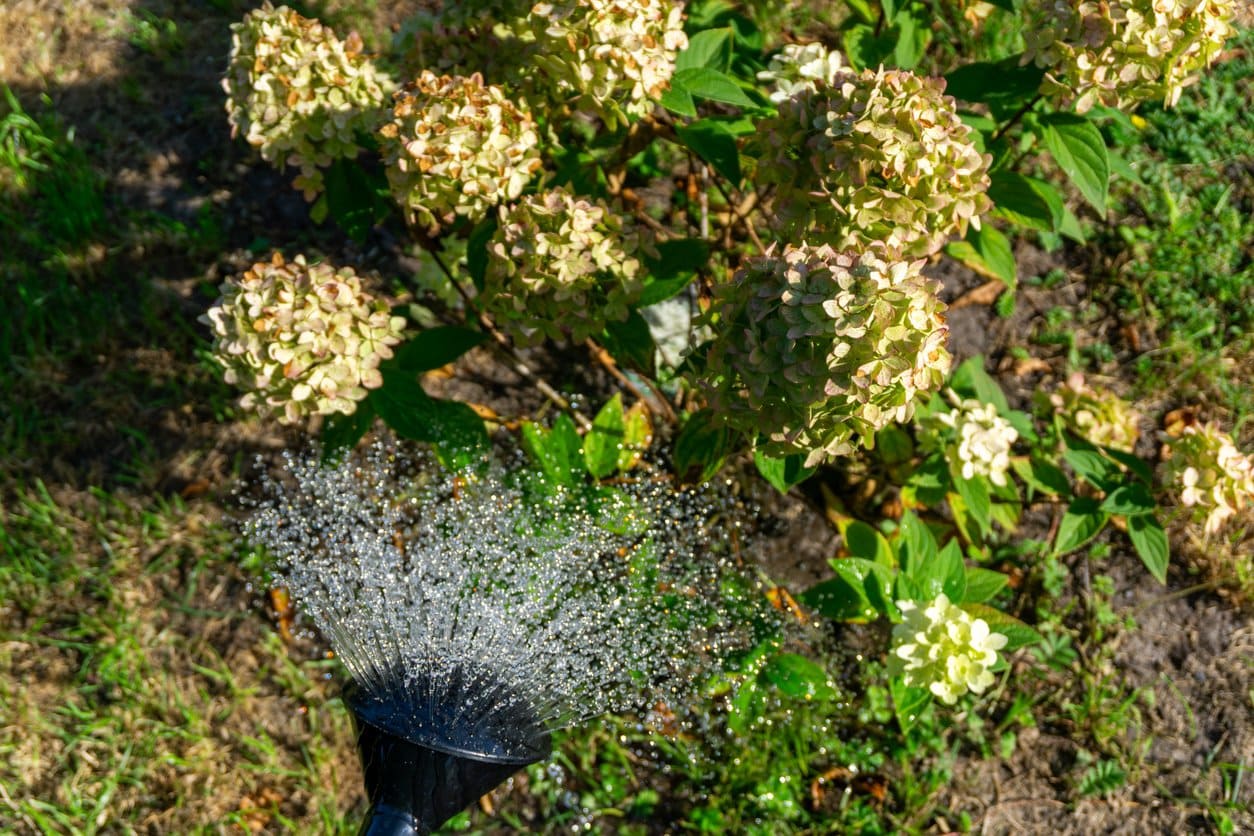
If you’re offering a shot of water to a shrub that drinks like it’s August in Texas, no wonder its leaves are sagging. Hydrangeas are thirsty plants.
In most U.S. climates, they need about an inch of water per week. Give them a slow, deep watering at the base instead of a quick sprinkle. Then mulch it like you mean it (a few inches thick) to help the soil hold moisture.
I prefer watering a dawn watering session, so the foliage has time to dry. Evening watering isn’t the end of the world, but in humid areas it increases the risk of mildew if leaves stay wet overnight.
Quick tip: Rainwater (if you collect it) remains the ultimate artisanal drink for your garden, especially in areas with alkaline soil. It’s naturally softer than some tap water.
3. The Nitrogen Overdose

Too much nitrogen turns your hydrangea into a lush green jungle without a single bloom. You’ve essentially bribed the plant to focus on producing leaves instead of flowers. It’s a common mistake that encourages the shrub into a foliage-only frenzy while completely ignoring its flowers.
I use a balanced, slow-release fertilizer formulated for flowering shrubs.
Most often, you can blame generic lawn fertilizers. Most formulas are high in nitrogen because grass loves it. If your shrubs sit near regularly fed lawn, they may be getting more nitrogen than you realize.
What I recommend: Stick to one light feeding in spring and (if needed) another in early summer. Overfeeding can also lead to softer weak stems that snap under heavy blooms, so you’d end up with a giant and green leafy shrub with zero flowers.
And if you want to go beyond just fixing mistakes and actually encourage bigger, brighter blooms, I share a few more strategies in this guide on helping hydrangeas bloom bigger and brighter.
4. Winter Whiplash

Springtime is when you should prepare for a cruel game of bait and switch. You might notice your hydrangea looking ready for its debut, only for a sudden late frost to swoop in and murder the buds overnight.
This usually occurs after a warm spell wakes the plant too early. If you live in Zones 5, 6, or 7, you know how unpredictable spring can be.
When a cold snap is in the forecast, I cover my more sensitive hydrangeas with burlap or a frost blanket in the evening and remove it once temperatures rise the next day.
Quick tip: Just keep plastic away from the leaves. It can trap moisture and transfer the cold directly to the plant tissue, causing even more damage.
5. The Shadow Realm

You might assume these bushes love a gloomy corner, but you’d be wrong. Without enough light, the shrub prioritizes survival over producing flowers.
For most zones, about four hours of morning sun is usually enough to encourage bud growth. If your yard is heavily shaded, thinning overhead branches can help filter in more light without scorching the plant.
I protect my Bigleaf and Smooth varieties with afternoon shade. My garden lacks natural cover, so I often install a temporary lattice to block the harshest western sun.
Quick tip: Panicle hydrangeas can handle full-day sun better than the others, as long as the soil remains consistently moist.
6. Six Feet Under

A hole two feet deep or more spells disaster. As the soil settles, the plant will eventually sink, leading to a buried crown and root rot over time.
When planting hydrangeas, I dig the hole no deeper than the root ball itself. Standard nursery containers are usually about a foot tall. The rule is plant it level with the surrounding soil, not lower.
Instead, I focus on width. Loosening the soil two to three feet wide gives the root system room to spread outward, which helps the shrub establish faster.
Quick tip: I also spread mulch a few inches away from the main stems. Piling wood chips against the bark just creates a damp environment and invites pests and disease.
7. Holding On For Deer Life

Hydrangea buds are a five-star delicacy for deer and those tender spring buds are often the first to go!
Yet certain smells help deter them. I rely on garlic and egg-based sprays, and I’ve had decent success with them.
You can also hang bar soap or human hair near the branches. Strong, unfamiliar scents can signal a human presence they find terrifying.
Note that deer are scaredy-cats but not stupid! Rotate your deterrents so they don’t get accustomed. Also, reapply any liquid barriers after rain, once the leaves have dried.
What I recommend: Physical barriers are still the best backup for scent sprays. A tall fence remains the gold standard. Some of my friends have success with stringing fishing line between stakes at different heights (if you want a less visible option).
Never Say Bud-bye

My hydrangeas and I finally reached a peace treaty. They promised to bloom, and I promised not to accidentally sabotage them. Trade your frustration for these sharp strategies, and you too can officially retire from your career as a serial shrub-killer.
And if you’re wondering what to do with hydrangeas after they finish blooming, we have a full guide on whether to cut them back or leave them alone in the fall.


my snowball hydrangeas dont do well at all i am in zone 6 keep them where they can get plenty of sunshine and i very rarely water them. the stems are so tall and rangy even with support they fall over. HELP!!
Hi Joan 🙂 Snowball hydrangeas usually need deep watering, especially in full sun, so that may be a big part of the problem. I’d water deeply at the base about once a week during dry spells, add mulch to hold moisture, and avoid high-nitrogen fertilizer since that can make tall leafy stems with fewer strong blooms. If yours is a smooth hydrangea type, you can also prune it in late winter or early spring to encourage stronger new growth.
My hydrangea blooms on old wood. Would pruning time would be after the flowers dry and feel paper like in the fall? Thanks for the help.
Hi 🙂 Yes, if your hydrangea blooms on old wood, prune it soon after it finishes flowering rather than waiting until fall. Once the blooms fade, you can remove spent flowers and lightly shape it, but avoid cutting much later because those stems may already be setting next year’s buds.
Thank you for this information. I lost two hydrangeas for not trimming last fall.
Hi 🙂 I’m sorry you lost two, that’s so frustrating. 😣 Hydrangeas can be confusing because the pruning timing depends so much on the type. If you still have any questions about which kind you have or when to prune it, I’m happy to help.