
April is a short window, so you might appreciate a blueprint for legendary hydrangeas. Trust me, it’s significantly easier than training a cat or explaining the internet to your uncle.
If your hydrangeas stubbornly refuse to bloom year after year, we also wrote an article explaining why hydrangeas aren’t flowering and how to fix it.
Quick note: These April tasks mainly apply to USDA Zones 5-9, where hydrangeas are waking up for spring. If your garden is still buried under snow, my condolences… check back after the thaw.
1: Snap and Scratch

Do you know which wood your variety prefers? Bigleaf and Oakleaf hydrangeas typically bloom on stems that grew last summer. If you cut them back in April, you’re deleting your summer flowers faster than a “Reply All” to a sensitive email.
Conversely, Panicle and Smooth hydrangeas flower on new growth. For these, a hard prune in April stimulates the plant to push out fresh stems that carry the heaviest flower heads.
Quick tip: If the wood feels suspiciously dry, try to bend it. A dead stem will snap like a pencil, signaling it’s safe to prune. You can also check for life by gently scratching a small bit of bark. Or, as I like to say: if it’s green, don’t be mean.
If you’re still unsure which type you have, we explain everything in our guide on when to prune hydrangeas in each growing zone.
2: Happy Hour for Flower Power
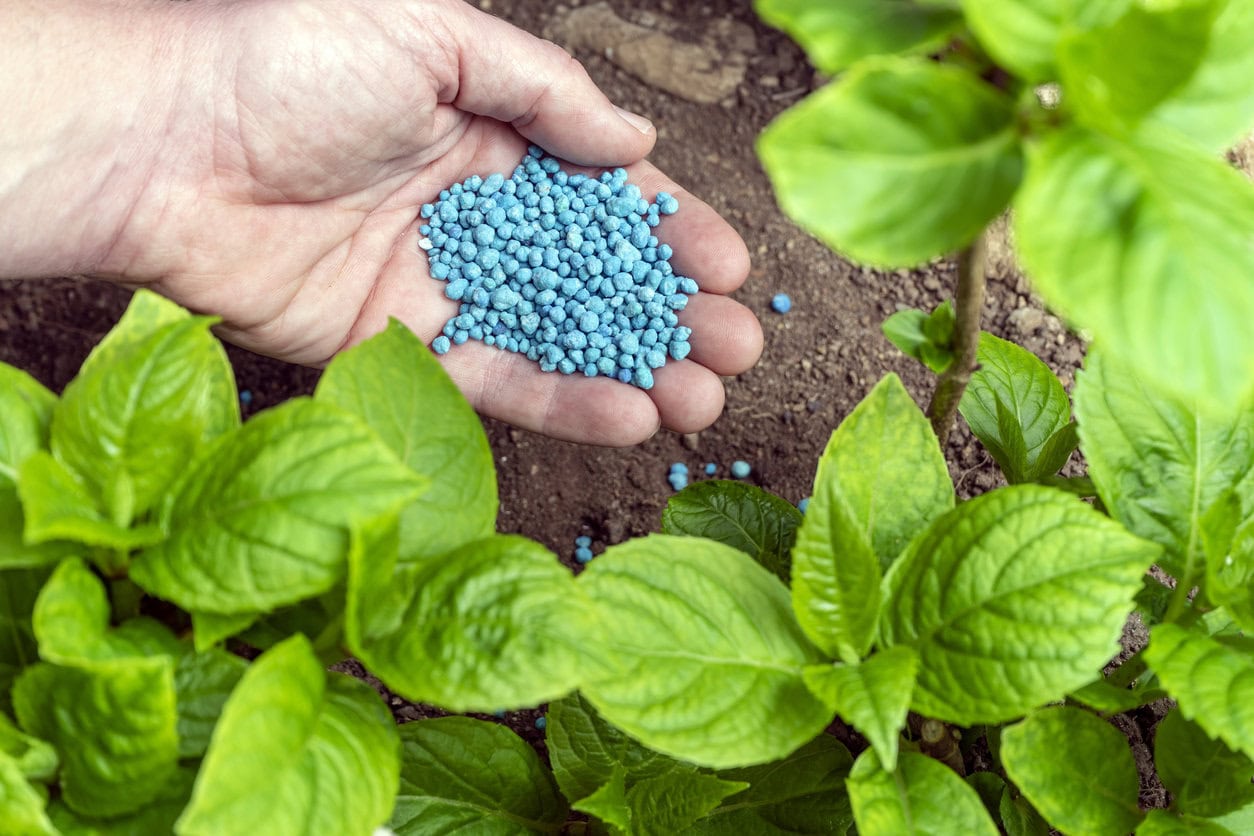
Our hungry shrubs crave some fertilizer. When the first green tips peek through the mulch, hand over a slow-release balanced fertilizer such as 10-10-10 or one formulated for flowering shrubs.
How much of it? Follow the label directions for the right amount based on your plant’s size.
Nitrogen promotes leafy growth, while phosphorus fuels flower production. So keep your high-nitrogen lawn fertilizer far away unless a leafy shrub sounds appealing.
How I do it: I scatter the granules along the drip line (not too close to the stem), then water the soil well so the nutrients can work their way down to the roots.
If you like experimenting with natural options, we also wrote a guide on easy homemade fertilizers that can boost hydrangea blooms.
3: Clear the Deadwood
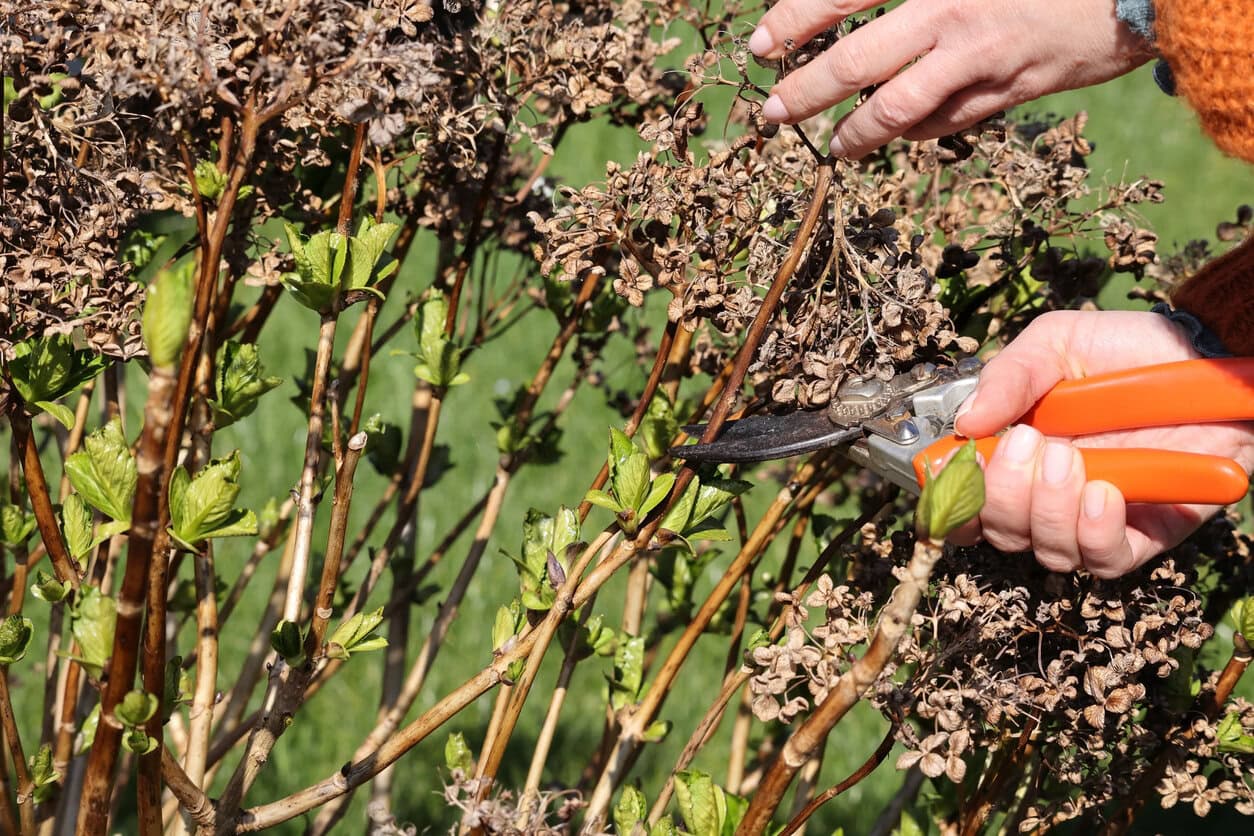
Even for varieties that bloom on old wood, April is the time for a thorough 3 Ds cleanup. Focus on the dead, damaged, and diseased stems. Clip away anything clearly brittle or grey.
Why? Removing dead stems prevents them from draining the plant’s resources. It also allows sunlight and air to reach the center of the shrub, which helps reduce problems like powdery mildew.
After all, April is the Loki of all months. If the weather’s dry, you’ll easily water (more about it later). But if it’s perpetually rainy and your plant is dense and half-dead? You get big problems.
4: The Aluminum Trick
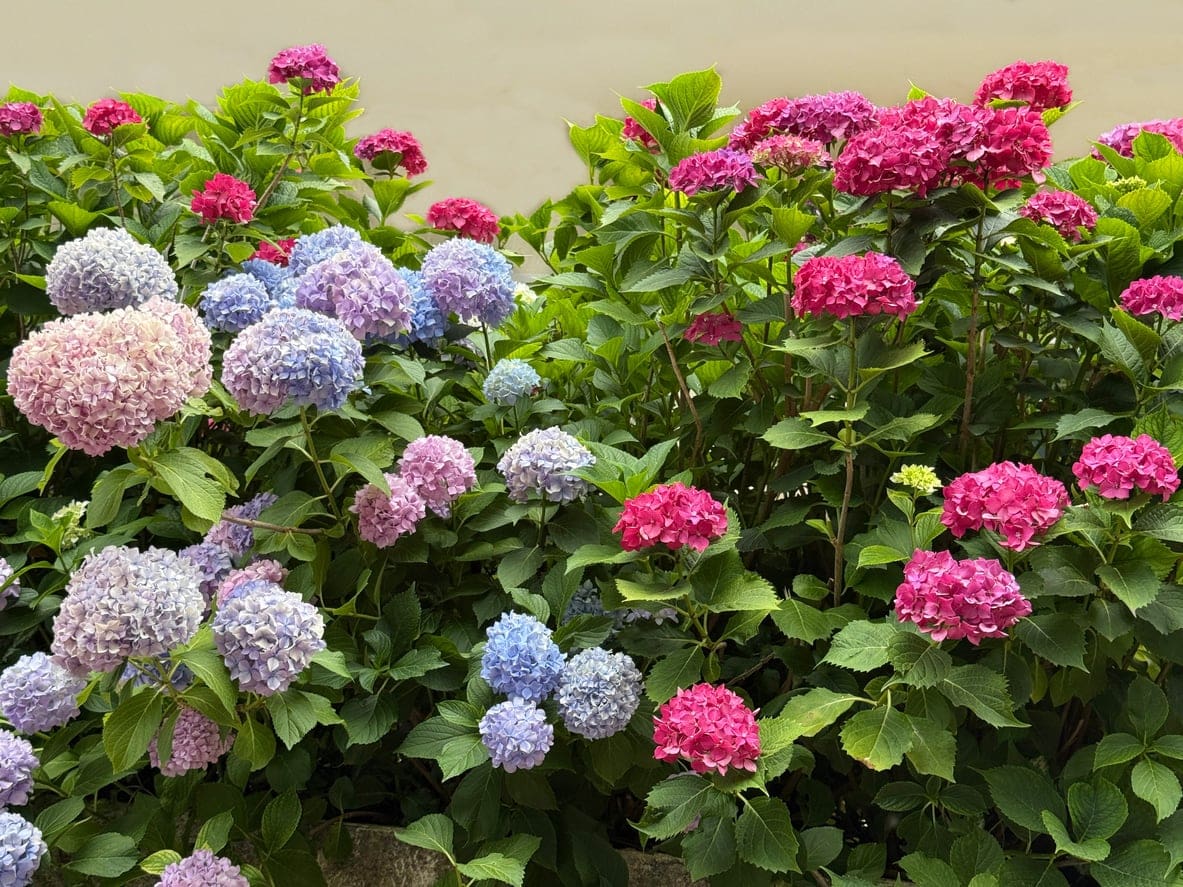
April is often the final deadline to manipulate Bigleaf hydrangea colors. Soil acidity dictates whether you’ll enjoy sky blue or bubblegum pink petals this summer.
These amendments take weeks to break down and be absorbed by the plant, so don’t wait until the flowers appear. Absorption is a slow process, like getting a cat to move off your laptop when you have a deadline.
Quick note: This color trick only works on Bigleaf and Mountain hydrangeas. White varieties and other hydrangea types won’t change color no matter what you add to the soil.
If you want to dive deeper, we explain how to change hydrangea colors naturally step by step in another guide.
5: Fortify with Fresh Mulch
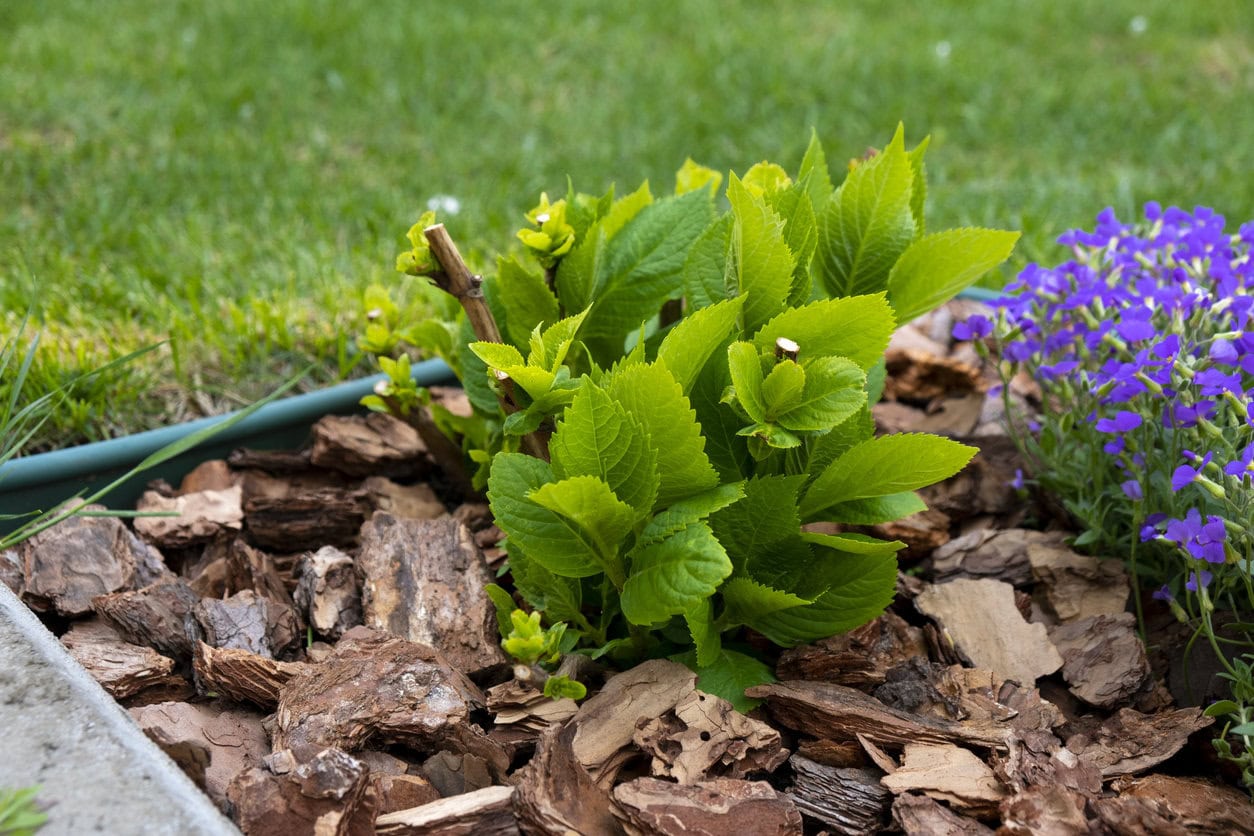
Hydrangeas crave water more than I crave caffeine on most mornings. Should the April sun threaten to parch your yard, spread a 2-3 inch layer of organic mulch across the drip line.
Pine bark or compost will keep the roots cool and protected, like sunscreen for your soil but without the coconut scent.
Quick note: Never pile mulch against the stems like a volcano! Leave a little breathing room so moisture doesn’t cause the bark to rot.
6: Inspect for P.E.S.T.S.
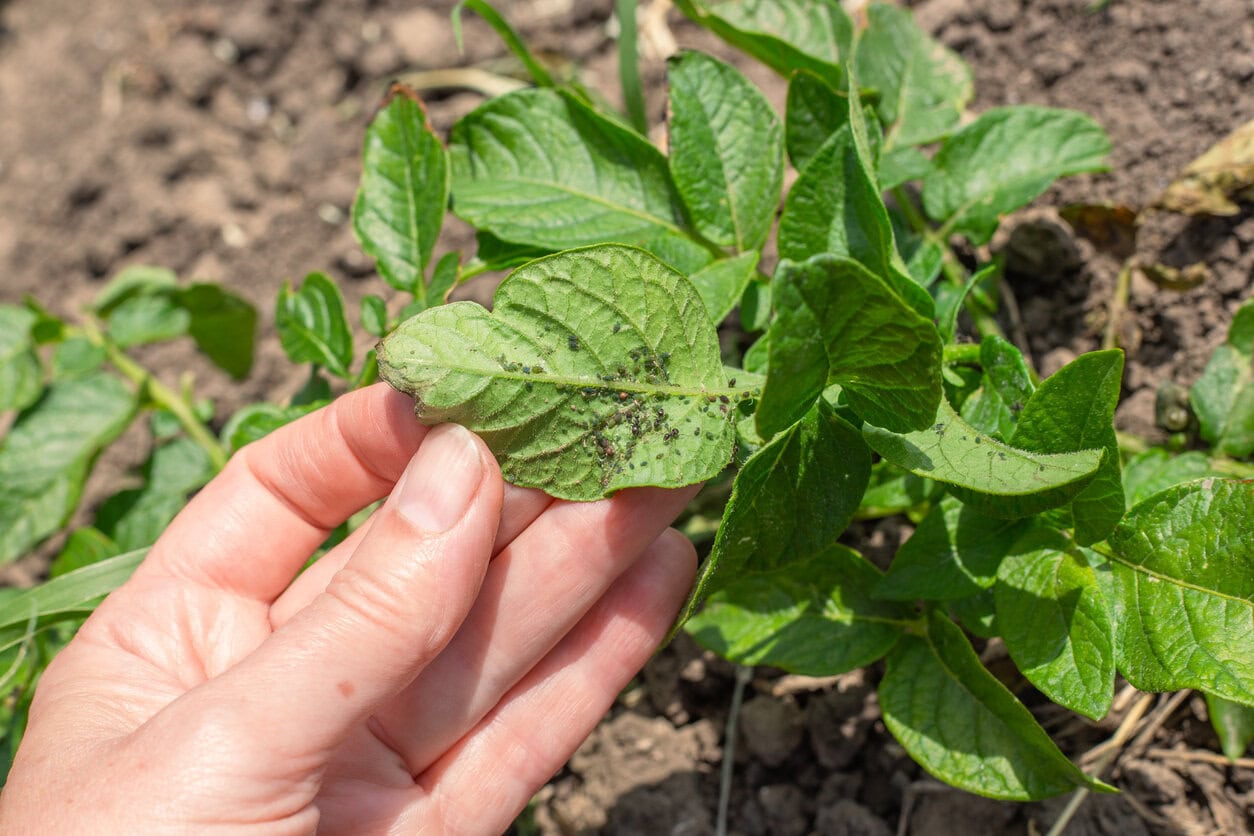
Each week, peek under the leaves and pray you see nothing suspicious, like aphids and slugs, hungry for tender, succulent, yummy growth that emerges in April.
So if you do see tiny green bugs or sticky residue, get the hose. A sharp blast is usually enough to dislodge the Petty Evil Sap Tapping Snackers without using harsh chemicals.
Catching the pests in April prevents an infestation that could stunt your developing flower buds. It’s basic crowd control, similar to how I handle people who try to talk to me before coffee o’clock.
7: Hydrate the Deep Roots
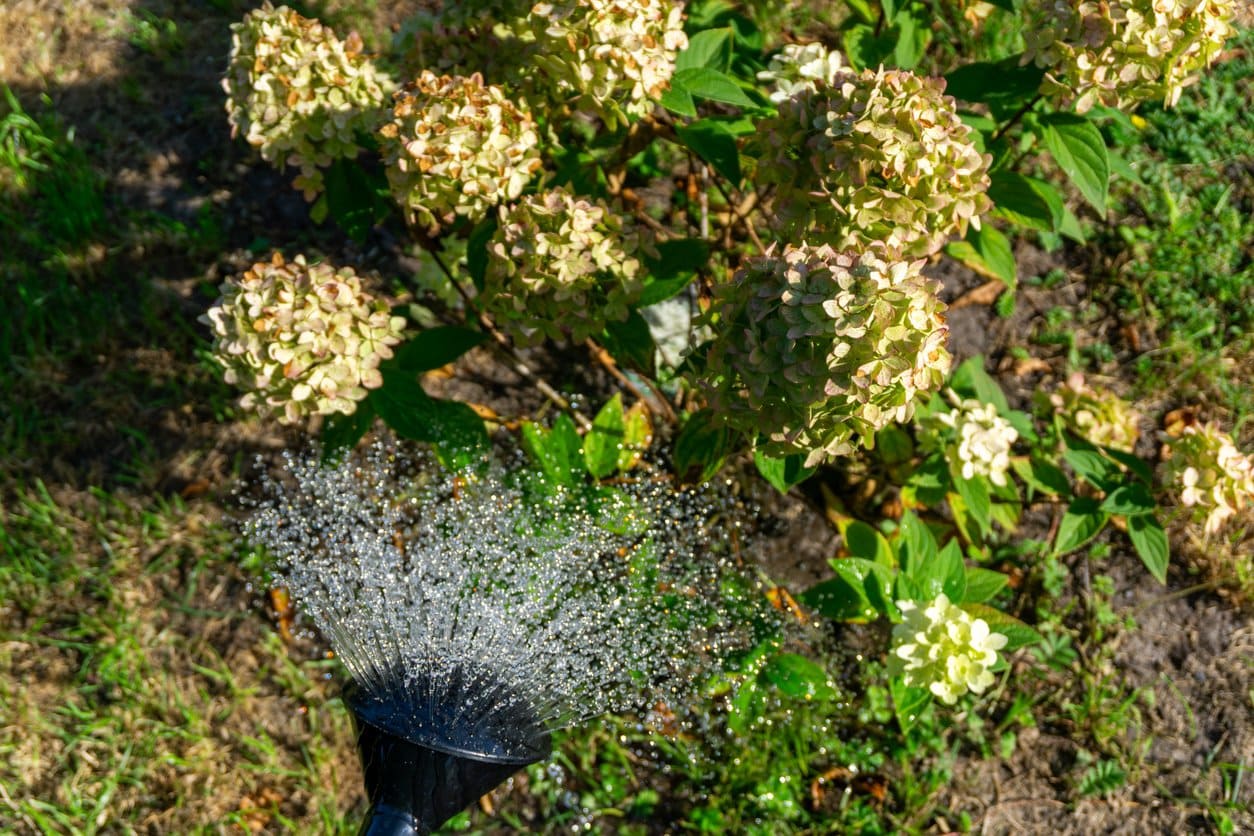
You never know whether April showers will fail your thirsty hydrangeas. So start a weekly deep-watering routine if your spring remains dry.
One inch every seven days during early morning hours beats daily light sprinkles. Deep watering encourages their roots to grow deeper.
Can your soil handle a heavy weekly soak? If yes, sandy soil drains faster than my bank account during a plant sale, so add organic compost to help hold moisture. If not, improve drainage with organic matter and avoid overwatering to reduce the risk of root rot.
If you’re chasing even bigger flower heads this year, we also shared 10 tips to help hydrangeas bloom bigger and brighter in another guide.
High-Stakes Hydrangea Checklist
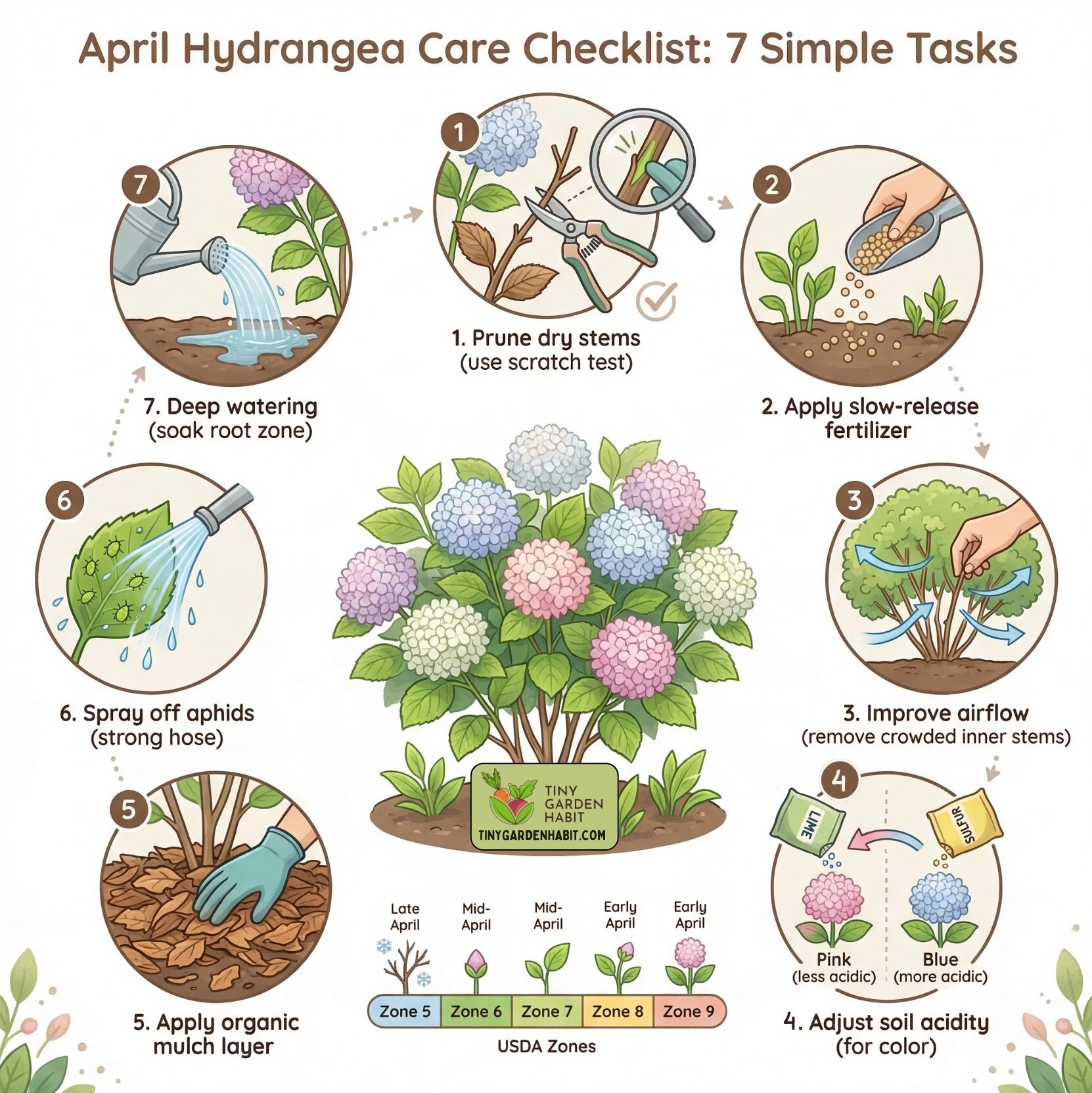
Get your plants in order before they decide to leaf you for a better gardener:
Your garden’s officially ready to bloom, so try not to soil your reputation. No pressure, though. But the bees are counting on you.
If blooms are still disappointing after all this care, you might want to check our article on common mistakes that keep hydrangeas from blooming.


