Don’t have a huge yard? No problem. All you need is a big plastic bucket and a can-do attitude.
Those are the only things standing between you and a delightful amount of home-grown veggies. Time to become your own supplier!
The Nitty-Gritty on Buckets & Gallons

Here’s your math homework for today. When we say “5-gallon bucket,” we’re talking about the US liquid gallon, which is roughly equal to 19 liters and about 4.2 Imperial (UK) gallons. Knowing the difference is a bucket list item for any serious gardener.
Now, on to finding the perfect container for your urban farm. Your first stop is the hardware store for a classic, orange or white 5-gallon bucket.
If you want a cheaper option, check in with your local bakeries or delis. They often have food-grade buckets just begging for a new life.
Rinse them thoroughly and, most importantly, drill at least four drainage holes in the bottom. While you’re at it, place a saucer or tray underneath to catch any excess water so you don’t soil your relationship with your landlord.
Choosing the right container size is so important. If you want help visualizing what fits best, here’s my guide on container sizes and what to grow in them, great for planning your bucket garden layout.
The Best Fall Vegetables for Container Gardening

Allow me to prove that a good harvest really does grow in small packages.
1: Spinach (Zones 2-9)

Spinach grows fast and loves cooler temperatures, in case you’re looking for a quick win. It’s an ideal container veggie for a fall harvest before the heavy frosts hit.
The trick is to plant the seeds directly into the bucket. Be mindful of warmer spells, though.
If temperatures get too high, your spinach might bolt (go to seed, not escape from the bucket), which makes the leaves taste bitter. A little afternoon shade should prevent this.
2: Kale (Zones 3-9)

Kale is an incredibly hardy leafy green, can handle light frosts, and a perfect candidate for a fall garden. A single plant in a bucket can provide a surprising amount of food kids hate.
The secret to harvesting is – trimming. Pick the outer leaves and let your plant get back to work. The cut-and-come-again trick will supply you with kale for weeks, sometimes even months. Yay.
Want tips on how to mix and match your plants in containers? Check out my post on companion planting in containers and grow bags for ideas that boost flavor and ward off pests
3: Radishes (Zones 2-10)

Radishes are the ultimate instant gratification crop for any gardener, especially beginners. They can go from seed to harvest in as little as three to four weeks.
Due to their small size, you can plant multiple radishes in one bucket, only make sure they have a little breathing room between them. They are a great way to get a feel for container gardening and prove to yourself that, yes, you can actually grow your own food.
4: Swiss Chard (Zones 3-10)
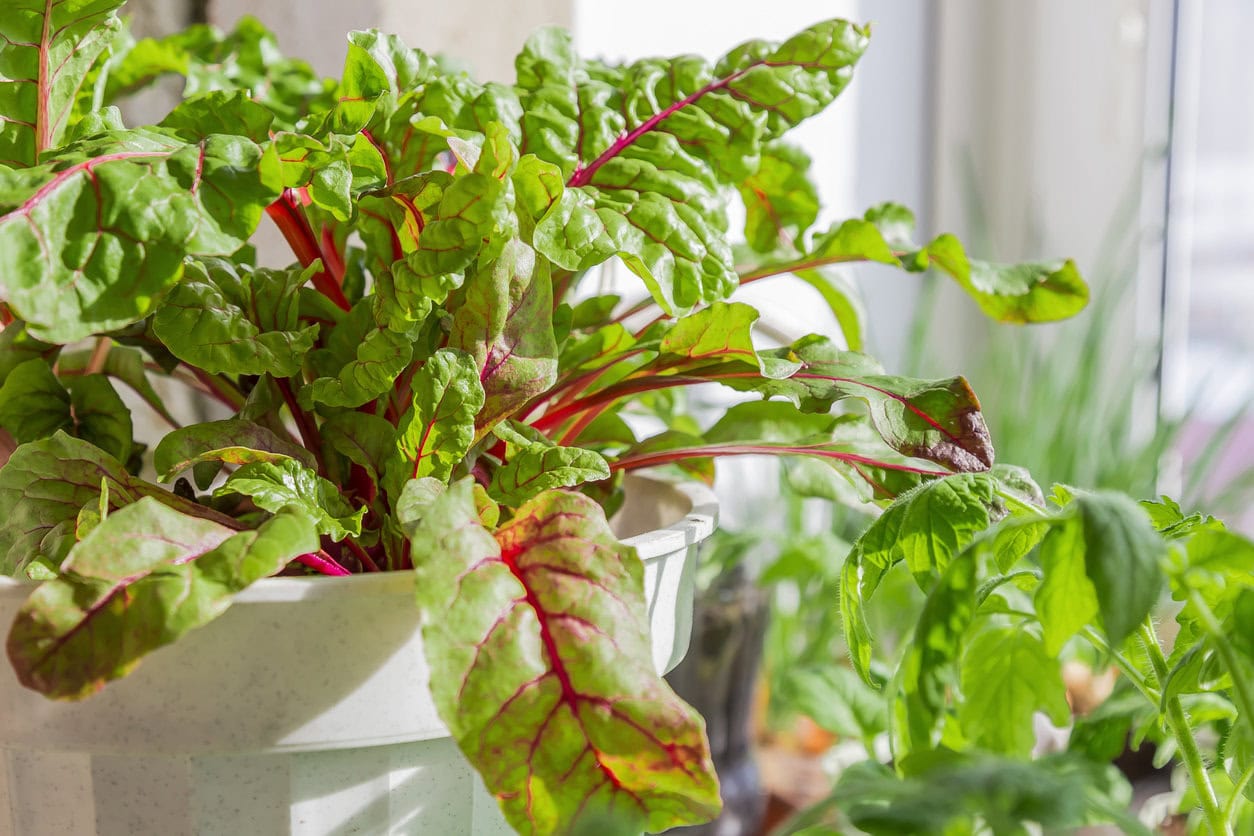
Swiss chard will show up to your bucket with rainbow-colored stems ready to fill the entire space.
The good news is that a single plant will produce so many tasty and versatile greens you might get tired of eating it. Almost. Just like with kale, you can use the earlier mentioned cut-and-come-again method to pick the outer leaves for a steady supply.
5: Bush Beans (Zones 3-10)

When it comes to bucket gardening, not all beans are created equal. You want to choose bush beans, which grow into a compact, bushy plant that doesn’t need a trellis to climb.
Leave the climbing pole beans for the ground gardeners. Plant several seeds in your bucket, and in a few months, you’ll be able to harvest your own fresh beans without all the vertical space.
If you’d like to bring in flavor without extra space, you’ll love my post on herbs that grow in containers anywhere. A few basil leaves in a bucket can turn simple salads into something spectacular
6: Beets (Zones 2-10)

Beets are the ultimate two-for-one deal for your garden. The greens are as delicious as the root itself and can be harvested while the root continues to mature.
Sow your seeds directly into the bucket, and when the seedlings get to be a few inches tall, you’ll need to “thin” them. This just means pulling out a few of the smaller plants to give the bigger ones room to grow.
Don’t toss them, though. The thinned leaves are great in a salad!
7: Lettuce (Loose-leaf varieties) (Zones 2-11)

Why keep paying for pre-packaged salad mix? You can plant multiple seeds of your favorite loose-leaf lettuce in one bucket and simply pick individual leaves as you need them.
Also, try succession planting. Means you sow a new batch of seeds every couple of weeks to make sure you’re always picking a fresh crop.
Tip: Oakleaf, Red Sails, and Green and Red Salad Bowl are popular varieties of loose-leaf lettuce, perfect for growing in containers.
And if you ever want to expand beyond buckets, I also covered vegetables that grow in pots and containers perfect for indoors!
8: Garlic (Zones 3-10)
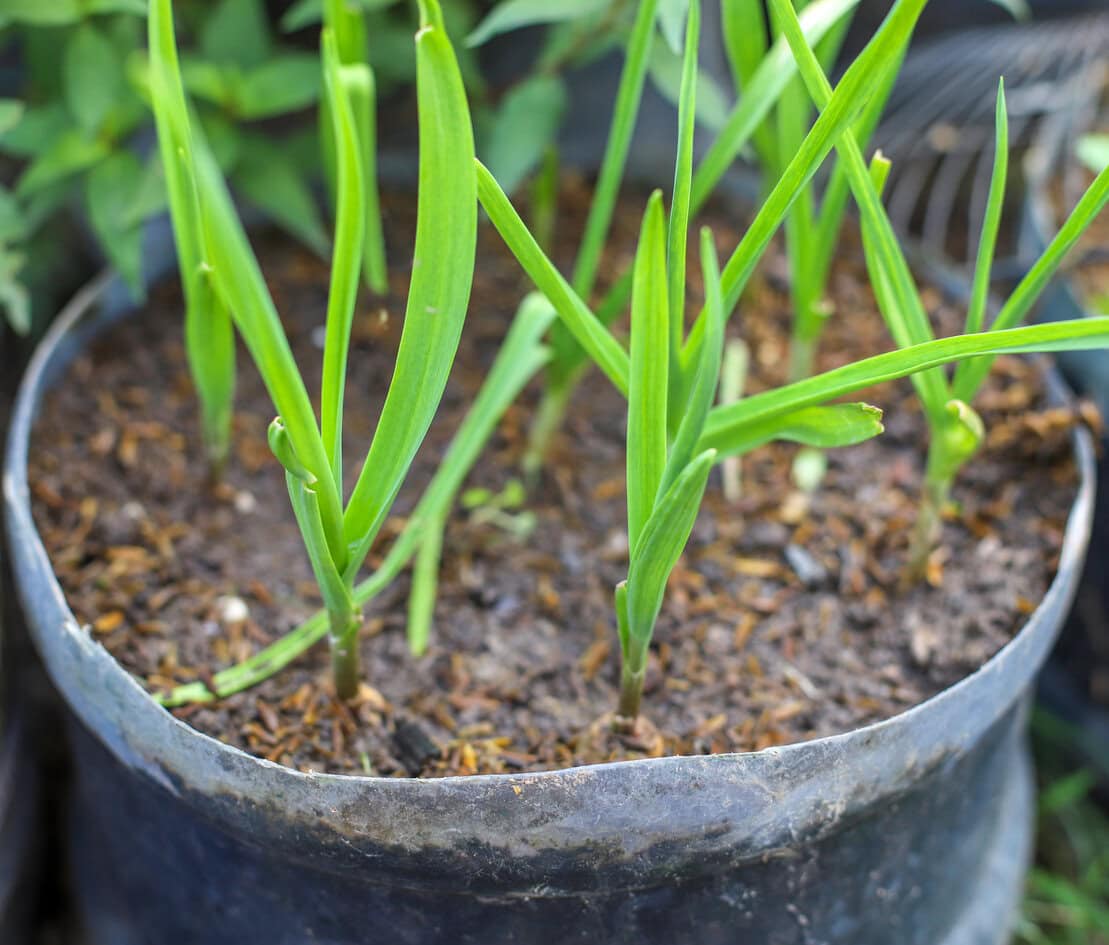
Garlic is a long-term investment, but it’s worth the wait. You’ll plant the cloves in the fall and then protect them over the winter for a summer harvest.
Just break a head of garlic into individual cloves and plant each one about two inches deep. The cloves will grow roots in the fall and then sprout in the spring. Just make sure your bucket is in a sunny spot and drain it well.
Hardneck garlic thrives in colder climates (Zones 3–8), while softneck garlic is better suited to warmer regions (Zones 8–10)!
9: Carrots (Zones 3-10)

Growing carrots is a great way to put your bucket’s depth to good use. Of course, you won’t be growing classic long carrot varieties. There are plenty of round or shorter-rooted types perfectly suited for a contained life.
Just sow the seeds directly into a bucket and thin them as they grow. You’ll have a sweet and crunchy harvest in no time.
Tip: Consider planting ‘Thumbelina’ (not related to a 90s cartoon) or ‘Danvers Half-Long’ (not related to LOTR, either).
If you’re curious to see more crops that fit into the bigger bucket-gardening picture, take a look at my guide on what vegetables thrive in 5-gallon buckets it pairs perfectly with this fall-focused list.
Lettuce See What You’ve Grown
Turns out, all it takes to become a real gardener is a cheap plastic bucket, high-quality potting mix, and a bit of effort.
So go ahead, put a bucket on your container gardening list or… a container garden on your bucket list or… just sow the seeds of a whole new obsession.