Don’t assume the bulb ship sailed in October. One year I found a forgotten a bag of forgotten tulips and, on a mild February day, I planted them anyway… right into a slushy trench.
Neighbors laughed. I laughed. Then April arrived, and my yard looked like a Dutch postcard while their plots stayed brown. Hah! Ever since that year, I plant a second round of bulbs on purpose for a more continuous show throughout spring.
The Bulbs’ Comfort Zone

Check your hardiness zone before you go wrestling with a shovel.
Knowing your USDA zone is the difference between a spring garden and a very expensive subterranean compost pile.
If you’re reading this while staring at three feet of snow… well, first of all, I’m sorry. But like I said, pots in an unheated garage or cold shed work just fine, so don’t use snow as an excuse to be lazy… unless you want your neighbor (who followed my tips) laughing at your sad brown yard in April. Just saying.
6 Early Bloomers (Even If You’re Planting Late)

My thumbs turned green through a series of oops moments, so yours can remain perfectly manicured. Kidding. Get these late-to-the-dirt gems (if the ground isn’t a brick of ice) and dig in. I’ve planted more than a few of them “out of season,” and they still showed up like they had something to prove.
1: Snowdrops (USDA Zones 3-7)

These warriors possess more grit than a seasoned cowboy, often poking straight through snow just to prove winter is losing its grip.
If your ground is still frozen solid, you can plant these in a pot using a rich, organic potting mix and keep it in an unheated garage or cold shed, as I mentioned earlier. Then, the moment a shovel can finally pierce the earth, you can move the whole pot outside and plant the clump in the ground.
How deep to plant: I’ve learned they really don’t like being bone-dry, so I tuck them about three inches deep into soil rich with leaf mold or compost.
And if the ground is frozen solid, I won’t judge… we actually wrote an article about houseplants you can propagate from cuttings indoors and still feel productive.
2: Crocus (USDA Zones 3-8)

Beware: your crocuses can be breakfast cereal for local rodents! They’re small, colorful, and gone overnight if squirrels get greedy.
I once lost an entire patch to a hungry rodent community before I started topping the soil with organic crushed oyster shells (one perk of living by the sea).
If you aren’t near a coast, you can try crushed eggshells, a gritty layer of gravel, or even a little pepper as a mild deterrent, but keep in mind nothing is 100% squirrel-proof. The real goal is to make digging annoying enough that they move on.
How deep to plant: Plant crocus bulbs about four inches deep in a sunny spot with well-draining soil. I also throw a handful of sharp sand or grit into the hole. It fixes drainage issues and makes the texture miserable for any critters hunting a midnight snack.
Technically these are corms, not bulbs… but close enough for muddy gardening weather.
3: Daffodils (USDA Zones 3-8)

Daffodils are the only roommates that don’t mind a bit of cold and refuse to leave when deer come knocking. I’ve found that deep planting is the secret to success!
Considering we’re planting late, go for an early-blooming variety like ‘February Gold’. I’ve had the best luck with those when I want flowers as early as possible, even after a last-minute planting.
How deep to plant: Plant daffodil bulbs about six inches deep in a spot with decent drainage and as much sun as you can give them.
If you’re in the mood to plant anything that blooms early, we also rounded up a few early-spring perennials that are also worth planting in February. They’re perfect if you want spring color that comes back every year.
4: Siberian Squill (USDA Zones 2-8)

If you want a carpet of blue that rivals the sky, Siberian squill is your best friend and spreads faster than happy news. These little bulbs thrive under deciduous trees, but I’d avoid planting them near pristine lawn edges unless you want a blue yard.
My personal trick involves planting them in drifts rather than straight lines. It looks more natural and finish usually finish blooming before the canopy even thinks about shading the ground.
How deep to plant: Tuck the bulbs about three inches deep in well-draining soil.
5: Winter Aconite (USDA Zones 4-7)

Yes, I know they’re technically tubers and not “real” bulbs, but they show up early and bloom like they own the place, so they’re invited.
Looking like buttercups wearing Victorian collars, winter aconite tubers love an overnight soak in a bucket before before they ever touch the soil.
Check them before you buy, though! If they look shriveled like a forgotten box of raisins, don’t worry. They’re just playing dead. The overnight bath plumps them back up so they don’t just sleep through spring.
They’re also one of the few early bloomers I’ve grown that doesn’t panic at damp, late-winter conditions (just make sure the spot isn’t a total swamp).
How deep to plant: I plant them about two inches deep and usually toss light layer of organic mulch over the spot so the moisture stays put while they finally decide to wake up.
6: Iris Reticulata (USDA Zones 5-9)

These stay low to the ground and bloom while the air still bites, offering intricate patterns and a sweet scent. My biggest lesson? These bulbs will rot if you don’t give them proper drainage.
If you’re digging into a soil feels like soggy cake batter, toss some coarse sand down there. I also like to tuck them near a walkway so I can actually enjoy the scent without trekking through February mud.
How deep to plant: I plant them about four inches deep in well-draining soil.
And since irises always seem to spark questions later in the season, we also explain when (and how) to cut back iris leaves properly.
The Pointy End Up!
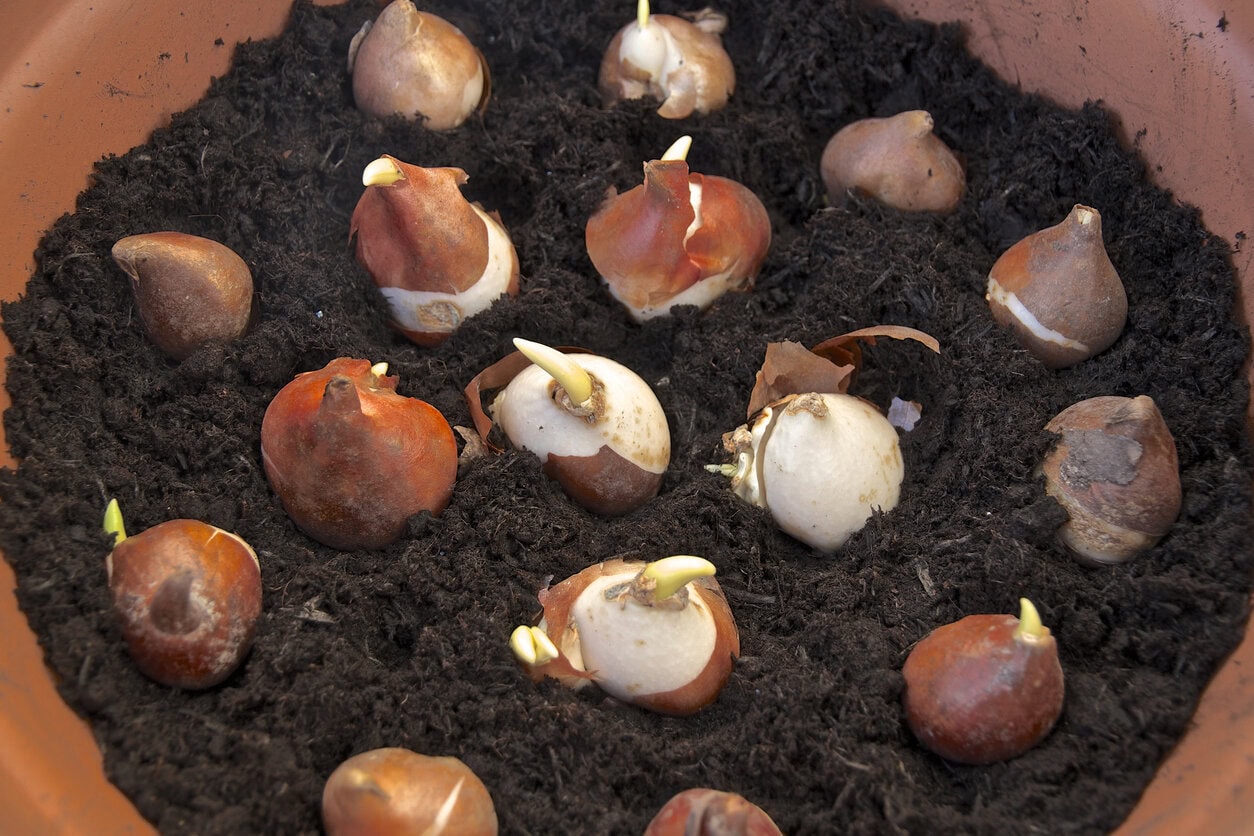
I know it sounds like something out of a Dummies guide, but when you’re stuck in mud and shivering, logic can take a hike. Most bulbs look like tiny onions or hairy pebbles. The rule of thumb? Pointy end up!
What if your “bulb” looks more like a lump of coal with no obvious top or bottom? Plant it on the side. Nature usually figures out which way is up, but asking a sprout to pull a U-turn in the dark is a tall order for a tiny bulb.
If you want even more color fast, we wrote an article on a few flowers you can sow in February to get a head start on spring that pair perfectly with early bulbs.
Sunbeams and Sore Glutes

At the end of the day, planting bulbs in February isn’t about following every rule to the letter but having the iris-istible urge to see something grow. And yes, getting sore in places you didn’t know existed.
But the bright side? You’ll also have a head start on that summer body while you’re at it. Win-win?
And if your soil is workable right now, we also put together a list of a few hardy perennials you can transplant in February, which is another easy way to get ahead while you’re out there freezing with a shovel.