Hoping your ZZ plant flowers indoors is like expecting to spot a unicorn sipping Lady Grey with milk and sugar. Those few who have seen the rare bloom were either on special mushrooms or exceptionally patient gardeners.
Choose your weapons wisely. Getting your ZZ (ZamiZami to friends) to flower is akin to achieving a black belt in gardening, a sign of dedication bordering on obsession.
Understanding the Reluctant Bloom

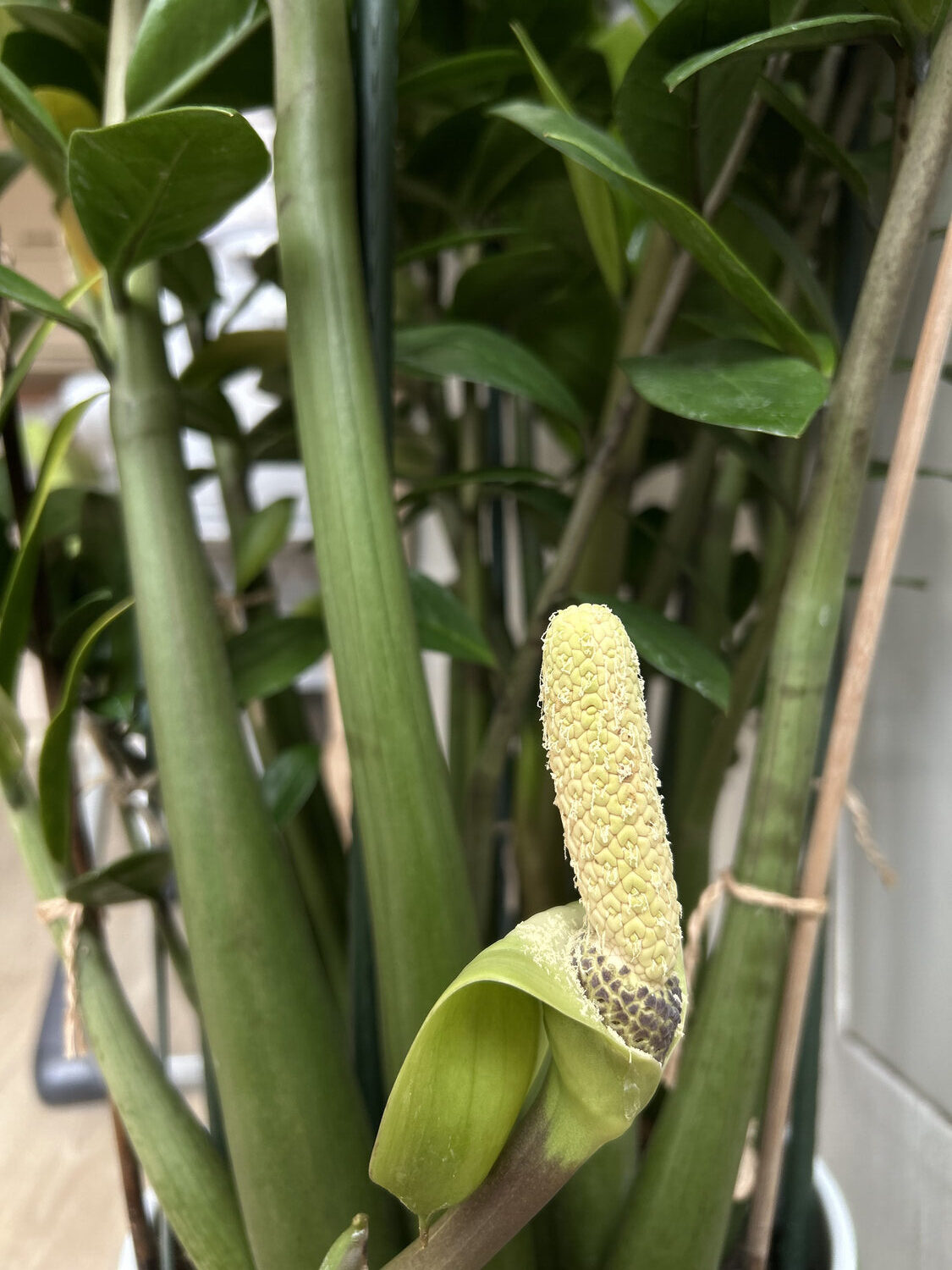
If you are expecting a monumental, glorious, enthusiastic bloom, prepare for a disappointment so profound it is almost funny. The ZZ plant’s flower is small and waxy with an aroid structure.
What you get is a central spike (the spadix), stuffed with its pale yellow baby flowers, which is then shyly tucked into a protective green leaf (a spathe) shaped like a little boat. It looks a lot like a tiny corn cob wearing a hood. Frankly, it’s a reward for your ego, not your eyeballs.
The reason for this extreme rarity is 100% biology. The Zamioculcas zamiifolia evolved in the seasonally dry grasslands and rocky forest understories of East Africa. In that punishing environment, flowering is a massive commitment that must not be taken lightly.
A ZZ will only dedicate the resources necessary for reproduction when it is absolutely, blissfully, and utterly certain that its environment is perfect and stable for a long period.
That further means that your plant must not only be mature (typically three to five years old) but also experiencing such consistent and ideal care that it believes the drought is permanently over.
It is a sign of contentment, not stress, and getting there requires moving beyond mere survival tactics.
Just like timing an amaryllis so it blooms at Christmas, patience is half the magic. Here’s how to schedule amaryllis planting for the holidays!
The Three Pillars of Perfect Happiness (And Flowering)
By now, you know that Zami is a commitment-phobe, so you need to press the three buttons that will make it feel secure enough to bloom.
Light: Bright, But Not Brutal

The biggest myth about ZZs is that they prefer dark corners. They tolerate low light, ok, they do not thrive in it. When a plant needs to muster the enormous energy required to produce a flower, it needs a fuel source, a tasty sunlight, and lots of it.
So aim for bright and indirect light. Position it near an east or west-facing window, or several feet (1 to 2 meters) back from a sunny south window where the harshest midday rays can’t touch this.
Mission: convince the plant it can have more than the bare minimum now. Rotate the pot weekly for even growth and ultimate light absorption.
The ZZ bloom is subtle, a lot like the quiet surprise of a snake plant. If you’re curious, here’s how to get a snake plant to flower.
Water: A Strict and Steady Hand

Overwatering is famously the only reliable way to quickly kill a ZZ, thanks to its chubby rhizomes that store water during its native dry seasons. So, how do you water more without drowning it? The legend says consistency and perfect drainage.
Your ZZ must believe the drought is forever over and its personal water reservoir is reliably topped up. So to induce blooming, your watering schedule must be consistent.
Use a moisture meter for accuracy. Insert the tool about two-thirds of the way down the pot, which is where the meter will show you the rhizomes’ real feel. Wait until the meter shows a “1” or “Dry” reading before you declare happy hour.
Fertilizer: A Gentle and Nourishing Treat

A plant barely needs food to survive, but it undoubtedly needs a decent meal to reproduce. Creating even those small blooms demands energy that pot soil cannot provide forever.
Throughout the warmer months, apply a liquid feed such as a 10-10-10 solution, but dilute it to half the strength recommended on the bottle. Apply it once a month.
The science is clear: too much fertilizer is worse than none, as it burns the roots. Once your plant is mature, switch to a formula with a slightly higher middle number (Phosphorus) to encourage the bloom. Once a month during peak summer is enough.
Feeding makes a big difference. This is also important for other seasonal bloomers, so take a look at this Christmas cactus care calendar.
Patience and Plant Maturity

Goldilocks lighting? Check. The bizarre watering paradox? Check. Surely, a flower is imminent, right? Not so fast.
Size and Age Always Matter

To see a bloom, your plant must be large and mature, usually three to five years old, with multiple, thick stems and a root mass that looks like it is auditioning for Geralt.
A tiny starter plant, no matter how perfectly you water it, will focus solely on survival and growth, not showmanship.
Some plants, like anthuriums, are far quicker to bloom, but only if conditions are right. Here’s how to fix an anthurium that stopped blooming.
The Beauty of Being Bound

Weirdly, ZZs like to be slightly root-bound. It limits the energy it must spend on root expansion. When the roots run out of horizontal space, the plant is tricked into focusing its energy upward and toward reproduction, i.e., flowering.
Only repot when the pot is bulging, and even then, only go up one size. If you move it into a significantly larger pot, you’ll only reset the clock, send the plant on a two-year mission to fill that space with more root and leaf, and postpone the elusive bloom.
Your final, inescapable instruction is patience. Give it time, treat it with consistent care, and understand that success may take a few more seasons of perfect conditions.
If you ever wonder why patience matters, just think of the peace lily. It only flowers when it’s truly content, so here’s why your peace lily might not be blooming.
The Zen of ZZs

This plant does nothing quickly. Even when treated like royalty, a ZZ plant is exceptionally slow to mature, like the average millennial. Why? It needs to build a massive underground energy store in rhizomes and a strong root system before it will ever consider flowering.
And even if you never spot the ZZ bloom, and many dedicated gardeners never do, you have achieved a far greater victory. Your healthy Zami is a happy witness to your dedication and confirms you have earned at least the 1st Dan in houseplanting.