Horticulture is a lie, much like the cake. Getting an amaryllis to bloom precisely for the holidays (of your choice) has nothing to do with a green thumb but the 6-to-8-week rule.
Sure, you can buy a potted amaryllis in December, but where’s the fun in that? What are you going to do with the rest of your time? Watch a holiday movie marathon for the zillionth time?
Staring at a giant bulb producing a gorgeous stalk of flowers on cue is infinitely more satisfying.
Setting the Deadline is the Only Math That Matters
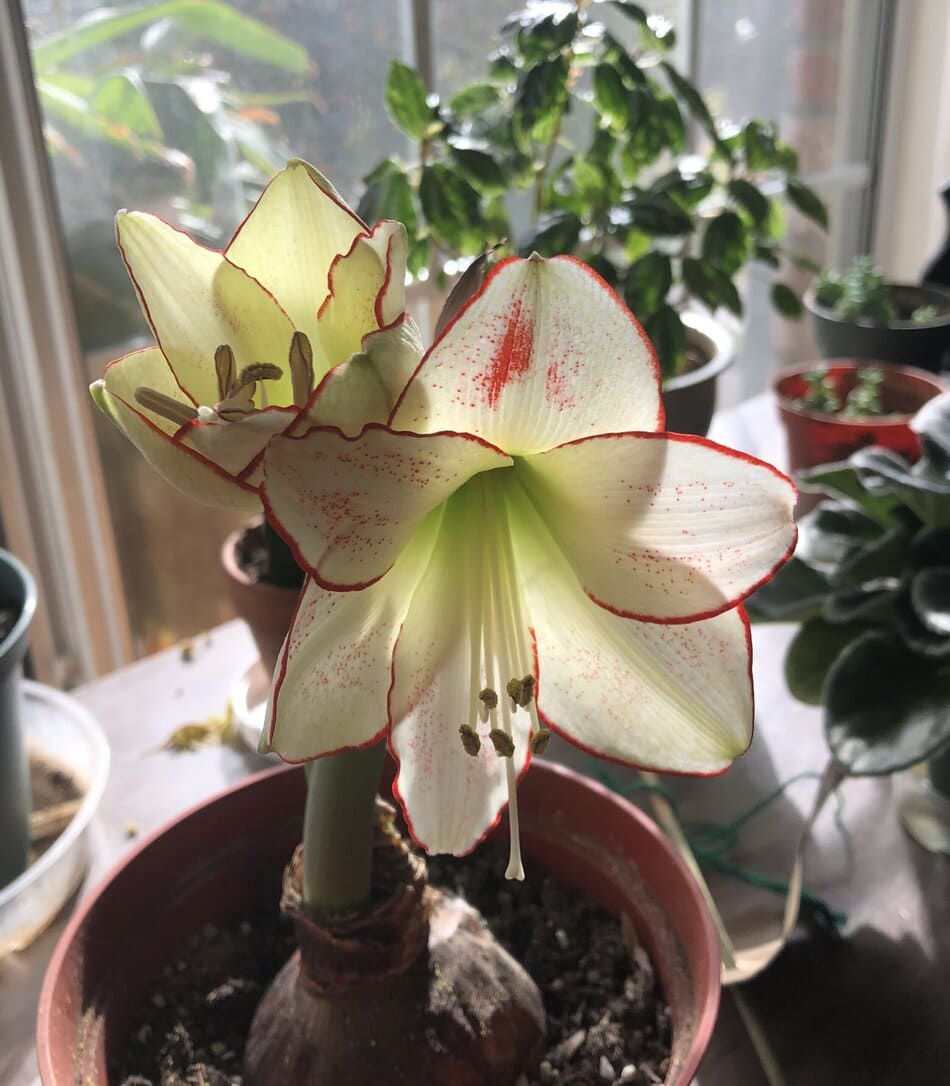
This is the non-negotiable portion of your gardening. Pick your date. Count backward 49 days:
Do not trust the simple bulb to adhere to this. It knows nothing like Jon Snow. This 7-week rule applies exclusively to high-quality, plump, and healthy bulbs.
Just like timing an amaryllis for Christmas, other holiday favorites have their own schedules too, see our Christmas cactus care calendar to learn how to make it bloom
Amaryllis Bulb Selection: Size, Speed, and Zero Excuses
The timing of the bloom is an exact science, but the quality of the display is simply down to girth. It’s time to inspect the goods.
The Bulb Weight Watchers Rule:

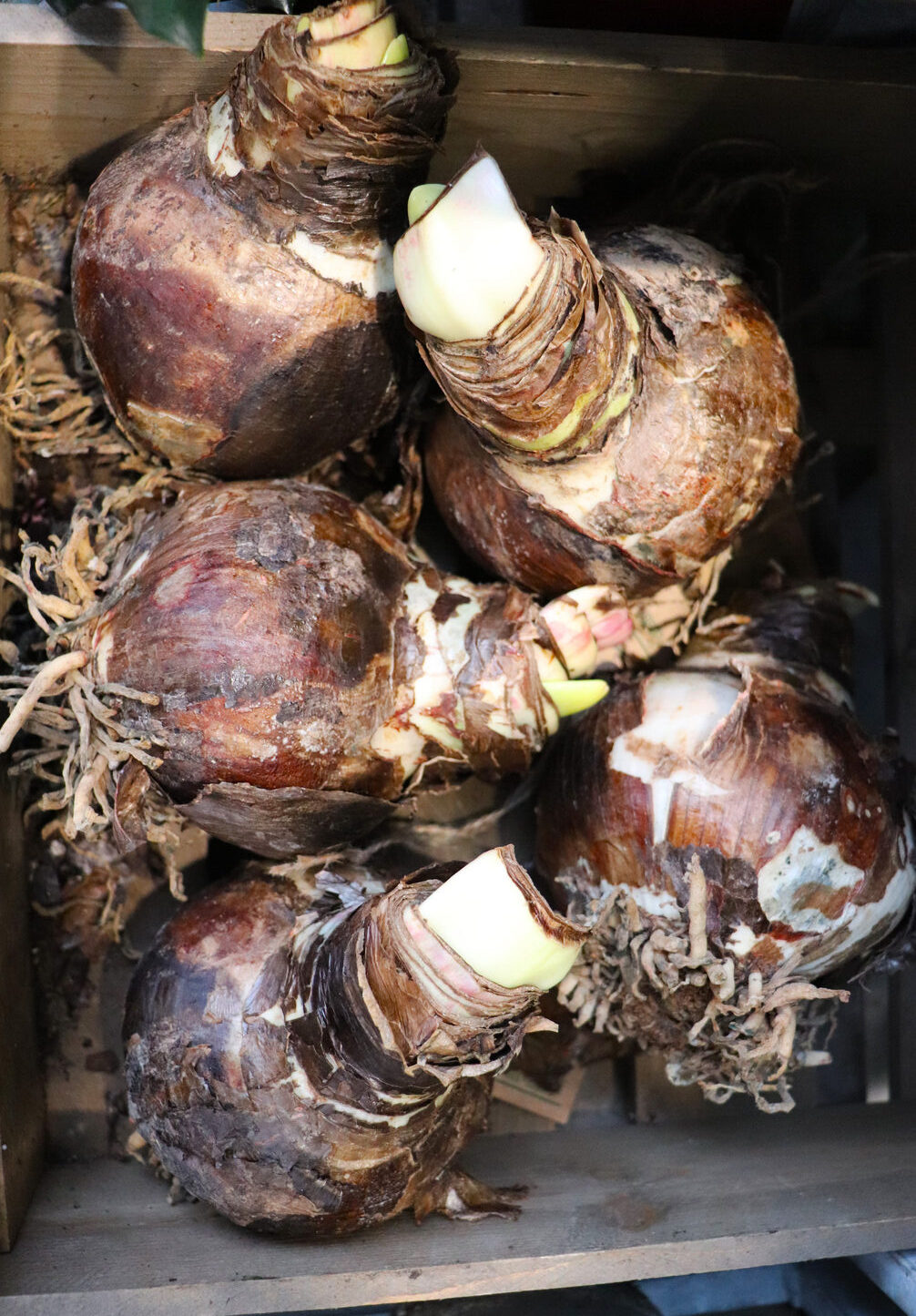
Get the largest, fattest, couch-potato bulb you can find. Ironically, that’s your guaranteed performer. It houses the most stored energy, which translates directly into speed and flower power.
How big is big? Bulbs are sized by circumference (in centimeters). A holiday-ready amaryllis bulb should be at least 12 inches (30/32 cm). Anything smaller than 10 inches (26 cm) is a lazy straggler and will take 8 to 10 weeks, pushing your bloom well into January.
So, how do you inspect it? The bulb should feel dense and heavy, with no squishiness. The neck, where the stalk emerges, must be firm and dry. This is not a rescue mission like you’d do for our overlords, the cats. No mercy for amaryllis.
Plant health always decides bloom quality, see why your peace lily might not be blooming!
Avoid the Leisurely Cultivars:


Every variety has a distinct personality, and some are sprinting towards Christmas with childlike joy, while others are enjoying a scenic route:
- The Speedy Gonzales kind of bulbs (6 Weeks): Stick to dependable varieties. ‘Red Lion’, ‘Apple Blossom’, ‘Minerva’, and ‘Rilona’ are your most reliable, 6-week favorites.
- The Slowpoke Rodriguez types of bulbs (8-10 Weeks): Avoid the double-flowered, more exotic, giant varieties. Cultivars like ‘Aphrodite’, ‘Dancing Queen’, or ‘Blossom Peacock’ but only plant these if you genuinely enjoy waiting, you patient and saintly person.
Your goal is clear: select a healthy, large, dry, and firm bulb of a fast-blooming variety. With it, you have already won half the battle.
Planting Day Protocols

The bulb is blissfully ignorant, much like your crush, so your first task is to strategically place it where it will receive just enough of your attention to thrive.
For another holiday bloomer, read how to get your Thanksgiving cactus to flower.
The Anchor:

Amaryllis thrives on pressure and a lack of personal space. Its ideal pot is only about one to two inches wider than the bulb. Close confinement discourages the bulb from wasting energy on making too many offsets.
Also, make certain your pot has excellent drainage holes. Soggy roots lead to a moldy demise, and that is tragic, like most of The Walking Dead series.
The soil is mostly a decorative anchor. Use a well-draining potting mix. The important thing is drainage, not nutrition, because you’re forcing a bloom on stored energy.
The Critical “One-Third Rule”:

This is critical. Don’t bury your entire amaryllis bulb. Plant it so that its shoulders (the top third of the bulb) are sticking proudly out of the soil. The top third needs air and validation. Gently tamp the soil down around the exposed portion.
The Post-Planting Phase:

Your work isn’t done until you initiate the tough love phase, which is also known as “forcing the bloom.”
Water it once. Thoroughly. This is just to settle the soil. No more watering afterwards.
Leave the pot in a cool and dark place, like a goth teen’s dresser. No more water, no direct light. The bulb is supposed to be miserable for a few weeks, sitting at around 55-60°F, or 13-15°C.
You are waiting for the first sign of life, a tiny green nose, poking out of the top of the bulb. This usually takes two to four weeks. Until then, ignore it. It’s working.
Once that green tip emerges, your schedule is confirmed, and the real countdown begins.
Patience is sometimes the only option, just like with hydrangeas that refuse to flower
The Big Reveal

Dormancy ends with the first green shoot, when you move the pot back to a warm environment. A rapid increase in temperature, to 70-75°F (21-24°C), is the shock it needs to stop idling and start growing.
Get it to the brightest possible spot you have, such as a southern window. Rotate the pot daily or enjoy your leaning Pisa flower stalk.
You can start watering again. Once that top layer is unmistakably dry, switch to watering twice a week. As it gets taller, two things happen: you must provide support and slightly adjust the temperature to time the bloom.
Insert a thin stake into the pot right next to the bulb, but take care not to pierce it. Gently tie the stalk to the stake with soft twine or scream at it to stand up straight (latter won’t work, but it might make you feel better).
When the flower buds begin to color, a few days before they open, move the pot to a slightly cooler and shadier spot. That’s your final trick. A temperature of about 65°F, a.k.a. 18°C, forces the plant’s metabolism to crawl and significantly prolongs the lifespan of the first flower.
Savor Your (Fleeting) Victory

After seven weeks of punishingly precise work, how long does this glorious triumph last? Only about three weeks total per stalk. The good news? You might get a second stalk a few weeks later, extending your bragging rights and your holiday decor until the last guest finally leaves.
And if your amaryllis skips a season, you’re not alone, even dahlias sometimes don’t bloom. Here’s how to make your dahlias bloom again!