If there was ever a plant you could put in a meme, it would be the Pothos.
On the one hand, you have your everyday houseplant. Little, shy, adorable leaves that trail politely. Cheems Pothos, if you will. On the other hand, you have the mighty, beefed-up, wild pothos, climbing up trees in a tropical forest with leaves bigger than your head.
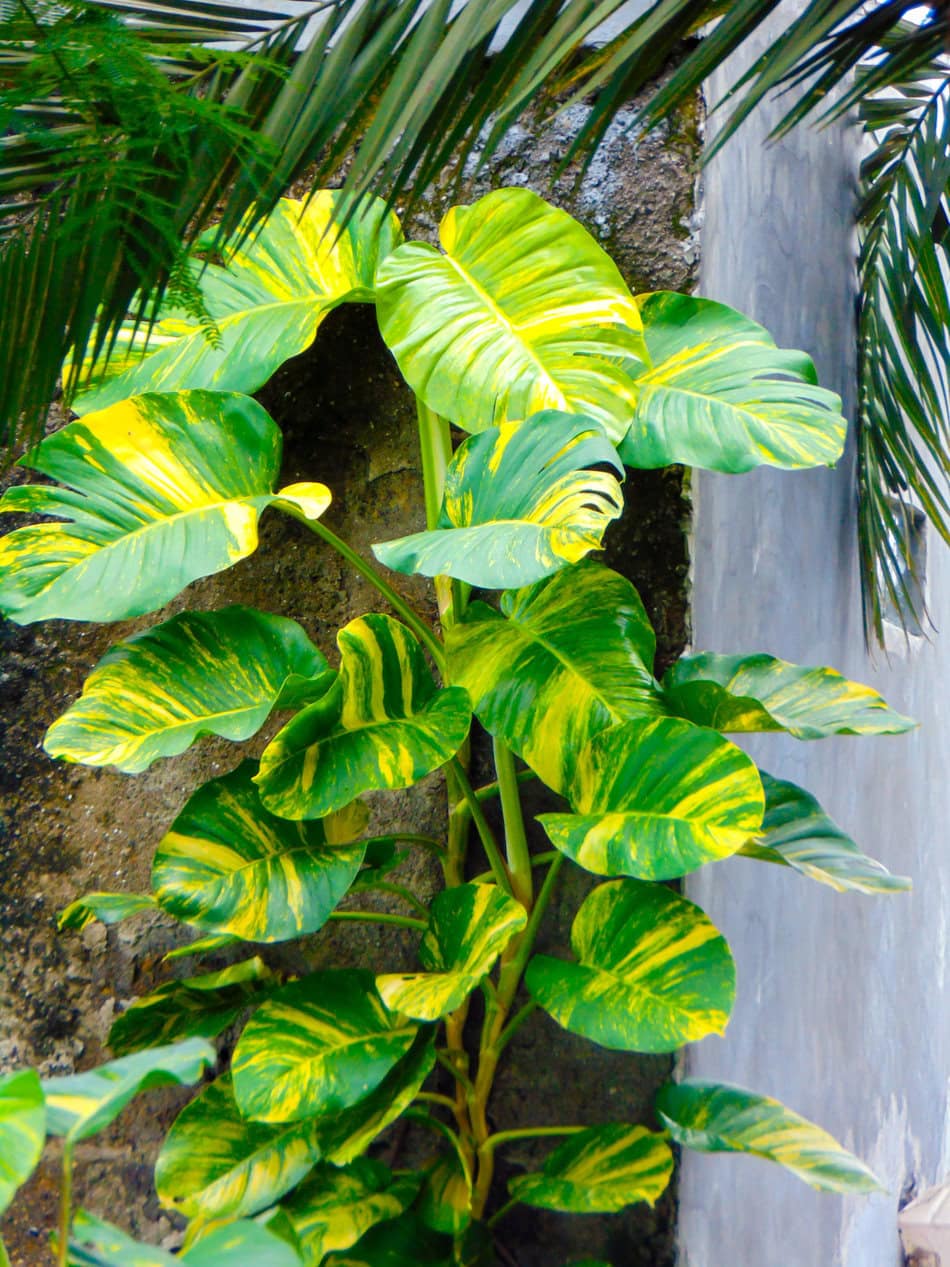
I know my job was not done until my guests looked at my plant and asked, What on earth is that?! That, my friends, is my magnificent Swole Doge Pothos.
Pothos, But Make it a Statement
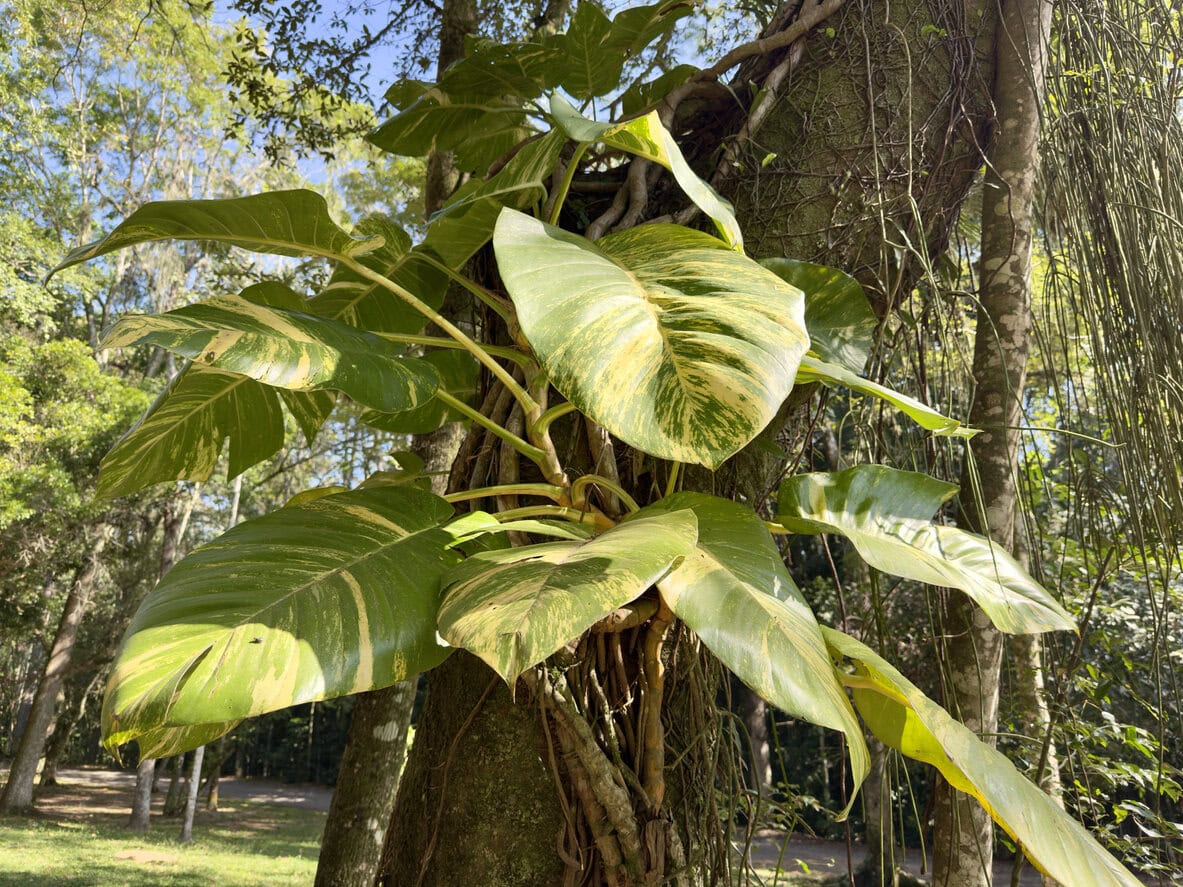
So, why does your indoor pothos stay so smol? The answer is simple. Your indoor plant is actually a tropical vine, and a natural-born climber at that. In the wilds of Southeast Asia, a pothos is a true adventurer. It uses its aerial roots to claw its way up trees and chase after sunlight.
As it climbs, a pothos grows bigger leaves with every inch it gains, all to capture every single photon. I suppose you want that same glorious foliage at home. Then simply stop treating it like a mere feng shui add-on and give it a chance to do what it was meant to do. Climb.
Still, not every pothos will turn into a jungle beast. Most indoor varieties, like Golden, Marble Queen, or Neon, will stay smaller unless they get the royal treatment I’m about to teach you about.
Essential Ingredients for a Leafy Goliath
Your pothos has a list of demands, so here is the rider.
The Golden Ticket: Light
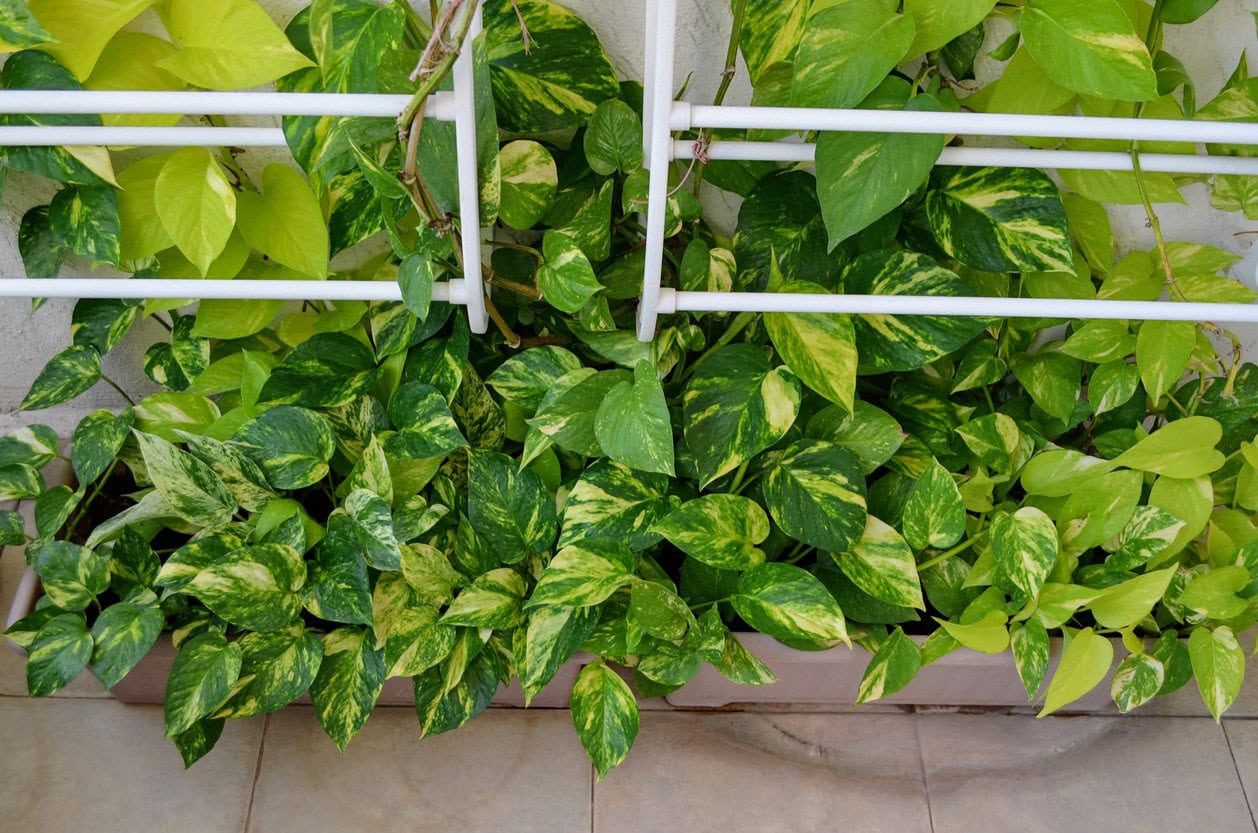
I’m not saying your pothos is spoiled or a food critic, but it does have a very specific taste. It requires bright but indirect light because direct sun will scorch its delicate foliage and leave ugly brown spots.
On the other side, too little will result in a leggy plant with small and quite pathetic leaves.
But what if your home is a total dungeon? Then, consider a grow light. A full-spectrum LED is a great choice. It provides a broad range of light your plant needs to produce chlorophyll and grow big new leaves. Your pothos is not a picky eater like an orange cat. (like any cat)
And if your pothos has healthy roots but refuses to push out new leaves, you might be missing something important, here’s exactly what it needs to start growing again!
Give It Something to Climb On
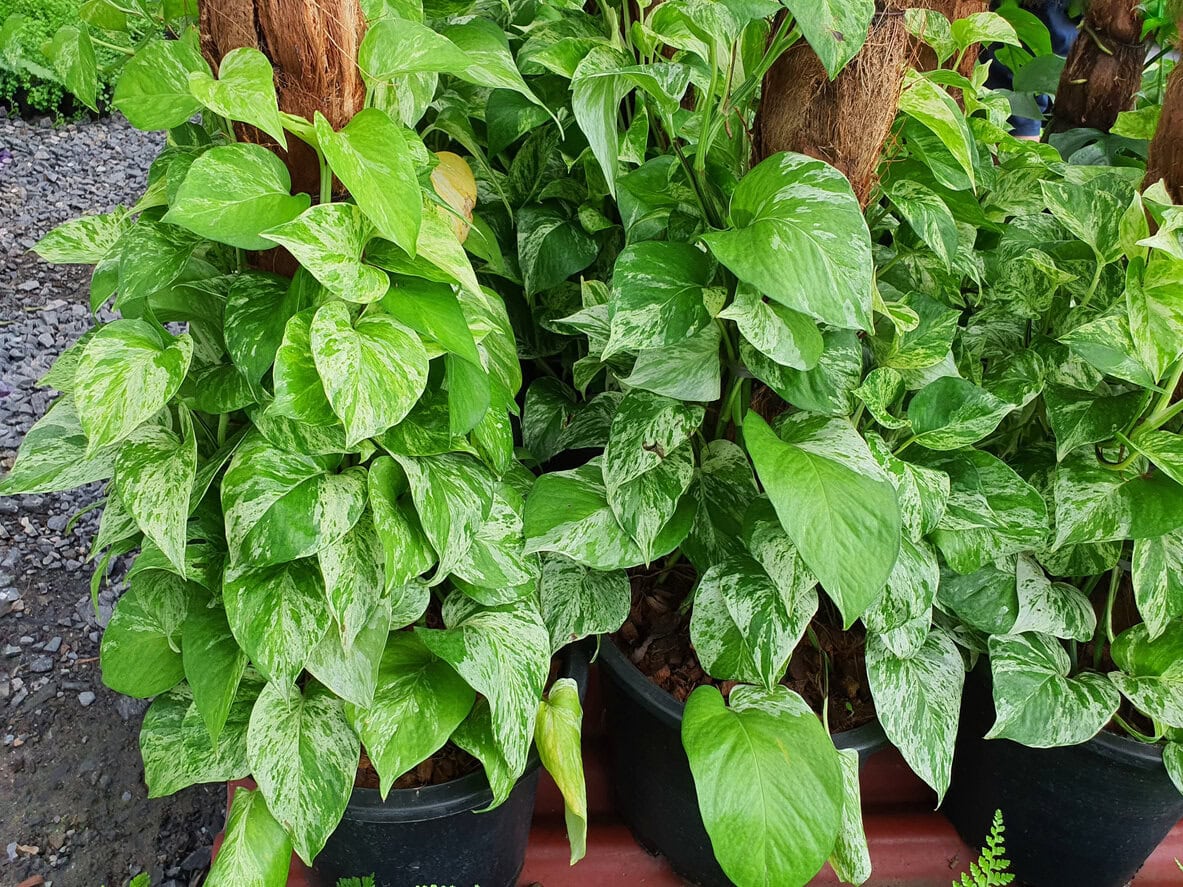
Shame on you for your thoughts. That aside, this is the number one secret to bigger leaves, so pay attention. Pothos grow their biggest leaves when they are actively climbing. They use their aerial roots to latch onto surfaces. In the wild, it is a tree. At home, it should be a moss pole or a coir pole.
Why can’t you just let it climb your wall? Because pothos is not an IFSC member. And because your wall doesn’t provide what the plant needs. A moss pole mimics a tree trunk best, but its key advantage is its ability to hold moisture. That is what tells the plant it’s safe to grow bigger there.
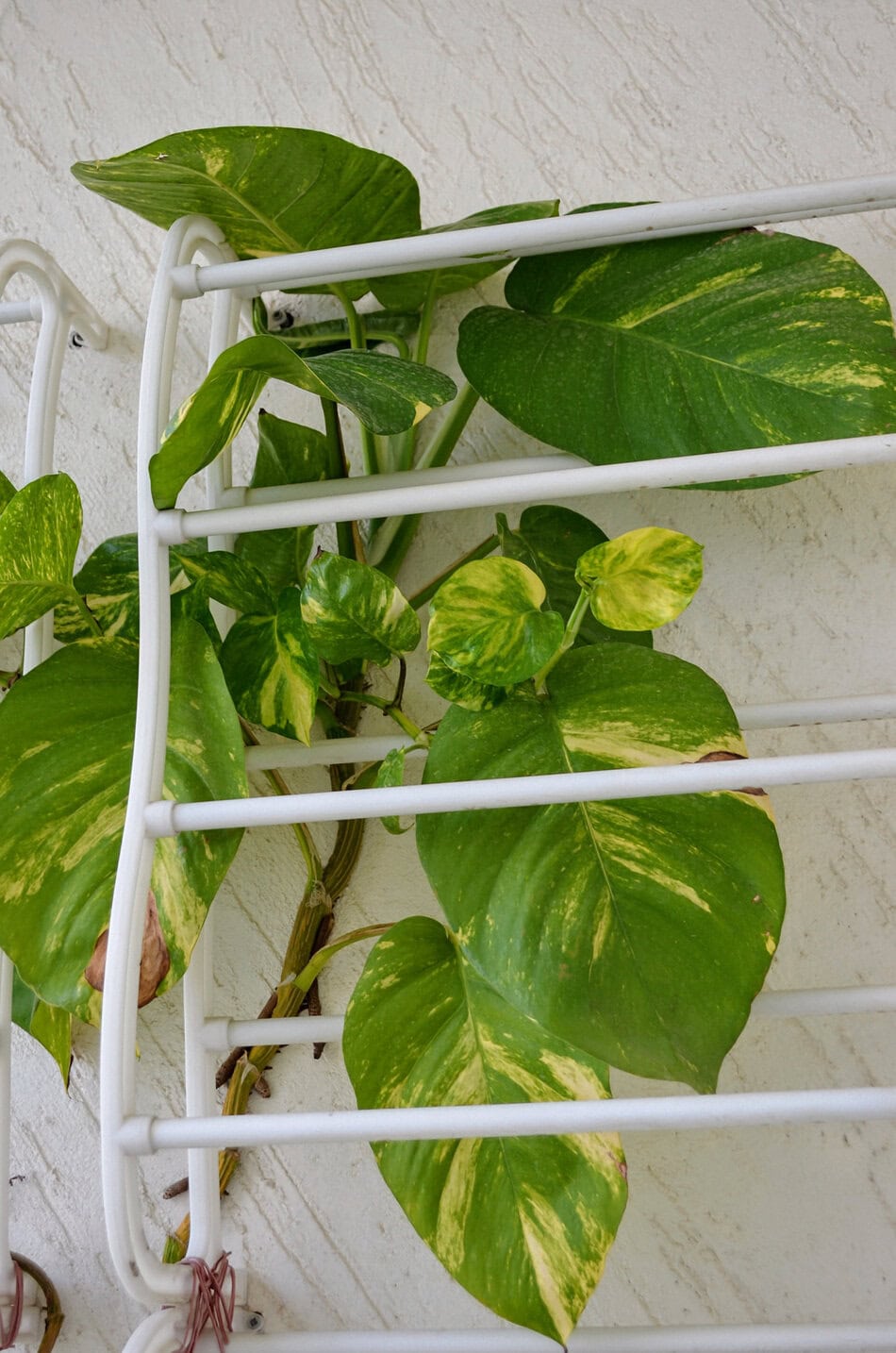
Besides, letting your pothos climb a painted wall can also damage the paint and drywall, and leave behind a mess you just don’t need.
You have the pole in place. Now, it is a simple matter of gentle guidance. Use a soft tie, like twine or florist wire, to secure the vines. The moment its aerial roots start to attach, your plant will get the message. It is climbing, and it is time to grow signature leaves. You just keep the pole slightly damp by misting it occasionally, and the roots will latch on more eagerly.
And if yellow leaves keep showing up even with perfect care, check out my full guide on why pothos leaves turn yellow and how to fix it.
Watering and Feeding the Beast
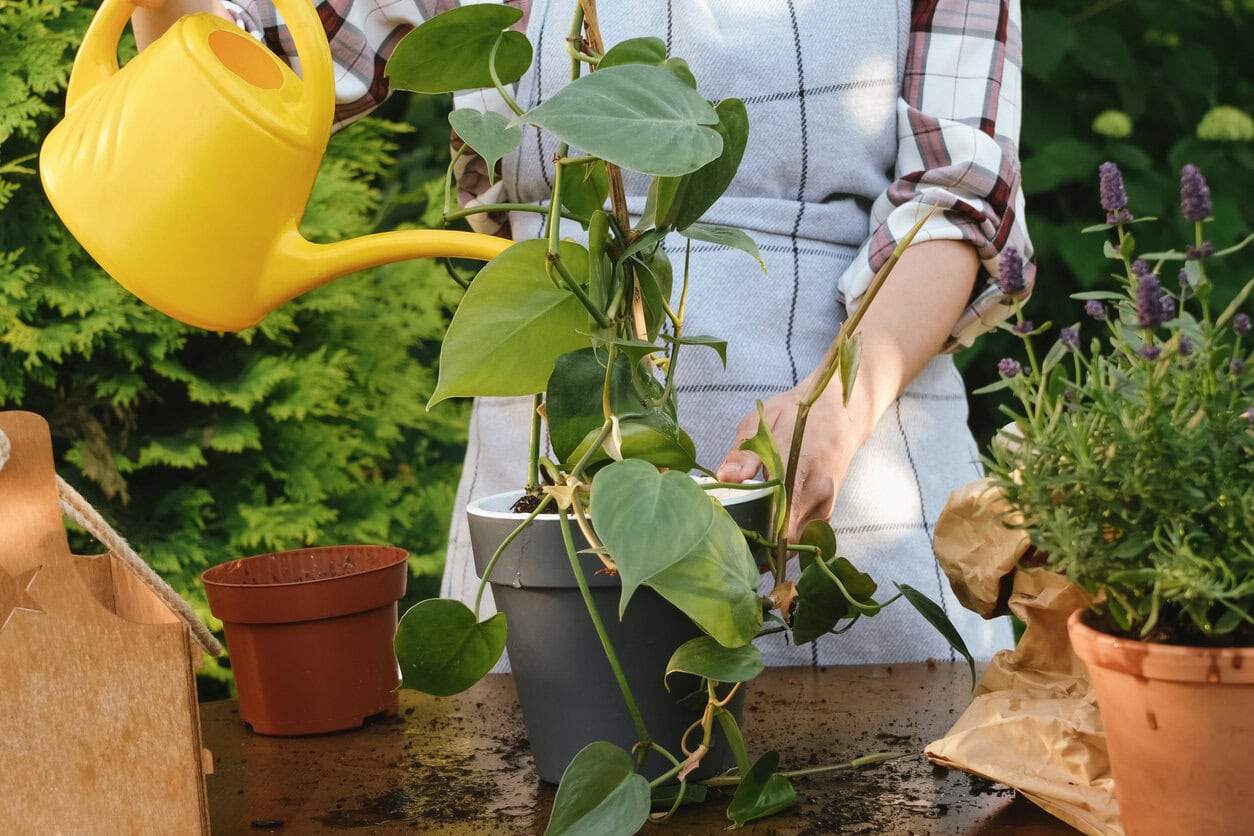
Wet feet are a no-go, even for a tropical plant. Wait until the top 2-3 inches of soil are completely dry. Just stick your finger in to check. (!)
Give it a good soak until water drains out of the bottom of the pot.
It is a delicate balance, I know!
Next, you need to fertilize your pothos during its growing season, normally from spring through summer. Serve it up some balanced, liquid fertilizer every 2-4 weeks. Simply dilute the fertilizer to half or quarter strength to avoid burning the roots, and give the plant a rest in the fall and winter when it gets a little lazy.
Need help choosing one? Here’s my roundup of the best fertilizers for indoor plants that will keep your pothos thriving year-round.
Patience, Pruning, and Purifying
The idea that pothos is one of the best air purifiers comes from the famous NASA Clean Air Study. However. The study was done in a sealed lab.
For a pothos to have a similar effect in your home, you would need to have an absolutely absurd number of them, literally cramming them into every corner of the room. Your plant has its own agenda, and just as you can’t force it to purify your air, you also can’t make it grow faster.
Growing a leafy pothos takes the patience of a marathon runner. And although chopping toes won’t help an athlete run faster, pruning pothos is how you can encourage a plant that is both full and lush. I know it feels like a crime to cut your little guy, but pruning is what forces new growth.
And even if you do everything right, your pothos will grow on its own schedule. Unbe-leaf-able, right?