
Winter’s over. Dull, lifeless rose canes ruin the scenery, so sharpen those shears for a ruthless edit. When April yells “Action!”, it’s time to get to work!
If you’re not sure when your roses should be waking up, we explain how to tell exactly when roses are ready to bloom and grow in this guide.
Tailored Trimming
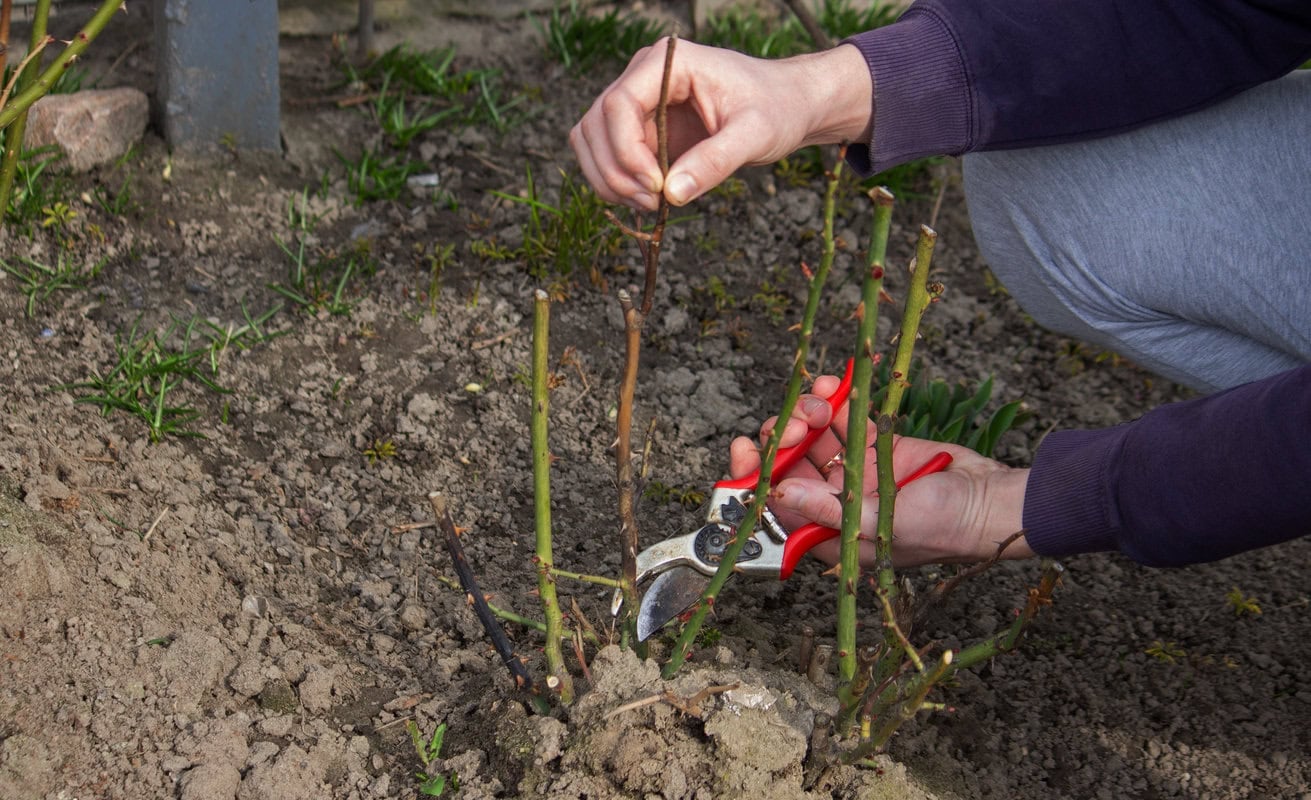
Before You Grab the Shears: April is prime pruning time for most gardeners in USDA Zones 6-8. But if you’ve still got snow on the ground or hard frosts hanging around, don’t rush it, wait until you see new growth starting. Roses will tell you when they’re ready.
Treating every rose the same is a rookie mistake since growth habits vary wildly. Tailor your blade work to the unique personality of each bush:
Hybrid Teas and Grandifloras

These benefit from a deeper cut. Reduce them to 3-5 strong canes, typically about 6-12 inches tall.
If you’re unsure which canes to keep, go for the thickest ones, about the width of a pencil or more. Spindly canes rarely give you strong blooms, so I usually cut those out completely.
If your goal is bigger, showier blooms, we wrote an article about exactly how to get larger rose flowers.
Floribundas
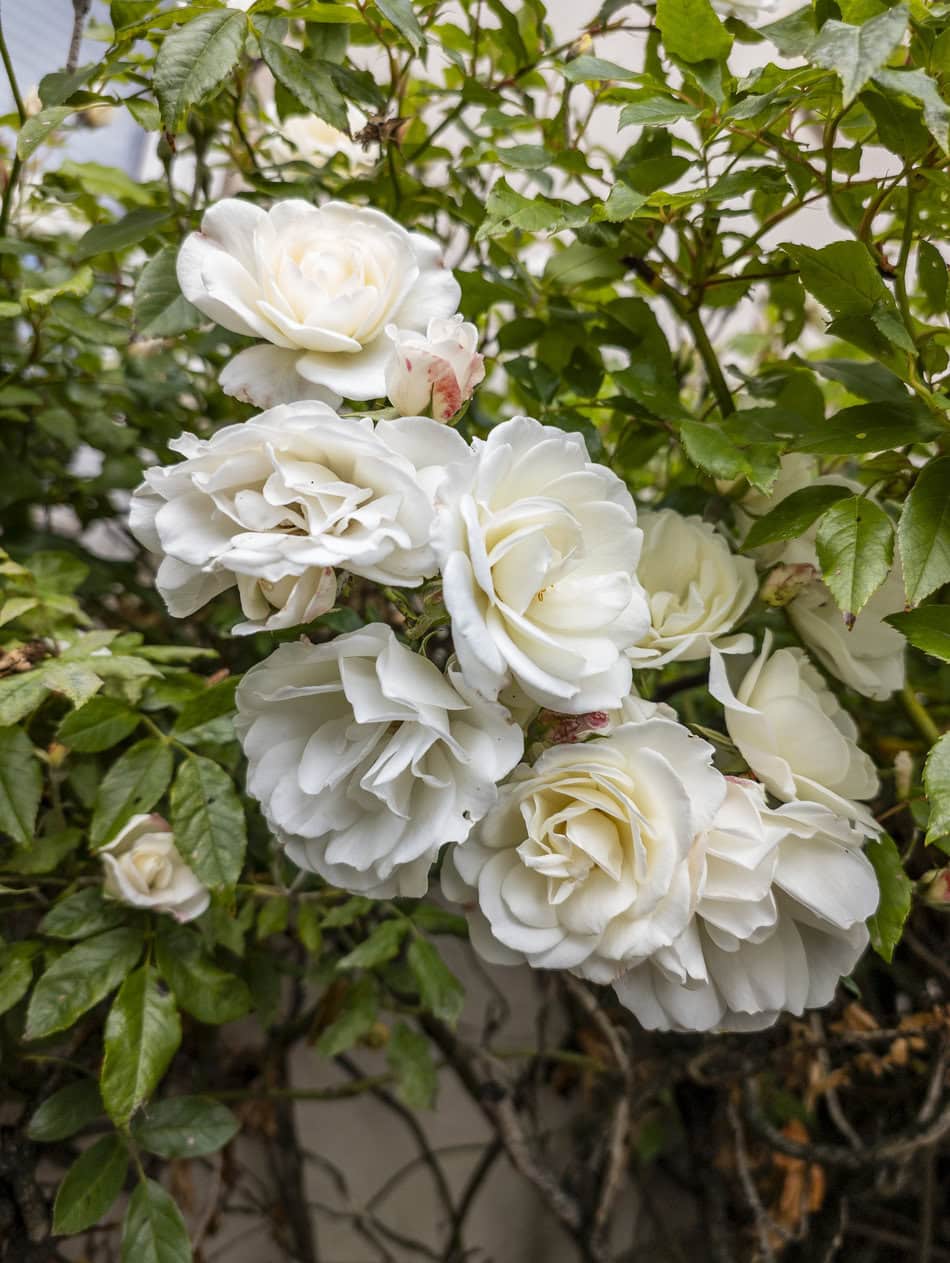
Go lighter here. Keep around 12-18 inches of growth so the plant can support its clusters of blooms.
Quick tip: Beginners often over-prune these like hybrid teas. If you do, you’ll get fewer flowers. When in doubt, step back; if it still looks full, you did it right.
And once they start blooming, we explain how to deadhead roses properly to keep those clusters coming all season.
Climber Roses
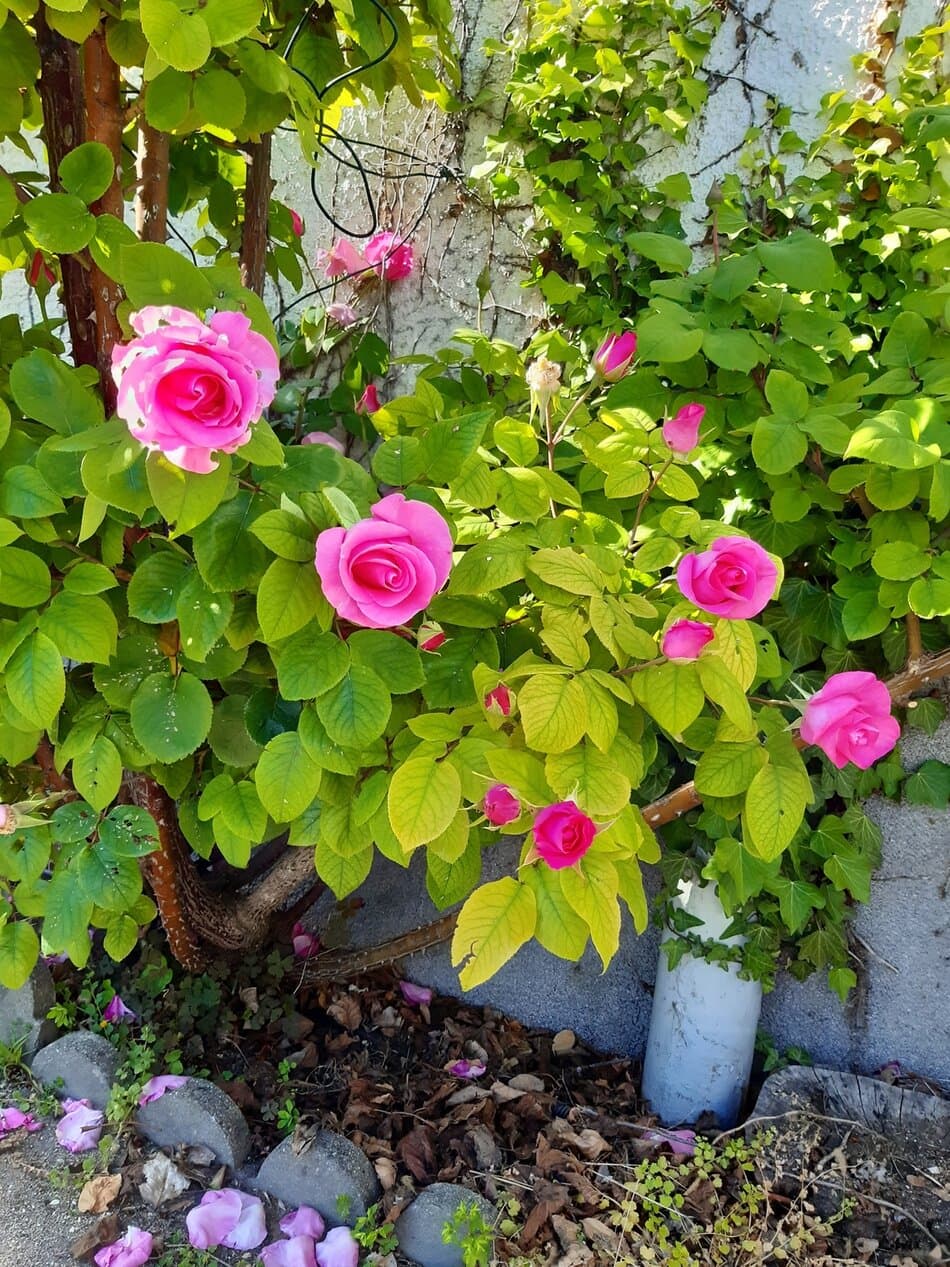
Focus less on cutting and more on training. Tie main canes horizontally to encourage side shoots and more blooms along the stem.
If your climber isn’t blooming well, it’s usually not a pruning issue. It’s because the canes are growing straight up. Bend them sideways, and you’ll see a big difference.
Shrub Roses
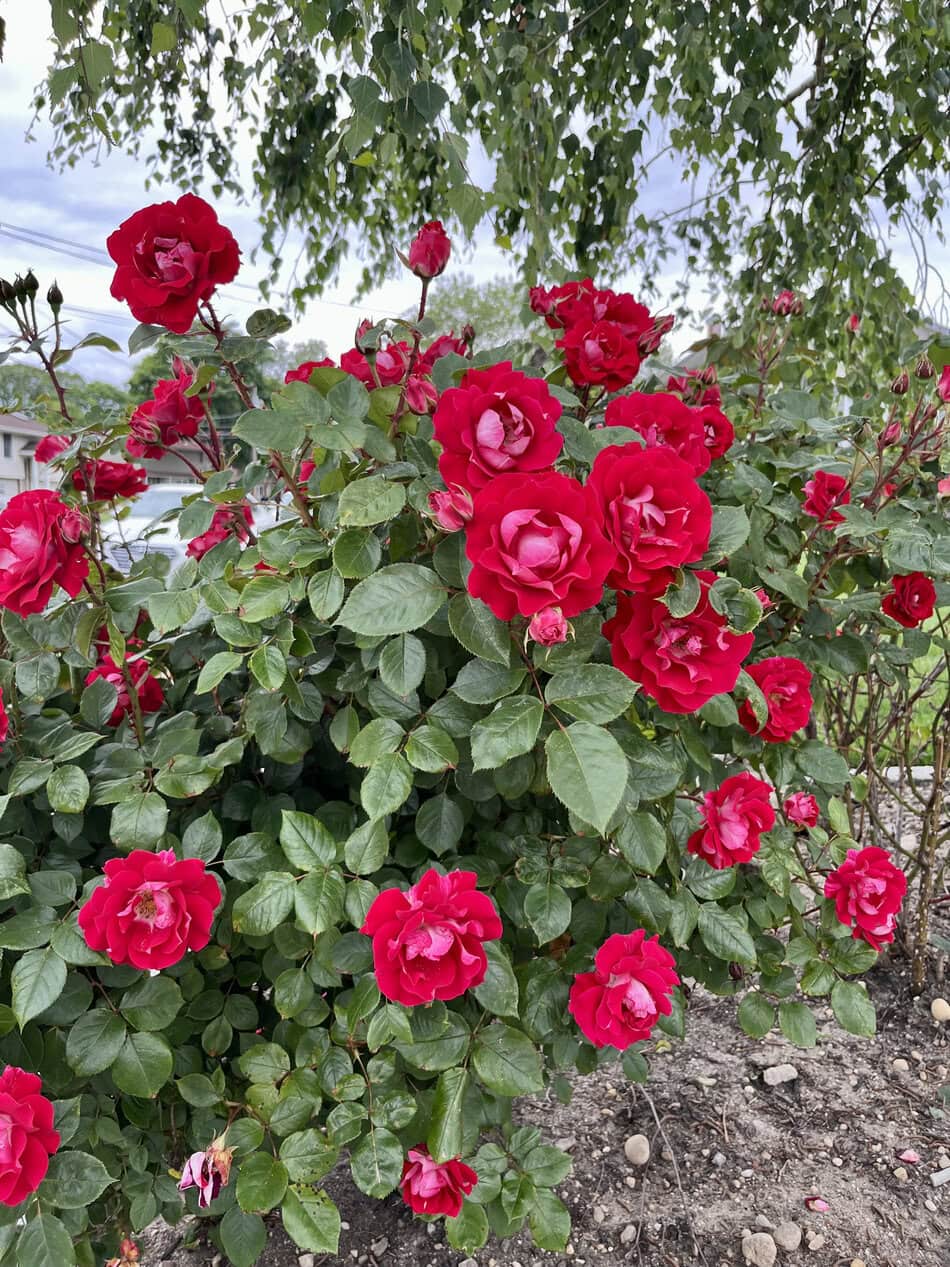
These prefer a gentle touch. Remove about one-third of the plant to keep that natural, arching shape.
If it still looks like a “wild mess” after pruning, that’s normal. These aren’t meant to look perfectly shaped. Over-pruning actually ruins their look.
Miniature Roses
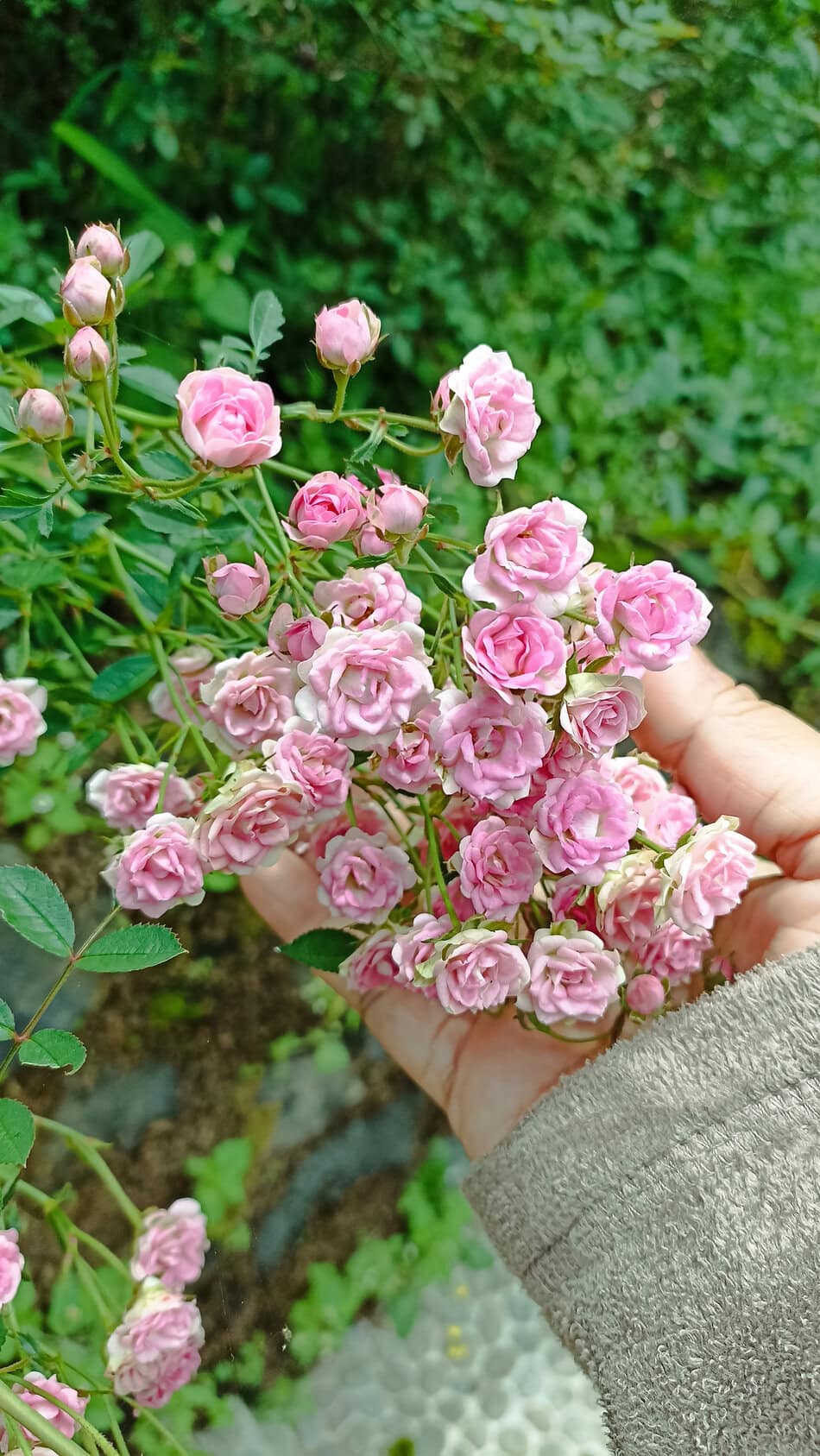
Keep it simple. Thin the center and cut back by about one-half to keep them compact.
Don’t stress about precision here. I’ve found mini roses are pretty forgiving. You can almost give them a haircut, and they bounce back just fine.
Match your strategy to the variety to ensure every cut has a purpose. Now that you know what you’re working with, it’s time to grab your tools and make it happen.
Shear Perfection
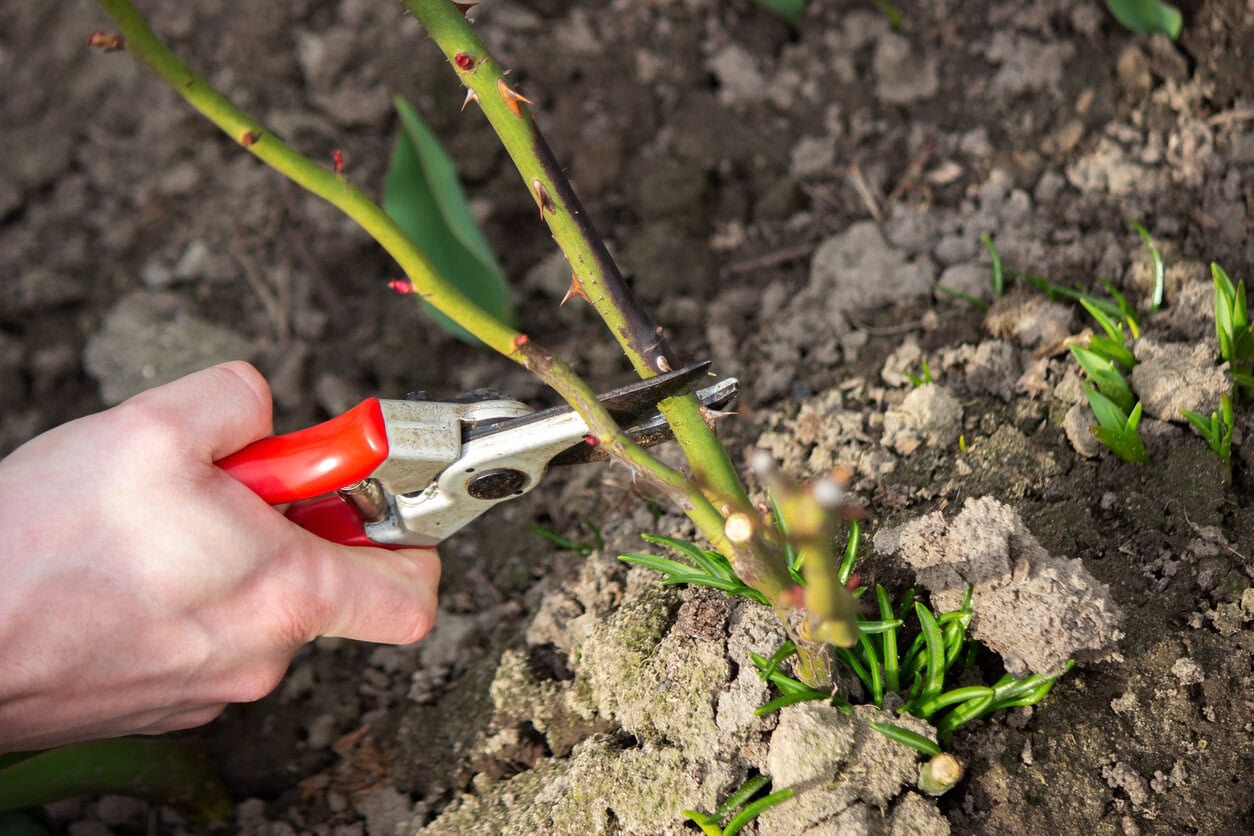
Trade those notched blades for a sharp pair before they touch a stem. Dirty shears can carry disease straight into a fresh cut. That’s why, before you even venture outdoors, you first:
Clean cuts heal faster and reduce the risk of infection. Crushing a stem with blunt tools? It’s a no-go.
The Three D’s of Pruning
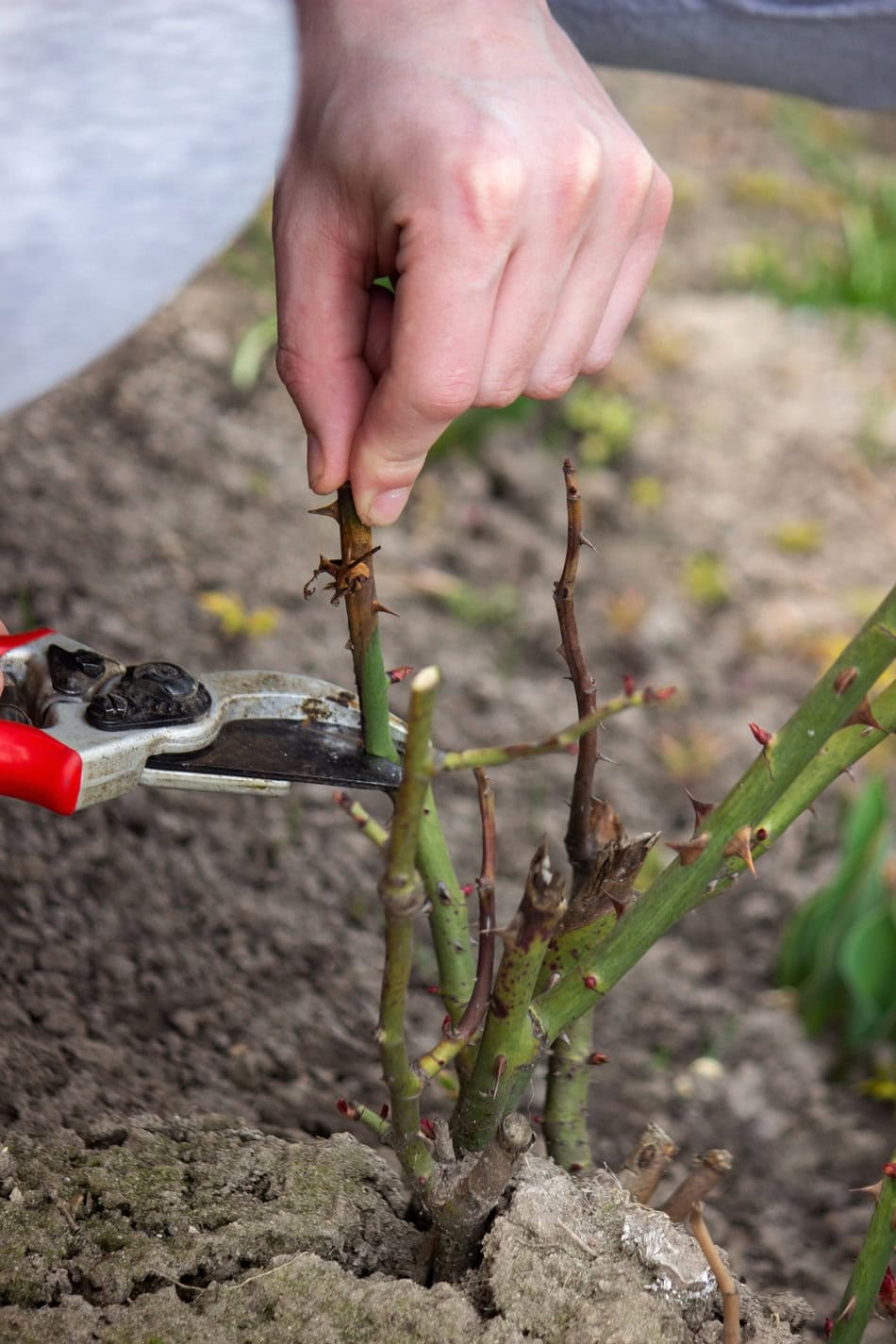
Pruning has three non-negotiables. Dead, Damaged, and Diseased canes all deserve a one-way trip to the bin. Or as I call it, Don’t Do Differently… or else.
Clearing out this brittle wood reveals the plant’s true structure, making it much easier to tackle the chaotic interior. It makes it obvious which healthy branches are blocking airflow.
If you’re noticing odd leaf color along with that, we explain the most common reasons rose leaves turn yellow and how to fix them.
Breath of Fresh Air
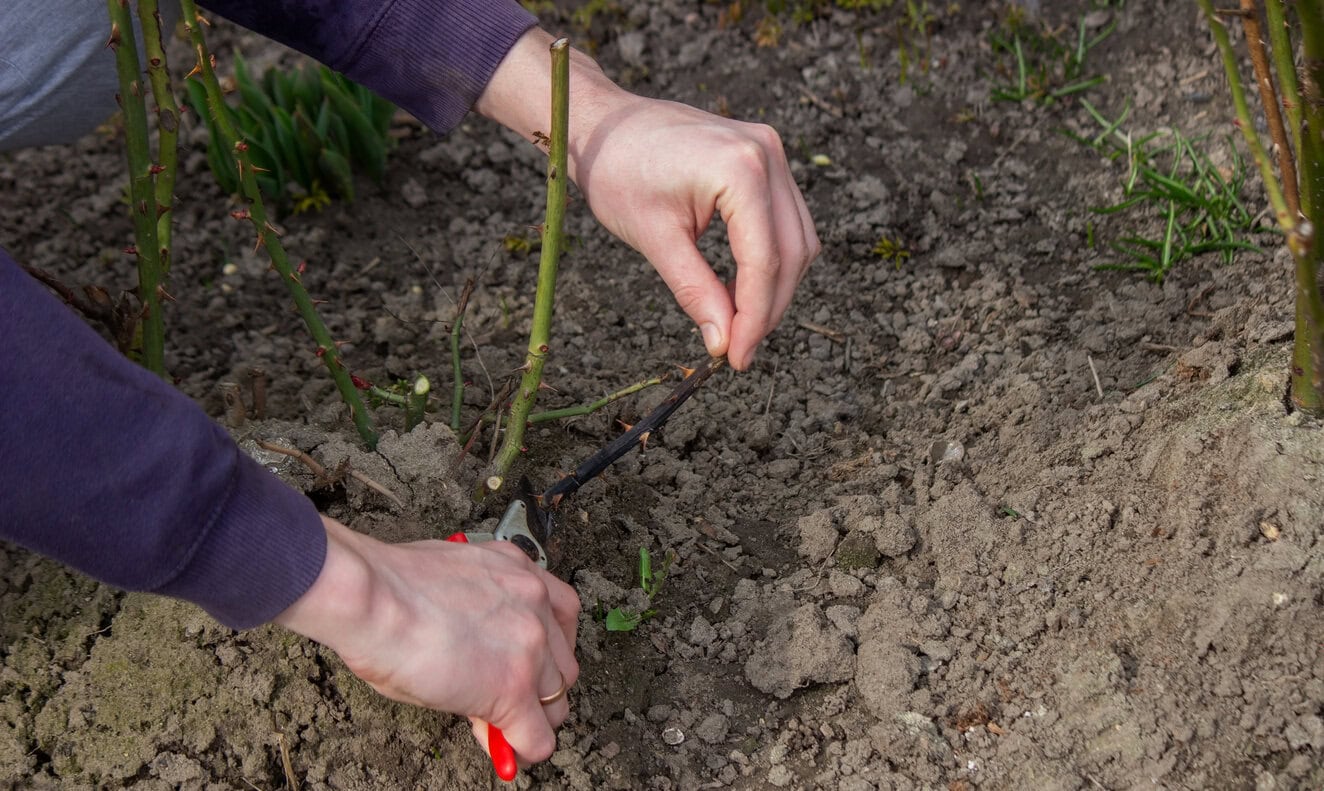
Clearing out the internal clutter comes next. Skip it, and your rose becomes crowded and more prone to disease. Air needs to move through the center to help leaves dry and reduce fungal issues. Here’s how:
Sunlight can now reach the center, and every leaf gets a chance to breathe without fighting a neighbor. Clearing that clutter makes it easier to see where to make your final, well-placed cuts.
Slant of Hand
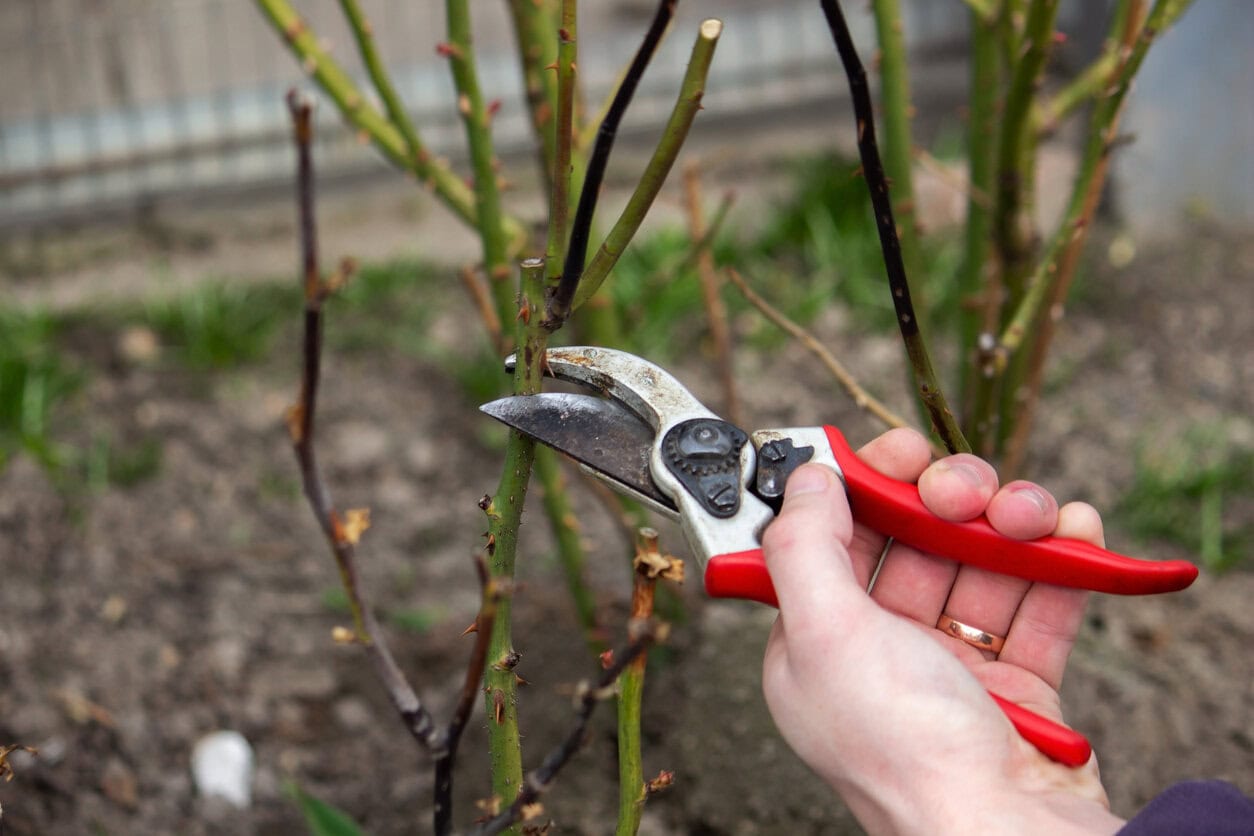
Every expert demands a forty-five-degree angle, but nobody explains the actual strategy. Here’s what actually matters:
I align the blade with the natural angle of the branch and cut about 1/4 inch above an outward-facing bud to guide growth away from the center. Yet the specific pruning method depends entirely on the type of rose I’m working with.
Clear Deck
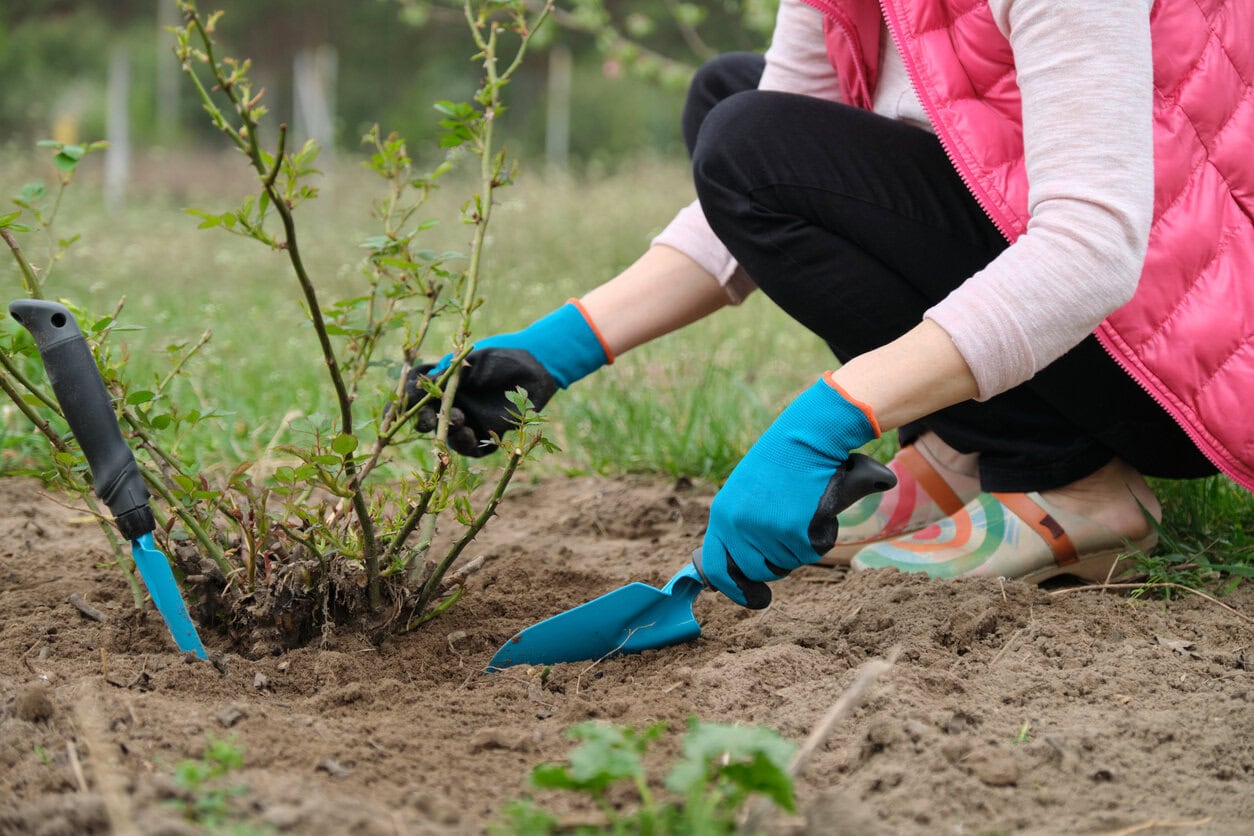
Sweeping the floor after a haircut makes sense, so why treat your garden differently? Clean up around your roses to ensure every stem thrives.
Living right next to the fire station means I just give the guys a quick heads-up before burning my diseased trash to enrich the compost with ash.
Burning rose debris doesn’t produce any more smoke than a BBQ anyway. But I wouldn’t recommend it to people living under an HOA thumb; they’ll go nuts. If burning isn’t allowed (or just not worth the hassle), bag it up and dispose of it in the trash instead.
Feeding also plays a big role after pruning, and we explain exactly when and how to fertilize roses for the best results.
Final Cut
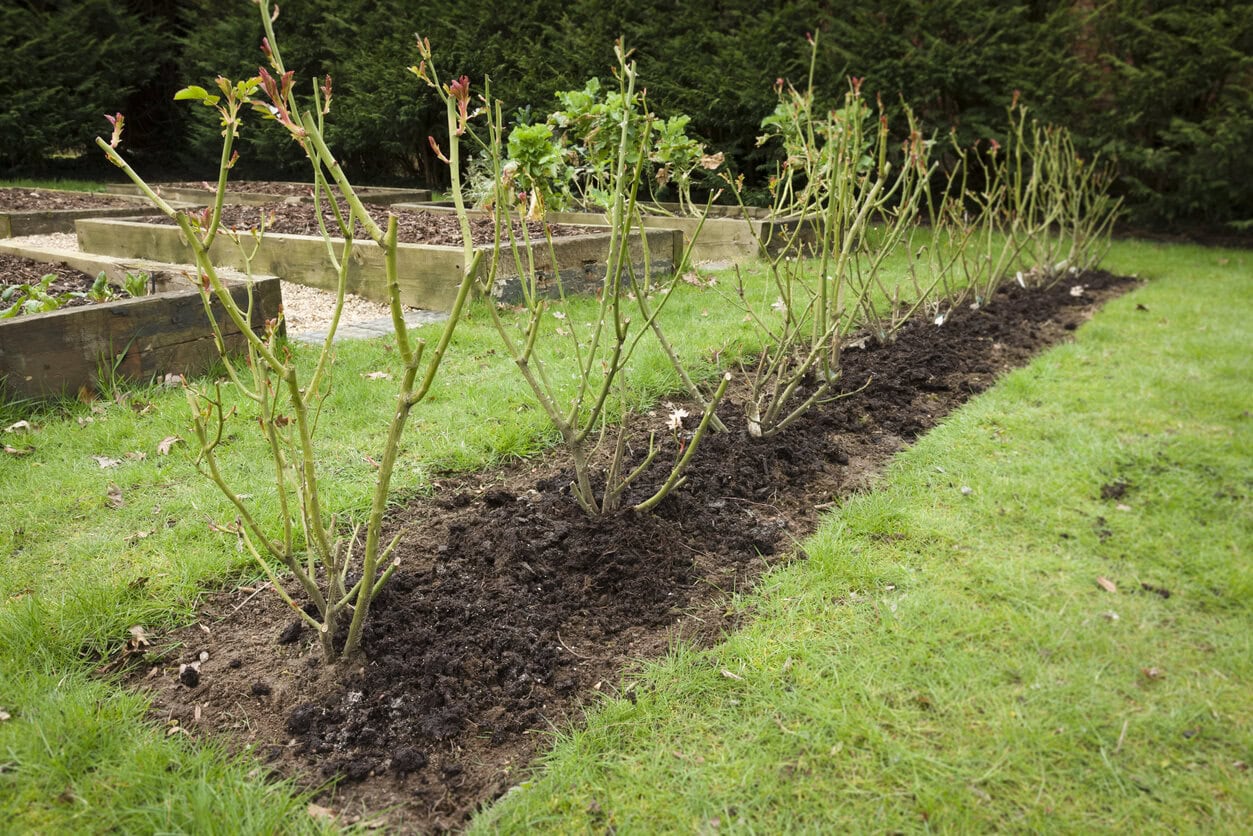
And if you want a full step-by-step breakdown beyond this checklist, we put together a complete guide on how to prune roses from start to finish.
The script is ready, and the stage is clear. Since you finally mastered the character roles and studied every technical cue, sit in your pruning director chair and… CUT!


