Bending over to find a hidden cucumber is a great way for millennials to remember they’re not twenty anymore and and spiral into yet another existential crisis. Luckily, for us millennials and anyone who has to live with us, there’s a way to bring those vegetables up to eye level: a cattle panel arch.
Done Crawling in the Dirt
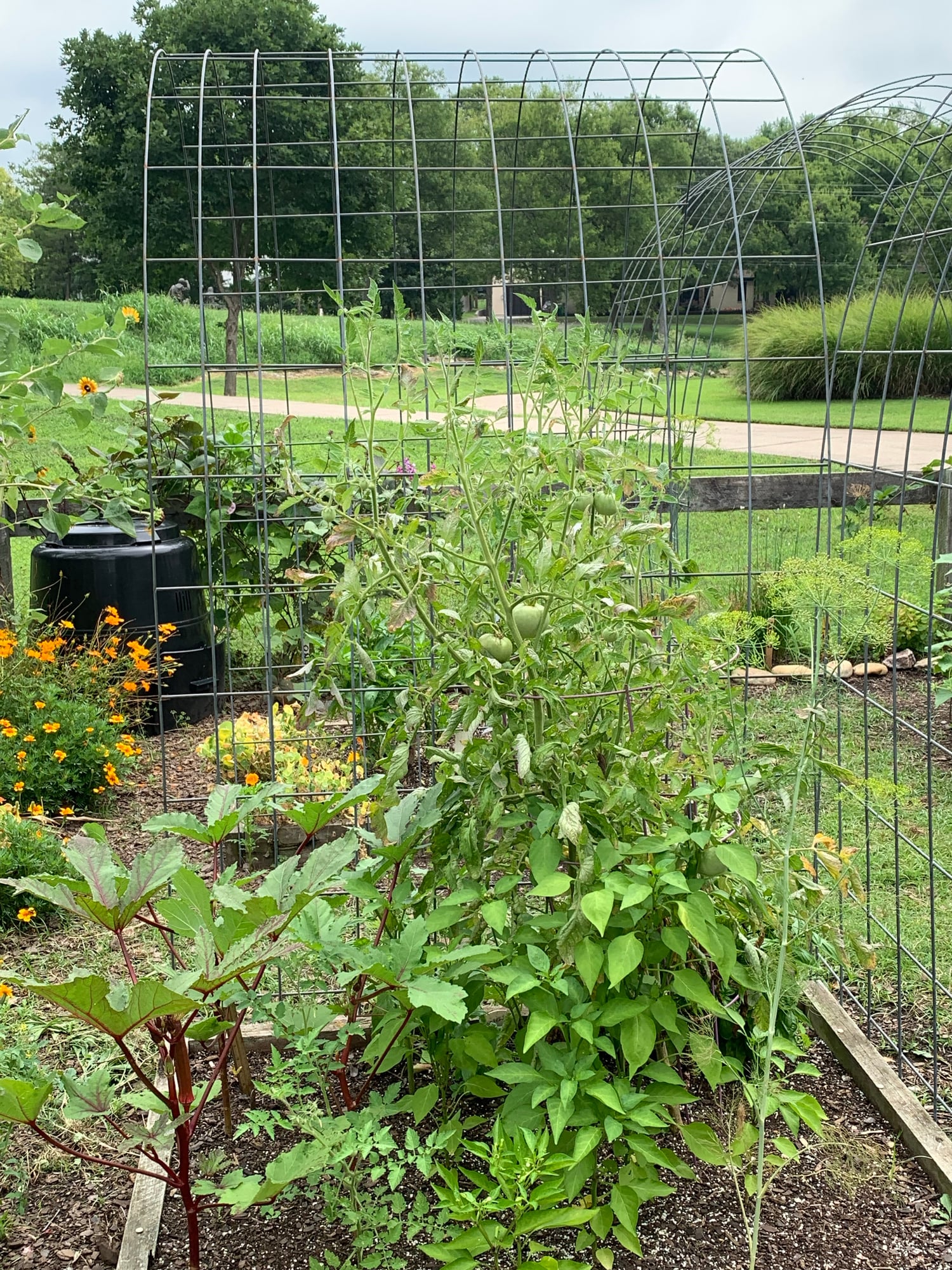
Before you can have a Pinterest-worthy vegetable tunnel, you have to visit a farm supply store.
The more strongly it smells of high-quality manure, the more confident you should feel that you’re in the right place. Ask for a cattle panel and try not to look terrified when they point you toward something longer than your car.
You aren’t buying a group of cows gathered to discuss the future of hay. You’re buying sixteen feet of galvanized steel wire, roughly fifty inches wide, and somehow, you have to get it home.
1. Malabar spinach
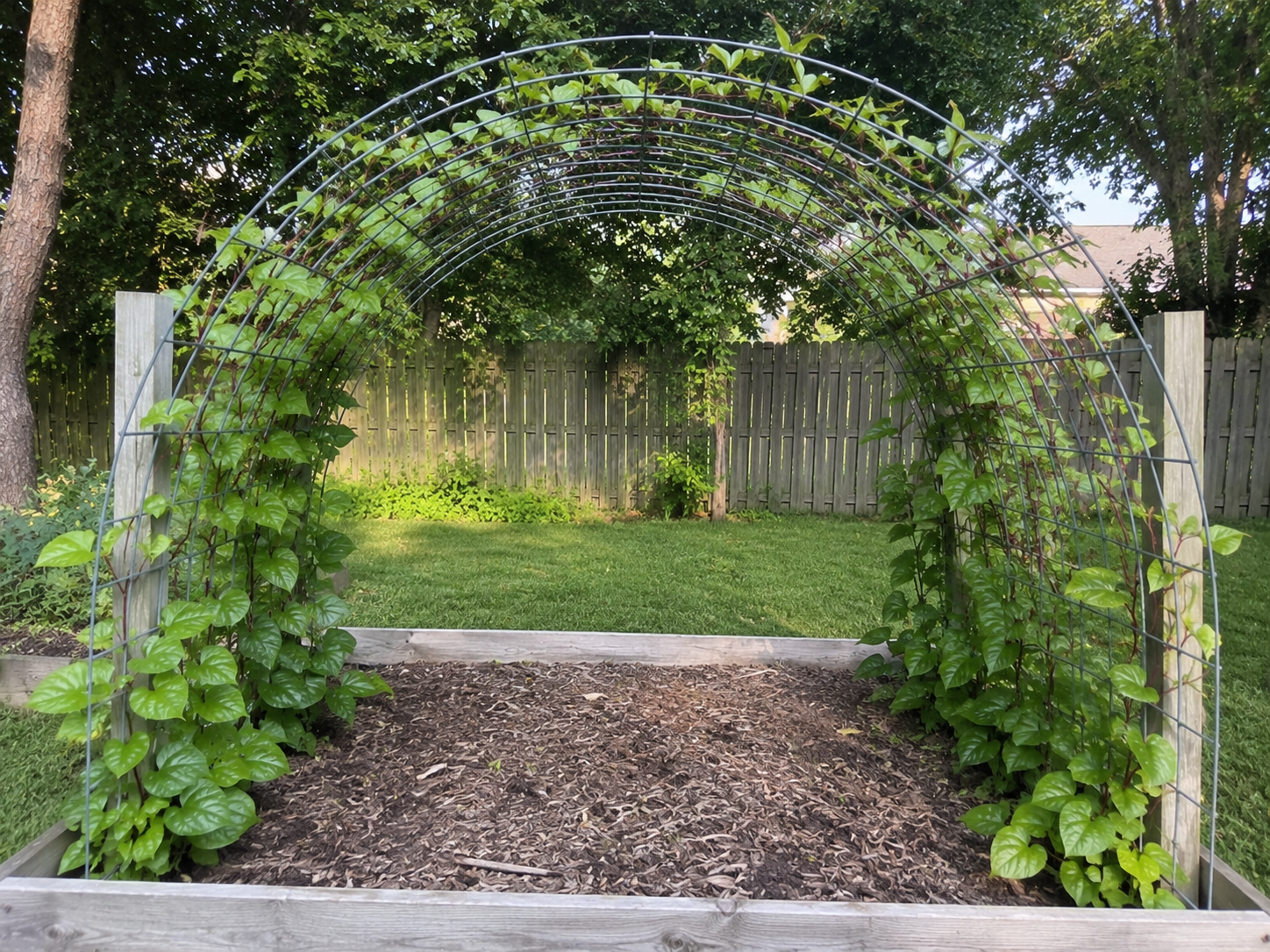
Regular spinach gives up at the mention of summer. Good thing Malabar spinach isn’t spinach at all. You’re getting a fast-growing, heat and humidity-loving tropical vine with thick, succulent leaves.
It handles summer heat brilliantly, but it still needs consistently moist soil, especially during a heat wave.
Quick tip: You need to harvest its tips and leaves regularly (then sautée them with garlic) so it doesn’t become sentient.
2. Cucumbers
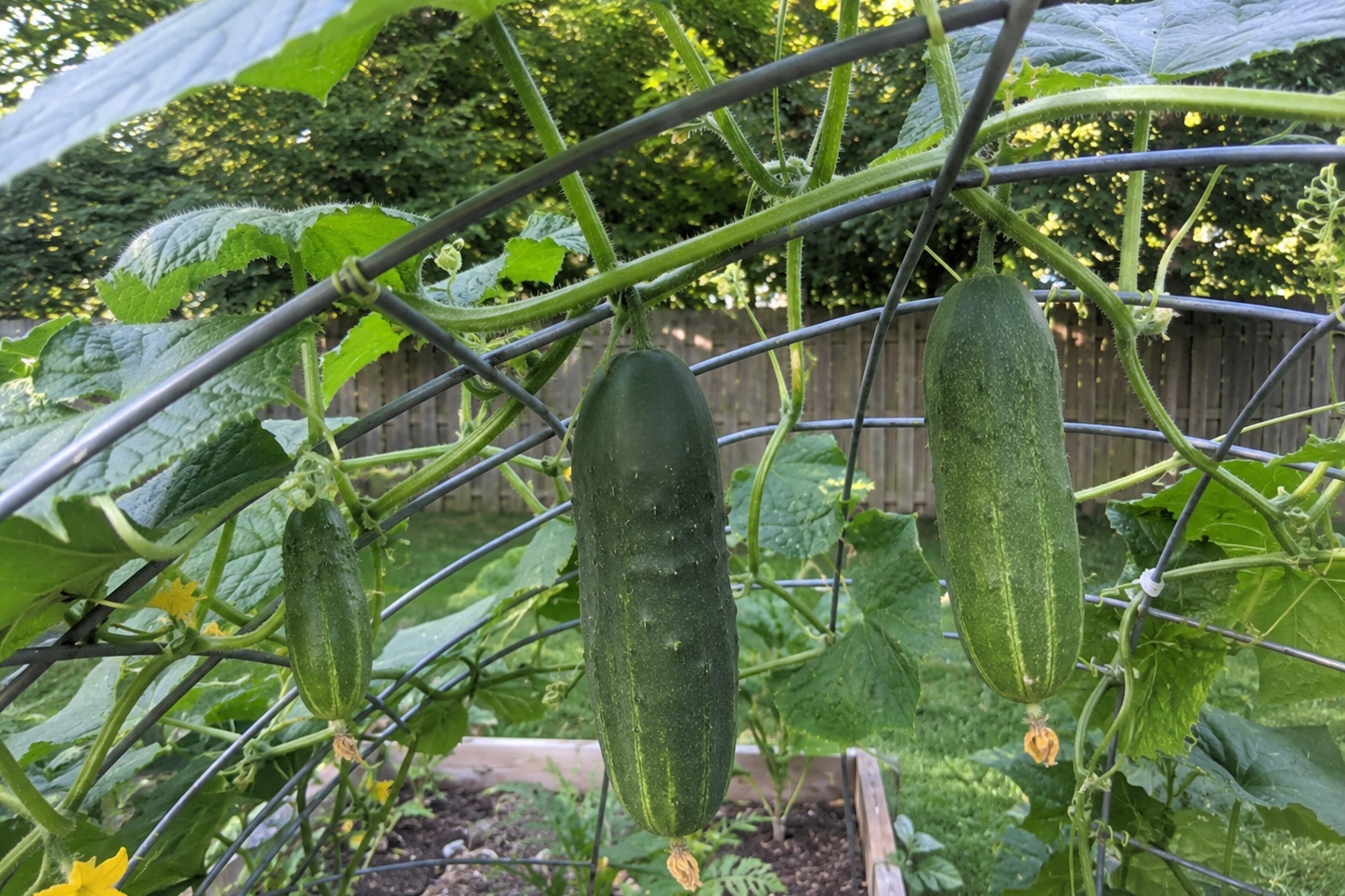
Cucumbers grown on the ground can end up dirt-covered, hidden under leaves, and shaped like a question mark. But on the arch? They’re easier to spot and usually grow straighter, greener, and cleaner.
Just be warned: they have little grabby tendrils that will latch onto anything, including your hair, if you stand still for too long contemplating your life choices.
If you want to compare this arch with a few less dramatic setups, we also put together a guide to seven easy cucumber trellis ideas.
3. Small Melons
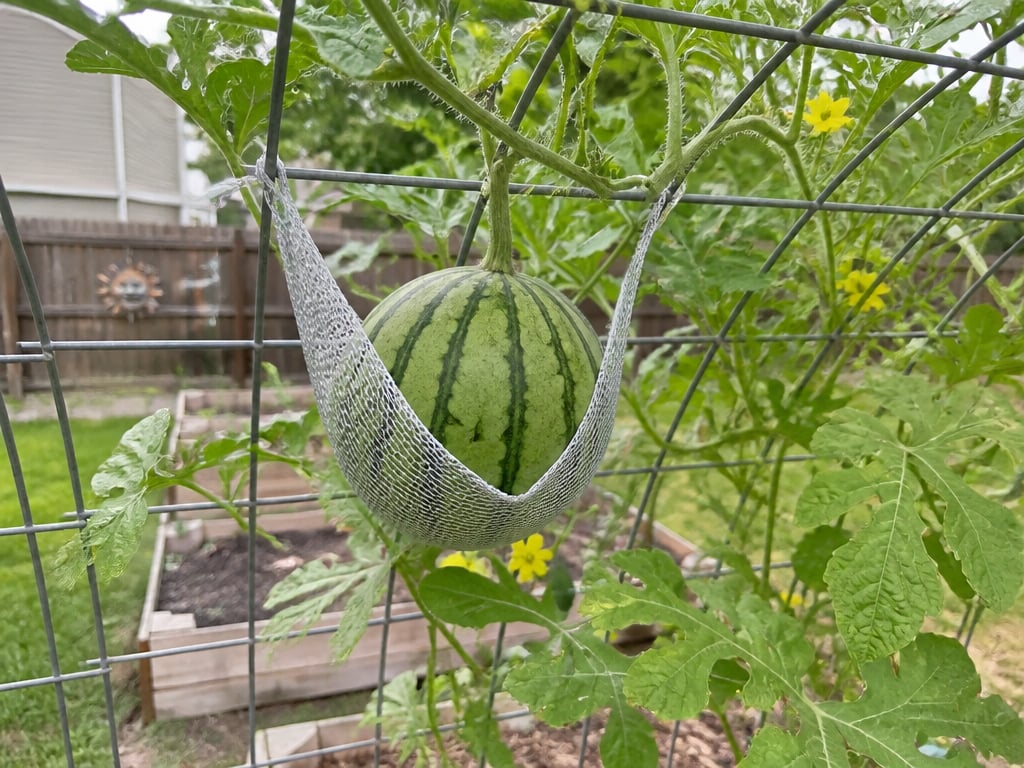
Sugar Baby watermelons and smaller cantaloupes love the climb, right up until the fruit starts gaining weight. *Gravity enters the chat.*
My best advice is to make them hammocks or slings out of stretchy old t-shirts or mesh bags. Yes, you will be literally tucking your melons into an improvised bra. In public. Anyway… attach each sling to the cattle panel and leave enough room for the melon to keep growing.
4. Tomatoes
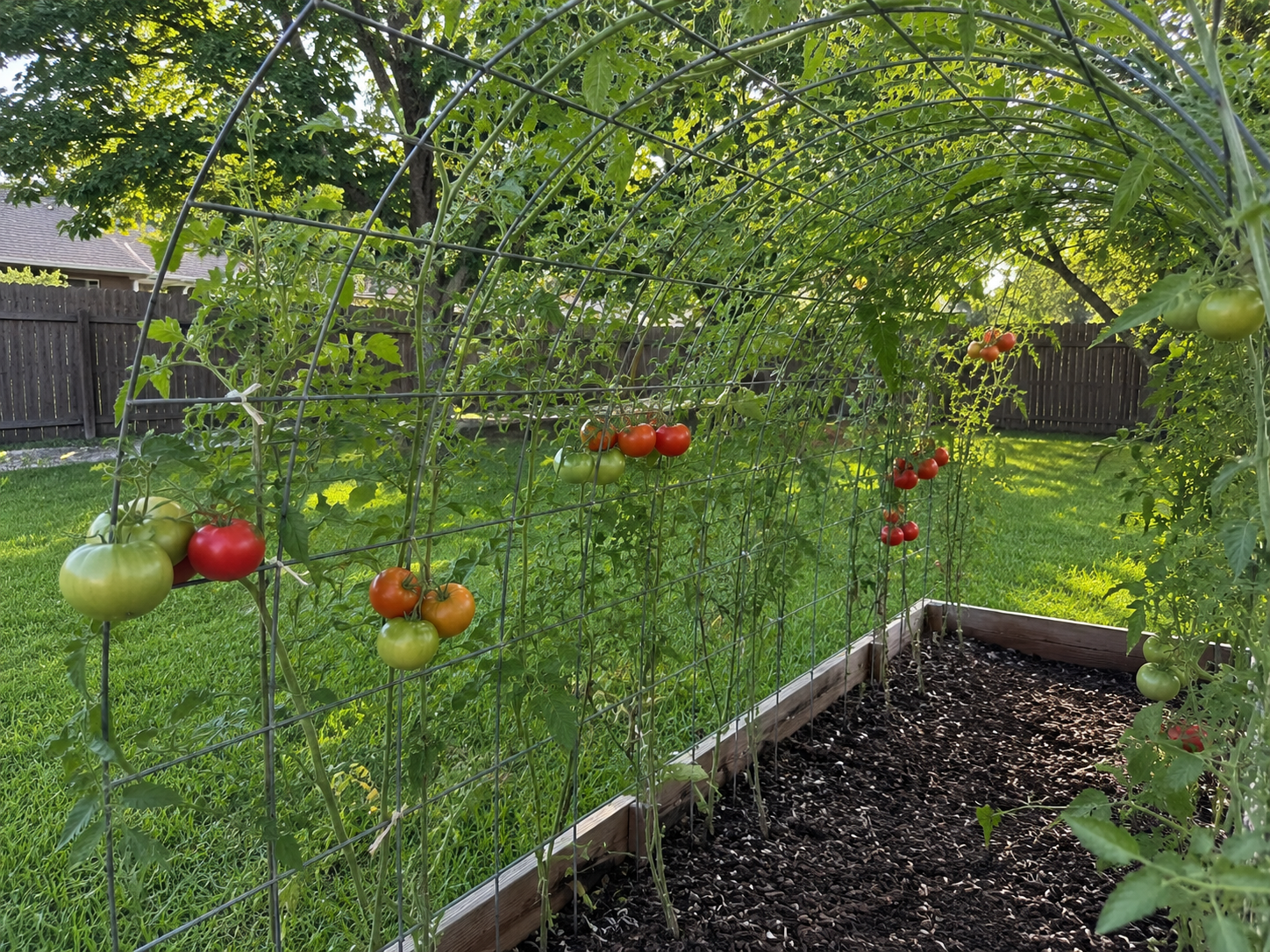
You cannot just let indeterminate tomatoes go on an arch unless you want one plant claiming the entire structure. You need to pinch out enough suckers (the new shoots that form between the main stem and a leaf) to keep the plant to one to three main stems.
Force those vines to hunt for the sun at the very peak of the arch. Use soft garden twine to loosely tie the stems to the wire every 12 to 18 inches as they grow.
Quick note: Suckers aren’t useless, but every one you keep becomes another vine you’ll have to wrangle.
If your tomato looks at the arch and chooses chaos anyway, we wrote a guide to 11 tomato support ideas.
5. Snow Peas
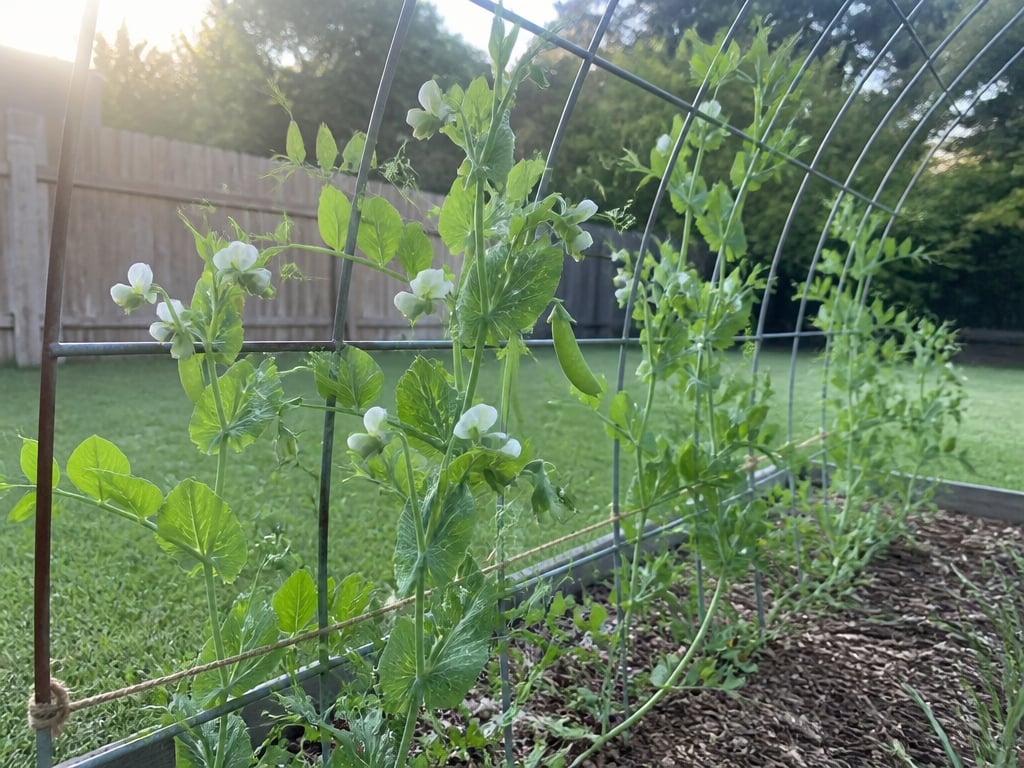
Snow peas are the perfect starter plant, gripping the panel with the kind of commitment I usually reserve for my books and ice cream. Yet, their tendrils are tiny and delicate.
The thick cattle panel wire can be a bit clunky for young vines. If they’re struggling to get started, weave some cheap twine horizontally between the lower wires to give them a ladder for the first foot of growth.
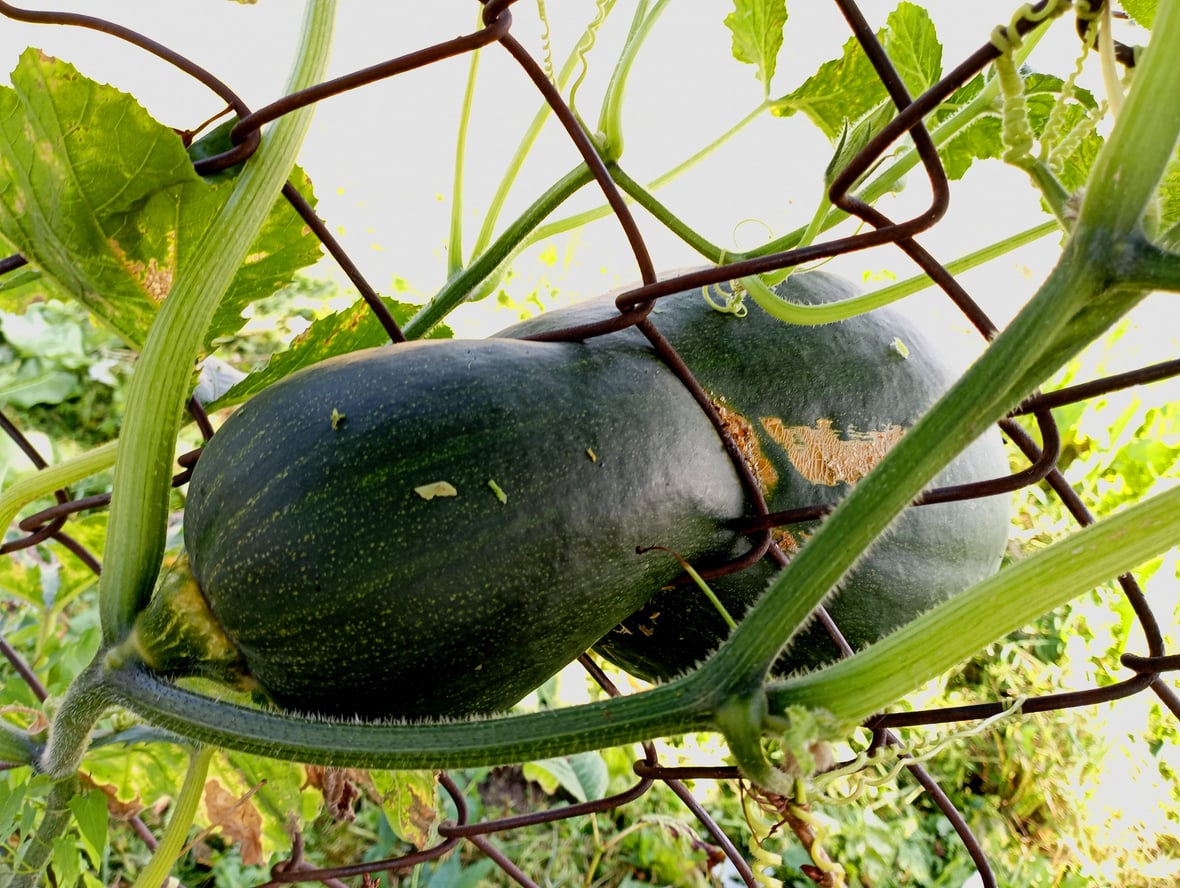
6. Winter Squash
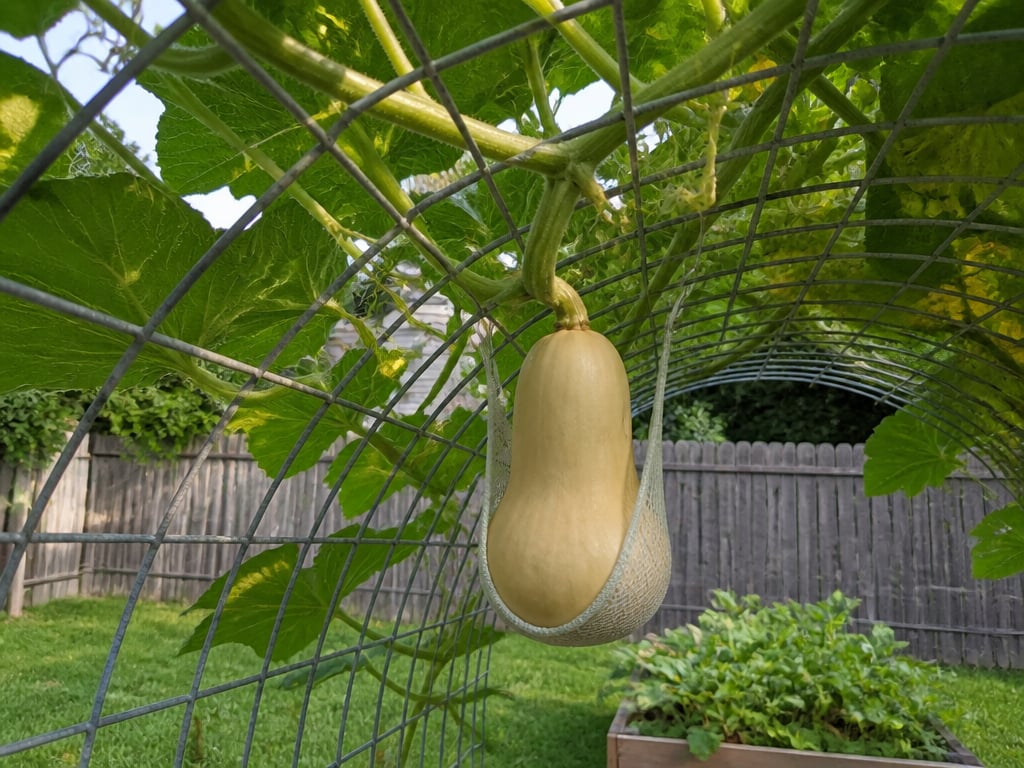
Stop letting Butternut and Delicata squash hog all the space. Moving them onto the arch instantly frees up a surprising amount of garden floor.
Unlike pole beans, squash vines don’t twine around the panel. They climb using coiling tendrils, so guide the young, flexible stems through the openings every few days before they become thick and brittle.
Quick tip: These vines and their fruit are also quite heavy. Like melons, if the squash starts putting on weight, give it a sling.
7. Small Pumpkins
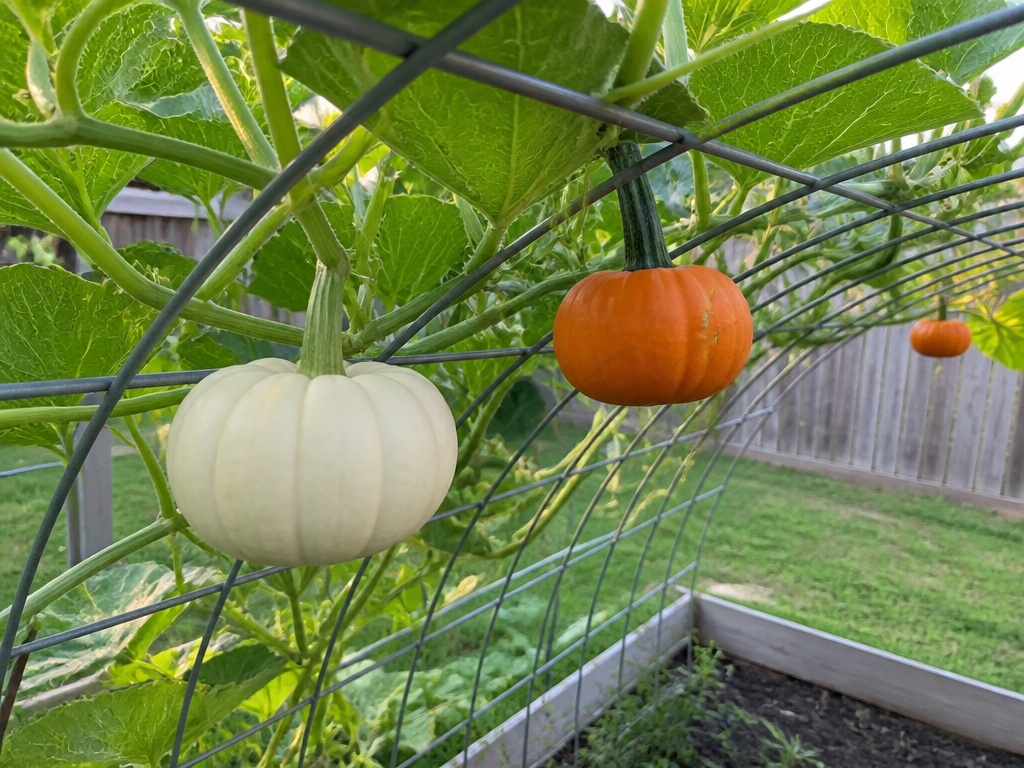
A tunnel of dangling pumpkins will make your backyard look intimidating at night, but I guess that’s what we want. Stick to mini or small varieties like Jack-Be-Little or Baby Boo, though.
Trying to grow a forty-pound prize winner on a cattle panel? Your homeowners insurance won’t cover that level of optimism. Keep the heavy hitters on the ground and save the arch for pumpkins it can support without becoming a structural experiment.
8. Pole Beans
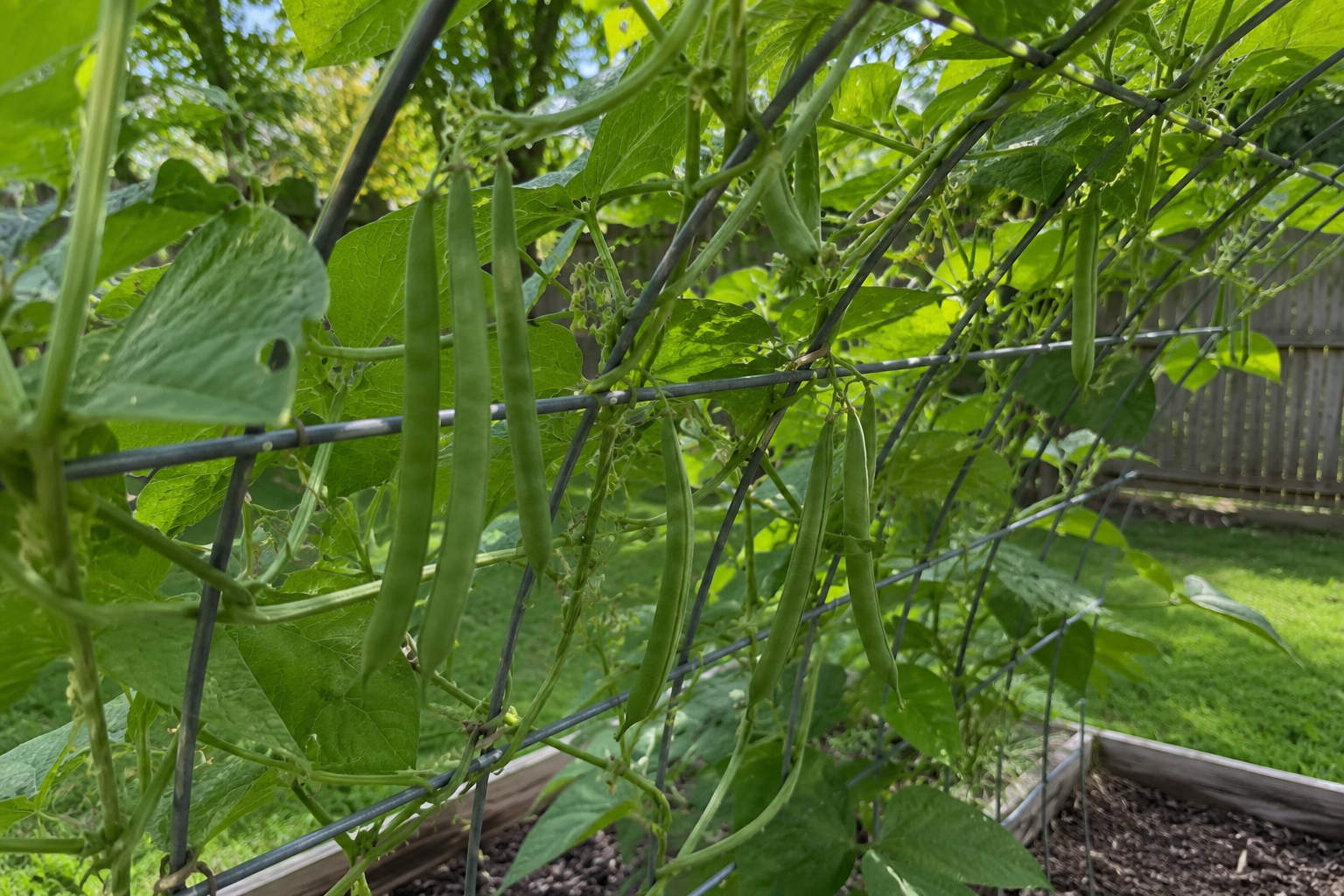
Pole beans have a bossy personality. They don’t need much coaching or tying. Once they find the panel, they twine around it and just climb. Within weeks, they’ll create a dense green curtain that provides the perfect cover for hiding from neighbors.
Quick tip: Plant them about 4 to 6 inches apart. Once the pods start coming, harvest every two to three days to prevent your plants from entering early retirement.
9. Yard-Long Beans
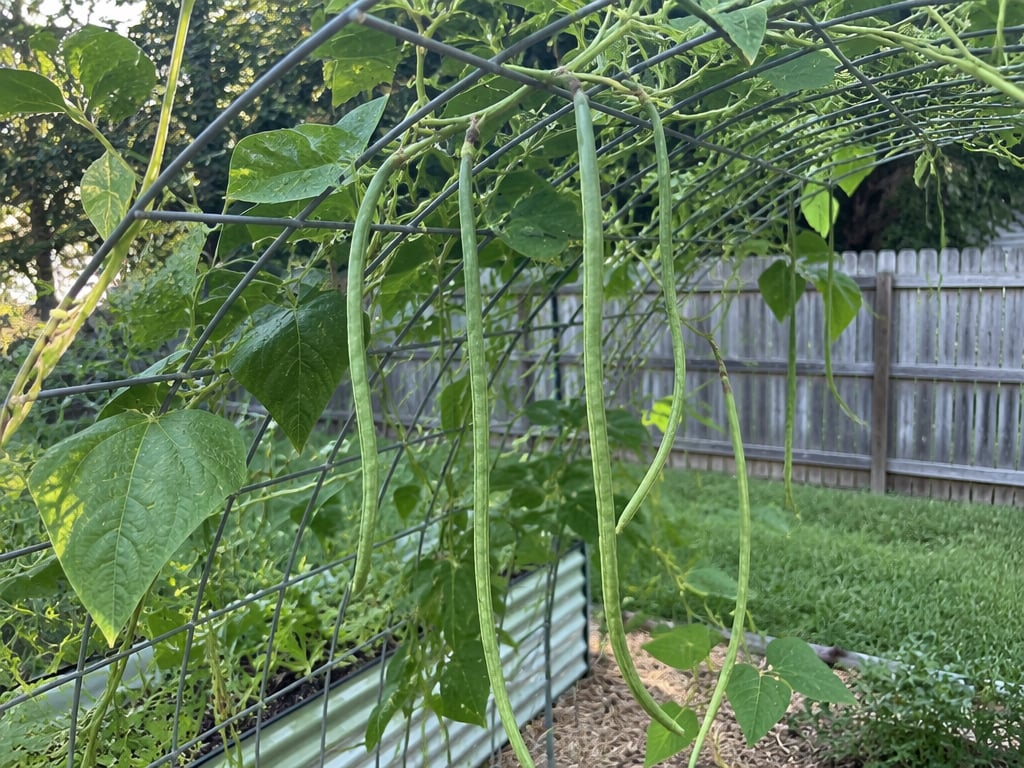
Yard-long beans can grow up to three feet long. Expect to be interrogated by everyone walking past your fence. These things hang like green fringe and look completely alien.
Give each seed about six inches of space. The flavor is nutty and concentrated, miles ahead of a basic green bean.
Quick tip: Snag the pods while they’re still slender and crisp (usually around 10 to 14 inches long and before the seeds begin swelling) unless you enjoy chewing on garden rope.
A cattle panel arch is the brute-force option, but we also explain how to choose the right trellis for different vegetables if you want something smaller, lighter, or less likely to require divine intervention.
Arch-itectural Essentials
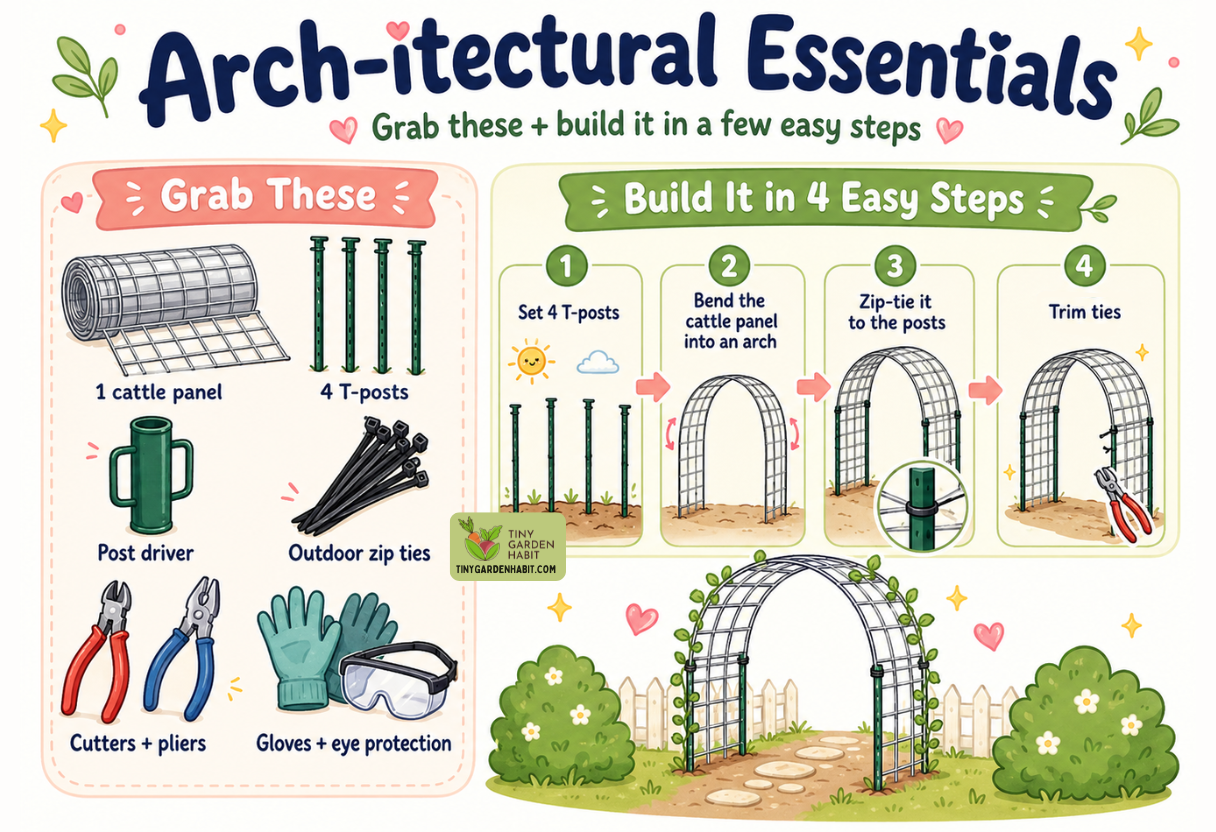
Before you start driving posts, we also wrote a guide on which direction your trellises should face, because a beautifully engineered vegetable tunnel is less impressive when it spends all summer shading the rest of your garden.
Now, time to gather a few items. If you have to stop halfway through to drive back to the store while holding a half-bent steel panel, you will cry. I speak from (other people’s) experience.
Call a friend, your partner, your Gen Z kid (or whatever generation the young people are calling themselves now). Call the Holy Spirit if necessary. You’re wrestling a 16-foot spring. Offer them your first harvest of cucumbers as a bribe.
The View From the Underworld
Once the vines meet at the top, you’ve officially created a living hallway. On those July days when the sun is trying to personal fry every living thing in sight, you can stand in the shade of your arch, surrounded by dangling cucumbers and melons in makeshift bras, and not feel weird at all.