You’d think that once the leaves fall, your gardening duties are officially wrapped up. Both November and hydrangeas have different plans for you. The best you can do is play along, giving each type of hydrangea the care it needs before winter sets in.
If you missed a few earlier fall chores, we also put together a guide to seven October hydrangea tasks that help protect next year’s blooms.
Task 1: Clear Diseased Fallen Foliage
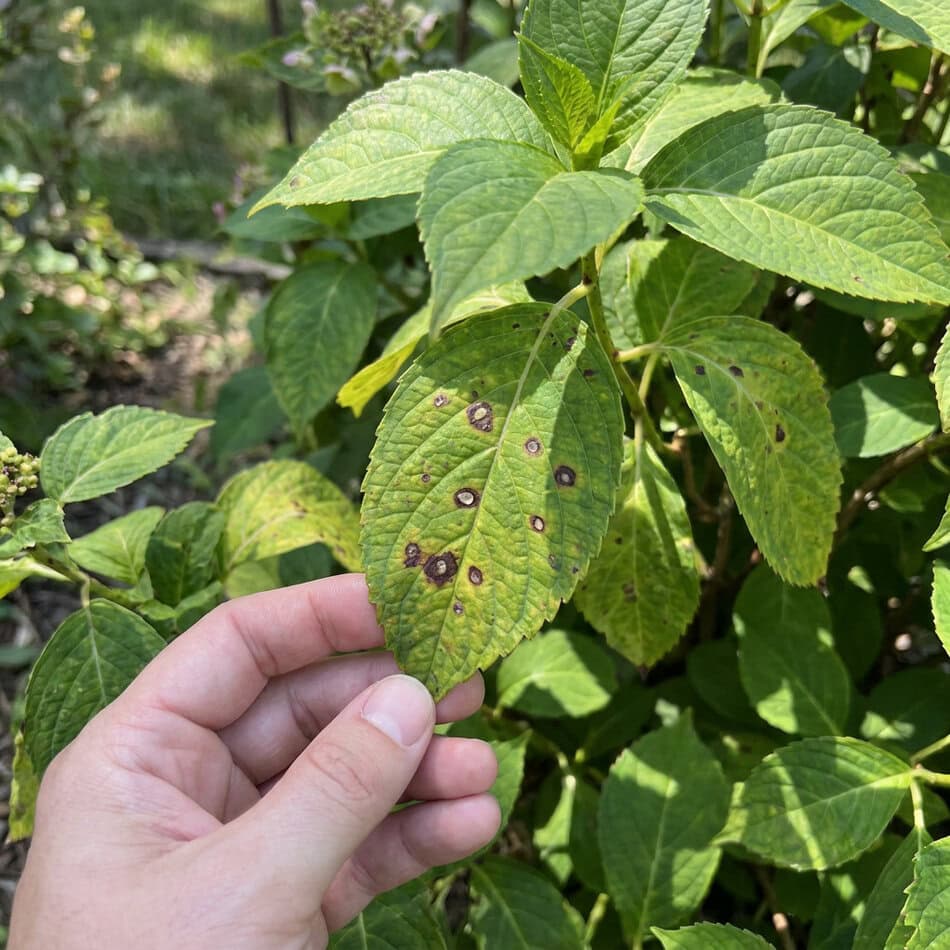
You don’t need to exile every single fallen hydrangea leaf. Plenty of clean ones make excellent, free mulch (once shredded). Then there’s the fungi- or bacteria-infested junk that’s best kept out of your home compost pile.
When the foliage drops in fall, sort the good from the ugly first. Rake out leaves showing signs like:
Bag them and send them straight to the trash. Leave those infected leaves lying around, and you’re just handing their pathogens a front-row seat to cause trouble again next spring.
Task 2: Mulch the Root Zone
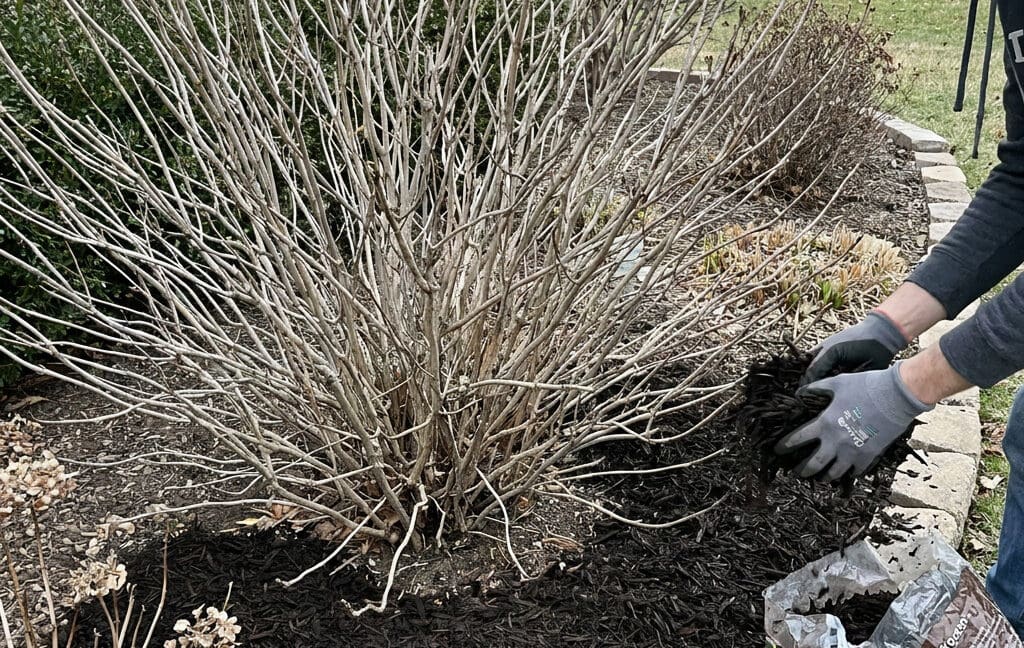
Got those spot-free leaves shredded? Perfect, free soil insulation. Shredded hardwood bark or well-rotted leaf compost works just as well if you don’t have enough leaves.
Once the soil cools in fall, check how much mulch is already there. Aim for a two- to three-inch blanket over the root zone out to the drip line. But keep it three inches away from stems and the crown!
That insulating layer slows down how quickly the ground freezes and thaws. It can even keep frozen soil frozen a little longer during warm spells.
Does it sound counterproductive? It does until you remember that bare soil repeatedly freezes, thaws, heaves, and can damage shallow roots. Your mulch puts the brakes on that roller coaster. And your hydrangea enjoys a more peaceful winter sleep.
Task 3: Protect Old-Wood Flower Buds
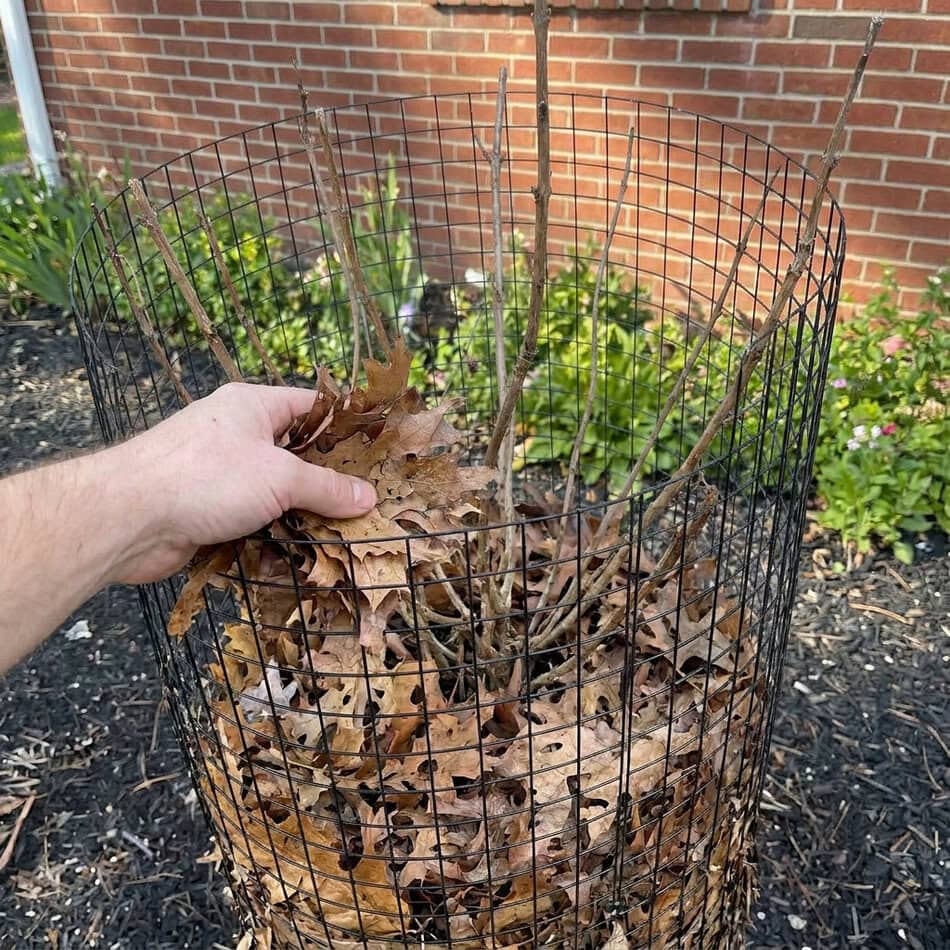
No flowers this season? Last winter may have stolen them. Some hydrangeas form their flower buds months before spring arrives, leaving them exposed to freezing temperatures.
But not every hydrangea needs the same protection! It all depends on which type you’re growing:
Growing an old-wood bloomer in a colder area, especially USDA zones 4-6? Here’s how to protect those precious buds:
Quick tip: Keep the protection through winter. Once the buds begin swelling in spring, carefully remove the cage and keep frost cloth handy for late freezes. Keep frost cloth handy for late cold snaps. Those buds have come too far to lose them now.
Of course, winter damage isn’t the only reason flowers go missing. We also wrote a guide to seven common reasons hydrangeas don’t bloom and how to fix them.
Task 4: Don’t Prune Old-Wood Stems
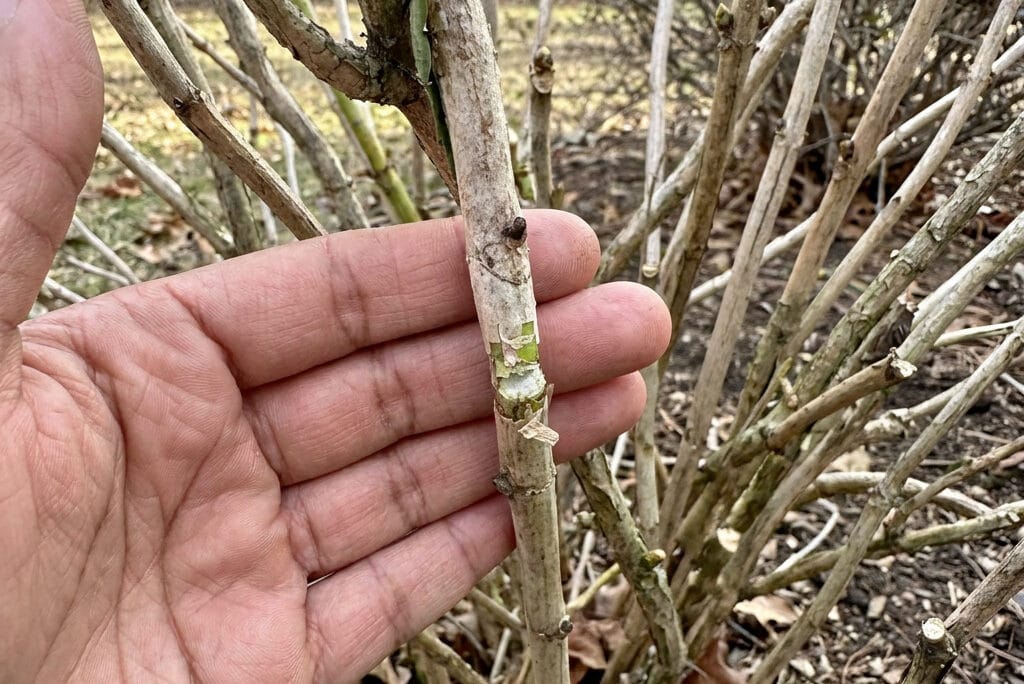
Not every brown stem is dead wood. Once the leaves drop, bigleaf (H. macrophylla), mountain (H. serrata), and oakleaf (H. quercifolia) hydrangeas look like bundles of gray-brown sticks.
But don’t be fooled! Many of those bare stems are already holding next summer’s flower buds, especially near their tips.
So, for old-wood bloomers, fall pruning starts and ends with the Three D’s: dead, diseased, and damaged. If a brown stem only looks dead, leave it alone until spring growth tells you otherwise. Everything else stays untouched.
Panicle (H. paniculata) and smooth (H. arborescens) hydrangeas, however, bloom on brand-new spring growth. Fall pruning won’t remove next year’s flower buds, but late winter or early spring is still the better time to prune them.
Still unsure when or where to make the cut? We explain how and when to prune each type of hydrangea in our complete guide, so you don’t accidentally sacrifice next year’s flowers.
Task 5: Water Before Freeze-Up If the Fall Is Dry
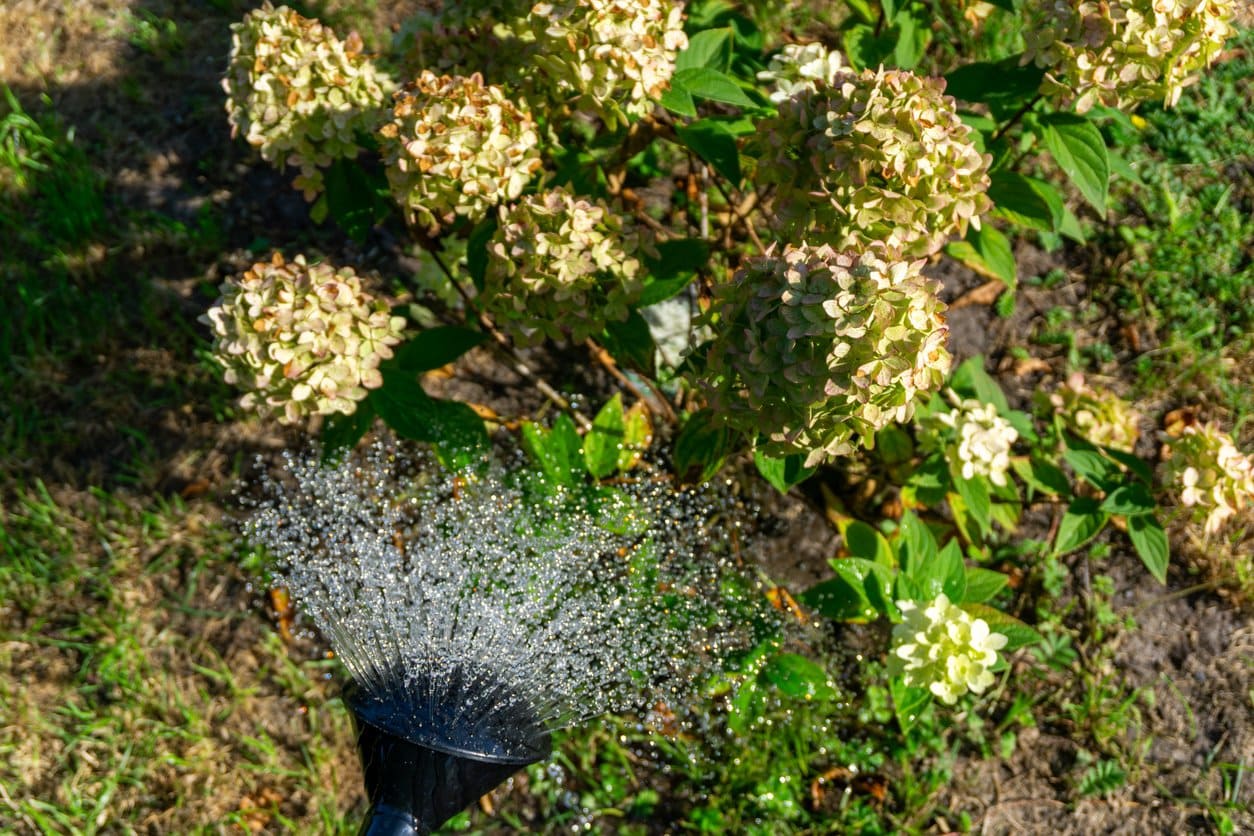
Got plenty of fall rain? Your hydrangea is probably all set.
But if it’s been bone-dry this fall, don’t send it into winter thirsty. Check the soil four to six inches deep near the roots. Still moist? Leave it alone.
If it’s dry, give the root zone a thorough soak out to the drip line before the ground freezes. Let your hose trickle slowly until the soil is moist several inches deep, without leaving puddles.
And don’t swear off watering until spring. During a prolonged dry winter spell, check again and water on a mild day above 40°F if the ground isn’t frozen.
And if you’re wondering what else your shrubs might need during the colder months, we also put together a guide to four essential winter hydrangea jobs.
Beleaf in Winter Prep
November hydrangea care is less about active maintenance and more about helping your shrubs settle in for winter. A little cleanup, mulch, and protection where needed can make all the difference come spring. If only someone could handle our winter prep while we hibernate.