Spider plants are fairly forgiving. That’s one reason I like them. But forgiving doesn’t mean they enjoy everything you throw at them. Shorter days? Cooler rooms? Even moving them back indoors after a summer outside can affect them.
Fall is a good time to make a few small adjustments to your spider plant’s care routine. Here are five things worth doing this fall and two you don’t need to rush into.
Task 1: Bring Outdoor Plants Indoors Before Chilly Nights
Did you move your spider plant outside for the summer? Then fall means moving it back indoors. Just don’t wait until the first frost. Bring it inside when nighttime temperatures start dropping to around 55°F.
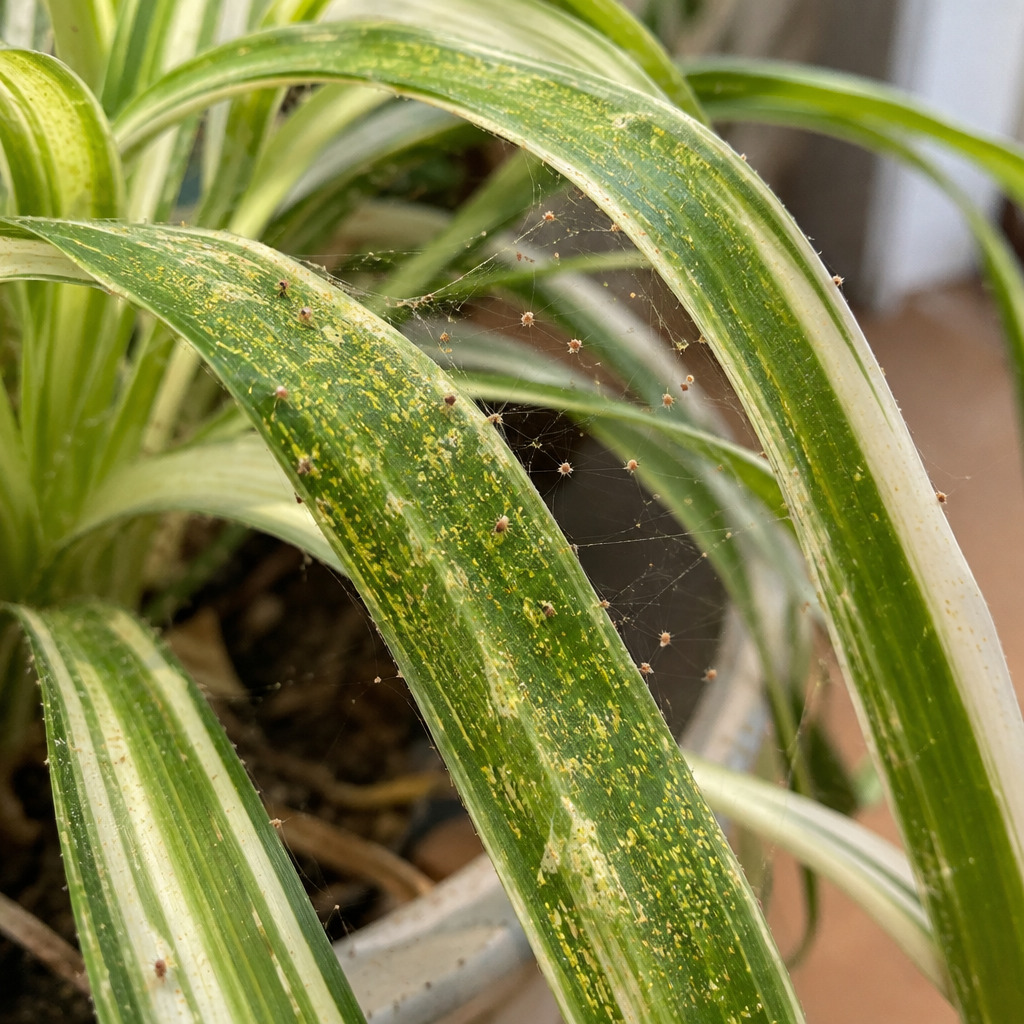
Before you put it next to your other houseplants, take a closer look. Check the undersides of the leaves and around their bases for aphids, mealybugs, scale insects, and spider mites. Inspect the pot and the soil surface, too.
Give the foliage a gentle rinse with water while the plant is still outside to remove dust and dislodge any small pests. Let the leaves dry before bringing it indoors.
If you spot an infestation, keep the plant away from your other houseplants until you’ve dealt with it. If not, I’d still keep it separate for three to four weeks and check it regularly. Better safe than sorry, right?
Spider plants aren’t the only ones that need protection from chilly nights. We also put together a guide on which plants you should bring indoors before the first frost.
Task 2: Find a Bright, Comfortable Spot
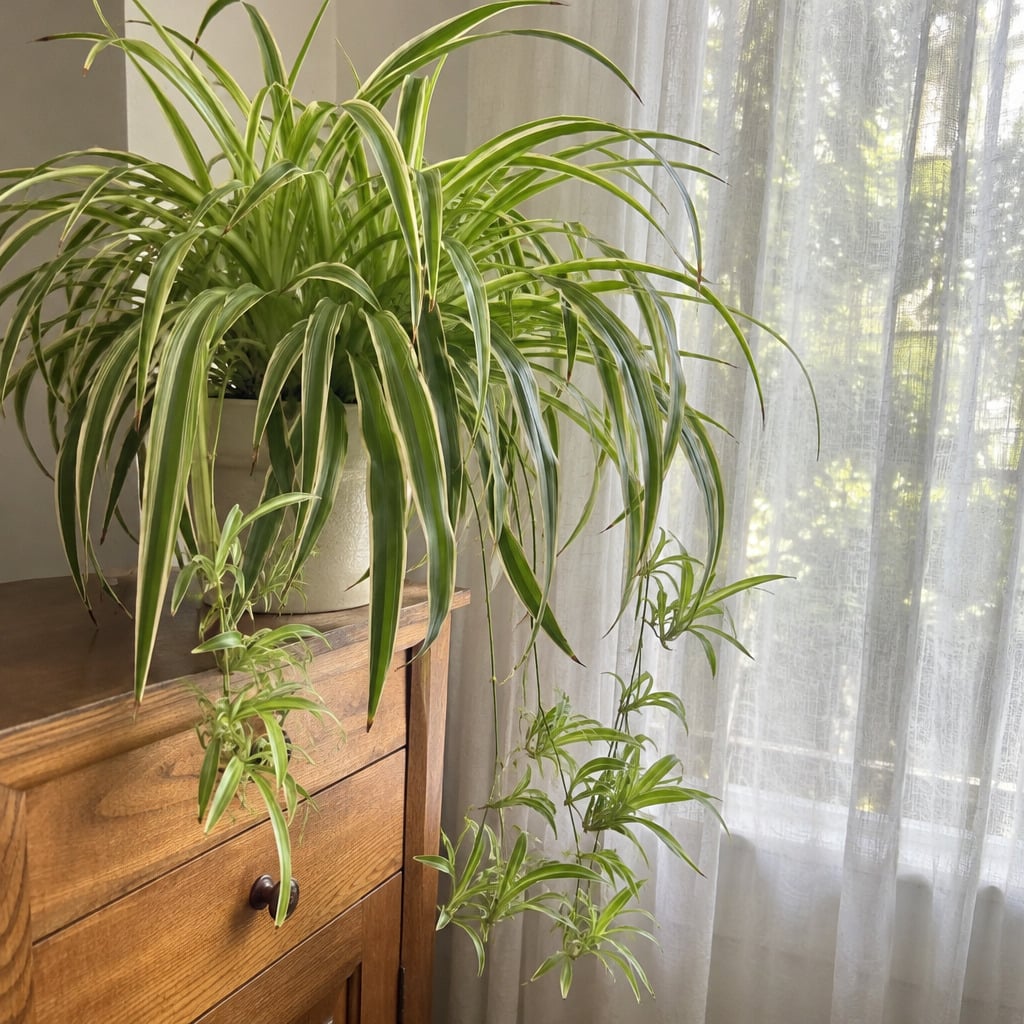
Your spider plant is back indoors. Now, where is it going to live?
Spider plants prefer bright, indirect light. An east-facing window usually works well, and a little gentle morning sunlight is fine. A south-facing window works, too, if you filter the stronger sunlight with a sheer curtain.
As the days get shorter, you may need to move your plant a little closer to the window.
Quick tip: Just keep it away from cold windowpanes and heating vents. Neither makes a particularly pleasant neighbor.
Task 3: Your Watering Habit Needs a Break
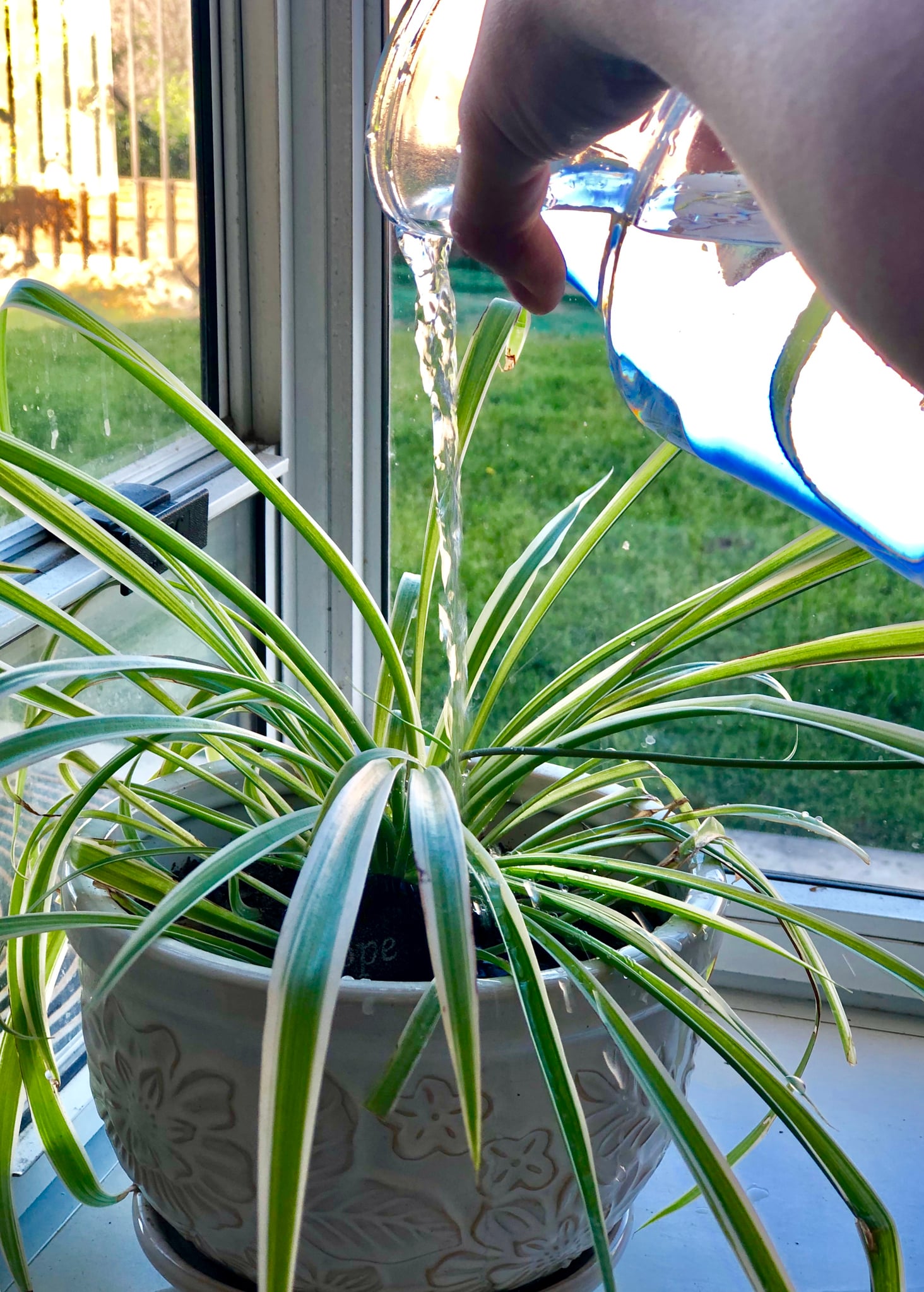
Not a permanent one, of course! But your spider plant may need less water as the days get shorter.
Less daylight can slow growth, and cooler rooms often mean the potting mix takes longer to dry. That’s why I recommend checking the soil rather than watering by the calendar. Here’s what to do:
Soil that stays wet for too long can lead to root rot, and your plant certainly doesn’t need that extra trouble. Just don’t go to the other extreme and let the potting mix dry out completely between waterings.
If you’re adjusting the watering routine for your other indoor plants, too, we’ve put together a houseplant winter watering guide with suggested watering intervals for each plant.
Task 4: Those Brown Tips Aren’t Always a Bad Sign
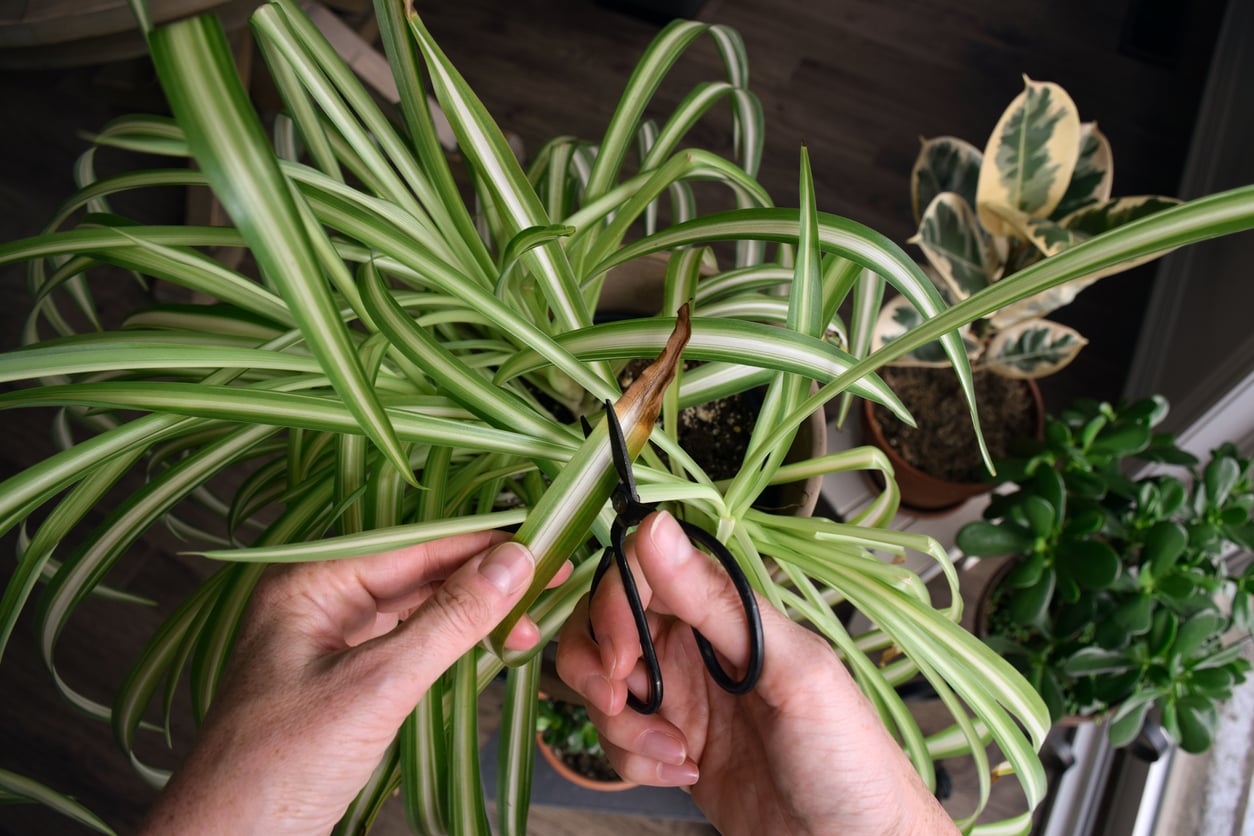
Spider plants can get a few brown tips, even when you’re doing most things right. Don’t blame yourself.
Inconsistent watering, too much fertilizer, and low humidity (especially when the heating comes on) can all contribute to brown tips. Spider plants are also sensitive to fluoride in tap water, so try switching to rainwater or distilled water.
Don’t like the brown tips? Trim them with clean, sharp scissors, but remember that this won’t fix the underlying problem.
While you’re at it, wipe those dusty leaves with a soft, damp cloth. Skip the oil, mayonnaise, and homemade concoctions. Not everything green is a salad.
If you’re also noticing yellowing or drooping leaves, we explain what causes these common spider plant problems and how to fix them in another article.
Task 5: Give One of Those Babies Its Own Pot
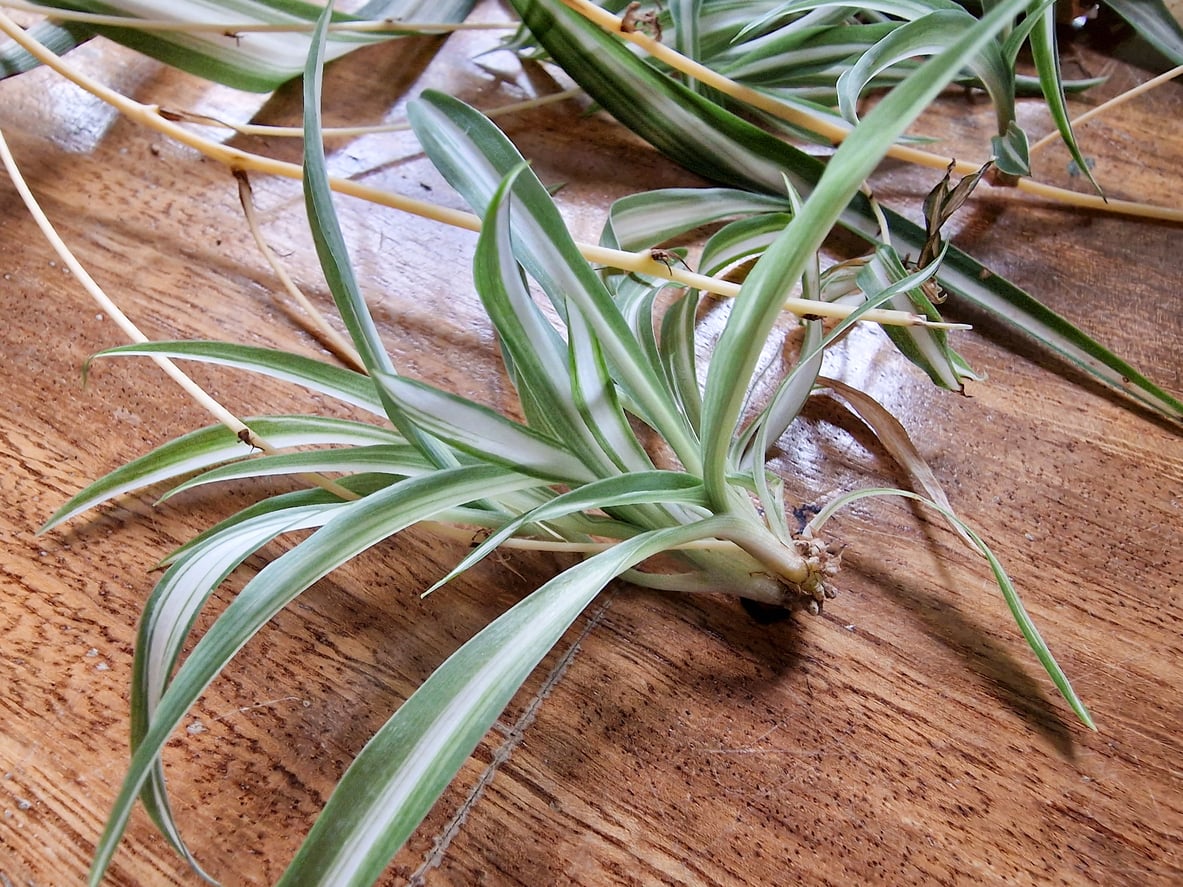
Those little plantlets hanging from your spider plant are rather handy. You can grow another plant without even cutting the baby off right away.
If the baby already has visible roots, you can simply snip it off and pot it up directly.
No babies yet? Fall might actually help with that! Shorter days and longer, uninterrupted nights encourage spider plants to produce plantlets. Give yours bright, indirect light during the day and avoid exposing it to artificial light late into the evening.
Enjoy growing new plants for free? We also wrote a guide on 11 houseplants you can propagate in December, including a few that root easily in water.
Skip Going Overboard With Fertilizer
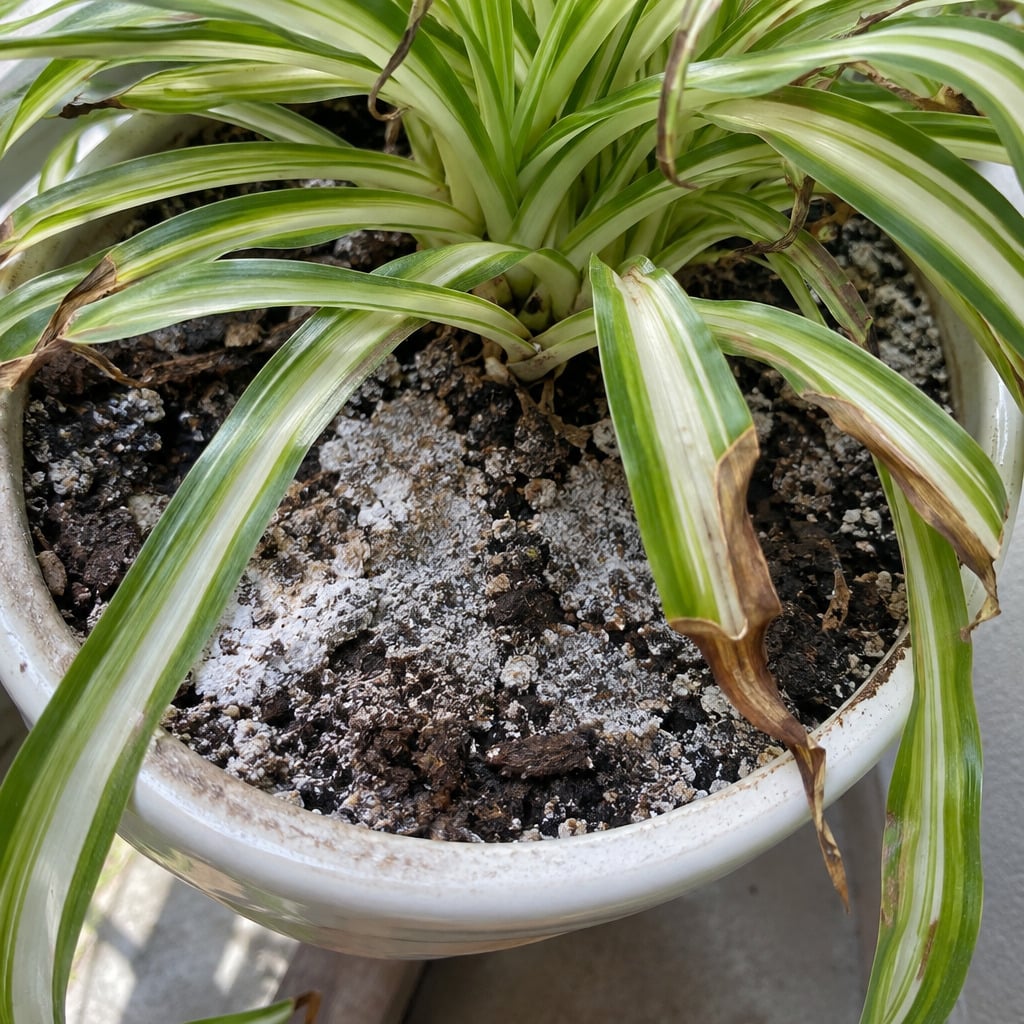
Your spider plant doesn’t need an extra helping of fertilizer just because winter is coming. In fact, it may need less. As the days get shorter, growth often slows.
If your plant is still actively producing new leaves, you can feed it occasionally with a half-strength houseplant fertilizer. Otherwise, I recommend pausing until growth picks up again in spring.
Quick note: Too much fertilizer can cause salts to build up in the potting mix, and brown tips are trouble enough already.
Not all houseplants need a break from feeding, though. We’ve written a guide explaining which houseplants you can fertilize in winter and which ones are better left alone.
Skip Unnecessary Repotting
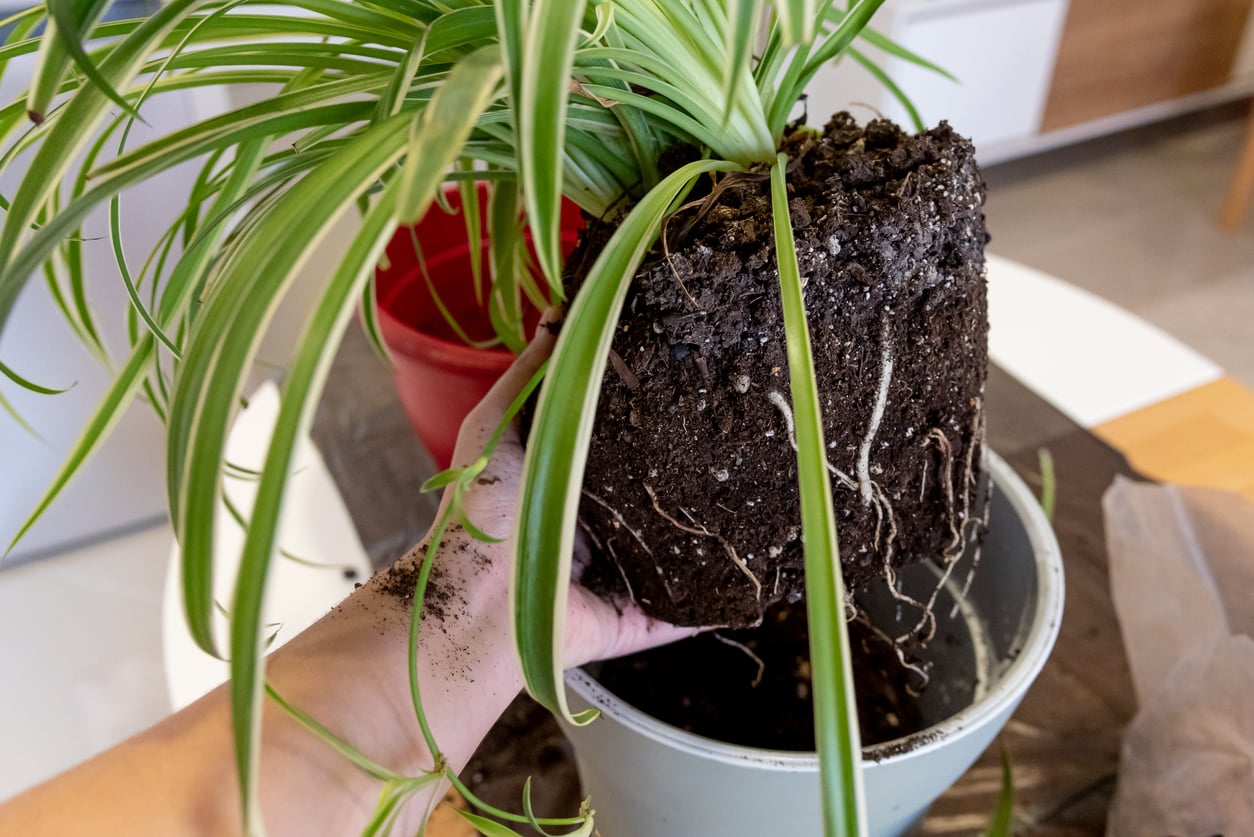
Seeing thick roots pushing against the sides of the pot can make you reach for a larger one. Hold that thought! Spider plants don’t mind being slightly pot-bound, so unless yours is struggling, I’d wait until spring to repot it.
However, if the roots are pushing the plant out of its pot, distorting the container, or making watering difficult, it’s time for a change.
Choose a pot with drainage holes that’s only 1 to 2 inches wider than the current one. A much bigger container can hold too much moisture, increasing the risk of root rot.
That’s enough fussing for one fall. Your spider plant can get on with being a spider plant.