
Many gardeners are of the opinion that perennials aren’t very reliable and cannot be expected to return year after year consistently. While they may have had their bad experiences, not all perennials are like this; in fact, some are much more reliable than others.
In today’s article, let’s take a closer look at reliable perennials that thrive in shade and can bring magnificent beauty to your garden for years to come. Trust me, this is going to get interesting.
Why Shade Perennials Really Matter?

Shade perennials isn’t just a fancy term being thrown around here; they’re flowers that truly make a difference.
You can use shade perennials to fill dark corners in your garden that may not receive enough sunlight, or plant them underneath trees to make the lower portion of your garden stand out and look fuller.
Shade perennials are also much lower maintenance and can thrive in a variety of climate conditions as long as they’re given the time and resources to adapt.
And if you’re working with a shady garden space, you might be surprised how many vegetables thrive in low light too.
Reliable Perennials That Thrive In Shade

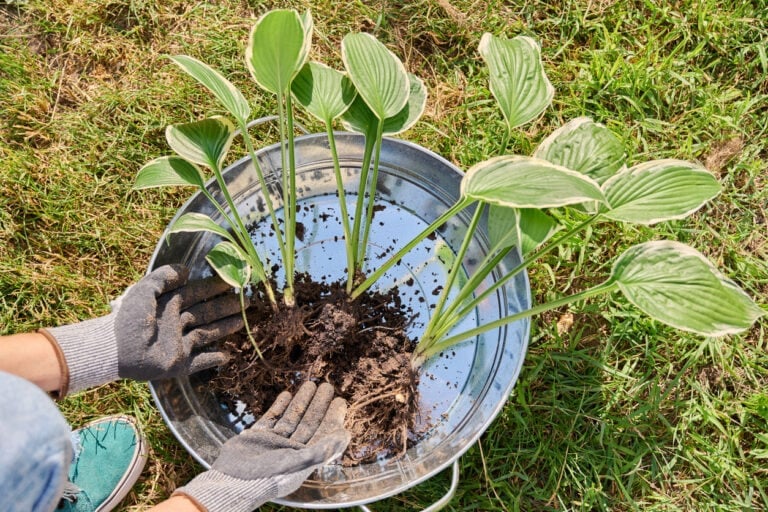
1: Hosta (Hosta Spp.)

Hostas are known for being well-adapted to partial or full shade, and they’re ideal for milder zones between 3-9.
Their bold white blooms add a sharp floral kick to the garden and can look magnificent against a darker, contrasting background. Depending on the hosta variety, your blooms can vary between a mini and a large size.
And since many shade perennials benefit from occasional dividing, here’s a quick guide to perennials you can divide.
2: Astilbe (Astilbe Spp.)

Astilbes are ideal for zones 4-9, and they thrive in moist, partly shaded environments.
They’re perfect for adding vertical growth and beauty to your garden, thanks to their vibrant, feathery blooms that come in all shades of red, white, pink, and purple.
3: Coral Bells (Heuchera Spp.)

This popular perennial is known for growing well in partial to full shade, and that’s why it’s ideal for mild to slightly warm climate zones like 4-9. Its vibrant foliage, combined with the elegant flower spikes, can help revive dull and dark areas of the garden in no time.
And if you’re looking to get even more blooms out of your perennials, here are some that will bloom again if cut back mid-summer.
4: Bleeding Heart (Dicentra Spectabilis)

Bleeding hearts do quite well in shaded conditions, especially in mild to slightly warmer zones like 3-9. The twisting, arching stems with vibrant, heart-shaped blooms create a stunning visual in the garden that’s hard to walk by and not admire.
5: Brunnera (Brunnera Macrophylla)

Brunneras are well-suited for deep shade and moist environments, ideally in moderate to slightly cooler zones like 3-8. Their tiny blue flowers and silvery foliage add a stunning, mature, but also simplistic look to the garden landscape. Many gardeners prefer to plant brunneras as ground cover.
6: Ligularia (Ligularia Spp.)

Ligularias thrive in part shade and should be planted in moisture, ideally in zones 3-8. Its flowers are daisy-like and have a bright yellow shade to them that really stands out, especially when coupled with its large, bold foliage.
And if you’re after more low-effort color in the garden, these easy, plant-it-and-forget-it annuals pair well with shade perennials like ligularia.
7: Foxglove (Digitalis Spp.)

Floxgloves grow best in part shade conditions in zones between 3-8, ideally. This perennial offers vibrant tubular blooms, is self-seeding by nature, and can possibly add great vertical interest in the garden if you allow it to.
8: Hellebore (Helleborus Spp.)

Hellebores are best suited for shaded, dark spaces in the garden, and they thrive in zones 4-9. Though blooming may not be the strongest element of this perennial, its magnificent, evergreen foliage does make up for that.
9: Japanese Forest Grass (Hakonechloa Macra)

While Japanese forest grass does prefer some amount of sunlight, it can do pretty well in part shade as long as other growth aspects are optimized. Plant these in warmer zones (5-9 ideally).
The mounded golden foliage from this perennial adds a soft texture and light color to the garden landscape that can make any vibrant flowers nearby stand out instantly.
You should also check out these low-growing ornamental grasses that work beautifully in shaded borders alongside Japanese forest grass.
10: Virginia Spiderwort (Tradescantia Virginiana)

If you’ve never seen Virginia spiderworts, they’re essentially clumps of grassy leaves with vibrant, light-colored flowers on them. Most of the time, these flowers only have 3-4 petals. These perennials thrive in partial to full shade and are best suited for moist environments in zones 3-9.
11: Sweet Woodruff (Galium Odoratum)

Plant your sweet woodruff in full to partial shade, ideally in zones 4-9. This perennial offers pearly white flowers and fragrant foliage that adds an enchantingly sweet fragrance to the garden. It can serve as excellent ground cover under trees.
And if you’re aiming for more repeat color throughout the season, take a look at these perennials that bloom multiple times a year, they pair nicely with steady spreaders like sweet woodruff.
Let’s Conclude

As much as I love perennials, I do have to agree that some of them aren’t very reliable and shouldn’t really be called perennials in the first place since they never really return yearly.
That said, the perennials we discussed today are much more reliable in comparison and can thrive in shaded conditions, while adding just as much beauty to the garden landscape.
Give your favorites from the list above a shot and let me know in the comments how it went!




Always enjoy your information. I live on an island in Puget Sound. Would love to see some plants that thrive near the saltier soil near the water. Saw some specialty seed developed for when soil has become salty from hurricanes or winter storms with especially high tides. Does it help?
Hi Sue 😊 I’d look for plants that naturally handle salty wind and occasional salt in the soil like sea thrift, sedum, yarrow, rugosa rose, and lavender. Those “salt tolerant” seeds can help a little, but they won’t fix salty soil on their own, the real difference comes from flushing with fresh water after storms, adding compost, and choosing truly salt tolerant plants 🙂
Love reading all the information about gardening
Hi Catherine 🙂 Thank you so much, I’m really glad you enjoy the gardening information.
Are any of these deer-resistant? I lost a bed of hostas to the deer and haven’t replaced it. The bed is shaded by a very large crape myrtle and 10-ft brick wall in Charlotte NC.
Hi Emily 🙂 Hostas are definitely deer favorites, so I’d skip those if deer are a big issue. Hellebores, ferns, epimedium, lungwort, and astilbe are usually better choices for a shady bed, though deer can still nibble if they’re hungry enough. Under a large crape myrtle, I’d also add compost and water well while they settle in.
I agree with the request for you to include information about deer resistance in your information. It’s hard to separately have to look up every plant you mention rather than having it included in your reporting. Thank uou!