You bought a charming little groundcover because the tag promised it was “vigorous.” Two months later, it has swallowed your prize roses, the shed, and now eyes your Prius. No need to consider a restraining order.
These eleven fill awkward bare spots, look fabulous, and behave better than the usual garden thugs.
Fillers Without the Killers
If you’re tired of plants with commitment issues (the kind that commit to every square inch of your yard), this list is your therapy. If you’ve been burned by pretty plants with criminal tendencies, we also wrote a guide on common garden flowers that can become surprisingly invasive.
1. Creeping Phlox (USDA Zones 3-9)

Best for: Full sun, dry slopes, rock gardens, and sunny bed edges. Avoid wet, heavy soil.
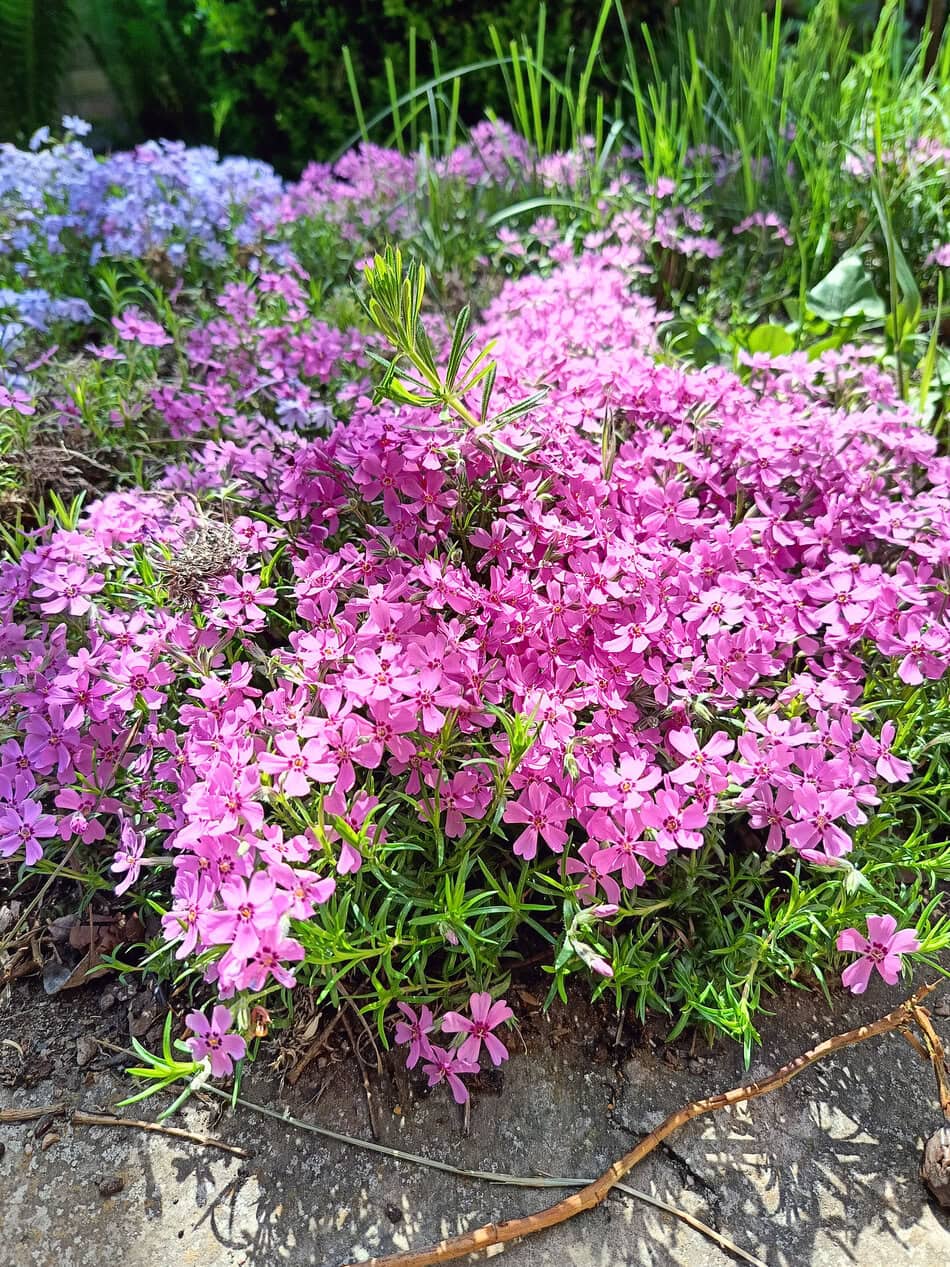
Here comes one of the better-behaved carpet makers. Phlox subulata fills sunny gaps with the efficiency of expanding foam, but it’s easy to trim when it creeps over an edge.
It forms a low, mossy cushion that helps shade bare soil and crowd out tiny weeds once established. Mulch young plants the first season, but after that, it’s the ideal neighbor: practical, colorful, and silent.
If your sun-baked edges need more than one polite little carpet, we wrote a guide on full-sun border plants that stay pretty when summer gets brutal.
2. Bergenia (USDA Zones 4-8)
Best for: Part shade to full sun, front borders, walkway edges, and spots with well-drained soil. Give it afternoon shade in hot Southern gardens.
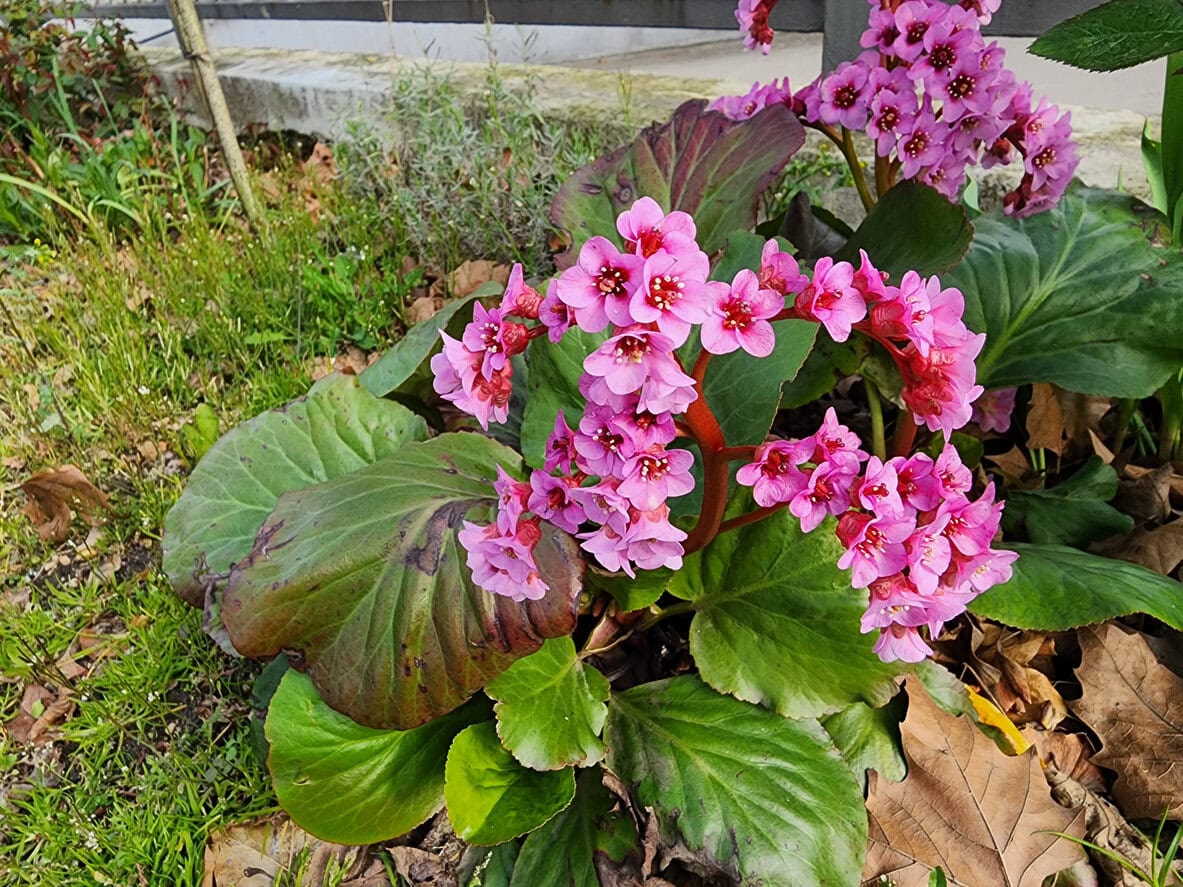
Bergenia has the confidence of a houseplant that somehow got promoted to landscaping. Its thick, glossy leaves form a slow, sturdy clump that fills bare spots without staging a property dispute.
In early spring, it sends up pink or purple flower clusters before most of the garden has found its shoes. I like it where I want something tidy and leafy year-round, but not something I’ll be apologizing to the neighbors for later.
3. Dianthus (USDA Zones 4-8)
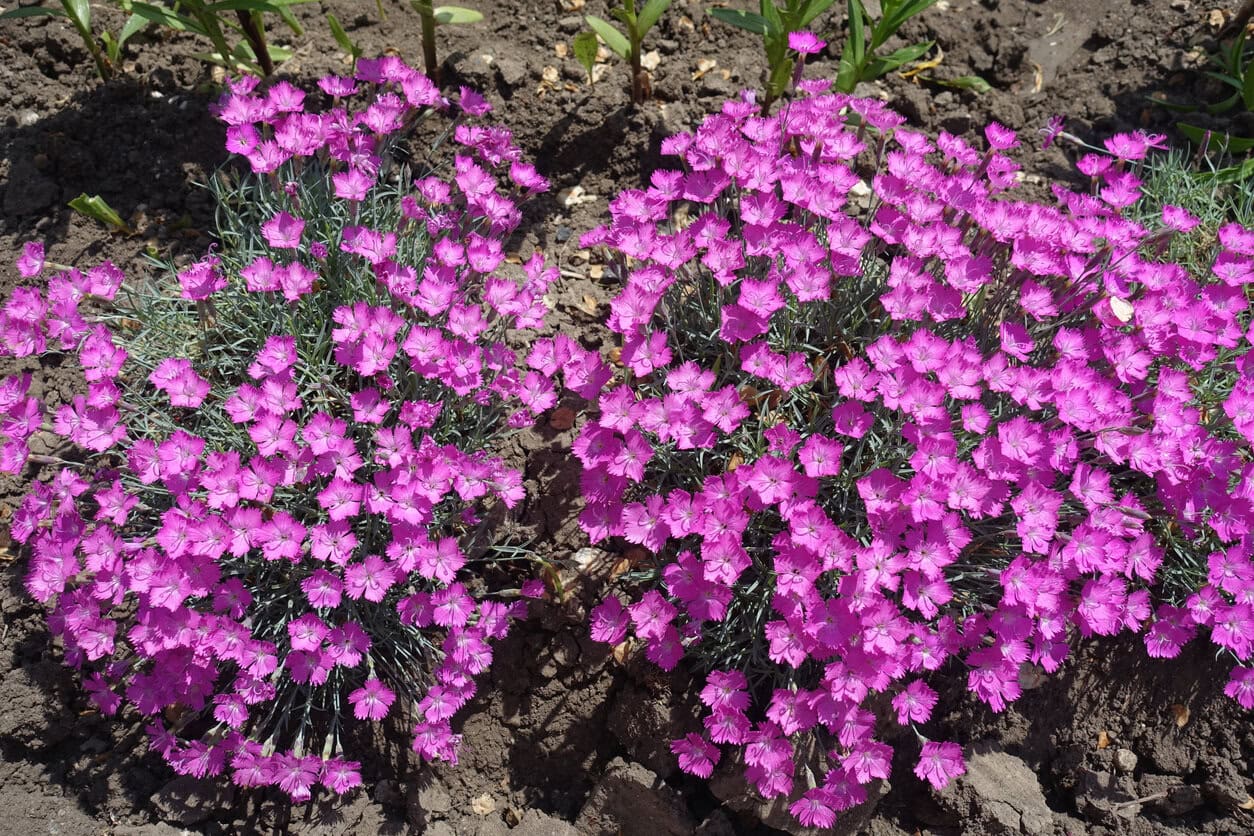
Best for: Full sun, front borders, rock gardens, and dry, well-drained soil. Avoid soggy spots.
Cheddar Pinks smell like someone exploded a spice jar in your yard. The silvery mounds stay neat and low, especially if you give them a quick trim after blooming.
While other flowers get leggy and dramatic, dianthus keeps a tidy shape and helps cover bare soil. Give it sun and drainage, and it will handle lean soil without filing a complaint.
4. Pussytoes (USDA Zones 3-8)
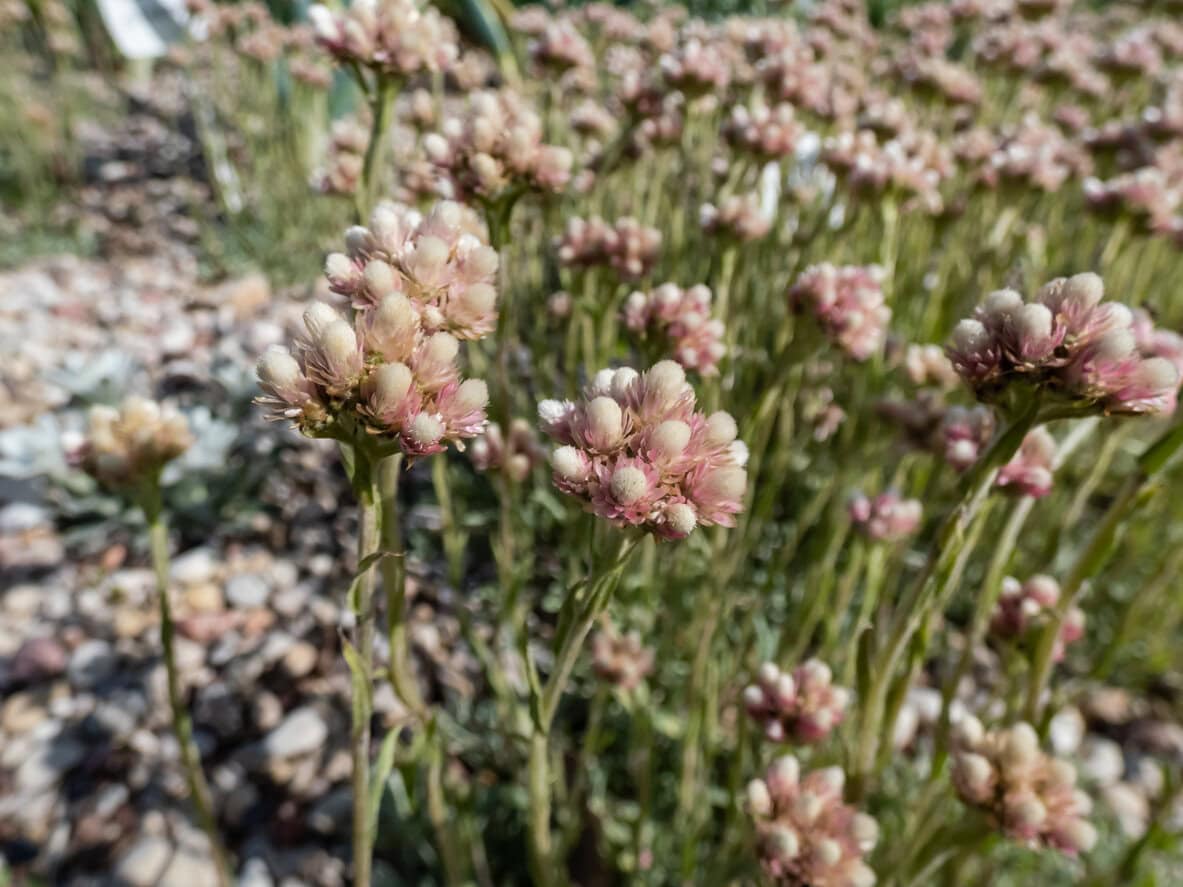
Best for: Full sun to part shade, dry edges, rock gardens, and lean, well-drained soil.
Pussytoes has the soft, silvery charm of lamb’s ear without quite so much world-domination energy. Its fuzzy little leaves form a low mat that looks delicate, but handles dry soil better than you’d expect.
It’s perfect for awkward bare spots where fussier plants go to sulk. Not flashy, not needy, and not the kind of “pussytoes” that leaves paw prints on your counter.
5. Heuchera (USDA Zones 4-9)

Best for: Part shade, shade borders, containers, and rich, well-drained soil. Give darker-leaved types more sun only if they get enough moisture.
Most shade-lovers show up in plain green, but heuchera arrives with a full paint-sample wall: plum, caramel, bronze, lime, silver, and nearly black.
Coral bells form tidy leafy mounds that cover bare soil without sending runners into the next ZIP code. Flower stems may rise above the foliage, but the plant itself stays polite, compact, and mercifully low-drama.
If shade is the part of your yard currently winning the argument, we also have a guide on flowers that grow better in shade than full sun.
6. Epimedium (USDA Zones 5-8)
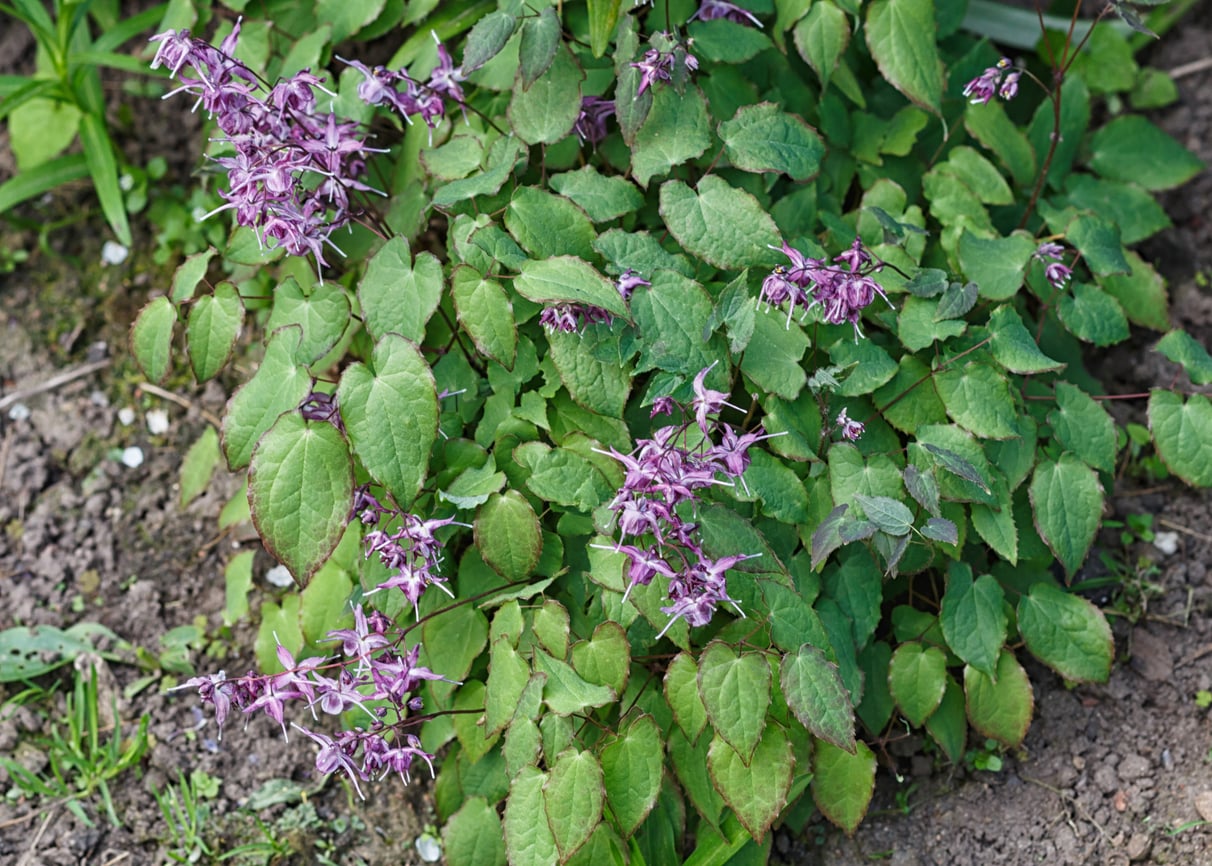
Best for: Part shade to shade, dry shade, woodland edges, and the root-tangled mess under trees.
Epimedium, AKA barrenwort or bishop’s hat, is a specialist for the root-tangled void under old trees where even weeds struggle.
The leaves look delicate, almost like fairy wings, but the plant is tougher than it pretends to be. It spreads slowly, handles dry shade once established, and usually stays too bitter for deer to put on the dinner menu.
It’s not flashy or pushy. It just fills the hard spots quietly, which is honestly more than I can say for most garden guests.
And if deer treat your yard like a salad bar, we wrote another guide on deer-resistant summer flowers that still bring plenty of color.
7. Penstemon (USDA Zones 3-8)
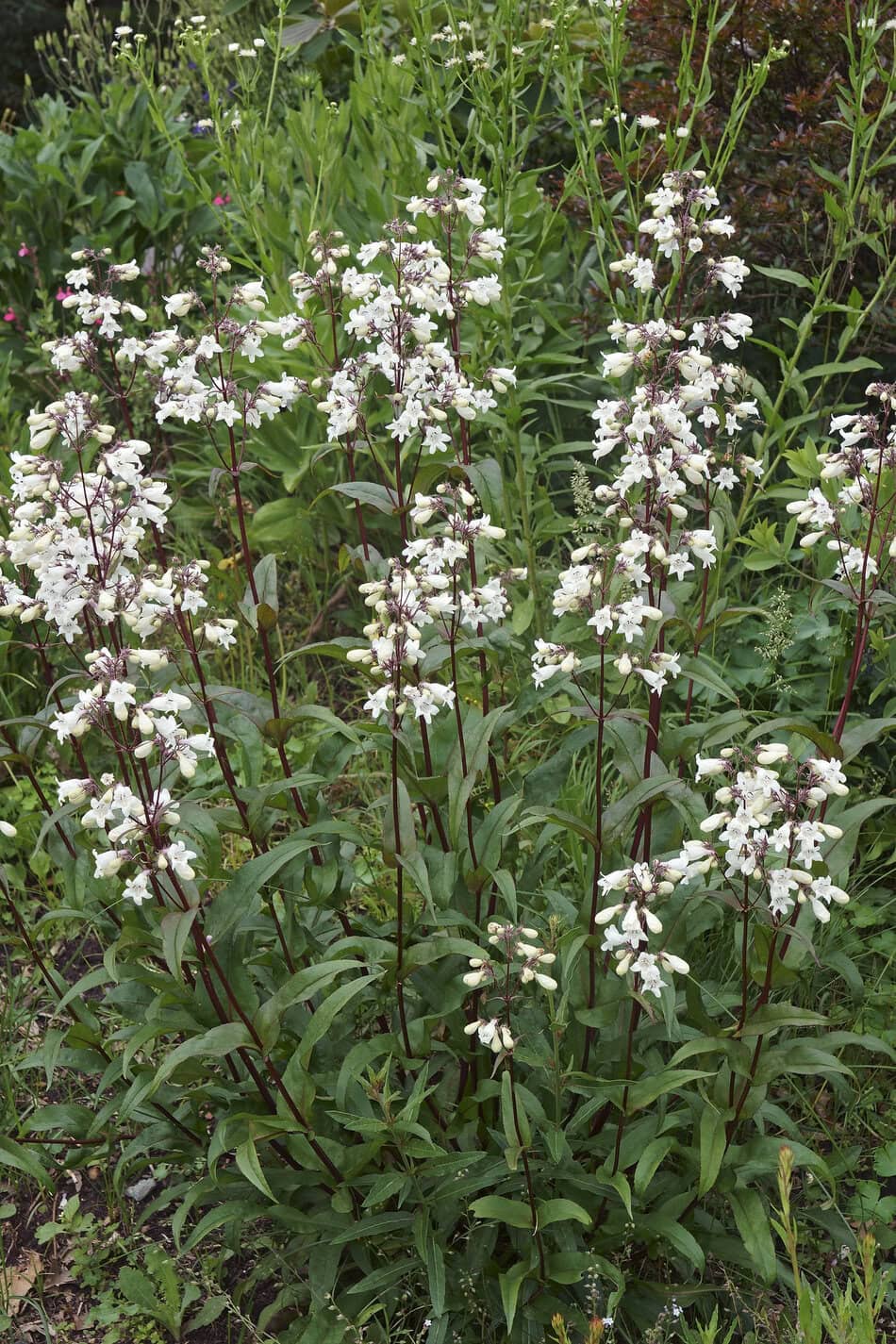
Best for: Full sun, mixed borders, pollinator gardens, and well-drained soil. Avoid soggy clay.
If your garden is a green tablecloth, ‘Husker Red’ penstemon is the splash of merlot that stays right where you spilled it. It will handle both high humidity and baking sun.
In early summer, this foxglove beardtongue sends up tall stems of white to pale pink blooms that bees and hummingbirds actually notice. Give it sun and drainage, and it stands upright without acting like every rainstorm is a personal crisis.
8. Bluestars (USDA Zones 3-9)
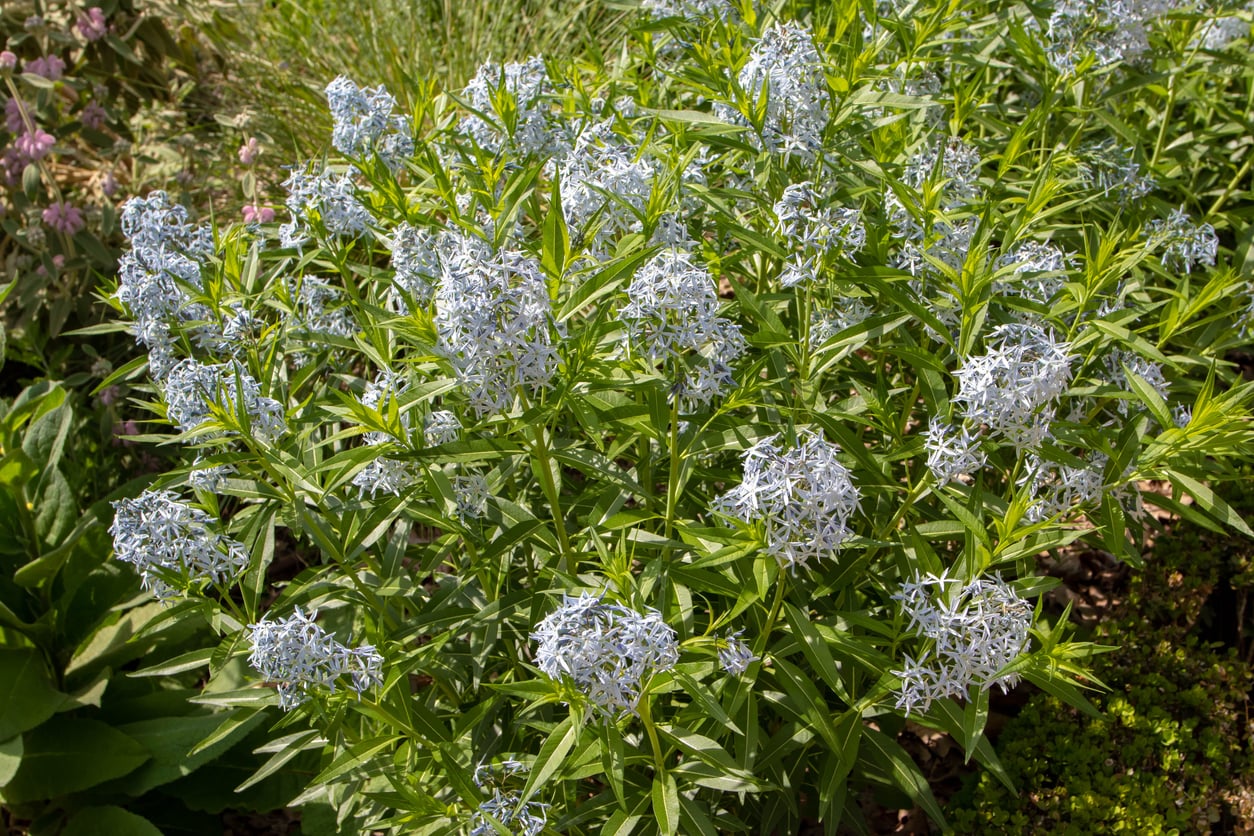
Best for: Full sun to part shade, mixed borders, native gardens, and well-drained to average soil.
Blue Star is your garden’s finest chameleon. It brings soft blue blossoms in spring, but the real value is a texture so feathery you’ll want to pet it. It creates a hazy silhouette that keeps its composure in summer heat while other perennials are busy scorching.
When fall arrives, Amsonia stops playing it safe and flips to glowing gold. It stays in a polite, rounded clump, so you get structure, color, and zero need to chase it across the yard.
9. Native Sedge (USDA Zones vary by species)
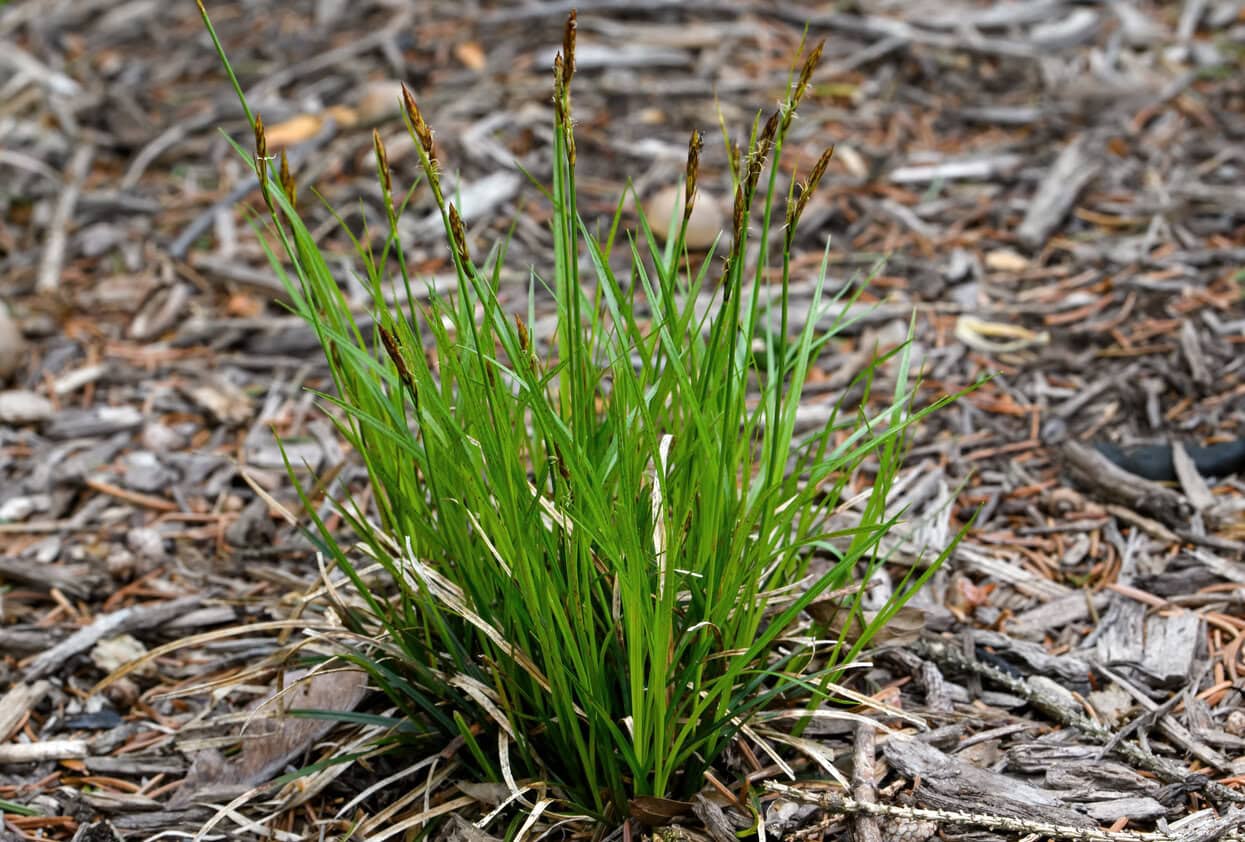
Best for: Part shade, woodland edges, tree roots, and replacing liriope in tough spots. Choose a native sedge suited to your region.
Native sedges give you that soft, fountain-like texture without the weekly lawn tantrum. They look grassy, but they behave more like tidy perennials, forming clumps or slow patches instead of launching a neighborhood takeover.
I like them for awkward edges where mulch always looks unfinished. Pick the right Carex for your light and soil, and you get a calm, natural-looking filler that doesn’t need constant refereeing.
If you’re already side-eyeing your lawn mower, we also explain more no-mow lawn ideas using ground covers.
10. Green-and-Gold (USDA Zones 5-9)

Best for: Part shade, woodland edges, front borders, and moist, well-drained soil.
Green-and-gold is what happens when a polite little groundcover decides to wear sunshine. It stays low, spreads into a tidy mat, and brightens shady gaps without turning into a botanical land grab.
In spring, Chrysogonum virginianum sends up cheerful yellow flowers over fresh green leaves. I like it where bare soil keeps showing between perennials, because it fills the space without acting like it owns the deed.
11. Cranesbill Geranium (USDA Zones 5-8)
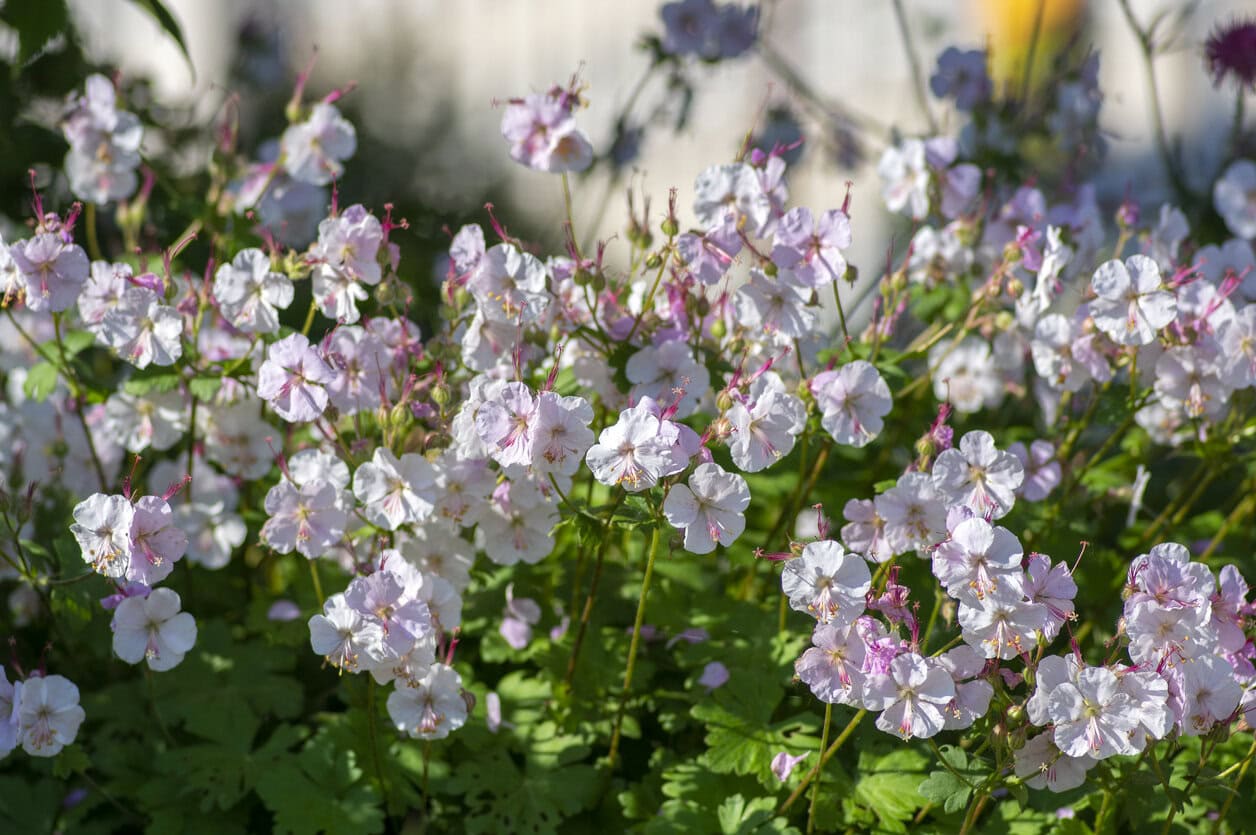
Best for: Full sun to part shade, border edges, underplanting shrubs, and average well-drained soil.
A lone botanist dragged the ‘Biokovo’ cranesbill hybrid off a jagged peak, and the plant has spent every year since making its neighbors look incompetent. It secured a top-tier Perennial Plant of the Year award in 2015 by being gloriously stubborn.
Diseases and pests find it entirely unappetizing. It maintains a tight, disciplined footprint without any coaching. It has pale pink flowers, aromatic foliage and then shifts to a defiant red once fall arrives.
Mind the Gap, Respect the Map
I once planted Mint. I was young. I was foolish. I thought, “How lovely! Fresh mojitos every Friday!” Within a season, it declared independence from the flowerbed. It was a toxic relationship I barely escaped.
These eleven will fill the void in your soul (and your soil) without invasive tendencies or cocktail-making potential. Still, check your local conditions, because even polite plants behave better when they’re planted where they actually belong.
Once the plants are behaving, we also wrote a guide on low-maintenance border materials that make flower beds look cleaner without constant fussing.