Nasturtiums are edible, water-repellent oddballs, famous for making raindrops bead up and roll across their leaves like tiny marbles. They’re keepers. I advise taking a few home. They don’t even expect dinner first.
In fact, feeding them too generously is one of the fastest ways to end up with a mountain of leaves and hardly any flowers.
Why Standard Fertilizer Can Backfire
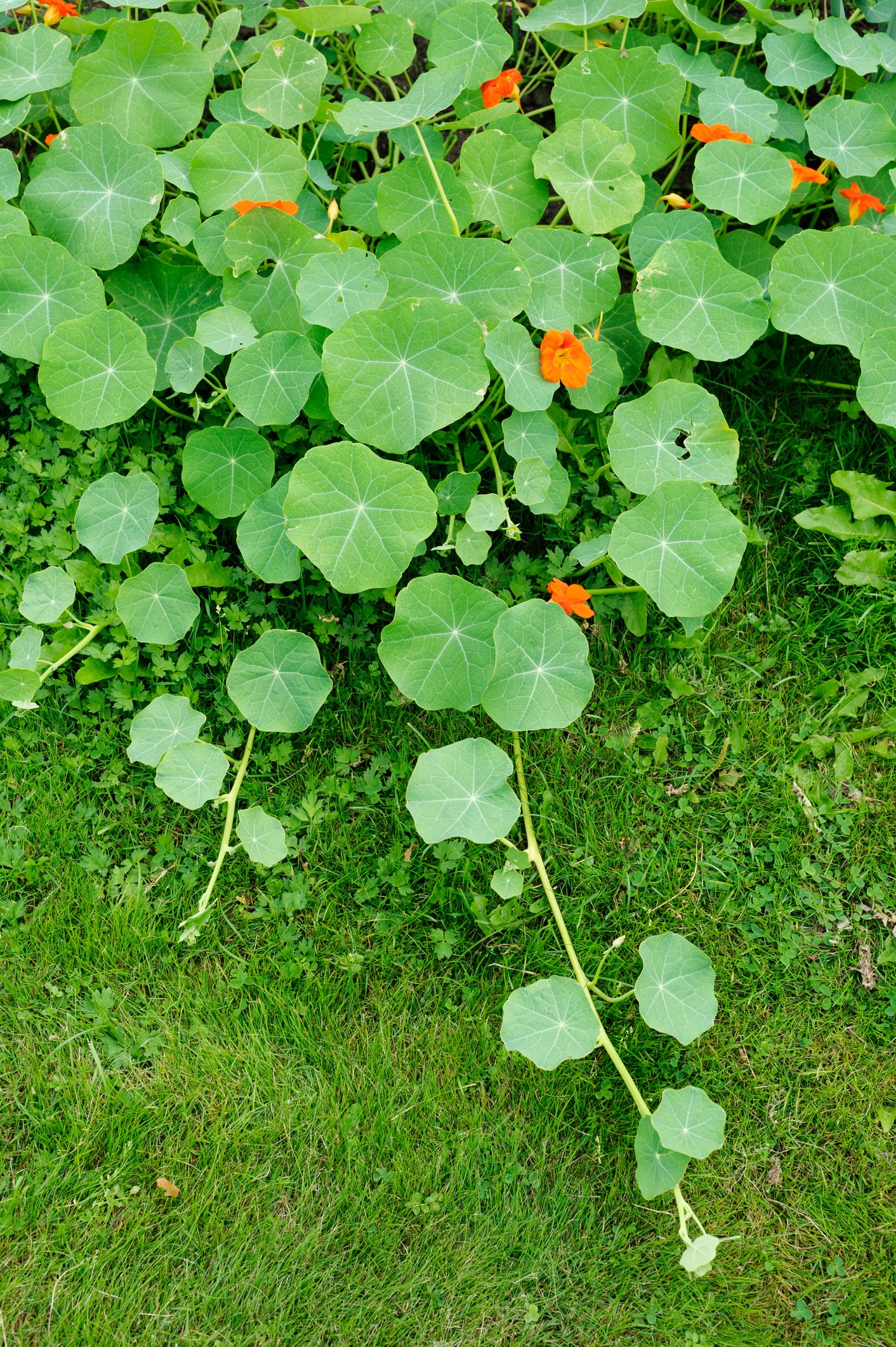
Put the balanced fertilizer down. If you keep pouring 10-10-10 or a high-nitrogen liquid feed onto your nasturtiums, you’ll get plenty of growth, but not the kind you were hoping for.
That is because nitrogen encourages the plant to put more energy into stems and foliage. On nasturtiums, that often means oversized lily-pad leaves and long vines spreading through the bed while flower production slows to a crawl.
The Nutrient Selection (And What to Actually Buy)
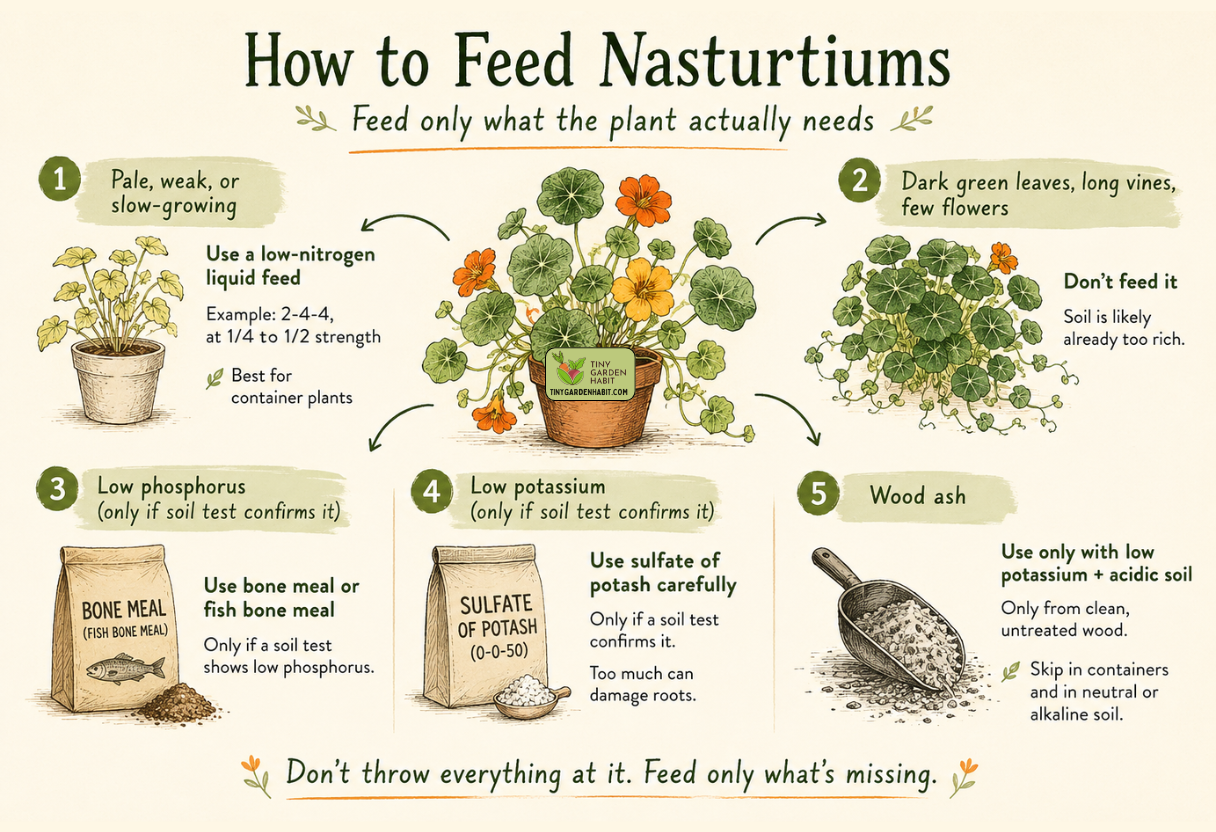
Before reaching for anything, look at the plant and forget the chemistry experiment. This is not keto. Use a product only when the plant is showing a real need for it.
Do not throw every amendment in the shed at it and hope for flowers. Feed what the plant is actually missing.
We also wrote a full guide on using nasturtiums as companion plants if you want to know where they fit best in the garden.
The Right Feeding Plan for Nasturtiums
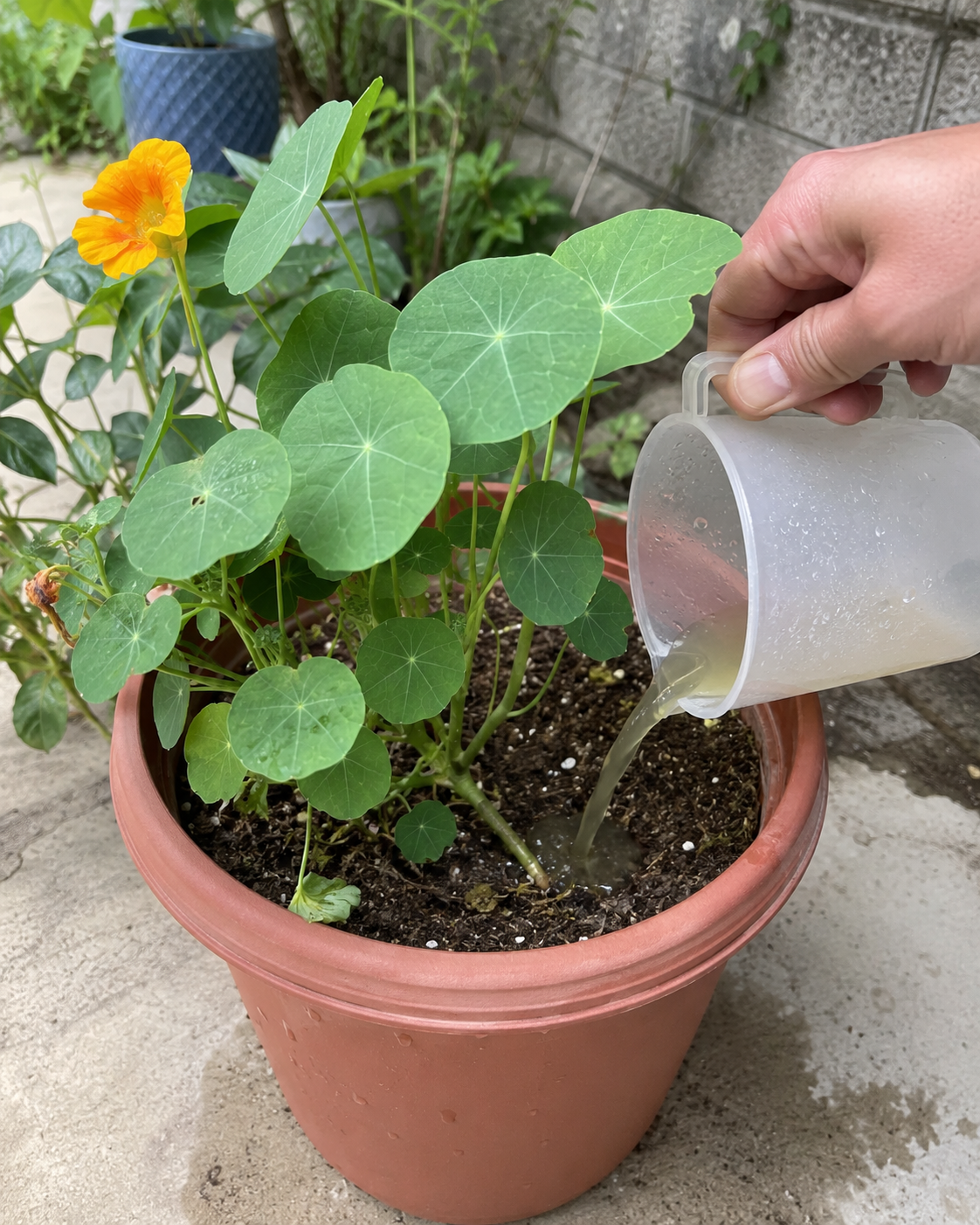
If your nasturtiums are growing in poor, rocky, miserable garden soil, do not disturb their happiness.
But what if they’re stuck in containers where repeated watering can gradually leach nutrients from the potting mix? Or if you accidentally planted them in rich soil?
The treatment depends on which problem you actually have, so look at the plant before reaching for the fertilizer.
Step 1: Start With Lean, Well-Drained Soil
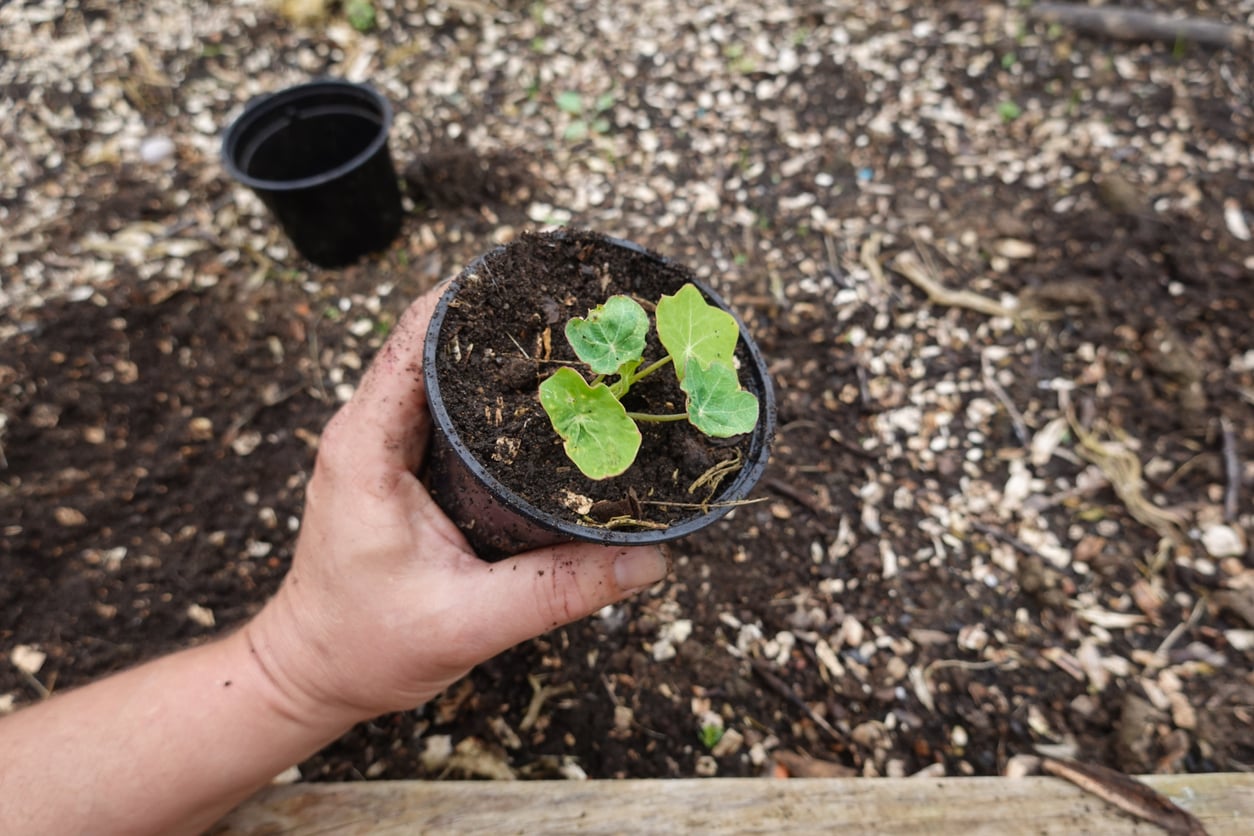
Step away from premium potting mixes packed with enough fertilizer to feed plants for six months. They can turn your nasturtiums into a thick green hedge with very few flowers!
That does not mean buying the saddest bag of dirt in the store. Use a clean, well-drained potting mix without added fertilizer, or choose one with only a light starter charge.
You want a simple base that drains well and gives you control over any feeding later.
Step 2: Check the Leaves and Feed Only If Growth Is Weak
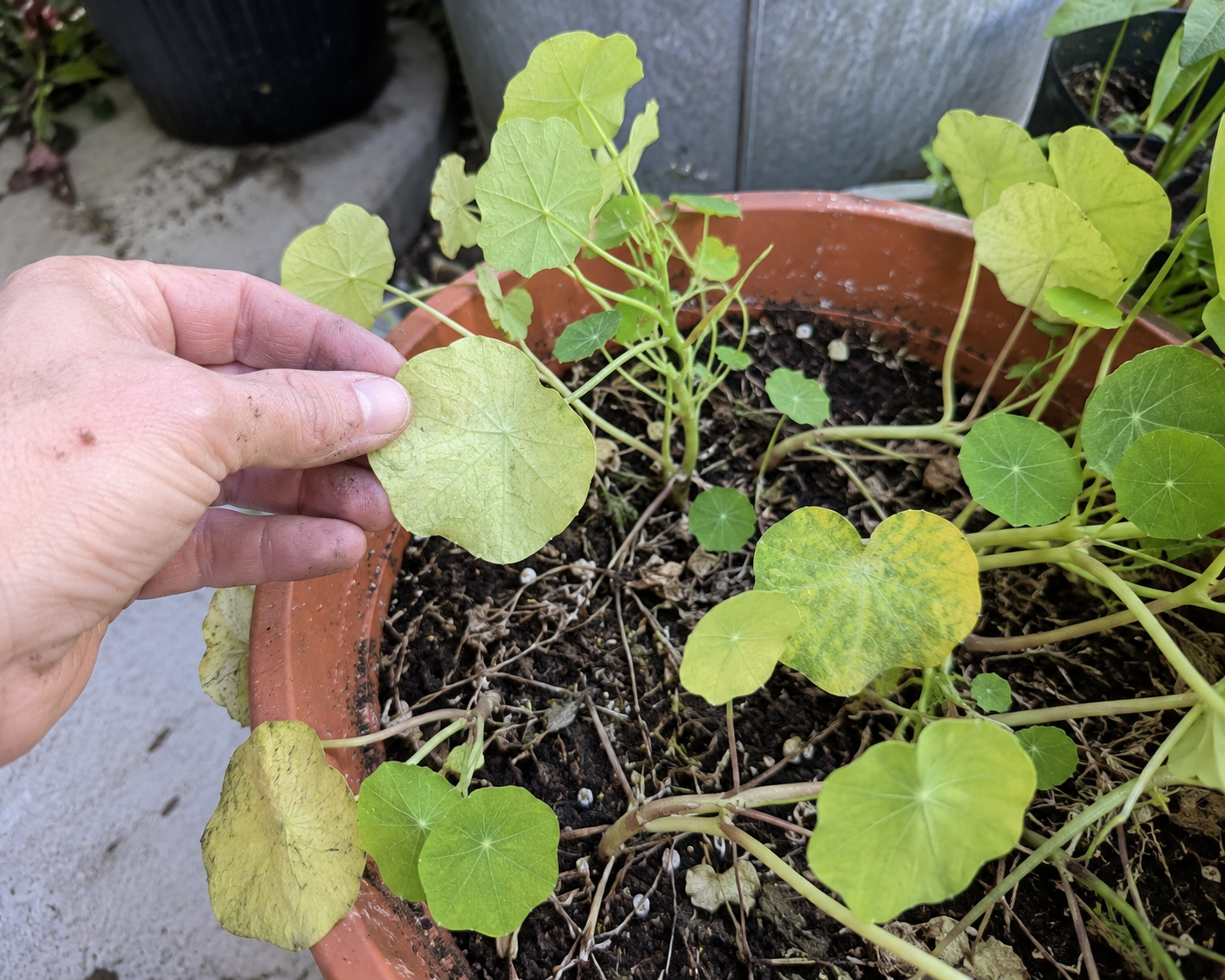
Once the vines start growing, check the leaves before adding anything. If they are green, full, and growing steadily, the plant already has what it needs.
If growth is weak and the leaves look pale, give the plant a diluted low-nitrogen liquid fertilizer, such as 2-4-4, at one-quarter to one-half of the label rate.
Step 3: Stop Feeding If Leaves Take Over
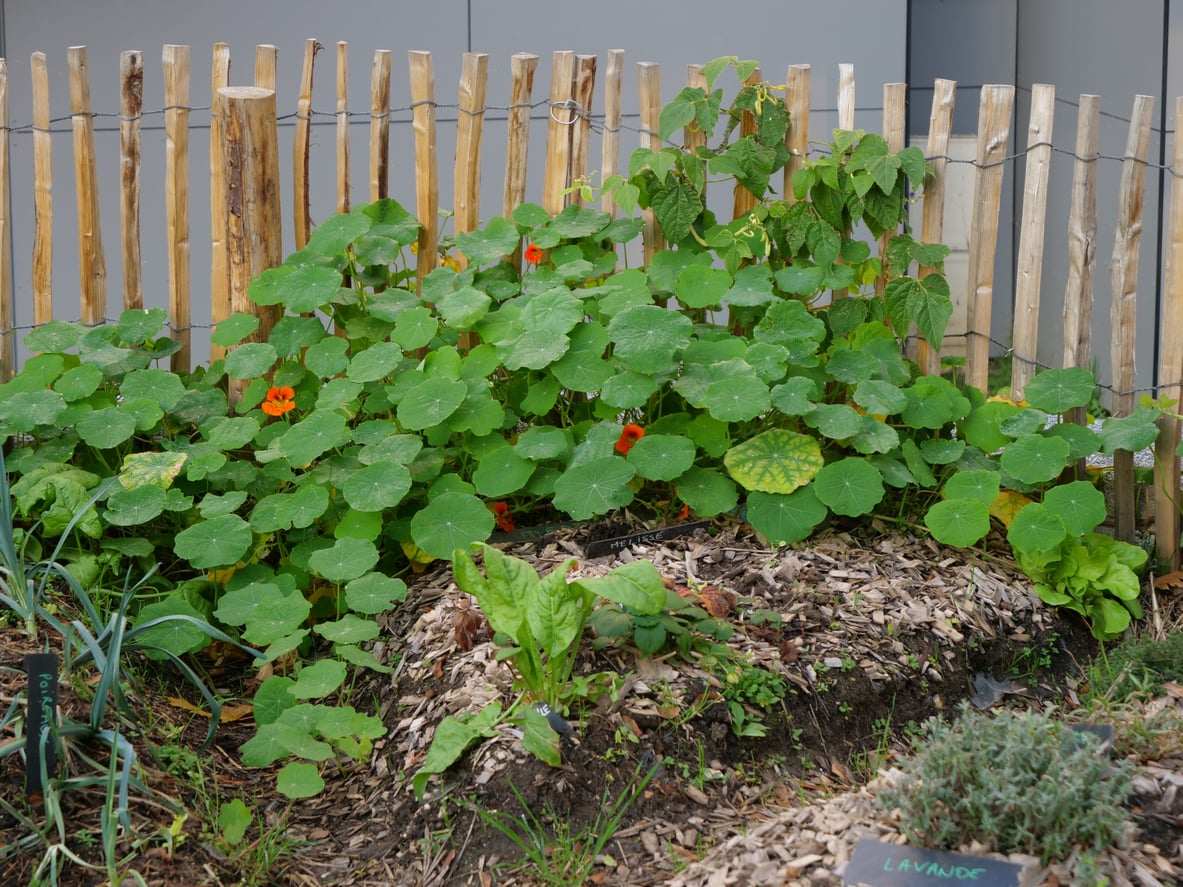
By midsummer, a nasturtium covered in healthy green vines but producing hardly any flowers has probably had too much nitrogen.
Stop feeding it rather than trying to balance the soil with another fertilizer. Give the plant plenty of light and time to work through the excess nutrients already in the soil.
Step 4: Test the Soil If Problems Continue
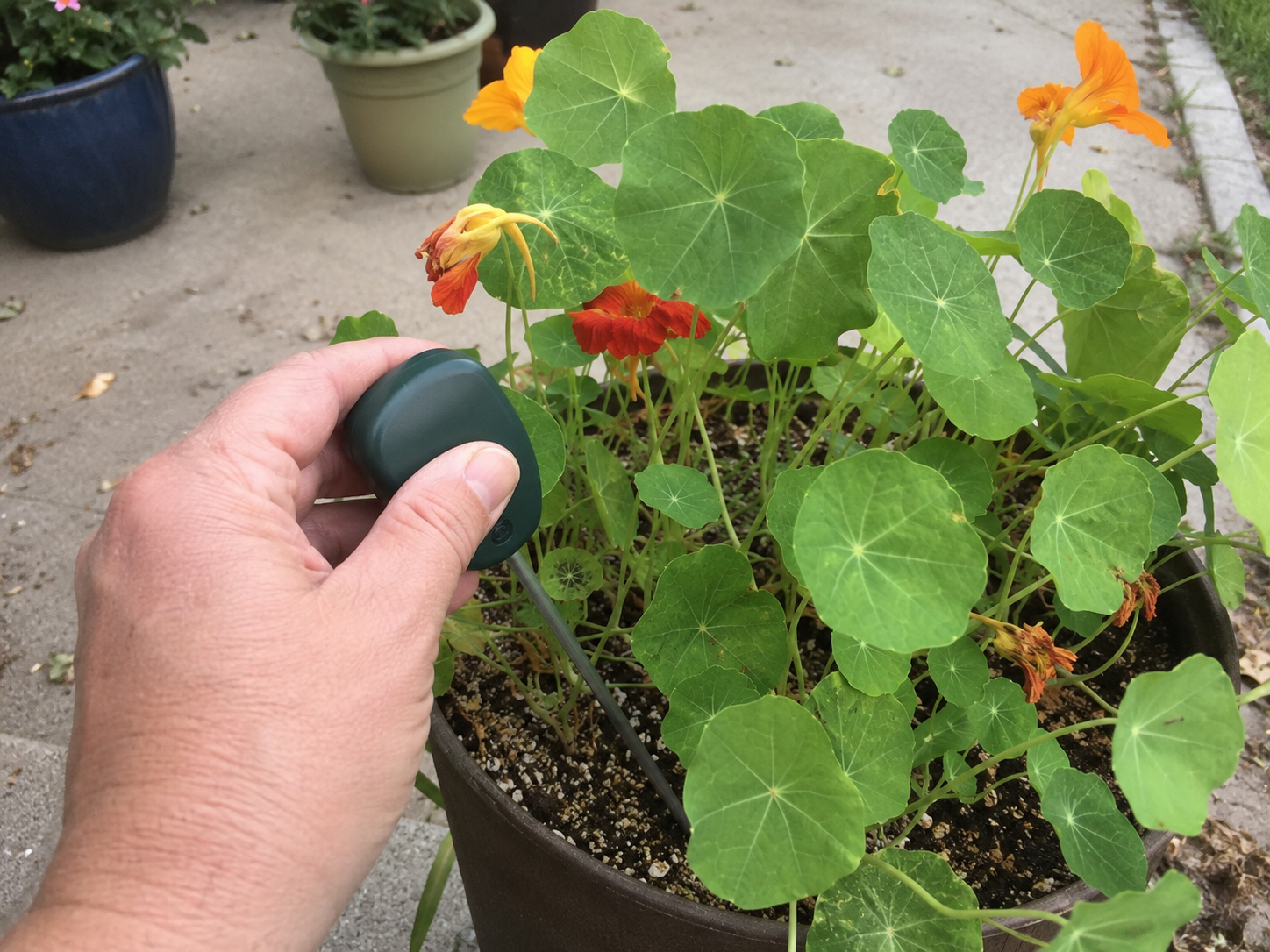
If a garden-grown nasturtium remains pale or stunted after you have ruled out soggy soil, poor drainage, pests, and heat stress, test the soil before adding anything else.
Step 5: Know When You’re Done

Once the plant is growing well, stop feeding. If the leaves later turn pale or growth clearly weakens, reassess the plant before feeding again.
Nasturtiums are light feeders, and more fertilizer usually means more leaves, not more flowers. Thank heavens they don’t have puppy eyes.
Encourage Blooms Without More Fertilizer
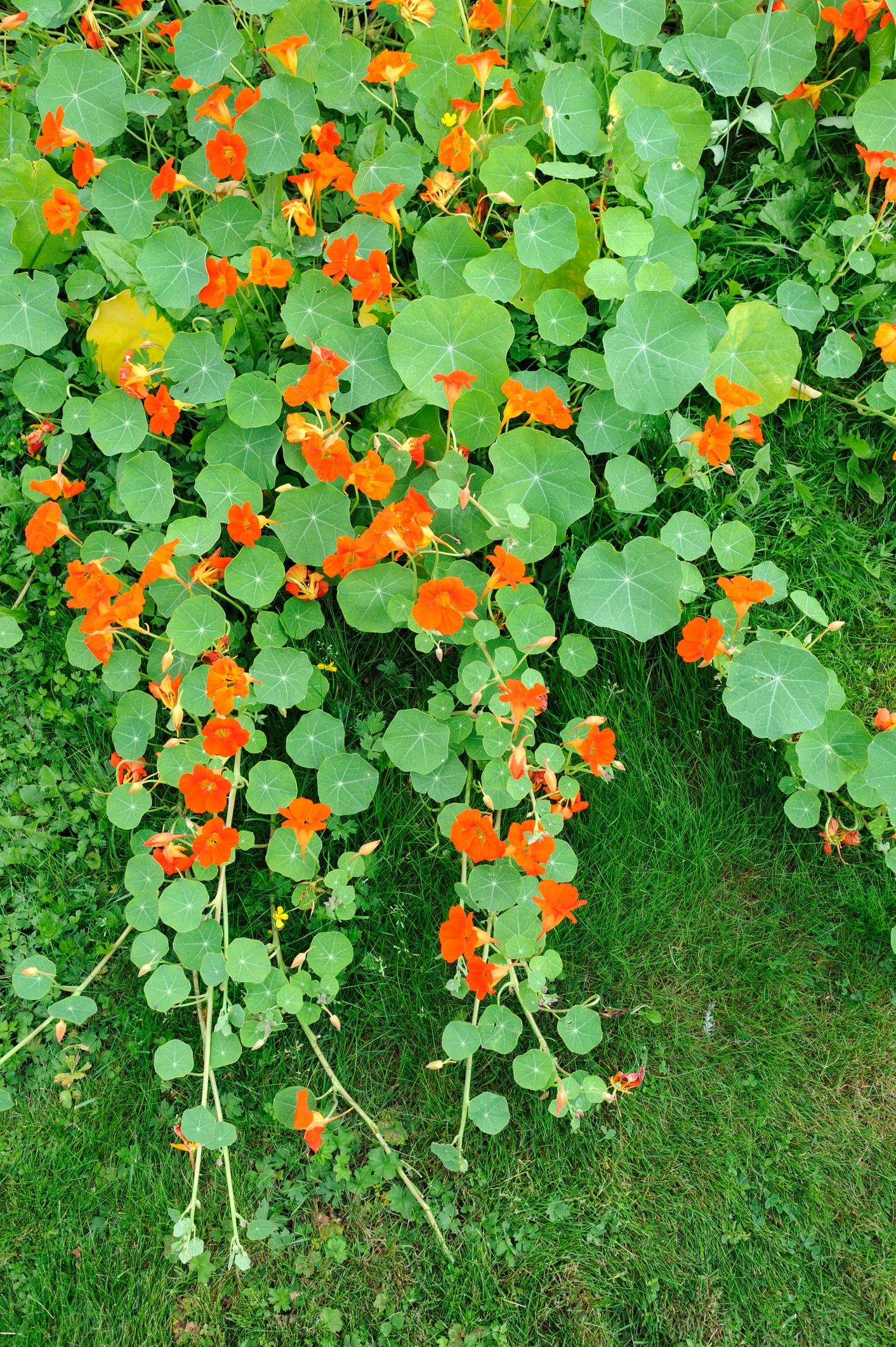
If your nasturtiums are healthy but still refusing to flower, the answer may have nothing to do with fertilizer.
Water by Soil Feel, Not the Calendar
Daily watering is usually unnecessary in garden beds, but containers may need it during hot, dry weather. I check the top inch of soil first. When it feels dry, I water thoroughly and let container plants drain.
Do not let the soil bake completely dry or wait for the leaves to droop. That kind of stress can slow growth and reduce flowering, especially in containers or during hot weather. The goal is not to panic the plant. It is simply to stop treating it like a swamp resident.
Give Them Brighter Light
Too much shade can leave nasturtiums stretched, leafy, and hunting for light like teenagers searching for Wi-Fi.
Don’t coddle them. Aim for at least 6 hours of direct sun each day. In areas with brutally hot summers, morning sun and a little afternoon shade can keep the plants flowering longer.
Quick tip: The goal is brighter conditions, not baked soil. Extreme heat can stress the plant and reduce blooms instead of encouraging them.
Leaf Well Enough Alone

I hope this proves to you that nasturtiums don’t need micromanagement. Actually, the less you fuss over them, the better they often look.
Your work here is officially done. And by work, I mean learning when to leave the fertilizer on the shelf and stifle your inner nurturer.
Nasturtiums are not the only plants that enjoy lean conditions, either. We put together a guide to 14 flowers that grow beautifully in poor soil.