
This is your guide to glorious botanical laziness. You may forget fussy plants, endless watering, and soil so perfect it should have its own bank account.
Some of the world’s most stunning flowers couldn’t care less about your green thumb. Or other fingers, no matter their color.
There are plants so tough and self-sufficient they practically grow themselves, leaving you with more time for …well, anything but weeding. Nobody’s perfect.
Why Native Wildflowers Are the Smartest Choice
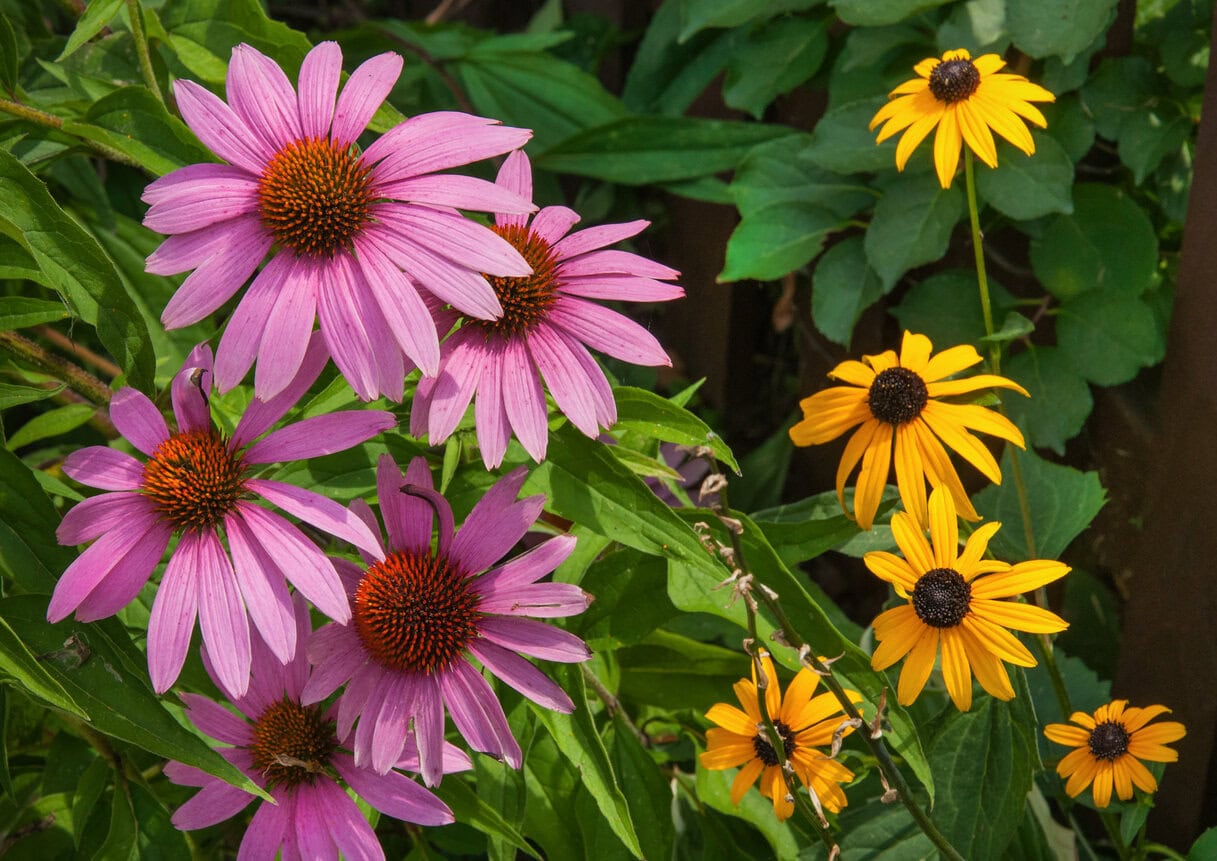
Native wildflowers are the new hire you’ve always wanted. They’re already your local climate experts who don’t need constant check-ins, micromanagement, or a special water bottle.
In fact, they’ll practically do the work for you and free up your time to sit back and actually enjoy your garden.
All that fuss over pricey fertilizers and specialized soil? It can add up faster than you can say “mulch.” Native wildflowers don’t need you to subsidize their lifestyle. They show up and thrive on what’s already there. Drought, harsh winters, and rocky soil? They’ve seen it all, and they’re ready.
And in return for your healthy neglect, they provide a much-needed habitat and food source for local wildlife as they’re perfectly adapted to support local pollinators.
If you’re also looking for larger options, I wrote an article about non-invasive privacy shrubs that grow fast and stay native.
The Best Low-Maintenance Wildflowers
You’ll notice a certain… regional bias. It’s true, many of the world’s most famous “practically grow themselves” wildflowers hail from North America. Yet, don’t expect a conspiracy.
The reason they’ve become staples in gardens worldwide is their incredible resilience and ease of growth. Which is exactly what you want.
1: Blanketflower (Zones 3-10)

This one looks like summer threw a party and forgot to clean up. Gaillardia pulchella bursts into fiery reds, oranges, and yellows that scream sunshine even on cloudy days.
It’s the definition of unfussy, poor soil, drought, and hot sun don’t bother it one bit. Once it’s in, this wildflower self-seeds with gusto, keeping the color coming back like an old friend who never leaves the party early.
And if you love the idea of color without the upkeep, here are some colorful lawn alternatives you can plant instead of grass.
2: California Poppy (Zones 6-10)

While a perennial in Zones 8-10, Eschscholzia californica is an annual in cooler Zones 6-10, where it poppy-s up on its own. It’s a drought-tolerant star that thrives in poor but well-draining soil.
Its silky flowers are a real eye-poppy-ng sight even though they shyly close at night and on cloudy days. The state flower of California is a sun-loving native of the western US and northern Mexico.
3: Black-Eyed Susan (Zones 3-9)
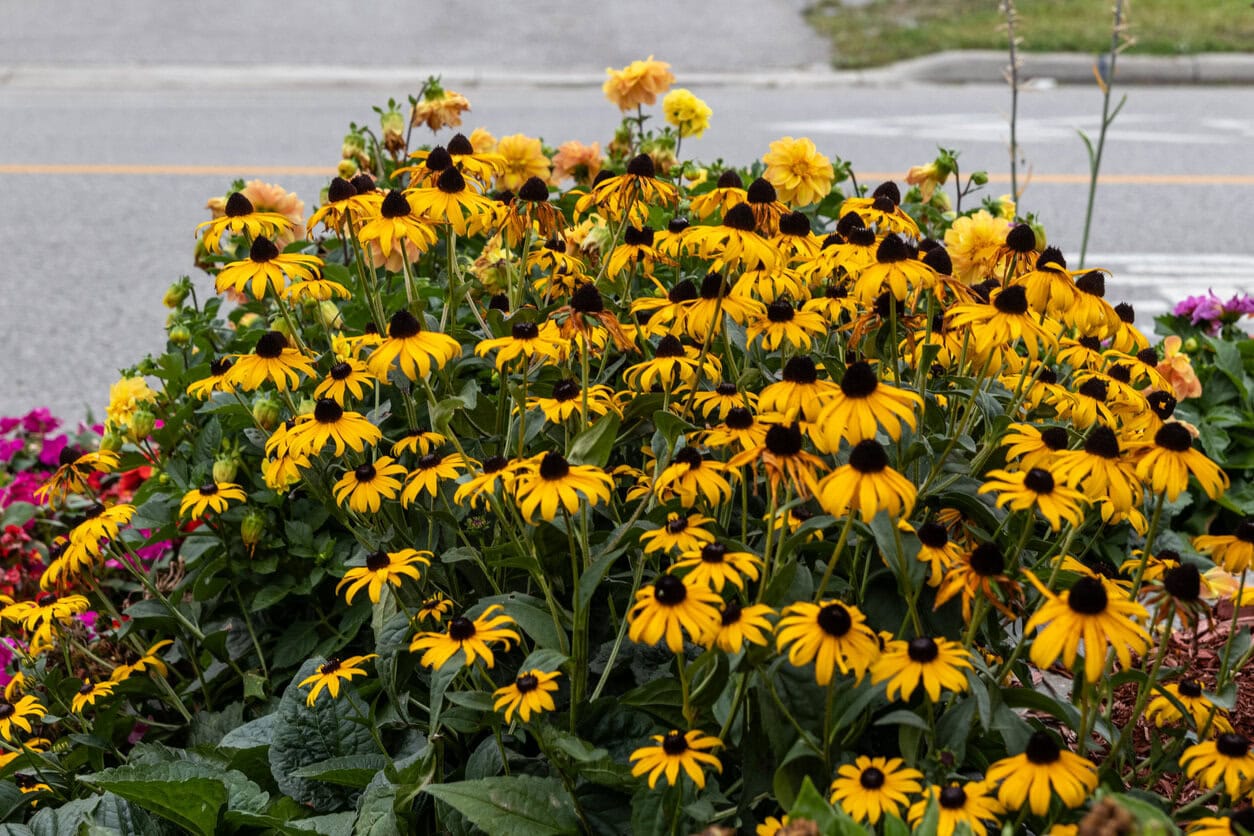
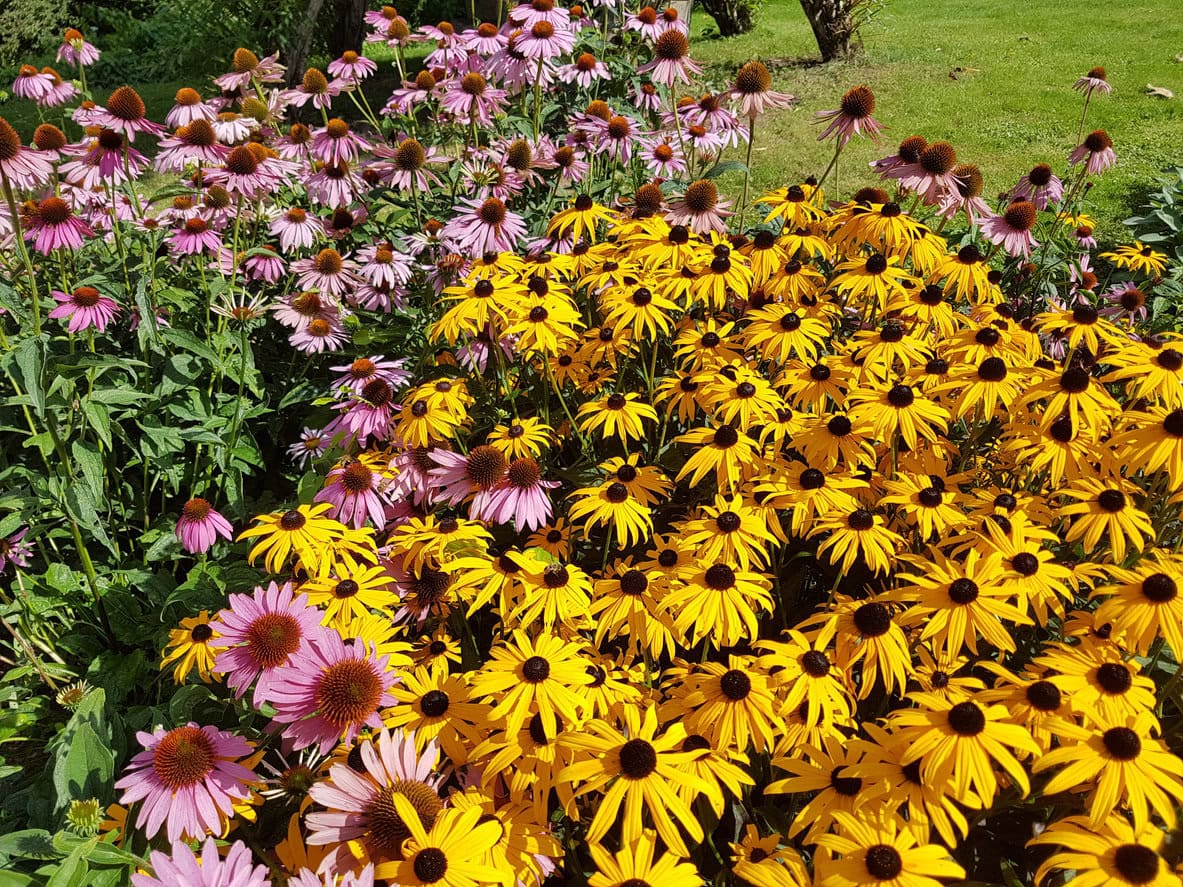
This one is a classic for a reason. Hailing from North America’s heartland, the Black-Eyed Susan is a no-nonsense plant that’s now a common sight in gardens and fields globally.
It’s typically a biennial or a short-lived perennial, but you wouldn’t know it. It generously self-seeds so its bright flowers always come back to the party year after year.
4: Purple Coneflower (Zones 3-9)

This North American native has a lot of fame for its beauty and medicinal properties, but you’ll be happy to know it’s a very cone-venient plant to grow. Once it settles in, Echinacea purpurea handles heat and drought with no issue. Leave it alone and cone-t to it to provide a stunning display.
I also put together a guide on native flowers that attract pollinators if you want to bring even more buzzing visitors to your yard.
5: Common Sunflower (Zones 4-9)

Yes, that iconic giant is a wildflower. A true native of North America, Helianthus annuus (giggles) is a symbol of summer for good reason.
It grows impossibly tall and confident with minimal human intervention. It’s an expert at self-seeding, so you can continue to enjoy its magnificent presence long after you’ve stopped trying.
6: Wild Lupine (Zones 3-8)
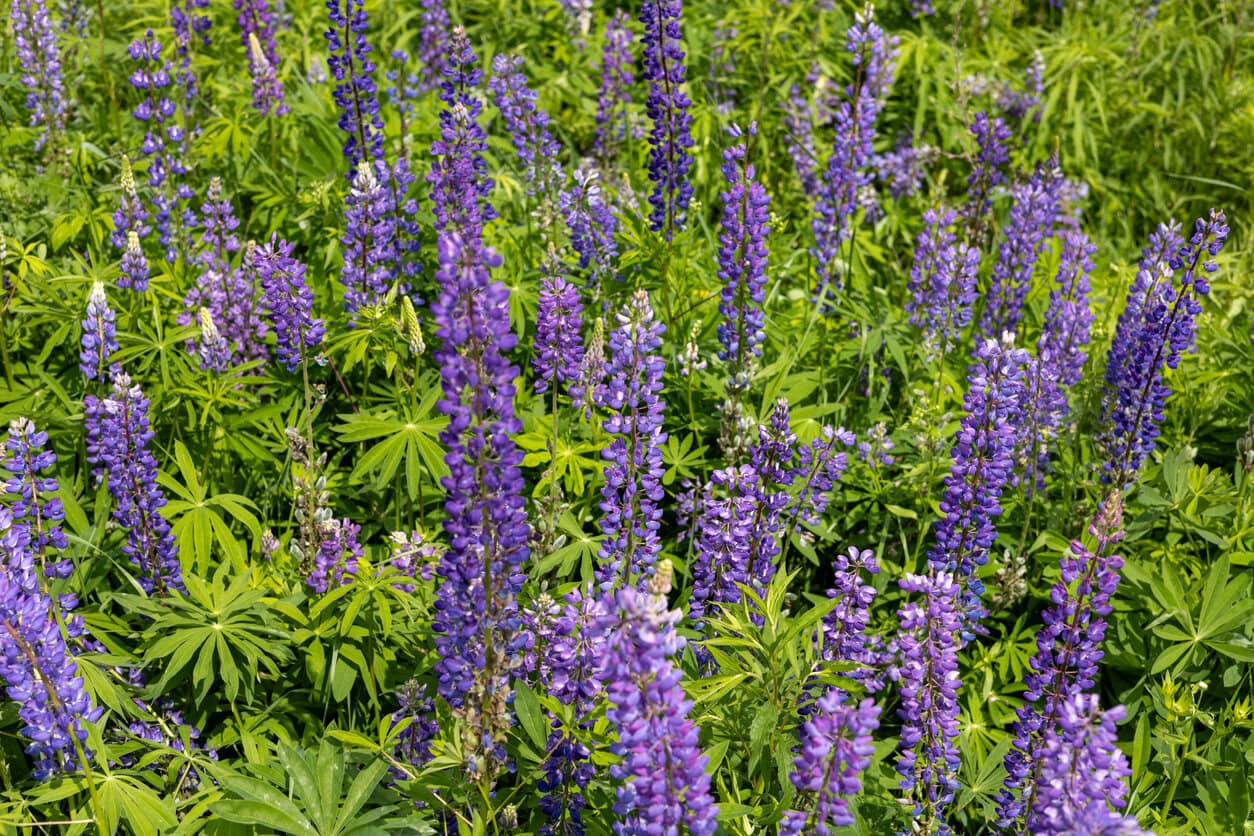
A North American native, Lupinus perennis is a gardener’s best friend that helps out in two big ways. First, it sends up stunning spires of blue, purple, and white flowers. Second, and this is the best part, it improves the very soil it grows in. Wild Lupine is so low-maintenance, it will make you howl with delight.
7: Yarrow (Zones 3-9)

If you think you have a brown thumb, Yarrow is the plant for you. This world traveler, with species found throughout the Northern Hemisphere, is the gardener’s best friend. It barely notices drought or poor soil.
Achillea millefolium will give you beautiful flowers and attract pollinators while you get on with your day. The only way it’s an Achilles heel is if you’re a demanding gardener because this plant thrives on neglect.
8: Bee Balm (Zones 3-9)

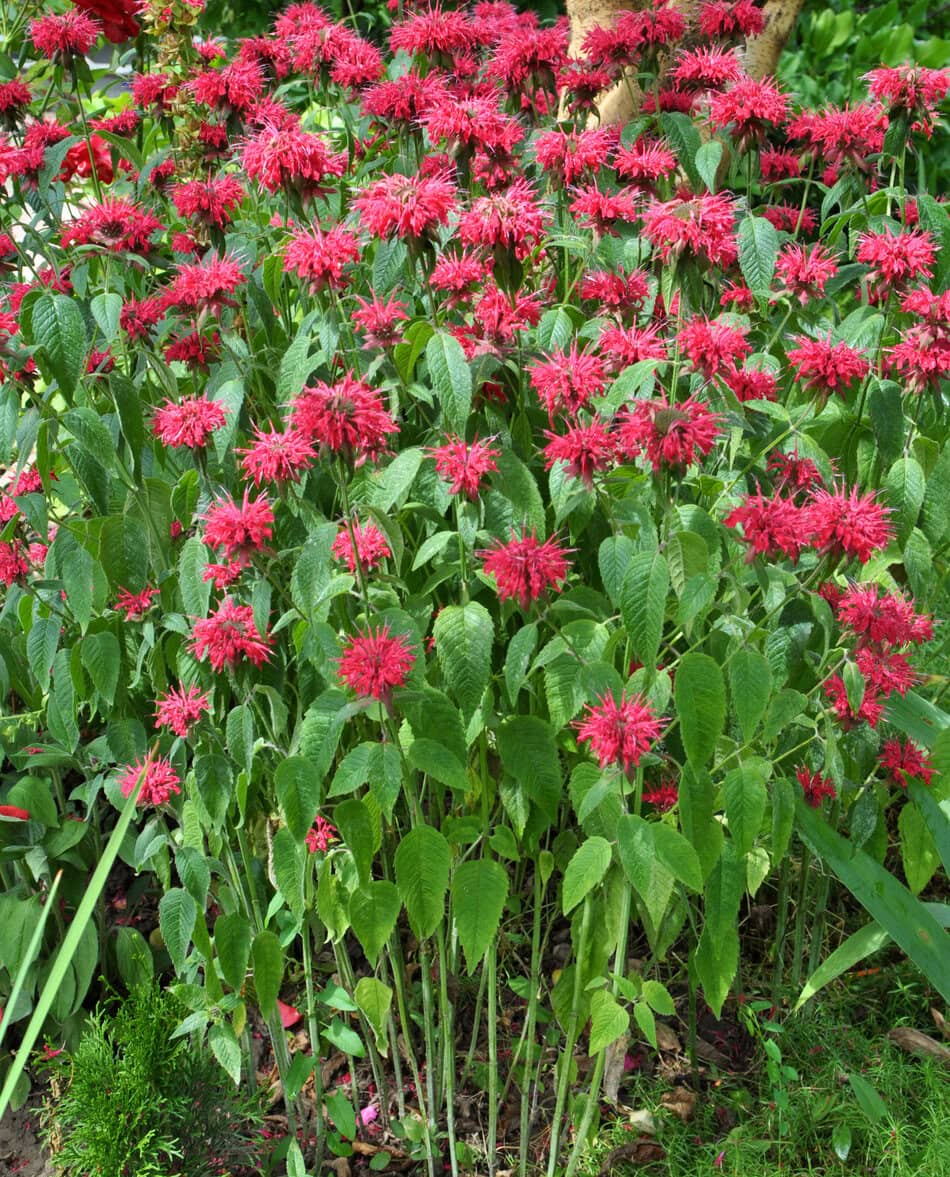
If you want to run a pollinator nightclub, Bee Balm is your headliner. Monarda fistulosa sends up shaggy lavender-pink blooms that lure bees, butterflies, and even hummingbirds to your garden.
It’s a native that thrives on neglect, spreads easily, and bounces back year after year. Plant it once and watch your garden turn into a buzzing VIP lounge without you lifting a finger.
Want even more ideas? Take a look at these native plants that support pollinators in Midwest gardens.
9: Evening Primrose (Zones 4-9)

Evening Primrose is a serious night owl. Native to North America, this hardy biennial spends one year getting comfortable and the next putting on a show. Its pale-yellow blooms open only after dark, just to be extra. Oenothera biennis takes care of its own business, generously self-seeding so you don’t have to.
The Fine Print of Planting Wildflowers Responsibly
Just because a plant is low-maintenance and self-seeding doesn’t mean it’s a good citizen everywhere.
In fact, the very same trait that makes a flower “grow itself” can also make it a little too good at it in a place where it’s not native.
The reality is, some of these low-maintenance flowers can crowd out native plants. So before you start, find out if they’re a good fit for your area.
Your local native plant society, an agricultural extension office, or a national invasive species database are all great places to check.
If you’re planting in spring, don’t miss my list of spring-blooming native plants to keep the color going early in the season.
A Simple Guide to Growing Wildflowers
Growing wildflowers is easier than you think. You can plant the seeds in a sunny, clear patch of soil in the fall or early spring. Don’t worry if your garden looks a little empty the first year as that’s just part of the process.
Until the plants are established, make sure to keep the weeds in check and give them a little water. At the end of the season, simply cut them back. This allows them to self-seed for next year, and you’ll be glad you leaf-t them alone.


