Summer annuals often have super short bloom times, and they’re pretty much gone by the time you really start to admire them.
However, there are ways you can extend their bloom time and even get them blooming well into fall!
In today’s article, let’s discuss summer annuals in detail and try to figure out what exactly you can do to keep them blooming into fall. Trust me, you’re going to love this one!
Yes, It Is Possible To Keep Certain Annuals Blooming Until Fall!

While this might sound too good to be true, it is actually completely possible to keep certain annuals blooming well until fall!
More often than not, the trick here is to pinch the annuals timely or make trims that specifically help you achieve that goal of extending bloom time. Unfortunately, every annual reacts to pinching and pruning differently, so you can only use this trick with a select few annuals.
While the main trick to extending bloom time is cutting back and deadheading, remember this isn’t an all-or-nothing choice.
Friendly reminder: This it totally optional! Snipping spent flowers will give you more color, but you can always leave a few faded blooms for the birds if that’s your goal. Most summer annuals (like petunias, impatiens, coleus, or begonias) don’t really offer much in terms of seeds or shelter, though zinnias, marigolds, and sunflowers are small exceptions.
List Of Annuals & How To Keep Them Bursting With Blooms

1: Petunias

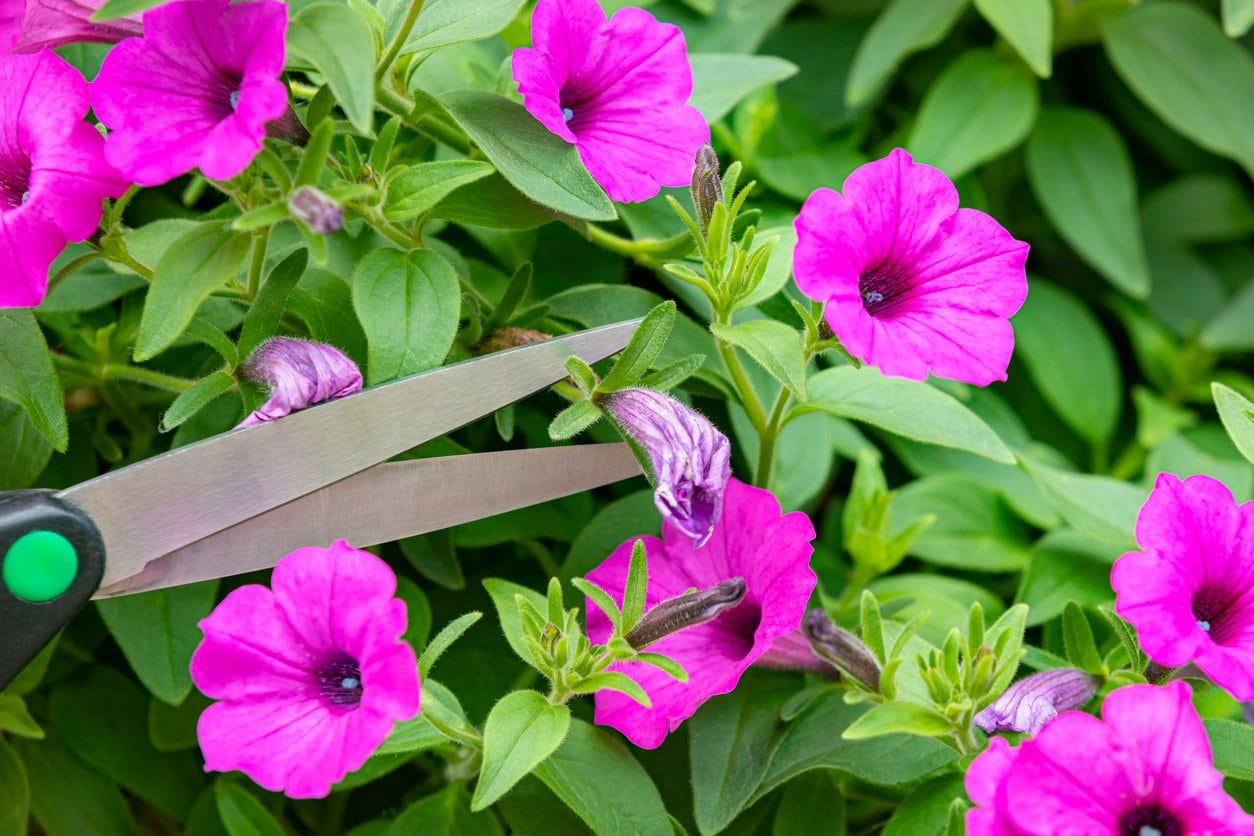
For petunias, you want to cut back their leggy stems by one-third and deadhead fading blooms weekly in order to achieve better growth and flowering longevity.
Try to feed the annuals a phosphorus-heavy liquid fertilizer every 2 weeks to keep the results coming.
Petunias really come alive with regular trims, and if you’re building mixed pots, here are more flowers that thrive in fall containers.
2: Marigolds

Remove spent flower heads from marigold plants before they set seed. Rather than watering lightly and conservatively, water deeply at least twice a week. Since marigolds thrive in moist soil, mulch comes in handy for moisture retention and temperature regulation.
3: Zinnias

Once zinnia blooms begin to fade, make cuts right above the leaf node to achieve faster regrowth. If you see some leaves that are visibly infected and weak, remove them before they cause any trouble.
Ideally, you should be fertilizing zinnias monthly with a balanced fertilizer to support continuous flowering into fall.
And while you’re trimming zinnias, don’t forget, early fall is also a great time to divide some perennials for a better spring show
4: Impatiens

For impatiens to grow and bloom well, sufficient, consistent moisture is very important. Spent flowers should be deadheaded in a timely manner to help conserve energy and redirect it to blooming, which is more productive.
Applying compost or a liquid fertilizer every couple of weeks can really add that boost that your impatiens will need going into fall.
5: Begonias

Pinching faded flowers and removing discolored leaves regularly can really contribute to extending the bloom time of begonias. Water this annual at the base and avoid getting the foliage wet to prevent mildew problems.
If your begonias look visibly weak and tired, it may be a good idea to add some fresh potting soil to their base. Also, feeding them monthly with a balanced fertilizer also helps them stay vibrant into fall.
Tidying up begonias in September also fits into the wider picture, here’s a list of perennials worth trimming now for stronger blooms next spring
6: Geraniums (Pelargoniums)

In the case of geraniums, you want to go hard on the deadheading and remove entire flower stems instead of just petals. To promote dense and compact growth, trim back weak and lanky stems and feed your annual with a specialized bloom-boosting fertilizer every 2 weeks.
7: Verbena

Cut back verbena plants lightly in August to trigger a new flush of blooms. Any faded flowers should be removed early on, before the seeds develop. This annual requires plenty of sunlight to produce meaningful growth, so 6-8 hours of sun exposure daily is a must.
8: Coleus

Although coleus is typically grown for foliage, its flowers do still affect growth. You want to pinch off flower spikes right after the plant is done blooming to help direct energy towards producing denser, more stunning foliage. Weak stems should be trimmed back to prevent legginess.
After any sort of pruning, it’s essential that you water the plant immediately, as stressed coleus will typically bolt and stop producing the vibrant foliage it’s known for. Also, a light feeding once a month helps to keep the foliage colors bold and healthy.
If you’re not sure which flowers are worth deadheading this month and which to skip, here’s a handy September deadheading guide
9: Calibrachoa

This unique, colorful annual requires a bit of deadheading as well as a light trim by cutting back the longest stems by a few inches in order to achieve nonstop blooms. Due to their heavy feeding habit, you want to fertilize calibrachoas once every 1-2 weeks and keep the soil moist consistently.
Let’s Conclude
Because I love plants and bushes that bloom for long periods of time, you can just imagine how frustrating I found most summer annuals to be.
The ones I mentioned in this article are some pretty popular names, but fortunately for me, their bloom time could be extended with the help of some special knowledge and common gardening tools.
Now, it’s time for you to experiment with these and let me know which ones work best for you. Good luck! And if you’d like more ideas, here are some fall-blooming flowers that keep the color going even through frost.