
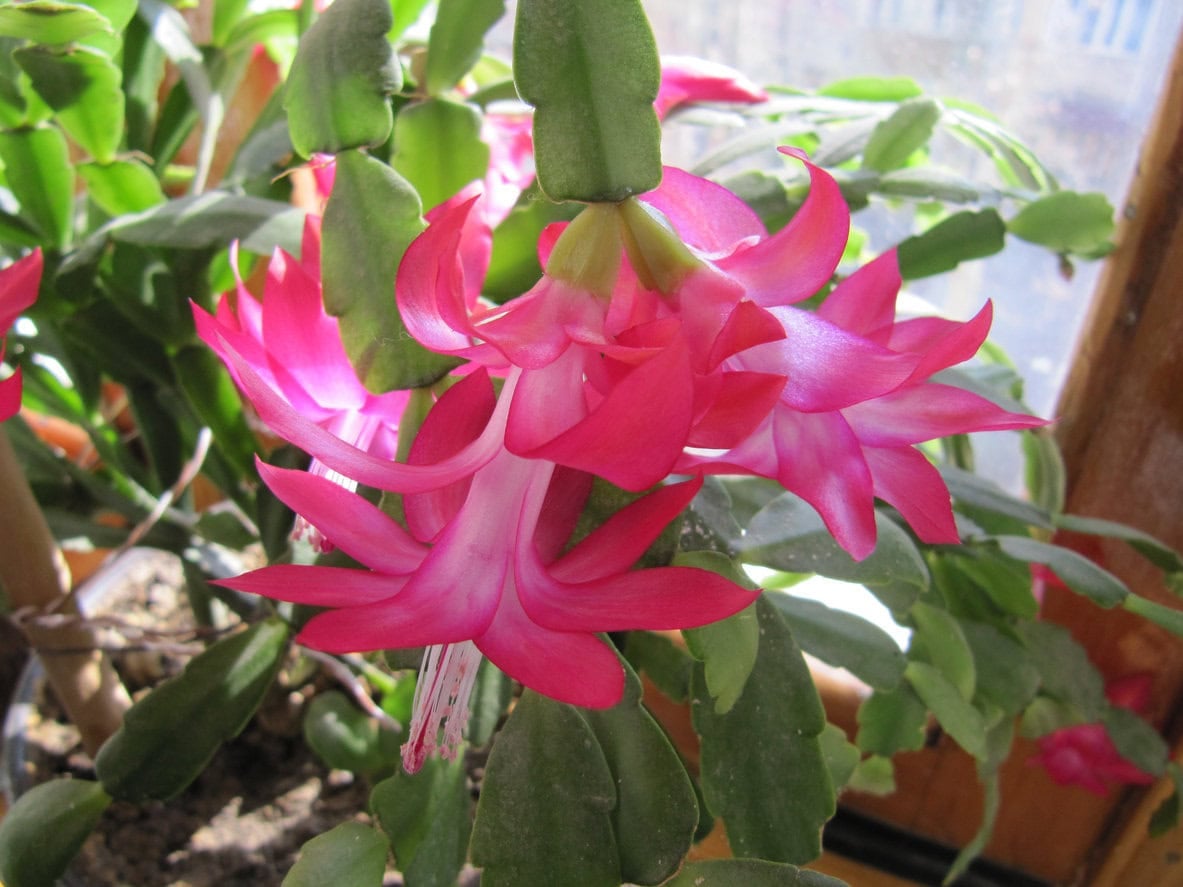
Your Schlumbergera needs a careful diet as much as my extended family. And while I do not expect my cousins to suddenly flower (a disappointment I have learned to manage), I do have high expectations for my Christmas Cactus.
My trick is in dialing in the perfect micro-snack every month. Get the feeding right, and you earn your spot on the nice list.
Your Christmas Cactus Has Standards
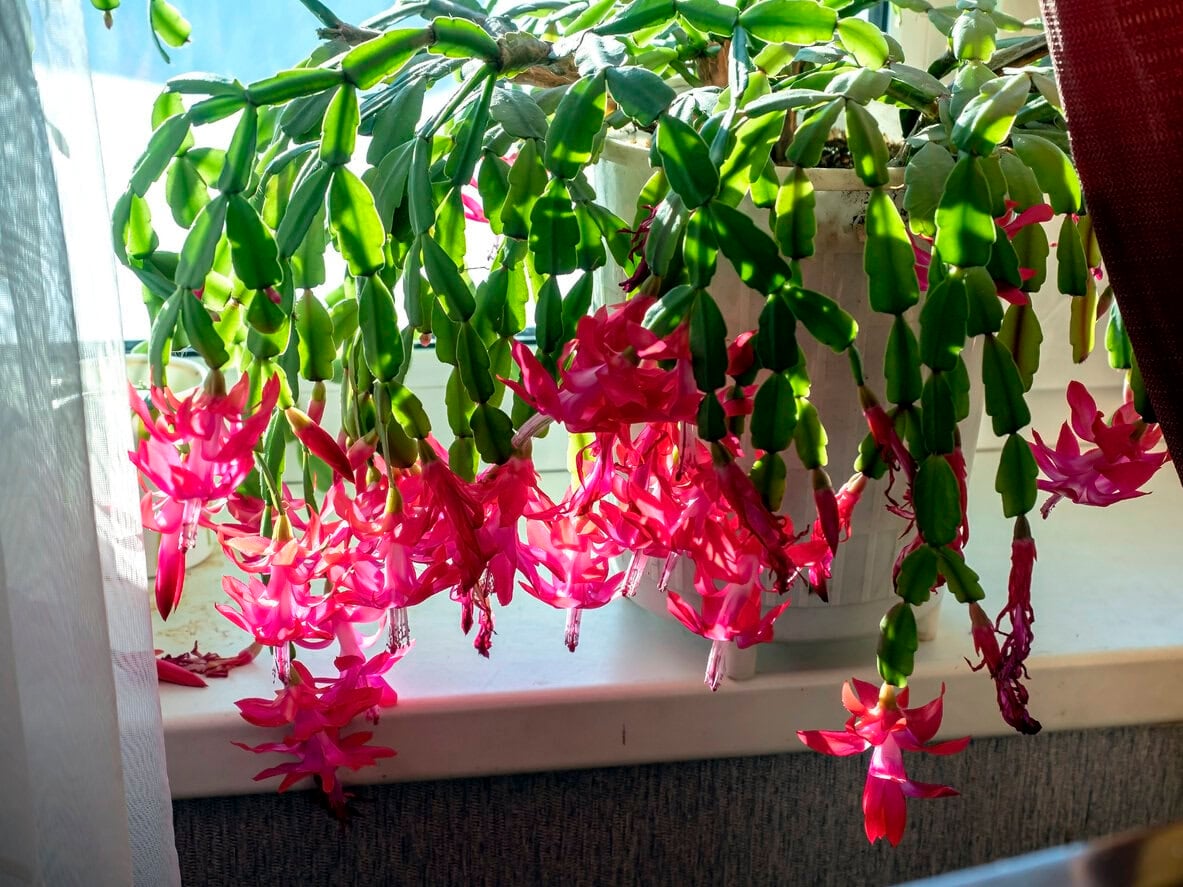
Here comes the truth that separates the flourishing from the flailing. Your Christmas Cactus prefers to dine lightly. As an epiphyte, it’s used to the bare minimum in life. Yet, people manage to overfeed it into oblivion because it can’t get away from the table.
But do not mistake “not a heavy feeder” for “no feeder at all.” It still requires a steady but diluted drip of nourishment. Proper nutrient micro-dosing creates roots stronger than a politician’s alibi, and such robust roots fuel stunning flowers later on.
The only danger? Over-fertilizing. Full-strength doses leave accumulated mineral salts, causing leaf burn and root damage.
Feeding matters, but location plays just as big a role, here’s where to put a Christmas cactus for maximum blooms so all that careful nutrition actually pays off.
The Approved Menu
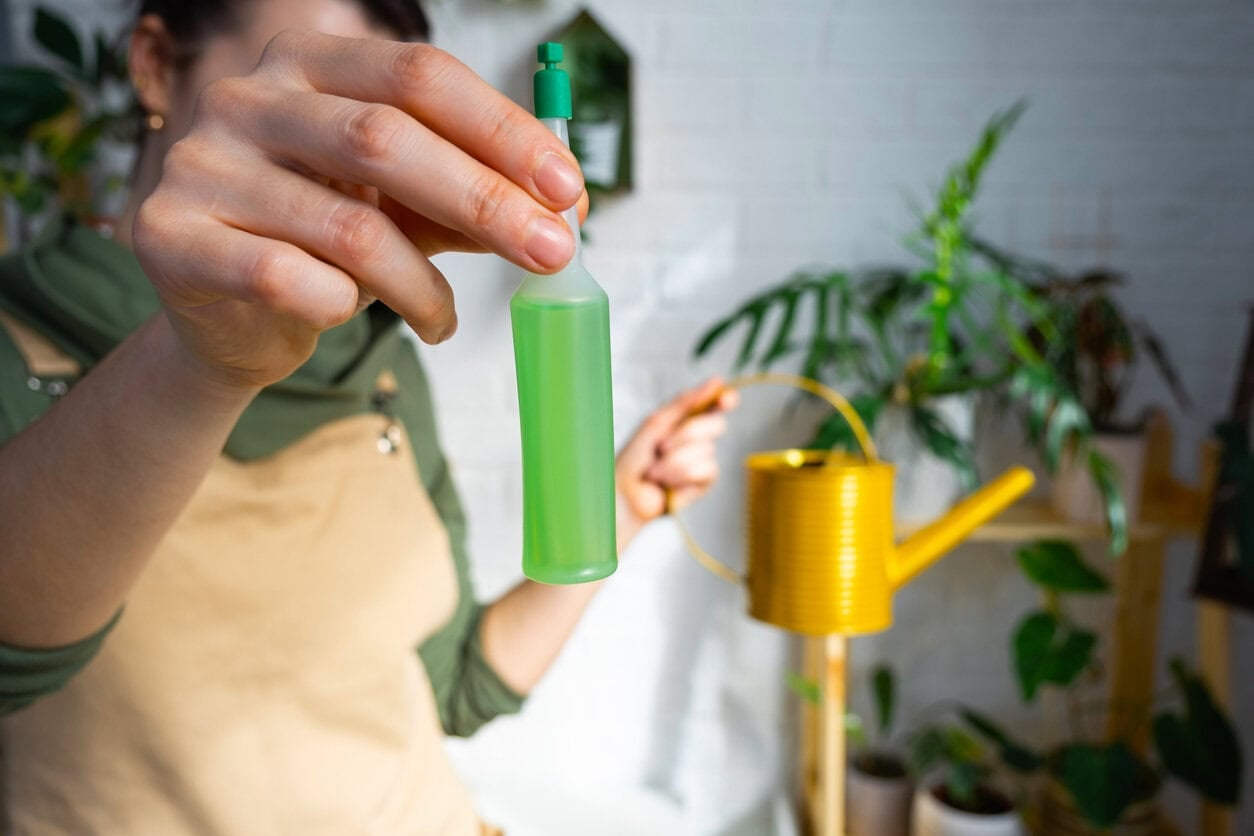
The golden rule of light feeding your cactus is dilution. Now, let me tell you the specials.
The standard diet, once the holiday blooms fade, is a balanced fertilizer such as 10-10-10 or 20-20-20. Feel free to ghost the directions on the bottle as the solution needs to be half or quarter strength.
Later, for pre-show training, switch to a bloom-focused fertilizer (to support flower development) with higher phosphorus content in late summer.
Beyond the standard, you can optionally treat your plant to some Epsom salt. Mix one teaspoon into one gallon of water or four liters and use this solution instead of plain water once during the entire active growth period. If magnesium is lacking, Mg in Epsom salt spurs chlorophyll production and makes the segments richly dark and efficient.
Never, ever apply fertilizer at full strength. A light feeding is a safe feeding, minimizing the chance of fertilizer failure of epiphytic proportions.
Even perfectly diluted fertilizer can cause problems if the soil drains poorly. This guide to the best soil mix for Christmas cactus explains how to keep roots healthy and prevent salt buildup.
The Month-by-Month Feeding Schedule
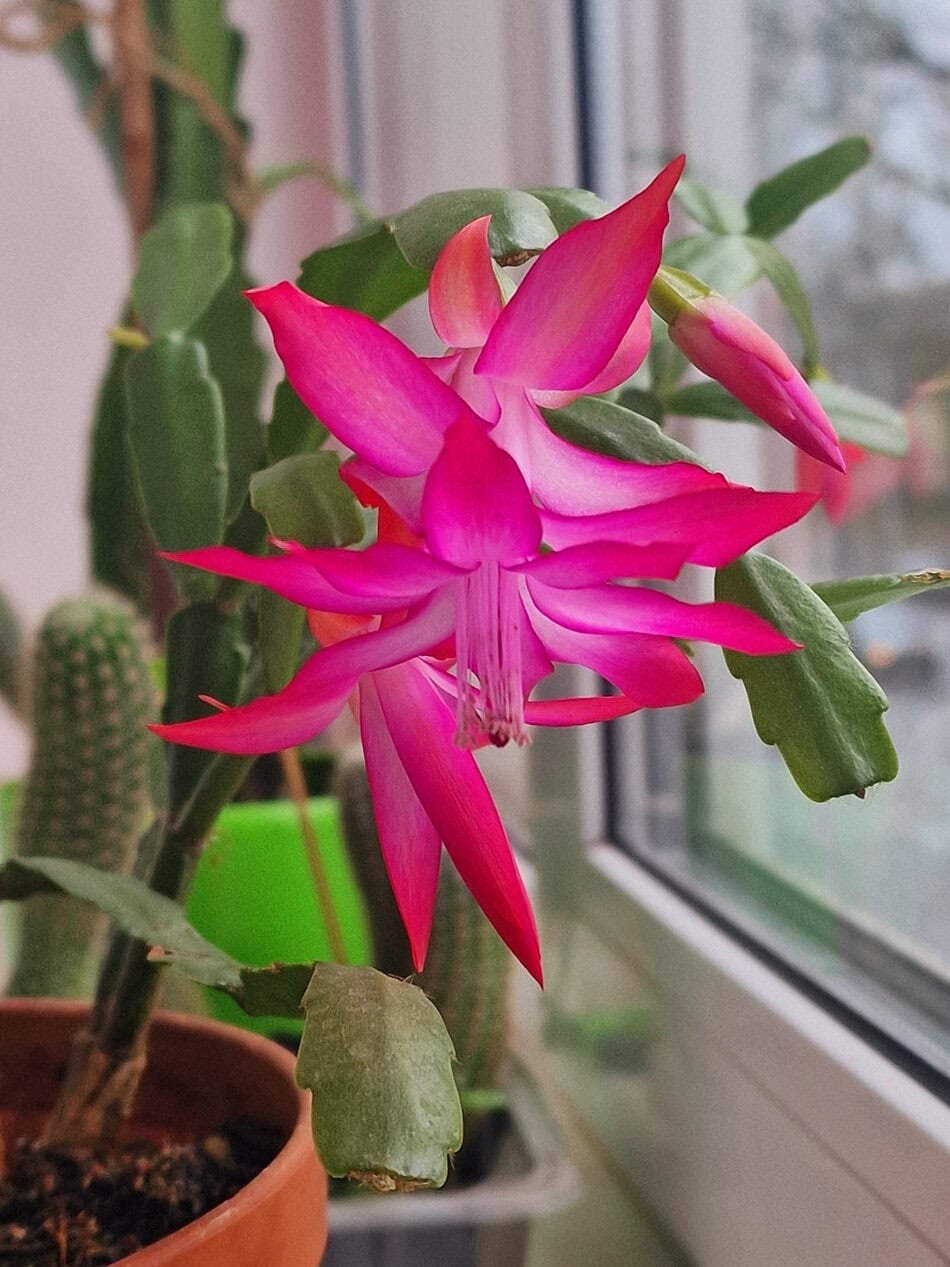
Schlumbergera’s feeding routine is so detailed, it makes celebrity diets look simple. This feeding plan is just one part of proper care. Take a look at our Christmas cactus care calendar to see how light, watering, temperature, and timing all work together.
January and February: No Fertilizer!
The plant has just wrapped up its starring role and is officially in post-performance recovery. It needs minimal attention. Absolutely no sudden moves. Zero fertilizer. None. Nada.
Focus only on light, careful watering. Winter is a quiet time for your cactus to restore its reserves.
The post-bloom rest period is also when I usually prune, if needed. Take a look at our guide on the signs it’s time to prune your Christmas cactus to see whether trimming makes sense this year.
March: Light Fertilizer

Spring light arrives, and with it the growth cycle gently restarts. Schlumbergera is awake and ready for its first tiny (!) meal.
Begin with the diluted balanced fertilizer (remember that half or quarter strength?) once a month. You need to ease it back into action and apply the food only after thoroughly watering the plant.
April and May: Regular Fertilizer
Your cactus is busy constructing the supportive structure for the December show. Now is the time to increase the frequency.
Feed your plant every two to four weeks, and don’t forget the quarter-strength dilution. Consistency is key because missing a feed can compromise the whole framework. This time frame also works perfectly for that (single!) light Epsom salt dose if you plan to boost magnesium this year.
June and July: Regular Fertilizer

It’s the heart of summer, and your cactus is focused on maximum segment development. It requires sustained nourishment in this period, so keep the feeding schedule consistent every two to four weeks using the light dilution.
Yellow heat alert! Avoid applying fertilizer during extreme heat waves because this amplifies the risk of salt burn.
August: Final Fertilizer
August is where the whole operation changes. The days shorten, and the plant needs to realize its party season is approaching.
The time has come to slowly reduce the feeding frequency to just one final boost this month. Make that one meal the introduction of the higher-P bloom fertilizer. Your goal is to prioritize future flowers over new leaves.
Fertilizer timing is only one piece of the puzzle. This guide explains the most common reasons a Christmas cactus won’t bloom and how to fix them.
September: No Fertilizer!

Your cactus requires cool nights and uninterrupted darkness to set its buds. Any distraction now is a threat. Lock the kitchen and lose the key.
Fertilizer now is an unwelcome distraction because it encourages new leaves and directly interferes with the setting of those gorgeous buds.
October: No Fertilizer!
October is all about the final preparations. Bud formation is fragile, so do not interrupt the genius at work. The rule is simple: zero fertilizer for your cactus.
Focus instead on maintaining a stable environment, and most importantly, prioritize cool night temperatures. A temperature drop will help the cactus lock its buds into place.
November and December: No Fertilizer!

Your cactus is ready to show off its stunning flowers and demand all the attention. Once again, set the fertilizer aside. You feed it now, you risk shocking its system or shortening the bloom time.
Just enjoy the show. Once the blooms completely fade in late winter, gradually reduce watering to signal the start of the rest period.
If you have a Thanksgiving cactus, follow the same fertilizer rules about one month earlier, meaning your “January” phase begins in December.
If you have an Easter cactus, follow the same fertilizer rules a few months later, meaning your “January” phase usually falls around March or April, after flowering ends.
Watering & Feeding Are BFFs

Applying fertilizer is merely step two; the first rule of feeding is keeping your cactus hydrated.
What greasing the pan is to a perfect cake, thoroughly watering first is to avoiding root burn. For a clear, step-by-step explanation, take a look at my guide on how to properly water a Christmas cactus to prevent rot, stress, and nutrient lockout.
When You Fail the Diet

Despite our careful schedule, mistakes happen.
If you see these signs, the emergency protocol is to flush the soil. Run clear water through the potted plant for ten minutes straight. Wash excess salt out of the soil and offer the roots a reset. After the flush, forget to fertilize your cactus for at least a month.
Pale or washed-out segments don’t always mean a feeding issue! Here’s how to tell if your Christmas cactus looks faded due to light, nutrients, or something else.
You Have Both Survived the Diet Plan
Coincidence? No. You nailed the nutrition. Kept the dilution light and the timing strict. Now get ready for the inevitable, spectacular, dazzling December show. You have a huge reason to brag, and your cousins still do not flower. Win-win.





Do you have a printed copy of this article?
Hi Sharon 🙂 We don’t have a separate printed copy at the moment, but you can print the article directly from your browser so you have a copy to keep handy.
Thanks for the helpful tops. I will be frying this
⁰
Hi Melody 🙂 You’re very welcome! I hope it works well for your cactus this year.🤞
How big of a pot should I put my cactus in. And can it go in a hanging basket
Hi Trudy 🙂 Christmas cactus actually blooms well when it’s a little pot-bound, so don’t go much larger than the root ball. A hanging basket is absolutely fine as long as it has good drainage, and the cascading stems look beautiful that way.
It is midway through August and I just am now seeing this is it too fertilize and expect blooms? Thank you, Denise
Hi Denise 🙂 I’m only seeing your comment now, so at this point I’d skip the fertilizer and let the plant focus on setting buds. Give it bright indirect light during the day, cooler nights, and about 12 to 14 hours of darkness each night for several weeks to encourage blooming.
My cactus hasn’t bloomed in years. I water it once in awhile when it is really dry. I didn’t know what to feed it,so it usually just gets water I keep it in front of a window where the miniblind isn’t open much and the smaller one in a dark bedroom. Tell me how to help them thrive and bloom.
Hi Sharon 🙂 I’d give both plants much more bright, indirect light during the day. They shouldn’t stay dark all day. In fall, give them about 12 to 14 hours of darkness at night and cooler nights around 55 to 65°F to encourage buds. Also water when the top inch of soil dries rather than letting them get completely parched.
Thank your the wonderful information. My question is that I get tiny buds and they never develop, lthey fall off! What do I need to do? Thank you!
Hi Nicole 🙂 Tiny buds dropping is usually more about stress than fertilizer. Keep the plant in a stable spot away from drafts and heat, water when the top inch of soil dries, and avoid moving it once buds appear. Sudden changes in temperature, light, or moisture can make those little buds fall.
Very good article, given me lots to think about! So why is my plant turning reddish? I know it’s stress, so I took it out of the hot conservatory but it’s not responding much!
Hi Jan 🙂 The hot conservatory and strong light are probably the biggest culprits. Christmas cactus often turns reddish when stressed by heat or too much direct sun. Moving it to bright, indirect light was the right move, but the color can take a while to improve, so don’t expect an immediate change. Keep watering when the top inch or so dries. New growth should give you a better idea of how well it’s recovering.
This has been good information about the Christmas cactus. Maybe I’ll get some flowers now!
Hi Ruth 🙂 I’m glad it helped! Hopefully this is the year you get a really good show of flowers. 🤞
Excellent information!!!
Hi Yolonda 🙂 Thank you so much! I’m really glad you found it helpful.
Thank you for the information and instruction. I love my Christmas cactus but didn’t know how or when to fertilize, if at all.
Hi Janet 🙂 You’re very welcome! I’m glad the guide helped clear that up. Once you have the timing down, it gets much easier to know when to feed it and when to leave it alone.
Thank you!
Hi Darlene 🙂 You’re very welcome! I’m glad it helped.
I have not fertilized my Christmas cactus at all is it to late for me to fertilize
Hi 🙂 It’s not a problem that you haven’t fertilized yet. I’d skip feeding now and let the plant focus on setting buds. You can start a light feeding routine again when active growth resumes in spring.