

Did your Schlumbergera decide to cosplay as a ghost of Christmas Cactus Past? Or is it auditioning for a Bleach Company ad?
That unsettling paleness is not a poorly rendered grayscale filter, but SOS, Save Or Sigh. Prepare to interrogate your care routine and answer your cactus’s cries for gingerbread cookies. Aid, I meant aid.
The Goldilight Zone
Your cactus is a curious celebrity. It loves the spotlight, but only if it’s filtered, indirect, and offered with a smile.
Too Much Time on the Tanning Bed

When fierce sunlight torches a thriving Schlumbergera, it swiftly transforms into a pale shadow of its former self. And plant sunburn is every bit as bad as it sounds.
The intense rays annihilate chlorophyll, forcing the segments to bleach. The plant is not pursuing artistic tendencies. It’s desperately shedding color to reduce light absorption, sacrificing pigment for survival.
How to Recognize It
They shift from lively green to yellow, then pale yellow-white in severe cases. You might also notice segments develop unsightly reddish-pink edges, like that rash you now so regret. When you spot this kind of color loss, the plant needs immediate relocation before it scars permanently!
The Dark Side of the Cactus
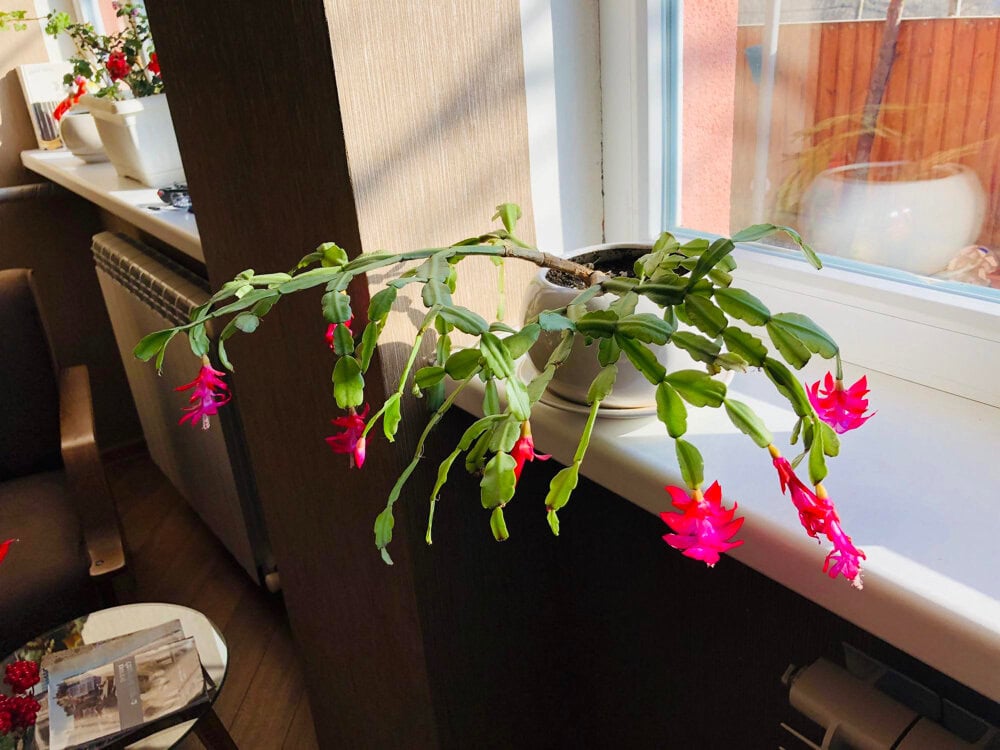
Shoving your cactus into a forgotten corner invites a separate brand of pallor: etiolation. When proper light disappears, the plant initiates a desperate stretch. It begins frantically producing hormones that command the segments to become a noodle in an awkward hunt for the sun.
With so little light, it can’t produce enough chlorophyll either! So color fades, energy tanks, and the whole plant starts behaving like it’s late for a spotlight audition it never rehearsed for.
How to Recognize It
New growth turns thin, long, weak and notably pale (a sickly, washed-out green) than the rest of the plant. Sparse segments and elongated joints confirm its dedication to a new career path. Becoming the world’s most delicate Tagliatelle à la Schlumbergera, rather than a lush epiphyte.
That Light Just Right:

Rectifying these light-related woes is relatively simple: find the “sweet spot” that mimics its natural jungle environment. You remember, it is used to growing under a dense tropical canopy.
How to Fix It
This means you must either escort the pot to an east-facing window for gentle morning sun or position it several feet away from a bright south or west window. The goal is reliable indirect light. If you absolutely must place it in a sunnier locale, draw a sheer curtain to filter the rays.
Then monitor the color change diligently over two weeks. Within a couple of weeks, you should witness a happy cactus regain its rich green hue!
If your cactus grew long, floppy segments while stretching for light, you can shape it back. Here are 7 signs it’s time to prune your Christmas Cactus.
The Hydra of Hydration
Your cactus is incapable of simply asking for a drink, unlike your favorite uncle. And you can’t just let it drown or shrivel, can you?
One Too Many

When they hear ‘cactus,’ people often think of parched deserts, surely not the humid Brazilian rainforests. Yet, the jungle canopy is where Schlumy comes from. It is a cactus only in the loosest sense, which directly leads to the most frequent care error: overwatering its roots.
Make someone who literally lives on a tree swim, and they will drown. Similarly, Christmas Cactus roots will suffocate and rot when overwatered. When this vital system fails, it cannot deliver oxygen or nutrients upward!
How to Recognize It
In early stages, the plant droops and feels limp, but as rot progresses, segments will turn a translucent yellow-pale and often feel soft or mushy to the touch. This kind of plant meltdown is the beginning of root rot.
Dry as a Lime-basket

On the flip side, sometimes you forget about your plant entirely. Unlike the translucent yellow of overwatering, dehydrated plant segments lose their usual sheen.
They take on that tired, washed-out appearance as if they partied two nights in a row. That type of paleness implies that the plant is too dry and needs thorough soaking, not just a measly sprinkle.
How to Recognize It
In dehydration mode, segments often look thin, wrinkled, or shriveled at the joints, with a dusty, exhausted texture. As the plant completely depletes its water stores, pads fold inward and turn slightly pale or gray-green, signaling that it desperately needs a proper soak
How to Water Without Consulting an Oracle:
Avoiding both hydration disasters hinges entirely on your schedule and soil checks. First, verify your pot has adequate drainage holes, as standing water is your enemy #1.
Second, never estimate the moisture level. You must stick a finger or a probe two inches deep. (Into the soil.) Only when the dirt feels completely dry should you water. Then, water thoroughly until the excess flows out the bottom. (Of the pot.) That’s how the roots get their fill, after which the soil can take a breath.
How to Fix It
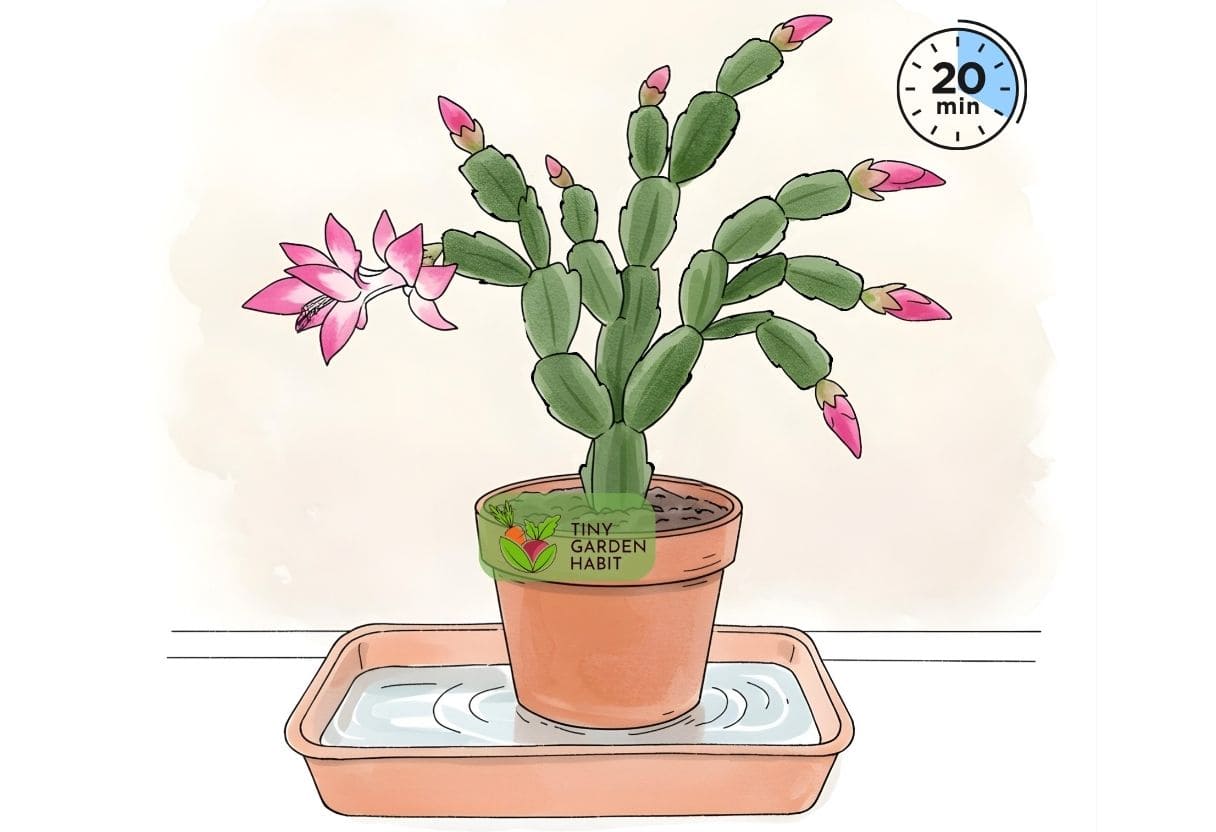
Bottom-watering (the spa-treatment method)! Just set the pot in a bowl of water for 15-20 minutes and let the roots drink from below. Once the top of the soil feels evenly damp, lift it out and let it drain.
If watering is your Achilles’ heel, here’s my full guide on how to water a Christmas Cactus properly and avoid root rot.
Feeding the Needy Cactus
What is the nutritional content of your cactus soil? A Slavic feast or a stale cookie? Let’s check the menu.
The Empty Plate Effect
If light and water have been ruled out, your cactus’s paleness crisis is likely a simple famine. It demands soil nutrients to manufacture the green engine of its life. So this paleness flares up when nutrients like nitrogen or magnesium vanish.
Nutrient deficiencies rarely appear in fresh potting soil, but in older mixes or plants that haven’t been repotted for years, a lack of nutrients can absolutely cause paleness.
How to Recognize It
Nitrogen deficiency shows up first in older, lower segments, which turn uniformly pale as the plant steals nutrients from them to feed new growth. But, magnesium deficiency looks different: yellowing appears between the veins, while the veins themselves remain noticeably green.
Slavic Grandma Syndrome
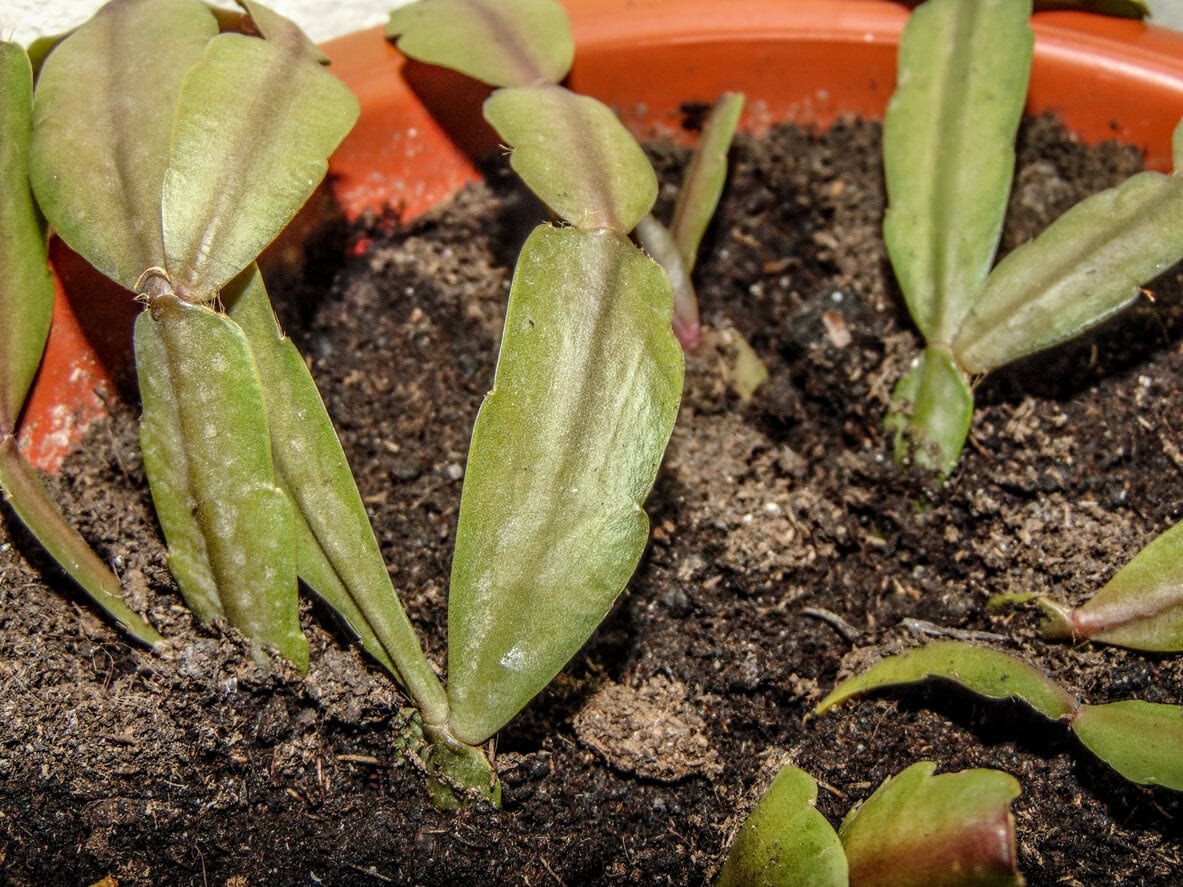
On the other side of the spectrum is overfeeding. Too much fertilizer triggers a nasty buildup of salts in the soil.
These wicked little thieves pull moisture out of the roots and block their ability to drink or absorb anything useful. The plant essentially gets dehydrated from the inside out, even when the soil still looks wet.
How to Recognize It
The segments turn pale, dull, and look chemically fried, like your grandma’s perm. A white or yellow crust forming on the soil surface is a classic sign of salt buildup. In more advanced cases, roots may appear browned or burnt at their tips, revealing a serious fertilizer overdose.
Serving a Proper Meal:

If the culprit is salt buildup, you must perform leaching. Flush the pot with plain water repeatedly until harmful salts drain away completely. If the problem is cactus starvation, hit the store before I call plant security services.
How to Fix It
Ditch that tired dirt! Make a major soil detox your mission by repotting every two or three years. Afterward, establish a strict diet. You can call it a feeding schedule, I don’t mind. Commit to balanced fertilizer during the spring and summer months (prime growth time).
Then, when late summer rolls around, you can give it a gentle nudge toward blooming season. Switch to a slightly more phosphorus-heavy fertilizer (something like 5-15-10, but very diluted) and only from July to August! This encourages the plant to shift its energy from cranking out green growth to quietly preparing its future bloom buds.
If you want a full month-by-month routine that keeps your plant from slipping into stress, here’s the Christmas Cactus care calendar I follow.
The Thermometer is Lying
Your cactus favors a first-class cabin experience. Temperatures must remain stable, predictable, and utterly luxurious. Luckily, this is something you can afford.
The Frostbite Fiasco

The irony of the “Christmas” name is cruel because this epiphyte loathes the season’s chill. Any temperature below 50°F/10°C begins to stress the plant, disrupting cell integrity and damaging the tissue at a microscopic level.
This cold shock is the plant version of frostbite and the scarring that follows is permanent. Protect your cactus from winter drafts or aggressive cooling systems, as it lacks the fortitude for the outside world.
How to Recognize It
When exposed to cold stress, segments quickly shrivel and develop ugly, pale spots that leave the normally rich green looking sallow, stained, and patchy (the unmistakable signature of plant frostbite).
Stress from sudden changes often leads to bud drop too. If that’s happening, here’s why Christmas Cactus drop buds and how to stop it.
The Desert Delusion

Short bursts of heat are fine, but sustained high temperatures above 80°F/27°C force the plant into emergency shutdown mode. The heat disrupts the plant’s internal balance, causing it to burn through energy faster than it can replenish.
The cactus looks exhausted and fried like a mom of four at 10 p.m. The oppressive indoor heat simply stole its energy. Remember, it is a jungle tropical, not a desert tropical.
How to Recognize It
The green pigment flees the scene and the segments become dull, dusty and visibly faded. The cactus takes on an exhausted appearance, looking wilted and drained.
The Goldilocks Glow:

No need to guess the temperature. The solution is total environmental boredom!
How to Fix It
Keep the thermostat locked down between 65°F and 75°F (18°C-24°C) and the cactus won’t have anything to rebel against.
If your plant looks limp or droopy beyond just temperature issues, here’s a full breakdown of why Christmas Cactus wilt and how to fix it.
Sooo, You Were the Problem

If your cactus looks pale and stressed, it may also struggle to bloom properly. If that’s happening too, here are 7 reasons your Christmas Cactus won’t bloom and how to fix them.
Case closed, the cactus is still picky. But now you know something critical.
Paleness is always fixable, not a death sentence. The majority of issues boil down to simple environmental sins. Either you misunderstood light, water, or temperature. You have all the clues necessary to stop the bleaching and start the healing!


