
It was a relief to discover that peonies are tough, and leaving them alone is 80 percent of the August battle. The remaining 20 percent breaks down a handful of small jobs worth doing now, along with two mistakes I make sure to avoid if I want plenty of blooms next spring.
1. Leaf Them Alone
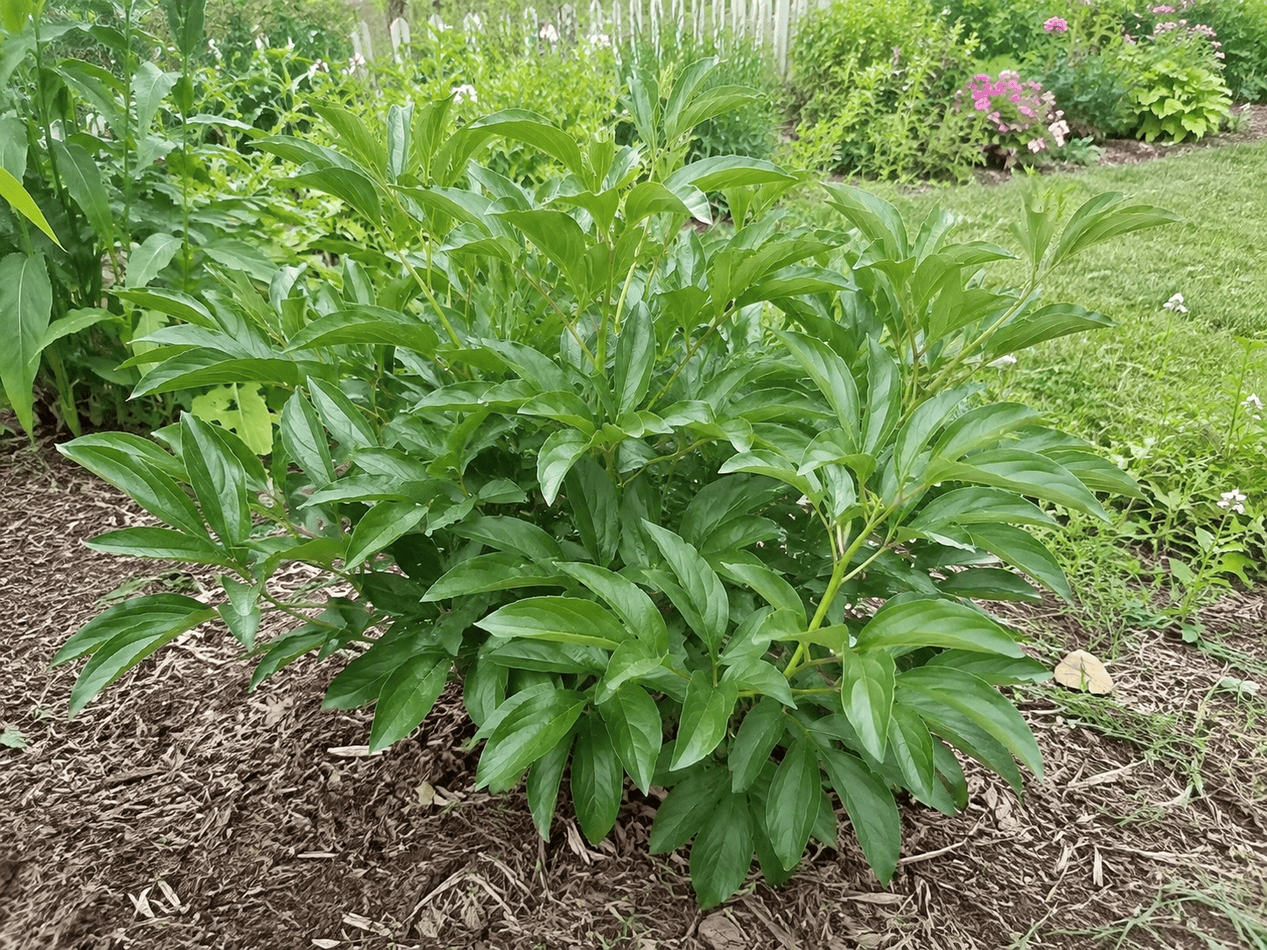
A peony in August is not winning any beauty pageants. The leaves are leathery, covered in dirt, maybe starting to flop, looking like they survived a bender with my uncle.
Cut the green foliage off in August, and you cut short the plant’s ability to store energy for next year. That’s why I ignore the mess and leave healthy leaves standing through late summer.
The plant won’t die, sure, but cutting it back too soon can weaken it and leave you with fewer blooms next spring.
What to do instead: As long as those leaves are still green, leave them. They’re still doing an important job, photosynthesizing and helping the plant store energy in its fleshy roots and crown for next year’s growth and flower buds.
If you’re unsure what to do once fall actually arrives, we wrote a guide on when to cut peonies back and when to leave them standing through winter.
2. No Fun in Fungi
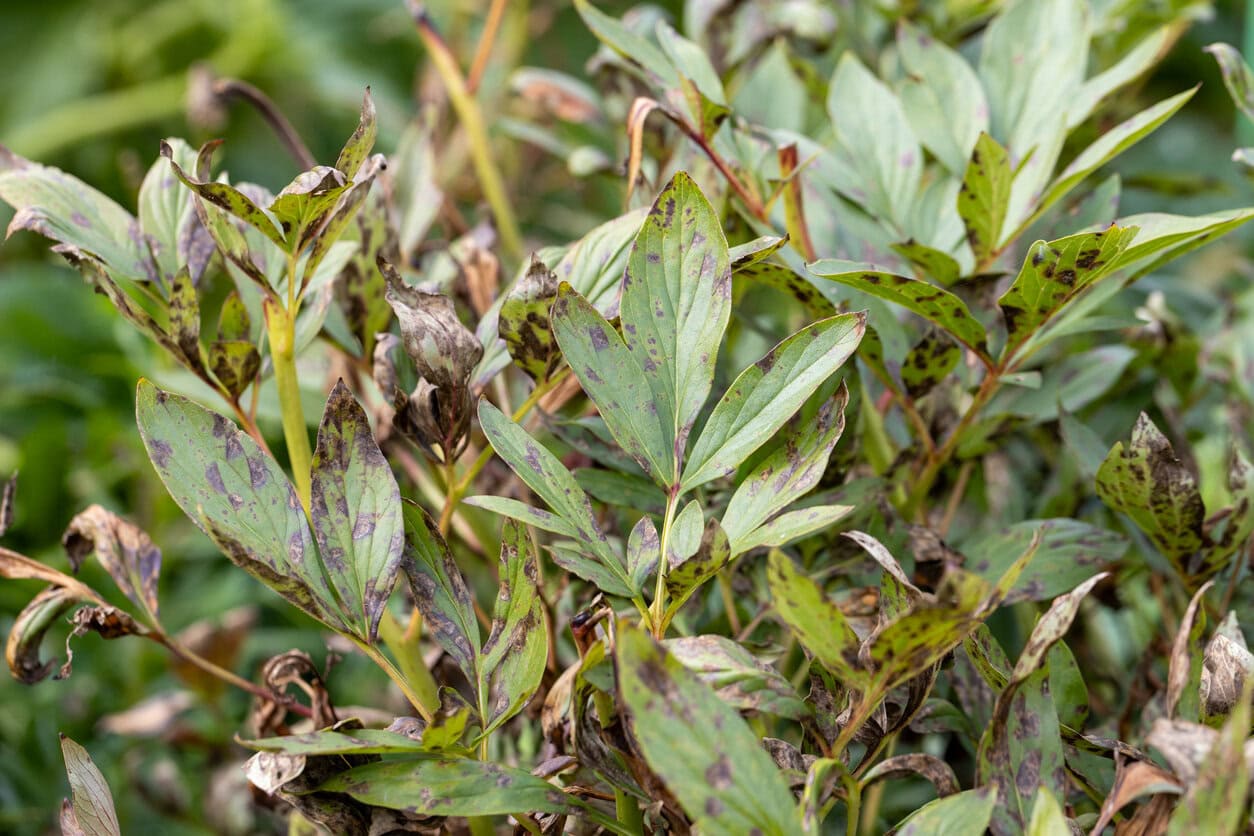
If task one is protecting the healthy green leaves, the logical task two is removing the sick ones.
Leave badly diseased, blackened foliage hanging around, or worse, let it drop and rot around the plant and some fungi can happily overwinter on those infected leaves and stems.
Come spring, they’ll be ready to go again just as tender new shoots appear. The shoots will look at the spores; the spores will look back, and you know who usually wins.
What to do instead: I carefully cut off only the stems and leaves that are heavily diseased, badly spotted, or completely withered. Then I collect the debris and trash it rather than leaving it around the peony.
3. Stop the Seed-Building
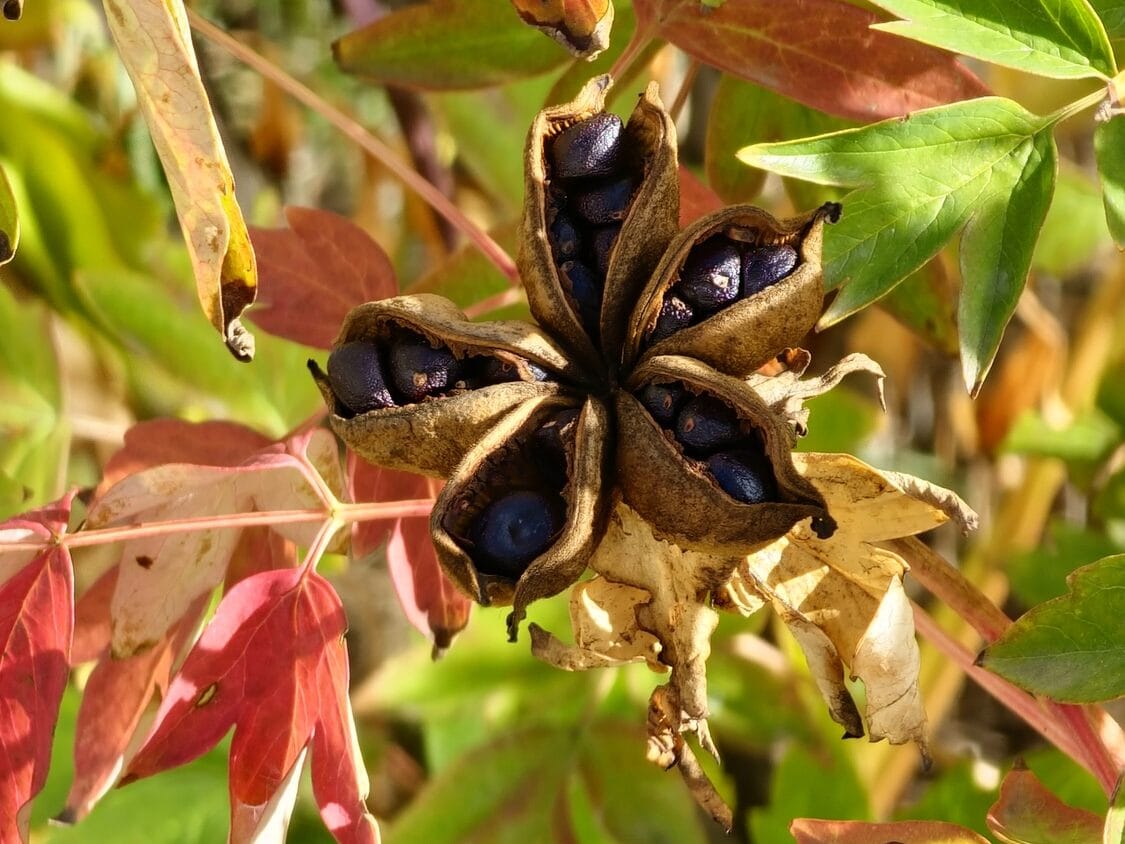
It’s all about logic. If task one is keeping healthy leaves working and task two is removing diseased ones, task three is stopping the plant from spending energy on seeds you probably don’t need.
Once the flowers are finished, peonies can put energy into ripening seed pods. That isn’t harmful, but if I’m not collecting seed, I don’t see much reason to make the plant do the extra work.
What to do instead: I snap or snip the seed pod off just above a healthy set of leaves and leave the rest of the stem alone. Those leaves are still working for you.
If you’re wondering what else to do once the flowers fade, we wrote a guide on what to do with peonies after flowering and when to leave them alone.
4. The Flood and Forget Strategy
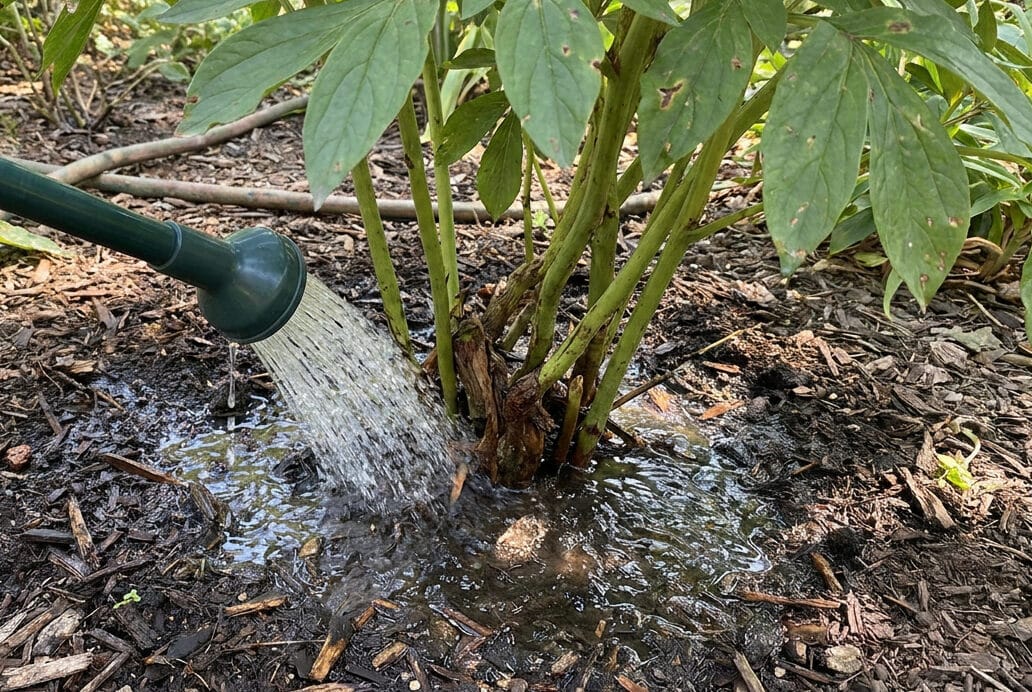
With peonies, a shallow watering routine can be almost as useless as doing nothing at all. A five-minute light spray may only wet the surface before the summer sun gets to it, leaving the deeper roots thirsty. The water was so close!
Worse, keeping the soil constantly wet creates a tiny Florida environment that crown and root rots enjoy a lot more than your peony does.
What to do instead: If we haven’t had meaningful rain and the soil a few inches down is dry, I give the plant a slow, deep soak around the root zone. Then I leave it alone until the soil starts drying again.
5. Lock In the Location
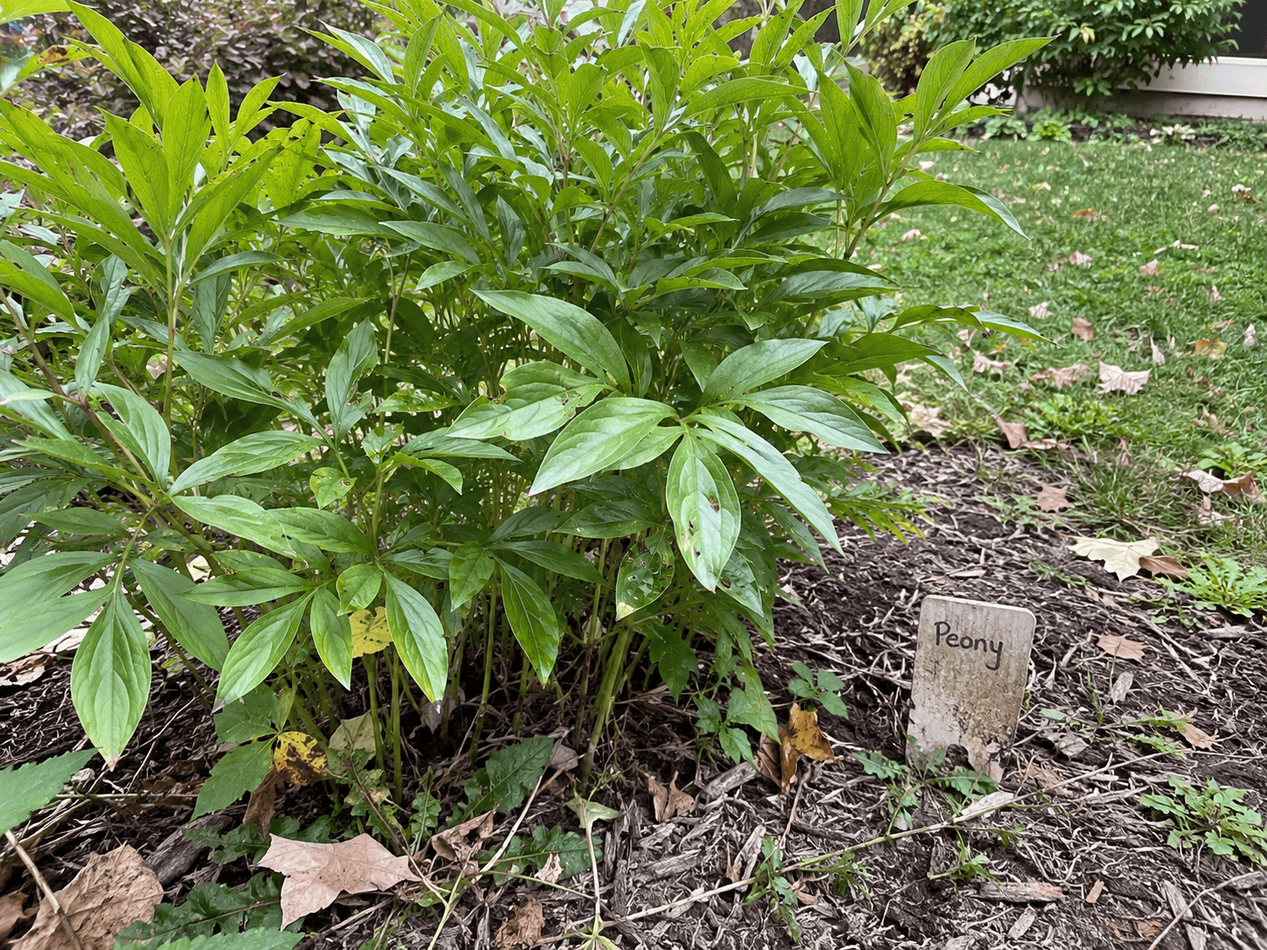
Come late fall or early winter, every leaf and stem will die back. By spring, you’ll be out in the yard, full of spring enthusiasm, and one careless chop can slice right into the sleeping crown of your peony.
So, mark its territory while the plant is still standing, in August.
What to do instead: I place a marker just outside the clump while I can still see exactly where the peony is. That way I know where not to dig come spring, without risking impaling the crown.
And if you’re starting to wonder whether that spot is doing your peony any favors, we wrote a guide on where to plant peonies for the best growing conditions and blooms.
The Two Big Don’ts
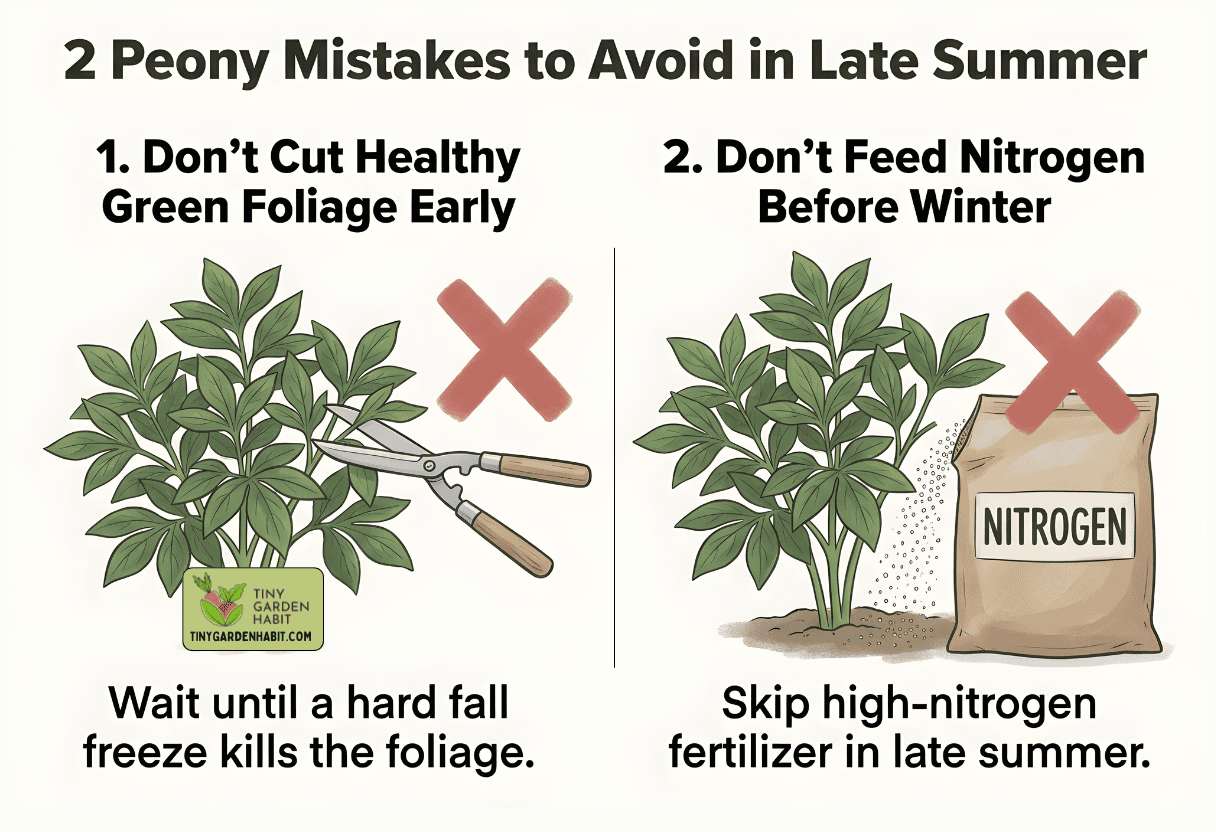
If repeating this feels redundant, just remember the “Do Not Drink” label on a bottle of bleach. Some warnings are worth repeating. Here are the two late-season mistakes I make sure to avoid if I want plenty of blooms next year.
1. Don’t Cut Down Healthy, Green Foliage Early
Photosynthesis doesn’t take August off. So don’t shave the bush to the ground in August just because it looks a bit ratty.
Leave it alone, and don’t touch a pair of shears until a hard fall freeze thas killed the foliage and the leaves have turned brown.
2. Stop Feeding Nitrogen Before Winter
Say no to N late in the season. High nitrogen fertilizer or fresh manure can do your peonies more harm than good.
By August, I’m done trying to push extra growth. Established peonies aren’t heavy feeders, and too much nitrogen can give you lots of foliage at the expense of flowers next season.
So I leave the fertilizer alone and let the plant wind down naturally. If the peony is growing well, there’s usually no reason to feed it just for the sake of it.
If you’re not sure when they actually need feeding, we explain how and when to fertilize peonies in our full guide.
Plotting Ahead
Itching to dig up a massive clump or drop new bare-root peonies into the dirt? Hold off. Late summer to early fall is the better time for that job.
Just don’t expect instant results. Newly planted or divided peonies can take a season or two to settle in and get back to heavy blooming. Sometimes doing less really is the smartest move you can make all year.
And when those first shoots finally appear again, we also wrote a guide on the spring peony jobs I do for healthier plants and better blooms.




Great info
Hi 🙂 Thank you! I’m so glad you found the information helpful.
Can peonies be grown in a container?
Hi Susan 🙂 Yes, peonies can be grown in containers, although they’re generally happier in the ground long term.
Use a large, deep pot with excellent drainage, keep the crown shallow, and make sure it gets its winter chill. If you live in a colder area, I’d add some extra winter protection because the roots are more exposed!