Sweet potatoes’ sweet dreams are made of these nine plants. Who am I to disagree? I traveled the world and the seven seas (or at least the seed aisles) to find partners that truly pull their weight… and found these specialists.
Over the years, I’ve noticed certain companions consistently pull their weight, helping sweet potatoes grow stronger, stay healthier, and make better use of space. These are the ones I keep coming back to season after season.
Sweet Potato’s Best Garden Allies
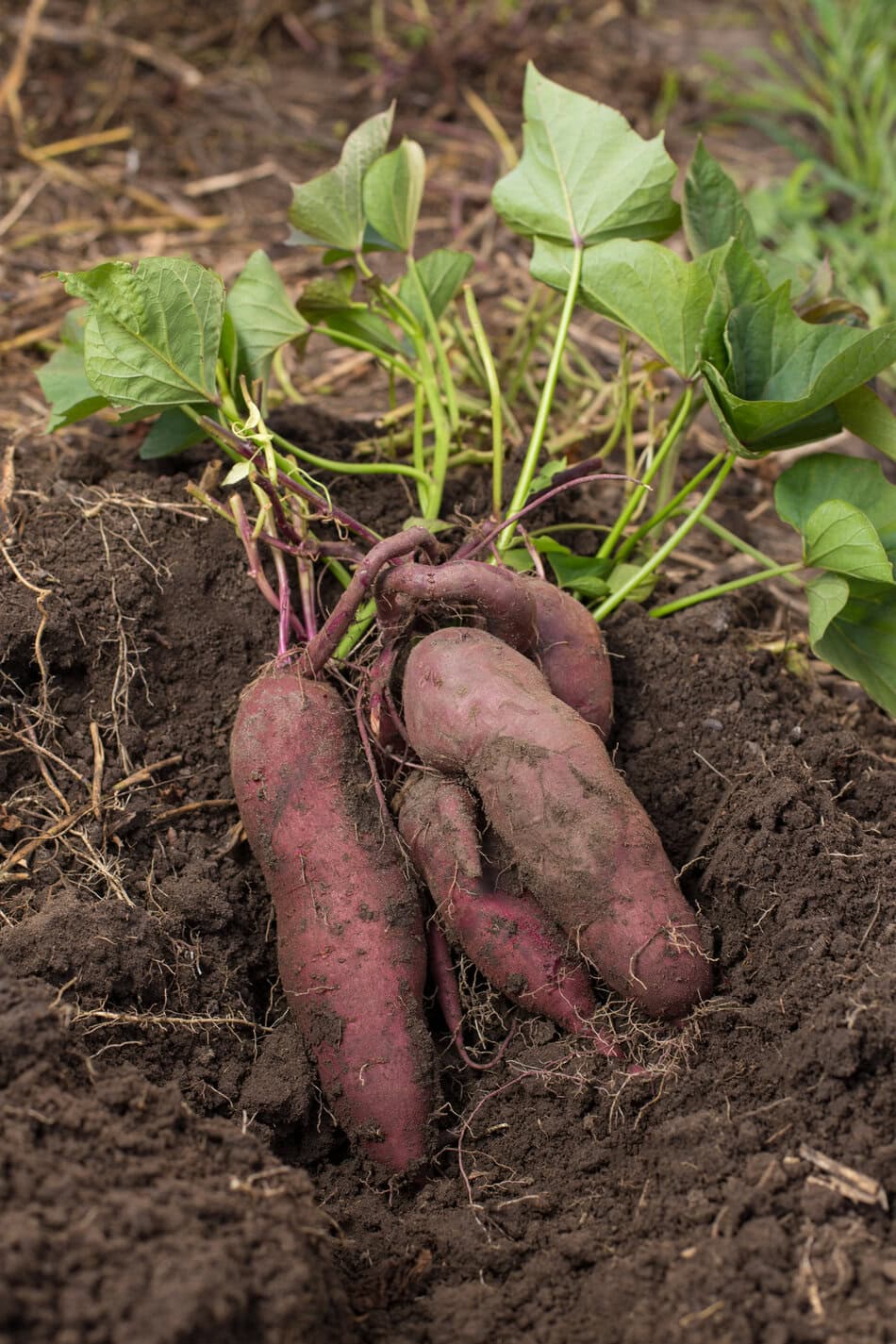
Sweet potatoes have a way of making the most of every inch of garden space, especially when paired with the right plants.
1: Borage (USDA Zones 2-11)
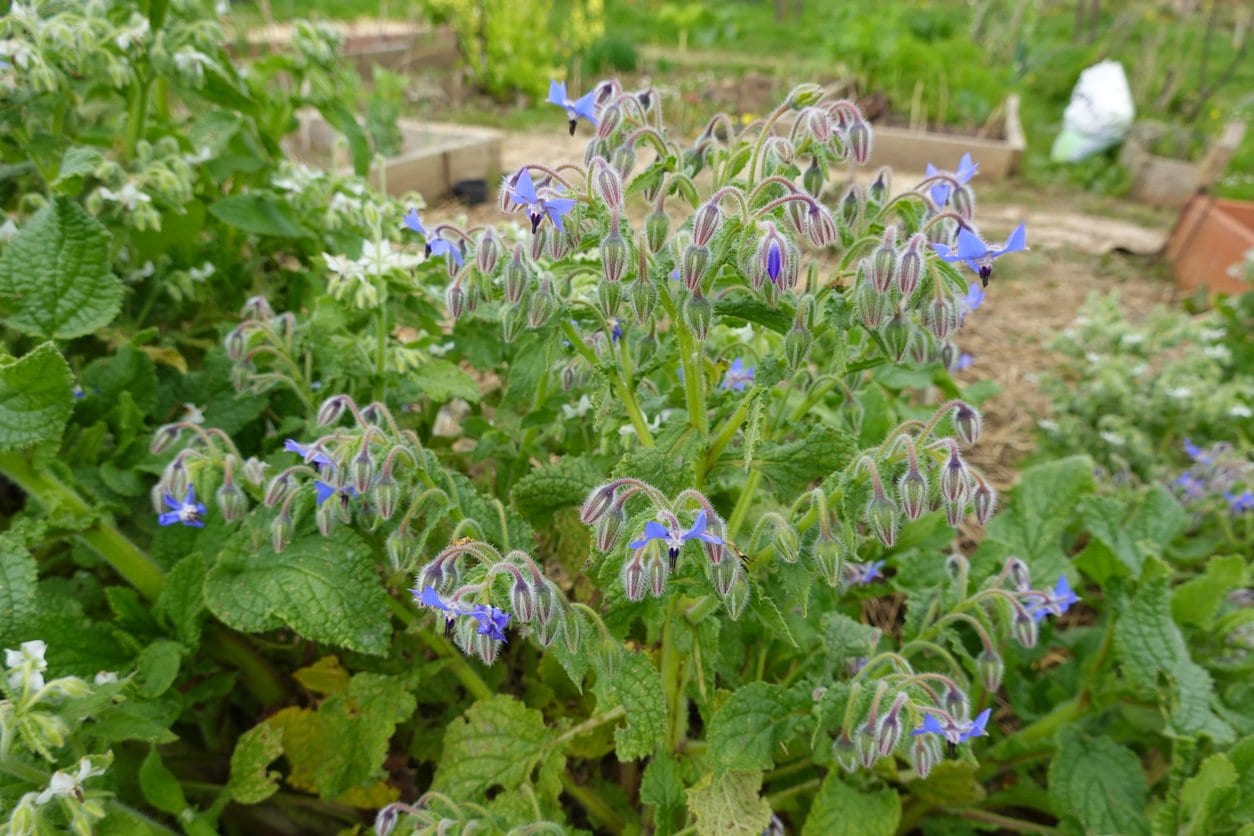
Deep soil layers hold minerals that sweet potatoes can’t easily reach on their own. Borage is the middleman, because of its long taproot, which helps pull nutrients from deeper in the soil and cycle them back toward the surface.
While it doesn’t feed sweet potatoes directly, I’ve noticed the bed improves over time when borage is part of the mix, especially once leaves drop or the plant is cut back.
Quick tip: I usually let borage grow until it starts flowering, then chop and drop the leaves right on the soil surface. It works as a light mulch and slowly returns those deep-mined nutrients to the bed.
Borage is one of several plants we like to use to quietly improve soil over time, and we break down more of our favorites in this guide on plants that practically fertilize the soil for you.
2: Chives (USDA Zones 3-9)
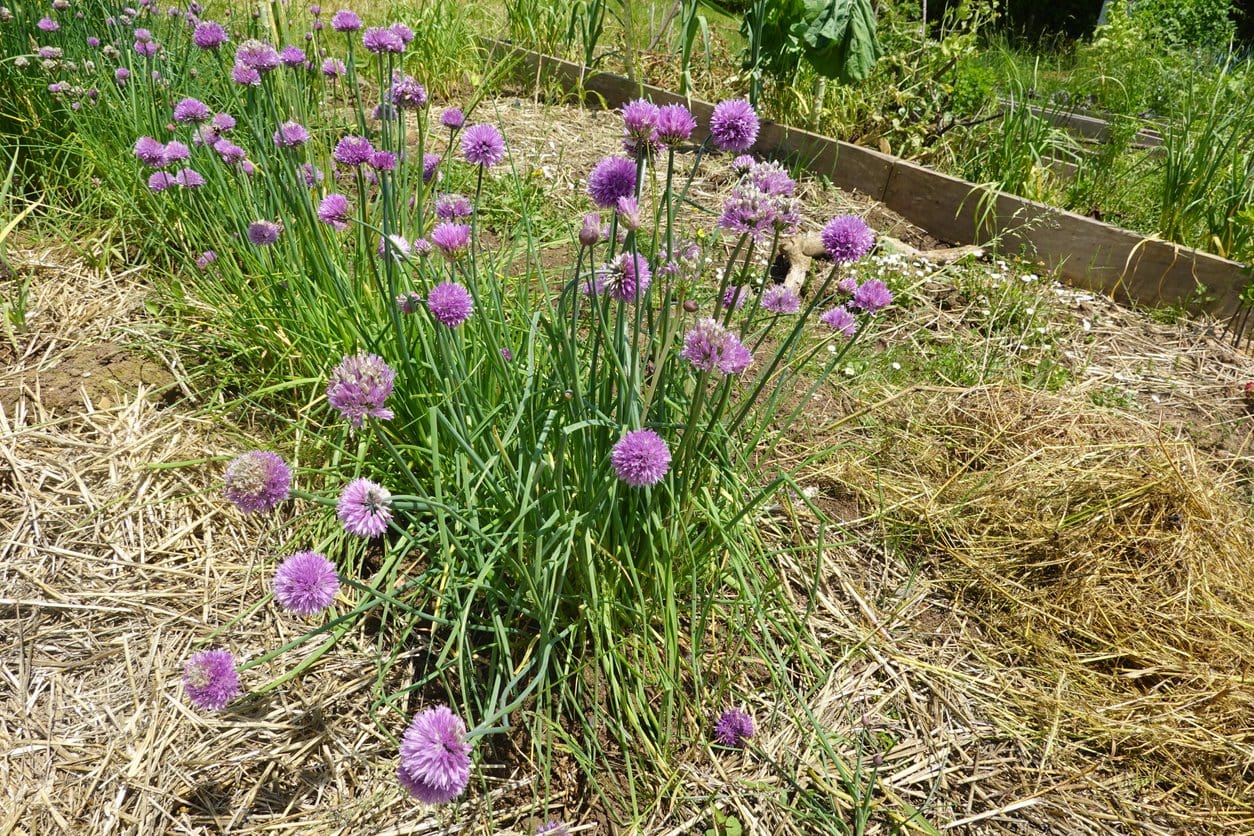
Sweet potato pests rely heavily on scent to find their host plants, and that’s where chives earn their keep.
Chives flood the immediate atmosphere with strong, oniony aroma that can help confuse or deter insects that are sniffing around for an easy meal. Why waste money on toxic sprays when a simple herb can keep your harvest invisible?
Quick tip: Plant chives as transplants rather than seeds so they start giving off scent right away. I’ve noticed they work best when tucked along borders or between rows rather than scattered randomly.
We rely heavily on companion planting for pest control, but if pressure ever gets high, we’ve shared the natural garden sprays we actually use in this guide on chemical-free pest control.
3: Calendula (USDA Zones 2-11)

Calendula is one of those plants I tuck into sweet potato beds almost by habit. Equipped with resinous and sticky trichomes, calendula is a perfect biological glue trap (not a literal glue trap, btw).
It physically snags soft-bodied insects like whiteflies and aphids. It works best as a distraction plant, pulling insects outward instead of letting them settle on your vines.
Quick tip: Plant calendula along the perimeter of the bed rather than right on top of your sweet potato slips. The vines also stay greener and suffer less leaf damage through the season.
We’ve written a full breakdown on why calendula earns a spot in almost every garden bed, if you want a deeper look at how we use it beyond sweet potatoes.
4: Dill (USDA Zones 2-11)
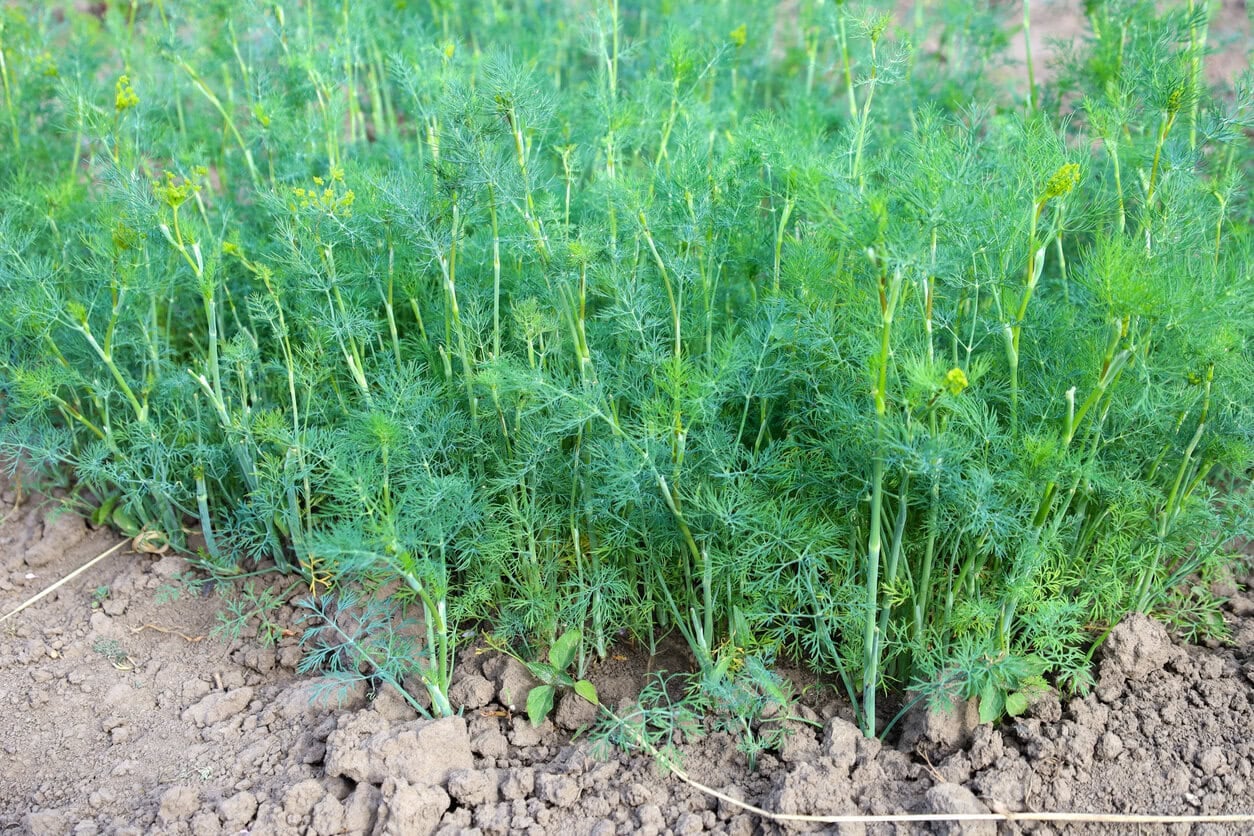
Dill earns its spot thanks to its flat, umbrella-shaped flowers, which are especially easy for beneficial insects to use. The architecture of its flower (flat, wide, and accessible) attracts helpful pedrators, like parasitic wasps and lacewings.
Short-mouthed beneficial insects cannot reach deep nectar elsewhere, so these blooms offer a necessary rest stop. Those insects don’t stay for the flowers alone. After fueling up, they tend to stick around the area, helping keep caterpillars and other leaf pests in check on nearby vines.
Quick tip: Let at least one dill plant flower fully instead of harvesting it all early. The blooms are what attract beneficial insects, and even one flowering plant can make a noticeable difference.
Dill isn’t the only flower that plays well with vegetables. We’ve shared several others we regularly plant alongside food crops in this guide to flowers that benefit vegetable gardens.
5: Yarrow (USDA Zones 3-9)
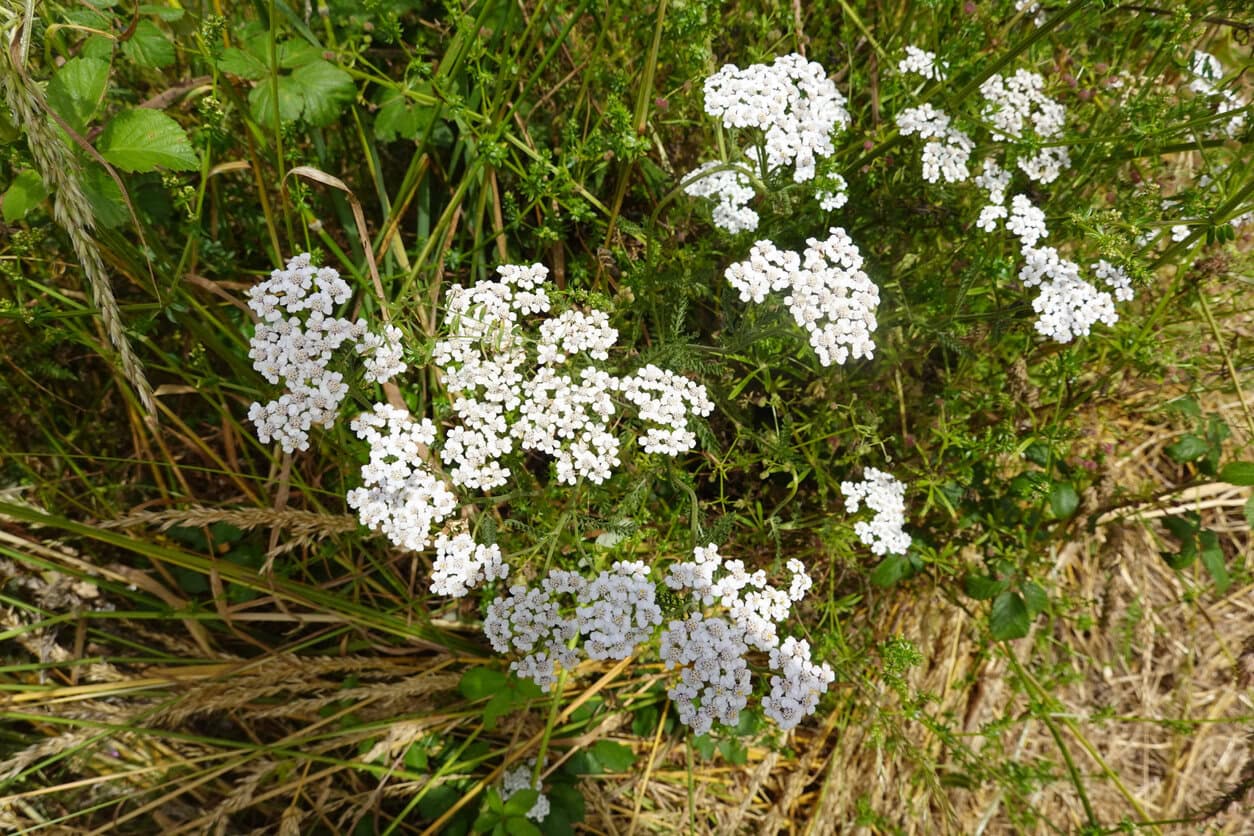
Yarrow is one of those plants that quietly improves the whole garden without drawing much attention to itself. While it doesn’t directly trigger an immune response in neighboring plants, it supports beneficial insects, improves soil structure, and seems to create a more balanced growing environment around them.
In my experience, sweet potatoes grown near yarrow show fewer stress issues over the season, especially during humid stretches when fungal problems usually pop up. It’s less about activating defenses and more about keeping conditions from tipping in the wrong direction in the first place.
Quick tip: Plant yarrow a little away from the slips, not right on top of them. I like placing it toward the center or back of the bed so it can do its thing without competing for space as sweet potato vines start to spread.
6: Thyme (USDA Zones 5-9)

Bare soil is a liability that invites heat stress and weeds. A thick cover of thyme keeps the ground cool and temperatures more stable during summer scorchers.
Thyme’s roots stay fairly shallow, so in my experience it rarely competes with sweet potatoes for the deeper nutrients they need to bulk up underground. Instead, it fills in gaps where mulch would normally go, without getting in the way of tuber growth.
Quick tip: Plant thyme along the edges of the bed or in spots where vines haven’t spread yet. It works best as a border or filler plant rather than directly under the main slips.
7: Buckwheat (USDA Zones 2-11)

Phosphorus is often present in soil but locked up in forms many plants can’t use. Buckwheat is especially good at making that phosphorus more available over time thanks to its fast-growing roots.
When buckwheat is cut back, those freed-up nutrients stay in the bed, right where sweet potatoes can benefit as they start bulking up later in the season.
I like using it as a short-term companion because it improves soil conditions without hanging around long enough to become a problem.
Quick tip: Sow buckwheat early and cut it down before it sets seed. I usually chop it at flowering and leave the clippings on the soil as a light mulch.
If you’re thinking beyond this season, we’ve also shared plants we use specifically to improve soil for the next crop, especially in raised beds.
8: Summer Savory (USDA Zones 2-11)

Summer savory is bad news for sweet potato weevils looking to start a family. Its strong, peppery scent can help discourage certain insect pests from settling in, which is especially useful during the warm months when pest pressure is highest.
I don’t rely on it as a cure-all, but I’ve noticed fewer issues when it’s planted nearby as part of a mixed bed.
Its job doesn’t end in the dirt, though. Peppery leaves will eventually season the very sweet potatoes they spent the summer protecting.
Quick tip: Plant summer savory as a transplant rather than from seed so it establishes quickly and starts giving off scent early in the season.
9: Nasturtiums (USDA Zones 2-11)

Nasturtiums are one of my favorite overall trap plants. Flea beetles will bypass almost anything for a taste of Nasturtium. Their soft, juicy leaves tend to attract a range of leaf-chewing insects and aphids, pulling infestations away from your sweet potatoes.
Yes, you’ll sacrifice flowers, but consider it a small price for a clean harvest. When the beetles take the bait, your vines can focus on turning sunlight into energy for tuber growth.
Quick tip: Plant calendula along the perimeter of the bed rather than right on top of your sweet potato slips. The vines also stay greener and suffer less leaf damage through the season.
If you’re curious how nasturtiums behave with other crops, we’ve gone into much more detail in this article on whether nasturtiums make good companion plants.
Plotting Vines and Lines of Defense
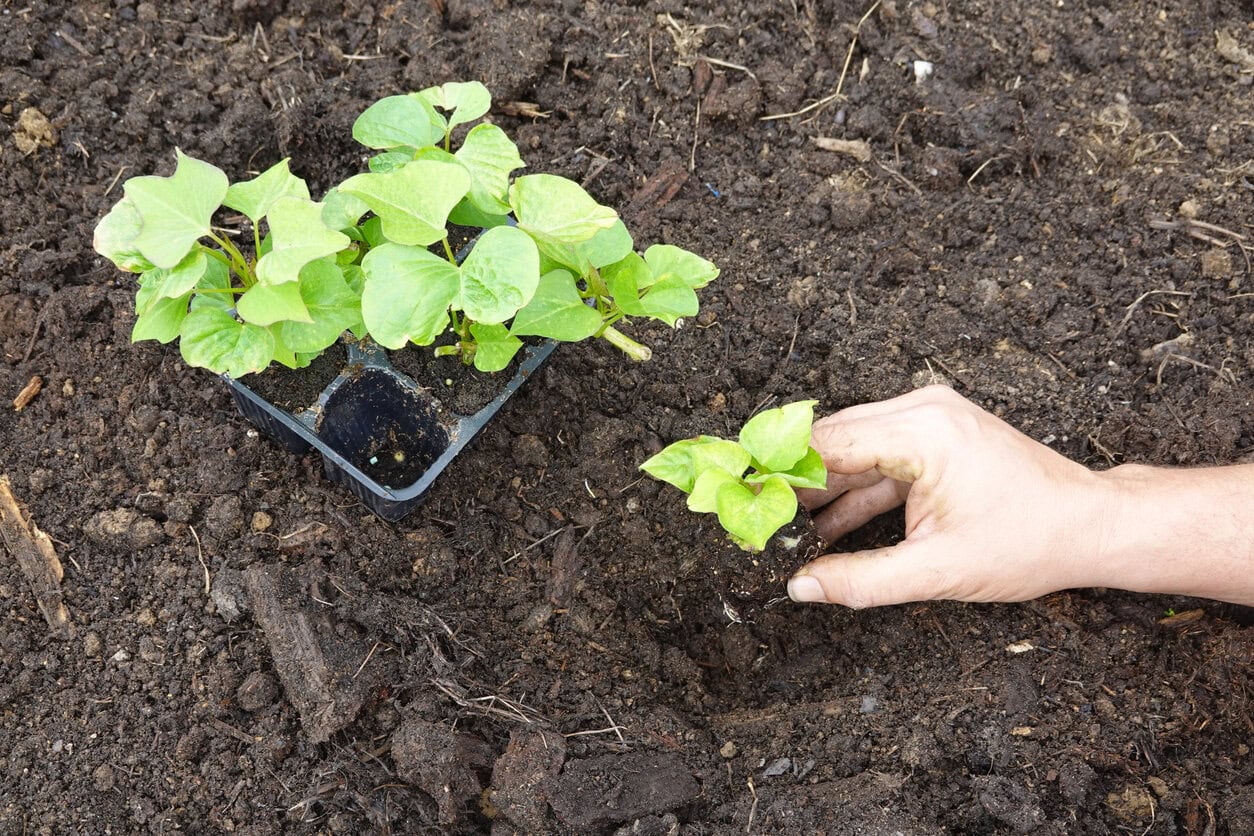
Sweet potatoes love warmth and long stretch of heat to bulk up. I always wait until the soil has warmed to at least 65°F before planting, since cold ground can slow growth or damage young slips.
Aim for a spot with at least eight hours of direct southern sun before all systems are go.
Operation Sweet Potato:
Skip the sweet potato seeds and go straight for slips. I’ve had far better results starting this way.
Dig a hole and bury each slip up to its first set of leaves. Space slips about 12 inches apart in hilled rows to give the tubers room to expand. I usually plan on 5 to 10 slips per person, it usually covers a standard family supply for the winter.
Spicing Up Planting Patterns:
I like to get everything in the ground at roughly the same time. A synchronized start lets your companions establish their territory before pests find the patch.
All About That Space:
I’ve found that where you place each companion matters just as much as what you plant.
If companion planting is new to you, we’ve put together a full list of plants that naturally repel garden pests, which explains the bigger picture behind why this approach works so well.
Rooting Out the Distractions
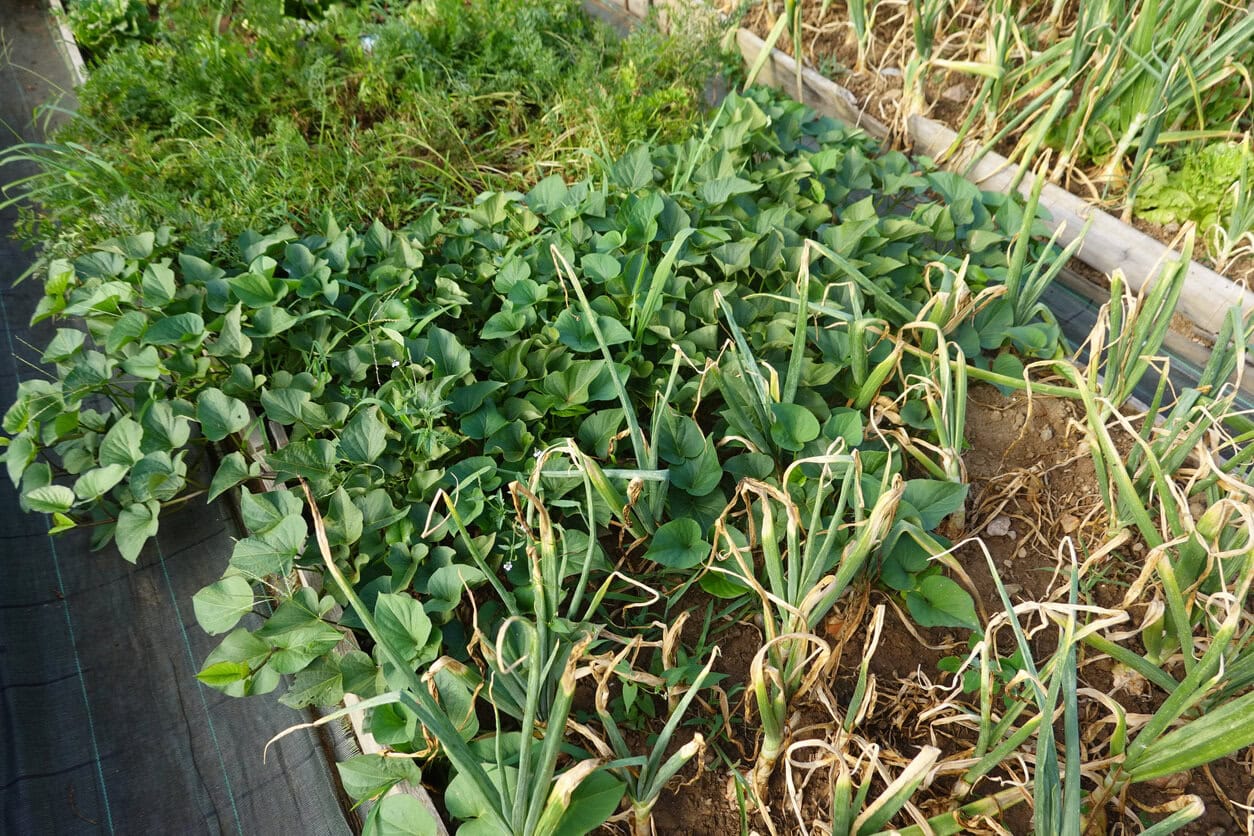
Sweet potato vines are creepers, so when nodes touch consistently damp soil, they can form extra roots along the way. Rather than fueling your harvest, the plant will divert strength to thin offshoots that won’t mature.
Every two or three weeks, I do a quick check. If a vine resists, it’s anchored itself. Snip those secondary roots or lift the vine just enough to break the connection, then carefully replace it to keep solar-tracking leaves oriented toward the sun.
Sweet Potato O’ Mine
Where do we go? Oh, where do we go now? Straight to the garden center. Grab the slips and companion plants and seeds to engineer a high-heat, pest-proof patch. One that reminds you of childhood memories where everything was as fresh as… a homegrown harvest.