If your New Year’s resolutions, like mine, include: ‘make my home cozier’ and ‘stick to a budget’, I’ve got the perfect late winter pastime for us: houseplant propagation.
It may seem counterintuitive to propagate plants in the winter, but the nice thing about growing plants indoors is that they can pretty much be propagated all year long.
Why January and February Are Great for Houseplant Propagation
Let me count the ways why it makes perfect sense to propagate houseplants in January and February.
11 Houseplants You Can Propagate From Cuttings in January and February

Here are some of the popular plants that you can take cuttings of this time of year:
1: Tradescantia
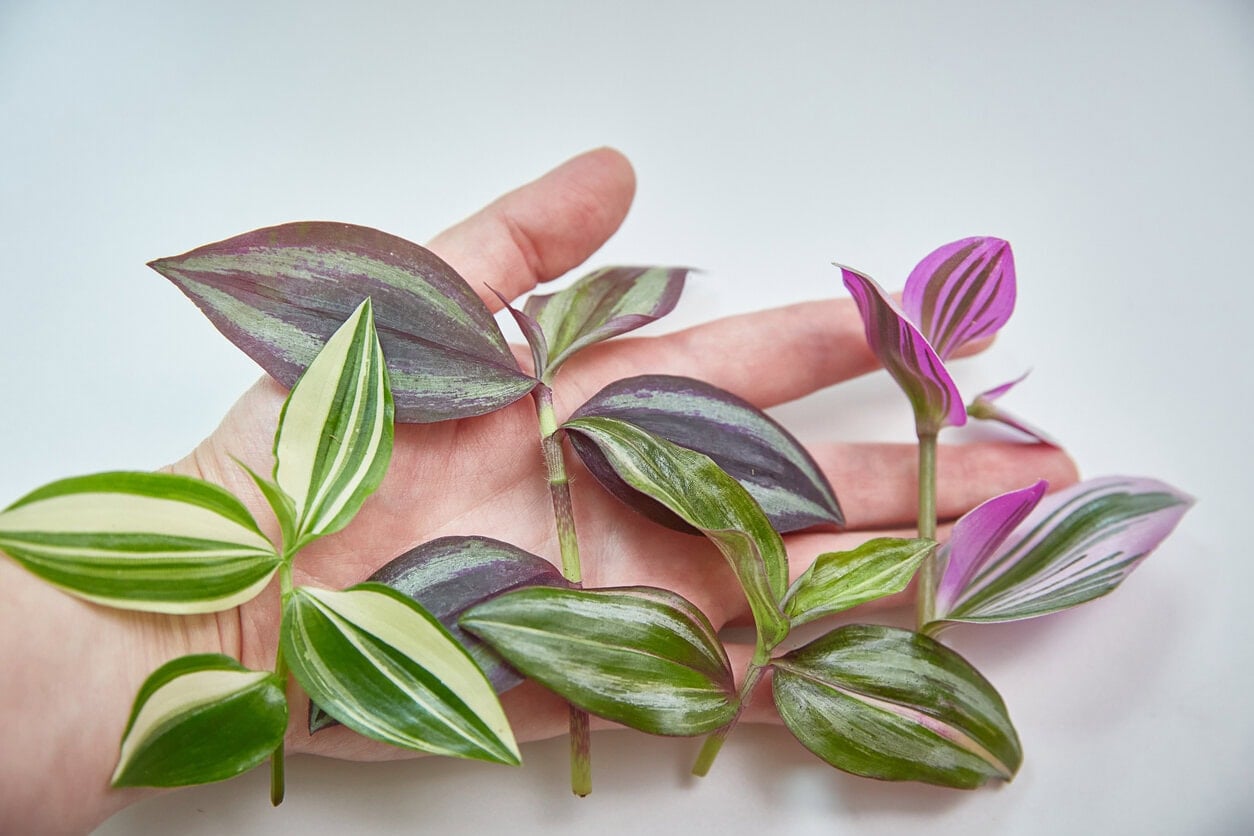
I’ll start with tradescantia not only because it’s really easy to propagate, but because if we don’t, it will start looking leggy and disheveled pretty quickly.
The good news is that this also means we have plenty of material to work with. Depending on how long our tradescantias grew, we’ll be able to get a few cuttings from each strand.
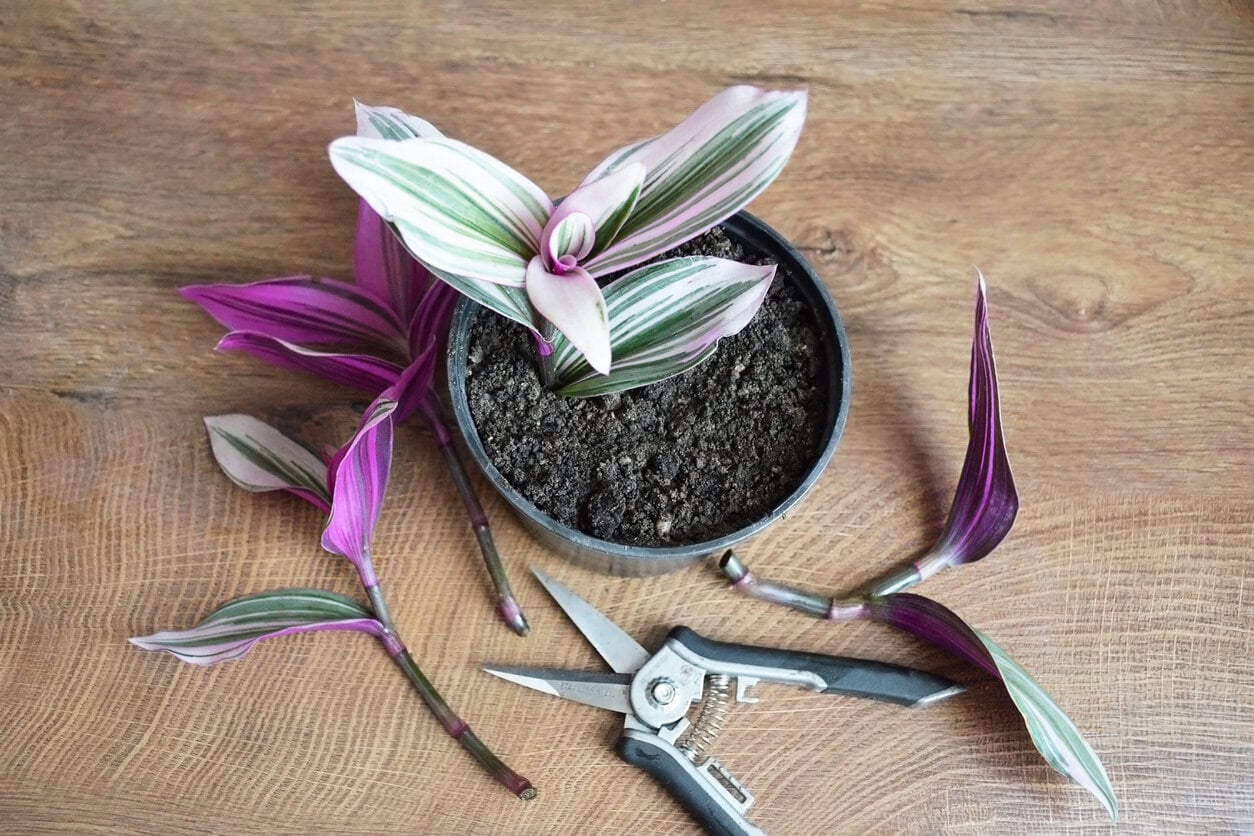
Where to make the cut: I’d normally say below a leaf node, but since tradescantia have a cascading growth pattern, we want to trim right above the node. Simply make the cut above a leaf node, making sure that every cutting has at least one set of leaves (preferably two, if you can).
You can place the cuttings directly in water or plant them straight into moist potting soil. Both methods work well, and you’ll usually see roots forming within a week or two.
2: Pothos
Another trailing beauty, I like to think of pothos as the invincible plant. But just like tradescantia, it’s not a big fan of bright direct light, which makes it a perfect candidate for winter propagation.
Where to make the cut: When I take pothos stem cuttings, I’ve found it best for each cutting to be about four to five inches long and have at least a couple of sets of leaves. I select a strong shoot and cut about half an inch below a growth node.
I always root my pothos cuttings in water first, since they tend to be pretty thirsty, even as young plants.
3: Christmas, Thanksgiving and Easter cacti
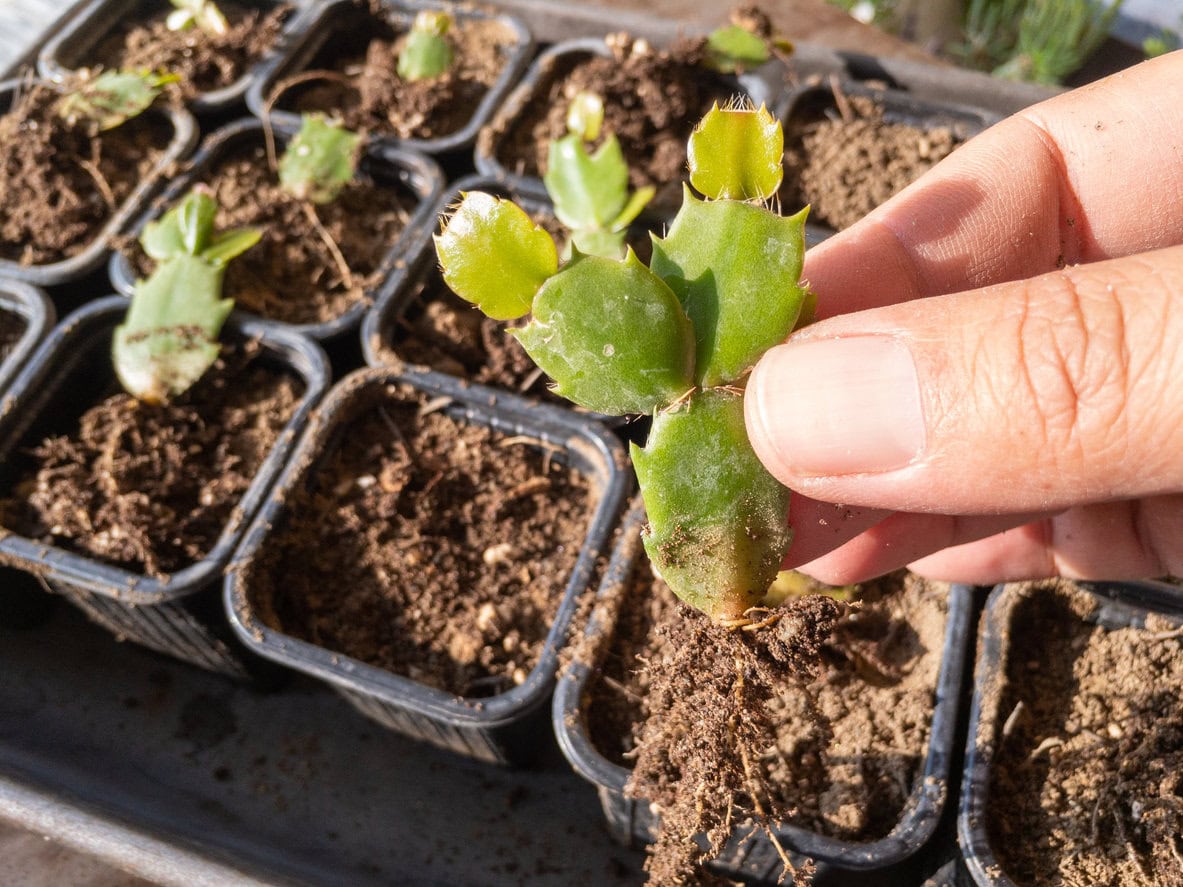
Of course, I’m talking about Schlumbergera, but good luck pronouncing this one right. They’re all easy to propagate from stem segment cuttings.
The trick is using the right potting mix, specifically blended for cacti and succulents. It will not retain as much moisture as regular potting mix, but it will still have enough to encourage root formation.
Where to make the cut: First, we twist off a section that encompasses two or three segments. Then we have to set it aside for a day or two in order to allow it to cure – that is to form a callus over the part we broke off.
A single segment will also work, but I prefer to have more rooting points. Make some holes in the propagation tray and place one clipping per hole, then keep the tray in a warm spot.
4: Pilea Peperomioides
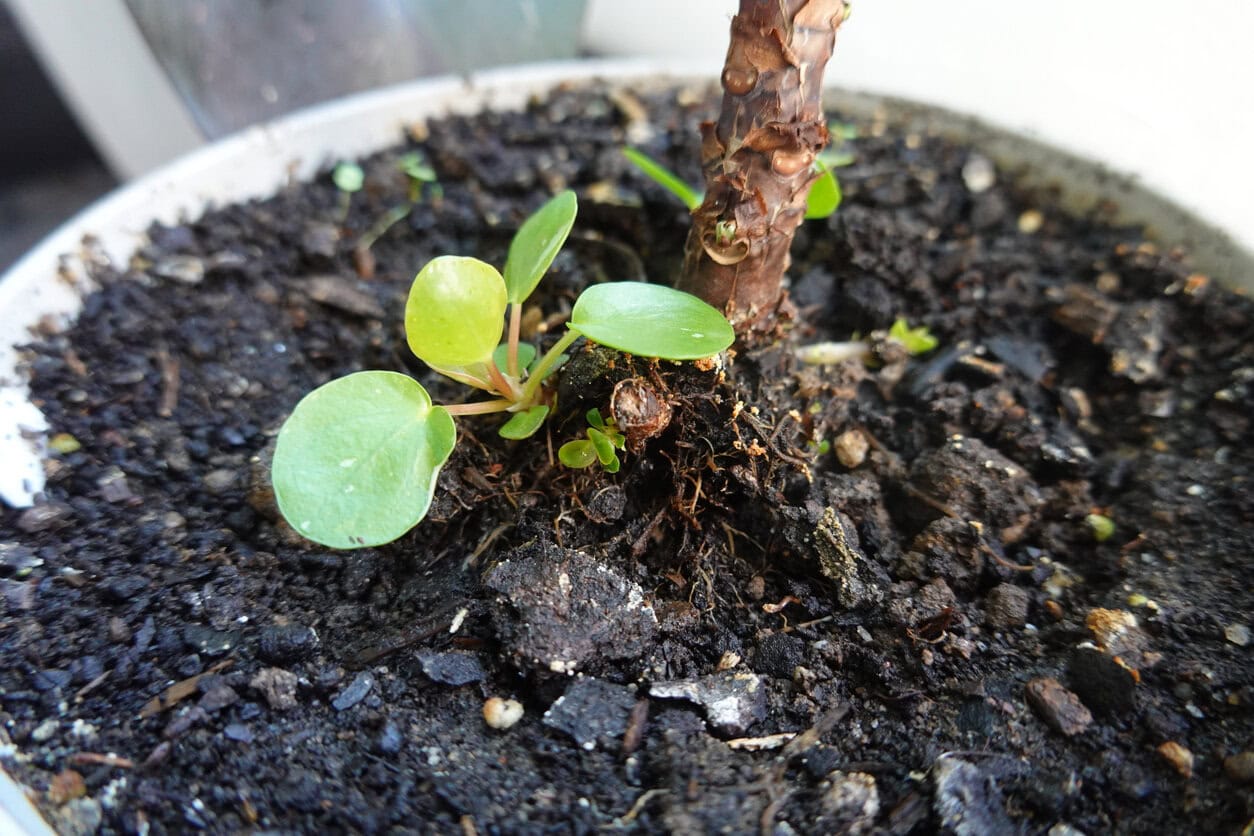
It might feel a bit like cheating to say we take pilea cuttings, since this prolific plant will gladly do most of the work for us.
In the right conditions, the plant will put out small plantlets (affectionately known as pups) that are attached to the mother-plant below soil level. If we let them grow in the same pot, they’ll get a bit too crowded and sap each other’s energy.
Where to make the cut: So we simply need to remove them by cutting them off the main plant and planting them in soil in their own separate pot.
We can, of course, root them in water. But for houseplants with thick stems, I found that rooting them straight in soil works best.
5: Snake Plants (Sansevieria)

Snake plants don’t really have a stem, so some people find taking cuttings a bit intimidating. Let me assure you that taking leaf cuttings is just as easy as stem cuttings.
Where to make the cut: Start by identifying one healthy leaf and remove it from the crown. Make sure you keep track of the leaf orientation. Then cut the leaf in four-inch segments.
Place each segment (always right side up) in a pot or a tray of moist rooting medium (a mixture of houseplant soil, horticultural sand and perlite). Press it down gently to secure it in place.
For leaf cuttings, we can also use a dab of rooting hormone on the part that goes in the ground in order to stimulate faster root formation, since leaves have fewer growth hormones than stems.
6: African violets

African violets are among my favorite blooming houseplants. They can live for decades and do well in lower light than most other flowering indoor plants. And they’re super easy to propagate from leaf cuttings.
Where to make the cut: Select a few healthy plump leaves and cut them off the main plant right where the leaf meets the crown. Make sure you take most of the petiole too (the stick that attaches the leaf to the crown).
We can root these cuttings in water or in soil. If you choose soil, make pencil holes in the compost to avoid damaging the petiole when you push it in. Keep the potting medium slightly moist, but not drenched, and you should get roots in about six to nine weeks.
7: Coleus
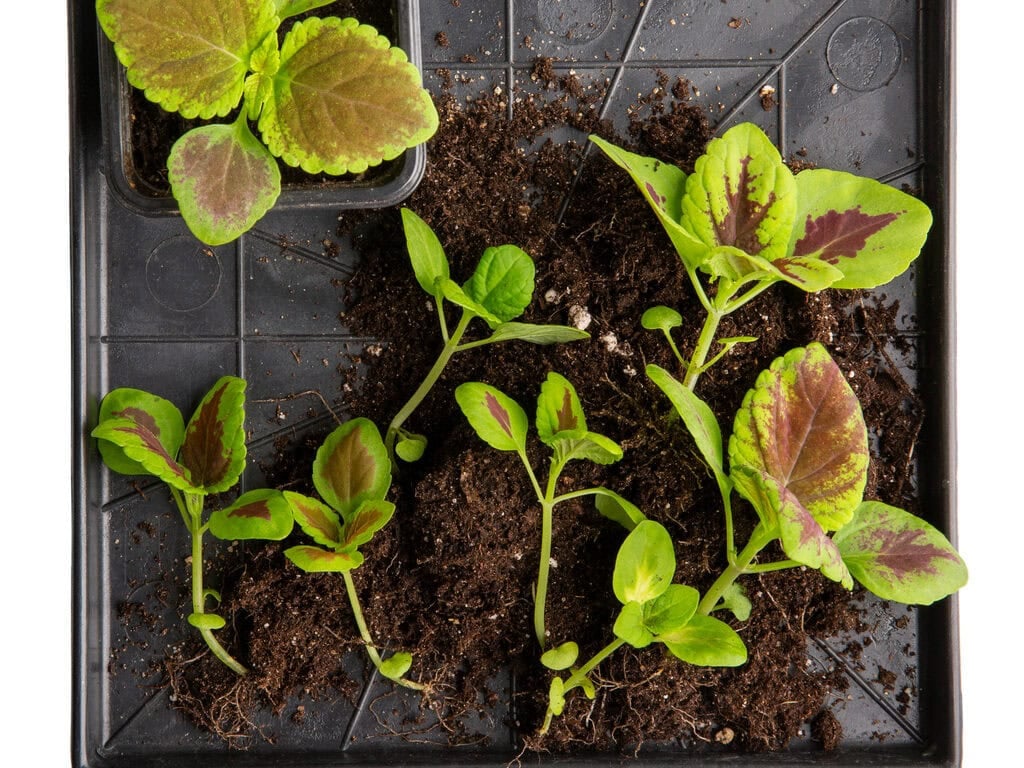
Some people grow coleus as a garden plant and get a new one every year. Us die-hard coleus fans would rather grow it as a houseplant year-round.
Whether you evict it to the patio in the summer or keep it indoors, now’s the perfect time to take cuttings. Bonus points: the mother-plant will grow back bushier in spring.
Where to make the cut: Trim off a stem that’s around five to six inches long, strip the leaves off said stem and plop everything in water.
We can transfer it to soil once we see roots growing. The nice thing about coleus is that since the cuttings are genetic clones, they’ll keep the same bright color pattern as the source plant.
8: Arrowhead Plants (Syngonium podophyllum)

The nice thing about arrowhead plants is that they’ll tell you exactly where to take the cutting from.
Where to make the cut: As they mature, they send out tiny aerial roots all growing around the same node. If we cut right below those rootlets and plop the whole cutting into water, they’ll develop into a thick fully grown root structure in a matter of weeks.
We can take arrowhead stem cuttings even if our plant doesn’t have any roots forming, but it will take a bit longer for the cutting to root in water.
9: Jade Plant (Crassula ovata)

Let me teach you a trick about crassula. We can propagate it two ways: either via stem cuttings or via leaf cuttings. And the magic is that you can try both methods at the same time.
Where to make the cut: First, we’ll cut a side stem and carefully strip off the lower leaves. Then we put that stem in water. Then we reuse the leaves that we removed and turn them into brand new plants.
Like with all succulents, we’ll have to set tho leaf cutting aside for a few days until they form a callus at the point where they were attached.
We then lay them flat on a propagation tray filled with a potting soil mix for succulents and cacti. The ends will send wispy little roots that will just dig into the soil as they grow. At that point, we can gently turn the leaf upright and add a bit more potting soil to cover the roots.
10: Monstera Adansonii
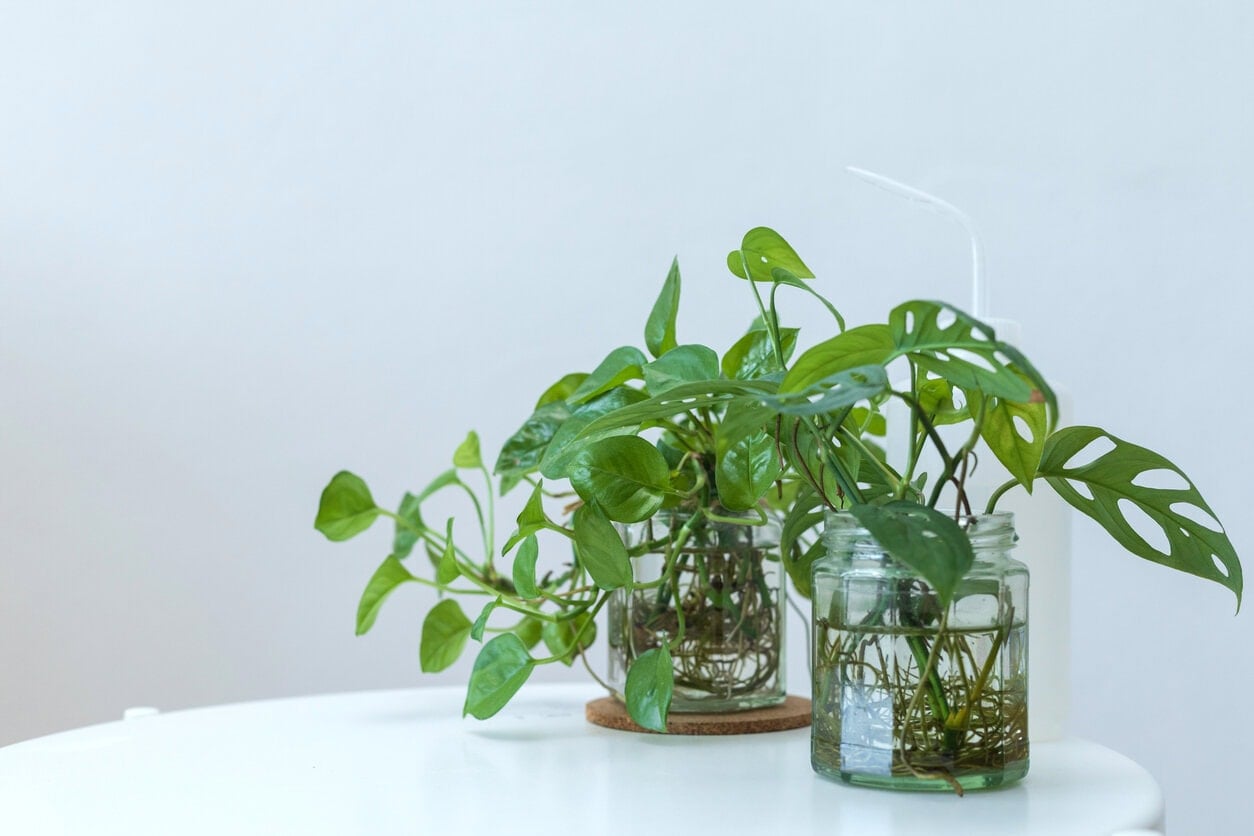
Taking monstera cuttings is probably as close as I’ll ever feel to printing money when I’m propagating a houseplant. And it’s super easy to do too.
Where to make the cut: We just have to cut off a piece right below a leaf node, then submerge said leaf node in a glass of water.
Remove any leaves that would be under water (they speed up bacterial growth, which is exactly what we’re trying to avoid). There should be at least one set of leaves left on the plant though because we want that sweet photosynthesis to happen.
11: Echeveria
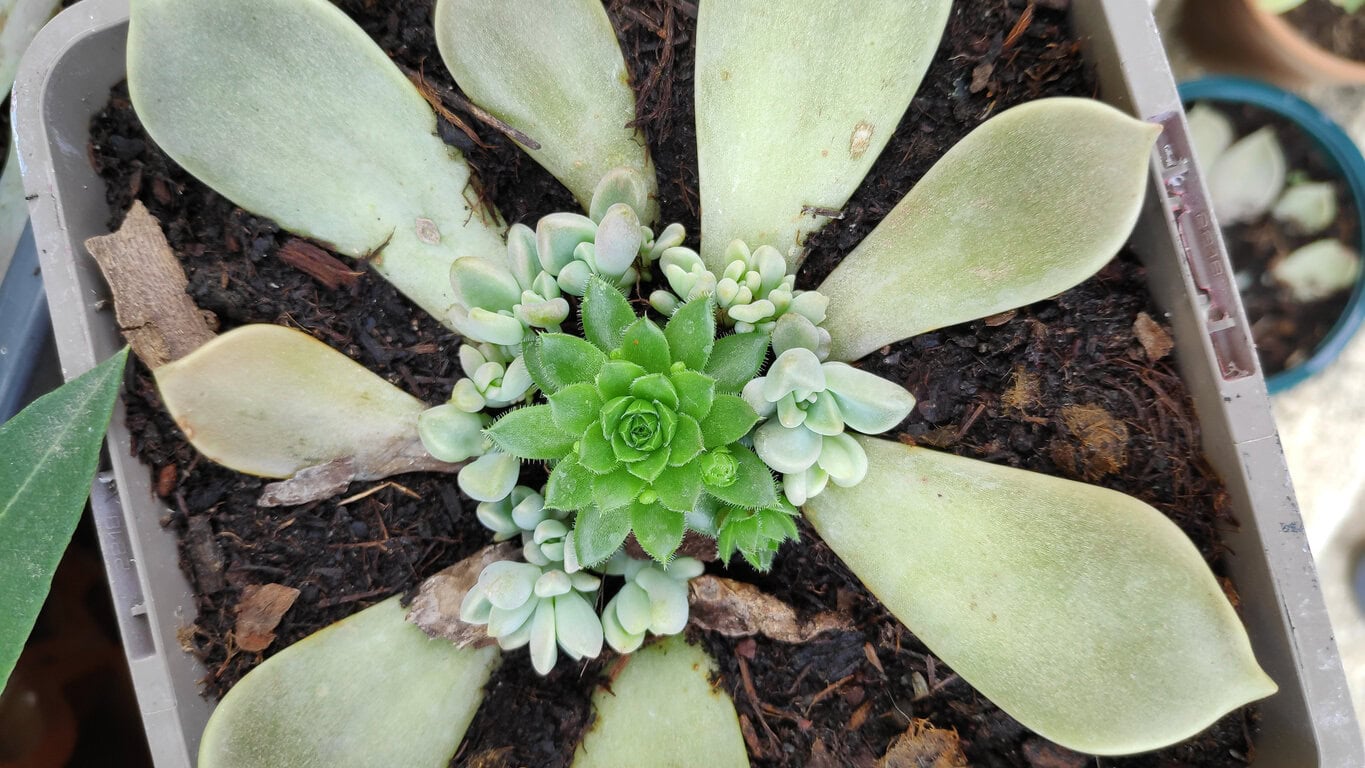
This method of taking cuttings will work on basically all succulents with fleshy leaves, but let’s demonstrate it on echeveria, one of the most popular houseplant succs.
Where to make the cut: All we have to do is pluck a few healthy leaves (avoid the yellow and shriveled ones), let them cure for a couple of days and once the end looks dry, place them on a sandy growing medium.
Keep the medium slightly moist (again, not drenched) and watch the roots grow out of the callused ends. You can sprinkle more soil on top of the roots to protect them and prevent them from drying. When the roots look sturdy enough, pot up each leaf in its own individual pot.
For me, propagating houseplants in January and February feels like a small win during the quiet months. It’s simple, satisfying, and by the time spring rolls around, I already have new plants rooted and ready to grow.