
Tomato plants can get heavy fast, especially once the fruit starts filling out. Give them the right support early, and you’ll avoid sagging stems, snapped branches, and tomatoes dragging through the soil.
Here are eleven sturdy, field-tested setups that keep plants upright and make harvest season a whole lot less chaotic.
If you’re also sorting out supports for the rest of the garden, we wrote a complete guide on choosing the right trellis for different vegetables.
1. Simple Tomato Stakes
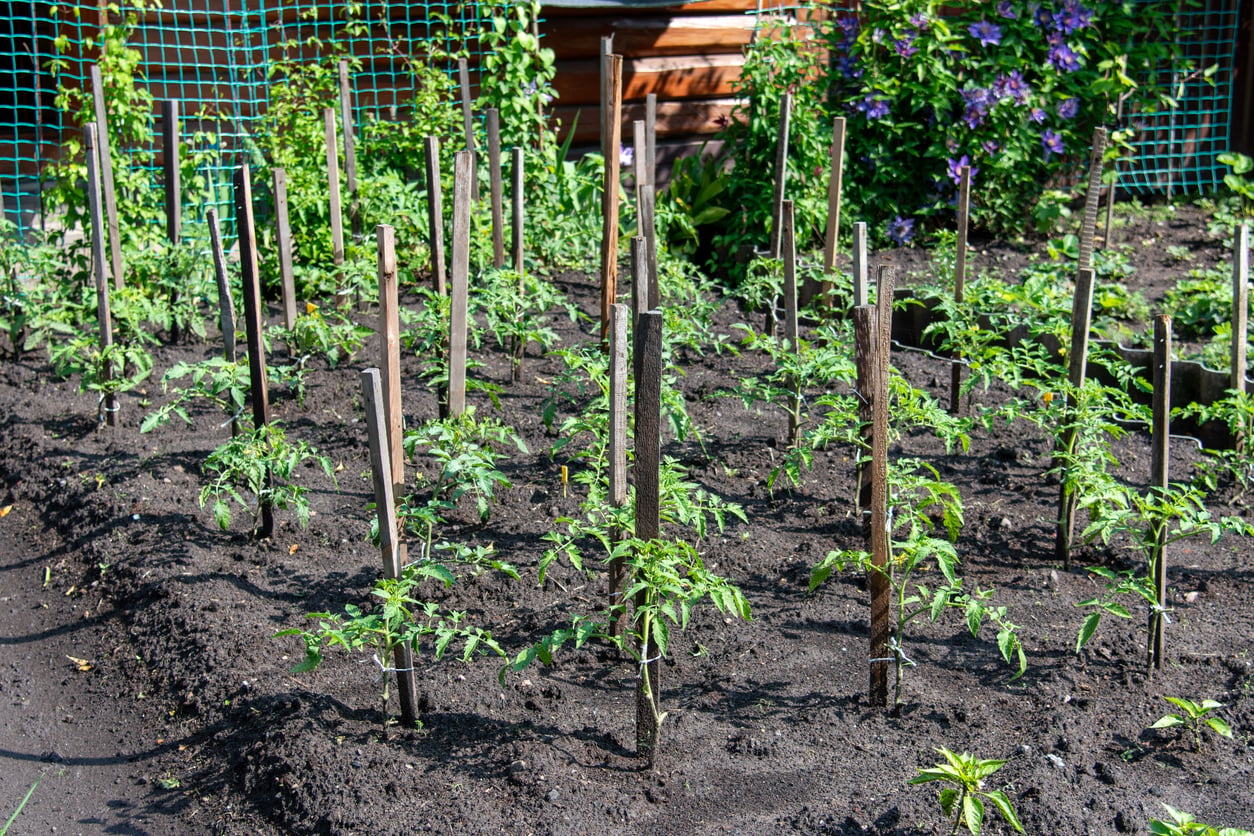
Best for: indeterminate tomatoes trained to one or two main stems.
Drive a 2×2 cedar stake, sturdy untreated wood stake, or thick metal rebar at least a foot deep before planting so you don’t damage the roots later. A single stake takes up zero space and keeps the plant open for better airflow, which helps reduce disease pressure.
The catch? It needs regular tying and pruning. Train the plant to one or two main stems, pinch extra suckers as needed, and tie the stem loosely every 6 to 8 inches with twine or soft plant tape. Skip it too long, and a heavy heirloom can flop, kink, or snap once it’s loaded with fruit.
Support is only one piece of the puzzle, though, so we also put together a guide on tomato-growing mistakes that can quietly hurt your yield.
2. Classic Tomato Cages
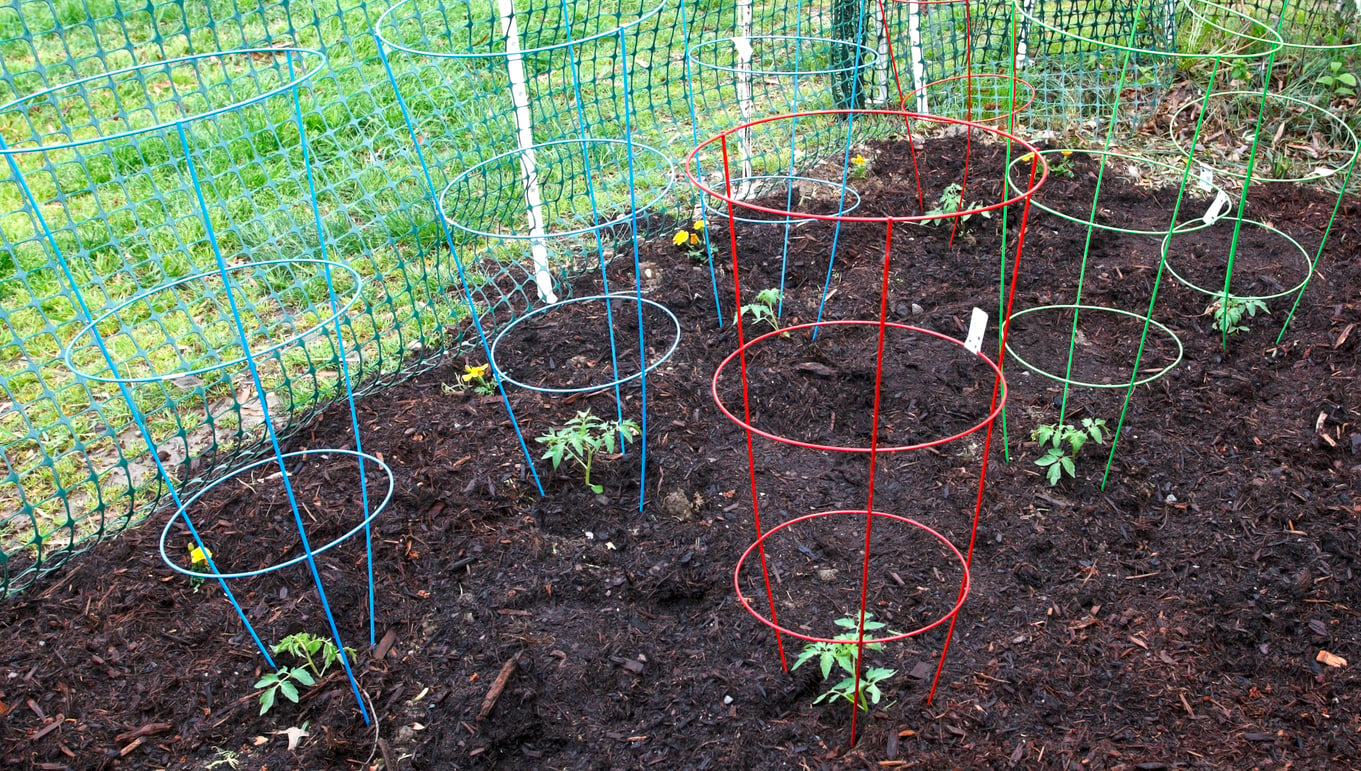
Best for: smaller determinate tomatoes and compact patio varieties.
Classic cone-shaped tomato cages are a simple support for tomato plants that stay fairly compact, like Roma, or semi-determinate types like Celebrity. They’re easy to find, easy to set up, and usually sturdy enough for plants that don’t grow into a full tomato jungle.
For the best results, push the legs deep into the soil while the plant is still young, and add a small stake if your garden gets windy.
3. Concrete Mesh Cylinders
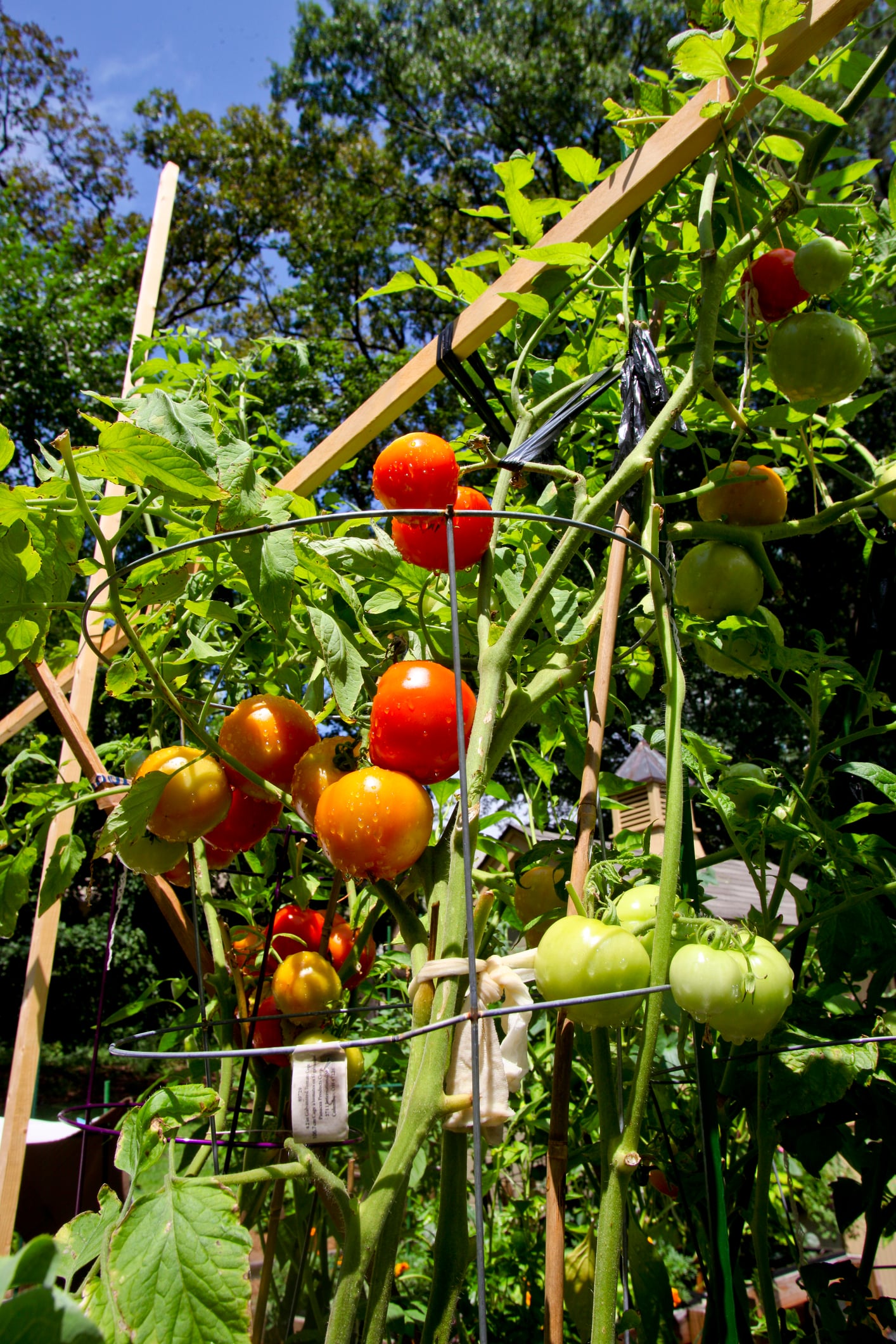
Best for: large indeterminate tomatoes, beefsteaks, and plants you want to grow with minimal pruning.
Roll a six-foot length of concrete reinforcement mesh or galvanized hog wire into a DIY cylinder, and you can let the plant grow with very little pruning. This brute of a cage easily handles massive, multi-stemmed indeterminate giants like Beefsteak or Brandywine.
Just push stray branches back inside as they grow. It can last for a decade, but transport requires a truck, and reaching your hand into a leafy, unpruned center to find hidden fruit is a massive hassle.
4. String Trellis System
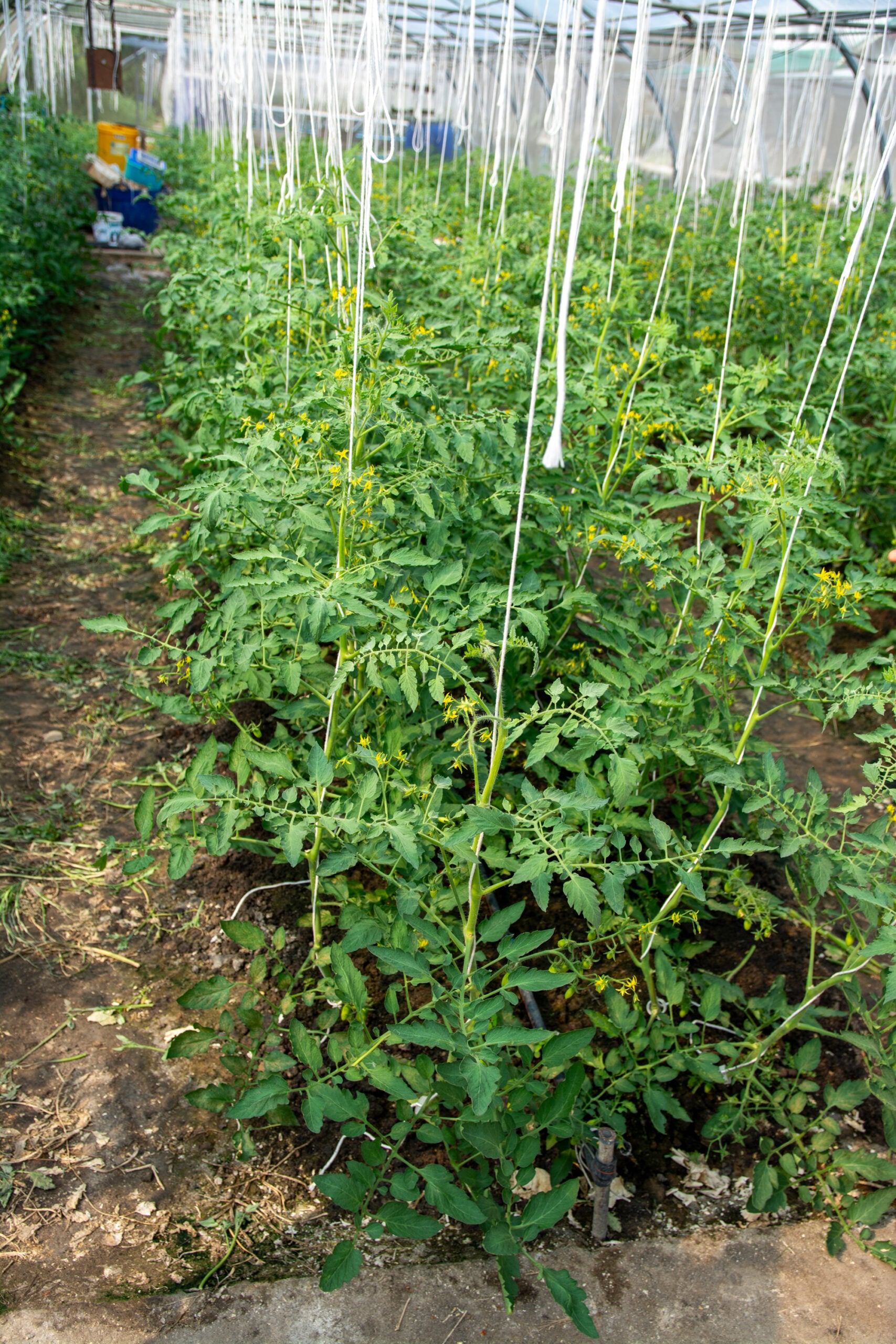
Best for: indeterminate tomatoes grown vertically in greenhouses, raised beds, or tight spaces.
Commercial greenhouses often drop UV-resistant twine from an overhead frame, then train the main stem up the cord as it grows. I like this setup when I want tomato plants growing up instead of sprawling everywhere.
This vertical approach keeps fruit off the soil, makes harvesting easier, specifically benefiting indeterminate varieties like Trust, Big Beef, or San Marzano.
The key is staying on top of pruning. Pinch extra suckers regularly, and clip or wrap the stem as it climbs. One long vacation, and you come back to matted mounds.
If you want the step-by-step version, we explain exactly how to set up a string trellis for tomatoes in this guide.
5. A-Frame Tomato Trellis
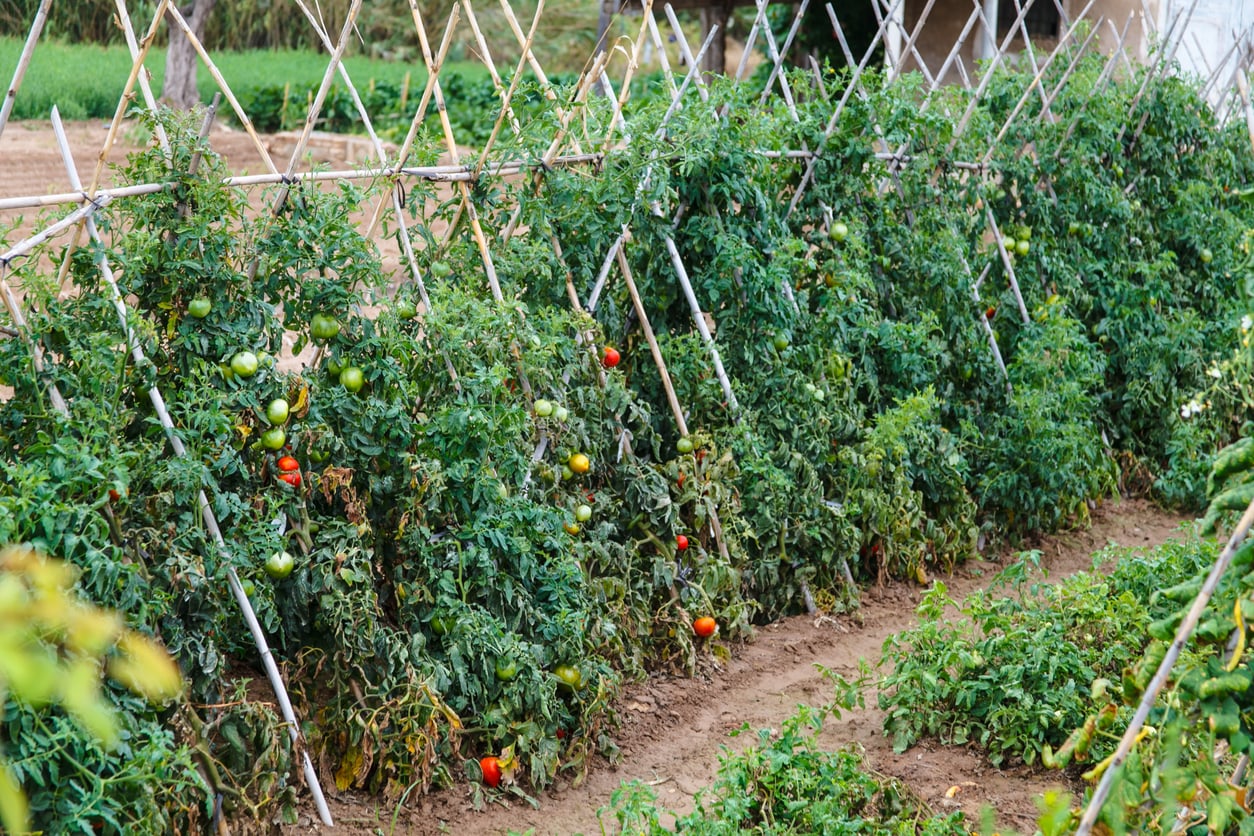
Best for: vigorous cherry tomatoes and sprawling indeterminate varieties.
Lean two mesh-covered wooden frames together like a tent, then train the vines up and over the sides as they grow. Prolific cherry tomatoes (like Sungold or Super Sweet 100) love it as it distributes weight evenly across two slopes.
Its only vulnerability is the center can get a little shaded and humid, so don’t let the lower growth turn into a leafy cave. Keep the bottom leaves trimmed and tuck wandering stems back onto the mesh before the whole thing starts feeling like a jungle. Keep calm and imagine you’re Indiana Jones!
Before you set it in place, it’s worth checking our guide on which direction trellises should face so you don’t accidentally shade half your bed.
6. Cattle Panel Trellis

Best for: heavy indeterminate tomatoes, large heirlooms, and long-term garden setups.
Set a 16-foot galvanized cattle panel against heavy T-posts and secure it well with zip ties or wire. That thick steel grid is practically bulletproof.
It won’t sag an inch, even when loaded down with your heaviest heirloom beefsteaks or ginormous oxhearts (yummy!). You also get a massive grid that is easy to reach through for tying stems and harvesting fruit, and it lasts forever.
The annoying part is getting it home. Transporting a 16-foot panel is a total pain without a truck or trailer, but it is the last support system you will ever have to install because it lasts for years.
7. Florida Weave
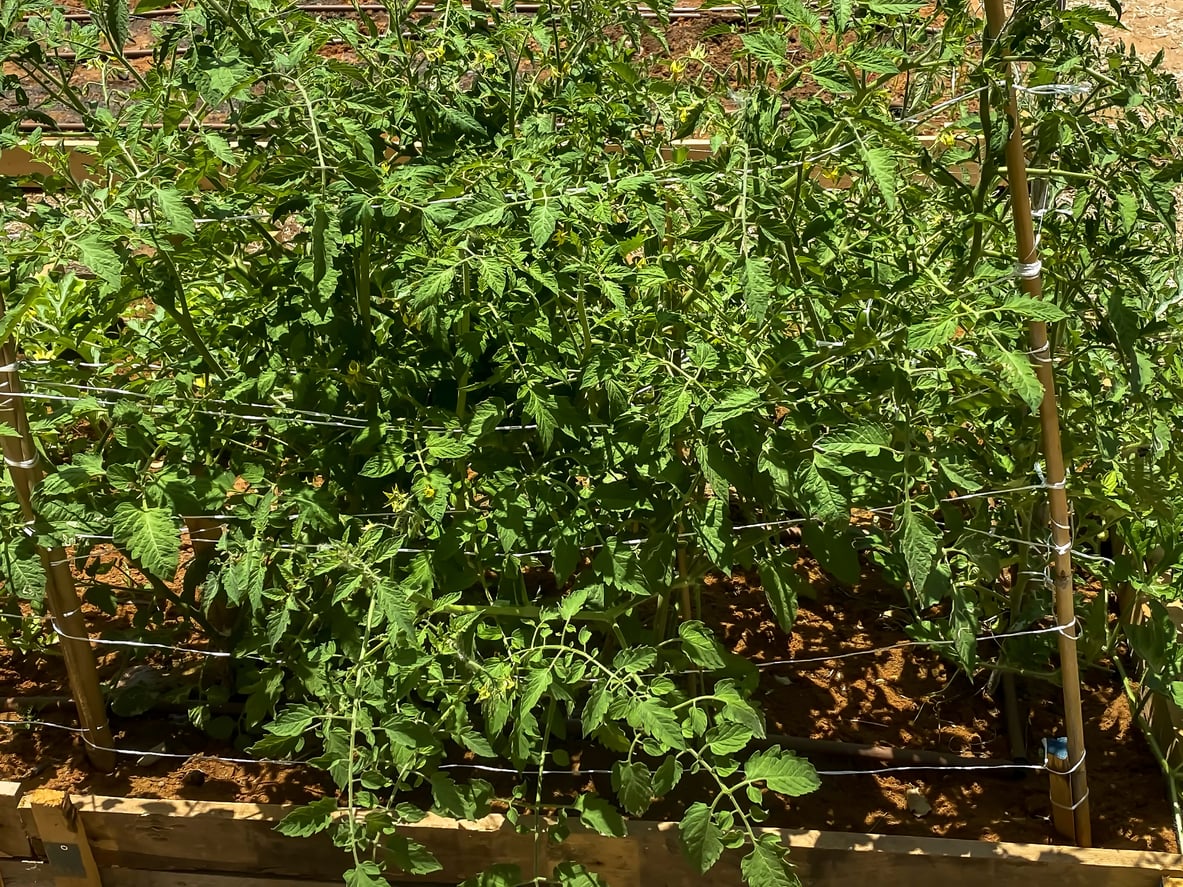
Best for: rows of determinate tomatoes, paste tomatoes, and gardeners growing several plants at once.
For long rows of twenty or more determinate paste tomatoes like Roma (13/10 Italian nonnas recommend) or Amish Paste, drive sturdy stakes or T-posts every three plants, then weave synthetic tomato twine back and forth as the plants grow.
It takes about ten minutes to install, even if you have two left hands. But the twine needs to stay tight and anchored well. If it stretches, snaps, or loosens at one end, the whole row can start sagging like a wet clothesline.
8. Bamboo Teepee Framework
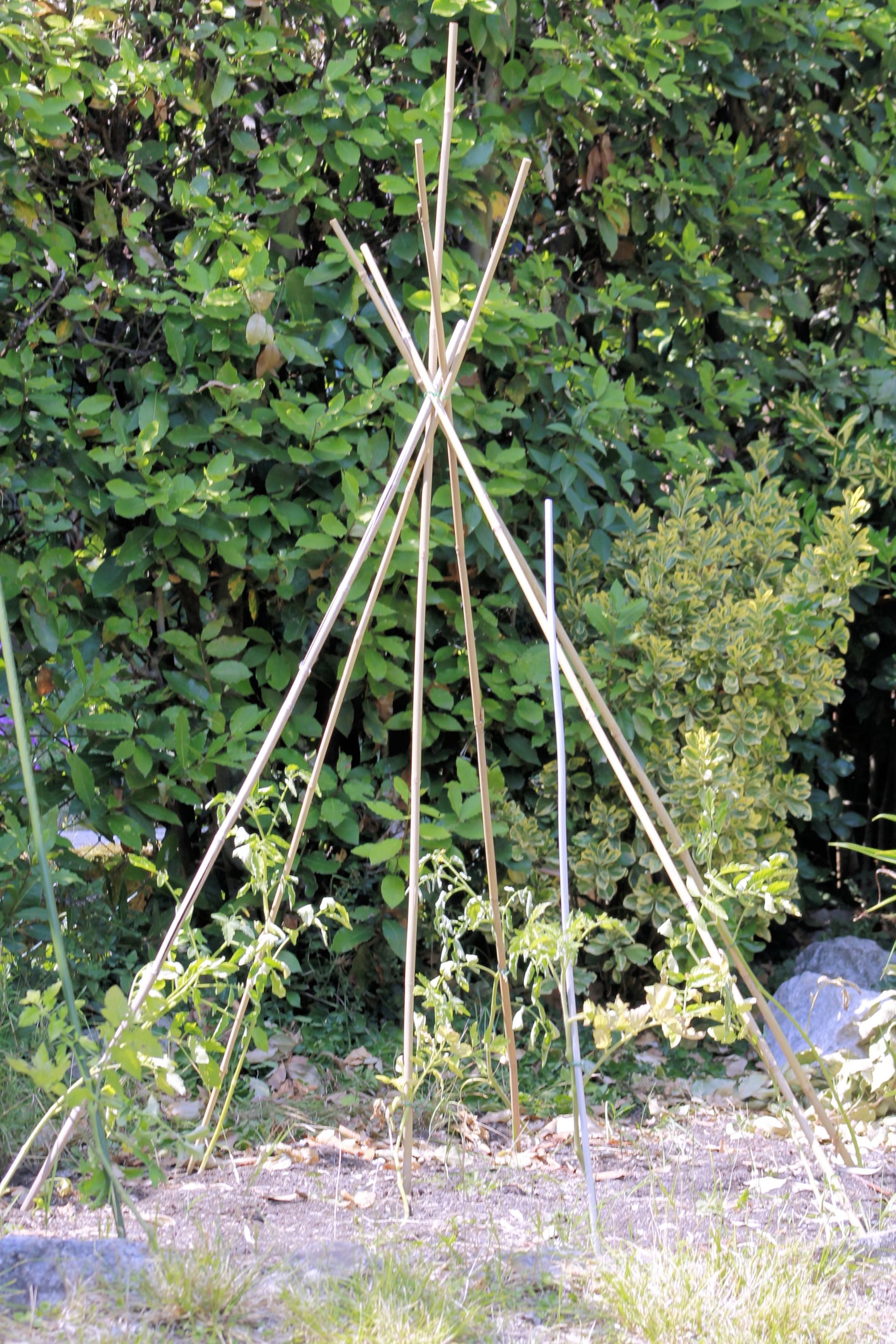
Best for: small to medium tomato plants, semi-determinate varieties, and lightweight setups.
To make this framework, grab four bamboo stakes, lash the tops together, and spread the legs wide around the tomato plant. This simple setup works best for mid-sized plants, including semi-determinate varieties like Celebrity. It costs almost nothing and stores completely flat in the winter.
Just remember, tomatoes don’t have tendrils, so they won’t grab the bamboo on their own. Tie the stems loosely with garden tape or soft twine as they grow, especially once the plant starts setting fruit.
9. Wooden Ladder Trellis
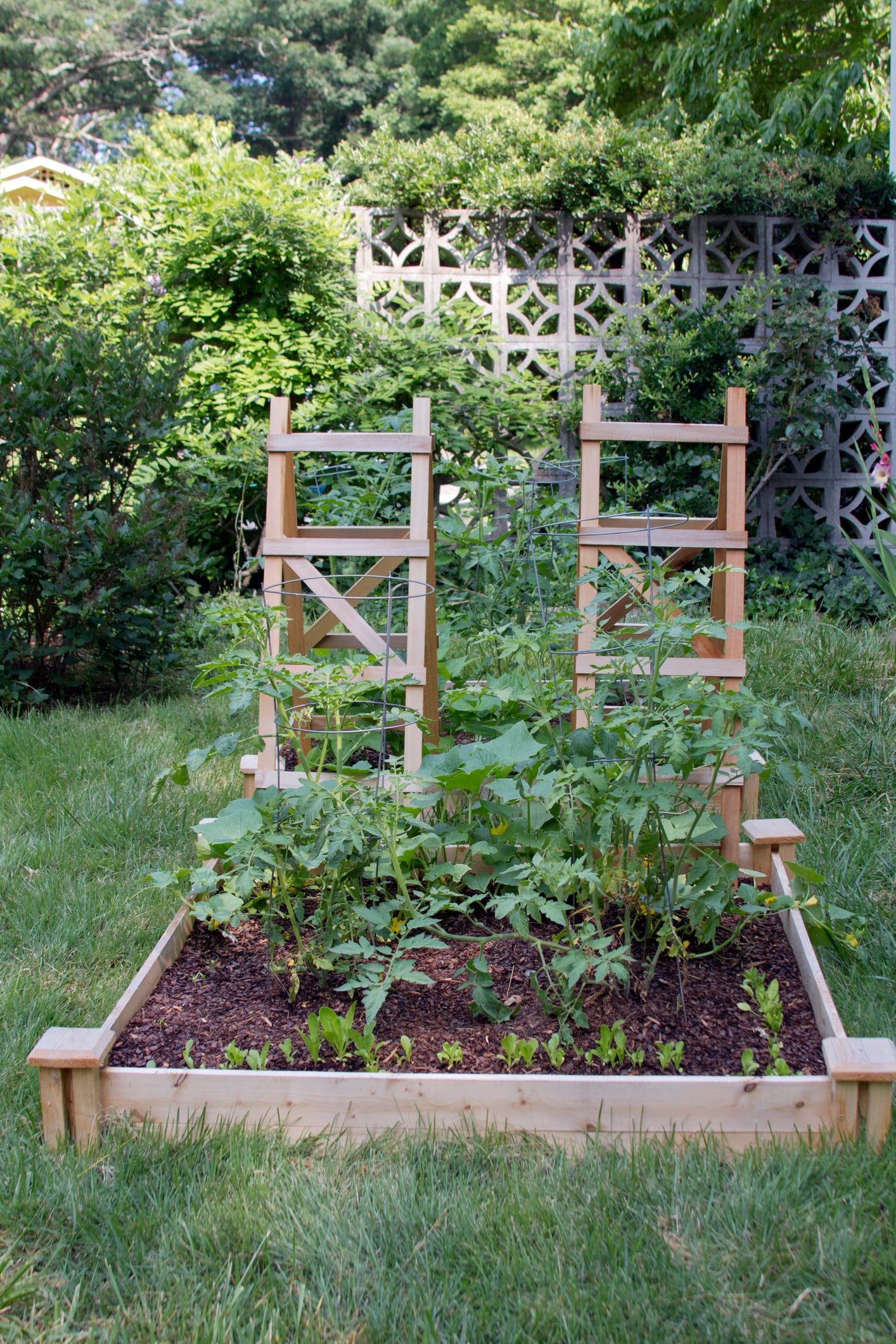
Best for: medium to large tomato plants that need sturdy branch support.
Build a rigid ladder frame out of 2×2 lumber, with wide rungs that help support heavy branches without tying a million knots. This is a handy way to use up scrap wood, as long as it’s sturdy and in good shape.
The beauty here is clearing out your garage workshop for zero dollars. Just don’t use pressure-treated scraps from an old deck project. Stick with untreated wood for this one.
Also, don’t skimp on the joints. Use exterior deck screws instead of lightweight nails, because a big indeterminate tomato can get surprisingly heavy once it’s loaded with wet foliage and fruit.
10. PVC Tomato Support Frame
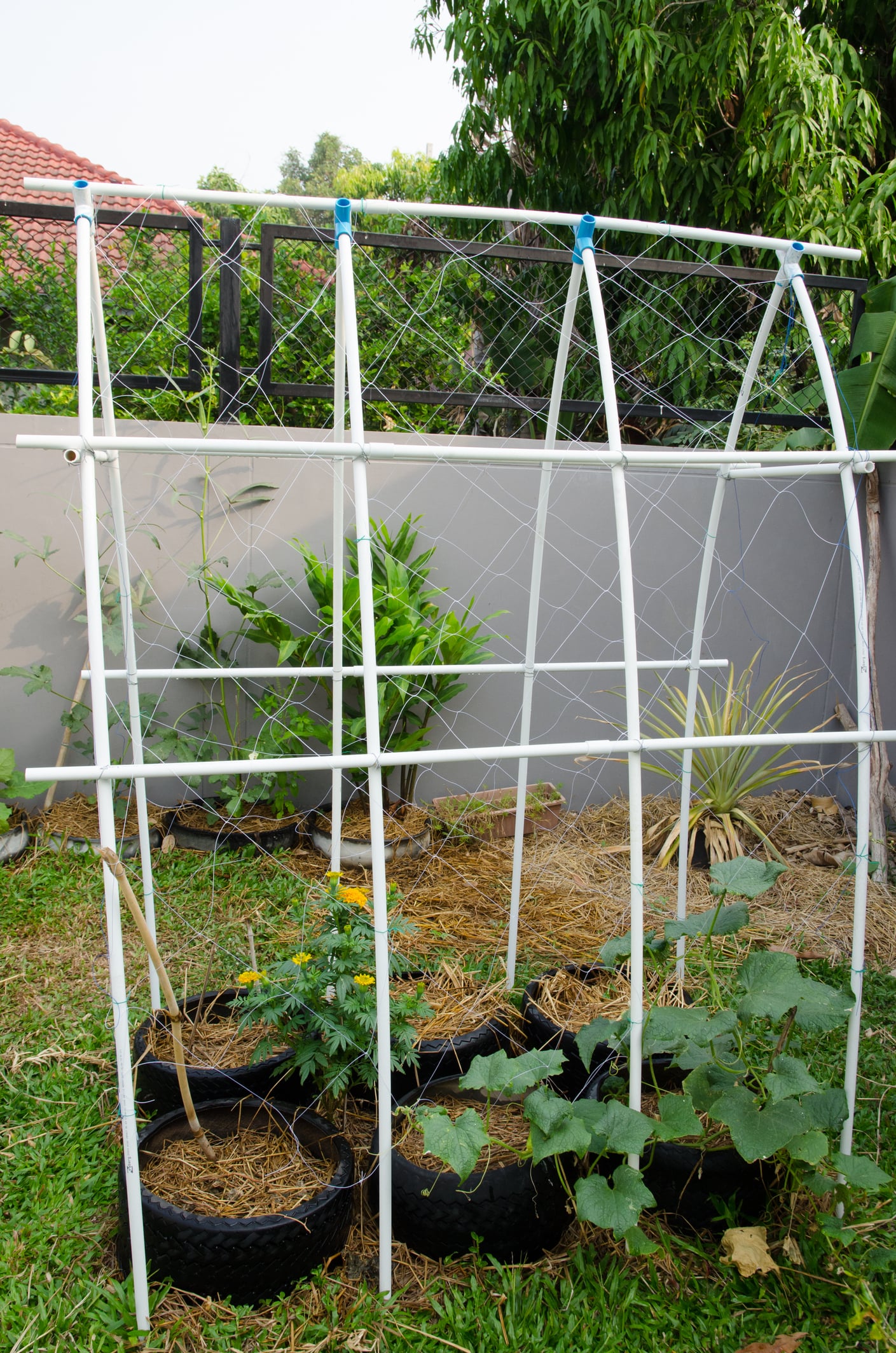
Best for: determinate or semi-determinate tomatoes in gardens where supports need to move each season.
PVC is cheap, light, and easy to snap together into a custom square cage. It may not win any beauty contests BUT it does have one big advantage: you can move it around easily when you rotate crops or change your bed layout.
It does handle medium-weight determinate or semi-determinate tomatoes well. Just know that constant sun exposure can make some PVC brittle over time, so check the joints and pipes before reusing it each season.
11. Container Tomato Support Setup
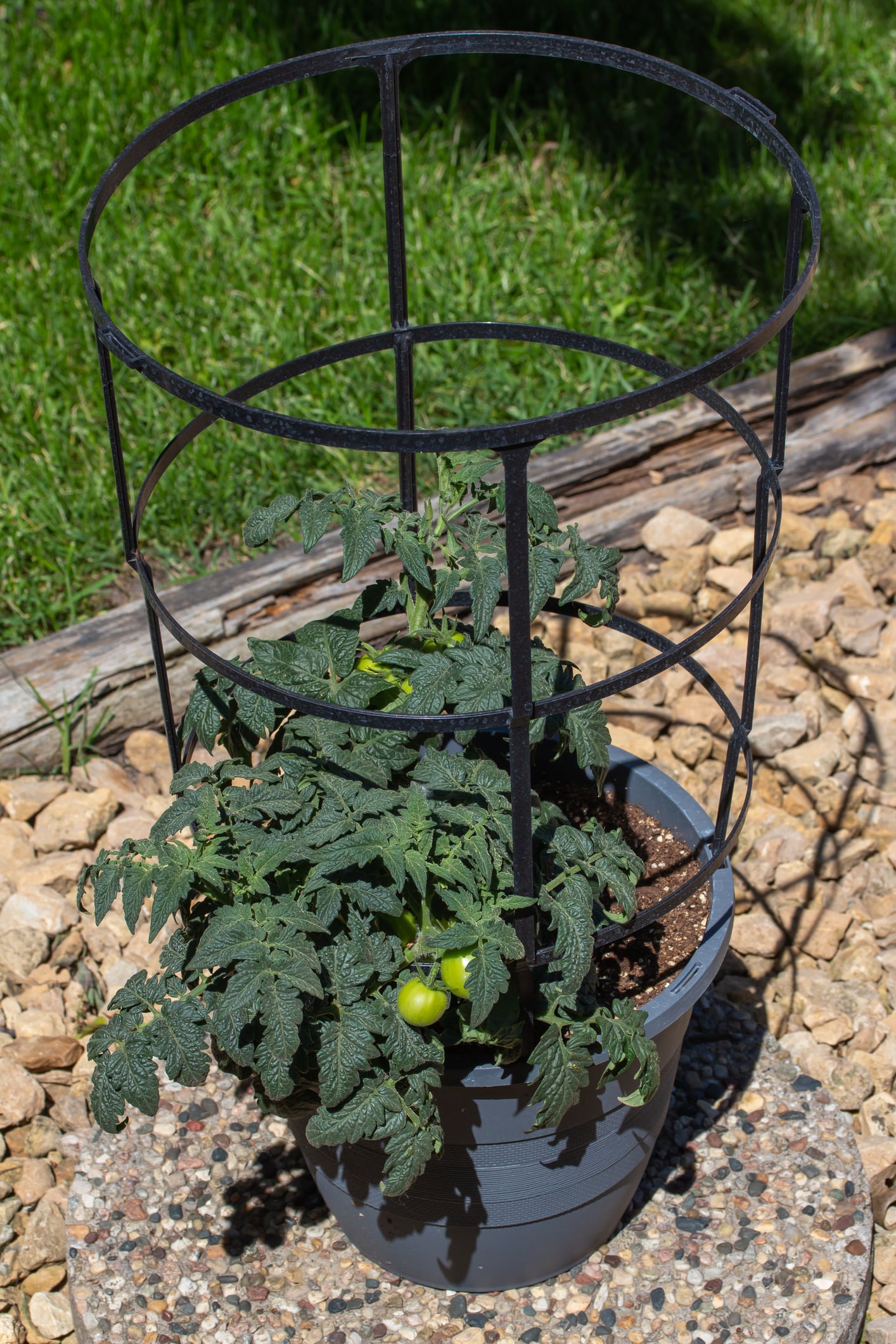
Best for: dwarf, patio, and compact container tomatoes.
Growing tomatoes in food-safe five-gallon buckets has been pretty trendy lately, and I get why. It’s practical, easy to move, and perfect if you don’t have much garden space. You can even grow a small tomato plant on a sunny balcony.
Use a compact cage or sturdy spiral stake, and stick with smaller varieties like Tiny Tim, Patio, or Tumbling Tom. Just add some weight to the bottom or keep the container somewhere protected, because once the plant gets top-heavy, one strong gust can send the whole thing over!
If you’re leaning into compact gardening, we also wrote a guide on vegetables you can grow in five-gallon buckets.
Brace For Impact
Grab your tools, shake a leg, and lock down your ideal framework early so everything stays perked up right where it belongs. Once your support system is handled, our tomato growing tips can help you get more fruit from those nice, upright plants.


