Craving lush begonia leaves and non-stop buds? Let the basic care methods, lazy approach, and textbook advice be gone from your routine. They want a little more strategy than that.
Here are the care tasks that helped me get healthier leaves, fewer ugly problems, and a lot more flowers.
Task 1: Ditch the Overhead Watering (Target: Stem Rot)
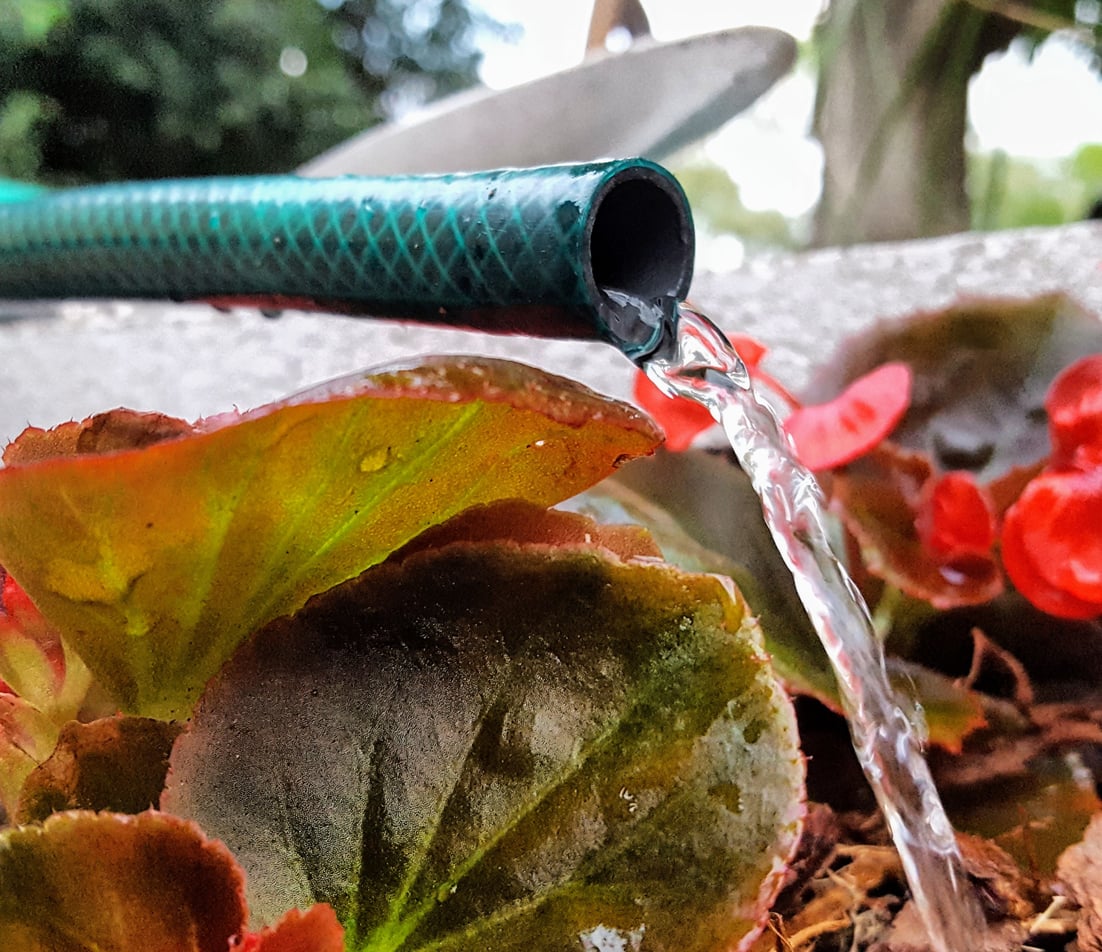
Dousing begonias from above is asking leaf problems to throw a rager on your foliage. Wet leaves and soggy crowns are where begonias start getting dramatic.
Water strictly at the soil line with a narrow spout, aiming under the leaves instead of over them. Or better yet, set the pot in a saucer and let it drink from the bottom up.
Quick tip: Just don’t let it sit there forever! After 20 to 30 minutes, dump out any leftover water so the roots stay moist, not marinating.
Task 2: Deadhead Before They Turn Gross (Target: More Flowers)
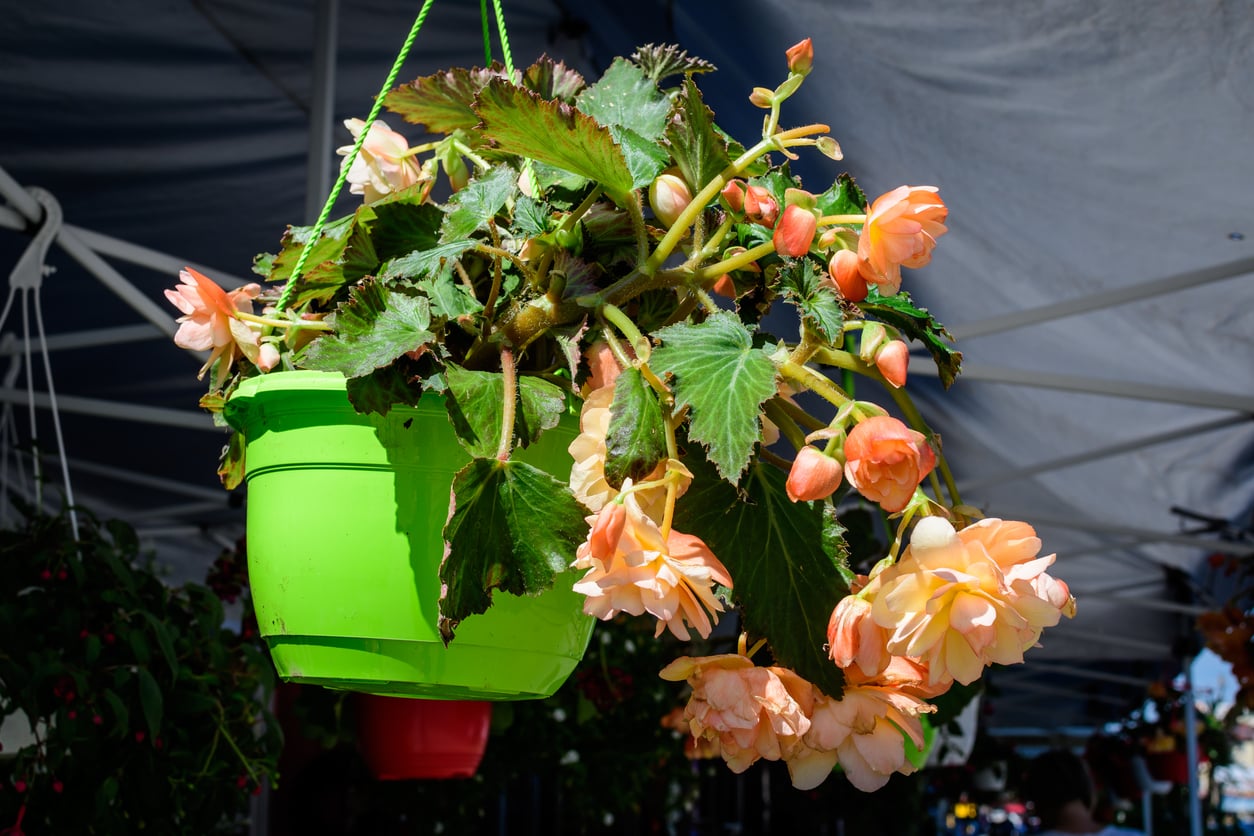
Spent, gooey flowers are energy vampires like my nosy neighbor. And begonias are dramatic enough without giving them a reason to waste effort on seed pods.
I don’t wait for old blooms to drop off on their own schedule. Once they start fading, I pinch or snap the spent flower stem off close to the node, using clean fingers or snips if the stem feels too soft.
That keeps the plant tidier and encourages it to put more energy into fresh buds instead of dragging around old flowers like emotional baggage.
Task 3: The Finger Test Soil Check (Target: Root Suffocation)
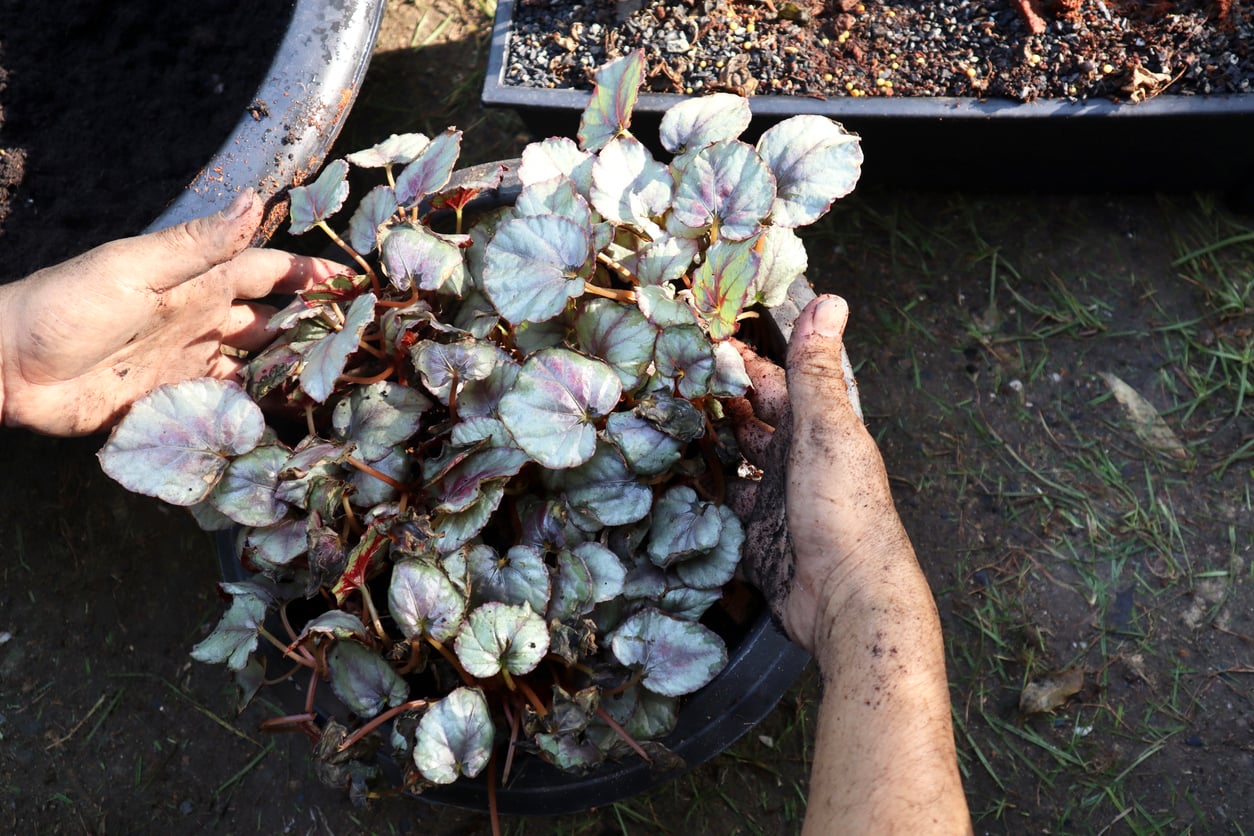
Watering on a rigid calendar schedule kills begonias faster than my favorite uncle kills a bottle of single malt.
The surface layer dries first and lies right to your face, so I always check lower than that before watering.
Push a finger about an inch or two into the soil and see what is actually happening down there. If it still feels damp, put the watering can down and go fold your clothes or something.
Quick tip: I wait until the top layer feels dry, but not until the whole pot turns into desert dust.
Task 4: Dappled Light Positioning (Target: Leaf Scorch)
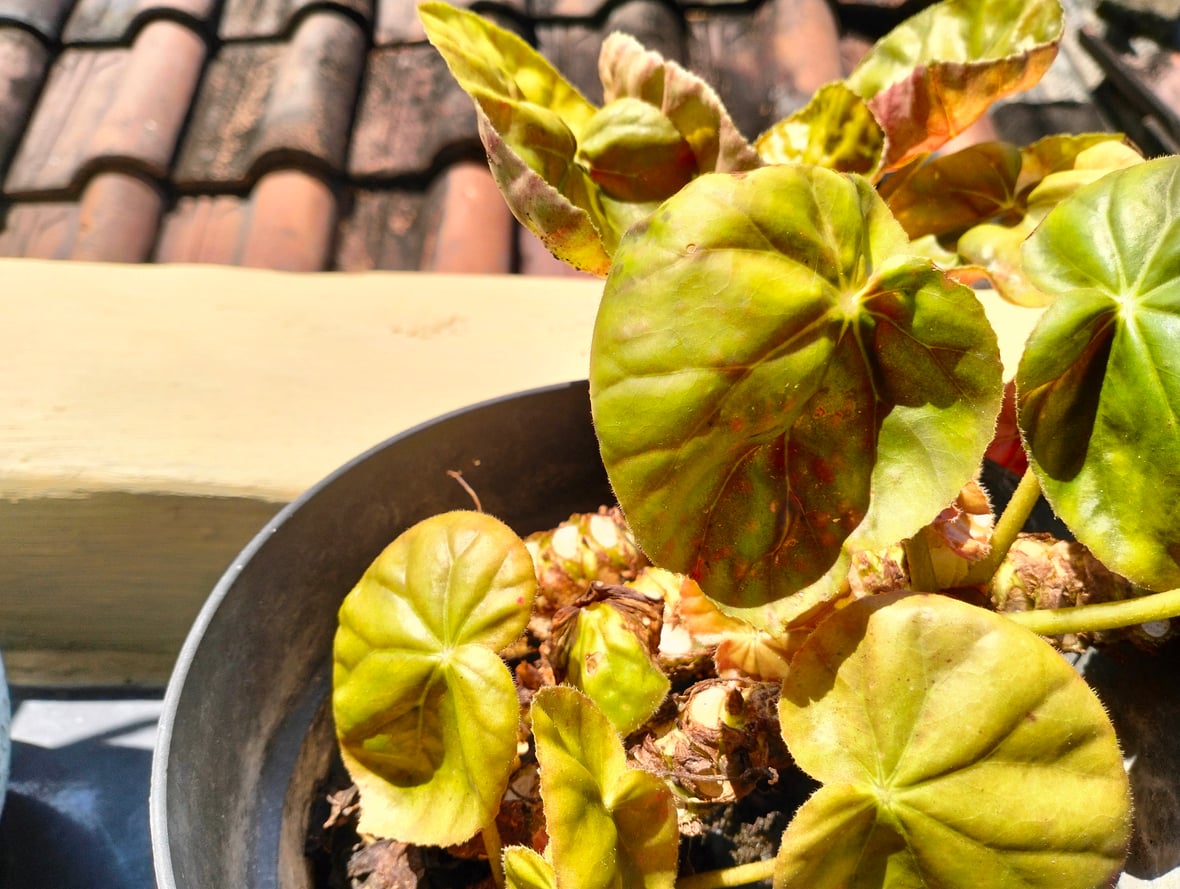
Direct, intense afternoon sun will scorch begonia foliage faster than you can say “crispy regret.”
Leave one baking in a hot south window, and those leaves can bleach, crisp, or curl like they’re filing a complaint. On the flip side, deep shade is not the answer either! So, quite reasonably, they refuse to push out buds.
Task 5: Careful Feeding (Target: Bloom Power)
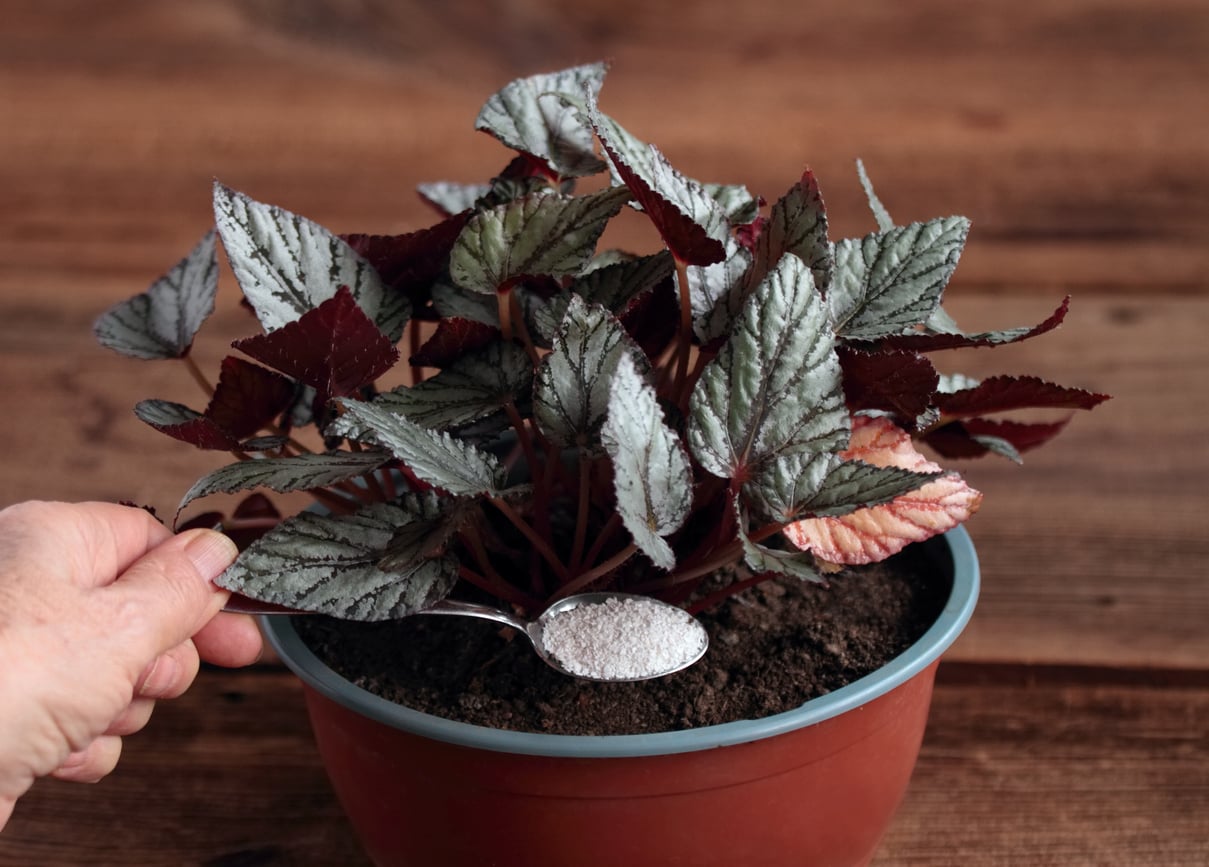
If your begonia looks like an enormous green bush that refuses to flowers, the feeding routine might be part of the problem.
Too much nitrogen can push out loads of leafy growth while the blooms sit there doing absolutely nothing, like they’re waiting for a written invitation.
I’ve had better results using a diluted balanced fertilizer, like 10-10-10, or a bloom-supporting feed with a lower first number, like 5-10-10.
Quick tip: Don’t go feral with it either. More fertilizer does not mean more flowers. It usually means stretched stems, weak growth, and a plant that suddenly collapses like it has been personally betrayed.
Task 6: Humidity Management (Target: Crisp Leaf Margins)
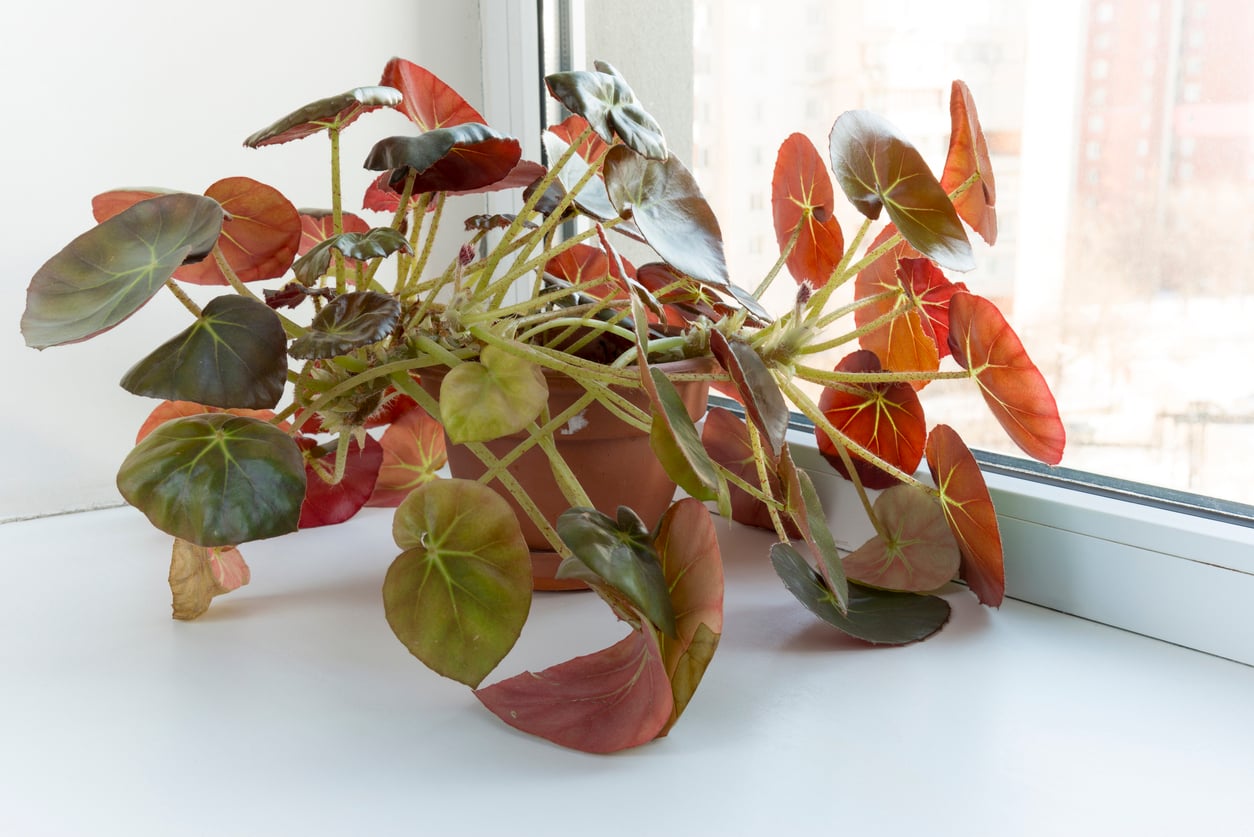
The second indoor air gets dry, the edges of your begonia leaves turn crunchy.
But if you walk over with a misting bottle, you’re not helping. You’re mostly leaving wet spots on the leaves for mold to throw a party on, plus it leaves a chalky white crust behind that looks exactly like dried spit.
I set the pot on a tray of wet pebbles instead, making sure the pot sits above the water, not in it. It gives the plant a little humidity boost without turning the leaves into a damp disaster.
Task 7: Strategic Pinching (Target: Bushiness)
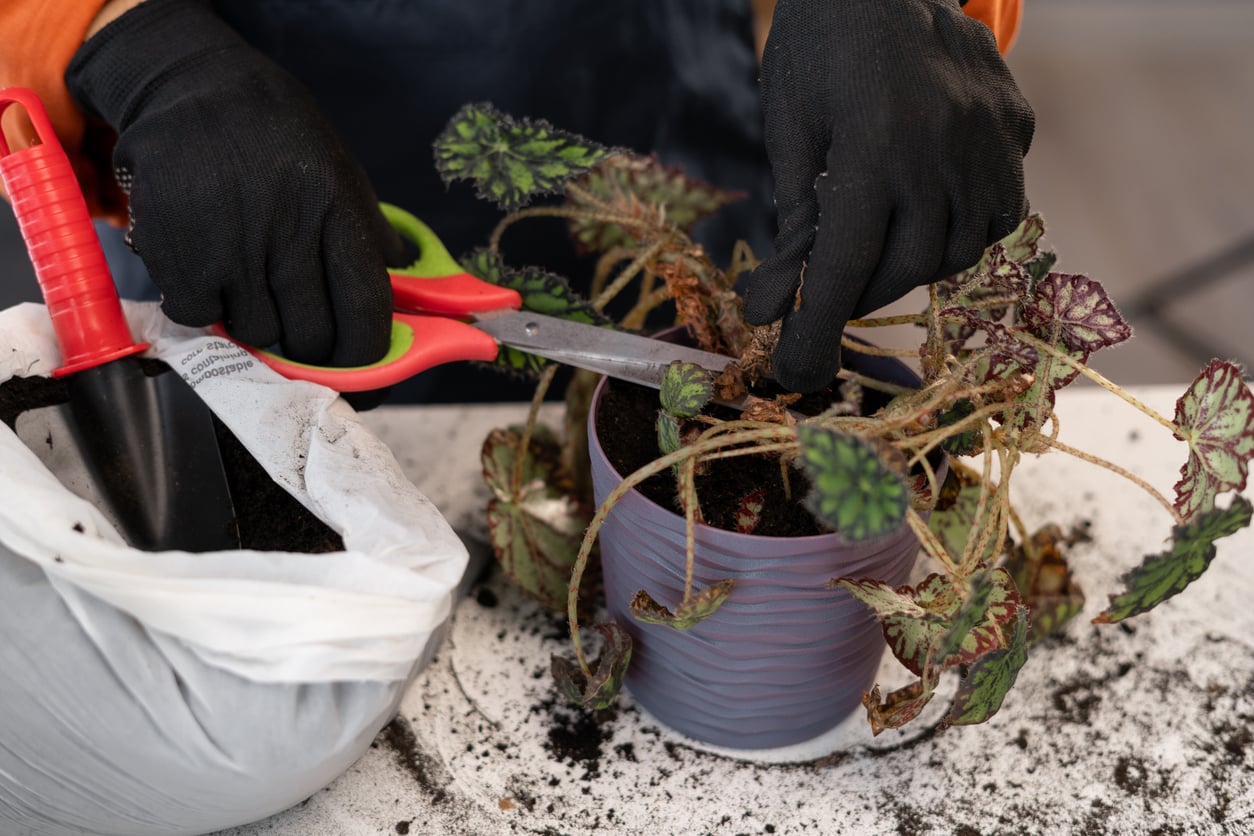
Begonias are fundamentally lazy. If you leave a single stem alone, it often just keeps reaching upward like branching is beneath it.
When you pinch off the growing tip, you basically cut off the boss’s microphone. The lower nodes stop slacking, panic a little, and suddenly start pushing out side shoots to compensate.
You aren’t just pruning. You’re waking up dormant buds and forcing the plant to do some work.
Task 8: Container Size Shaming (Target: Root Rot)
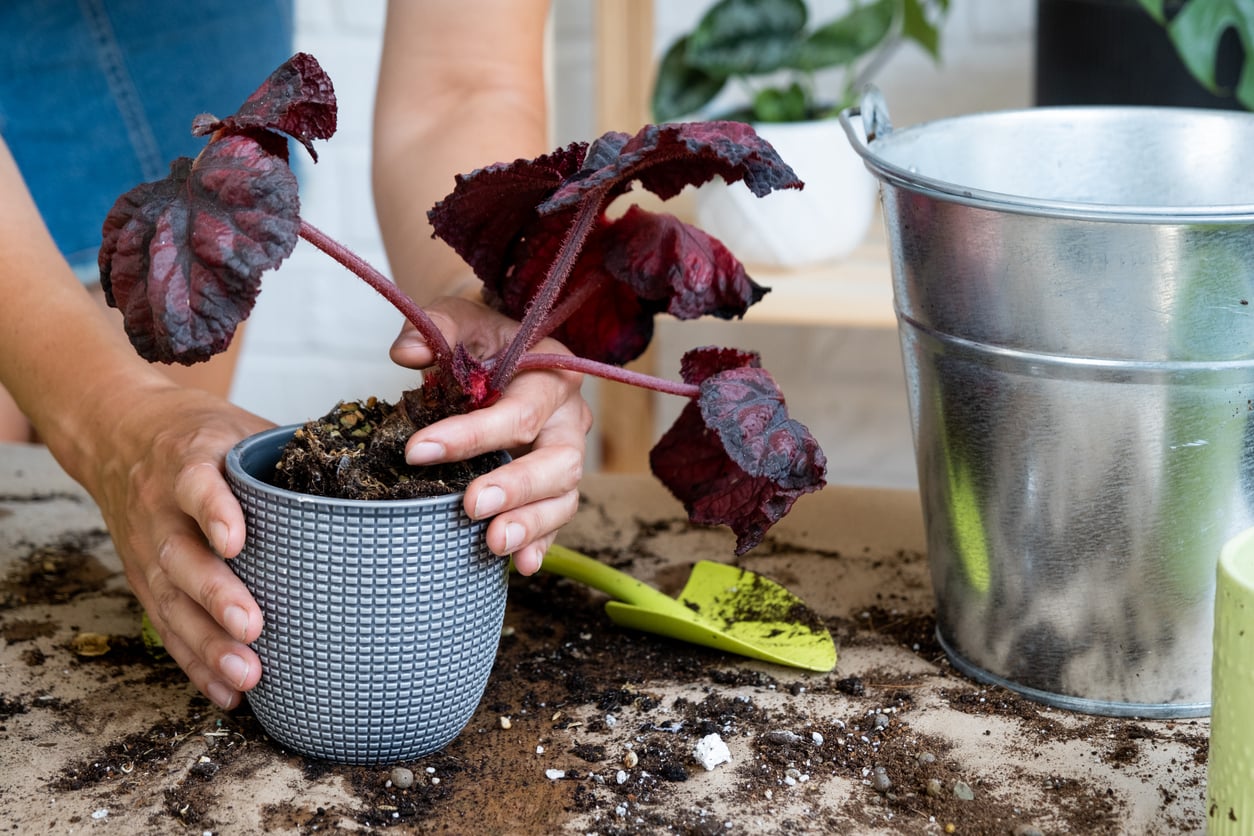
Shoving a begonia into a massive pot “so it has room to grow” is how you end up with a soggy little tragedy.
Begonias do not need a giant bucket of soil sitting around wet for days. If the root ball is small, all that extra mix holds moisture the plant cannot use fast enough.
I keep mine slightly snug, in a pot just a little bigger than the root ball. Not strangled, not swimming. Just enough room to grow without turning the soil into a swamp.
Task 9: Choose the Right Pot Material (Target: Dehydrated Roots)
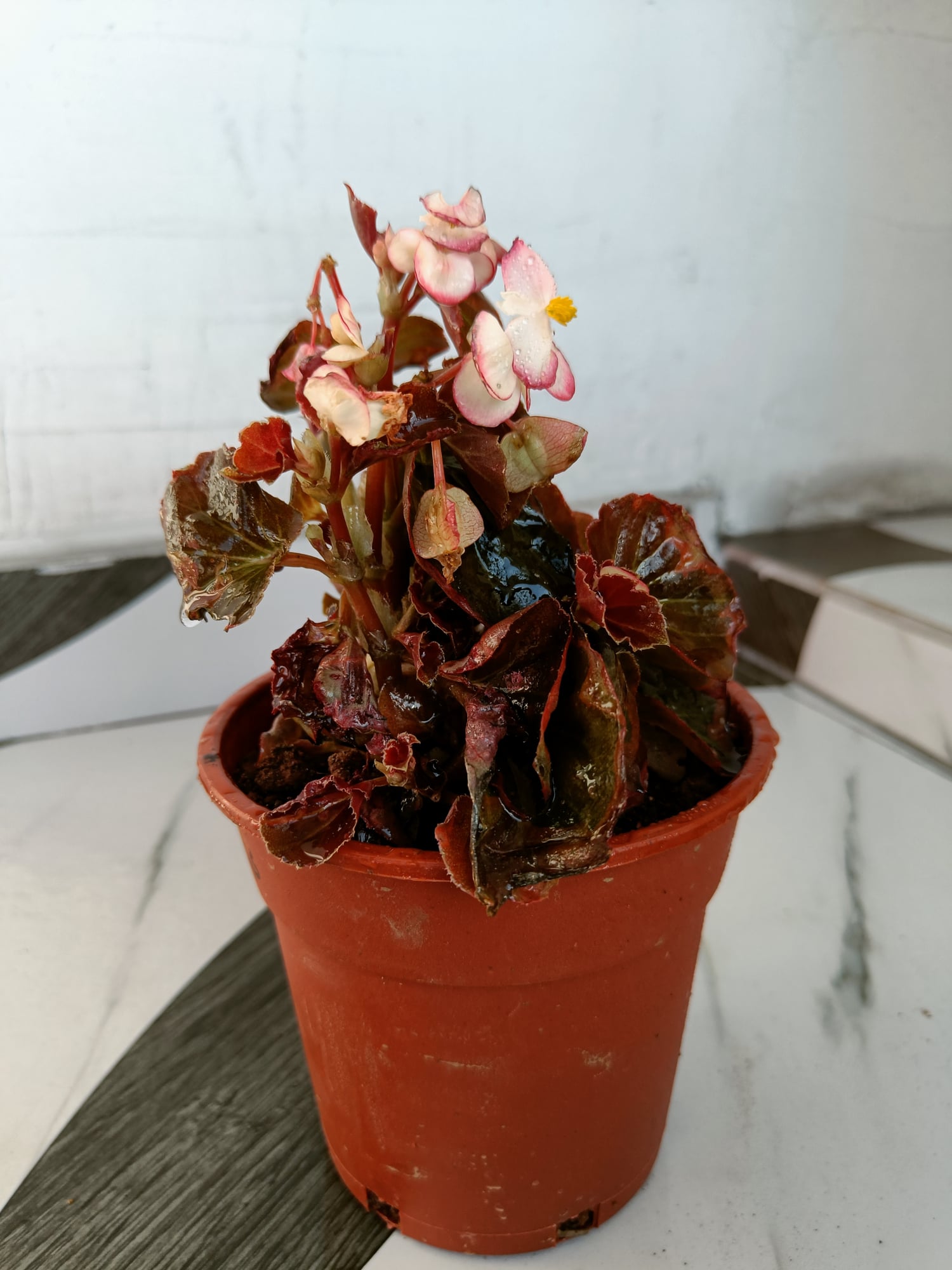
Terracotta looks gorgeous, but for begonias in a dry room, it can be a sneaky little traitor. Because it’s porous, it dries the soil faster, and some begonias do not appreciate that wet-dry roller coaster.
I usually stick with plastic or glazed pots if begonias are drying out too quickly.
Terracotta can still work if you’re a careful waterer, but don’t use it just because it looks cute and then act surprised when the plant throws a crispy tantrum.
Begonias Are Chaotic Evil
Think about it. You try to move a stem? Snap. Ruined. You give them a splash of direct sun? They turn to ash before you can apologize. You mist them to keep them comfortable? They reward you with gray mold and rot into a puddle. They will actively self-destruct just to watch you suffer. They don’t want your rules, but they might want mine.