Roses are like cats: designed to draw you in, backed up by razor-sharp physical consequences if you handle them carelessly. And neither does well staying soggy, August or not. I’ve got both, very much alive and thriving, which makes me somewhat of an expurrrt on the topic.
By August, roses are usually showing you exactly what they need, and these are the eight jobs I tackle to keep mine healthy and coax out another round of blooms before fall.
1. Scour Leaves for Pests
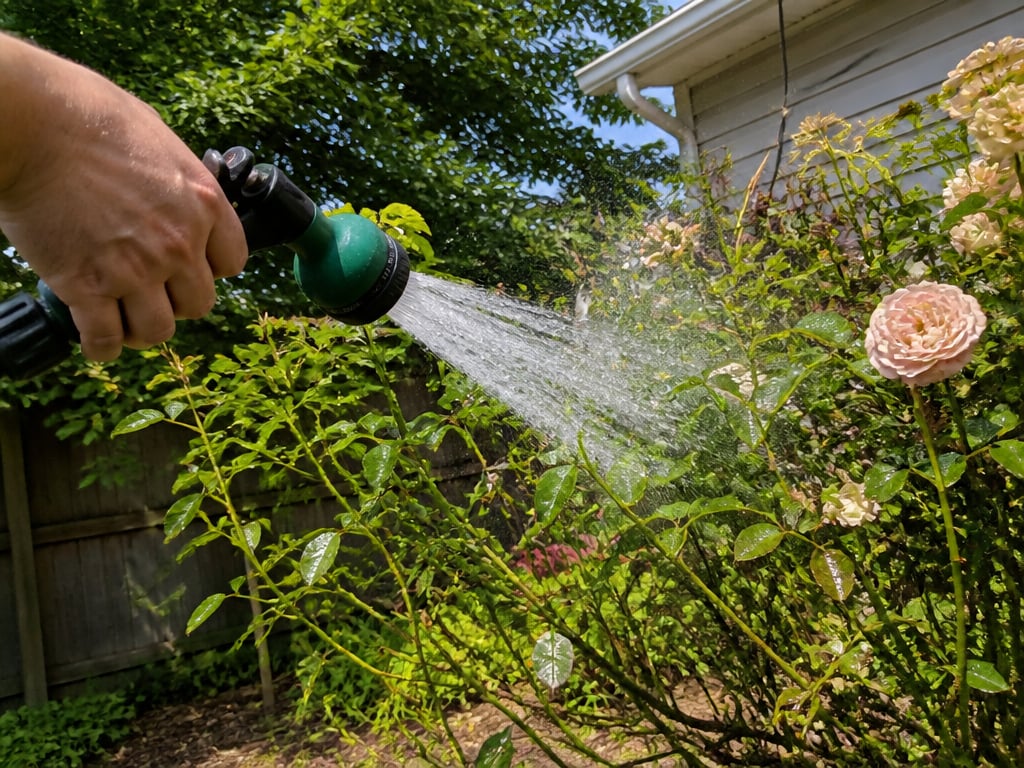
Hot summer air sends spider mites into overdrive, while aphids and sawfly larvae may still be hanging around. So first of all, flip leaves. Inspect the undersides. These pests chew through tissue or suck plant fluids while you wait for autumn buds that won’t come.
Some sprays can scorch heat-stressed foliage, while broad-spectrum insecticides can kill predatory bugs that are on your side.
So, my first move is to blast those colonies straight into the dirt with the nozzle turned to a strong spray.
Quick tip: Hit the underside of every leaf. Do it early in the morning so the foliage dries before nightfall, showing fungal spores who’s the garden boss.
2. Sanitize Canopy and Root Zone
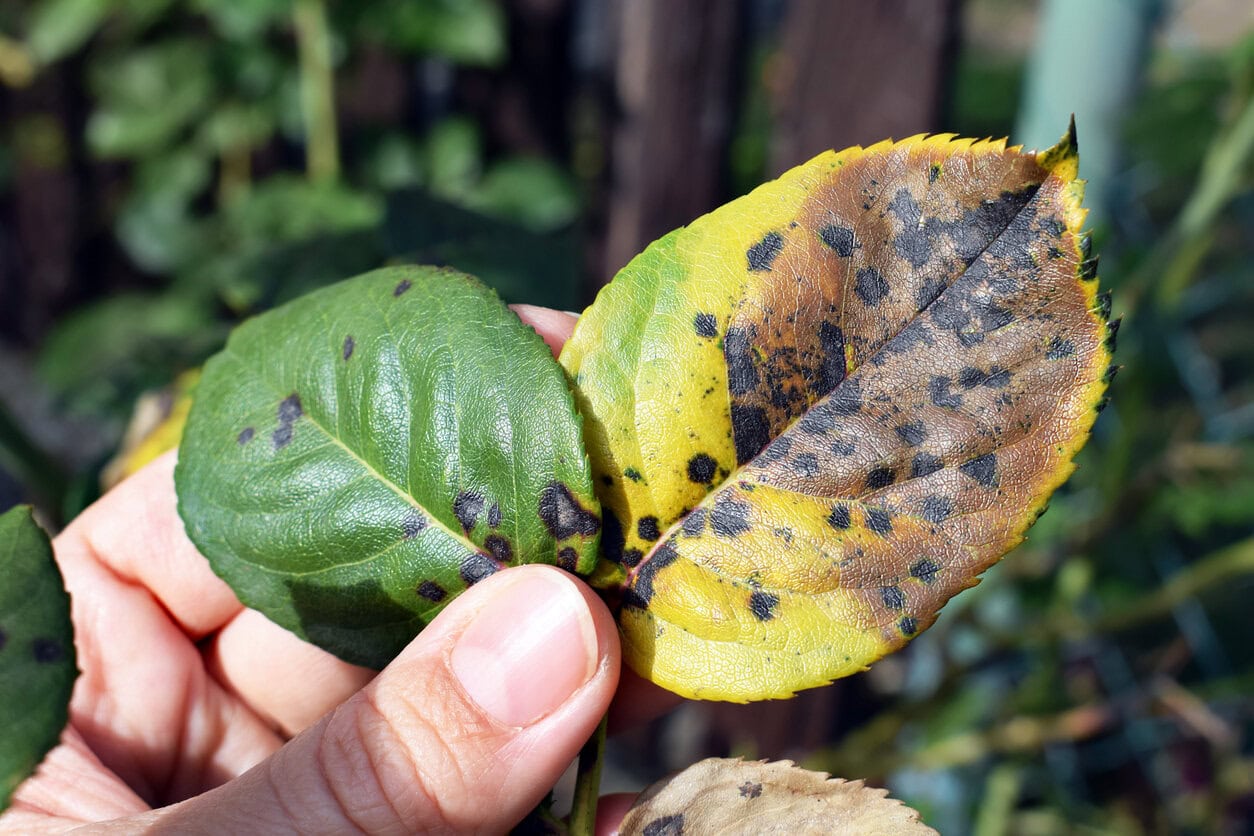
Fungicides don’t fix dead foliage. When black spot hits, I pluck badly infected leaves off and pick up anything that’s already fallen. The plant is better off without spore-factory leaves feeding the next round of infection.
Also, clear infected leaves and debris from around the base. Black spot can survive in fallen leaves and infected canes, and splashing rain or irrigation can carry spores straight back into the lower canopy. Get the infected debris out and keep it that way.
3. Deadhead Repeat-Bloomers Only
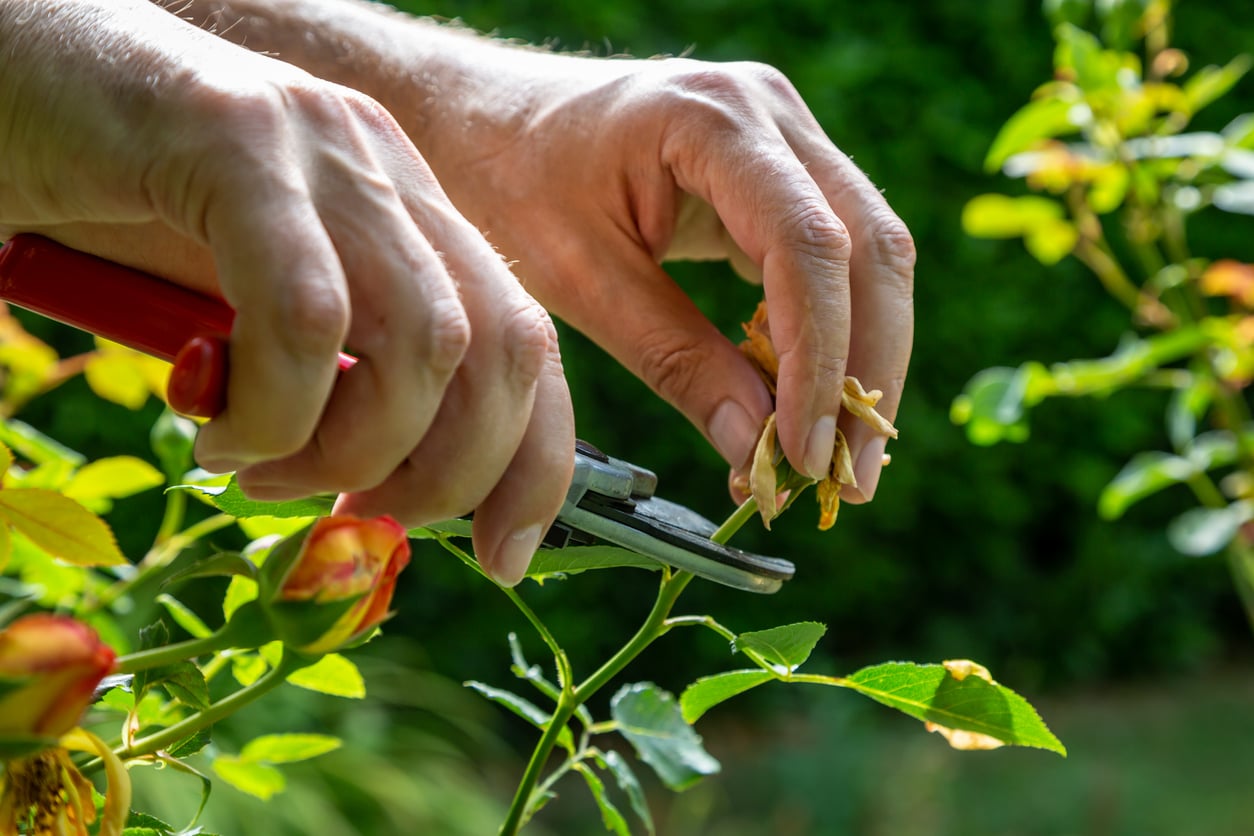
Not every spent flower deserves a cut. I deadhead repeat-flowering hybrid teas and floribundas to stop them from forming hips and encourage another bloom cycle.
However, once-bloomers are done, and roses I want hips from are better left alone. Snapping spent heads off rugosas or species roses when you’re growing them for hips just destroys the developing hips, trading colorful fall fruit for naked canes.
Know what you grow before snip-snip-snapping away. If you want to get the cut and timing right, we explain how to deadhead roses for more blooms in this guide.
4. Restrict Climbers

August storms love catching long, top-heavy climbing canes and wrenching them around like whips. That wild motion can snap canes or batter them against the support, and badly broken canes… Just. Don’t. Bloom.
Tie the main canes across your support structure as horizontally as they’ll comfortably go, using soft ties that won’t cut into the stems.
Training the cane sideways snaps sleeping buds awake along more of the stem, encouraging flowering side shoots instead of leaving all the action at the top.
Quick tip: For years I couldn’t figure out why I was only getting one lonely bloom at the very top of my climbers. Turns out, growing them straight up is a trap.
5. Cut Off Junk Food

I lost half a bed to an early freeze before I finally learned to put the roses on a diet in August. If you garden where fall freezes arrive, I advise you to put the fertilizer bag away around this time, too.
In warmer, frost-free climates, the schedule is different.
You may throw a little finished compost around the base if you can’t stand sitting on your hands, but stop trying to force soft new growth. The plant needs time to harden off and prep for winter.
Besides, that soft growth is basically a dinner bell for aphids, and late growth may not have enough time to harden off before temperatures drop.
If you’re not sure where your own cutoff falls, we explain when to fertilize roses throughout the growing season in this guide.
6. Stop Sprinkling
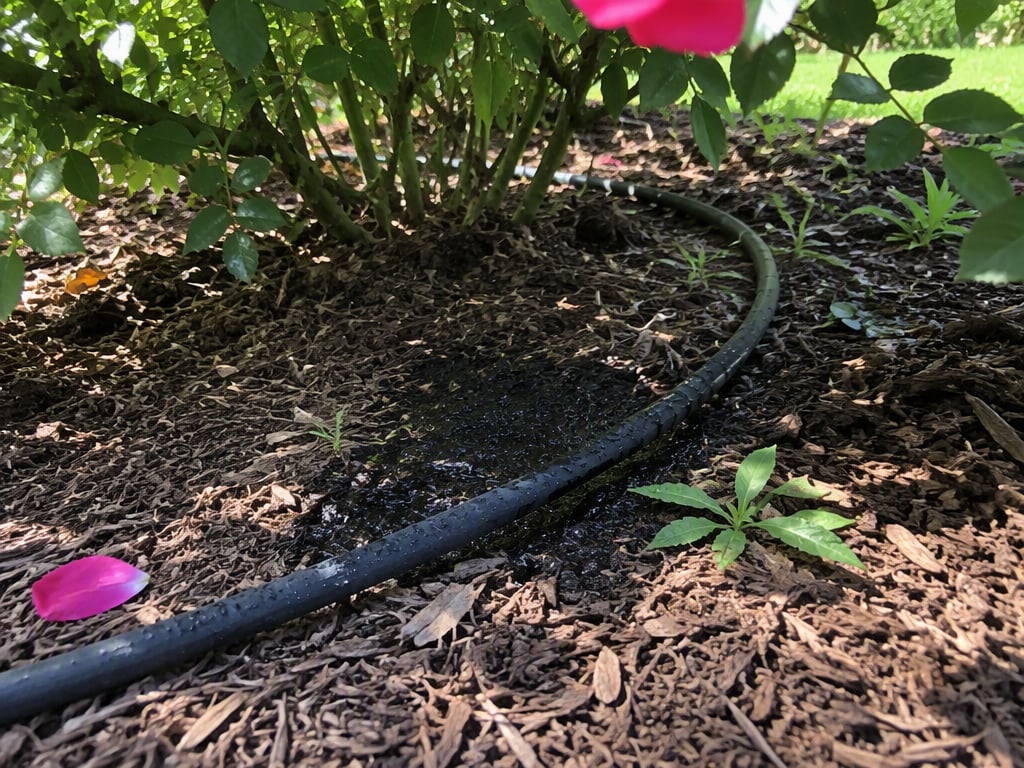
Weak little spritzes are worse than useless, with or without Aperol. In August, wetting only the top half-inch of soil encourages shallow roots instead of helping them reach deeper, cooler soil.
It means your roses need a slow, deep soak that encourages roots to grow down into cooler ground.
I lay a soaker hose along the dripline and let it run slowly rather than dumping a little water on the surface. Deep, thorough watering encourages a stronger, more drought-resistant root zone.
Quick tip: How often depends on your soil, rainfall, and heat. Once a week may work in some gardens, but in extreme Western heat roses need water several times a week or even daily. And don’t assume a quick afternoon shower in the humid East did the job. Check how deeply the water actually soaked in first.
7. Shield from August Heat

In task 2, I said clear the ground around the base. Now I say bare soil around your roses through late summer is asking for trouble. Who to trust, me or me? Well, both.
You clear out that matted leaf trash holding black spot, fine, but then you need to throw down two or three inches of coarse bark mulch right after. Mulch helps keep the root zone cooler and slows moisture loss in hot weather.
Leave that soil bare and the August sun bakes the root zone. Then heavy rain hits and splashes water from infected debris back onto the lower leaves. Either way, your roses bite the dust.
Once cold weather arrives, we also have a guide on how to mulch, prune, and protect roses through winter.
8. Trim for Air, Not Shape
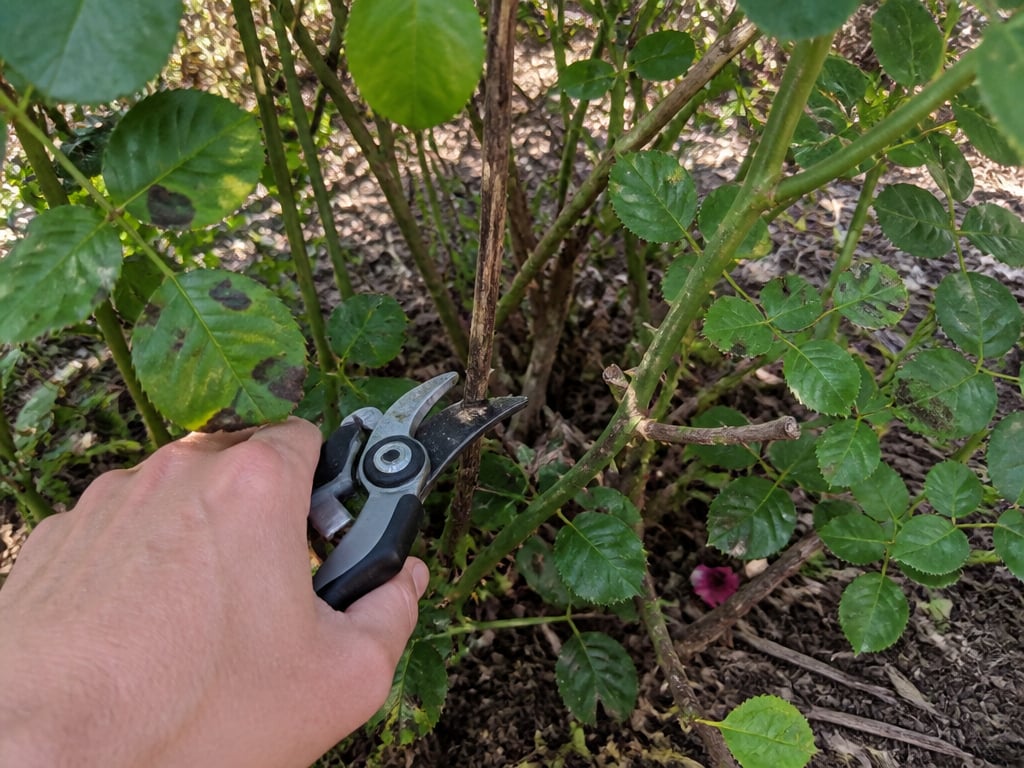
Forget making the bush look neat until spring. Right now, a crowded center traps muggy air, and slow-drying foliage gives black spot exactly what it wants.
Reach in with your shears and cut out dead, diseased, or badly rubbing stems blocking the middle. Open things up just enough for air to move through, but don’t go crazy with August pruning. Save the major shaping for late winter or spring.
Quick tip: If you live in Arizona or another brutally hot, dry climate, don’t over-thin the canopy. A little extra healthy foliage helps shade exposed canes from sunburn.
When that bigger pruning job comes around, we wrote a guide on what to cut from each type of rose in spring.
For Purr-fect Fall Roses
Every single step is just basic cat logic applied to a stem. High maintenance, draws blood when ignored, hates staying wet, and hates heavy-handed touching even more when stressed. If you can keep a cat happy without losing a finger, you can keep a rose bush alive through August.