
If your patio feels like a pizza oven by July, fragile plants are not invited. Meet eleven heat-loving container plants that can take full sun, bounce back from dry spells, and still look good when the rest of the patio is begging for mercy.
What do you say when summer tries to bake your outdoor space? The answer is simple: bring it on.
11 Sun-Loving Plants for Containers
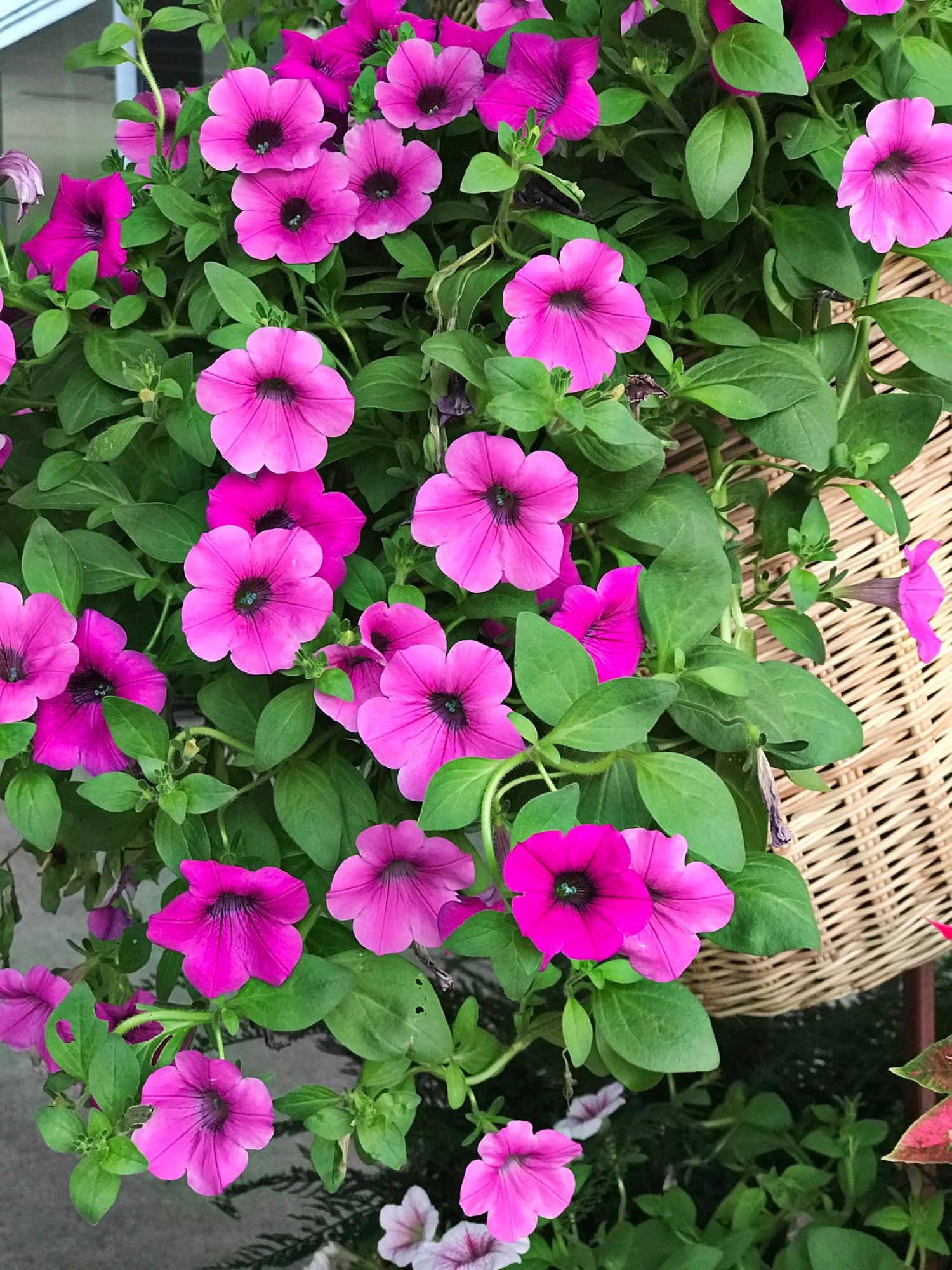
1: Lantana (USDA Zones 8-11, annual elsewhere)
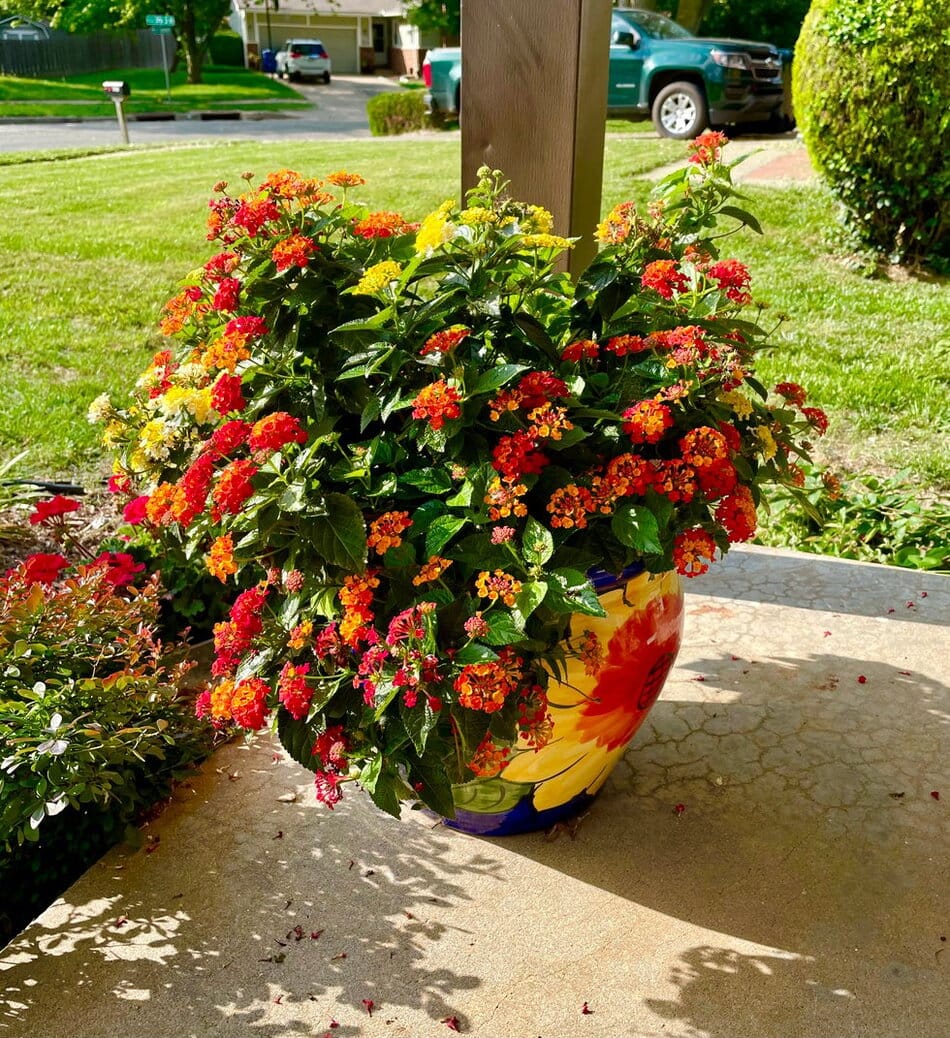
Lantana wants at least six hours of direct sun, or it starts dropping buds and sulking. Skip the daily coddling, too. Let the top few inches of potting mix dry out, then water deeply.
Go easy on fertilizer too, unless you want a big leafy bush with only a few flowers.
Quick tip: Just wear gloves when planting or pruning it, because the leaves can irritate sensitive skin and it smells like a lawnmower ran over a gas can.
2: Petunias (USDA Zones 10-11, annual elsewhere)
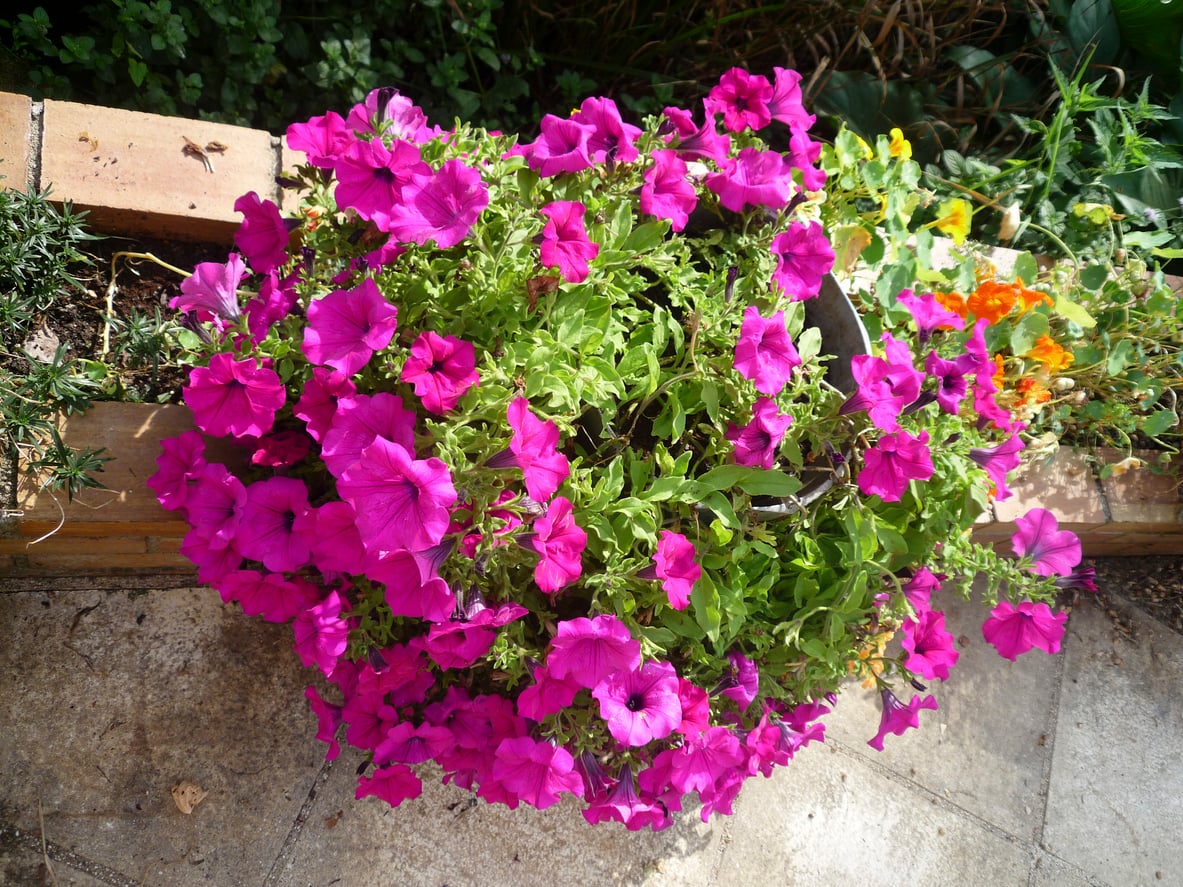
Petunias bloom relentlessly in full sun, but hanging baskets and porch planters can turn them sticky, thirsty, and exhausted by peak summer. Plan on checking the soil daily in hot weather and watering deeply when the top inch feels dry.
If you hate manual labor, hunt down self-cleaning varieties like Supertunia or Wave petunias, or prepare to spend your evenings ripping off faded, slimy flower heads by hand.
Quick tip: When they start looking sparse and stringy, take shears and cut the stems back by about a third to force a fresh reboot.
If you want the less chaotic version, we explain the whole process in our guide on how to deadhead petunias for fuller, longer-lasting color.
3: Calibrachoa (USDA Zones 9-11, annual elsewhere)

Calibrachoa is basically the fussy little cousin of the petunia, dressed up in flashy trade names and spilling over the edge of the pot like it owns the place. It wants consistent moisture, but not swampy roots, so don’t let the container bake dry for days.
At planting, mix in slow-release fertilizer, then feed with an acid-loving plant food if the plant starts looking hungry. These little things eat faster than I can polish off a tub of Ben & Jerry’s.
Quick tip: Hard tap water can cause trouble if it pushes the soil pH too high, leaving the leaves pale or yellow.
If you like flowers that do not demand constant cleanup, we also wrote about flowers that practically deadhead themselves.
4: Pelargoniums (USDA Zones 10-11, annual elsewhere)

Commercial growers flood the market with these because people buy them for instant, foolproof color. Your main job is snapping off the spent flower stems right at the base, before the plant wastes energy on dead clusters.
They bloom best with plenty of sun, but on a brutal patio, I’ve had better luck giving them morning light and a little afternoon mercy.
Quick tip: Harsh rays aside, watch for caterpillars hiding in the tight flower clusters. They love tunneling in and chewing the petals from the inside out.
We explain that cleanup step more clearly in our guide on how to deadhead geraniums for continuous blooms all summer.
5: Zinnias (Annual in all USDA zones)
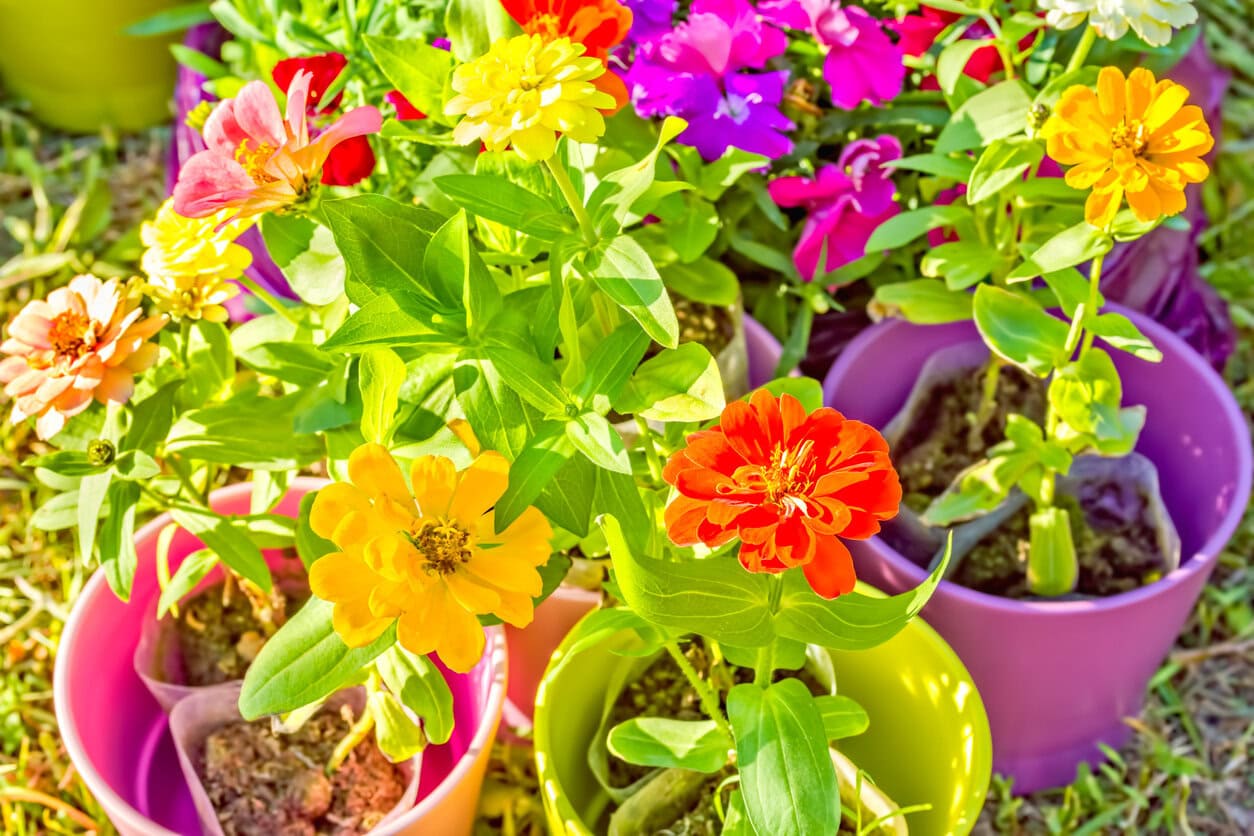
Traditionalists insist on sowing zinnias out in open garden beds, but they can absolutely earn a spot in a deep, heavy patio container. Give them full sun, good drainage, and enough room for their roots, and they’ll crank out those ridiculous color disks all summer.
The rules of engagement are strict: water the potting mix directly in the morning and keep the foliage dry as a you can.
Quick tip: Avoid the standard garden varieties that grow three feet tall and flop over the rim. Instead, make dwarf varieties colonize the pot.
If zinnias are your summer weakness, we also have a guide on simple ways to maximize flowering in zinnia plants.
6: Marigolds (Annual in all USDA zones)

They look rumpled like tissue paper, grow almost anywhere, and need a solid six to eight hours of direct sun to keep blooming instead of sulking.
Stores love to push the plant’s weird smell as some kind of built-in bug shield, but spider mites don’t care at all. They’ll blanket the stems in webs when the weather gets hot and dry.
Just keep the potting mix evenly watered, blast the mites off the foliage with water, and let the sun do its thing.
And if your marigolds look exhausted by midseason, we wrote a guide on how to rejuvenate tired marigolds with one mid-summer trim.
7: Vinca (USDA Zones 10-11, annual elsewhere)
Buy this when you already know your watering schedule gets chaotic. Vinca looks like a glossy impatiens but carries far more heat tolerance, staying upright when weaker container flowers start fainting on the patio.
Let the top few inches of potting mix dry before watering again, but don’t leave the whole pot bone-dry for days in July heat.
Quick tip: Always wait to plant it until frost is gone and the weather has truly warmed up. It drops its spent blooms naturally, so you don’t have to deadhead every sad little flower by hand.
8: Angelonia (USDA Zones 9-11, annual elsewhere)

They labeled this summer snapdragon because the horticulture industry apparently hates plain language. It grows dead straight, stiff as a spike, and keeps standing when softer annuals start melting by 2 PM.
It holds heat and short dry spells better than most container flowers. But water when the top inch or two of potting mix dries out.
Because it doesn’t trail or bend much, it gives you almost zero coverage over the edges of a container. Plant it dead center in a bigger pot to serve as the structural anchor, then let the chaotic trailing species scramble around its feet.
9: Portulaca (USDA Zones 10-11, annual elsewhere)

Portulaca is a glorified weed with neon-bright petals, which is exactly why it belongs on your baking patio. It stores water in its thick, rubbery foliage, so it has no patience for heavy, soggy potting mix.
Give it a gritty, fast-draining blend and let the soil dry well between waterings. Go after it with a hose every day, and you’re committing plantslaughter. It wants the absolute hottest, most uncovered spot you own.
10: Verbena (USDA Zones 7-11, annual elsewhere)

Verbena looks fantastic spilling over a porch planter or hanging basket, but don’t expect it to stay pretty without a fight. The moment the weather gets oppressive, it will try to quit on you and drop its blooms.
Quick tip: Feed it at the label rate, trim the lazy stems back to force fresh growth, and make it earn its spot on your patio.
11: Salvia (USDA Zones vary by type, annual elsewhere)
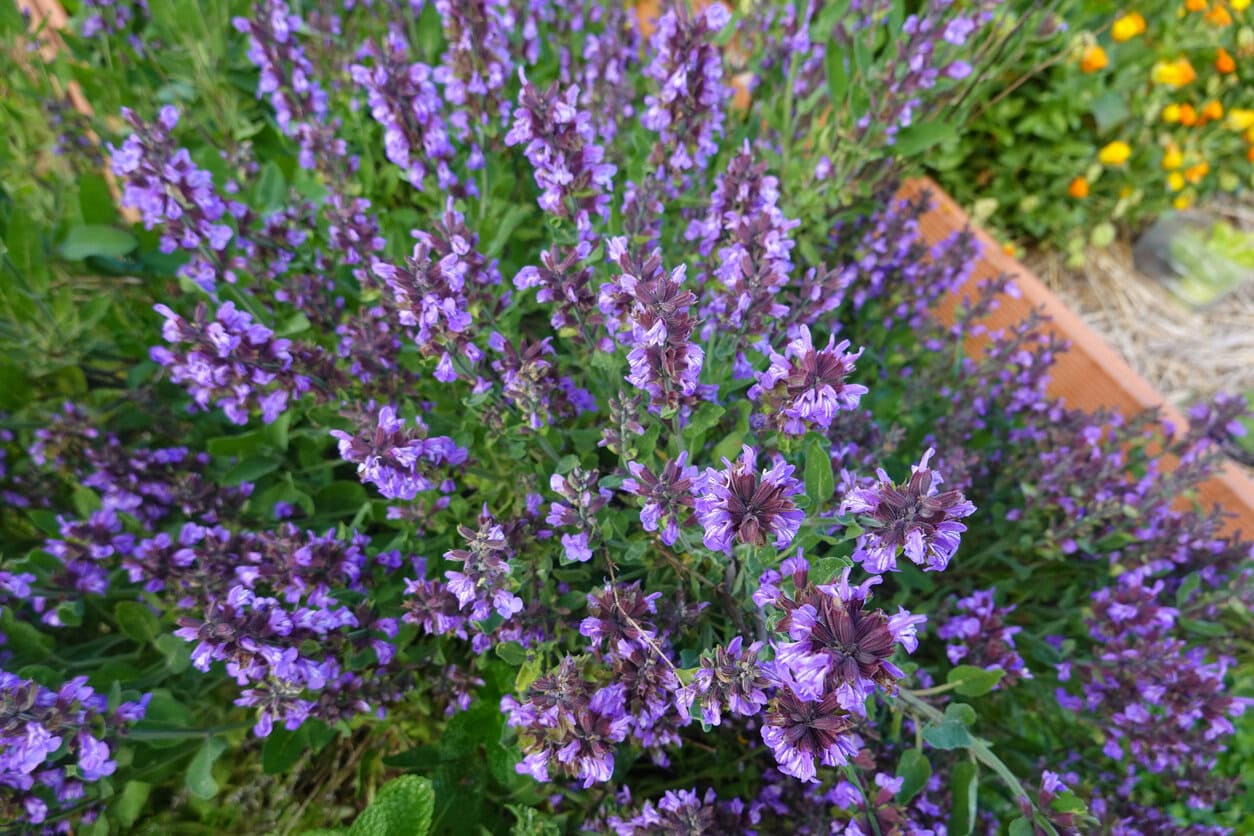
These upright, deep purple towers bring immediate vertical texture to a flat balcony arrangement, but they still demand space.
Salvia likes well-drained soil, but in a hot container, it still needs regular moisture. Let the pot stay dry for too long, and the lower leaves will scorch and drop off.
Hack the faded spikes back to the nearest leaf joint to force a second wave of growth. Approved by bees and hummingbirds.
Quick tip: Many salvias grow wider than they look at planting time, so don’t cram them into a tiny pot with delicate companions and expect peace.
For a fuller midseason routine, we explain how to keep salvia blooming nonstop through summer.
Quick pet note: If your pets like to chew patio plants, be careful with lantana, geraniums, and vinca in particular. They may look like harmless summer color, but they can bother dogs and cats if eaten, so I’d keep those pots out of reach of curious mouths.
Container’s Eleven
No more letting the July sun rob you blind every season. Assemble these eleven sun-drunk experts and finally walk away with a flawless summer win.




Consider adding Mandavillas
Hi Elizabeth 🙂 That’s a great suggestion. Mandevillas can be beautiful in sunny containers, especially with a trellis or support, and they’re a nice option for gardeners in warm climates or anyone growing them as a summer patio plant.