One day your mulch is just mulch. Next, it’s sprouting the most bafflingly weird shapes on the planet. Before you call local authorities, relax. It’s just fall.
Fungi always find a way to crash the party. Though unlike that other kind of party shrooms, these ones won’t show you the secrets of the universe.
1: Elegant Stinkhorn
Typical range: Eastern and central U.S.
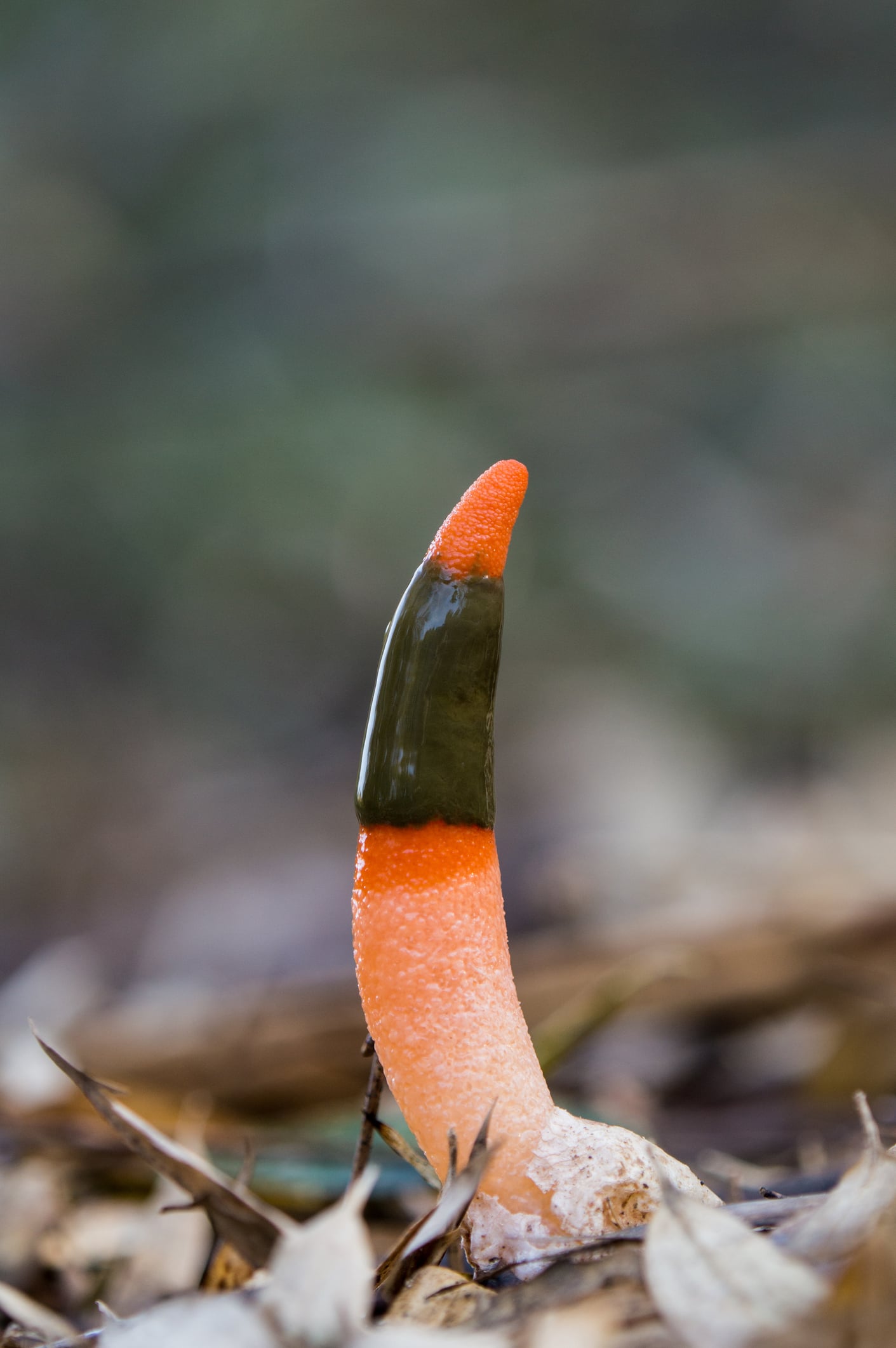
If your garden bed suddenly smells like a dumpster behind a butcher shop, don’t blame the neighbor’s pets. Blame the Elegant Stinkhorn (Mutinus elegans).
This bright pinkish-orange fungus pops up in wood chip mulch and decaying debris, with its upper stalk coated in dark, slimy spore paste.
Its gag-inducing, rotting-meat stench? It’s high-end marketing. The smell attracts flies that pick up the sticky spores and carry them around your yard. Like very yucky sporinators.
2: Bird’s Nest Fungus
Typical range: Widespread across the U.S.
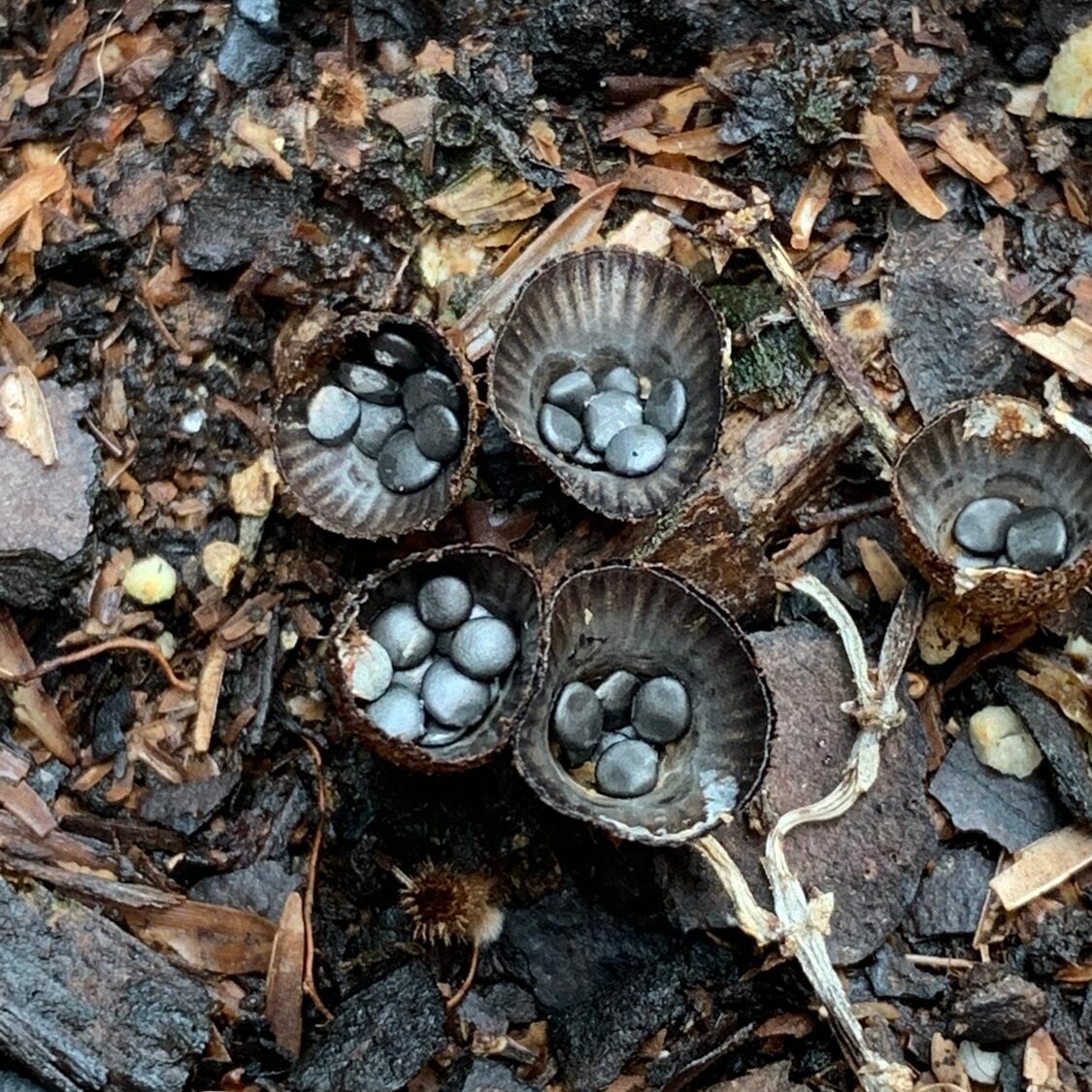
Then there are the bird’s nest fungi (Crucibulum and Cyathus spp.). If you squint at your mulch bed and think miniature woodland birds have laid tiny eggs in a micro teacup, you’re half right.
These little cups, usually less than half an inch across, hide among rotting wood chips and fallen twigs.
Their reproductive strategy? Pure physics. A fall raindrop hits the cup just right and launches its spore-filled “eggs” (peridioles) several feet away. They can even stick to nearby stems and debris. Nature’s very own bio-catapults.
3: Shaggy Mane
Typical range: Widespread across the U.S.
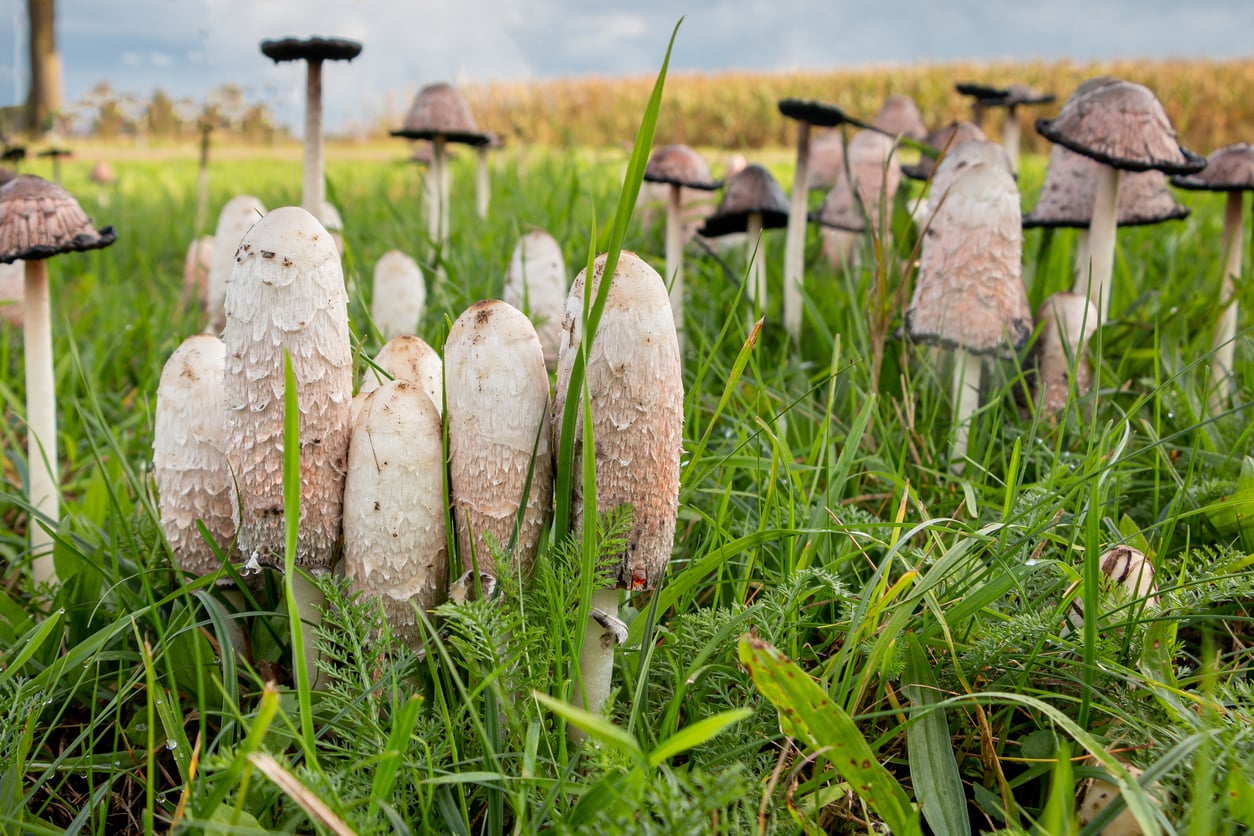
The Shaggy Mane (Coprinus comatus) sports tall, cylindrical white caps covered in upturned scales. If you had to compare them to something, they look like shaggy wigs for lawyers with very small heads.
Where to spot them? In open lawns and disturbed soil. Or even along gravel driveways.
As the mushroom matures, the cap edges blacken and dissolve into a thick, ink-like liquid. It’s called deliquescence. The fungus essentially digests its own cap as it releases spores. Dramatic, slightly messy, and entirely fascinating.
4: Giant Puffball
Typical range: Eastern and central U.S.
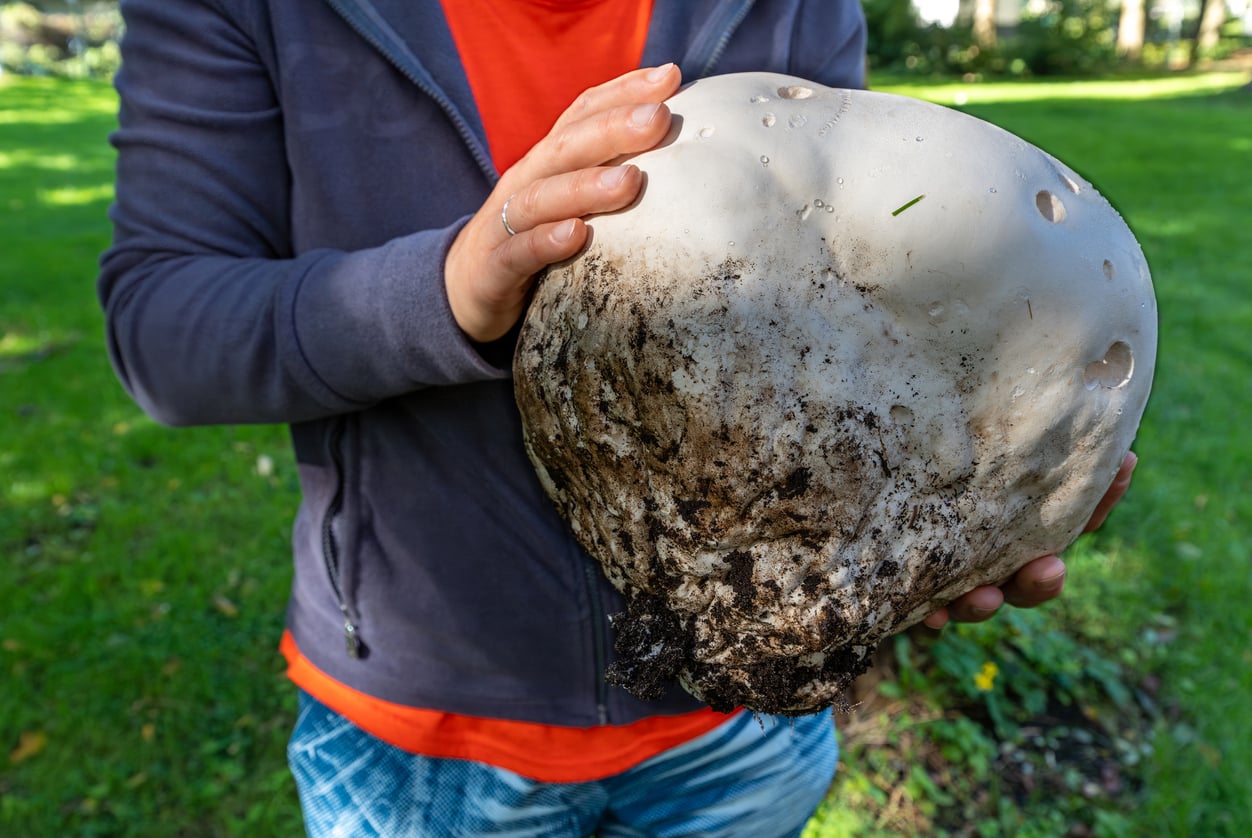
Has someone left a smooth white bowling ball right in the middle of your lawn? It lacks a traditional cap. It lacks a stem. But it compensates with a cute name: Giant Puffball (Calvatia gigantea).
You might spot one in grassy yards, meadows, or along woodland edges.
As it ages, that firm white interior turns into a dusty, olive-brown mass packed with trillions of spores. Disturb an old, dried-up puffball, and it can release a cloud of smoke-like spores. A biological time bomb. Don’t step on it!
5: Jack-o’-Lantern
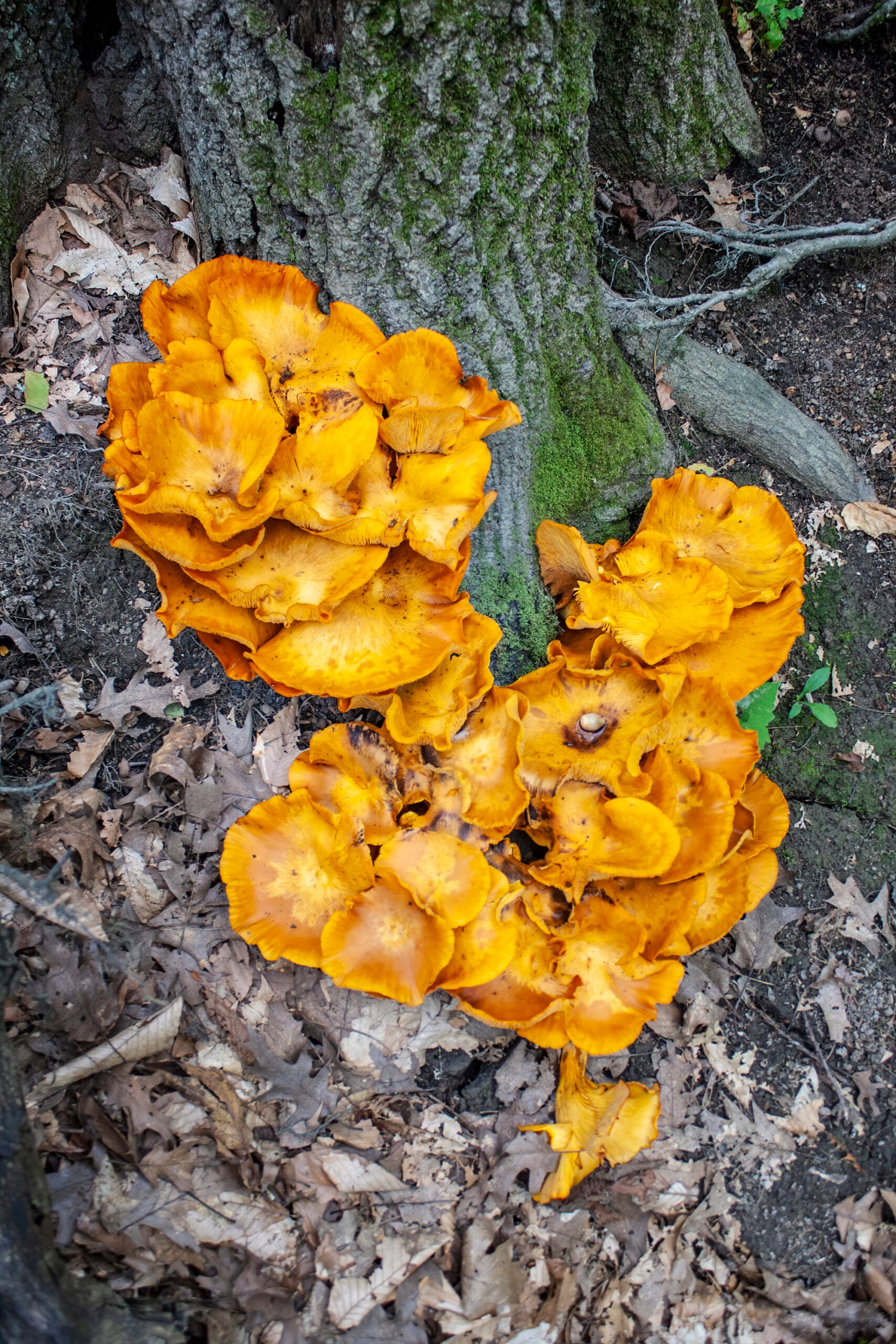
Typical range: Eastern U.S.
These bright orange clusters are hiding a deeply malicious streak. Their tightly packed gills run down the stems, and fresh specimens can even emit an eerie, faint green glow in total darkness.
Unfortunately, eating one won’t give you night vision. Just a severe, agonizing case of internal regret. They’re poisonous and can cause intense stomach upset.
Where do they crop up? Jack-o’-Lantern mushrooms (Omphalotus illudens) grow around decaying hardwood stumps, buried roots, and hidden wood, particularly in eastern and central U.S. yards. Admire them, but don’t eat them, and keep curious pets away.
6: Lion’s Mane
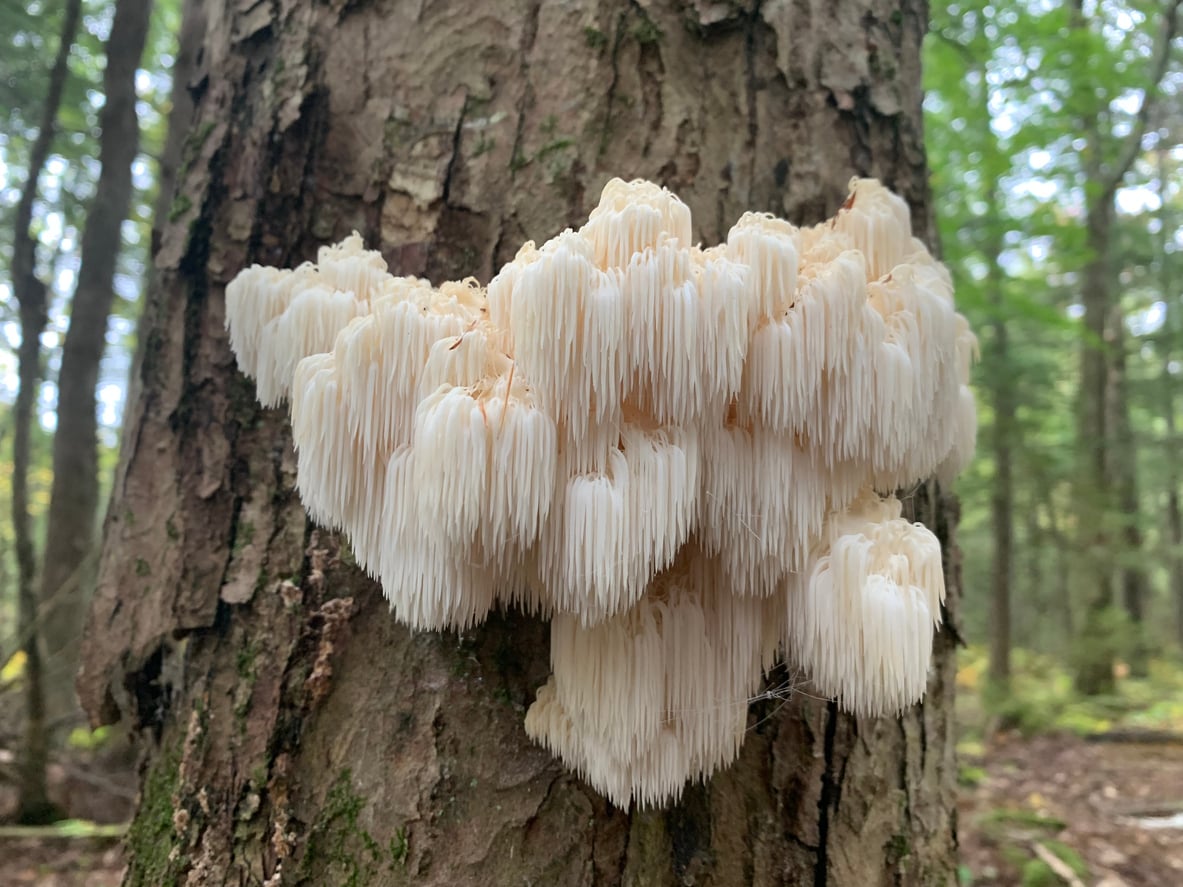
Typical range: Eastern U.S. and Pacific Northwest, although the species differ between regions.
If you look up at a hardwood tree and think someone duct-taped a snowy white bath loofah to the trunk, you might be looking at Lion’s Mane (Hericium erinaceus).
Its long, dangling white spines form a shaggy cascade. You’ll usually find it on dead hardwood logs or wounded trees, particularly oaks and beeches. Not an everyday backyard discovery, but worth looking for if you have mature trees.
Spot it on a living tree? That can signal internal wood decay. A professional arborist might look at it and sigh. For everyone else, it’s an otherworldly forest pom-pom.
7: Turkey Tail
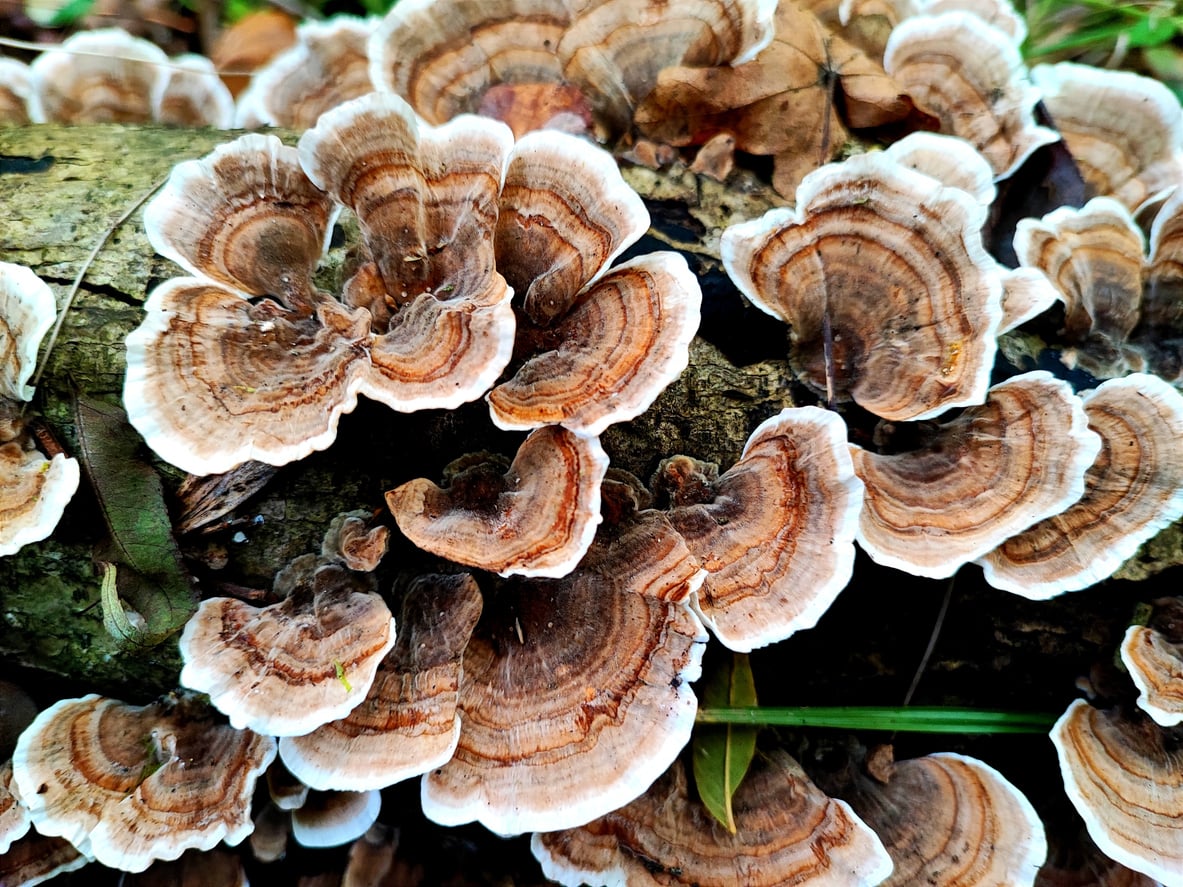
Typical range: Widespread across forested regions of the U.S.
As far as wood decomposers go, Turkey Tail (Trametes versicolor) is one of fall’s most stylish backyard visitors. Each shelf is painted with striking bands of reddish-brown, gray, blue, and tan, a pattern so turkey-like that even the mycologists couldn’t overthink it.
You’ll find it spreading across dead hardwood logs, fallen branches, and old stumps in overlapping, leathery shelves.
Flip one over, and you’ll find tiny pale pores instead of gills. Quite the little masterpiece for something growing on rotting wood.
8: Blewit
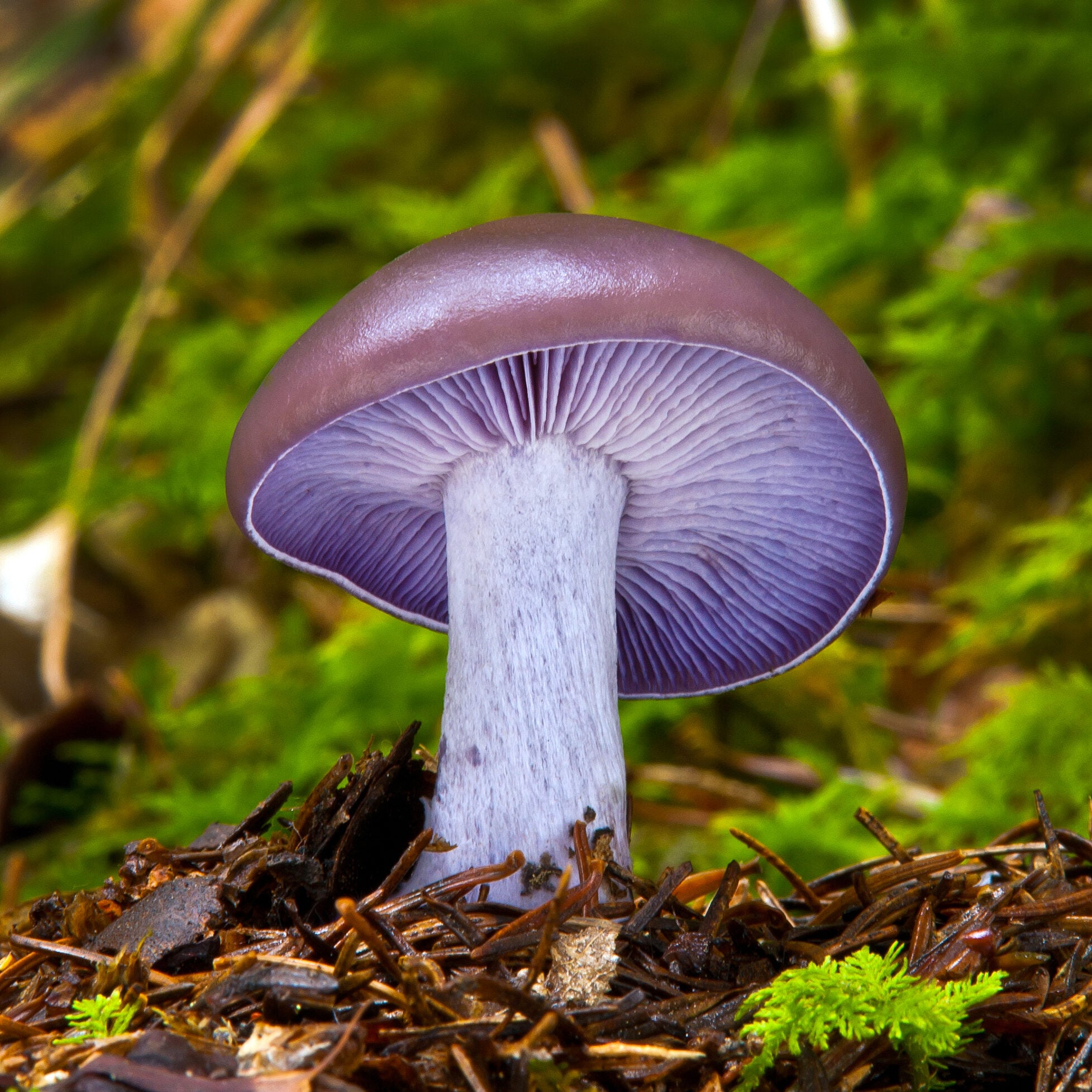
Typical range: Temperate regions of the U.S., including the Northeast, Great Lakes region, and Pacific Northwest.
Blewit. Yes, that is its real, dignified common name. And no, no one had a chance to name it and blew it. The name is thought to come from “blue hat,” which makes a little more sense once you see one.
The Wood Blewit (Collybia nuda, also known as Lepista nuda) splashes dusty lilac across its cap, gills, and stem before fading to a dull, discreet tan as it ages.
The hiding spot? Fallen leaves, compost piles, and mulch-rich garden beds during cool fall weather.
9: Earthstar
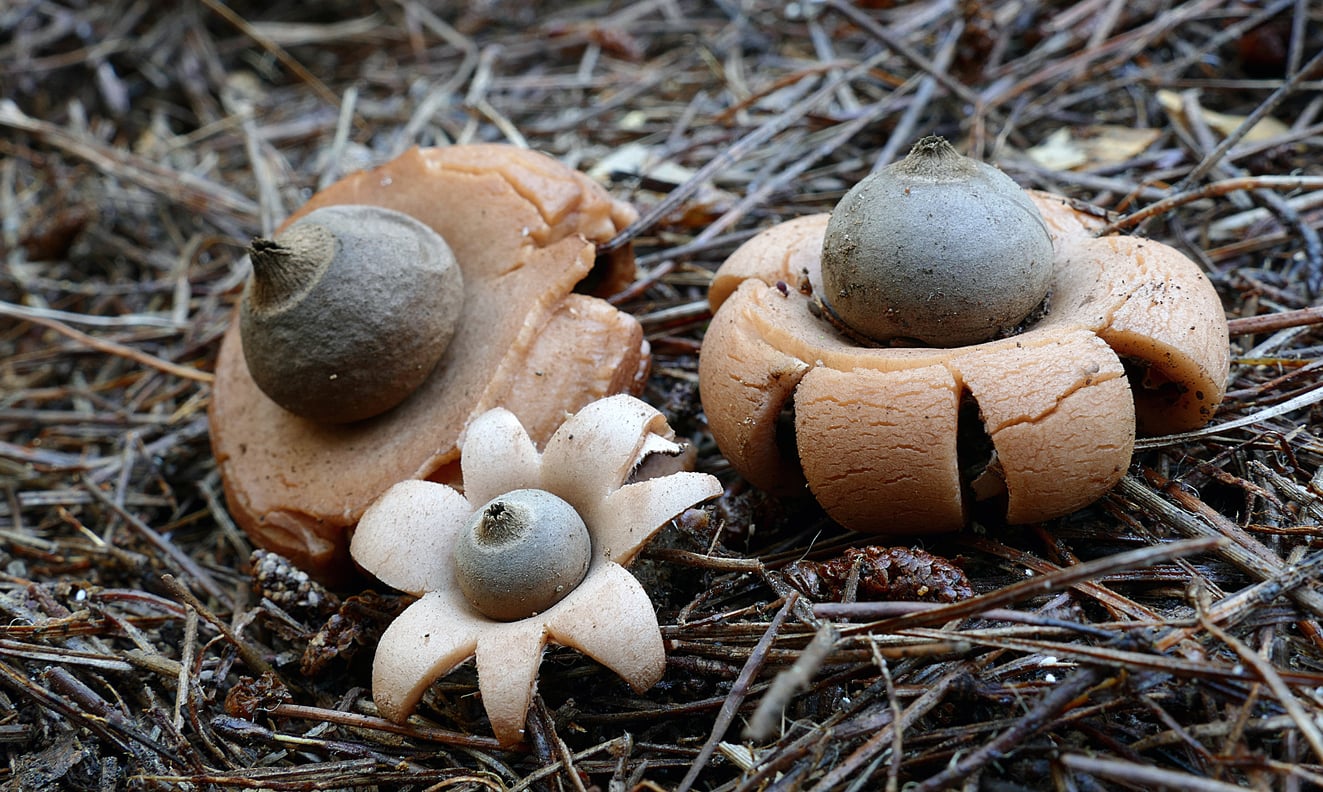
Typical range: Widespread across the U.S.
Sandy soil, fallen pine needles, and mulch beds are where Earthstars (Geastrum spp.) decide to get weird.
They start out as dull brown balls, often partly hidden in the soil. But as they mature, the outer skin splits open, peeling backward into a pointed star that lifts the central spore pod off the dirt. Quite sci-fi for something growing in your garden.
And when a fall raindrop smacks that central pod? It squirts a puff of brown spores through a tiny hole at the top. Remarkably original.
“Life Is Too Short to Pick Bad Mushrooms”
It’s my favorite proverb. Life’s also too short to panic over a few strange mushrooms in your lawn. Most lawn and mulch fungi are harmless to your plants, quietly breaking down dead organic matter.
But mushrooms growing on living trees or around their roots can sometimes signal decay. Which ones show up depends on your region, moisture, and what’s decomposing nearby.
Just because a mushroom grows in your backyard doesn’t mean it’s safe to eat! Some wild mushrooms are highly poisonous, so remove visible ones if curious pets or toddlers are around. And above all: never eat a wild mushroom based on a photo alone!