
Some perennials look completely harmless when you first plant them, but give them a few seasons and you may start wondering why they’re suddenly showing up everywhere except where you wanted them.
Not all of these are invasive everywhere in the U.S., but they can still become a real headache. So, let’s look at 9 perennials you may want to think twice about planting, plus better-behaved alternatives that won’t leave you fighting them for years.
Why Do Some Perennials Cause More Harm Than Good?
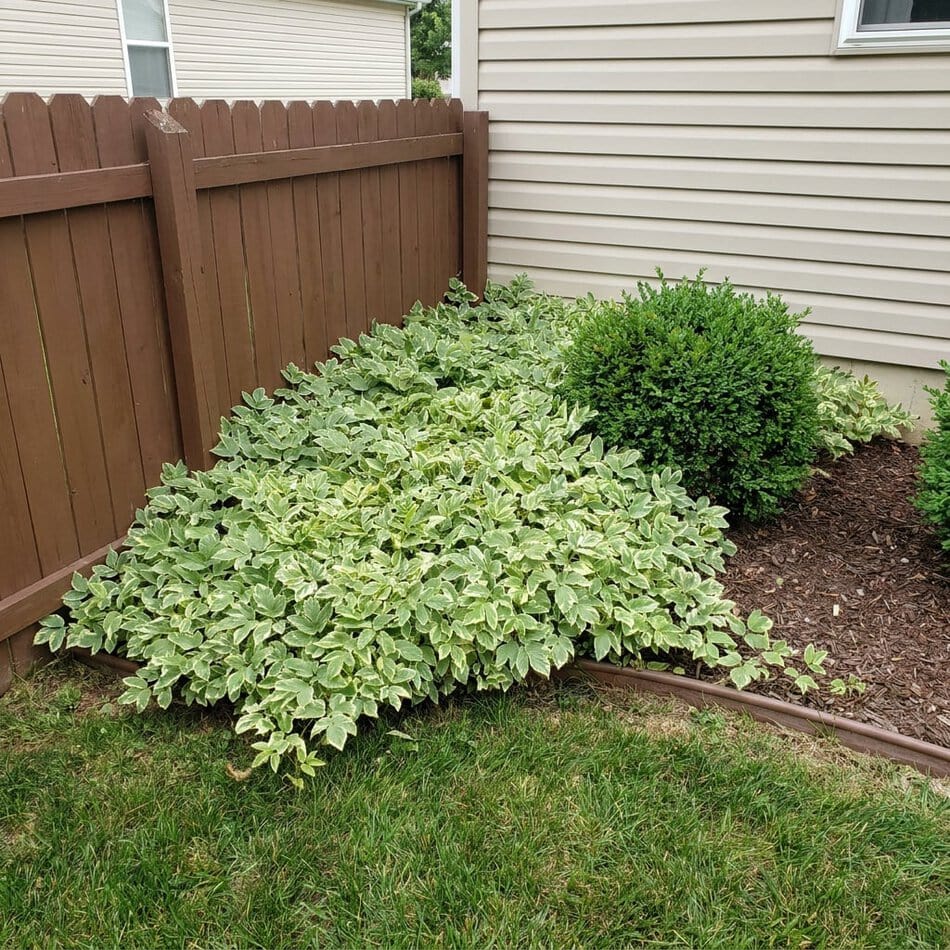
Some perennials are lovely at first, but they can become a lot more work than you signed up for. The problem usually isn’t the plant itself, it’s how quickly it spreads once it feels at home.
Here’s where things can get frustrating:
That’s why I’m a little more careful now about what I give a permanent spot in the garden.
9 Perennials To Avoid In Your Garden
1: Bishop’s Weed (Aegopodium podagraria)
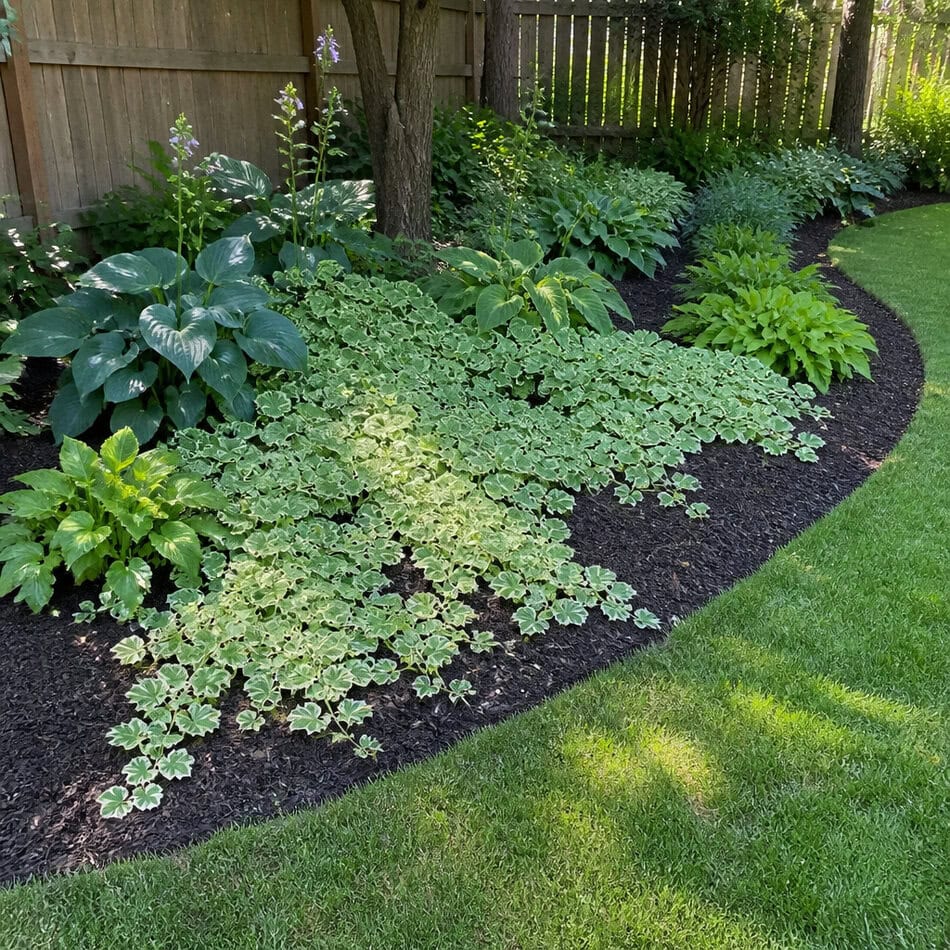
Bishop’s weed can look like an easy way to fill a shady spot, but it can quickly become more trouble than it’s worth. It spreads through underground rhizomes, forming dense patches that creep into nearby beds and crowd other plants.
The really frustrating part comes when you try to remove it. Leave even small pieces of rhizome behind and they can sprout again, which is why getting rid of an established patch turns into a long-term job.
Plant this instead: Try foamflower (Tiarella cordifolia), a native shade-loving groundcover with attractive foliage and delicate white blooms. It gives you that same lush look with a much more manageable growth habit.
2: Lily Of The Valley (Convallaria majalis)
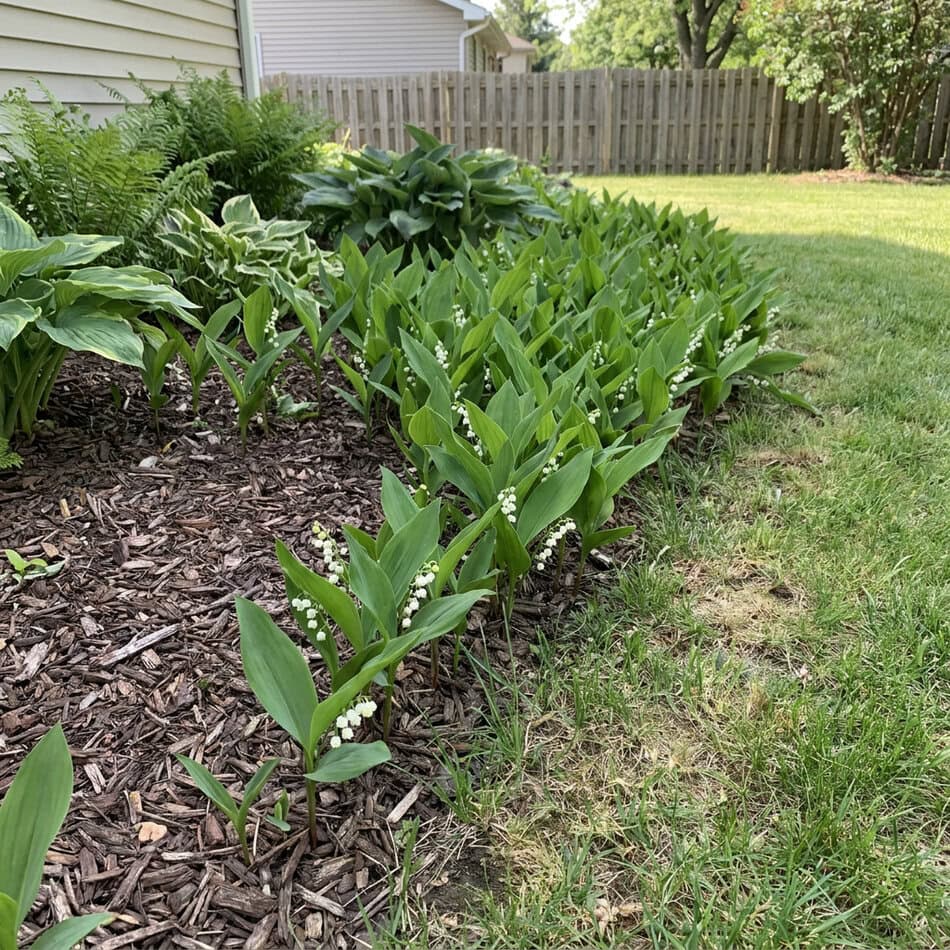
I completely understand the appeal of lily of the valley. It’s also a perfect example of a plant that behaves very differently from one garden to another. I hear from plenty of gardeners who struggle to get it established at all, while others can’t seem to stop it once it takes off.
It isn’t considered invasive everywhere in the U.S., and in some climates it may stay fairly well behaved. But in cool, moist, shady conditions, its underground rhizomes spread quickly and form dense colonies that crowd nearby plants.
Plant this instead: In eastern and northern U.S. gardens, try Canada mayflower (Maianthemum canadense). Also called false lily-of-the-valley, it’s a native woodland groundcover with a similar delicate look and small white spring flowers.
If you’re rethinking your spring garden altogether, we also put together a guide to spring-blooming native plants that can replace some of the common invasive favorites.
3: English Ivy (Hedera helix)
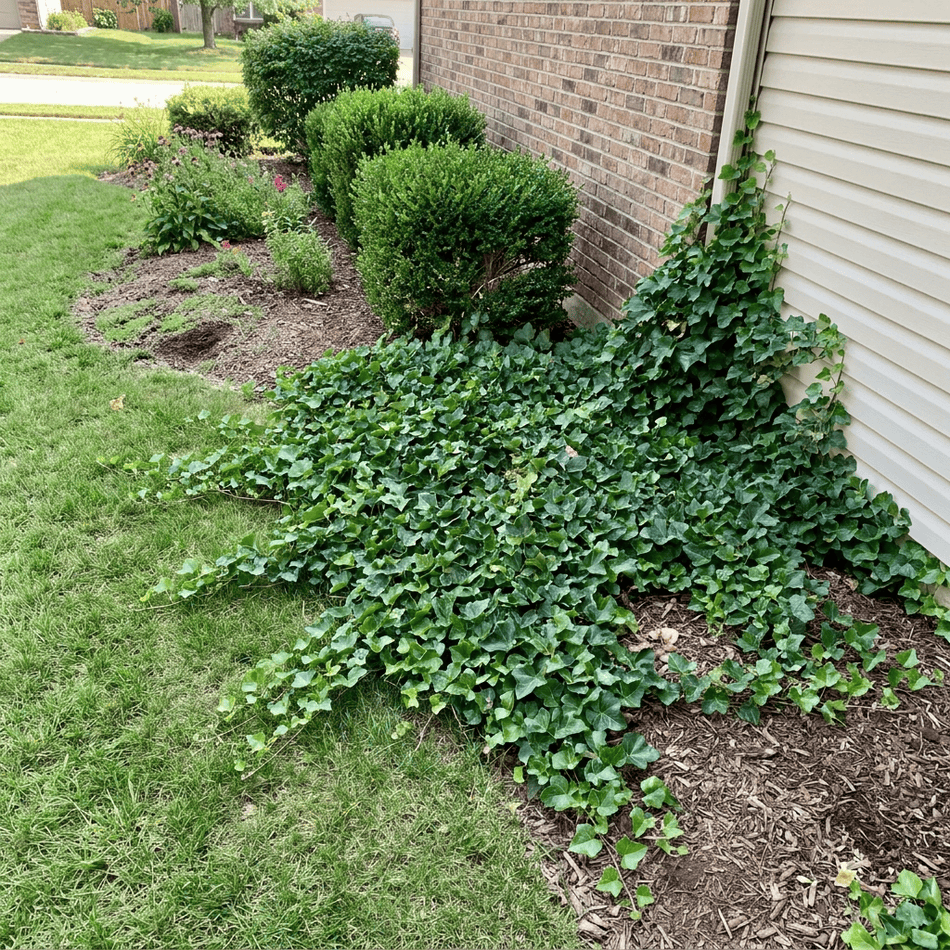
English ivy looks beautiful spilling over a wall or covering a shady patch, so I understand why it’s been planted around homes for so long. The problem is that it rarely knows where you want it to stop.
It can creep across the ground, root as it goes, and climb fences, walls, and trees. Once it escapes the yard, those thick mats can spread through wooded areas and crowd out native plants, which is why English ivy has become such a problem in many parts of the country.
Plant this instead: Try Virginia creeper (Parthenocissus quinquefolia) if you want that same leafy, climbing look. It’s a native vine that can cover walls, fences, and trellises beautifully, although you’ll still want to give its vigorous growth some room.
4: Mint (Mentha spp.)
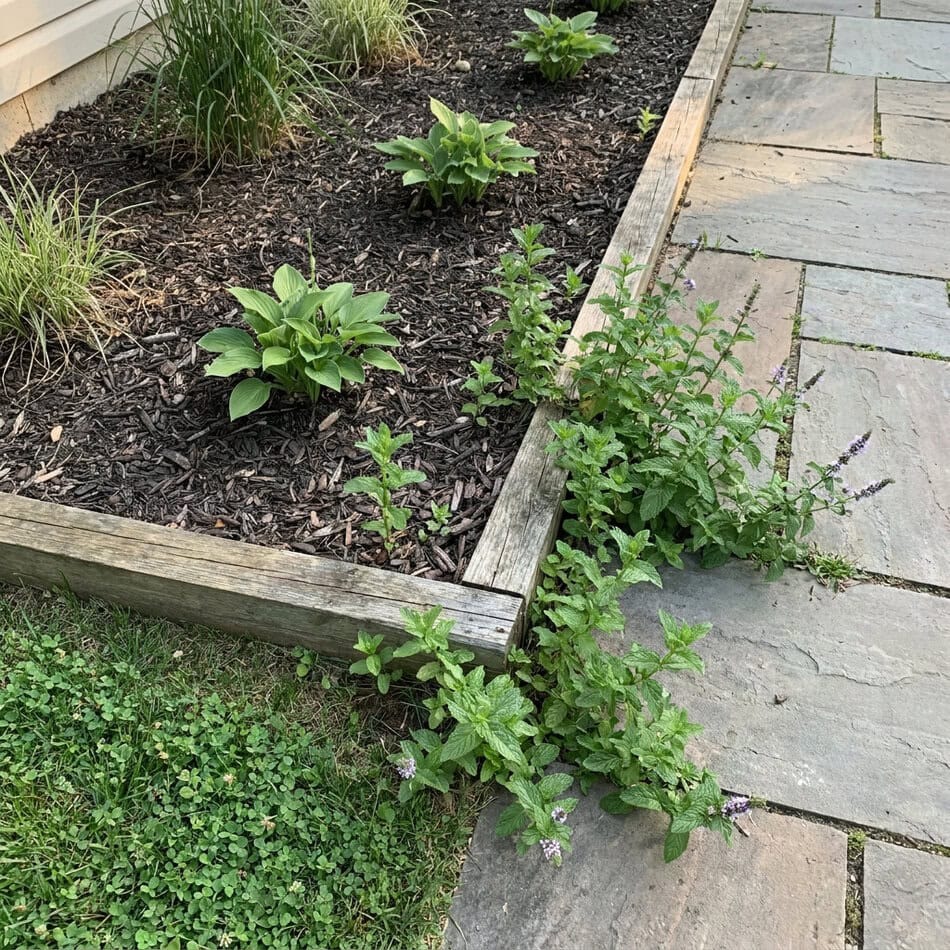
Mint is one of those plants I still love growing, I just wouldn’t give it free rein in a garden bed! Once it’s happy, those underground rhizomes travel surprisingly fast, sending up new shoots well beyond where you planted it.
And if you decide you’ve had enough, pulling the visible stems usually isn’t the end of it. Pieces of rhizome left behind can keep producing new growth, which is why mint is much easier to enjoy in a container.
Plant this instead: Try common mountain mint (Pycnanthemum virginianum), a native perennial with similarly fragrant, minty foliage. It can form a small colony, but its spread is generally much easier to manage.
5: Creeping Jenny (Lysimachia nummularia)
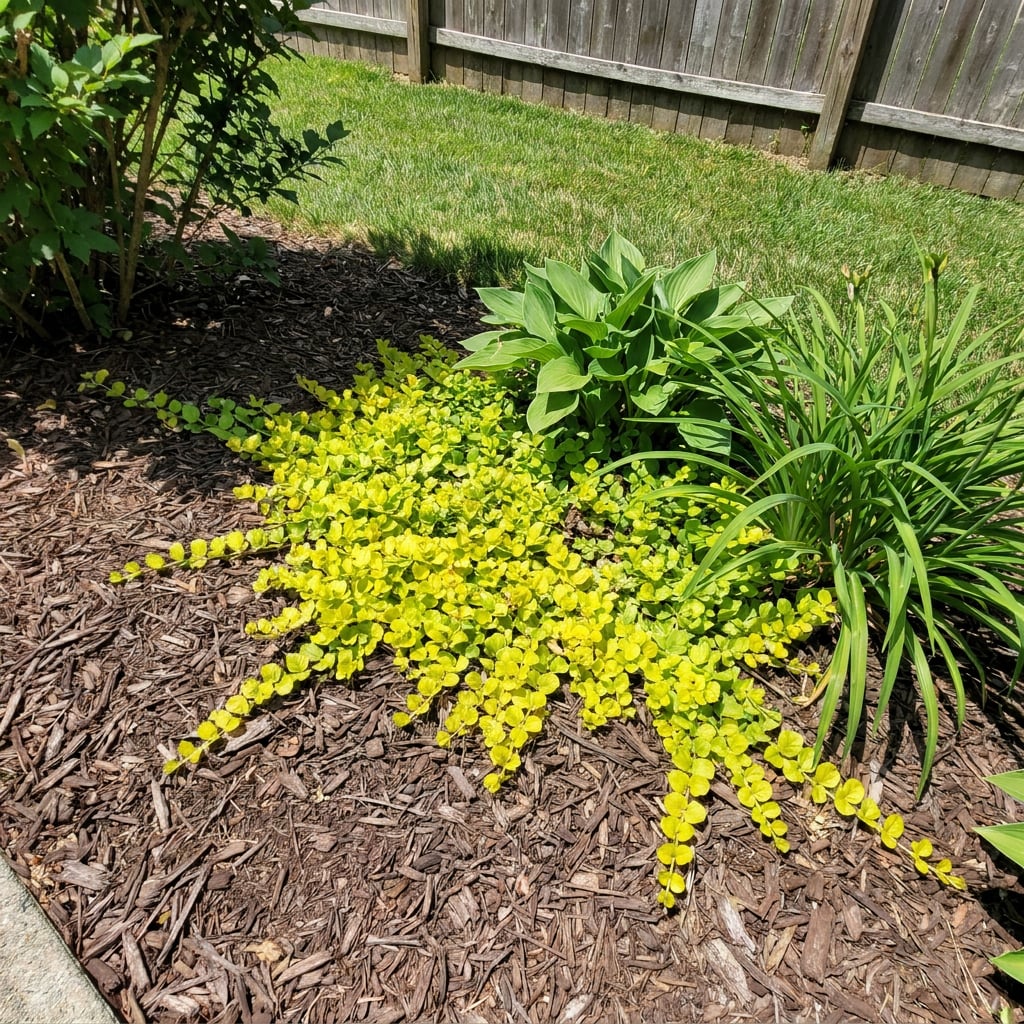
Creeping Jenny is easy to fall for, especially the golden variety with those bright little leaves spilling over the edge of a bed. But once those stems touch the soil, they root and keep spreading, sometimes much farther than you expected.
It can form thick mats and creep surprisingly far into lawns and neighboring beds. I’ve seen how quickly a small patch can turn into something you’re constantly pulling back, which is why I’d much rather keep this one in a container where I can control it.
Plant this instead: Try green-and-gold (Chrysogonum virginianum), a native groundcover with a similarly low, spreading habit and cheerful yellow flowers.
6: Periwinkle (Vinca minor)
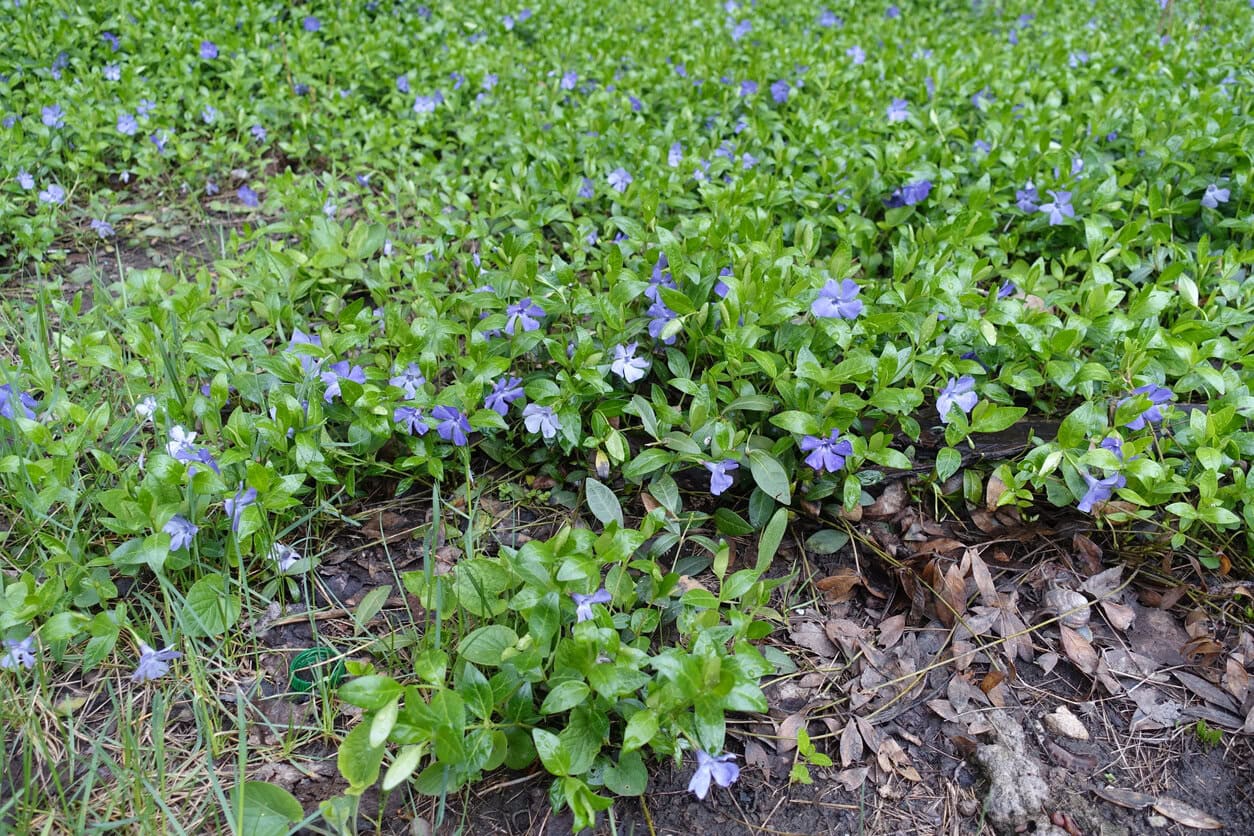
Periwinkle is popular for a reason, it stays low, handles shade, and fills bare ground quickly. Unfortunately, that last part is also where the trouble starts.
Its creeping stems root as they spread, creating dense mats that move into nearby beds and natural areas. Once you have a large patch, removing all those rooted stems becomes a real chore!
Plant this instead: Try creeping phlox (Phlox stolonifera), a native groundcover with a similarly low, spreading habit and pretty blue, purple, pink, or white spring flowers. It also handles partial shade well.
7: Japanese Pachysandra (Pachysandra terminalis)
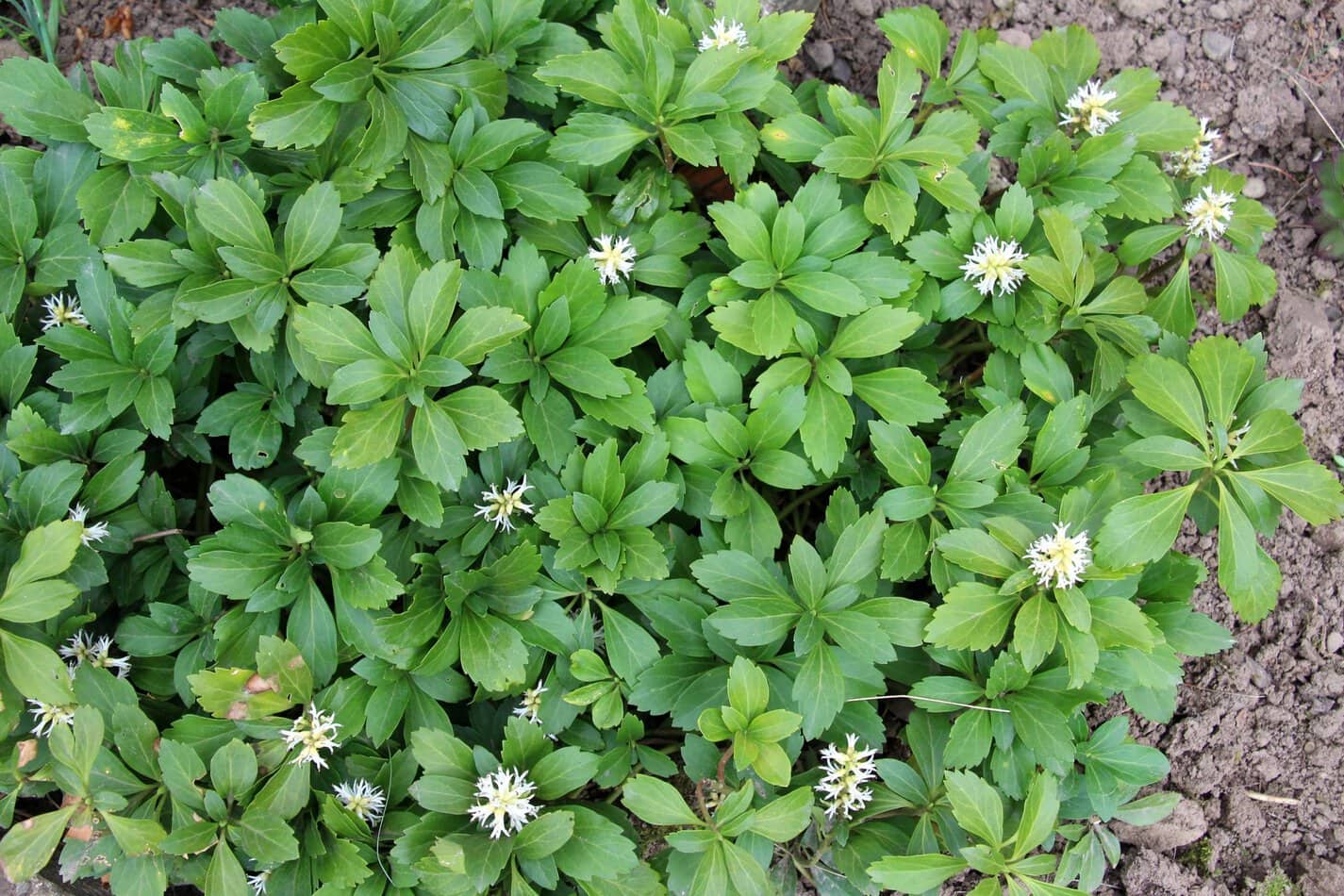
Japanese pachysandra is one of those old-school shade groundcovers that does its job almost too well. It spreads by underground rhizomes, and once a patch gets established, it slowly pushes into neighboring beds and becomes surprisingly difficult to remove.
Plant this instead: Try Allegheny spurge (Pachysandra procumbens). It’s a native relative with a very similar leafy, low-growing look, but it spreads at a much more manageable pace in shady gardens.
And if you’re trying to replace more than one aggressive groundcover, we wrote a guide to 11 native groundcovers that can give you the coverage you want without the same headaches.
8: Ajuga/bugleweed (Ajuga reptans)
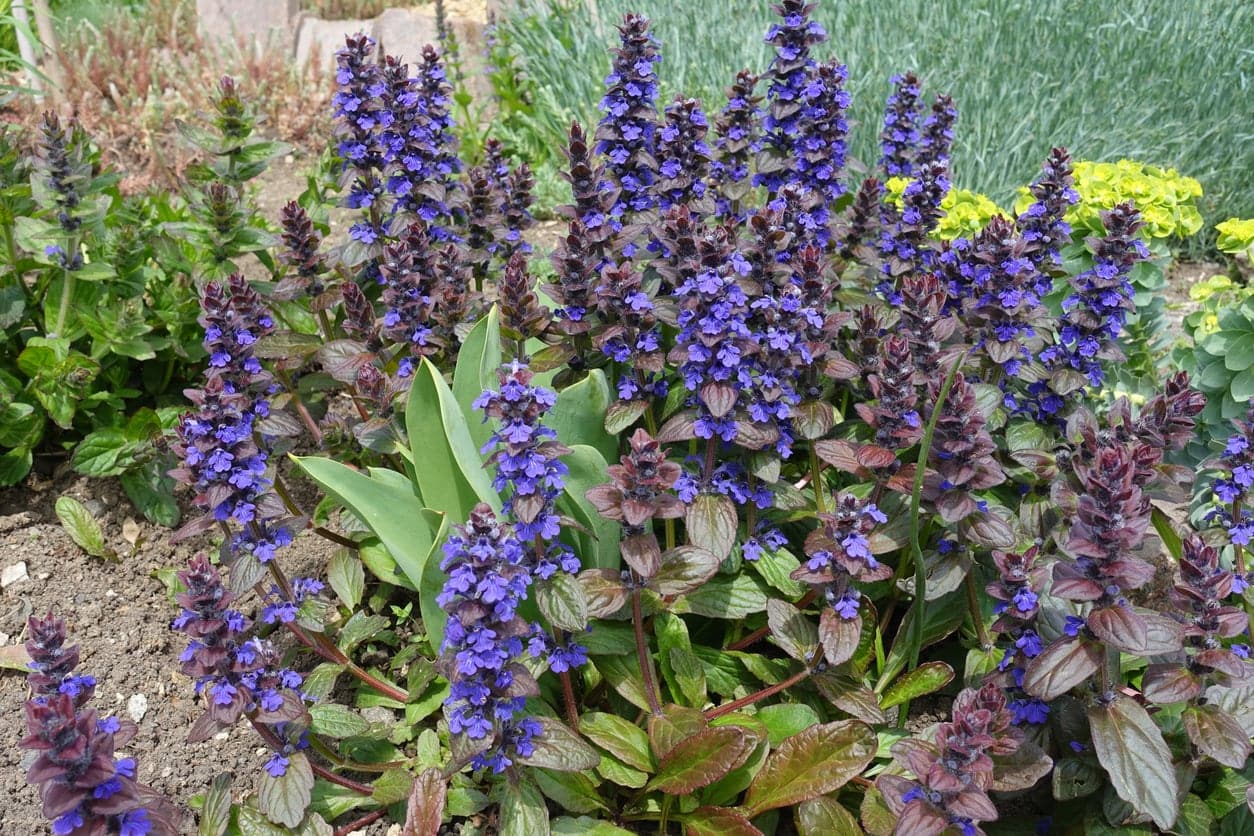
Ajuga is easy to love at first. It stays low, has pretty purple flower spikes, and fills those awkward bare spots surprisingly fast. Unfortunately, sometimes it fills a lot more than the spot you had in mind.
It spreads quickly across the ground and can work its way into lawns and neighboring flower beds, where removing all those rooted stems gets frustrating. In some regions, it has even escaped gardens and spread into natural areas.
Plant this instead: For eastern U.S. gardens, try Meehan’s mint (Meehania cordata). It’s a native, low-growing groundcover with green foliage and lavender-purple flowers that gives you a similar woodland look without Ajuga’s reputation for taking over.
9: Chameleon plant (Houttuynia cordata)
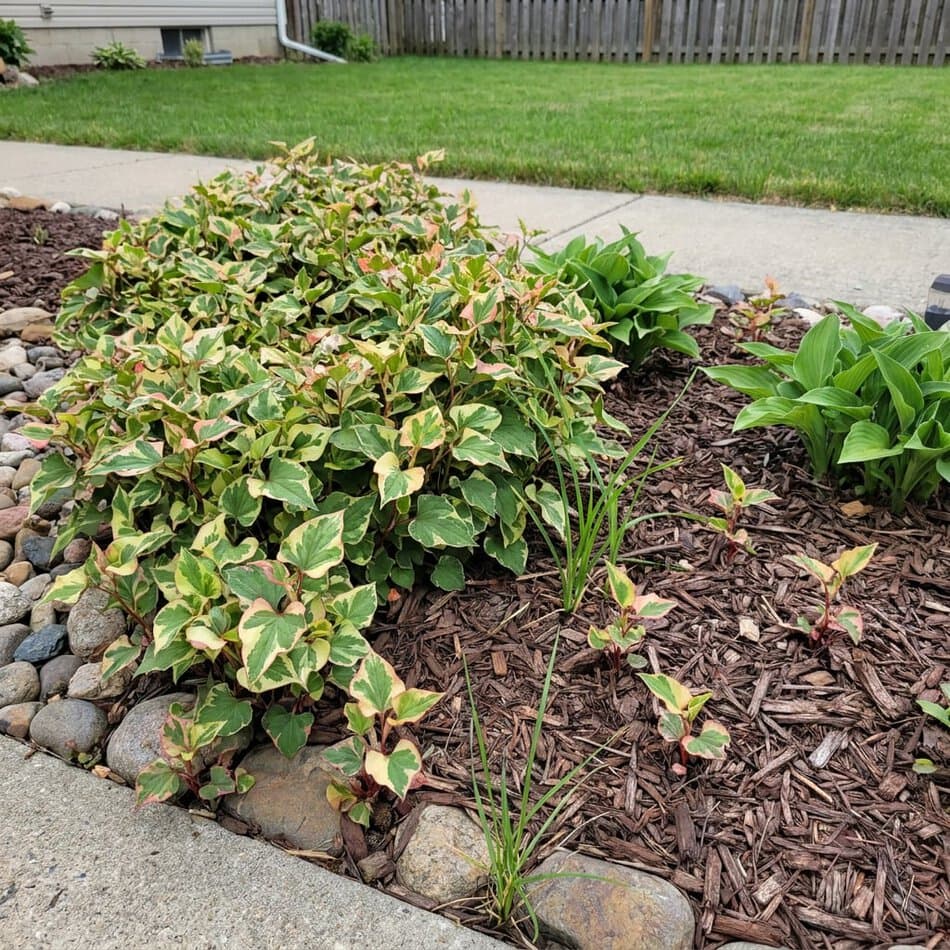
Chameleon plant is hard to resist when you see those pink, cream, and green heart-shaped leaves, but this is one I’d think twice about putting straight in the ground. It spreads quickly through underground rhizomes, and those roots can run surprisingly deep.
Once it gets established, removing it becomes a real battle because even pieces of rhizome left behind can grow again. What started as one colorful little patch can eventually show up several feet away from where you planted it!
Plant this instead: Try American alumroot (Heuchera americana). This native perennial gives you that same focus on attractive, colorful foliage, with leaves that can be marbled with purple, bronze, or cream, but it grows in much more manageable clumps.
These aren’t the only plants worth watching, either. We also wrote about 9 common garden flowers that can become surprisingly invasive if you want to know what else to keep an eye on.
Already Have One? Here’s How To Get It Under Control
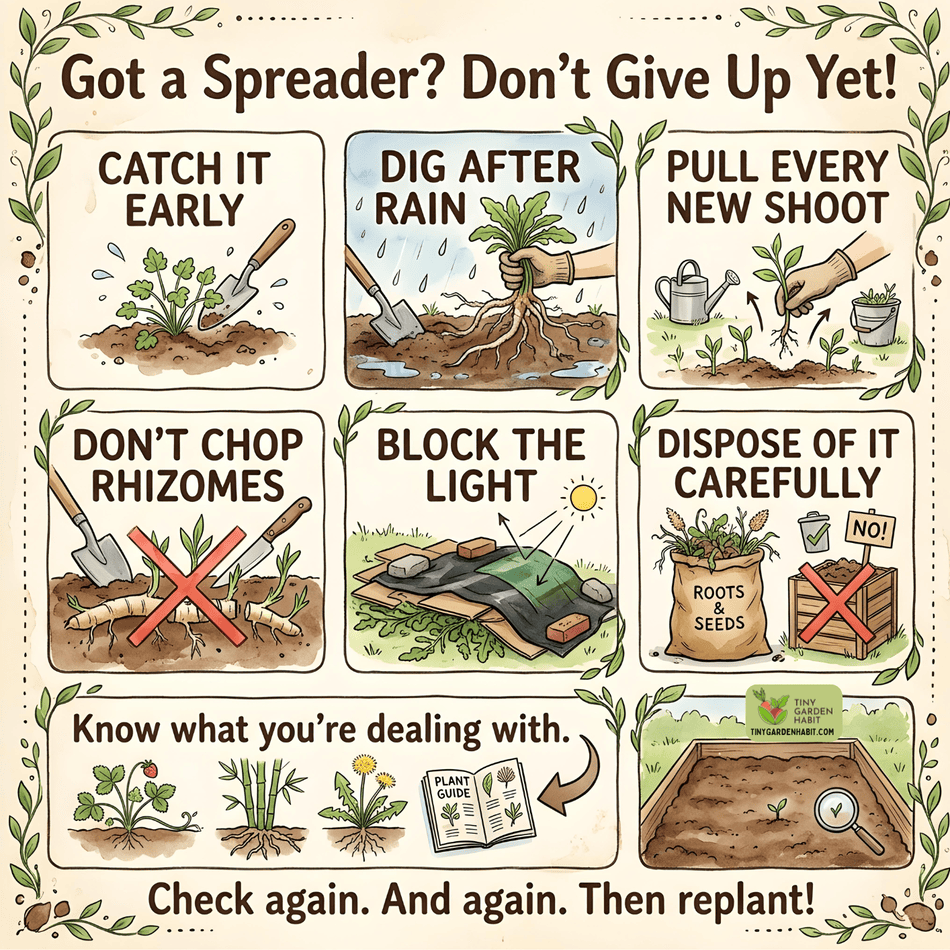
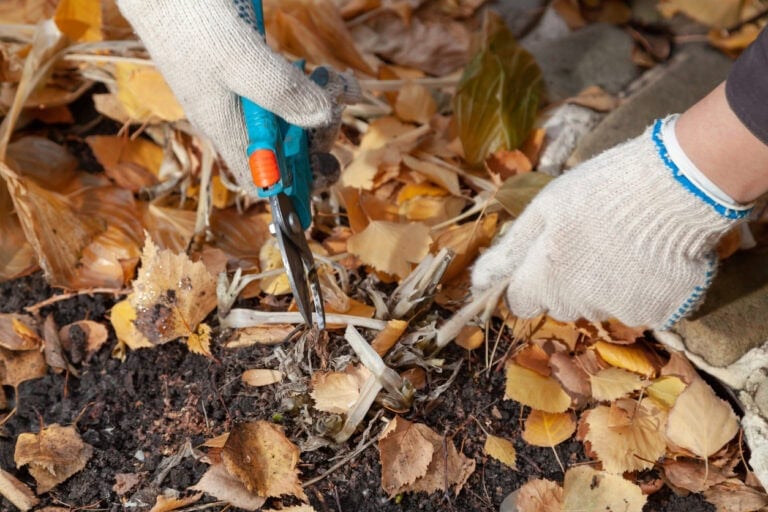
If you already have one of these plants growing in your yard, don’t assume you have to live with it forever.
Just know that established patches rarely disappear after one afternoon of pulling, you may need to go back a few times before you finally win. A few things that really help:
And most importantly, check the specific plant before you start digging. English ivy, mint, chameleon plant, and bishop’s weed don’t all respond exactly the same way.
Once the patch is gone, keep checking the spot for new shoots and fill the empty space with something you actually want growing there!
If you want to replace that empty space with something native, we also put together a guide to native wildflowers for different regions of the U.S. so you can find something that actually suits where you garden.
Quick tip: For a really stubborn infestation, your local Cooperative Extension office can help you choose the safest control method for your area.
Pretty Plants, Bad Roommates
Some of these perennials are beautiful, useful, and even beloved by gardeners; they just don’t always know how to stay in their own space.
If you already grow one and it behaves itself, great! But if you’re planning a new bed, choosing a better-behaved alternative now can save you a lot of digging, pulling, and muttering under your breath later.
And if one of these has already taken over? Keep at it. Persistence usually wins in the end, even if the plant makes you work for it.
A quick note: Native ranges and invasive status vary across the U.S., so if you’re replacing one of these plants, it’s worth checking what’s native to your own state or region.





That’s not Lily of the Valley
Hi Cindy! You’re absolutely right! Thanks for catching that—we’ve just fixed it. 😊🌿
If it isn’t lily of the Valley, what is it. We had that in our yard when I was growing up and it was called Lily of the Valley!
Hi Pat! I had actually posted the wrong picture earlier, but I’ve since fixed it! What you see now is Lily of the Valley. 😊
It was lily of the valley. You are correct
Add to this list Russian Sage. It becomes invasive and very difficult to remove. We have found it will stain the siding and stucco on homes and inhibits lawn-mowing when it falls over into the grass areas. While it’s great for pollinators, recommend not planting next to homes. Understand it is invasive.
Hi Kathryn! 😊 Yes! Russian Sage is beautiful but definitely a handful. My neighbor planted it too close to her house and it flopped everywhere, stained the siding just like you said and took over the nearby bed. It’s one of those plants that looks low-maintenance… until it’s not 😅
Hello from the North of England.
And another plant that should be banned is a Honeysuckle, Lonicera Henryi. I bought it as an evergreen but it is a brut of a plant. It takes over everything as it rushes, winter and summer, into everything. Its flower is tiny, no scent and the berry, black, is not the least attractive. Maybe the birds are happy but, it is far too vigorous for any garden. And does not die..
Your calendar is for what area?
I moved to Florida 2 years ago after coming from Oregon where I had my gardening down pat.
Now I’m trying my best in very hot weather and very sandy soil and I’m having a hard time adjusting to what I should plant.
Help!
It most certainly is Lily of the Valley. It can be controlled if you put in pound in border around it. Just make sure it goes down about 5-6 inches.
I am replying in general to many of these posts. At present I have vinca, English ivy, and honey suckle completely covering each other and my whole backyard. I did not plant any of them. I controlled them, fought them, and have now just given up. I think I need a bulldozer. I have pulled nine huge garbage bags of Bishop’s weed down to the very white root and after a season of rest started a new garden. Now I have Bishop’s weed coming back in from my neighbor’s yard.Lily of the Valley is in the front yard. I think all of this comes from living in a very old house and all the gardens that came before mine.
I think we have the same garden.
And like a complete idiot, I accidentally added creeping bellflower to the mix because I thought it was pretty and just like every other campanula. Also ditch lilies. I take some encouragement from some research–according to articles bishops weed, creeping bellflower and ditch lilies are apparently all edible. I haven’t had the nerve to try them yet. However, if there is a famine, I will never starve. In fact, my street will be well fed.
Hello, Rita; and unfortunately I’ve planted a few of these invasive boogers.😬😬. The periwinkle is all over and almost impossible to eradicate, Lily of the Valley is running rampant, and the Obedient plant comes and goes. It’s native to our state, so I’m not too worried about it! When we bought the house, I inherited an uncontrollable amount of Japanese Honeysuckle!😬. And THEN I made the mistake of planting Garlic Chives! Don’t ever do THAT! Not only are they bulbs, but they seed in the fall! Good grief! The bees love the flowers and usually they’re about the only thing blooming at the time. Double jeopardy. I wanted to ask you or anyone…besides digging periwinkle and Lily of the Valley, how do you/they eradicate it? Thanks for the info!
Hi Pat! Oh wow, sounds like you’ve had your hands full! 😅 You’re definitely not alone, so many of us have learned the hard way with these plants. Besides digging, the best way to tackle periwinkle and lily of the valley is:
🌿 Smothering – Cover the area with thick cardboard and mulch to block sunlight for several months.
💧 Persistent pulling – Keep removing any new growth as soon as you see it to weaken the roots over time.
🧤 For really stubborn spots, carefully spot-treat with vinegar or an organic herbicide, but it takes patience!
Hang in there. You’re doing great, even with all the “boogers” you inherited! 😂🌿✨
I have recently discovered that on my property line with my neighbor there is massive Japanese Naweed. I have been using commercial weed killer on my property. How do I stop this nightmare
Hi Celeste! Oh no, that’s a nightmare! 😩 Japanese knotweed is super invasive. Keep cutting it down regularly (every 2–3 weeks during the growing season) and treat it in late summer/early fall with a strong systemic weed killer (like glyphosate). It may take a couple seasons, but persistence really helps!
My Periwinkle and Obedient Plants ganged up to eradicate my Lily of the Valley patch. Lol. Now they are battling each other. These all came with the house 50 years ago. I didn’t plant them. But I like them.
Hi Cindy! Haha sounds like a true garden turf war 😂 At least they’re all pretty! I’ve had similar battles here too, sometimes I just let them fight it out and trim the winner if it gets too bold.
Will periwinkle kill my peonies that I planted?
Hi Leslie 🙂 Periwinkle usually won’t “kill” peonies directly, but it can spread thickly and compete around the roots. I’d keep it pulled back from the crown of the peony so the plant has airflow, sunlight, and room to grow.
I have both Spearmint and Peppermint going in my yard. They both are not the difficult to replace I have found with 20 years of having it around.
Hi Joe! 😊 That’s great to hear, with that much experience, you’ve probably found the perfect balance. Mint can definitely be managed well with a little know-how. Thanks for sharing your take!
There’s a FB group dedicated to eradicating Japanese Knotweed called worldwide Japanese Knotweed Support with excellent support techniques. Worth checking out if you’re dealing with that nightmare
Hi Bill! That’s super helpful, thanks for sharing! 😊 Japanese knotweed really is a nightmare in the garden. I’ll definitely check out that group, sounds like a great resource for anyone battling it!
I also have mint in a spot in my garden and keep it controlled and love it.
Though I usually plant my mints in large pots, I also have some growing “wild”. It is MUCH less problematic for me than the lemon balm that the previous owners planted. After 40 years in this house, I’m still trying to get rid of it.
Creeping Jenny and English ivy could be added to your list.
Hi Monique!😊 Totally agree, both can really take over if you’re not careful. Great additions to the list!
And Charlie!
Fever few and Wild sweetpea can also be invasive
Also chinese lanterns… My Aunt had them in her garden and I loved them, so I planted them in mine and can’t get rid of them, no matter how I try…
Chameleon plant is another to add to your list. Impossible to get rid of.
Hi Sher!
Great addition. Chameleon plant is definitely a tricky one,it spreads like crazy and can be so hard to control. Thanks for sharing! 🌿😊
I think moving to a new house is easier than trying to eliminate chameleon plant. I’m 5 years in trying to get rid of it… flame throwers have been used and it just keeps coming back. 🤣
Hi Jennifer! Oh no, five years and even a flame thrower?! 😅 That chameleon plant really does not give up. You’re definitely not alone, once it’s in the ground, it’s like a botanical horror movie. Hats off to you for the persistence (and humor!) Hopefully you’re winning the battle one root at a time! 💪🌿🔥
I would like to add Solomon Seal. You could yank it all day. Oh and, I literally can not get rid of grape hyacinth. I wish I could find a poison I hit them with?
Hi Kerrie! 😊 Yes, Solomon’s Seal and grape hyacinths can both be relentless! They look innocent, but once they take hold, they’re nearly impossible to remove. You’re not the only one wishing for a magic solution. Persistence (and maybe some mulch warfare!) is the only thing that keeps them somewhat in check. We’ll definitely consider adding those to the list, thanks for sharing! 🫶
Sure is bad. Spent one full day digging it all up removing all the roots and that is no where near all of them. Kill as they pop up!/
Hi Kathleen! 😊 Even after a full day of digging, it finds a way back. 😩 Spot-killing as soon as it reappears is the only thing that helps a little. Persistence is key… but wow, what a battle!
The picture is NOT Gooseneck Loosestrife (Lysimachia clethroides). It’s Lysimachia salicaria. A very different plant.
Many of the plants you’ve listed are grown commercially and responsibly by cut flower farms.
How much experience do you have with any of these plants? Little if any if you live in an apartment.
Hi Linda!
Thank you for pointing that out! You’re absolutely right about the plant mix-up, and I’ve fixed the image,it happens sometimes, and I really appreciate you catching it. As for my experience, I’ve mentioned many times how I grew up following my mom around her huge garden, learning everything I could from her. I also reach out to friends, family, and followers, not just for this article but for most of my articles, to ensure I’m sharing advice that’s as helpful and relatable as possible. It’s a learning journey, and I’m always grateful for feedback like yours! 🌿😊
Your comment back to Linda Williams was so kind. Her comment to you was very uncalled for! She could have been much nicer and should have been. After all, it’s your work and time put into the article. If she didn’t like it, she could’ve stopped reading it and moved on. It irritates me when people read something and have to be so critical!
Hi Dianne! Thank you so much for your kind words! 😊 I truly appreciate your support, it means a lot.
I know not everyone will agree with everything I share, and that’s okay but I always try to respond with kindness because we’re all learning together! I love hearing different perspectives, but thoughtful conversations always go further.
I’m just happy to keep learning and connecting with fellow plant lovers like you! 🌿💚
I can, and hopefully will, learn the art of kind and patient responses from you. Kudos!🙂
Thank you so much Patti, that truly means a lot! 🙂 I think we all grow a little better when we’re kind to each other, especially in the garden and in life.
I totally agree with you! Linda’s comment was rude, and I guess she needed to feel good about herself! Rita’s response was kind!
Thank you, George! 😊 I really appreciate your support, it means so much. I try to keep things kind and helpful, even when the feedback is tough. At the end of the day, I’m just grateful for this community of plant lovers who are learning and growing together! 🌿💛
I agree!
Ditto
Exactly! If you have nothing good say or add, just scroll on. I am so enjoying Rita’s posts! May not agree with everything, but that is fine too. Thank you Rita!
Hi 🙂 Thank you, Jamie. I really appreciate that. I’m always happy to hear different opinions, but kindness definitely makes these conversations so much better.
Would you mind saying what Zone you are in? I have Centaurea Montana and can’t get it to multiply at all. I’m in Zone 5/6.
Hi!
I’m in Zone 6b! Centaurea Montana usually grows well here. If it’s not multiplying for you in Zone 5/6, try giving it well-draining soil, full sun, and dividing it every few years. Sometimes it just needs a little extra encouragement to spread! 🌸🌿
Please don’t forget Morning Glories!
Hi Donna! 😊 You’re absolutely right!
Morning Glories can be a real headache in the garden. They spread so fast and can quickly take over. They may look beautiful, but they definitely make the list for plants that can cause more trouble than they’re worth! 😊🌿
Vinca vine looks beautiful cascading on a rock wall. Once established you will never get rid of it! It’s so invasive. I hate it now.
Hi Shelly! So true! Vinca vine looks lovely at first, but once it takes hold, it’s nearly impossible to control. It spreads fast and chokes out other plants. Definitely one of those “plant with caution” perennials! Thanks for sharing your experience! 😊🌿
Interesting. I’ve always had good luck with vinca planted around trees in the shade where nothing else seems to grow. Perhaps because I wasn’t trying to add anything else in that area. It hasn’t been a problem. It always could be contained with mowing around the edge. I’m just getting ready to establish it around two trees at my new home. I would be disappointed that to use it. Now English IV on the other hand…
Hi Karen! 😊 That makes total sense and you’re right, in the right spot (especially under trees where not much else grows), vinca can be a practical ground cover. It’s all about how it’s managed and what it’s paired with. Sounds like you’ve had a good system! And yes… English ivy is a whole other beast! 😅
Purple Loosestrife is outlawed in NE. Plantings along the Platte River choke out desirable habitat for water fowl. It will completely take over an island in a channel of the river.
Hi Kathy! That’s a great point! 😊
Purple Loosestrife is incredibly invasive and a serious threat to native habitats, especially in wetland areas like the Platte River. It’s a good reminder of why it’s banned in many places. Thanks for sharing this important insight! 🌿
Definitely; the prior owners of my house had planted it. Small then. Now, no matter what I do, it continues to grow and pop up all over the yard.
Hi Jan! That sounds so frustrating! 😩 Purple Loosestrife spreads aggressively once established, and it’s nearly impossible to fully remove. Even small root fragments can sprout new plants! Regular removal and even smothering with mulch or tarps can help slow it down, but it definitely takes persistence. Hope you’re able to keep it under control! 🌿🚫
I have Gooseneck Loosestrife, it has white blooms…is it a similar problem?
Hi Sherry! 😊 Gooseneck Loosestrife (Lysimachia clethroides) isn’t the same as Purple Loosestrife (Lythrum salicaria), but it can still be invasive, especially in moist soil or if not contained. It spreads aggressively by underground rhizomes and can take over garden beds fast. If you love it, I’d recommend growing it in a large pot or a contained area to keep it in check! 🌿😊
I live in Pennsylvania and we have a large eroding bank I would love to cover
Do you have any suggestions?
Robin B
Hi Robin! Great question! 😊 For erosion control, you’ll want deep-rooted, spreading plants that hold the soil in place. Here are some great options for Pennsylvania:
🌿 Native ground covers: Wild ginger, creeping phlox, or golden ragwort.
🌾 Ornamental grasses: Switchgrass or little bluestem—great for stabilizing slopes.
🌸 Shrubs: Red osier dogwood or sumac, which spread and provide year-round interest.
Mixing these together can create a beautiful, low-maintenance bank that prevents further erosion. Let me know if you’d like more details! 🌱✨
Sumac trees are terrible. They grow everywhere even in the cracks of our drive way. Impossible to get rid of.
Hi Marie! 😊 Sumac can definitely get out of control in the wrong spot. It’s great for erosion, but not ideal near driveways or foundations. I’ll make a note to add a caution about that. Thanks for sharing your experience!
Good morning, I have a bank that was too steep to mow, so I planted blue rug juniper on it. Yes, I have to watch it and trim it away from my drive way but it’s beautiful and well worth the time it takes to keep it trimmed. It only needs trimmed maybe every couple of years. I receive lots of compliments on the wy it looks.
I’ll put my Arizona soil up against ANY invasive plant. Arizona will win, no question. Arizona = “hardscrabble farming.” Any advice the author gives needs a disclaimer. “This does not apply in AZ.”
Hi Susan! Haha, fair enough! 😄 Arizona soil really is in a league of its own, tough, dry, and not easily conquered! Some of those invasive plants don’t stand a chance out there. Thanks for sharing! 🌵💪🌿
As far as I can see, the plants in your list are plants that if you have them in your garden and/or yard, you want them there. A ground cover is wanted for that purpose. I plant mint because I want it and yes I plant it in the yard where I don’t care where it spreads. Certain plants you want in the yard and not in the garden. I love violets and dandelions. To me, they belong in the yard and not in the garden. If you want to contain a particular plant, designate an area with a fixed border so that it can’t spread and then you can have it and prevent it taking over a different area.
Hi Elaine! Totally understand where you’re coming from! 😊
If you read the article, I actually explain why each plant can become a problem in certain situations and I give tips on how to grow them safely, like planting in pots or in a dedicated, contained area. When I was a beginner, I didn’t know any better and planted mint straight into the ground… it took over everything! So many others have shared the same experience. It’s really just meant to help gardeners avoid those early mistakes. 🌿💚
Trumpet vine will grow up your downspout and pull it right off your house. It gets to Newport, but doesn’t bloom for me, so , now to get rid of it!
Hi Kathryn! Yes, that vine can be relentless! 😅 It’s super aggressive and strong enough to do real damage, like you said. And if it’s not even blooming for you, definitely not worth the trouble. Good call getting rid of it!
Plus, if one attempts to eliminate a trumpet vine and roots remain in the ground, the vine spreads into the lawn and even into the neighbors’ lawns. It’s a devil to fight!
Enjoyed reading your article and appreciate your knowledgeable background. I live in East TN and want to fill a large area of embankments along a wooded mountain side. Looking for a drought resistant, blooming, pet friendly plant/flower. What is your recommendation? Where can I purchase a bulk quantity?
Hi Julie! Thank you so much! 😊 For a sunny, wooded slope in East TN, I’d recommend black-eyed Susans, coneflowers, creeping phlox, or coreopsis, they’re drought-tolerant, bloom beautifully, and are generally pet-friendly.
For bulk buying, check local nurseries or try online suppliers like Prairie Moon Nursery, American Meadows, or Eden Brothers. They offer wildflower mixes and plugs in larger quantities. Sounds like a beautiful project! 🌼🌿✨
Add Four O’Clocks to your list. They take over!!!
Hi Janis! Yes, Four O’Clocks can spread like wild! 😅 We’re already working on updating this article with more plants, so all suggestions are welcome. Thank you for adding to the list!
My big mistake was wanting to make mojitos. 🍹I bought one little container of mojito mint and planted it next to my flower garden. Fast forward 3 years….I have enough mint for a cruise ship mojito party!! I have spent weeks digging it up. It’s spread across the lawn into my raspberries since last fall. Last year I spent 3 weeks digging in just one area. I broke my shovel!! They tangled into my hostas….I had to dig them out, split them in order to remove the mint roots. It’s a parasite! I dug down more than a foot in some areas. I just started this spring on another patch. In the last 3 days I have filled 15 home depot buckets full of mint roots. Some are as thick as my finger. The white roots below the big roots are hair like strands. I think I will try industrial strength vinegar solution with dawn detergent added to see if I can stop even some of it’s travels elsewhere!
NEVER EVER DO WHAT I DID….IF YOU WANT A MOJITO, GO TO A BAR, DONT GROW YOUR OWN
Hi Terry! Oh my gosh, what a story! 😅 You deserve a mojito (or five) just for all that effort! Mint really is a beast once it gets going in the ground. Your experience is such a perfect example of why it’s best kept in a pot with a saucer! Thank you for sharing your warning in the most entertaining (and relatable) way possible. Here’s hoping that vinegar helps slow it down! 🌱🍹💪
Hoping for advice, here goes…
Have a Allium purple globes plant.
For some unknown reason the past 2 yrs. No gorgeous globes. Plants looking very strong & healthy, but No sign of Stems for flowers. Yep, I have looked to see if the stems were chomped off, Nope. Missing my 💜 beauties😔
Hi Marilyn! 😊 Totally understand why you miss those gorgeous purple globes! 💜 If your allium leaves look strong but there are no flower stems, it could be a few things:
🌿 Too much nitrogen can lead to lush leaves but no blooms. Try a low-nitrogen, high-phosphorus fertilizer in fall or early spring.
🌞 Make sure they’re getting plenty of sunlight, alliums love full sun!
🧄 And since they’re bulbs, overcrowding might be the issue. Dig them up and divide in the fall to give them more space and energy.
Hoping your beauties come back next season! 💜✨
I have both lily of the valley and the mint, but I manage to keep Lily of the valley in one area and I like it. The mint should probably be in pots. However, I have it near my strawberries; and I honestly believe the rabbits stay away because of it.
Hi! That’s such a smart setup! 😊 Keeping lily of the valley contained and using mint as a natural rabbit deterrent near your strawberries is a great way to make the most of both. And yes, mint really does seem to keep critters at bay! 🐰🍓🌿
Hi, Just found your article. Very informative. Thank you. I live in Northern Ireland. I grow mint in a pot on windowsill as I found it took over in garden. 😎
Hi Mary Ann!😊 So glad you enjoyed the article. Growing mint in a pot is a smart move, especially on a windowsill where you can enjoy it without it taking over the whole garden. Sounds like you’ve got it perfectly under control! 🌿
Such an informative article. With 80 acres in the Ozarks, invasive is not a scary word for me. Mint around the pond is easy to trim…with a delightful scent. English ivy has to be watched so it won’t grow up the trees and cause problems. I planted snow on the mountain to cover a hill side. Folks raise their eyebrows, but it is easy to maintain in that area. Poison ivy is a whole different ballgame. I may never win with it. No way I can eradicate the roots 😵💫. Vinegar works for a while on a sunny day, but too much to overcome. I’ll try the cardboard idea and hope for some area control. Thanks for sharing your knowledge 👍
Hi Alexis!So glad you enjoyed the article. 😊 Sounds like you’ve got a great handle on a wild landscape! I love that you’re using mint and snow on the mountain in a controlled way, it really is all about the where. And yes, poison ivy… that stuff is ruthless. 😩 I’ve battled it too, and the roots seem to come back no matter what. Cardboard mulching helped me reclaim a patch by the fence line, hopefully it gives you some wins too!
It’s all in the AI capacity. The more responses = more authenticity. I’m just convinced most of these responses are AI generated
Hi Lisa! 😊 Trust me, we never expected this article to blow up like this, but turns out we’ve all made the mistake of planting something that took over the garden! 😅 Behind it all is just a small team of real gardeners who care deeply about sharing honest, practical tips. Most replies are based on our own experience or passed along from gardeners in our facebook community. We’re just happy to keep the conversation growing! 😊
We’ve been trying to get rid of Japenese knotwood for years and it is still coming thru in many places!! It is so hard to get rid of, I’m at my whits end!!
Hi Lisa! 😊 That sounds incredibly frustrating, we hear this a lot with Japanese knotweed. It’s one of the toughest to control once it’s established. Persistence is key, but it’s totally understandable to feel worn down by it. You’re definitely not alone in this struggle!
I bought an older home with a fairly established garden. Noticeable what half the stuff is except the roses and bleeding hearts (which spread on their own). I think I have lily of the valley coming up in the back yard around my shed. Had no idea what they were or where they came from- not there last year. I have these crazy invasive bushy purple flowered plants that look like purple bee balm. It’s EVERYWHERE! I try and kill it with rhyzomes and it just doubles down. It’s now growing between my sidewalks and foundation. How fo you get rid of invasive plants?? I also have baby trees of some kind sprouting all over. Lots of birds and heavy winds in the area that like to share seeds.
Hi Crystal! That definitely sounds like a wild garden adventure! 😅 It’s amazing what pops up when you inherit a yard. Lily of the valley and spreading perennials like purple bee balm (or possibly an invasive mint or monarda type) can be relentless.
The best method for getting rid of invasive plants is consistent digging and smothering, cut them back hard, then cover the area with cardboard or thick mulch to block light. For anything in cracks or foundations, a vinegar and hot water solution has worked for us (it helps weaken the roots over time). It takes patience, but you’ll slowly win back control! 💪
I’ve been pulling my hair out as i pull out my pachysandra also!! Thanks for this article!!
Hi Char! You’re not alone! 😅 Pachysandra seems harmless until it takes over everything. Glad the article helped, it’s always nice to know we’re in this together! 😊
What can you do if you have mint that was already there. We’ve tried everything including digging roots out. Is there anything that will choke it out?
Hi Sammy! Ugh, mint can be so stubborn once it’s settled in! 😅 If digging didn’t help, you might try smothering it with thick cardboard and mulch for a season or two, it needs light to survive. Some gardeners also plant mint-choking ground covers like ajuga or lamium nearby to compete. Not a quick fix, but it can help over time! 😊
I have mint and Mexican primrose battling for ownership of my front yard. They’ve even jumped a sidewalk to get to the other side!
Hi Dawna!😊 Oh wow, sounds like a full-on turf war! 😅 Mint and Mexican primrose are both sneaky spreaders… once they settle in, they’re hard to stop! Hopefully they at least make the yard smell good while they take over!
You might want to differentiate between plants that are invasive (typically non-native spreaders that damage native habitat) and aggressive spreaders, which can take over your garden but are not actually harmful to the environment. People often conflated the two.
Hi Joanne! 😊 Yes, exactly, there is a big difference, but aggressive spreaders can still cause a lot of trouble in home gardens. They might not be invasive in the ecological sense, but they can still smother nearby plants, outcompete them for space and nutrients, and just take over if you’re not constantly managing them (mint is a perfect example of that!). Most people don’t realize how quickly they spread until it’s too late! 😅
You forgot the worst one of all: English ivy. I just paid $1,000 to remove an enormous patch of it that was going to completely cover my house and garden.
Hi Ami! Oh no, that sounds like a nightmare! 😩 English ivy can be relentless once it takes hold. You’re absolutely right, it deserves a top spot on the list. The damage (and cost!) it causes is no joke. Glad you were able to get it under control!
We’re currently working on updating this article, so if you know of any other perennials that have taken over your garden (or just drove you a little crazy 😅), feel free to drop them here in this comment, we’d love to hear your suggestions!
Hi Rita,
I’ve been looking at Yellow Loosestrife as spot filler in our flower box. Would that be along the same line as the Purpke one?
Hi Dave! 😊 Yes, Yellow Loosestrife (Lysimachia punctata) can be just as aggressive as the purple one (Lythrum salicaria. It spreads fast through underground runners and can take over a flower box pretty quickly if not kept in check. It’s beautiful, but definitely one to watch closely!
Elephant ears! And not the friendly kind! The lady we bought our house from was kind enough to drop a bunch of the rhizomes into our creek, which is part of our local watershed, and happily told us about it as she handed over the keys. We have been battling them ever since. The leaves die off in the winter, but by summer they are chocking out the creek and are spreading into the law. We‘ve dig. We‘ve cut new growth. We‘ve done the cut and spray the stem. Help!!!
H Sandra! Oh no, what a mess to inherit! 😩 Elephant ears can be beautiful, but once they take over, especially near water, they’re incredibly hard to control. It sounds like you’ve tried all the right steps already. Digging, cutting, and targeted spraying are usually the best combo. One extra tip: stay consistent with cutting every new shoot as soon as it appears to weaken the rhizomes over time. It may take a few seasons, but persistence really does help. Rooting for you, literally! 🤞
I live in a big city and mint deters the rats from coming in from the alley. They hate mint! It’s easy to manage mint in my yard, but not so much the daylilies. They take over everything. Also, alanthus trees, (Tree of Heaven, please…) they are my nemesis.
Hi Fran! 😊 Totally feel you on the mint vs. daylilies! Mint can actually be helpful in the right spot, my mom grows it in a buried pot to keep it from spreading. But daylilies… they really do take over fast if you’re not constantly dividing them. And don’t get me started on tree of heaven, they pop up everywhere! 😅
Sweet woodruff is a very poor recommendation .
Spreads like crazy !! Pops up everywhere. The seeds are burr like and stick to clothing shoes and critters . They then are distributed across a broad area .
Hi Sherry! 😊 Oh no, you’re actually right, I just switched it! My cousin has it at her place and never had any trouble, so I thought it was a safe pick. But I just did a bit of a search and oh my… those burrs really are a menace! 😅 Wild ginger seems like a much better fit, thank you for the heads up!
How do I get rid of a garden full of lemon oregano. I’ve pulled it out year after year and it just comes back stronger.
Hi Lisa! 😊 Oh, lemon oregano can be such a stubborn one!
I had the same problem in one of my beds, I finally got rid of it by digging out as much root as possible and then covering the area with thick cardboard and mulch for a whole season. Smothering it really helps stop those roots from resprouting.
Add forget me not , appropriately named
Hi! 😊 Yes, good point, forget-me-nots can spread fast too. Their name is spot on! 😅 They’re beautiful but definitely have a mind of their own once they get going.
I planted vinca vine around my hardy hibiscus. My hibiscus leaves looked like lace. I had leaf hoppers. They were partying and multiplying like rabbits in that vinca vine. I got neem oil and pulled out all the vinca vine in July. Now it’s October and vine is back with a vengeance.
Hi Mary! 😊 Oh, I know that struggle, vinca vine is relentless once it settles in! 😅 Keep pulling it as soon as you see new shoots and cover the area with mulch for a while to block light. It takes persistence, but it’ll weaken over time.
I would not suggest lemon balm as an in-ground substitute for mint. At least not in Eastern Washington State, where I live. It behaves much like mint, which is grown commercially here.
Lemon balm volunteered itself in my yard years ago, and I was delighted. I loved the smell. It makes lovely tea and has some great herbal properties.
But now it’s everywhere! It spreads underground and by seed. My husband and I joke about turning our yard into a lemon balm farm after seeing the price of the dried herb!
I suggest planting it in a pot and keeping it trimmed so that the flowers don’t form, just like mint.
I grow six varieties of mint (peppermint, orange mint, chocolate mint, mojito mint, Moroccan mint, spearmint), but only in pots with saucers. And they behave themselves because I monitor attempted escapes via runners and trim them regularly to prevent seeds! Plants get a “haircut” right into a colander. I rinse it, and then make refreshing iced tea. The excess dries in the colander and gets stored in an airtight container for when fresh isn’t available.
I am constantly trying to keep the lemon balm pulled and/or trimmed. It comes up in the lawn, in the gardens, in cracks in the concrete. If only I had known when it first arrived!
I also heartily agree on avoiding morning glory! I planted some once 20 years ago and I am still pulling starts. It strangles everything around it.
Add Comfry to the list of plants that take over. Extremely hard to get rid of. Digging out the long roots. Sprays don’t work either. The seeds go everywhere. Tried to also “smother” then.
They compete with the Tansy and take over everything! Lost most of my Iris to their invasive nature. GR-R-R-R
Another invasive plant is “mexican petunia”. That is what we call it here in the Southwest. It is fast growing and has a purple flower that blooms in the morning and it gone by that evening. It is pretty but it takes over. It is spread underground and has choked out my other plants.
Hello! I planted vinca major and it is horrible. At first I felt sorry pulling it up, but as years went by and it grew and grew I became a fanatic at keeping it at bay. Vinca minor, not as bad. I also am having trouble with four o’clocks. They drop seeds like crazy and they have a serious root system. Hollyhocks too. Drop seeds and plants pop up in pathways!
I mistakenly planted a wisteria over the door frame to my vegetable garden. It was beautiful until suckers started popping up all over in my veggies. I’ve cut it down, dug it back and drilled holes in the stump to which I added stump remover……to no avail. You can’t get rid of them!!!
My anemones after 15 years of being good are everywhere they even went to other areas of the yard. I love it but now not so much
I would not call Virginia Creeper much of an improvement over English Ivy. In my location (SW Missouri), it is constantly “creeping” into areas that I don’t want it. I have actually never planted it, but it grows naturally. Thankfully, it has shallow roots and it is fairly easy to pull up the runners, but it still has an invasive character as far as I am concerned!
I bought a packet of Malva seeds at a garden centre. Didn’t know enough to check if annual, biannual, or perennial. Will never buy again without checking, or maybe never again. They are a pretty purple flower and add lovely colour to the garden but the kind I got is VERY invasive and not an annual! They will sprout leaves from the tiniest stem left in the dirt. I am now pulling in various spots throughout the garden as soon as I see them coming up and before seed heads. VERY annoying and hard to get ahead!!
You forgot spiderwort. They are sneaky.