
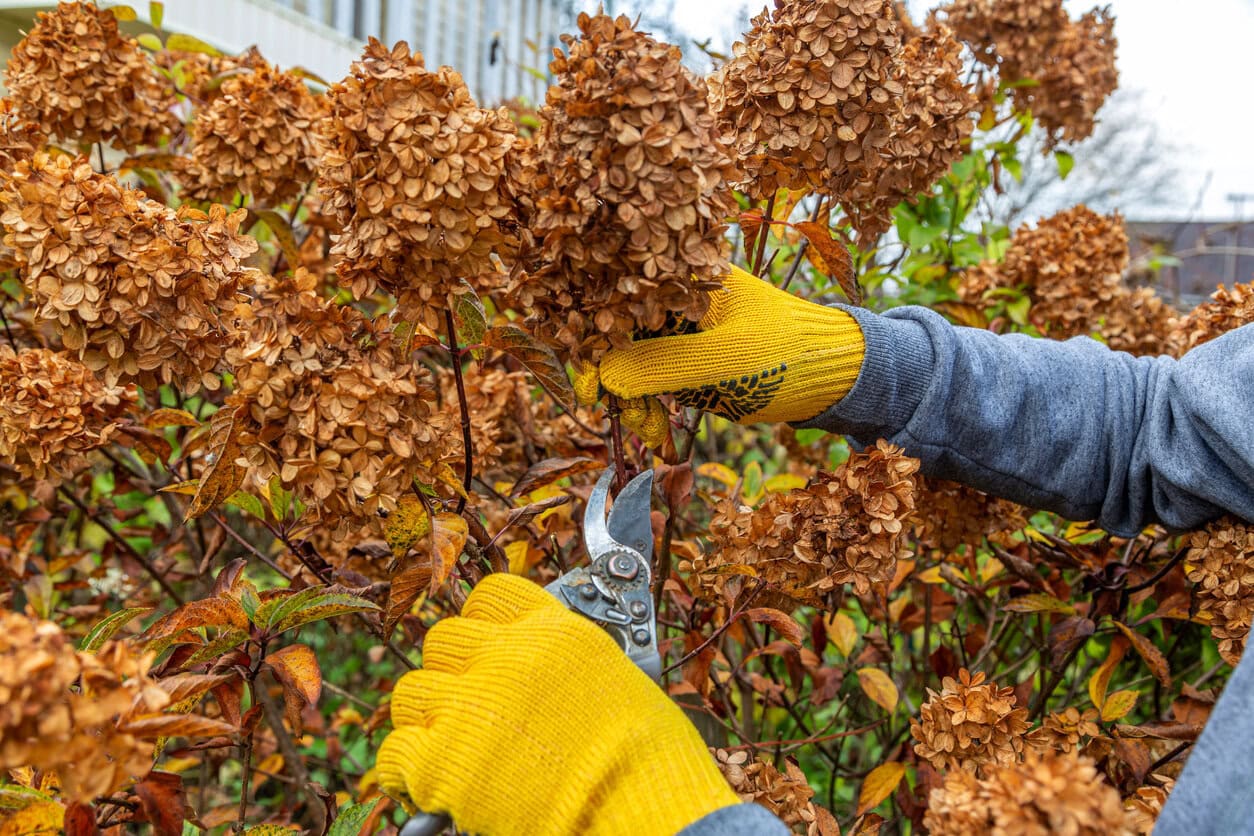
Ignore Susan next door staring at your mismatched gardening outfit while you assault your shrubs.
Your February garden may look like a slow-motion documentary about beige, but your favorite blossoms are busy beneath the surface as winter loosens its grip. They can’t wait to bounce back. And Susan doesn’t know that. Surprise her.
Flowers That Rise from (February) Ash
If your flowers demand you decapitate and hack them back now so they can dominate the landscape later, who are you to refuse? Susan will simply have to cope or call a therapist.
Quick note: Zones listed below indicate where soil typically begins to thaw in February, making late-winter cut-backs safe.
1: Russian Sage (Zones 7-9)

Snip these silvery stems to a mere 8-12 inches from the dirt. Leaving the old growth leads only to a floppy and pathetic eyesore that collapses under its own weight.
A hard late-winter prune forces the plant to build a sturdy and upright skeleton. Fresh wood provides the only reliable support for its heavy and electric blue spikes later in the year.
2: Panicle Hydrangea (Zones 6-9)

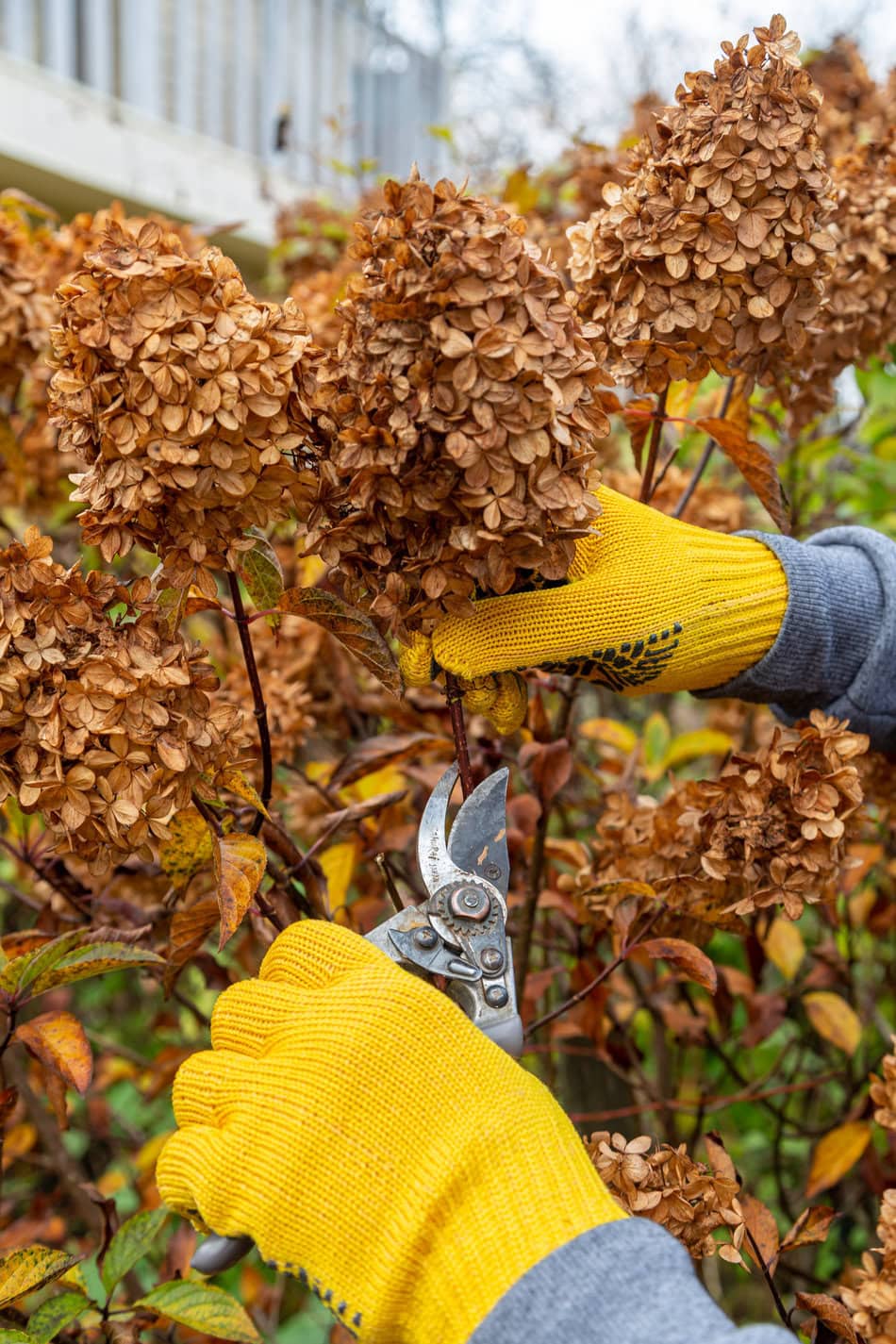
Adjust your glasses, identify the woody stems, and cut them back by about one-third. Unlike their fickle and blue cousins, Panicle hydrangeas produce flowers on fresh growth.
Once you remove the old debris, the new stalks will stay strong and thick enough to support the heavy flower heads. Your bushes will look lush and intentional and command respect from every passerby.
Quick tip: Panicle hydrangeas have cone-shaped flowers, not round ones. If yours doesn’t look like the picture here, don’t prune! I’ve seen too many people prune these at the wrong time and end up with zero blooms.
Since you’re already pruning your hydrangea, it’s also a good time to look at the other essential hydrangea care tasks for February. And if you’re unsure which type you have, Rita’s included a quick chart in her hydrangea pruning guide by USDA zone.
3: Lavender (Zones 7-9)

Lightly trim the green growth into a tight and tidy mound, but never touch the ancient wood at the base. A quick February shave keeps the plant compact and prevents an unsightly donut effect.
Lavender and other woody perennials are notorious for center dieback. It will reward your precision with a clean and aromatic explosion of purple spikes.
Quick tip: If you’re unsure where to cut, I stop as soon as the stems turn woody and stiff. Lavender won’t regrow from old wood, and cutting too low is the fastest way to lose the plant.
If you’re ever unsure about timing, I break down whether lavender is better pruned in spring or fall, and why gardeners disagree so much about it.
4: Coneflower (Zones 6-9)

Snip the blackened and bony remains right down to the basal leaves. These stubborn perennials spend winter looking like burnt matches, but a quick cleanup directs all energy into the crown.
I like to leave the seed heads standing through winter to feed birds, then cut everything back in February before new growth appears. Remove the dead weight so vibrant purple petals emerge around stiff, bronze centers without fighting through a forest of rot.
If you want coneflowers to stay tidy and bloom hard all season, I also put together my essential care tips beyond just cutting them back.
5: Perennial Salvia (Zones 7-9)

Salvia thrives when it doesn’t have to push through a layer of suffocating and wet trash. So clear away the mushy and brown foliage until you see the green nubs at the soil line.
Salvia needs a flat and clear surface so the emerging green can soak up every drop of early spring moisture. You shall enjoy a carpet of deep and royal purple that looks far too healthy for Susan’s peace of mind.
Quick tip: I always wait until I can clearly see new growth before cutting, anything green stays.
6: Autumn Joy Sedum (Zones 6-9)

Cut the old and dusty seed heads off to make room for the next generation. These succulent rosettes sit at the dirt line and crave a direct hit of sunlight.
Clearing the old stalks prevents the center from rotting and encourages a wide and sturdy clump. It is a succulent and indestructible comeback king.
7: Butterfly Bush (Zones 7-9)

Chop this beast down to a 12-24 inch stump. It blooms exclusively on new wood, meaning last year’s branches are just useless and brittle clutter.
Radical surgery in February triggers a massive growth spurt. And by July, it will be a tall and fragrant bush that attracts every butterfly in the county. Also, it’ll surge with more purple than Susan’s envious face.
Quick tip: I always cut butterfly bush back hard, but I leave closer to 24 inches if winter has been rough. You can always cut more later but you can’t undo frost damage.
8: Ornamental Grasses (Zones 6-9)

Not really a flower, but plumes count, kind of. Tie the dead blades into a ponytail and saw through them until about 4-6 inches remain. Leaving the brown fluff results in a messy and tan disaster once the green shoots arrive.
Besides, with a clean stump, the sun can reach the soil and wake the roots. Your garden will transition from a hay field into a fancy ornamental hay field.
9: Group 3 Clematis (Zones 7-9)

Locate the buds twelve inches above the mulch and decapitate everything above that line. Group 3 varieties only bloom on new wood, so last year’s vines act as a useless and heavy liability.
A hard prune, rather than leaving a bald knot of sticks forces the plant to concentrate its energy on fresh growth. The flowers will spill at eye level instead of on the roof, where only the birds and Susan’s judgmental cat can see them.
Quick tip: If you don’t know which clematis group you have, don’t cut this hard. Group 1 and 2 varieties bloom on old wood and won’t forgive a February haircut.
If clematis groups still feel confusing, I have a full guide where I show each group, when to prune it, and what happens if you get it wrong.
10: Blanket Flower (Zones 6-9)

Remove the spent and straggly stems to reveal the low evergreen foliage at the base. This plant loves to bloom itself to death, so a winter cleanup provides a much-needed and restorative break.
Tidying the mound now prevents the plant from becoming leggy and chaotic. It will return with a fiery and bold attitude that screams for attention.
Once the cut-backs are done, I also think about feeding the perennials that wake up early. Take a look at my article about which ones I fertilize in February and why.
Growth Requires Space

Stick to the routine: sanitize your tools with alcohol between different plants, watch the weather for sudden deep freeze, and keep your shears sharp, so your yard stays more impressive and organized than your actual life.
Call Susan over for a cup o’coffee and share some gardening tips while you gossip together about Martha two doors down. Let the weeds be the only ones who envy your success.


what about regular snow ball hydrangeas?
Hi Joan 🙂 If you mean the classic snowball hydrangea like Annabelle, that’s a smooth hydrangea and it blooms on new wood. You can cut it back in late winter or early spring, but I usually leave about 12 to 18 inches instead of cutting it flat to the ground so the stems have a little more support.
Thanks!
Anytime. Get those shears dirty next Feb, Corinne.
But then give them a really good rub with alcohol!
Am a little confused as to the different zones. I live in Brisbane Queensland so would like to know whih zone this is please.
Hi Anita 🙂 Since you’re in Brisbane, your seasons are different from the U.S. zones used in the article. I’d go by your local winter timing instead, and cut back these plants during your cooler dormant period before strong new growth starts.
For Michigan zone, 4-6, when do we cut back?
Hi Colleen 🙂 In Michigan zones 4 to 6, I’d wait until late winter to early spring, once the worst deep freezes are past and you can see signs of new growth. For many plants, that may be March or April instead of February.