
The reason your holiday cactus hasn’t flowered in three years isn’t bad luck. Chances are, it’s because your house is too warm, your nights are too bright, or your watering habits are completely out of sync with the season. Let’s fix that right now. Starting with sorting out what you actually own.
How to ID Your Holiday Cactus
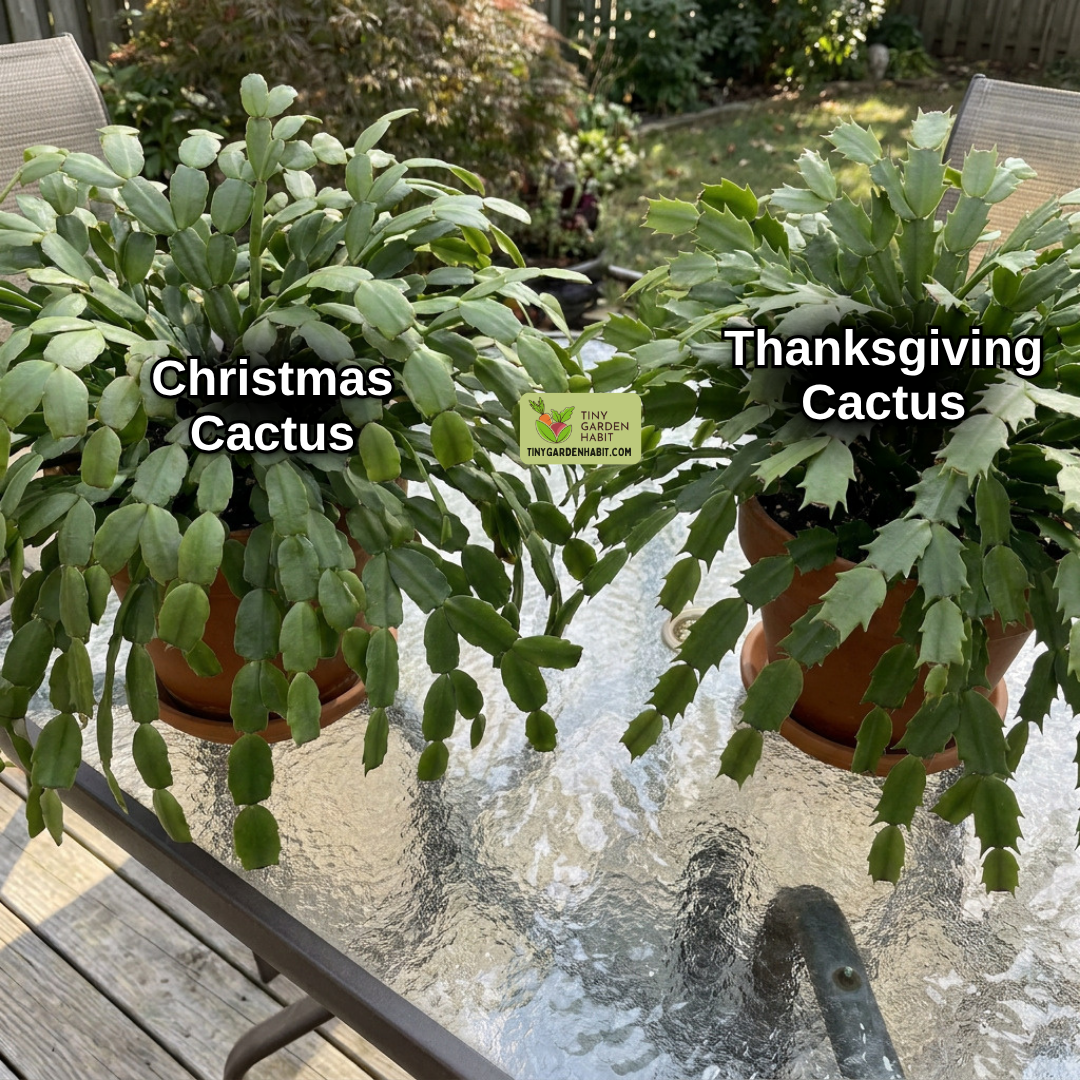
Wholesale nurseries and garden centers often sell Thanksgiving cactus labeled as Christmas cactus, complete with festive printed foil sleeves over the pots. And retail employees are busy stocking shelves, not sorting out cactus taxonomy.
So if you want the real holiday deal, you have to inspect the stem segments yourself:
A little botanical plot twist: Despite its name, the “true” Christmas cactus isn’t actually a naturally occurring species. It’s a hybrid called Schlumbergera × buckleyi, created by crossing the Thanksgiving cactus (S. truncata) with S. russelliana. So the “true” part is a little misleading, botanically speaking.
There is also a third player in the mix occasionally: Easter cactus (Rhipsalidopsis gaertneri). However, this one features rounded segment edges with tiny brownish bristles near the tips.
The distinction matters because misidentifying your plant means you’re tracking the wrong timeline for its blooms.
And if yours turns out to be a Thanksgiving cactus, we also wrote a guide on how to get it blooming again, even after the holidays.
Task 1: Provide Uninterrupted Long Nights
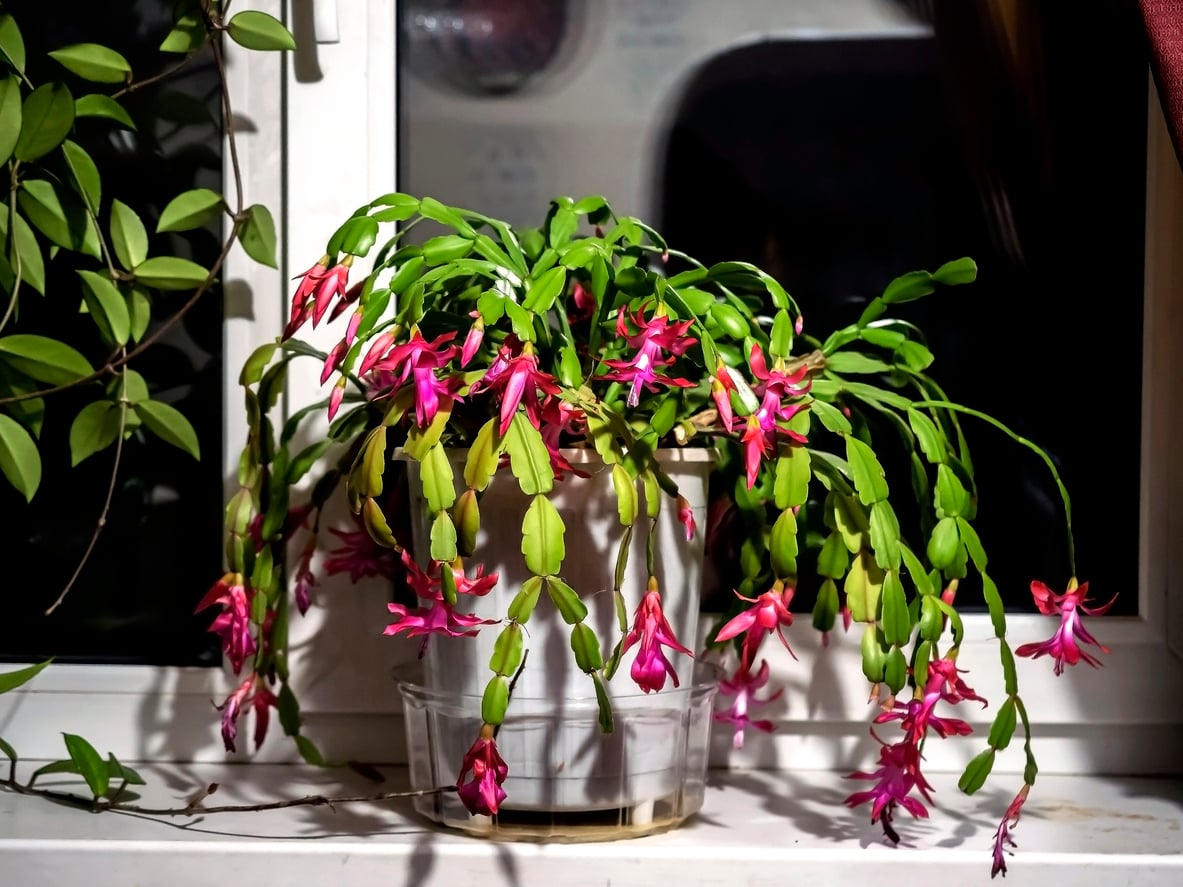
Your holiday cactus does not care about your late-night television habits or your kitchen overhead lights. But its flower buds certainly do. For about six to eight weeks, aim for roughly fourteen hours of uninterrupted nightly darkness.
Put the cactus in a room where nobody doomscrolls after sunset. Otherwise, cover it each evening and uncover it in the morning for bright, indirect daylight. Don’t cheat the schedule. And don’t peek! It’s still there. Setting buds.
Start around September for Thanksgiving cactus, or October for Christmas cactus.
One quick flick of a light switch won’t necessarily ruin everything. But overhead lights or a television glowing late into the night, night after night? That can interfere with bud formation while you’re none the wiser.
Task 2: Offer Naturally Cooler Nights
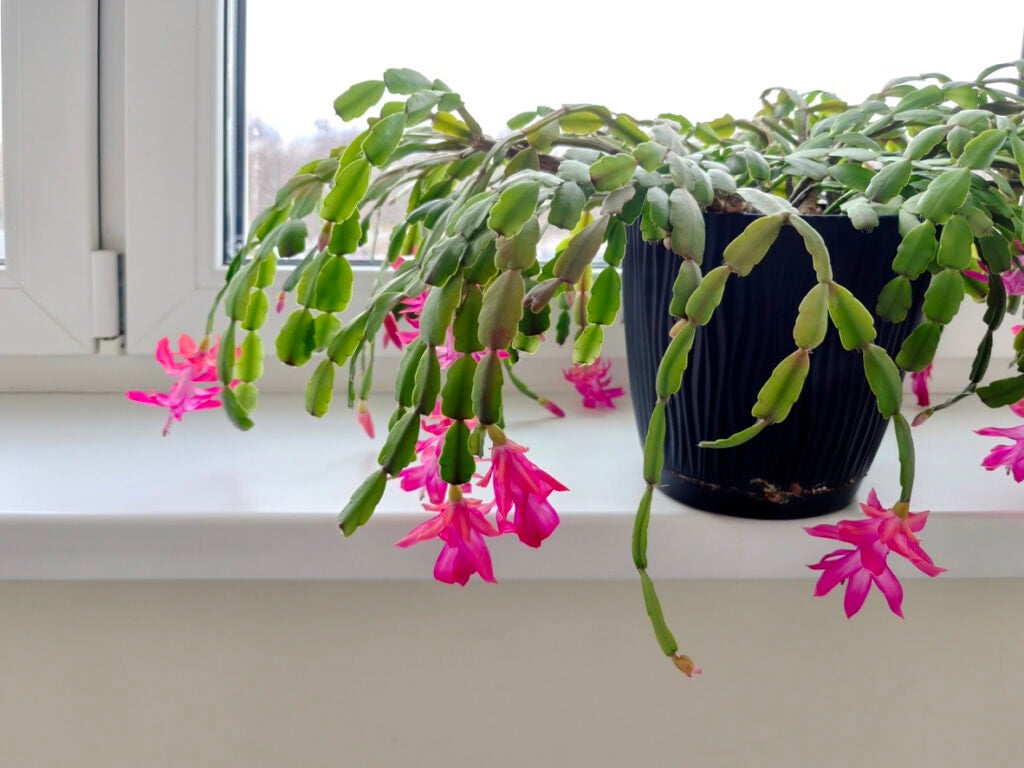
Pitch-black darkness won’t do a thing if your house stays above 70°F day and night during bud-setting season. That’s walk-in-a-T-shirt weather, not flower-bud weather.
Flower bud formation works best with cooler nights around 55°F to 65°F for several weeks in fall.
Where can you actually find that? An unheated guest room or enclosed porch does the job, provided temperatures stay above 50°F.
Don’t haul the plant around every morning to show it off or warm it up. Once buds appear, sudden changes in light or temperature can send them falling before they open.
Still not sure which room makes the cut? We also wrote a guide on where to put your Christmas cactus for the best chance of blooms, including which spots to avoid.
Task 3: Adjust Watering as Buds Develop
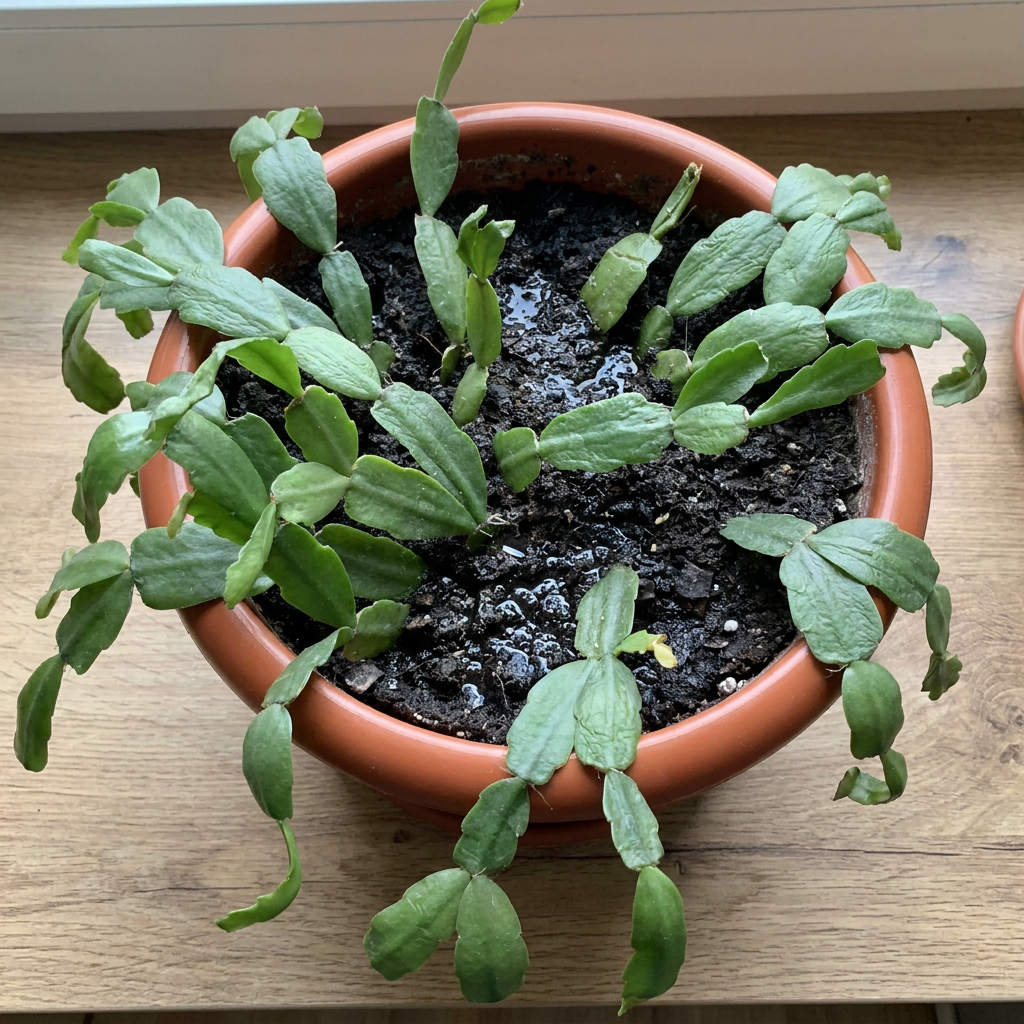
Dial back watering as growth slows in early fall. But once flower buds appear, don’t let the potting mix dry out completely. Your cactus may drop its future flowers just to ride out the drought. Overwatering is just as bad.
You’ll know you’ve overshot it in either direction by reading the segments and buds:
Forget the watering schedule. Stick your finger an inch into the potting mix. If it’s dry, water thoroughly and let the excess drain away. Keep moisture consistent while buds develop so you don’t… end up in deep water.
And if watering still feels like a guessing game, we explain how to properly water a Christmas cactus without risking root rot in a separate guide.
Task 4: Keep Conditions Steady Once Buds Appear
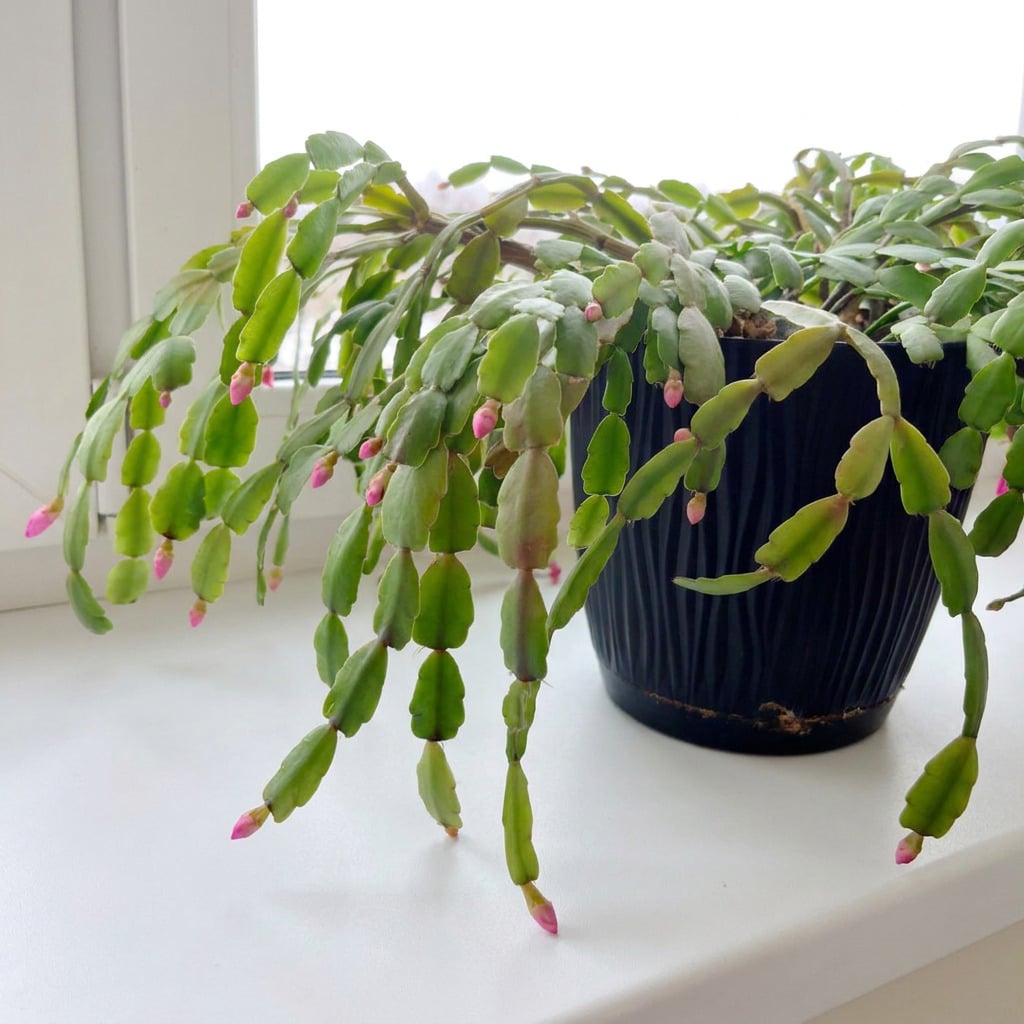
Spotting tiny pink or red bumps on the tips means lock-in time. A sudden swing in light or temperature once buds form can make them drop before they open.
Pick one spot that isn’t “thermally challenged” and leave it there until the bloom cycle wraps up.
Stop moving it around and forget trying out new windowsill spots for a holiday photoshoot. Keep it far away from blast zones, too. No heat vents blowing hot air, no drafty front doors opening into cold gusts, and no icy windowpanes that could chill the stems.
Task 5: No More Pruning and High-Nitrogen Feeding
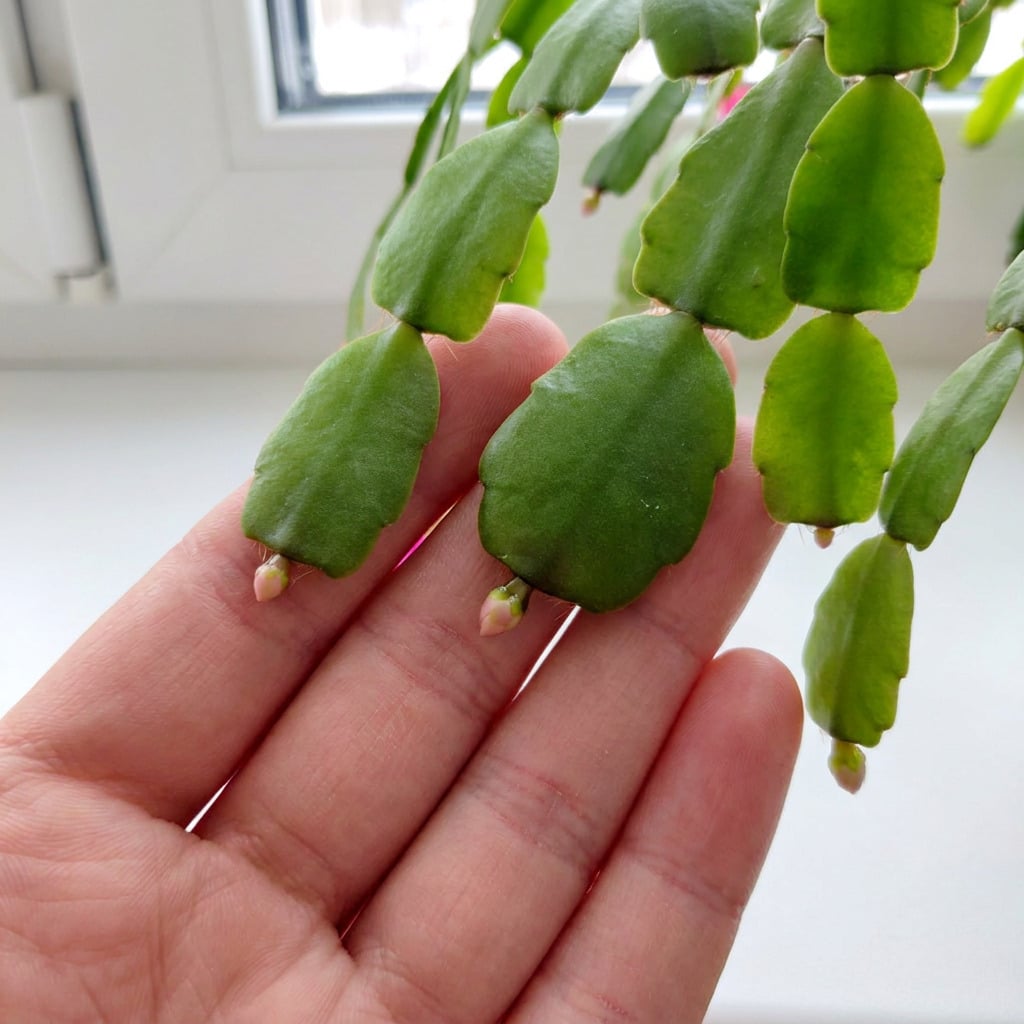
If you want a heavy bloom parade, put the shears away once fall bud-setting begins. Pinching back or trimming stems now removes the very tips where flower buds are supposed to form.
The rule here is very simple: leave the stems alone and don’t feed. Fall feeding encourages fresh green growth when the plant should be preparing to bloom. You want a cactus covered in flowers, not just a gorgeous green plant that won’t bloom.
So, save all your shaping and propagating for after the last flowers fade, and resume regular feeding when new growth begins in spring.
Not sure when to start feeding again? We put together a month-by-month Christmas cactus fertilizer guide so you know exactly when and what to feed it.
Climate Zones vs. Living Rooms
Hardiness zones mean squat indoors. Your home has its own little microclimates, and your cactus doesn’t care about USDA maps even if it could read.
For holiday blooms, give it around 14 hours of uninterrupted darkness, cooler nights between 55°F and 65°F, and bright, indirect daylight. Water when the top inch of potting mix feels dry, and skip regular feeding until spring.
So, like a developer working in a basement, but with much better hygiene.
And if you’d rather have the whole year mapped out, we also put together a month-by-month Christmas cactus care calendar covering what to do long before the holiday rush.


