Everyone loves a peony until it’s 30ºF outside and the wind is biting. Suddenly, the joy of gardening evaporates faster than your breath in the wind. Do it anyway!
Let’s get these chores finished so we can both go back inside for coffee.
A Peony for My Thoughts?

Actually, a lot of pennies, because if you get the type wrong, the plant dies. While they all share a name, their winter needs are distinct. By January, what’s left behind tells you everything you need to know, if you know where to look!
Herbaceous Peony
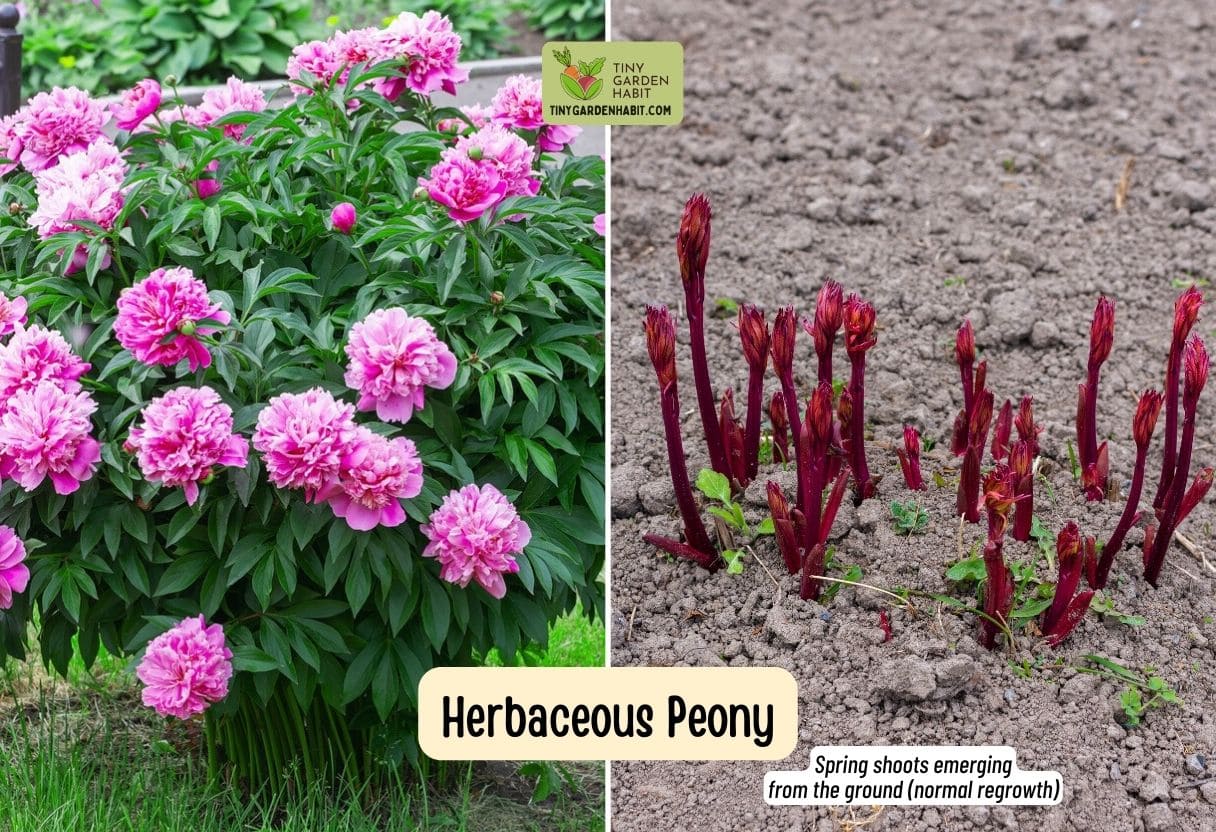
This is the peony most gardeners grow, and the one this guide focuses on. By January, it has completely disappeared above ground, leaving bare soil or a few brittle stalks behind. That’s normal. The entire plant survives winter as a shallow crown just below the surface, quietly waiting for spring.
Tree Peonies
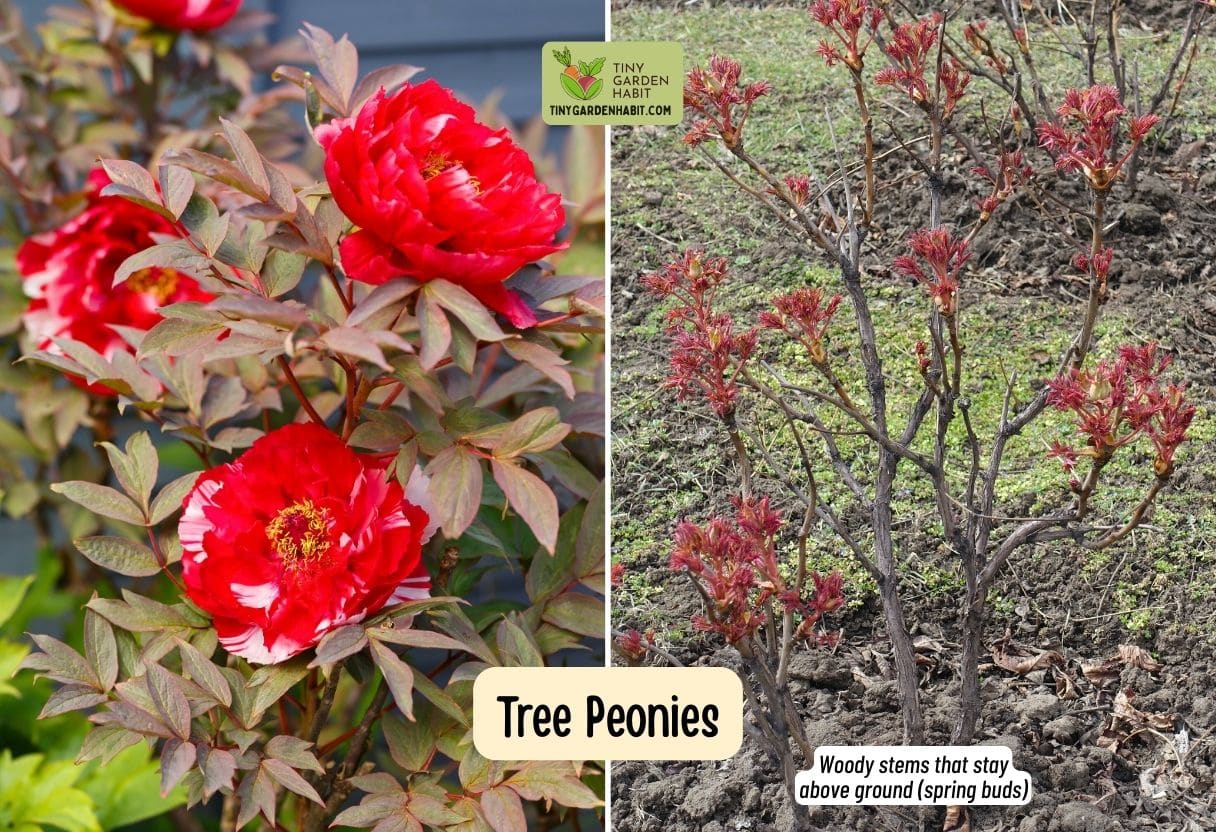
Tree peonies play by different rules. They don’t die back. Their woody branches stay standing all winter, and those bare stems already carry next season’s flowers.
What looks dead in January is often very much alive, which is why treating them like herbaceous peonies is such an expensive mistake.
The Hybrid (Itoh)
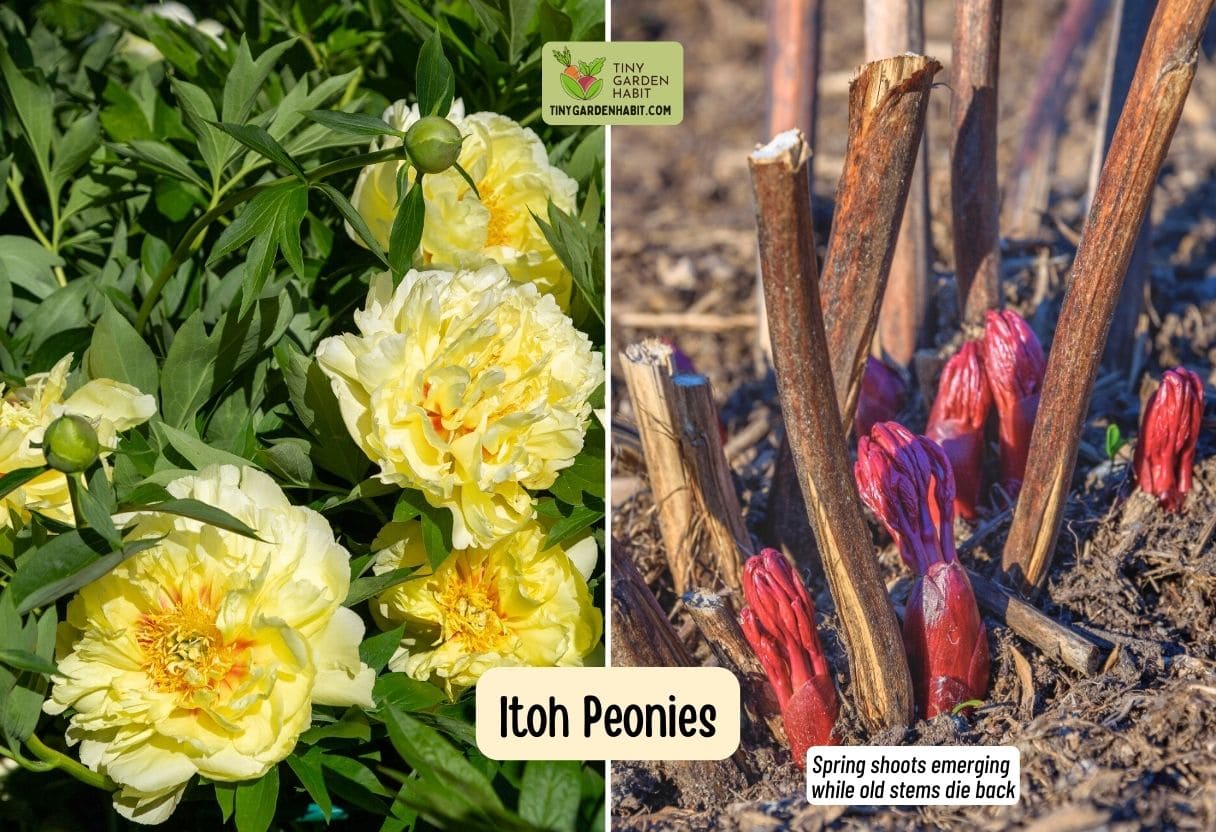
Itoh peonies sit awkwardly between the two worlds. They die back like herbaceous peonies but often leave behind thick, stubborn stems that look tougher than they really are. They’re more forgiving than most, but winter care still matters if you want reliable blooms instead of leafy disappointment.
6 Essential Peony Tasks to Do in January

These are the peony tasks I stick to every January, even when it’s cold enough to make me question my life choices.
1: Trash the Trash
Botrytis isn’t shy about using your old garden leaves as a winter basecamp. If you leave those crunchy brown stems or shriveled bits near the crown, you invite blight to hang out right where it does the most damage.
Sweep the scraps far away before the spring rain turns a small problem into a total outbreak. But avoid the compost pile! Sending those bits to the trash keeps the trouble out of your soil. Clean ground leads to a massive flush of flowers.
2: Eye See You
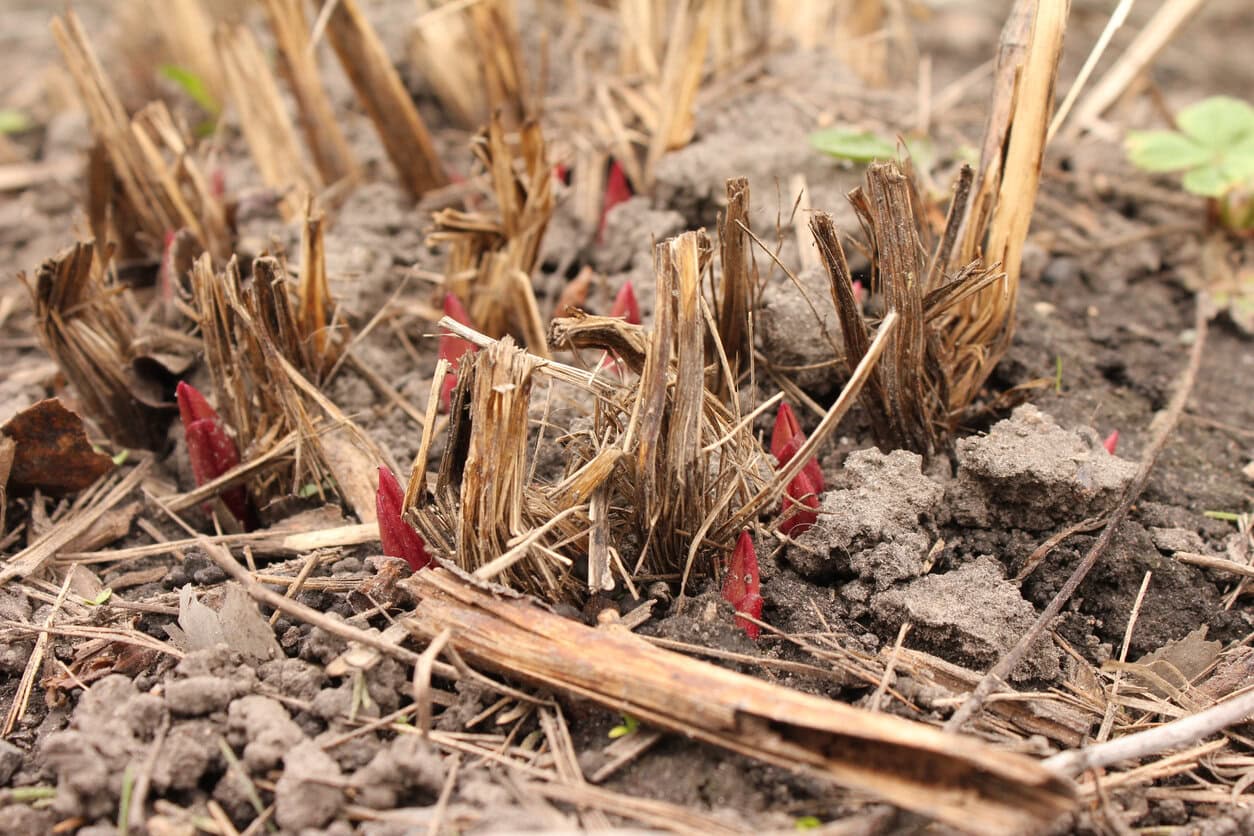
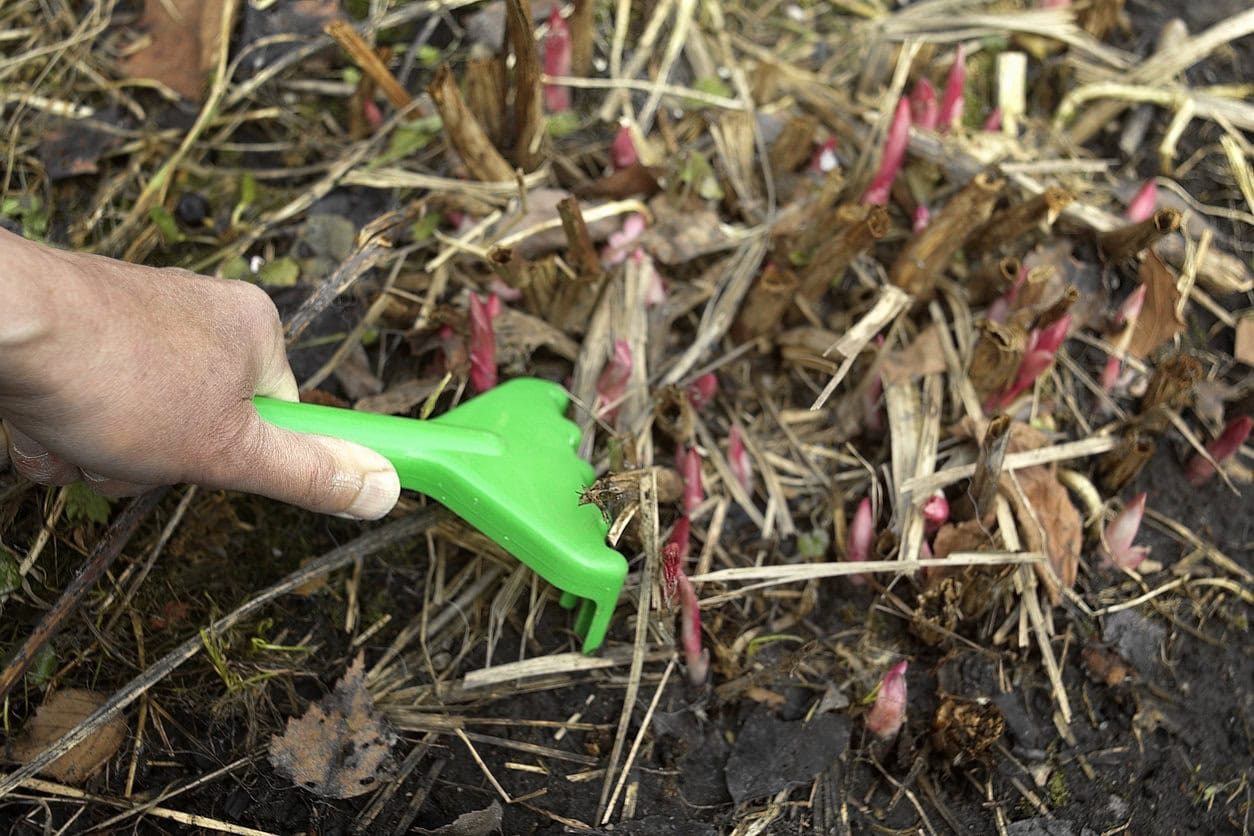
Peony buds resemble tiny pink pearls resting near the soil surface. These “eyes” need the winter chill to vernalize. Yet if you leave them uncovered, those future blooms will never even start.
Strolling through your rows reveals if the wind stripped soil away from those delicate pink tips. Put back a bit of dirt over exposed buds to insulate them.
Watch the depth, though. Once you pass the two-inch mark, you’ve traded your spring bouquet for a pile of plain green leaves!
Quick reminder: I’ve lost blooms by doing both, leaving eyes exposed and burying them too deep. With peonies, depth really is everything.
3: Ground Control to Gardener
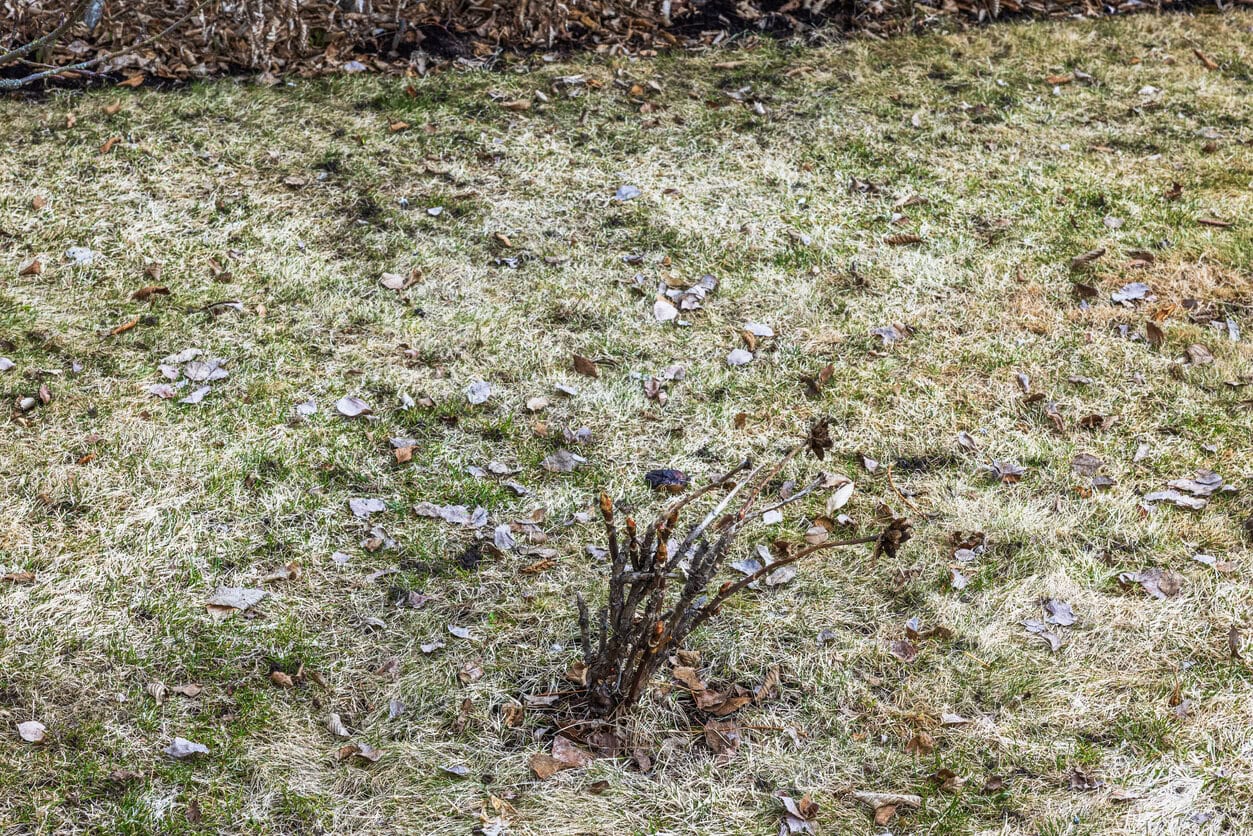
Frozen earth moves more than you might suspect. The cycle of freezing and thawing creates a lifting effect that pushes roots out. In the process, heaving exposes the crown to the biting air and drying winds.
So keep an eye on any peonies that seem to be rising upward. Press them back into the earth with a gentle hand. Brittle roots break under heavy boots, so save the stomping for the rave party.
If you’re already thinking ahead, we also have an article about whether peonies should be cut back or left alone after flowering.
4: Mulching for Thermal Sanity
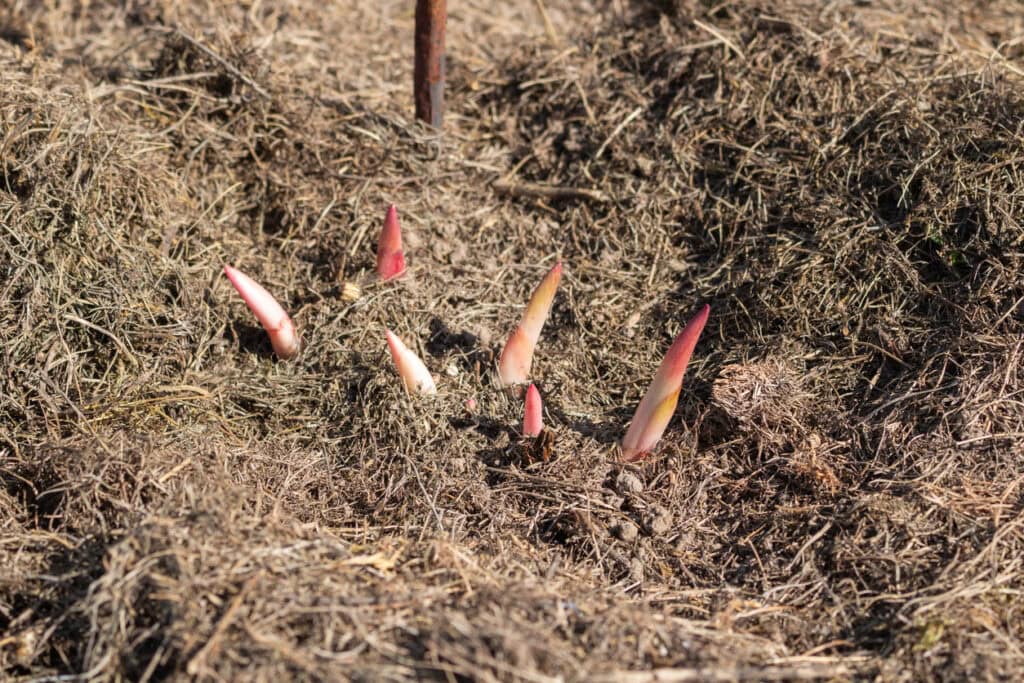
Mulch is a perfect buffer against our bipolar winter weather. When the soil temperature jumps around, the plant gets confused. Its muddled internal clock will wake it up weeks before it’s truly safe.
The good news is, a breathable layer of straw or shredded leaves will get the ground off the temperature roller coaster. However, avoid heavy bark! Dense materials trap moisture against the crown, which leads to rot.
5: High and Dry
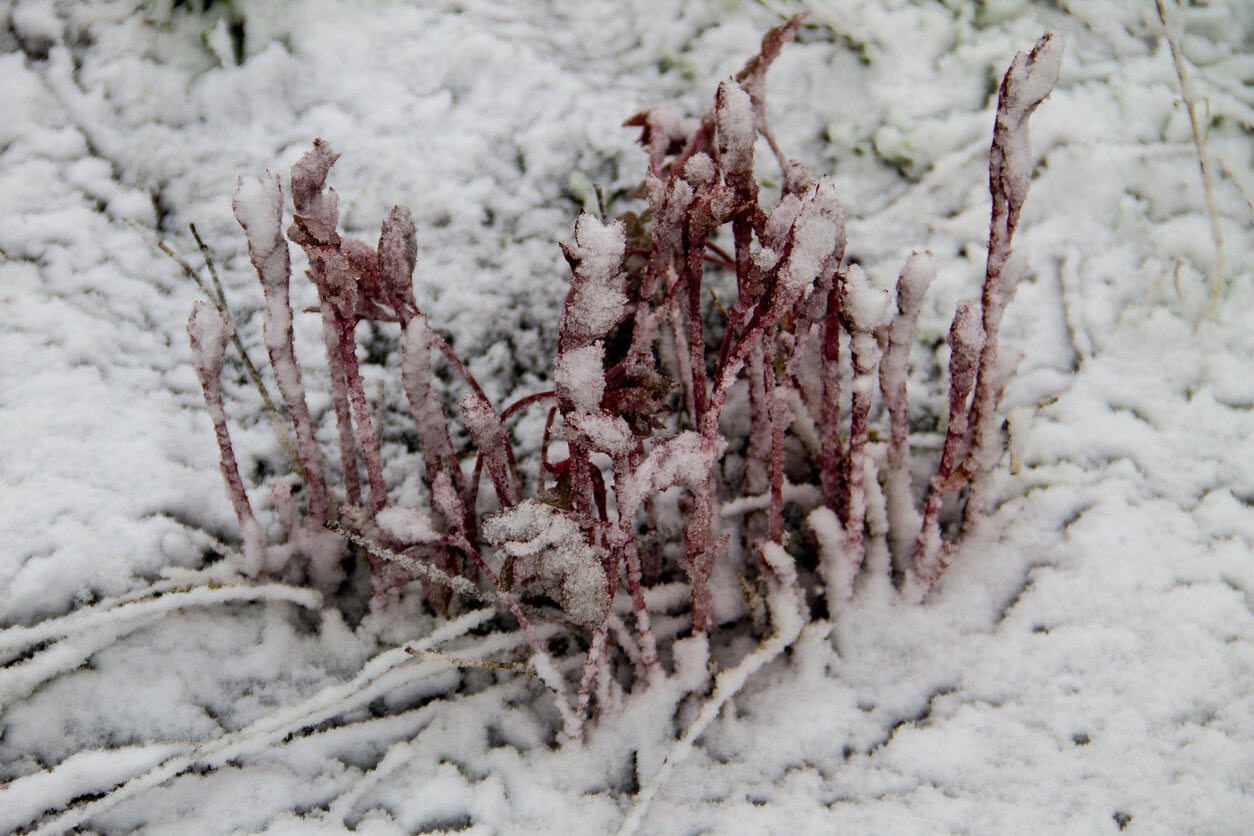
Peonies won’t tolerate any amount of winter flooding. Standing water around the crown will turn the plant into a mush, which, surprise, surprise, won’t wake up in April.
Check your garden after a heavy rain or melting snow. If the dirt feels like a sponge, clear small channels to guide the water away. Keeping the base dry is essential for survival. Proper drainage now maintains a healthy root system later.
If winter sogginess keeps showing up, one of our writers explains how to choose the right planting spot for peonies so drainage isn’t a yearly battle.
6: Leveling the Playing Field
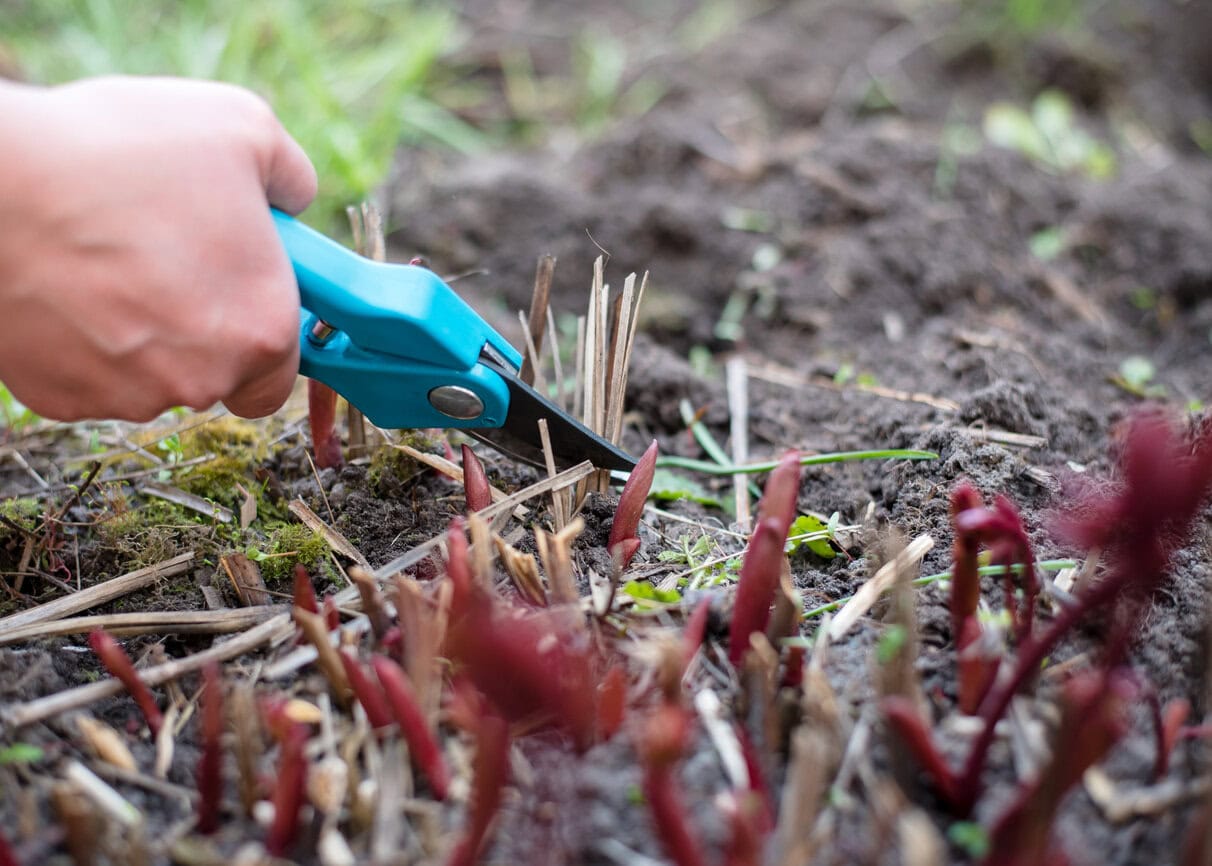
This is one of those moments where knowing your peony type really pays off.
If you’re unsure whether peonies should already be cut back by now, we’ve covered that decision in more detail in an article about fall peony cleanup.
Don’t Buy Into the Ant-ics
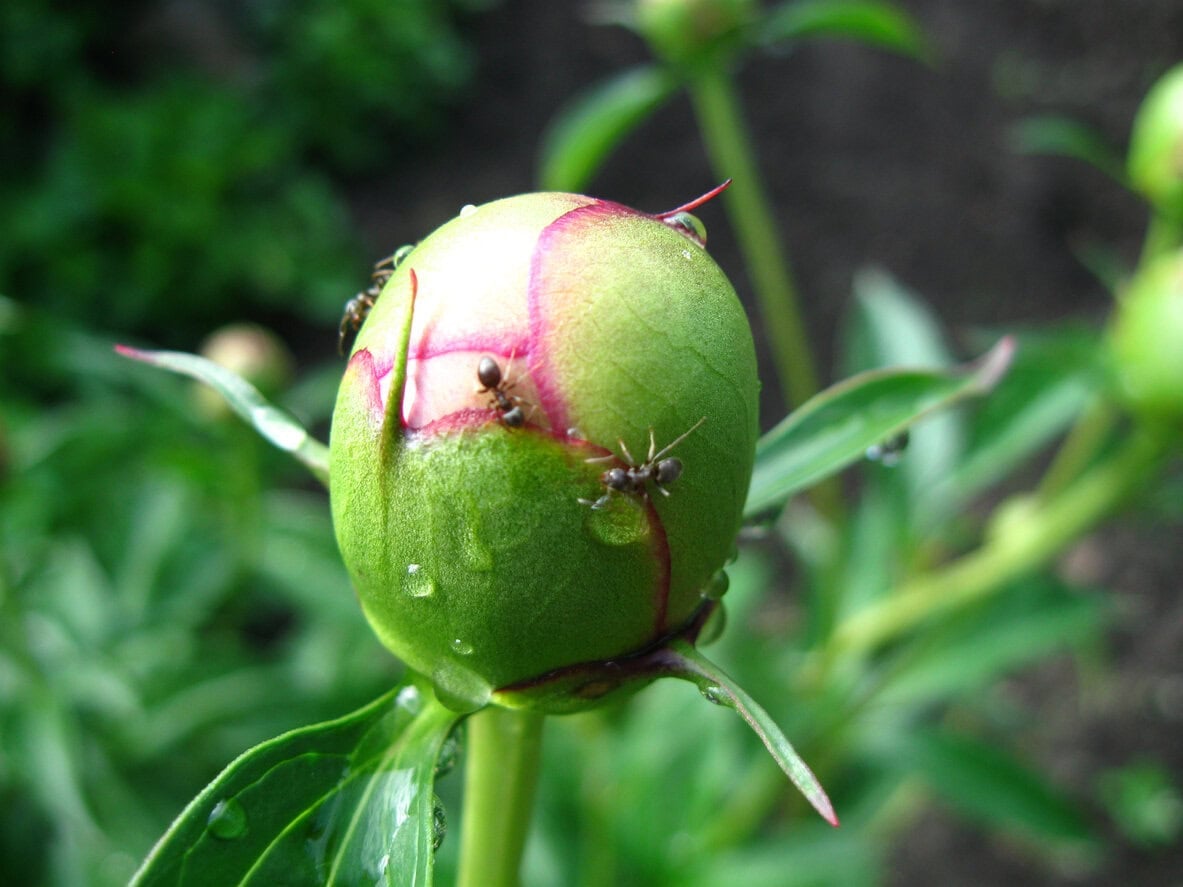
Folklore often suggests that peonies require a frantic army of ants to chew open their sticky buds in a desperate act of liberation. Reality is much simpler. They’re merely opportunistic sugar-junkies arriving for the free nectar.
Your blooms will burst forth perfectly fine without an ant escort, so leave the pesticides in the shed, follow our tips, and let the tiny guests indulge their sweet tooth!
Feeding is another area where timing matters. We’ve also covered fertilizing peonies in detail for when active growth actually begins.