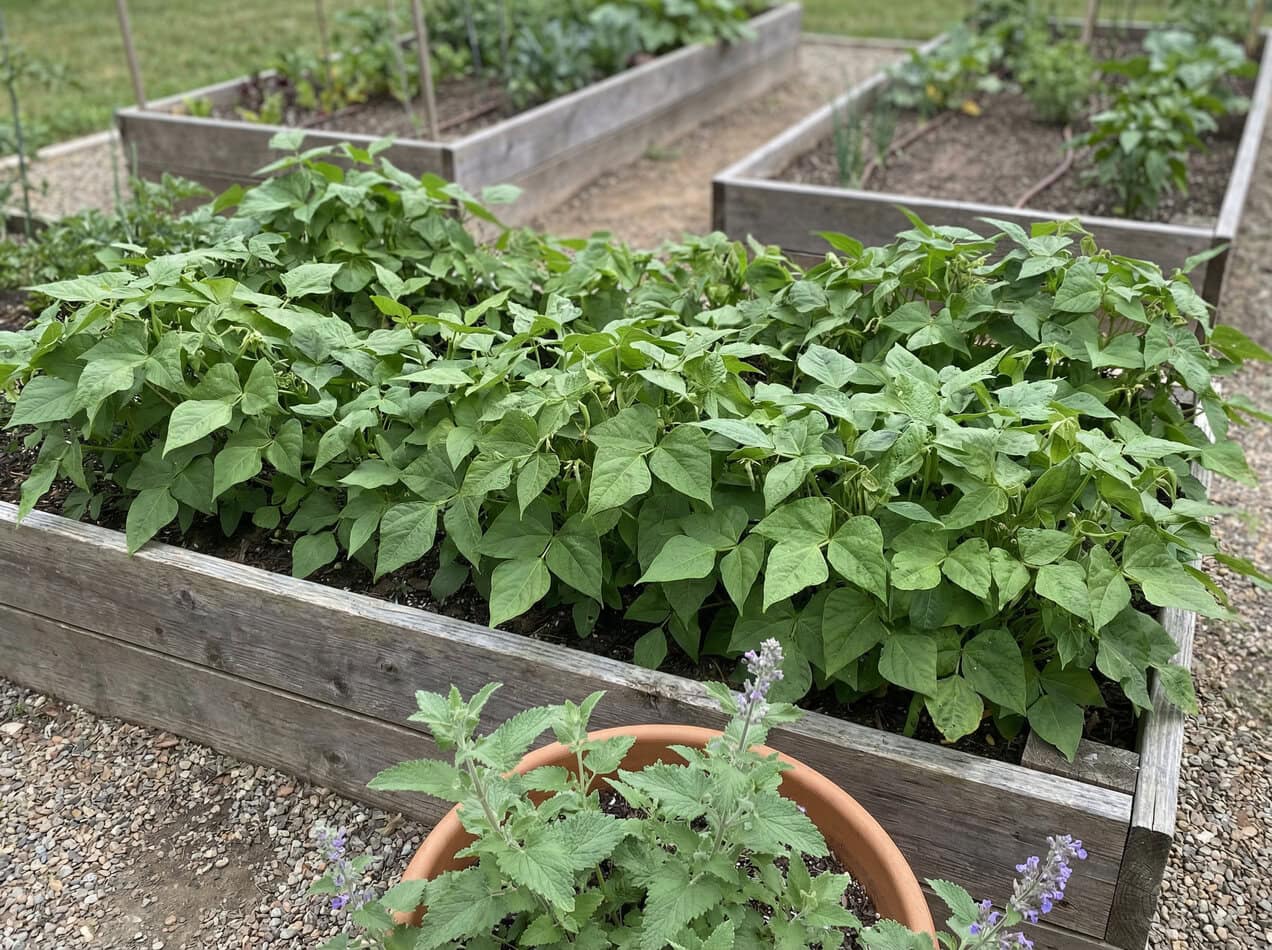
Don’t let your beans struggle on their own. Solitary legumes are sitting ducks for every passing aphid, but a curated social circle changes everything! When I started planting them alongside the right companions, the difference was noticeable.
There are at least nine companions that shield, invigorate, and defend your harvest, so quit raising sacrificial snacks!
9 Companion Plants for Beans That Support Health and Yields

Nobody wins a backyard brawl alone, even if they’re an actual plant-based protein source. Recruit some muscle to handle the dirt(y) work.
If you’re trying to get the most out of a small space, we’ve broken down a few other things that make a big difference in this guide on how to harvest more beans from fewer plants.
1: Summer Savory (USDA Zones 2-11)
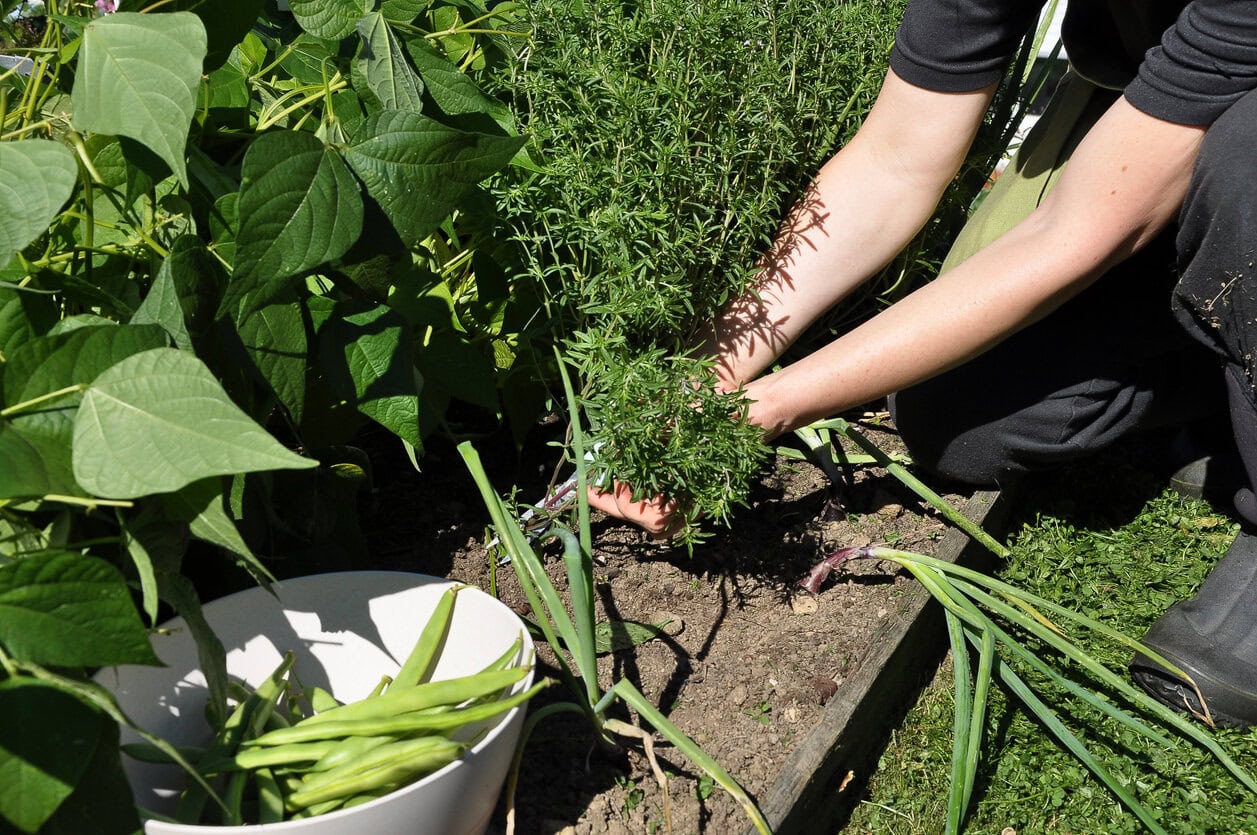
Summer savory is one of my favorite herbs to plant near beans. Its strong, peppery scent can help confuse or discourage pests like Mexican bean beetles, especially when planted close to the base of the plants.
I’ve noticed fewer issues when it’s growing nearby compared to bare bean rows. Beyond tactical deception, Summer Savory improves the actual taste of your pods while staying small enough to avoid competing for sunlight.
Quick tip: I plant summer savory within 6-8 inches of my bean plants so the scent stays close without crowding their roots.
If you enjoy mixing herbs into your vegetable beds, we’ve also shared what works well (and what doesn’t) when growing basil with companions in another article.
2: Corn (USDA Zones 3-11)
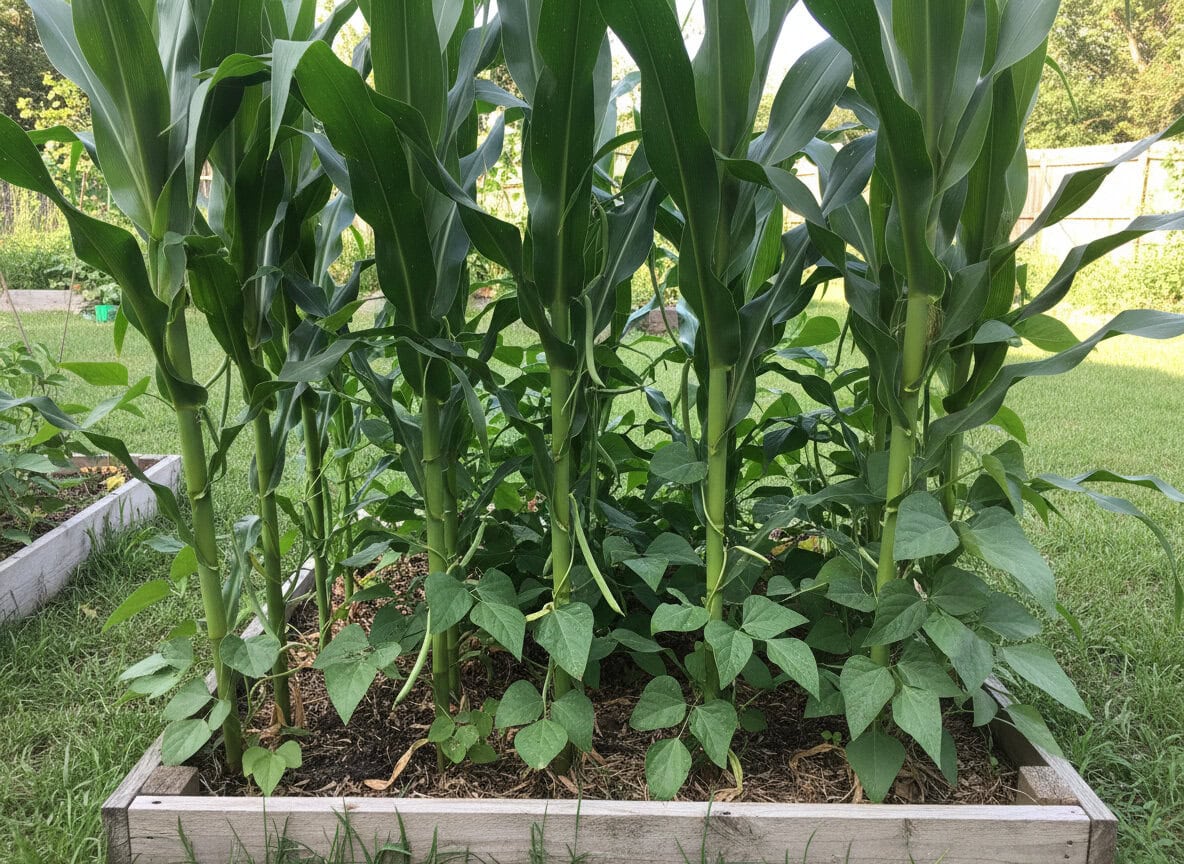
Corn is a classic companion for pole beans and one I use often in my own garden. Sturdy and natural ladders act as natural supports to pole beans, so there’s no need for extra trellises or netting.
Beans help improve the soil by fixing nitrogen, which satisfies corn’s heavy appetite. The best thing, vertical gardening allows more food to fit into a single bed.
How I plant: I plant corn first and wait until the stalks are about 6 inches tall before sowing pole beans at the base so the corn can support the vines without being overwhelmed.
3: Squash (USDA Zones 3-11)
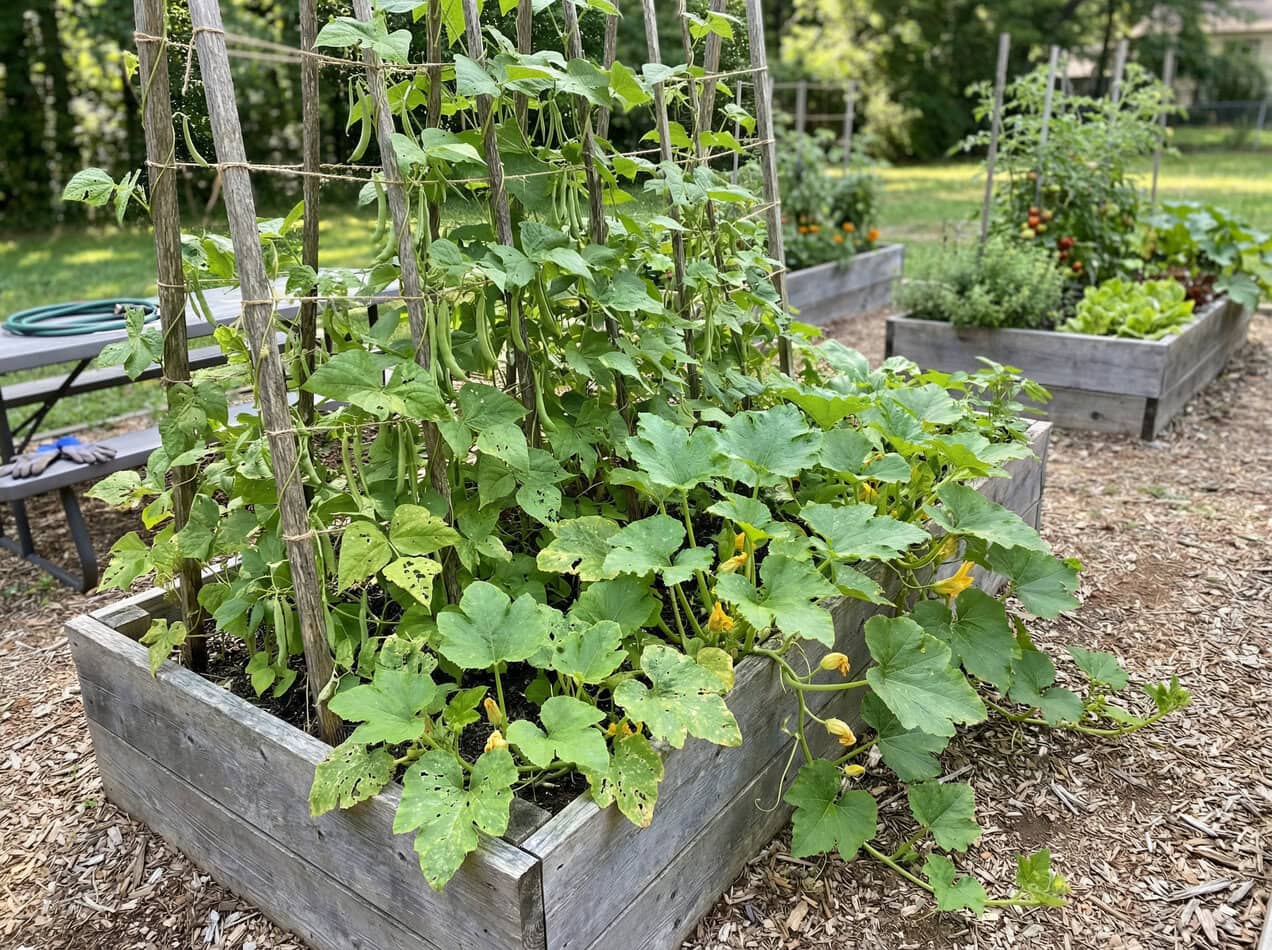
Squash is the third member of the classic “Three Sisters” trio and plays a big role at ground level. It acts as a living mulch that blankets the soil, traps moisture, and suffocates weeds (that would otherwise compete with your corn and beans).
Prickly stems are also a great deterrent for raccoons and other scavengers who hate the abrasive feeling on their paws (though it’s not a guarantee!). While the corn provides the height and the beans improves the nitrogen, the squash protects the base of the entire operation.
Quick tip: I plant squash around the outer edge of the mound or bed, giving the vines space to spread without smothering young corn or bean plants.
4: Marigolds (USDA Zones 2-11)
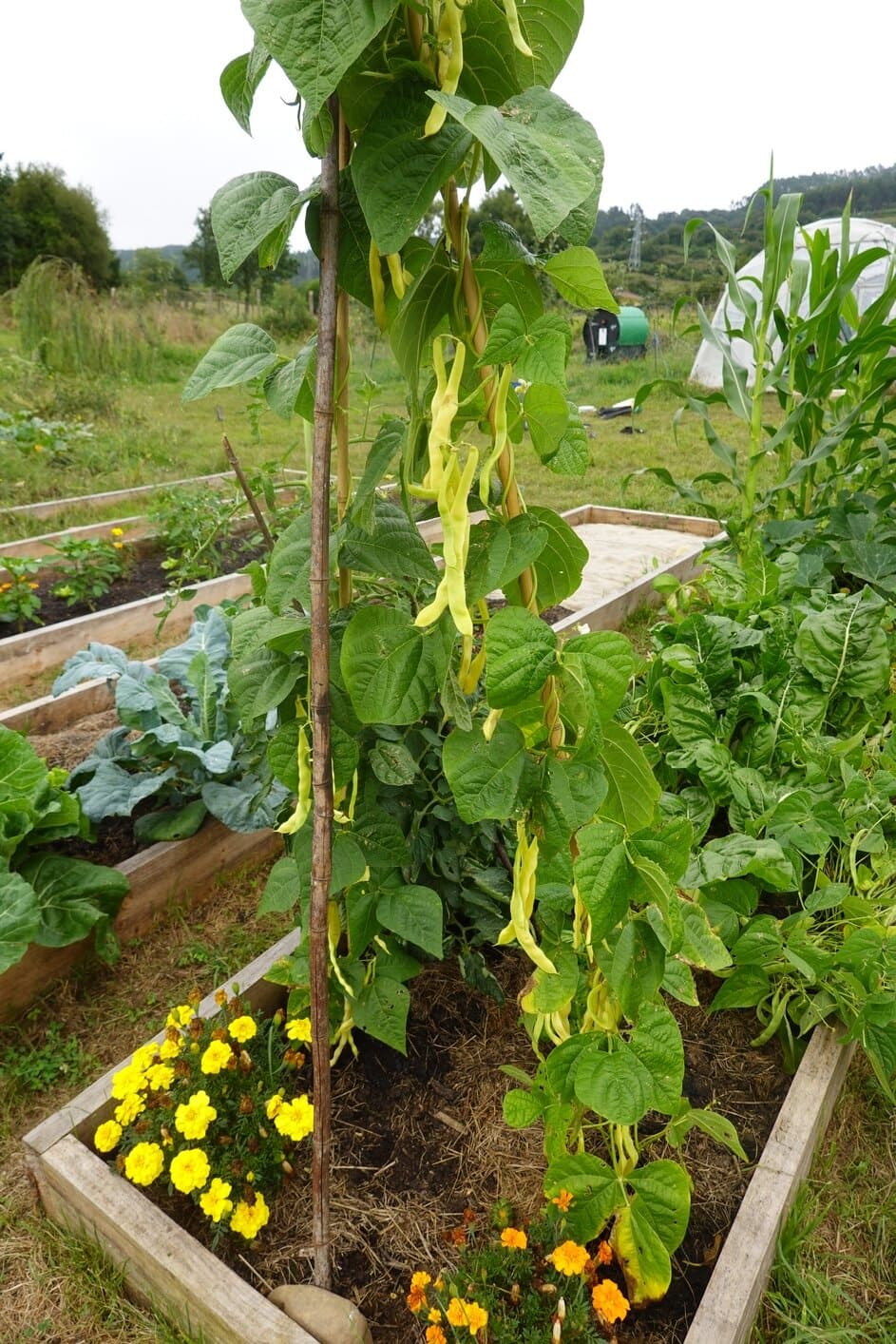
Marigolds are actually one of those companion plants I like to tuck in wherever I can.
They can help reduce nematode pressure in the soil over time, thanks to natural compounds released by their roots. I don’t treat them as an instant fix, but they’ve been a helpful long-term addition in my beds.
Above the surface, their strong scent helps discourages some pests, including aphids and beetles, from lingering on your bean plants.
Quick tip: I plant marigolds close to my beans, spacing them about 8-12 inches apart, and let them grow for the full season so their roots have time to do their job.
We use a similar approach with peppers, and we’ve shared which companion plants work best for peppers in a separate guide.
5: Potatoes (USDA Zones 3-10)
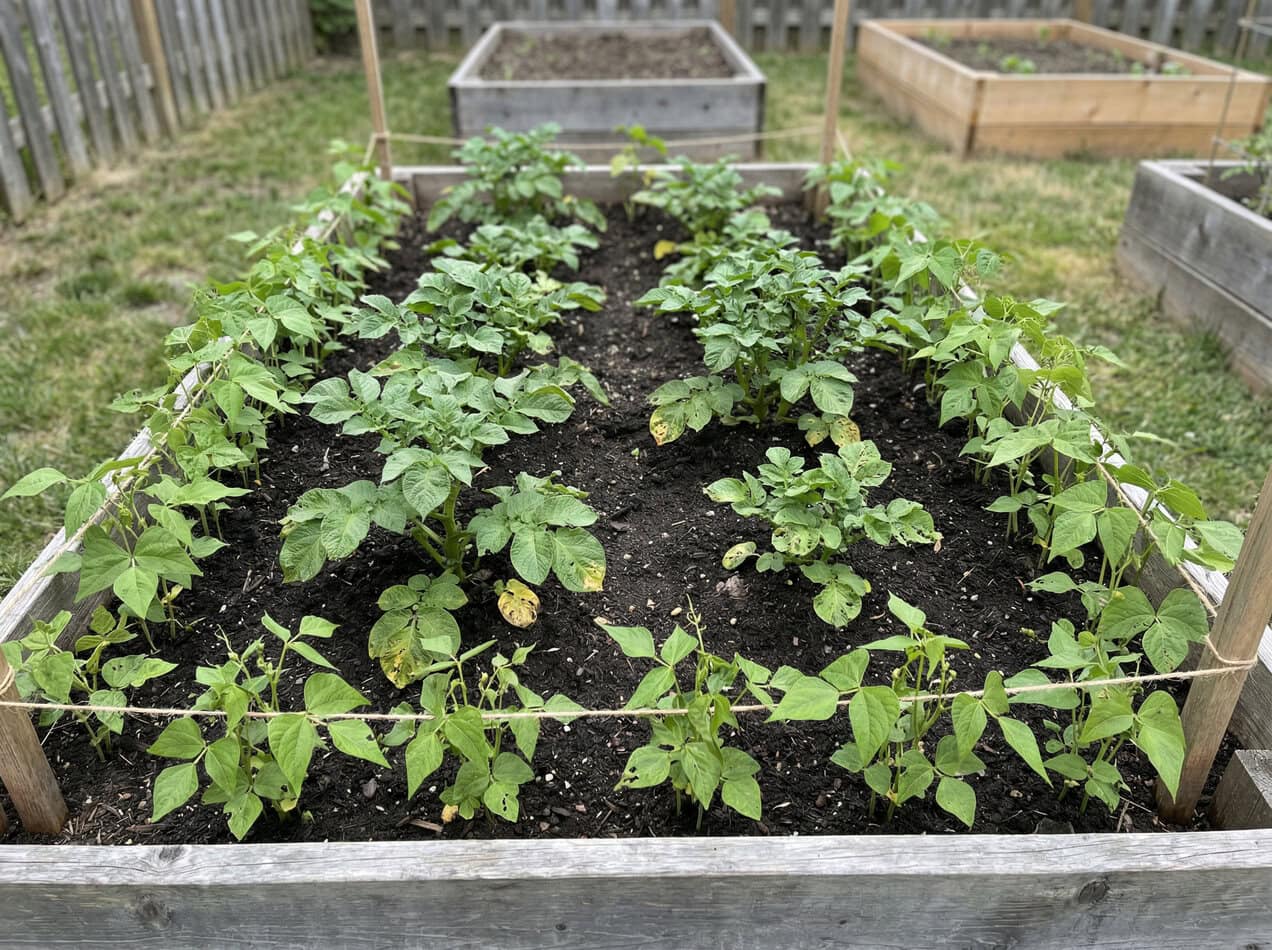
I’ve planted beans and potatoes in the same bed before and found they coexist nicely because they use different parts of the soil. Beans stay fairly shallow, while potatoes develop deeper underground, so they don’t compete heavily for space or moisture.
Just be mindful at harvest time. Beans and potatoes don’t mind sharing a bed, but they don’t like being pulled up carelessly! I cut bean plants at the soil line when they’re done producing instead of pulling them out, which helps avoid disturbing the potato tubers growing underneath.
Quick tip: I plant potatoes first and give them their space, then sow beans along the edge of the row or bed so their roots don’t crowd the developing tubers.
6: Nasturtiums (USDA Zones 2-11)
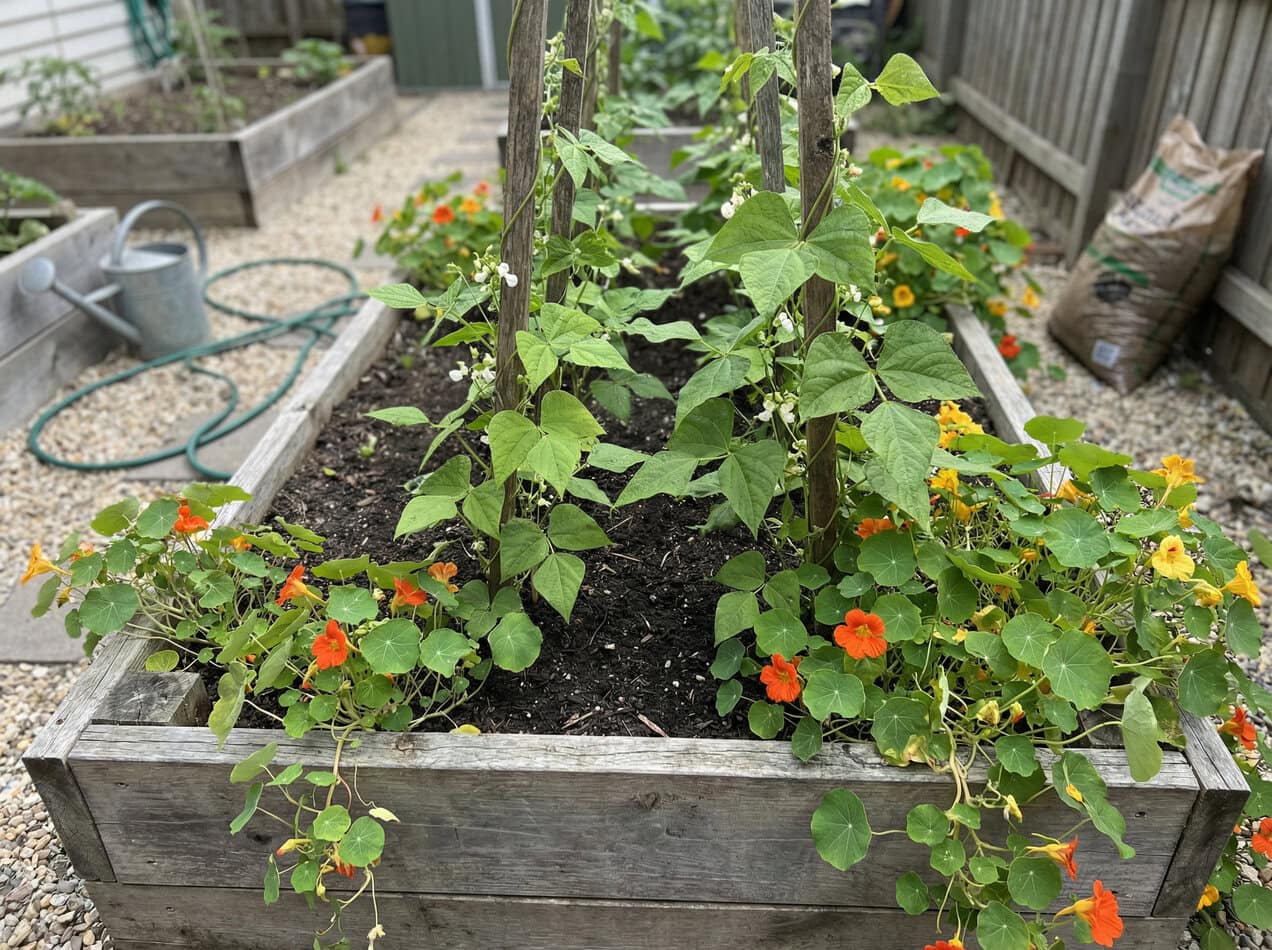
Aphids prefer peppery flowers over your bean leaves every time. I like using them as a simple trap crop to pull pests away from the main harvest.
Squash bugs and some beetles seem less interested in beds where nasturtiums are growing. The flowers may take a bit of damage, but I’ve noticed my beans stay cleaner when nasturtiums are part of the mix.
Quick tip: I either plant nasturtiums along the edges of my bean beds or between rows, giving them space to spread while keeping them close enough to draw pests away from the beans.
7: Rosemary (USDA Zones 3-10)
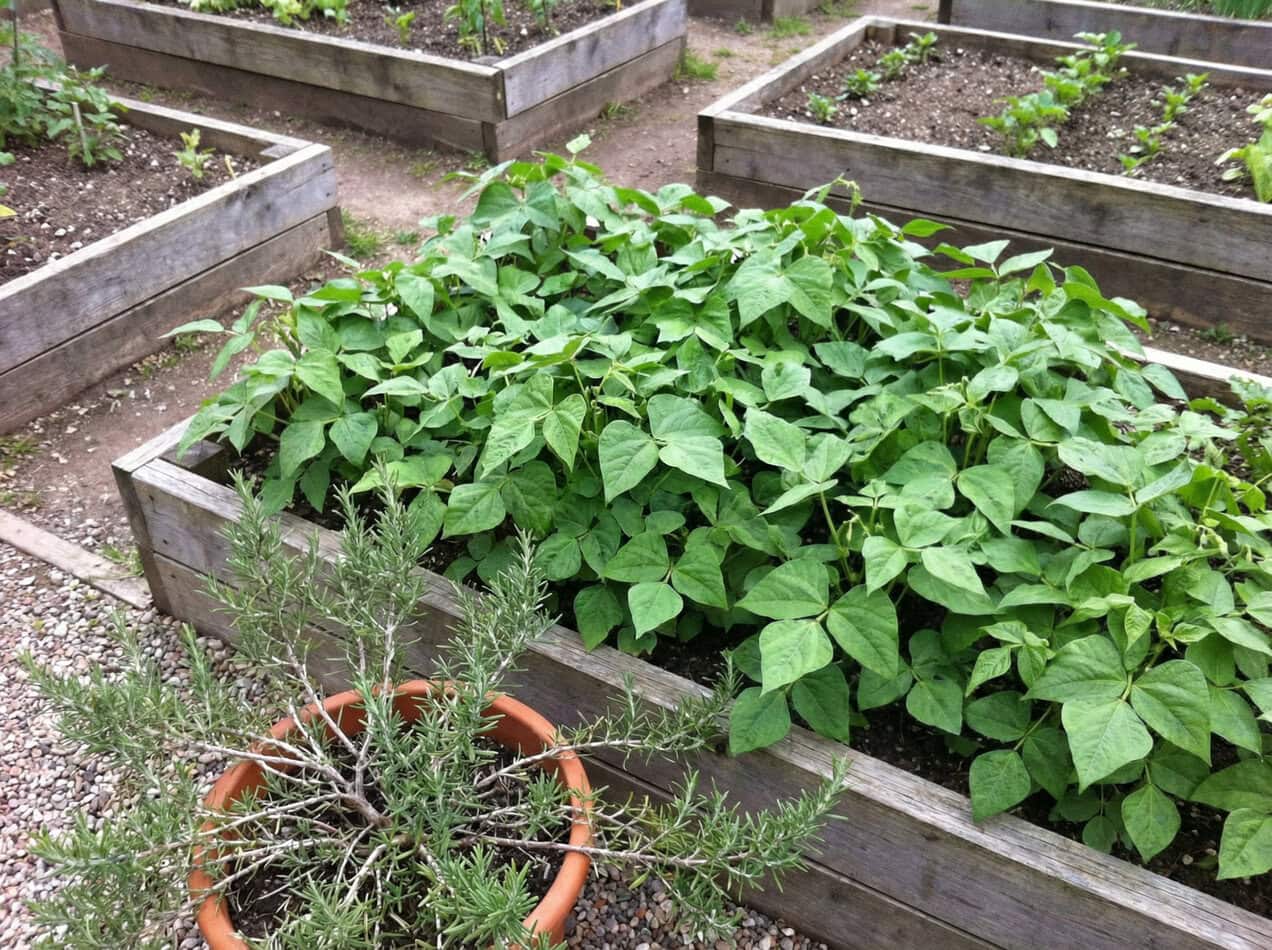
Bean flies avoid any area that smells like a woody apothecary. A strong, resinous scent can make it harder for egg-laying pests to zero in on tender bean stems.
As a perennial shrub, rosemary provides a reliable barrier against bugs that eventually give up and look for a less fragrant neighborhood to invade. It’s not a force field but it definitely helps.
Quick tip: I plant rosemary just outside the bean bed or at the end of a row so it provides scent without shading or crowding the beans.
Rosemary grows as a perennial only in zones 7-10. If you’re gardening in colder zones, you can grow it as an annual or keep it in containers and move it indoors over winter.
8: Catnip (USDA Zones 3-9)
Flea beetles find the nepetalactone in a mint relative absolutely repulsive. Planting catnip nearby wards off pint-sized leaf-eaters before they get the chance to perforate your foliage.
I wouldn’t call it foolproof, but it can tip the odds in your favor. The cats, of course, fully approve of this arrangement.
It also attracts parasitic wasps, which sounds terrifying until you realize they’re one of nature’s better pest-control teams.
Quick tip: I plant catnip a short distance from my beans rather than right next to them, so it helps with pest pressure without taking over the bed.
9: Radishes (USDA Zones 2-11)

Compacted dirt stands no chance against fast-growing roots. Radishes push through the top layer of soil quickly, helping loosen things up around young bean roots.
Because radishes grow and disappear so fast, they don’t hang around long enough to compete. Once they’re harvested, they leave behind slightly looser soil that beans seem to appreciate as they settle in.
Quick tip: I sow radishes right alongside my bean rows early on, then pull them as soon as they’re ready so the beans can take over the space.
Bonus: Sweet Alyssum (USDA Zones 2-11)
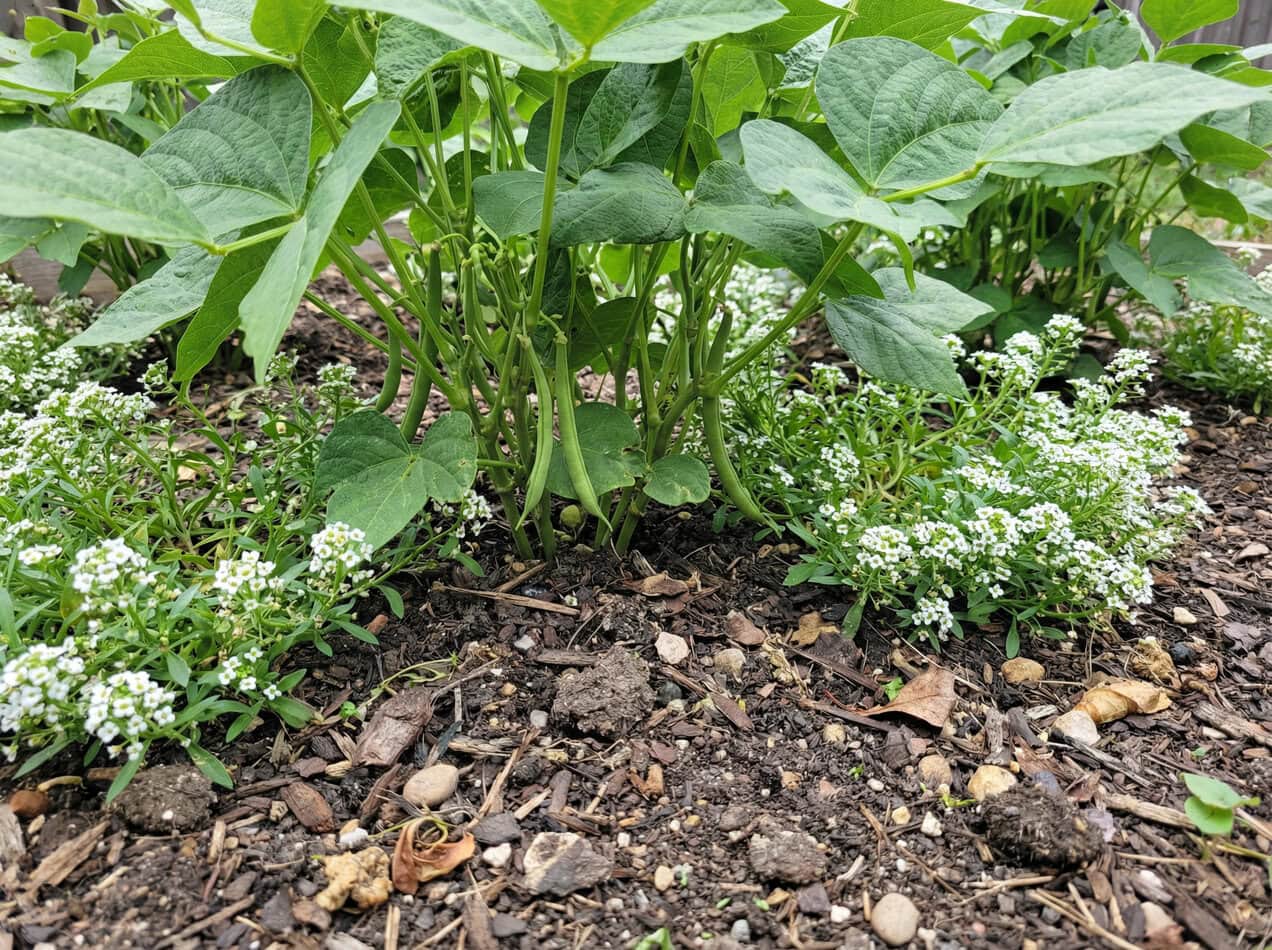
Believe it or not, beans and sweet alyssum work surprisingly well together in the garden!
I like planting sweet alyssum near bean rows because it attracts beneficial insects that help keep aphids in check, which are a common issue for beans. At the same time, beans grow upright and don’t compete with alyssum for space, making this pairing easy to manage even in smaller beds.
If you’re also growing cucumbers nearby, we’ve shared which companion plants help them grow stronger and keep pests away in another article.
How to Plant a Three Sisters Garden (Without Letting It Turn Into Chaos)
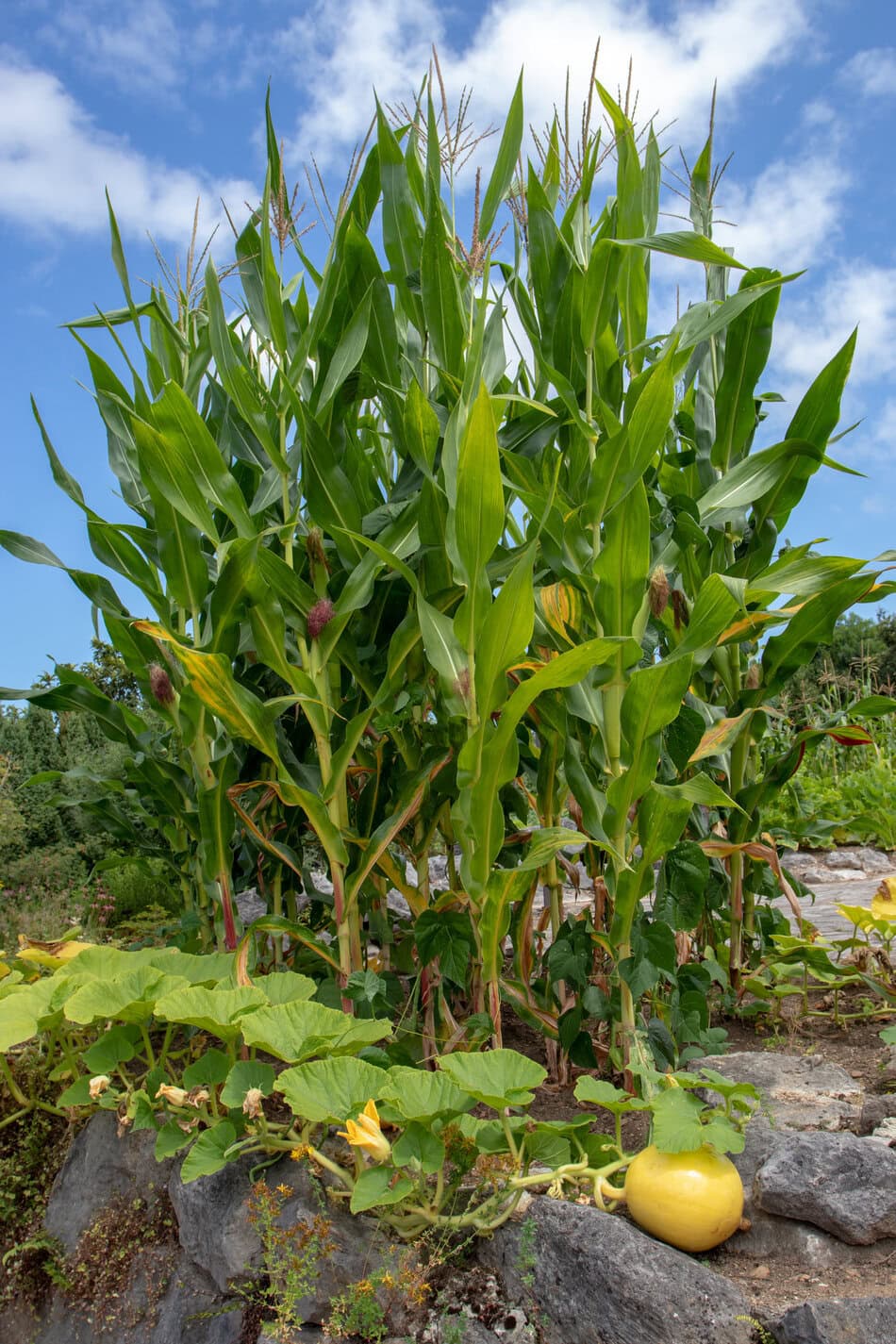
Constructing a Three Sisters mound requires tactical deployment, not brute force.
I always wait until the stalks reach about six inches tall before adding anything else. Early beans treat young corn like a cheap gym, wrapping and pulling the life out of it before it’s strong enough to stand its ground.
If companion planting has ever felt confusing or hit-or-miss for you, we also put together a list of common mistakes that are easy to avoid once you know what to look for.
Who’s Leek-ing Toxic Vibes?
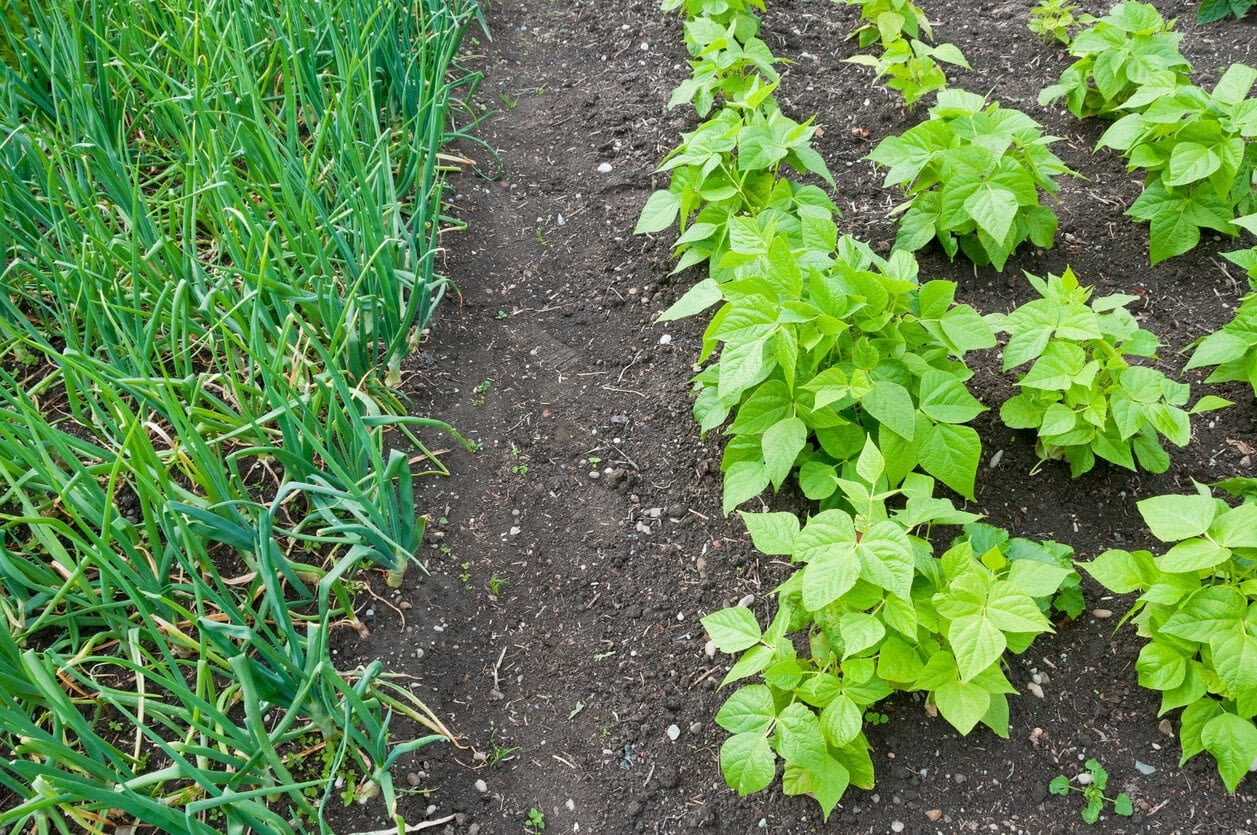
Every social circle has its drama, and for beans, the Allium family is the ultimate dealbreaker. Garlic, onions, and leeks tend to clash with legumes, likely because of the sulfur compounds they release into the soil.
Those compounds are great at suppressing fungi and some soil issues, but they can interfere with bean growth and the nitrogen-fixing process beans rely on.
Gladiolus flowers are another no-go, as they share the same bad attitude toward your bean’s development.
Bush vs. Pole Beans: Picking the Right Companions
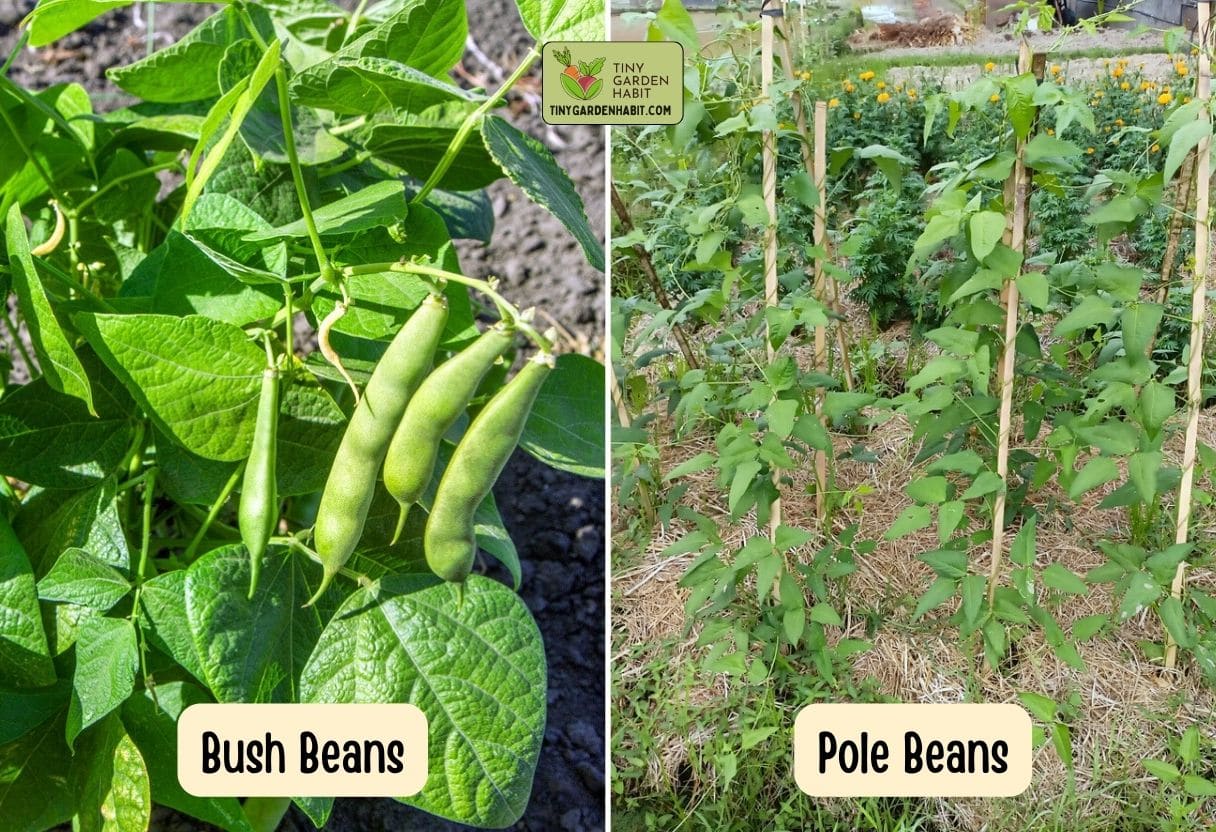
Pairing the right companions with your bean’s growth habit keeps the bed from turning into a scramble for sunlight. Pick your team based on their vertical ambition.
If you’re still deciding which type makes more sense for your space, we go into much more detail here on bush beans versus pole beans and how to choose between them.
Give People Something to Taco ‘Bout
Don’t make a ‘bean there, done that’ mistake by forcing your veggies into solo survival mode. Beans grow better with the right neighbors nearby, plants they can lean on, a homebody who keeps out uninvited guests, and ideally, the one who covers the (nitrogen) rent on time.
If you’re growing beans in containers or grow bags instead of in-ground beds, we’ve put together a separate guide that focuses specifically on companion planting in small spaces.