
August is a furnace. Your hydrangeas know it, you know it, and every gardening expert knows it, they just prefer telling you to “water deeply” as if you’ve never seen a garden hose before. Real summer care isn’t a serene weekend chore. It’s damage control.
So, let’s get into the seven tasks that will actually help your hydrangeas survive August and protect next year’s blooms.
1. Water Deeply During Heat and Drought
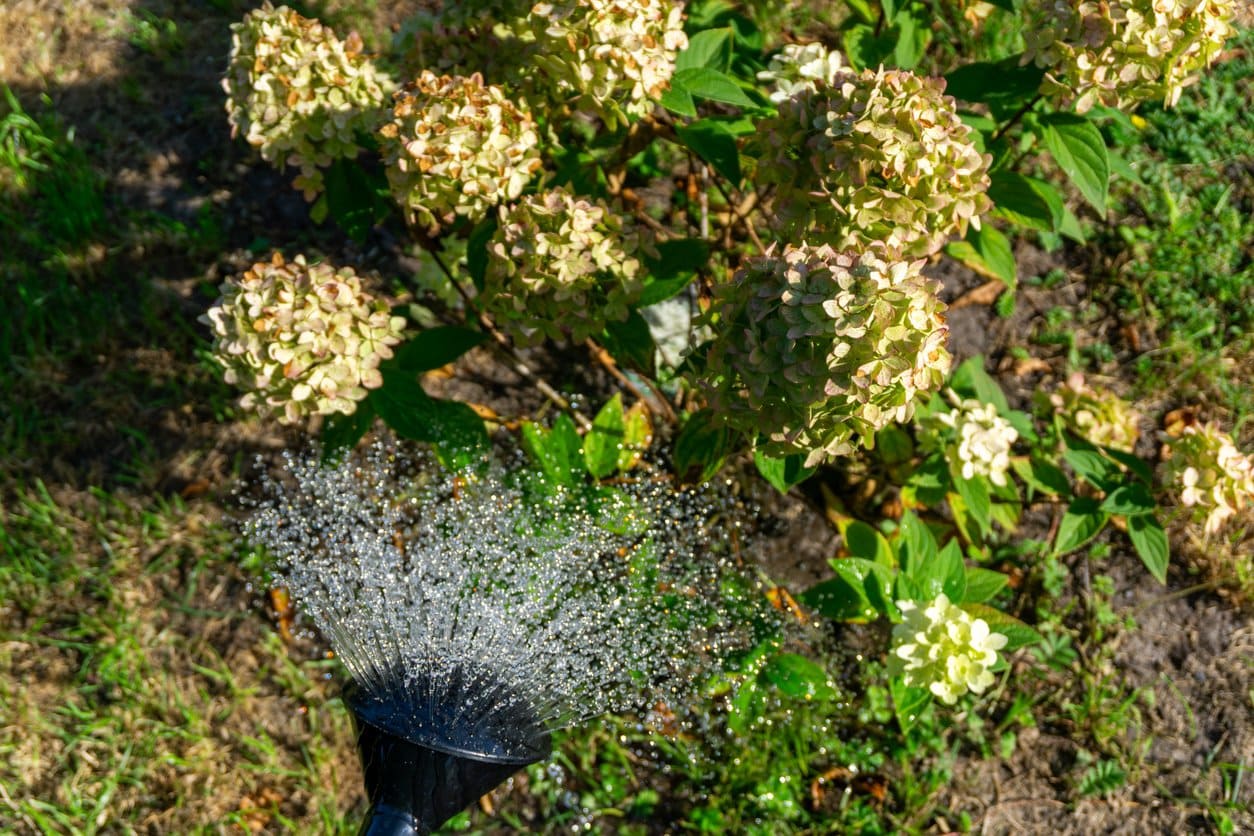
Sprinkling the soil surface for two minutes with a spray nozzle does nothing except trick you into feeling productive. The idea is to encourage roots to grow deeper, where the soil stays cooler and holds moisture longer.
Place a slow-running hose or soaker hose over the root zone beneath and around the shrub. Let the water soak in gradually until the soil is moist about six inches deep. If the water starts running away from the plant, turn the flow down or water in two shorter rounds.
Dirt Dictates the Game
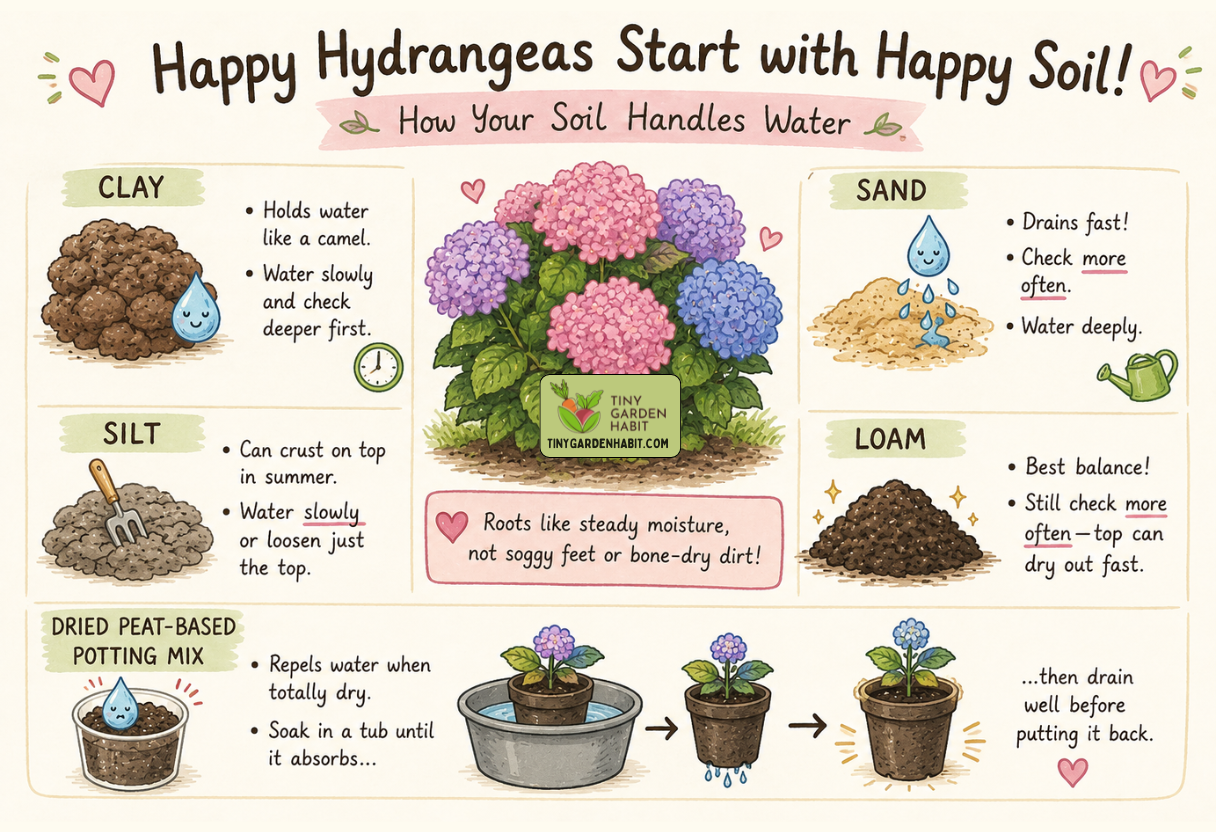
How your specific dirt handles that water determines whether your hydrangea stays hydrated or ends up sitting in a swamp:
The fix that helps every soil type? Spread about three inches of shredded bark or another organic mulch across the root zone, keeping it a few inches away from the main stems. Mulch is like SPF 50 for the ground: it keeps the soil cooler and slows evaporation before August heat steals the moisture.
Before you reach for a bag of bloom booster, we also wrote a month-by-month guide to fertilizing hydrangeas without forcing new growth at the wrong time.
2. Deadhead Faded Blooms Carefully
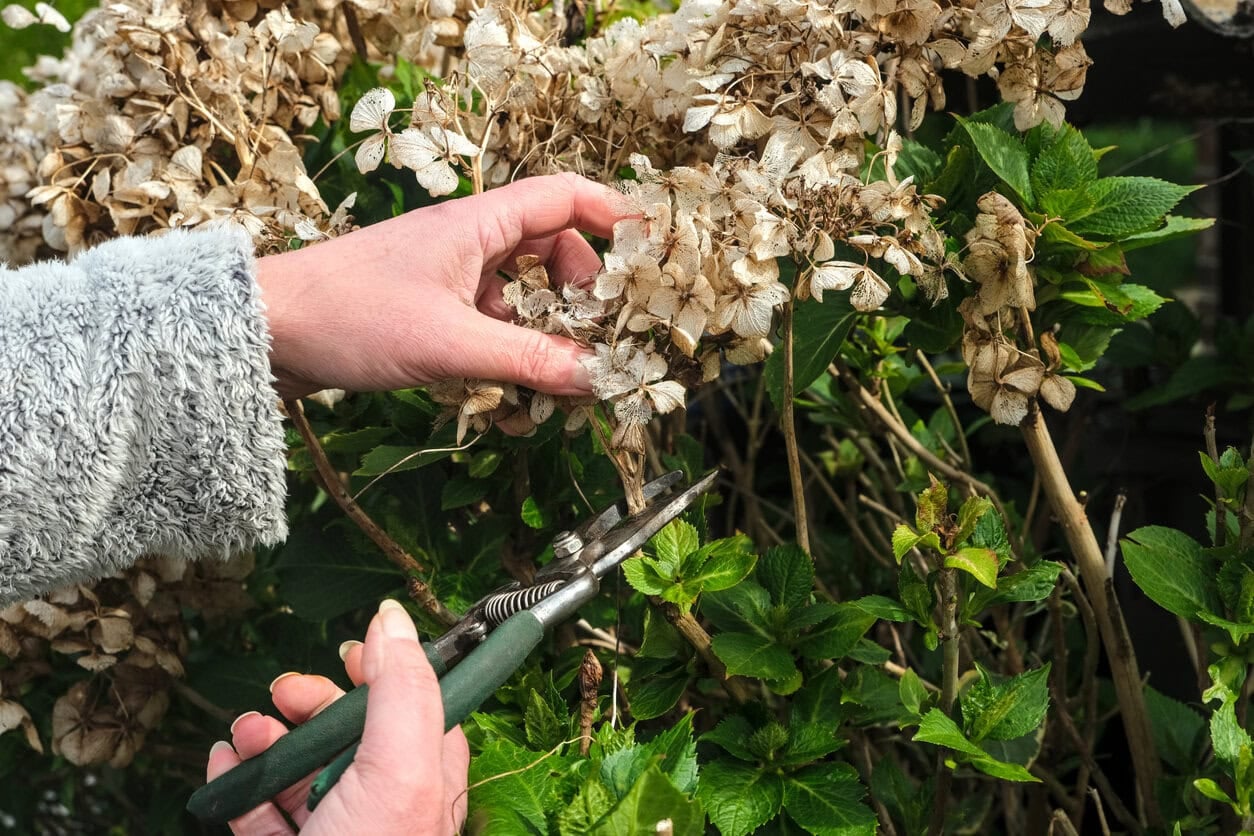
Deadheading isn’t pruning. It’s a little off the top compared to a full buzz cut. You probably aren’t getting new flowers this late on single-bloomers; you’re mostly keeping the plant tidy and stopping it from putting energy into seed production.
Take clean snips and trace the stem down from the dead flower to the first pair of healthy leaves. Cut right above them.
Quick note: If you go lower, you risk slicing off the buds hugging the stem (those tiny bumps may become next year’s branches and flowers). Don’t touch anything below that first leaf pair!
3. Prune Old-Wood Hydrangeas (Only If Necessary)
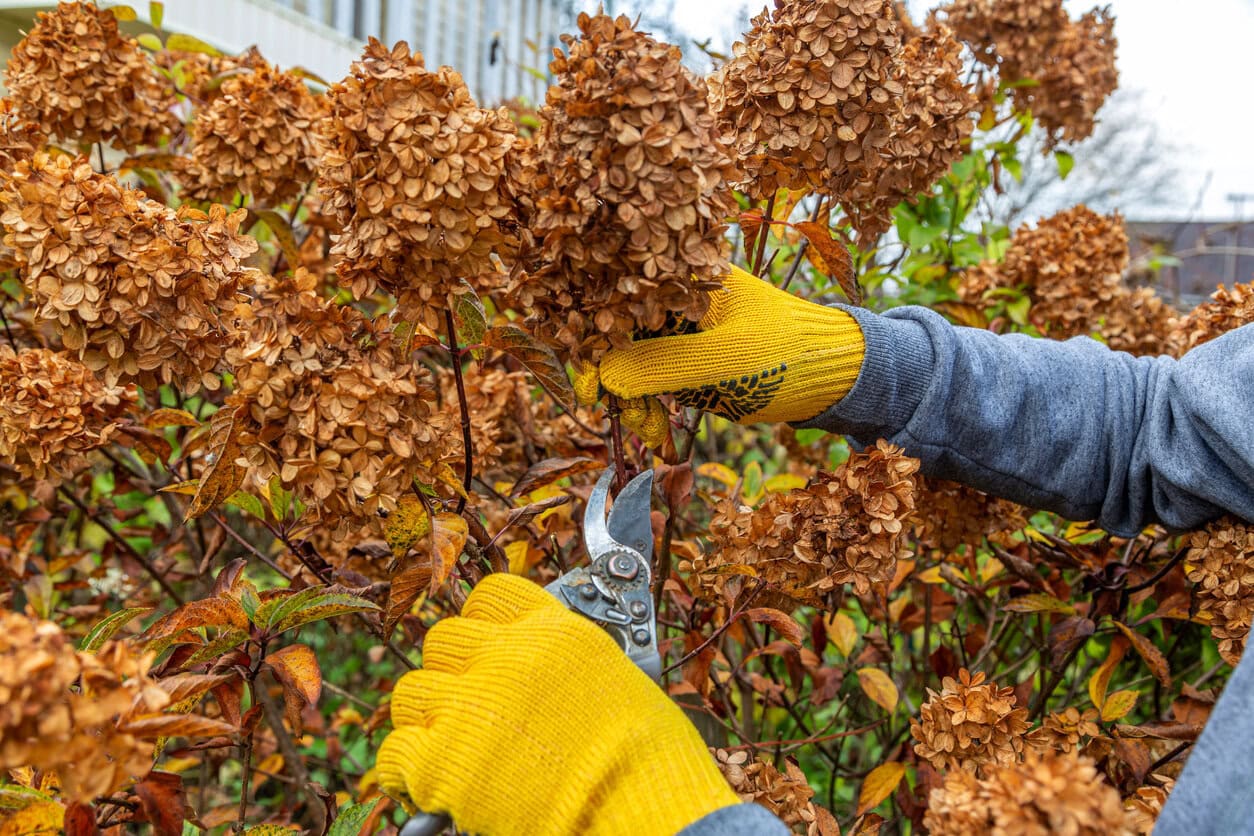
If you have a bigleaf, mountain, or oakleaf hydrangea, put the pruners down. These types bloom mainly on old wood and are forming next summer’s flower buds right now. Don’t cut them back in late August or September, or you could lose most (or all) of next year’s blooms.
Panicle and smooth hydrangeas bloom on new spring growth, so the risk is lower. Still, August isn’t the time for a major haircut. I only remove clearly broken, diseased, or dead stems and save the real shaping for late winter or early spring.
If you’re still unsure which type you have, we explain exactly when and how to prune hydrangeas without sacrificing next season’s flowers.
4. Remove Damaged or Diseased Leaves
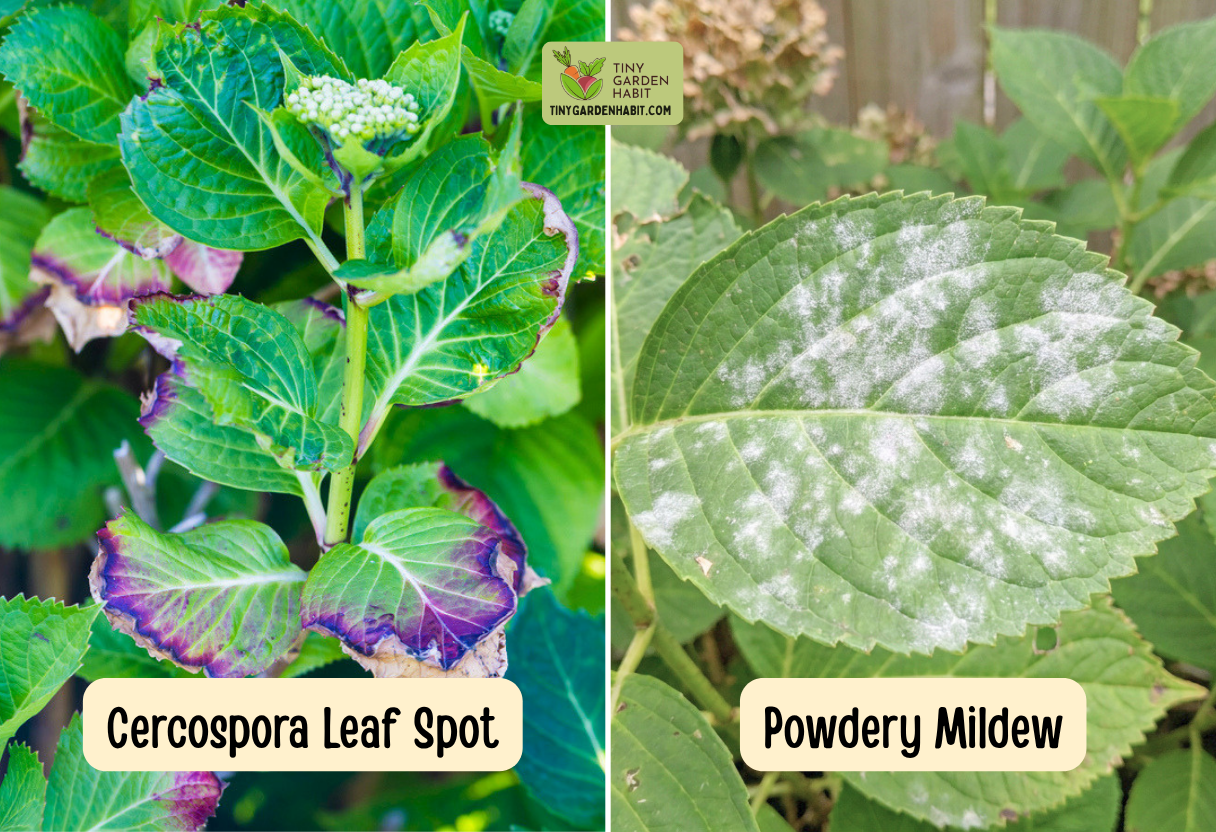
Purple-brown spots with pale centers may mean Cercospora leaf spot. White or gray powdery patches usually point to powdery mildew. Both thrive in warm, humid summer weather, and spraying chemicals won’t repair leaves that are already ruined.
Don’t strip the whole plant over a few spots. Snip off only the worst affected leaves at the base of the leaf stem, using clean pruners so you don’t tear the main branch. Rake up fallen leaf debris under the plant immediately and trash it.
Quick tip: I don’t add heavily infected leaves to my home compost. Otherwise, those fungal spores may survive and find their way back into the garden next season.
5. Support Branches Weighed Down by Blooms
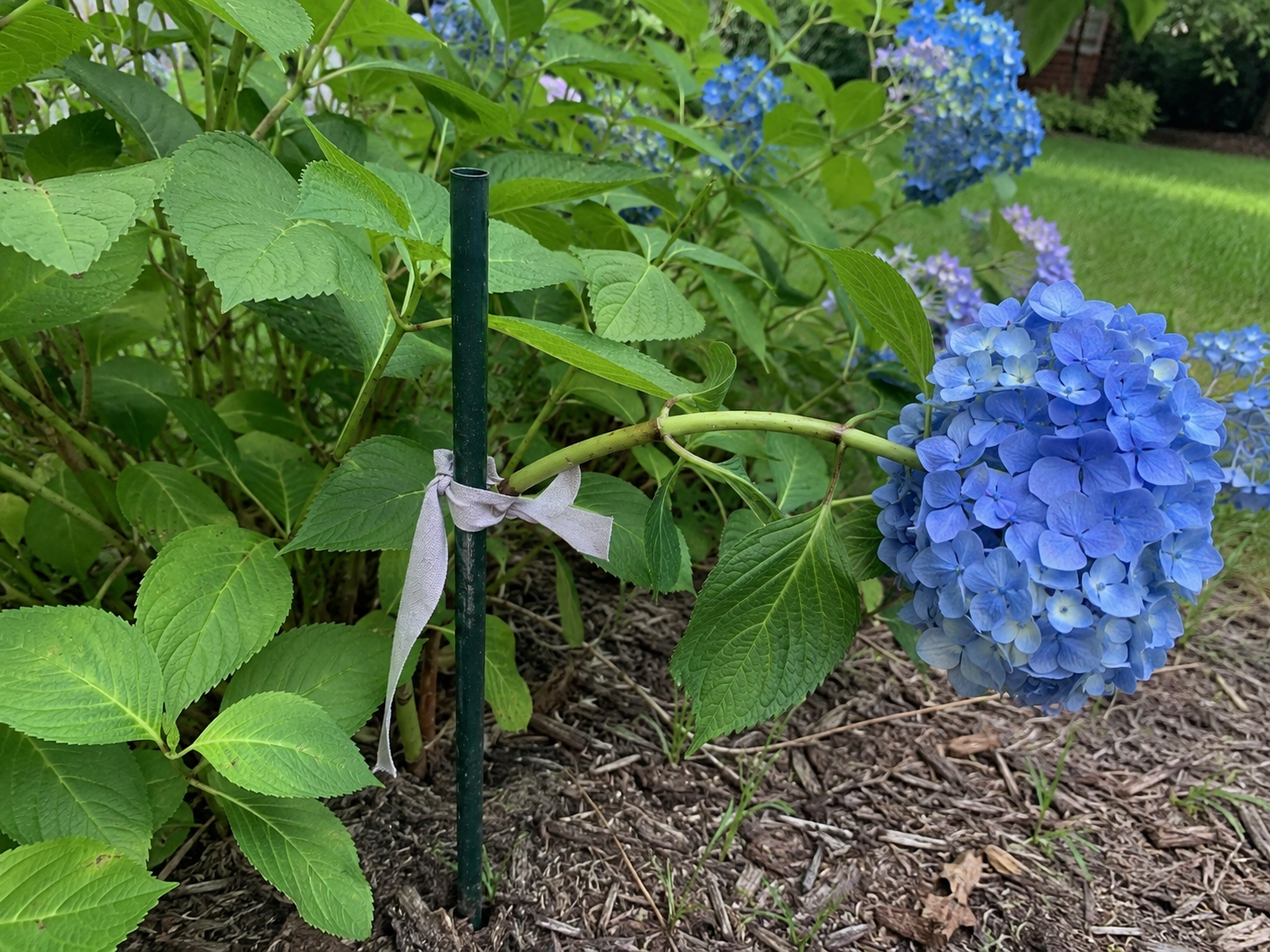
Massive panicle and smooth hydrangea heads turn into waterlogged bricks during summer rain. That extra weight can bend stems to the ground or split them at the fork, so add support before the next storm arrives.
Carefully push a sturdy stake into the soil beside the leaning stem, avoiding the crown and any major roots. Loop soft T-shirt strips or pantyhose around the stem and stake in a loose figure eight so the branch still has room to move.
Don’t let the wind garrote your plant, skip thin wire and tight plastic twist ties.
6. Check Whether Afternoon Sun Is Scorching the Plant
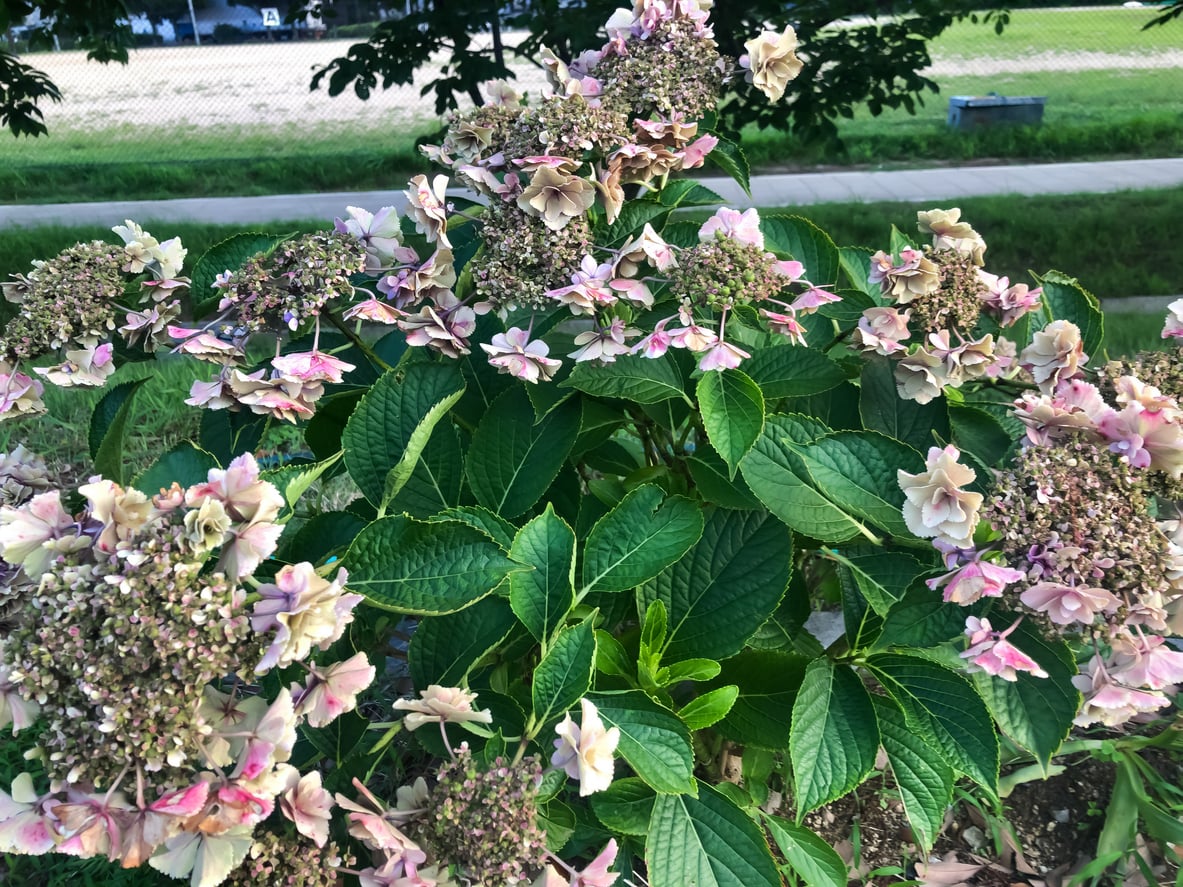
Hydrangeas often flop at 3:00 PM because their broad leaves lose moisture faster than the roots can replace it. A little afternoon wilt during extreme heat isn’t automatically a watering emergency, so don’t drench the soil based on drooping leaves alone.
Check the plant again at 7:00 AM and feel the soil.
If you see bleached patches with crispy brown edges, the sun is burning the tissue. I string up temporary shade cloth now, then move the shrub after leaf drop in mild climates, or in early spring where winters are colder.
For more than emergency shade, we wrote a complete guide on what hydrangeas need during hot summer weather.
7. Take Softwood or Semi-Ripe Cuttings
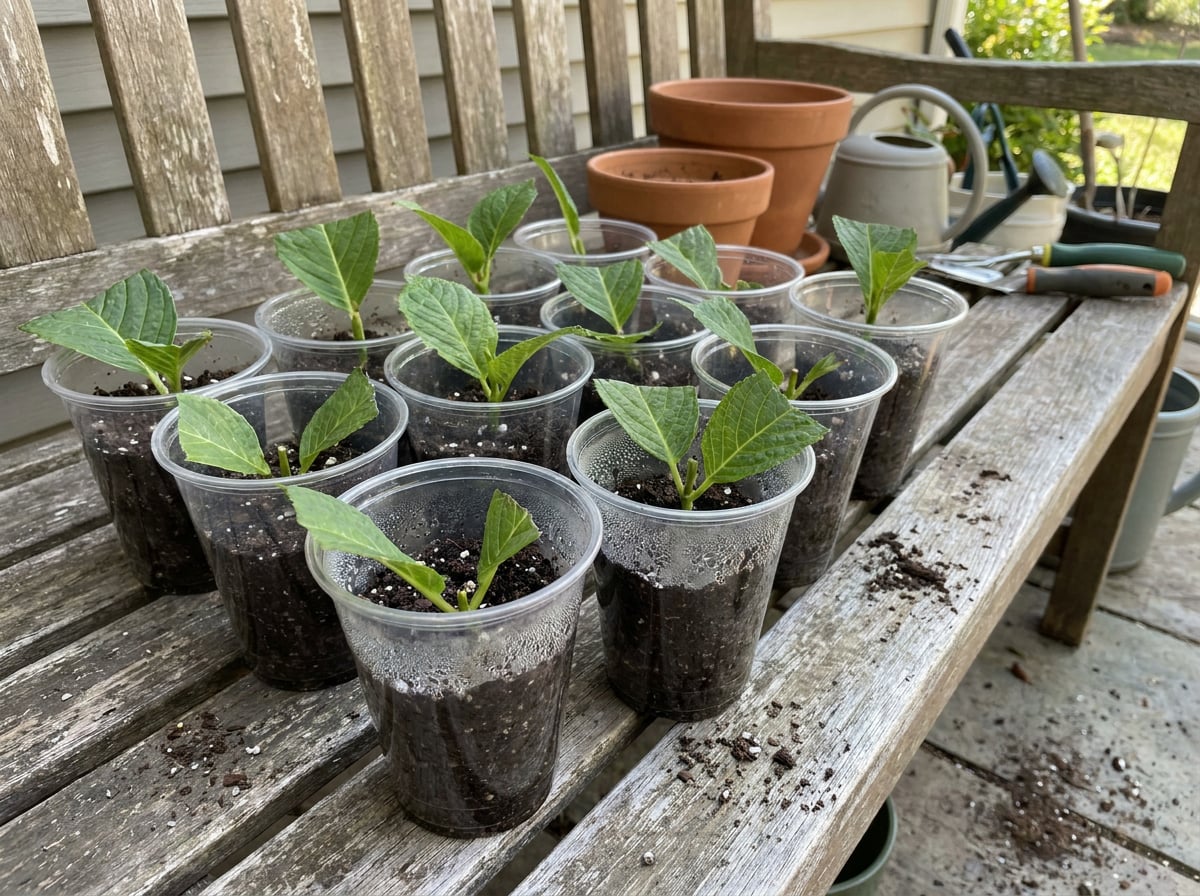
Don’t waste money buying new shrubs when cloning them is free. Skip the floppy new tips and hard woody bases.
Before taking cuttings, check the plant label. Some newer hydrangea cultivars are protected by active plant patents and should not be propagated without permission.
Choose a semi-ripe shoot instead, one that’s firm at the bottom but still green enough near the top to bend without snapping.
Snip a six-inch non-flowering stem right below a node. Strip off the lower leaves, then cut the top two leaves in half. Less leaf area keeps the stem from drying out before roots form.
Push the cut end into moist perlite and peat, cover it loosely with a clear plastic bottle, and keep it in bright, indirect light.
Quick tip: Avoid direct sun, or it will turn that bottle into a miniature greenhouse and steam the cutting before it ever gets the chance to root.
We also wrote a step-by-step guide to propagating hydrangeas if you want the full process, from choosing a cutting to keeping it alive.
Don’t Leaf Your Hydrangeas Hanging
Most August hydrangea damage comes from good intentions and terrible timing. As famous gardener Adele surely said once: You could have had it all… watering it deep, you had next spring’s buds in your hand, and you snipped them to the peat.
Once summer starts winding down, we also wrote a guide to the key fall hydrangea jobs that come next, followed by another on the winter tasks that protect those buds through the cold months.


My hydrangeas bloomed however all the blossoms are now on the ground with plenty of green growth on top. I did not prune last fall, early spring. What is wrong with??
Hi Jackie 🙂 It sounds like the flower-heavy stems have flopped, especially if you’ve had rain. Support them loosely with stakes or soft ties, avoid high-nitrogen fertilizer, and don’t hard-prune until you know which type you have.
My hydrangea has outgrown it’s space in my small garden. I was wondering if Hydrangeas can be split and if so when and how do you do it?
Hi Lee 🙂 Most hydrangeas are woody shrubs and should not be split like perennials. If yours has a separate rooted sucker, you may be able to remove that in early spring or fall, but otherwise transplanting the whole shrub or propagating a cutting is safer.
I have a big dark green leaf plant that has not flowered in two years. What can I do to see flowets?
Hi 🙂 Dark green leaves with no flowers can point to too much nitrogen, too much shade, winter bud damage, or pruning at the wrong time. Avoid high-nitrogen fertilizer, give it some morning sun, and don’t prune again until you know which hydrangea type you have.
Need more help with looking after my hydrangeas
Hi Mary 🙂 Tell me what problem you’re seeing, along with how much sun and water the plant gets, and I’ll help narrow it down.
I always cut lots of blooms for my indoor arrangements. Mostly big leaf kind. Am I damaging next year’s blooms?
Hi Darcy 🙂 If you’re cutting long stems from bigleaf hydrangeas, especially in late summer, you can remove some of next year’s flower buds. They start forming those buds on old wood around August and September. For arrangements this late, I’d take the shortest stem you can and avoid cutting below the first healthy pair of leaves.
I have three very large hydrangeas That haven’t bloom since the early heat wave we had here in Michigan in 2013. I cut them way back in the fall ( The foliage on the 3 is beautiful, about 3 1/2 tall and 6 to 8 foot around, just no flowers. Do I cut my loss and find someone to remove or do you have a suggestion to try.
Hi Judi 🙂 Don’t give up on them yet! The fact that you’ve been cutting them way back every fall may actually explain the lack of flowers if they’re bigleaf hydrangeas. They form next year’s flower buds on old stems, so I’d stop fall pruning completely and give them at least a season or two. Only remove clearly dead wood after they leaf out in spring.
Michigan winters can damage those buds too, but I’d definitely try changing the pruning first before removing such healthy plants.
I want to dry the flowers to use in flower arrangements. I want to spray paint and use for centerpieces at an Art convention next year.
Any suggestions?
Hi Julia 🙂 I love dried hydrangeas for arrangements! 😍
I’d wait until the blooms feel a little papery and mature, usually later in summer, then cut them on a dry day and remove the leaves. You can hang them upside down or put them in a vase with just a little water and let it evaporate. Once they’re completely dry, light coats of spray paint should work beautifully.
I’ve never spray-painted hydrangeas specifically, but I’ve done it with other dried flowers and it worked really well, so hopefully it works just as fine!
Ive 5 hydrangeas in front of house so get shade in d morning and gets d sun in d evening. 4 flower no problem and are healthy. 5th one flowers but flowers rust no long after. All in big huge pots and all got d same compost.wsts causing d rust?
Hi Janette 🙂 If by “rust” you mean the flowers quickly turn brown or rusty-colored, it may simply be the blooms aging faster or that particular pot drying out more quickly. Hot evening sun can speed that up too. Since the other four are fine, I’d check whether that pot is drying faster or if the plant is more rootbound. If you’re actually seeing orange or rusty spots on the leaves, that would be a different issue.
I’ve heard a lot about Hydrangeas and didn’t realise how many different ones there were, I have sandy soil and shade can you suggest one. I do prefer light coloured plants.
TIA Brenda Dodds.
Hi Brenda 🙂 If your shade is more part shade than deep shade, I’d look at an ‘Annabelle’ smooth hydrangea. It has beautiful large white blooms and handles shade well. Sandy soil dries quickly though, so I’d mix in plenty of organic matter, mulch around it, and keep a close eye on watering during hot weather.
my hydrangeas bloom on new wood. i live in the PNW. When should I prune them?
Hi Katie 🙂 If yours definitely blooms on new wood, I’d do the main pruning in late winter or early spring before the new growth really gets going. In the PNW, I’d wait until the worst winter weather has passed rather than pruning hard in fall.
I’d like to know how to bring color to my hydrangea.
When is the best time to plant hydrangea tree
Hi Susan 🙂 Early spring or early fall is usually the best time to plant a hydrangea tree, when temperatures are cooler and the plant has time to establish before extreme heat or cold. I’d avoid planting during the hottest part of summer if possible.
Hi, I have 2 hydrangeas that used to flower so well. My last 2 summers, one is no longer producing blooms and the 2nd one has only had one bloom. I haven’t changed anything. Any ideas?
Hi Debbie 🙂 Even if you haven’t changed anything, the weather may have. If these are old-wood hydrangeas, winter cold or a late spring freeze can kill the flower buds while the plant still grows plenty of leaves. I’d also consider whether nearby trees have created more shade over time or whether they’ve been getting high-nitrogen fertilizer. I’d avoid pruning until you identify which type you have.
No blooms!! Lots of leaves!!
We have limelight hydrangeas and the flowers are browning, we live in Omaha, I was wondering if I can cut them off in late August or just leave them alone.
Also, can I use something to keep the japanese beetles away next year.
Hi Sue 🙂 Yes, you can snip the browning flowers off your Limelight in late August, or leave them for fall and winter interest. It blooms on new wood, so its main pruning can wait until late winter or early spring. For Japanese beetles, I’ve had the best luck checking early in the morning and knocking them into a container of soapy water. I’d avoid beetle traps right beside the hydrangeas because they can attract even more beetles to the area.
Moved to a house with a hydrangea that appears to have never been pruned. There were only 2 or 3 flowers this summer (very small) and it has grown very large. How do I know what kind it is and how to prune it. Thank you
Hi Karen 🙂 Until you know what type it is, I wouldn’t hard prune it. Look at the flower shape and leaves next season, or take a few photos while it’s blooming. Mophead and lacecap types generally bloom on old wood, while panicle and smooth hydrangeas bloom on new wood. For now, I’d only remove clearly dead or damaged stems.
I have an old wood hydrangea that is very full and I feel I need to remove some branches to improve airflow. When can I start this process on this type of hydrangea?
Hi Lisa 🙂 For an old-wood hydrangea, the safest time to thin it is right after it finishes flowering, before it starts forming next year’s buds. I’d remove a few of the oldest stems right at the base rather than shortening everything, usually no more than about a third of the plant at once. If it’s already late summer, I’d wait until after next year’s bloom unless you’re removing dead or damaged wood.
I have had two hydrangeas that have not had any flowering for two years. Full sun and are planted in full sun area. What am I doing wrong? They are planted in a full sun area Seth full sun, a combination of dirt and sand, mulch is around the plants too. All the other flowers around them are ding great. Others plants are hostas, and roses. What do I do?
Hi Marlene 🙂 Two years without flowers makes me wonder first about what type of hydrangea you have. If it’s a bigleaf, the flower buds may be getting pruned off or damaged over winter. Too much nitrogen can also give you lots of leaves with few flowers. I’d avoid adding more fertilizer for now, identify the variety, and make sure a bigleaf hydrangea gets some protection from the hottest afternoon sun.
I have a big leaf with a lot of brown dried out flowers – can I snip those off?
Hi Jennifer 🙂 Yes, you can snip the dried flower heads off your bigleaf hydrangea. Just cut right above the first healthy pair of leaves and don’t cut farther down the stem, because next year’s flower buds may already be developing there.
The leaves on my hydrangeas are coverd in dark brown spots. They look awful! Can you tell me what’s happening?
Hi Peggy 🙂 Dark brown spots are often a fungal leaf spot, especially later in summer when hydrangea foliage stays damp. Remove badly affected and fallen leaves, water at the base instead of overhead, and improve airflow around the plants. It usually looks much worse than the actual damage it causes.
Hello, I’m wondering what going on with a few of my hydrangea on one particular side of my house. Some leaves on a few hydrangea stalks are yellow with dark green veins, while other leafy parts of the shrub are normal green. Why does this happen?
Susan
Hi Susan 🙂 Yellow leaves with dark green veins often point to iron chlorosis, usually because the soil pH is too high for the plant to take up iron properly. Since it’s happening on one side of the house, I’d start with a soil test there before adding fertilizer or iron and check that the soil is draining well too.
Hi, I have my hydrangeas in a large pot. There are 3 stems that have grown taller than the others. Can I trim them in late August?
Hi Lydia 🙂 If you don’t know which type of hydrangea you have, I’d leave those tall stems alone for now. Bigleaf hydrangeas may already be forming next year’s flower buds on those stems, so trimming them now could cost you blooms. You can always shape it once you know the variety and its proper pruning time.
I’ve had mine for almost 10 years, it flowered when I bought it..and not since.
I have a hydrangea that needs to be planted.When is the best time to plant.
Hi Kay 🙂 If the weather isn’t extremely hot, late August into early fall is actually a good time to plant it. Just give it consistent water while it establishes. Otherwise, early spring is another good option.
When do I prune my hydrangea tree?
Hi Bette 🙂 Most hydrangea trees are panicle hydrangeas, and I’d prune them in late winter or early spring before new growth gets going. You can shorten the canopy branches by roughly a third and remove weak or crossing growth, but keep the main trunk and framework intact.
My big leaf hydrangea is in a pot in zone 9. It has bloomed tremendously. Are the rules for deheading and pruning the same for hydrangeas in the ground and those in a pot? Also my plant has put out a lot of new stem growth how do I deal with this new growth and it has but from the top to the bottom of the stem? Your articles are great.
Hi Margarita 🙂 Yes, the deadheading and pruning rules are basically the same for a bigleaf hydrangea whether it’s in a pot or in the ground. I’d leave all that healthy new stem growth alone because it can carry future flowers. If those are buds you’re seeing from top to bottom, definitely don’t cut those stems back now. For faded blooms, just cut above the first healthy pair of leaves.
Hi
I have a fairy trail hydrangea. First year, planted in a large pot. Great leaves but only 1-2 blooms. Sun most all day. What can be done for more blooms?
Hi Lynn 🙂 Since your Fairytrail is only in its first year, I wouldn’t worry about just a couple of blooms yet. I’d give it time to establish, but “sun most all day” may actually be more than it needs. Around 4 to 6 hours of sun with some protection from the hottest part of the day is better, and avoid pruning because Fairytrail hydrangeas set much of their bloom on older stems.
I just bought a grin and tonic hydrangea it has beautiful white flowers on it. I would like to plant under my evergreens or keep it in a big pot outside not much sun on Esther it’s August 31 what do I do I’ve never had one before I live in pnw Vancouver wa do have a few yellow leaves on it.
Hi Debi 🙂 Your Grin and Tonic is a bigleaf hydrangea, so I’d give it bright part shade rather than planting it directly under dense evergreens where it may not get enough light and would compete with tree roots. In Vancouver, WA, planting it in the ground around now is fine as long as you keep it consistently watered while it establishes. A few yellow leaves after bringing it home wouldn’t worry me too much unless it keeps spreading. I’d also skip fertilizer this late in the season.
I cut mine down pretty low and it grew back but I don’t have any buds. I put them in the ground the first year they were beautiful than I trim them down they grew back this year but I didn’t get no buds.Thank you.
Hi Zelma 🙂 Cutting it down pretty low may be exactly why you got lots of new growth but no buds, especially if yours is a bigleaf or another hydrangea that flowers on old wood. I’d leave it alone this time and let those stems stay through winter so it has a chance to bloom next year.
What’s the best hydrangea to plant in the summer sun for 4 to 5 hours in the south of MS
Hi Jan 🙂 In south Mississippi, I’d choose a panicle hydrangea, such as Little Lime or Limelight, for 4 to 5 hours of summer sun. They handle sun better than most hydrangeas. If possible, morning sun with some protection from the hottest afternoon sun would be ideal in your climate, and keep it consistently watered while it establishes.