Remember that moment of triumph when your seedlings’ first little leaves popped up? Good times.
Then, a few days later, you wander past your seed tray and hear, “Where’s the sun, buddy?” Don’t worry, you aren’t hearing tiny voices. That’s just your guilty conscience! This is called etiolation. The good news? In most cases, it’s fixable and your seedlings can still turn out strong and healthy.
5 Simple Fixes for Leggy Seedlings (That Actually Work)

If your seedlings are leggy, don’t panic. This is a common problem, and it’s usually easy to correct with a few simple adjustments.
1: Bring the Sun Indoors
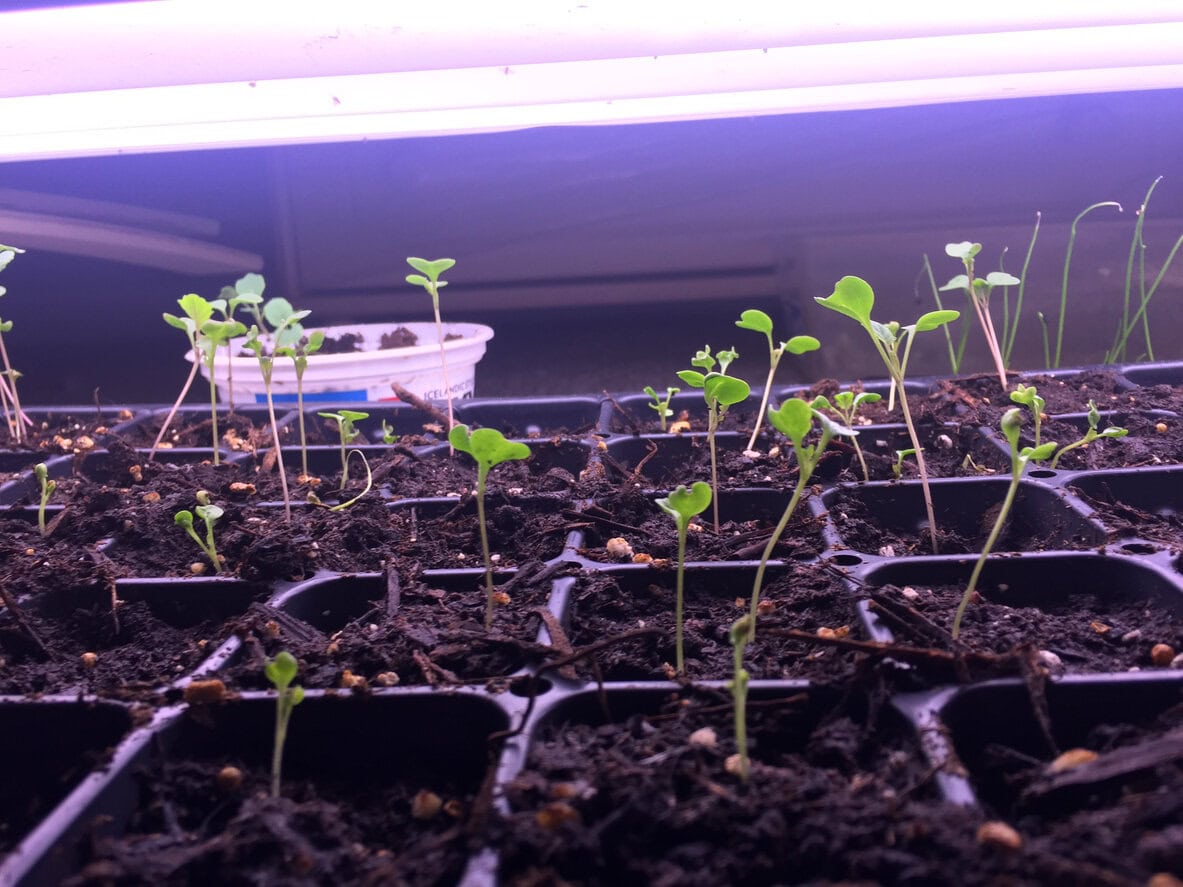
February sunlight simply isn’t strong enough for seedlings. They need a reliable artificial light source.
What I do: I fix leggy seedlings by keeping a strong LED or T5/T8 fluorescent light about two to four inches above the plant tops.
As seedlings grow, I raise the light to maintain that distance. Keeping the light close is key! When it’s too far away, seedlings stretch quickly in search of intensity.
If you’re stressed about burning them? Most modern grow lights are safe at close range. As long as the leaves aren’t pressing directly against the bulb, they’ll be fine.
2: The Burial Method

Sounds scary, yet it’s your primary rescue operation.
What I do: For plants like tomatoes, peppers, and other seedlings that can form roots along their stems, I repot leggy plants into a deeper container, burying the stem up to the first set of true leaves.
The buried portion of the stem will sense the soil and will develop new roots, helping the plant anchor itself and grow stronger.
This method doesn’t work for all seedlings, so skip it for crops like lettuce or onions that don’t root along buried stems.
3: Cool Your Jets

Remember how you were coddling them with cozy warmth? Once your seeds sprout, they do not need that toasty heat mat anymore. It only speeds up their metabolism and encourages the stretch for light. Time to break that cycle!
What I do: As soon as seedlings emerge, I remove the heat mat and keep them in a cooler space to slow growth and encourage thicker stems.
Seedlings are not the Dutch vacationing in Curaçao. For most seedlings, daytime temperatures around 65°F work well, with a slight drop at night. This temperature shift helps reduce stretching and supports sturdier, more compact growth.
4: The Fan Factor
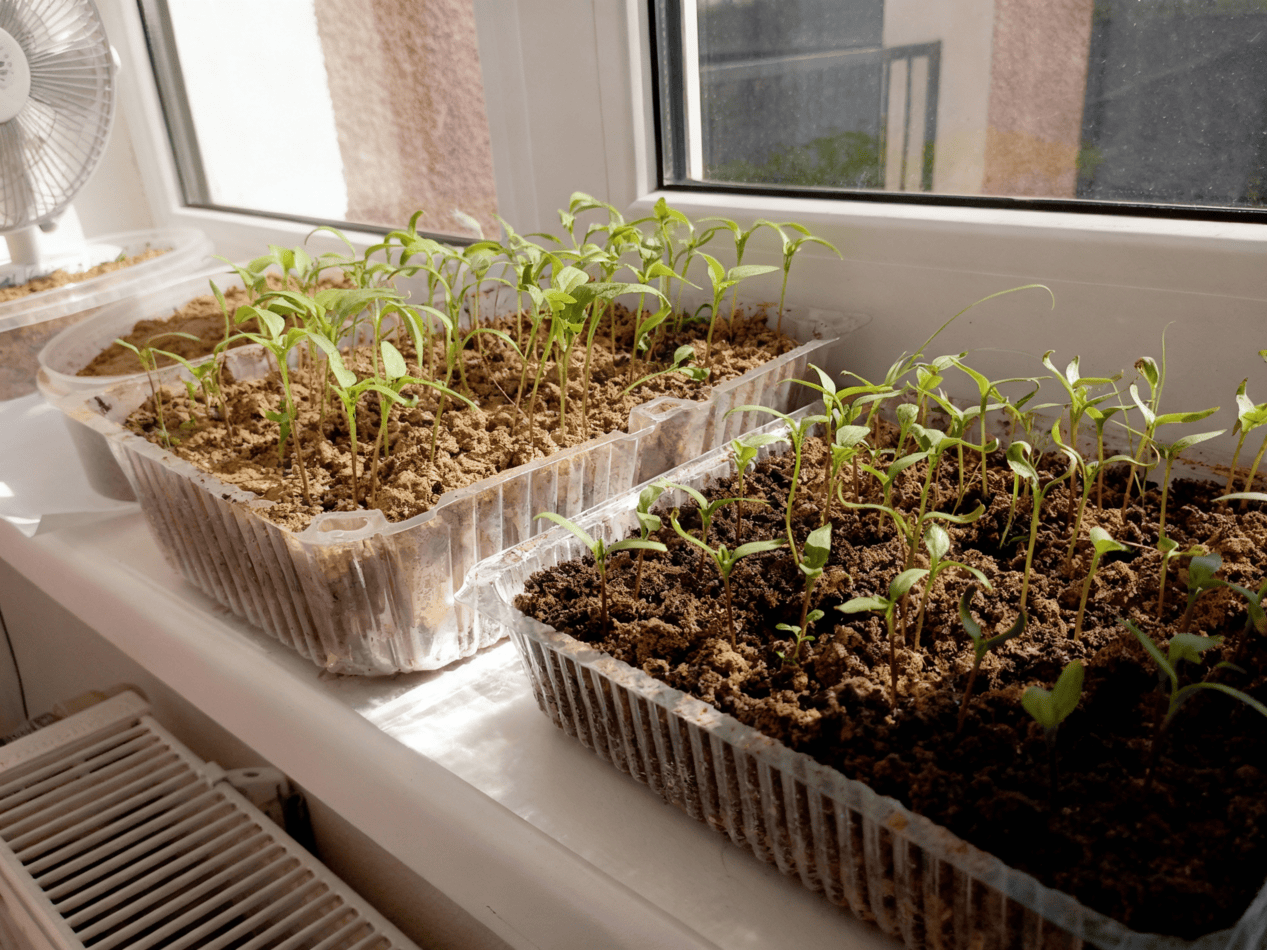
Stems that grow in still air tend to develop weak, thin stems. Gentle movement helps them build strength. It’s kind of a gym membership where spindly legs become trunks.
What I do: Once seedlings have their first true leaves, I run a small oscillating fan nearby so it lightly moves the tops of the plants for a few hours each day.
The constant yet subtle stress of the air movement mimicks natural outdoor conditions and helps the plant produce thicker stems to handle the “wind“. The key is gentle movement, the plants should sway slightly, not bend or dry out.
5: The Scissor Strategy

Are 6 inches of stem supporting two tiny leaves? The hard truth is, despite your best efforts, your seedling is simply too leggy and weak to recover.
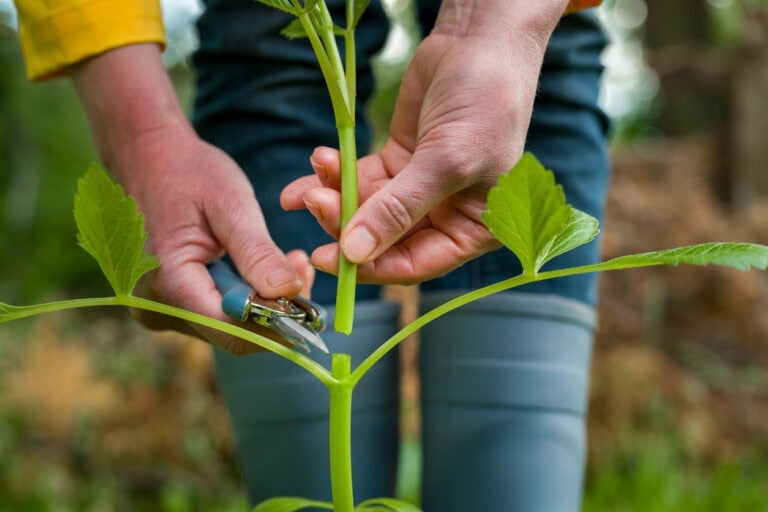
What I do: For branching plants like tomatoes or basil, I pinch off the growing tip just above a set of true leaves. This can encourage the plant to grow outward instead of continuing to stretch upward.
It seems drastic, but sometimes a strategic cut is the kindest cut. And, if you have plenty of healthy seedlings, it’s okay to let the weakest ones go…
This method only works for plants that naturally branch after pruning. Skip it for single-stem crops like lettuce or onions, which won’t recover well from being cut.
If you want a broader safety net, our team also put together a list of the most common seed-starting mistakes that cause seedlings to fail and how to avoid them.
Why Seedlings Get Leggy in February?

Now that you know how to fix leggy seedlings, it helps to understand what caused the problem in the first place. It almost always comes down to light, temperature, and spacing.
1: Too Close For Comfort

Remember when you dropped five seeds into one tiny cell because you’re an optimist? Congrats, plant momma!
They all sprouted, and now they’re engaged in a competition for the limited light. They brawl. They cast shadows on their neighbors. They trigger a frantic stretch to the top. The result is a tangle of weak stems, all fighting over the single light source.
To fix this, thin seedlings early by keeping the strongest plant in each cell and removing the rest.
You’re saving the best of the bunch, not being a monster. You’re allowing the remaining seedling to develop properly and grow stronger.
If you’re dealing with multiple seedlings tangled together, we’ve broken down how to safely separate seedlings at any stage without damaging the roots.
2: Light Deficiency

In February, daylight is weak and often filtered through clouds or windows, which makes it insufficient for strong seedling growth. Seedlings need intense, consistent light, not the diffused gloom passing for daylight in late winter.
When light levels are too low, your seedlings will (literally) stretch in a last-ditch effort to find light. Any light. This stretching is what causes thin, weak stems and leggy growth.
Light and temperature aren’t the only factors at play, watering habits matter too. We explain exactly when and how often to water indoor seedlings in this guide.
3: The Coddling Temperatures

You meant well, but you’re treating them too kindly. If you keep your seedlings in a overly warm area, you’re encouraging the stretch.
Warm air speeds up their metabolism and leaf expansion, but without enough light to match that growth, your baby plants grow tall and thin instead of developing strong stems. This is why cooler daytime temperatures are often recommended once seedlings emerge.
If your seedlings are also showing yellowing leaves along with legginess, we’ve covered the most common causes and fixes in a separate article.
To Stem the Tide
Leggy seedlings happen to the best of us. Most often, we forget that February windowsills are a lie. Or perhaps we didn’t adjust the light, temperature, or bury the evidence.
Consider this your seed funding for success and no one needs to know they ever struggled. Your seedlings’ early struggles can stay just between us.
Once your seedlings recover indoors, the next step is helping them adjust to outdoor conditions. We wrote a full guide on how to harden off seedlings the lazy way that walks through it without overcomplicating things.