
Powdery mildew is a common issue for zinnia growers, especially in the initial days of planting.
While there are popular ways to combat the issue, most of them require the use of store-bought fungicides that are full of harmful chemicals. Even though the fungicides do work pretty well, they can often end up harming the annual in the long run.
In today’s article, let’s go over some legit ways to treat powdery mildew on zinnias without the use of chemicals. Like always, all these solutions are tried and tested beforehand to ensure a good mix of anecdotal and theoretical evidence.
What Powdery Mildew Looks Like On Your Plants
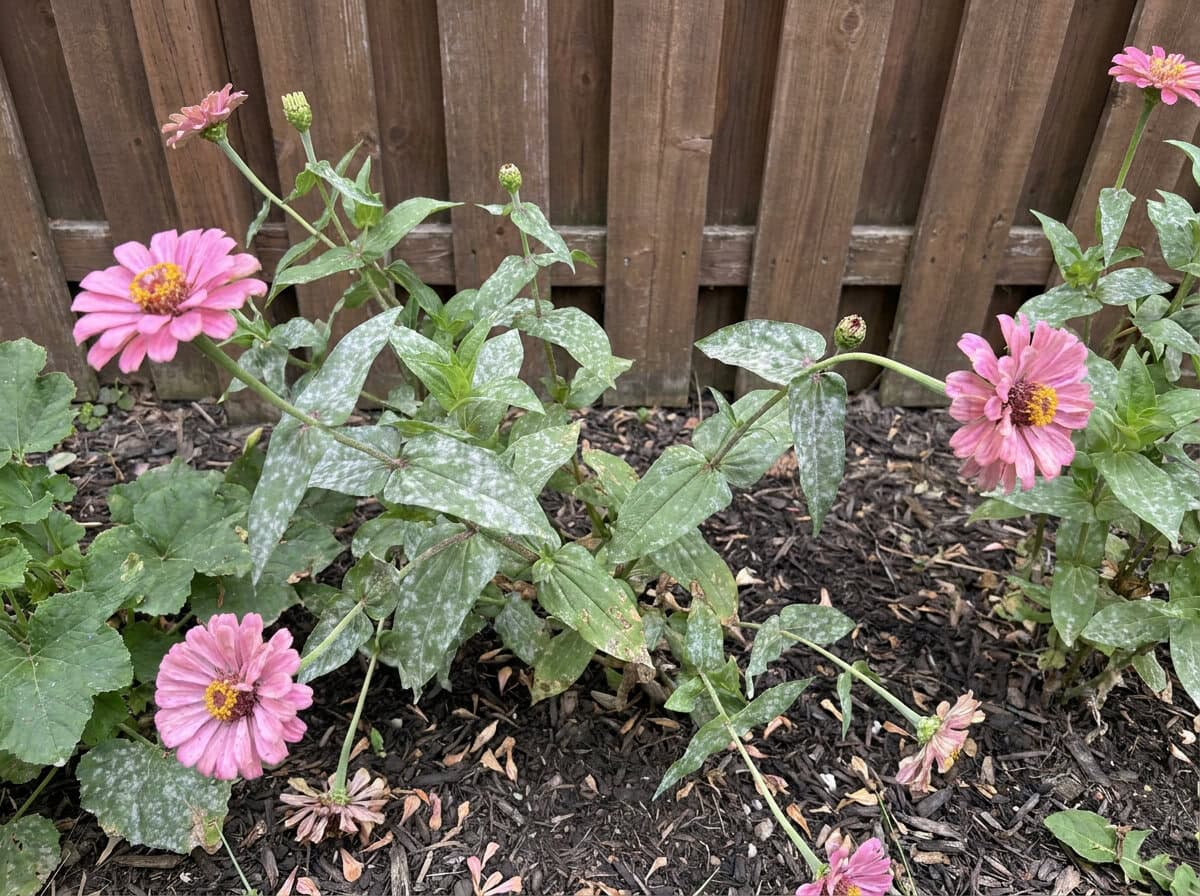
If you’re unsure of what to look for when trying to spot powdery mildew, some quick visual cues can help.
You’re looking for some sort of unusual white or greyish powder that may be coating the flowers and plant foliage.
Oftentimes, this powder goes unnoticed because it’s on the backside of leaves, so make sure to flip every single leaf over and inspect carefully.
Catching mildew early is key. And if you’re aiming for the fullest blooms possible, these simple tips can help you maximize flowering on your zinnias.
It’s Usually Just Cosmetic…But Can Reduce Blooms!

While powdery mildew is a fungal infection, it rarely kills plants. More often than not, you’ll find the powder to be purely cosmetic, but that doesn’t mean it’s not causing harm behind the scenes.
Powdery mildew can actually weaken the blooming potential of your zinnias and cause them to take on a paler, more dull appearance. Early spotting of this fungal disease ensures long-term health and blooming of your zinnias.
And if your zinnias are looking a bit dull, it might not just be disease, here’s how to feed them properly for stronger growth and vibrant color.
Prevention Is The Key! Let’s Start…

5 Organic Treatments That Actually Work

1: Milk Spray

Although this one may sound a little odd, try spraying down your zinnias with a milk spray made with 1 part milk and 10 parts water. Proteins in the milk can actually help break down the fungal spores and combat powdery mildew really well.
This one is also great for other plants with powdery mildew, like strawberries and zucchinis!
2: Baking Soda + Mild Soap

Mix 1 tablespoon of baking soda with half a tablespoon of mild dish soap in a gallon of water and spray your zinnia plants with it at least once a week.
3: Potassium Bicarbonate + Horticultural Oil

Like the soap and baking soda spray, you want to mix in 1 tablespoon of potassium bicarbonate with 2 tablespoons of horticultural oil to create a stronger mildew-combating alternative.
For more gentle, chemical-free solutions like this, check out these natural garden sprays that tackle pests and diseases without harming your plants.
4: Neem Oil

While neem oil is conventionally used to reduce pest populations in the garden, it can also help fight fungal infections if used correctly. Use 2 tablespoons of neem oil per gallon of water and spray the solution onto your zinnia plants for quick relief. Use this neem spray once weekly for the best results.
5: Garlic Extract Or Compost Tea

Although there aren’t any particular studies done on this for zinnias, some research does show that garlic and tea might have some antifungal properties that could be of use in the garden.
And while you’re treating powdery mildew, don’t forget to deadhead your zinnias regularly to keep those blooms coming strong all season long.
How To Apply Treatments Safely & Effectively?

So, application of treatments isn’t rocket science. Since we know that these methods work effectively, we can use them safely and without worry.
It’s generally a good idea to time your applications around early morning or evening, and not when the midday sun is blasting heat. Make sure to coat your entire zinnia plant evenly with the solution and not miss any affected areas.
In case of heavy damage, you want to cut off all infected parts of the plant and dispose them off as far away from the garden as possible. DO NOT compost them at any cost!
When It’s Okay To Just Let It Be…

While immediate action is typically encouraged, if the infection seems mild, you can just let the plants be. They don’t always need treatment and can often make surprising recoveries on their own.
Your number one indicator for whether to intervene or not should be bloom development. If it’s stagnant, changes may be necessary; if not, just let the plants be.
Let’s Conclude

Powdery mildew can be a serious hindrance in the way of zinnia blooming. It can make blooms stagnant and even stunt overall growth if allowed to dwindle on plants for too long. Take action as necessary and give organic remedies a try; you’ll definitely be surprised by how well they work!




Thank you! Zinnias are my favorite
Hi Peggy 🙂 You’re very welcome. Zinnias are one of my favorites too, especially when they’re blooming like crazy in summer.