September dahlia care is a little like speed-dating for flowers. You have a short window to make the right calls. Cut the losers fast, or end up with a garden full of regret. These seven jobs are the ones worth doing before frost calls time.
Task 1: Deadhead Cones, Protect Marbles
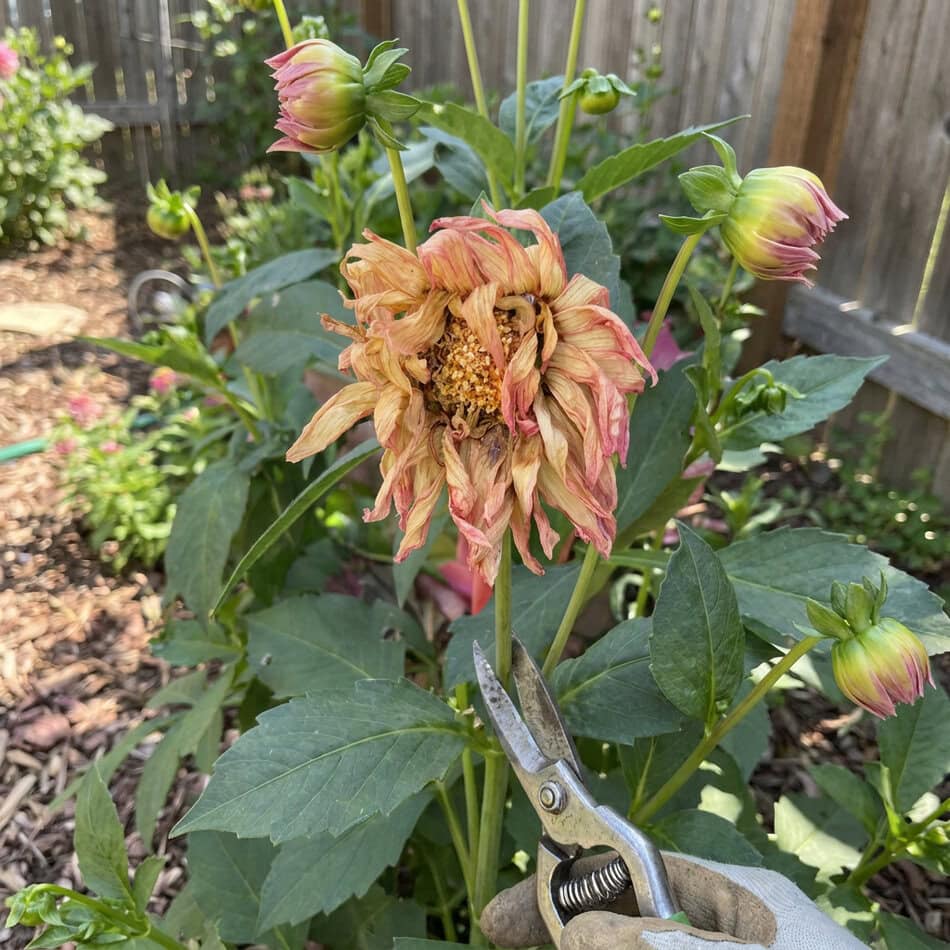
The biggest late-season dahlia blunder is blind pruning. September rolls around, the plant is packed with growth, and well-meaning gardeners go to town with the snips, butchering half their upcoming flower crop.
Dahlia buds are master tricksters. Snip the wrong one, and you just killed two weeks of waiting. So look at the shape before you cut:
Grab your shears, trace the cone stem down to the nearest leaf node, and slice it off clean. Removing spent flowers stops the plant from putting more energy into seed production and encourages it to keep pushing those developing green marbles toward bloom.
Quick tip: If I’m ever unsure, I give the head a quick look and feel before reaching for the snips. A firm, round marble stays; a spent, pointed cone goes.
We wrote a full guide on how and when to deadhead dahlias if you want to make sure you’re cutting in the right place every time.
Task 2: Harvest Deep Stems for More Blooms

Snapping off just the flower head with a tiny stem leaves an ugly stick poke-out and does little for future branching. You want more late-season flowers? Reach deeper into the plant framework.
When harvesting for a vase, follow the stem down into the center foliage and slice immediately above a strong leaf joint with side buds. Yes, it can feel painful to sacrifice a few smaller buds to get that long vase stem. Do it anyway.
Dahlias are stubborn. Chop back to a strong leaf joint, and new shoots can push out from the buds at that node, giving you another round of long flowering stems.
Task 3: Lock Down Top-Heavy Canopy
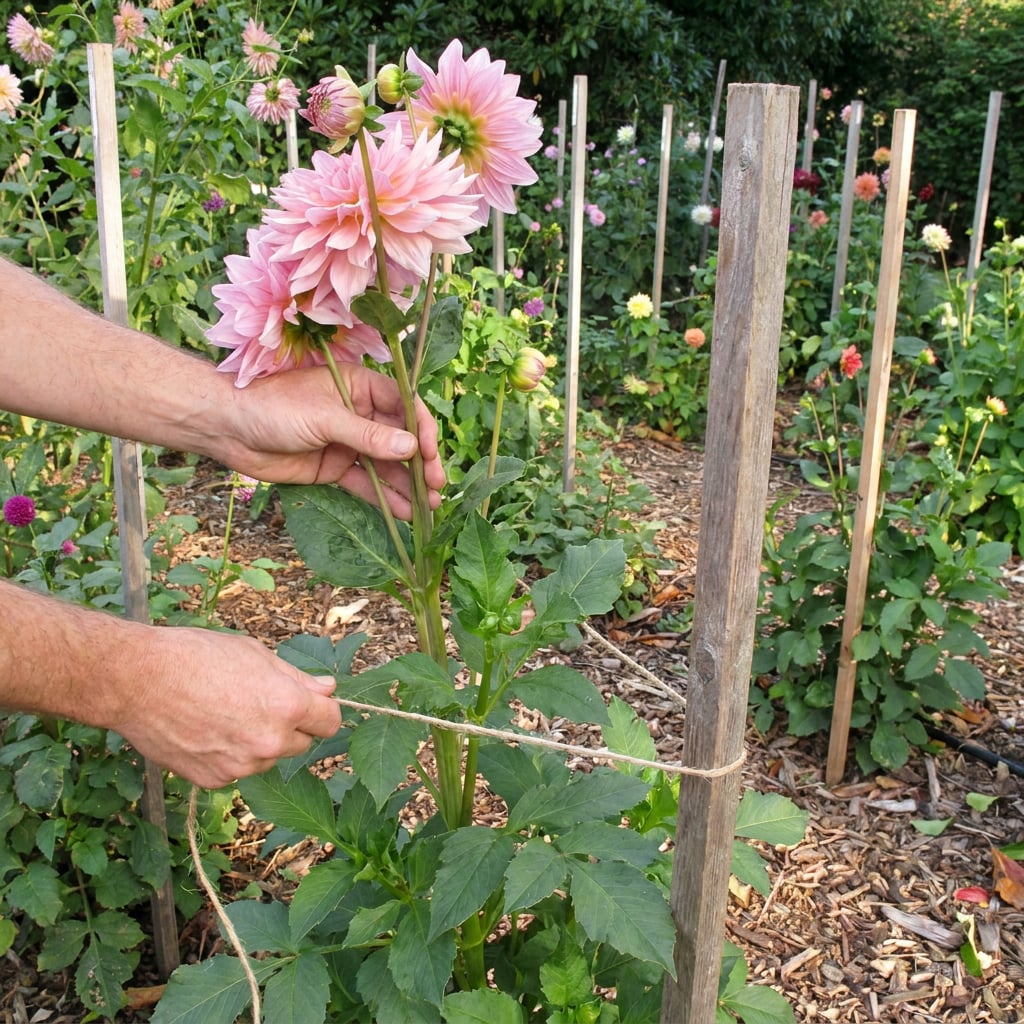
By September, your dahlias are top-heavy. One sudden autumn wind gust can snap a five-foot main stem at the base, ruining months of growth in two seconds.
Leaving summer stakes as-is doesn’t work. The plant may have outgrown them, and the canopy needs reinforcement now before the weather turns really nasty:
I usually give the taller plants a quick shake after tying them. If the stake moves with the dahlia, it needs to go deeper.
You found a bent or creased stem? If it’s still mostly attached, don’t chop it just yet! Splint it against a small stake and secure it gently with soft ties. Sometimes it holds and keeps growing.
We also wrote a guide to the August jobs that help keep them blooming strong into fall, if you want to save it for next year.
Task 4: Drench Soil, Dry Foliage
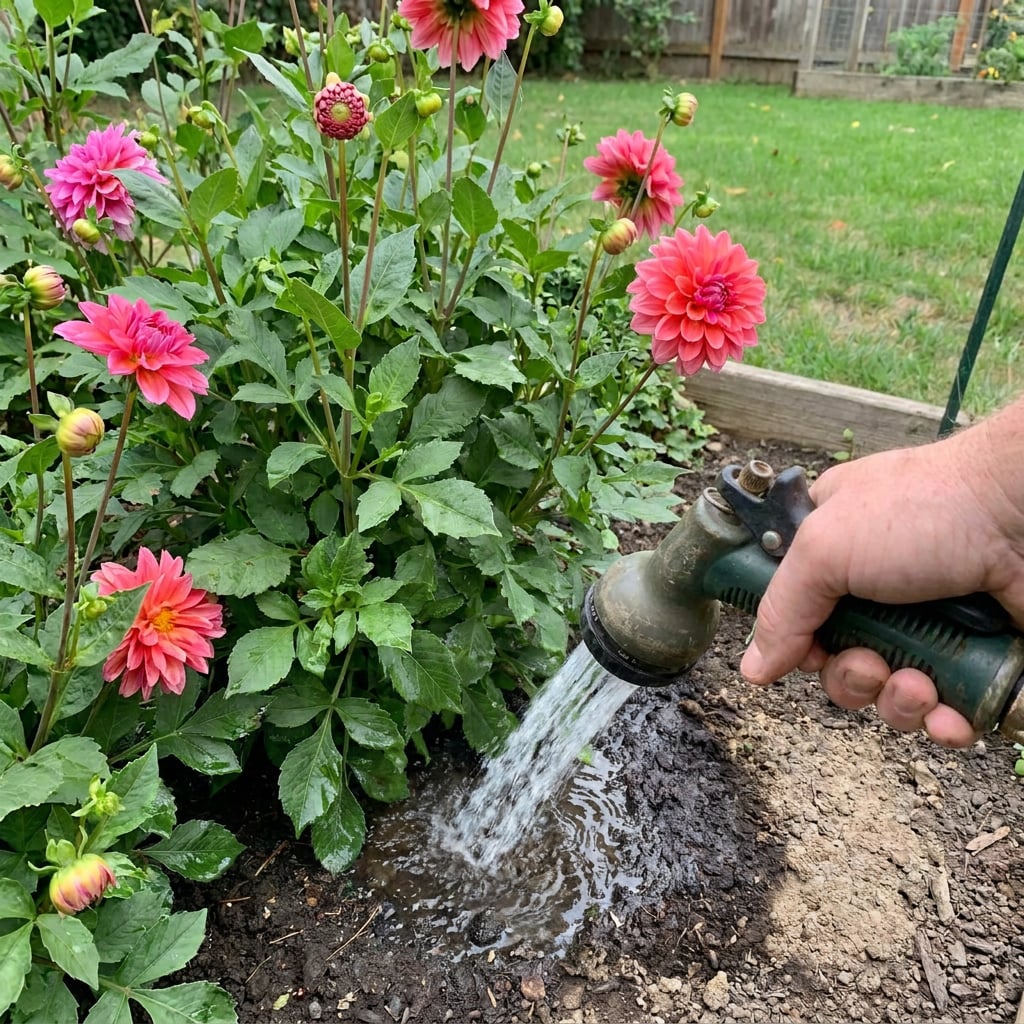
As September nights chill down and morning dew lingers, dahlias that shrugged off a splash from the garden hose back in July can start running into trouble. Don’t automatically shut off the water, but do adjust for cooler weather and September rainfall.
Lay a hose directly over the soil line to drench the roots without soaking every leaf. Spraying the tops in September can keep foliage wet longer and give fungal diseases an easier opening, plain and simple. Do your watering at sunrise so any accidental splashes have plenty of time to dry.
It’s a fine balance: dry roots can stall upcoming buds, but damp foliage heading into cool September nights is asking for disease trouble.
Task 5: Strip Bottom Leaf Disease Zone
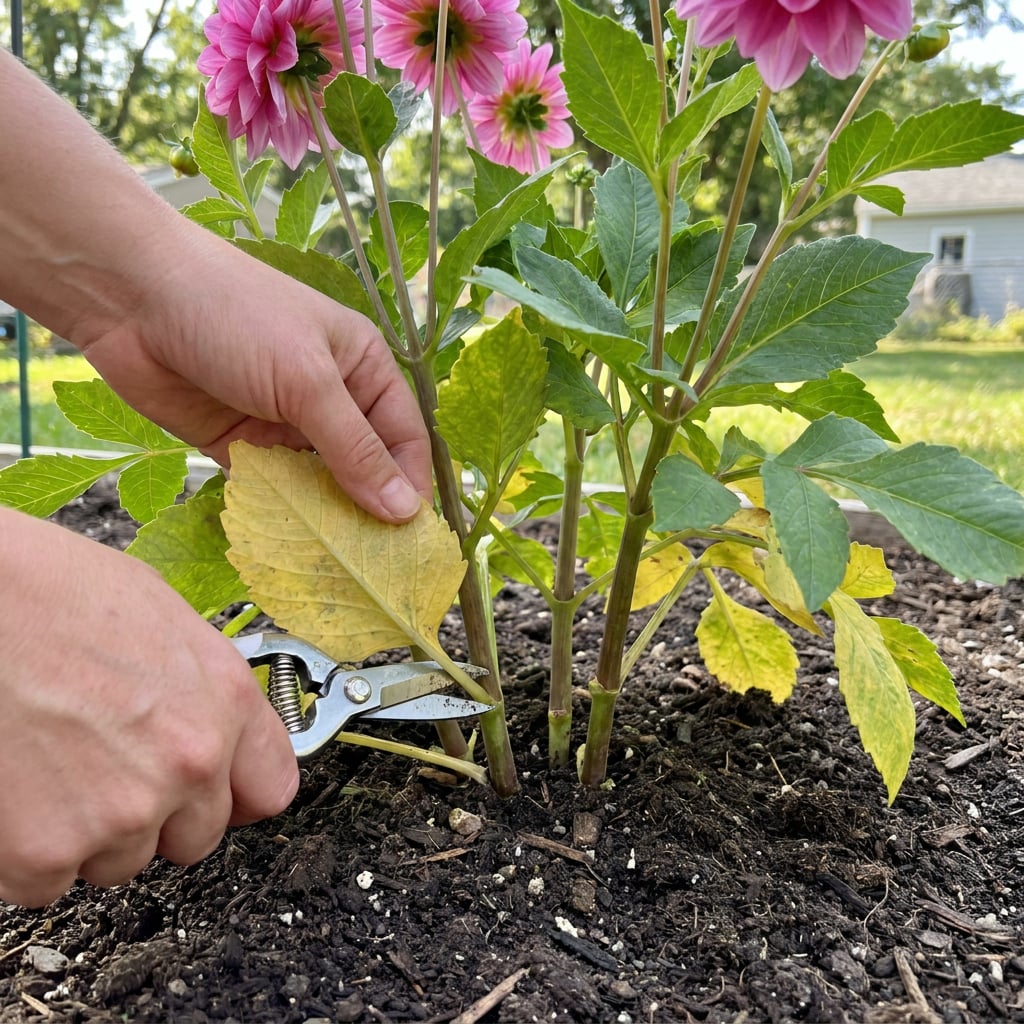
Those bottom dahlia leaves can become a liability now. Buried under a dense upper canopy, they stay shaded, crowded, and damp longer than the rest of the plant.
Even worse, soil splash can carry fungal spores and other pathogens onto weak lower foliage. Once disease gets a foothold down there, it can spread quickly through the plant.
Grab your trusty clippers and strip the lowest two or three sets of leaves from the main stems, especially anything yellowing, damaged, or touching the soil. Bare stalks look a little odd, but opening that bottom space lets fall breezes sweep through and helps the soil surface dry faster.
Quick tip: Toss anything diseased or suspicious straight into the garbage rather than the compost pile. Healthy leaves can go into a well-managed compost pile.
Task 6: Cut the Fertilizer
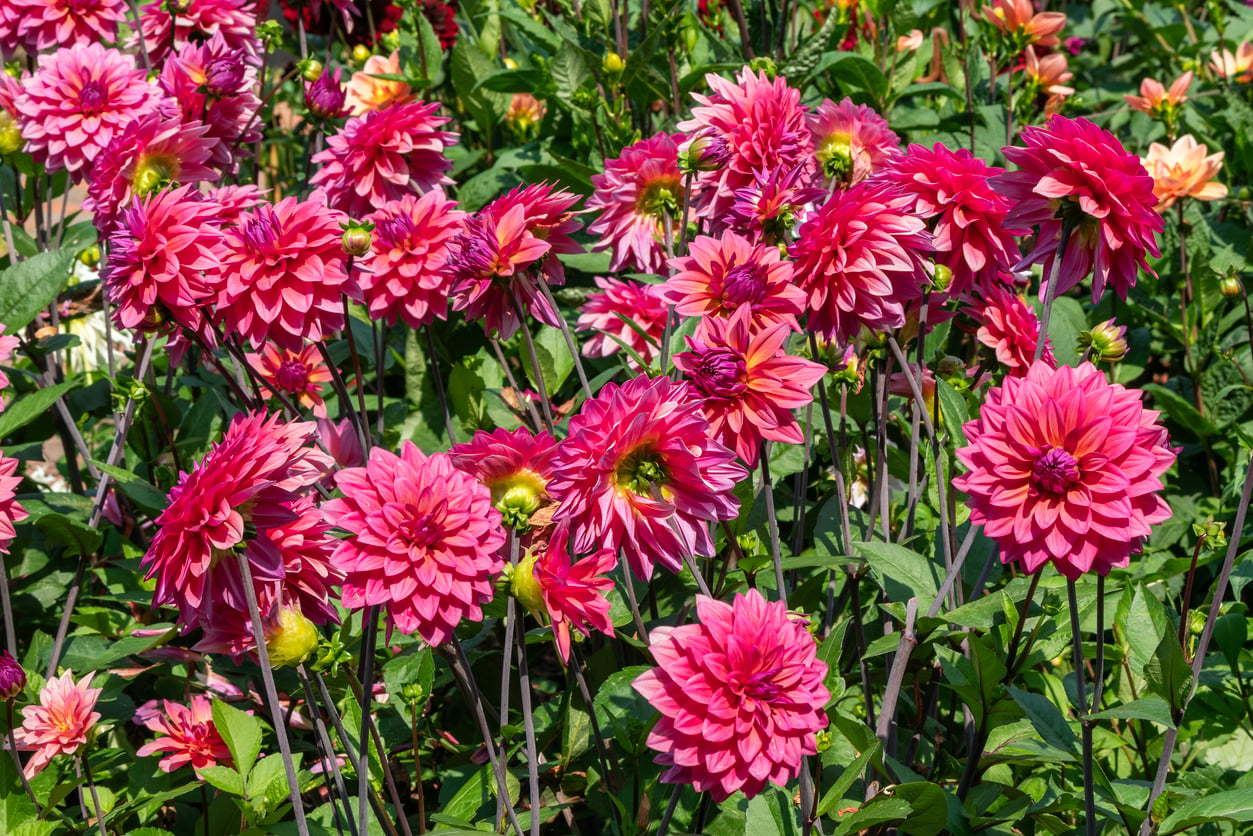
High nitrogen in September is pure balloon-juice; all hollow volume, no substance, waiting for the first pinprick of cold weather to pop it. So this is when I stop feeding mine altogether.
It’s tempting to switch straight to a high-potassium bloom booster, but don’t start dumping every fertilizer you have just because September showed up. Unless a soil test says your dahlias are actually short on something, leave the fertilizer bag alone.
At this point, I’d rather let the tubers mature properly than push another round of soft growth right before frost.
And if your dahlias still aren’t flowering the way they should, we explain the five most common reasons dahlias stop blooming and what to do about them.
Task 7: Consider Frost Dates and Storage Logistics
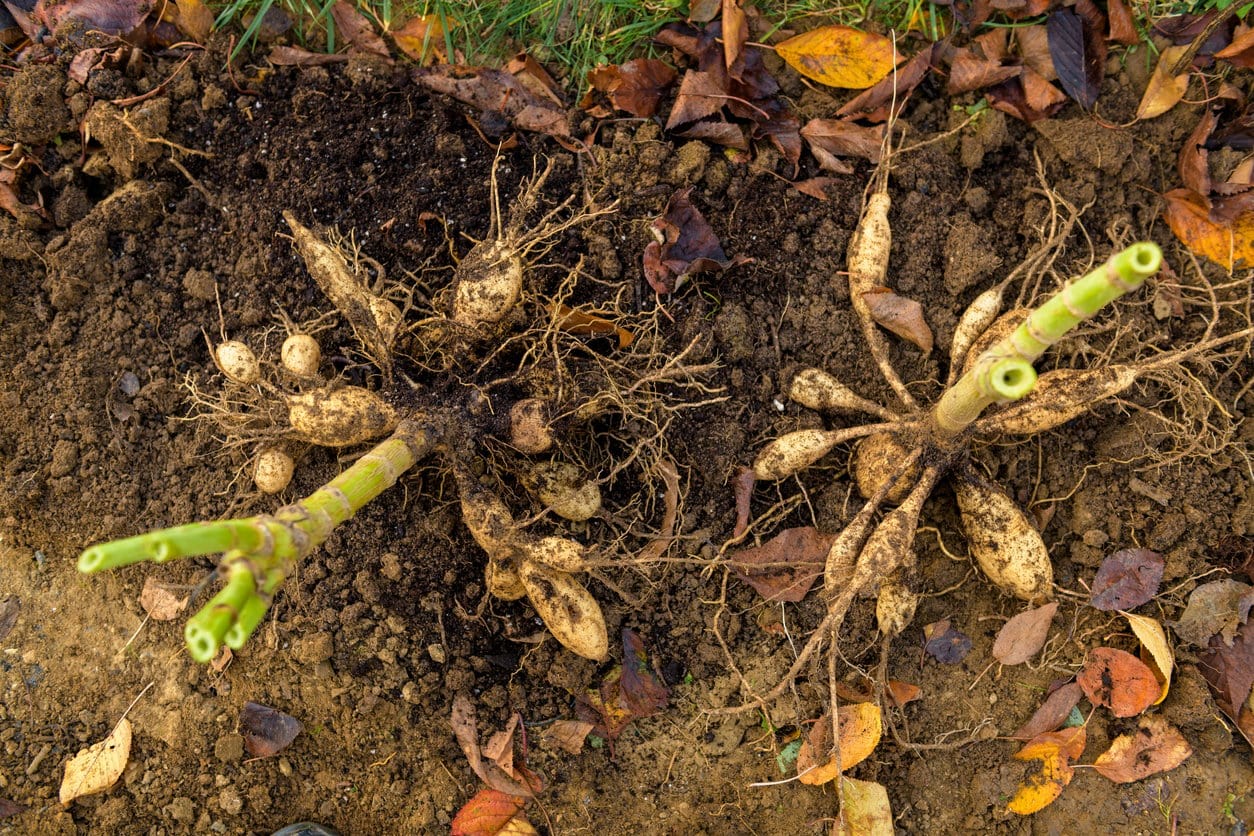
First frost isn’t the deadline to panic; it’s the trigger. Once a hard frost blackens the foliage, cut the stems back and dig the clumps within a few days (or sooner if a hard freeze is coming).
Fork them out carefully, leave a few inches of stem, and invert the clump so water can’t sit inside those hollow stalks. Let them air-dry for a day or two, then store them somewhere dark, cool, and safely above freezing. Tubers tucked away, your late-season dahlia duty is officially done.
We also have a complete guide to digging, storing, and replanting dahlias if you want the full overwintering process from start to finish.
The Root of All Good
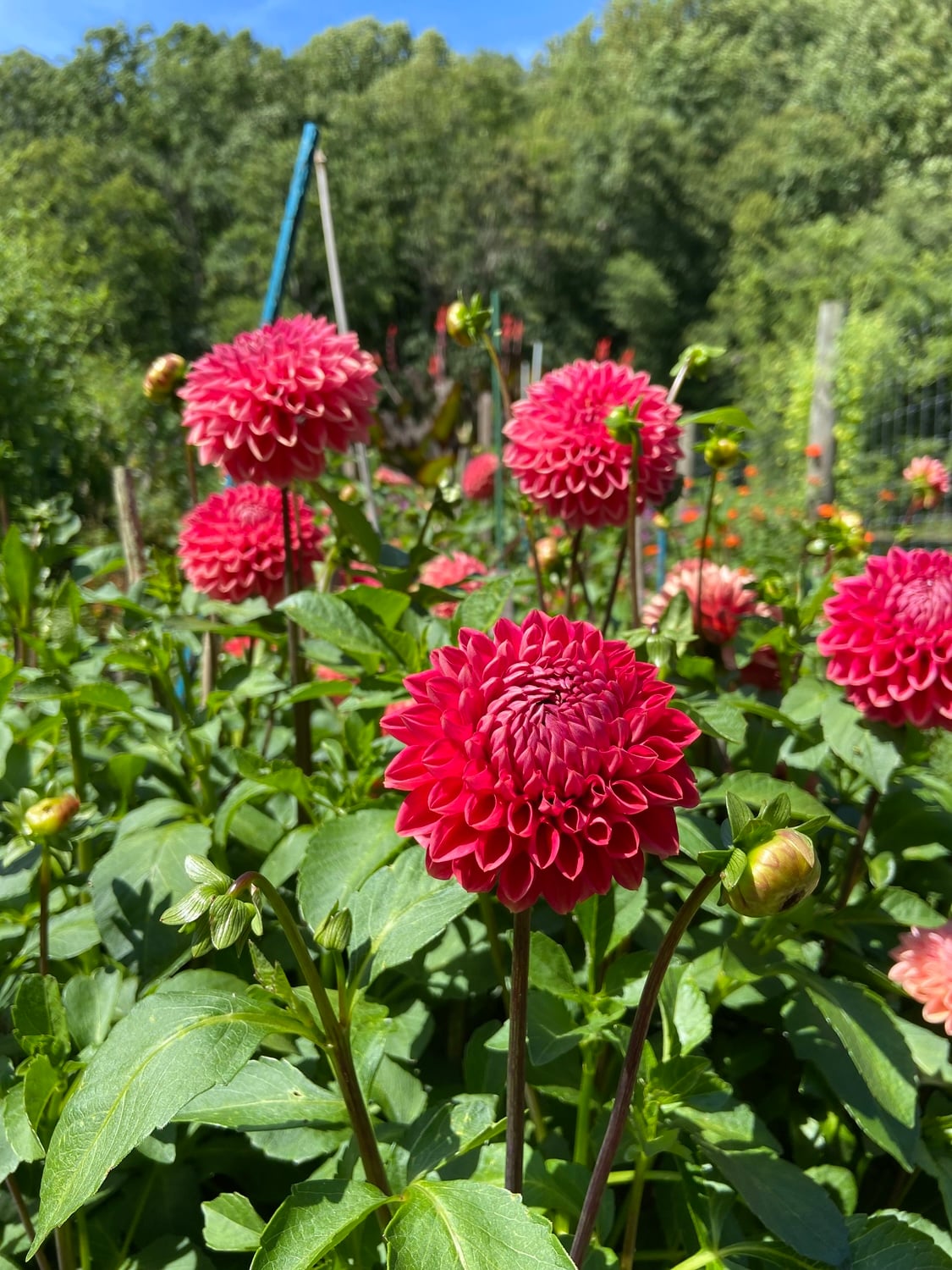
Seven steps and a much better shot at zero rot. Walk away knowing your tubers are happily napping in the dark, gathering strength to blow up your garden all over again come spring.