
I don’t think anybody can truly prepare for August heat, but your dahlias deserve that you at least try. Staying ahead of top-heavy stalks, dry soil, and relentless pests right now can decide whether the garden stays red-hot until frost or turns into a David Lynch landscape before Labor Day.
If yours are barely flowering at all, we wrote a guide on five common reasons dahlias refuse to bloom and what you can do about each one.
1. Deadhead Spent Flowers Properly
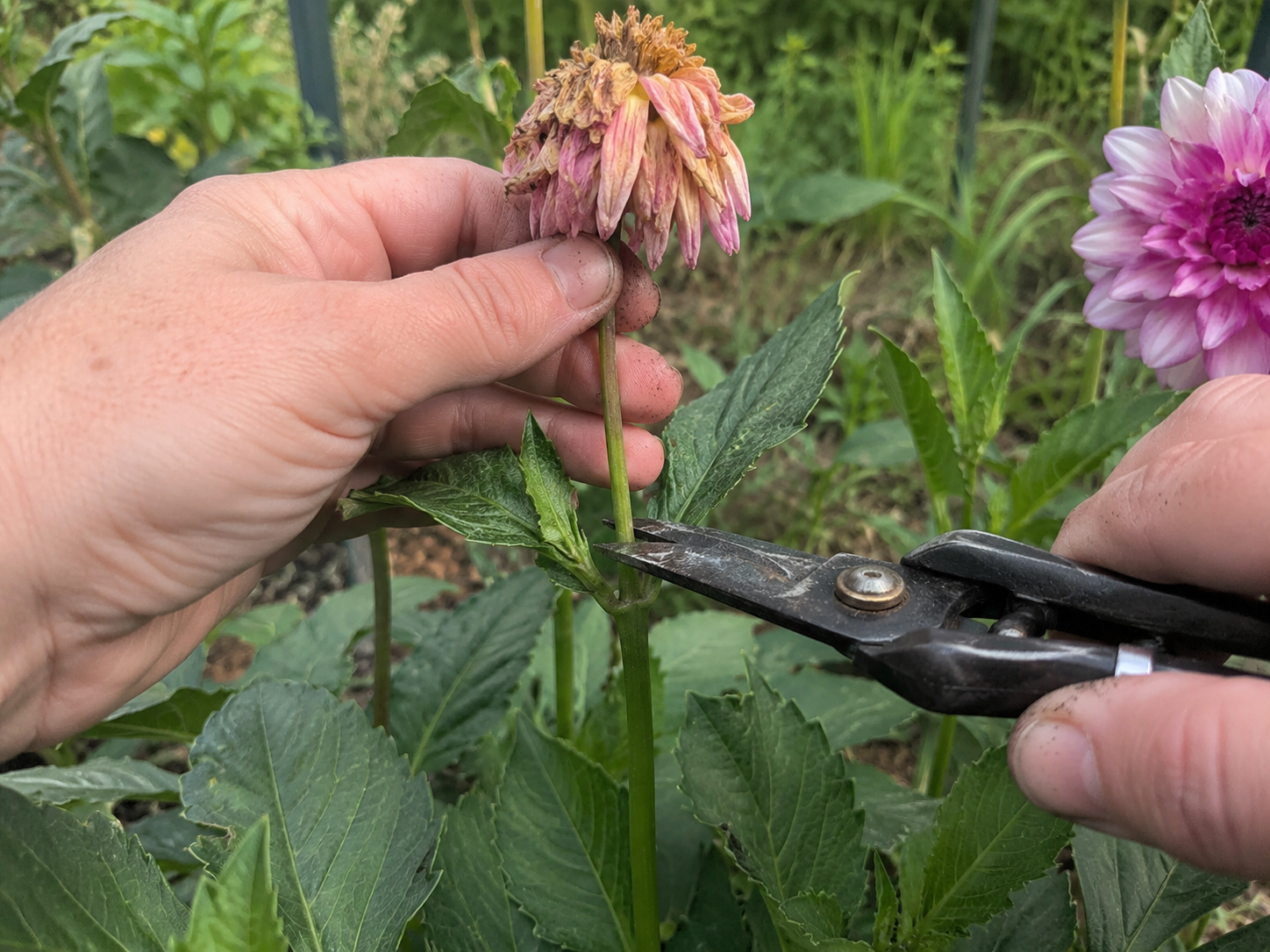
Some people blindly snip rounded green buds off their plants every single day, thinking they removed a dying bloom, instead obliterating next week’s whole flower run in three seconds flat. Look at the head before you clip.
Unopened buds stay firm, round, and hard like a marble. Spent heads heads feel softer and look more pointed or flattened at the tip, like an old party hat.
Get your snips down the stalk past that dead head, slide all the way down to the next leaf joint or developing side shoot, and slice it off just above that point.
Quick tip: Do not leave two inches of naked stem poking into the air. Those long stubs eventually die back, look ugly, and do nothing to help the plant push out fresh growth.
We explain the timing and cuts in more detail in our complete guide on how and when to deadhead dahlias.
2. Refresh the Mulch
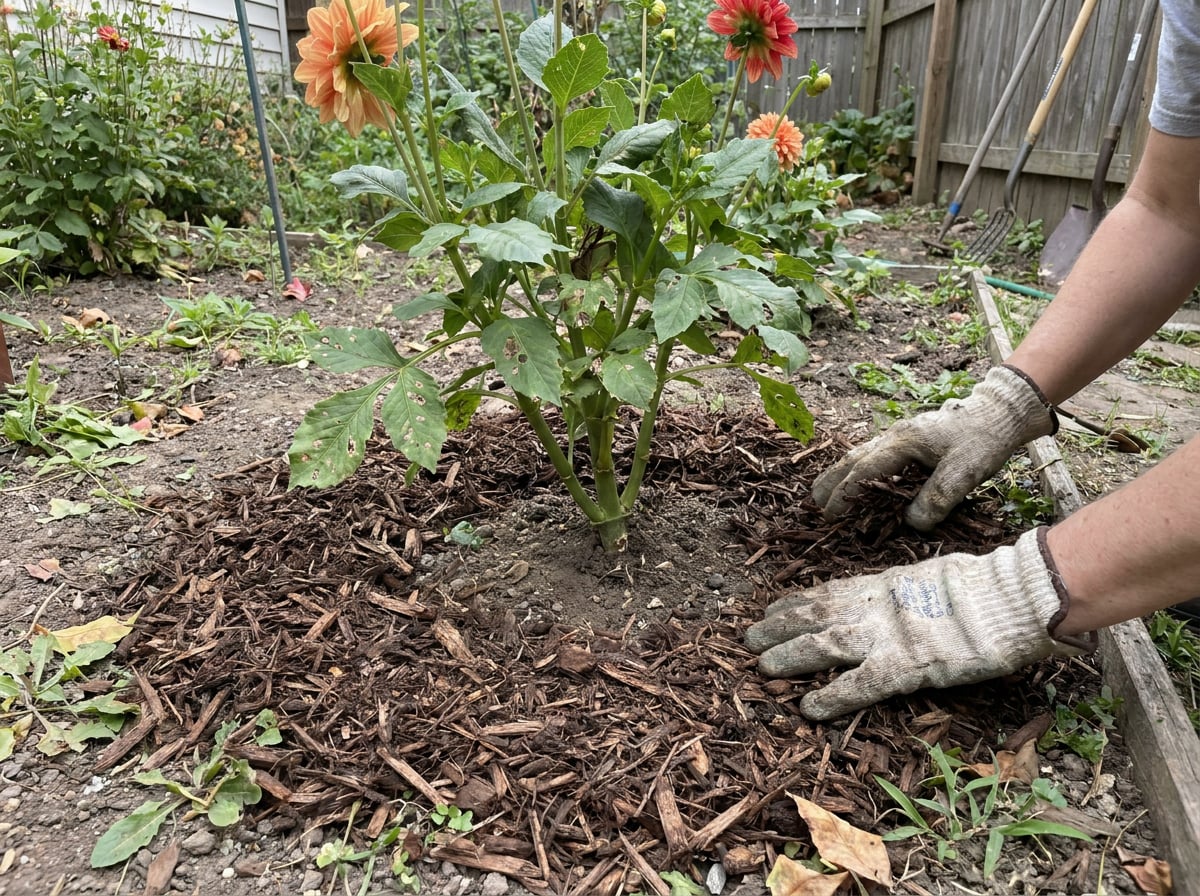
August sun bakes bare soil into something closer to pottery than dirt. I top mine with two to three inches of shredded leaves, straw, or clean mulch to keep the root zone cooler and stop every drop of water from vanishing by lunchtime.
Keep the mulch a few inches away from the main stalk. Piling it right against the stem traps moisture, invites rot, and gives slugs and earwigs a luxury apartment beside your dahlias.
3. Add or Adjust Stakes
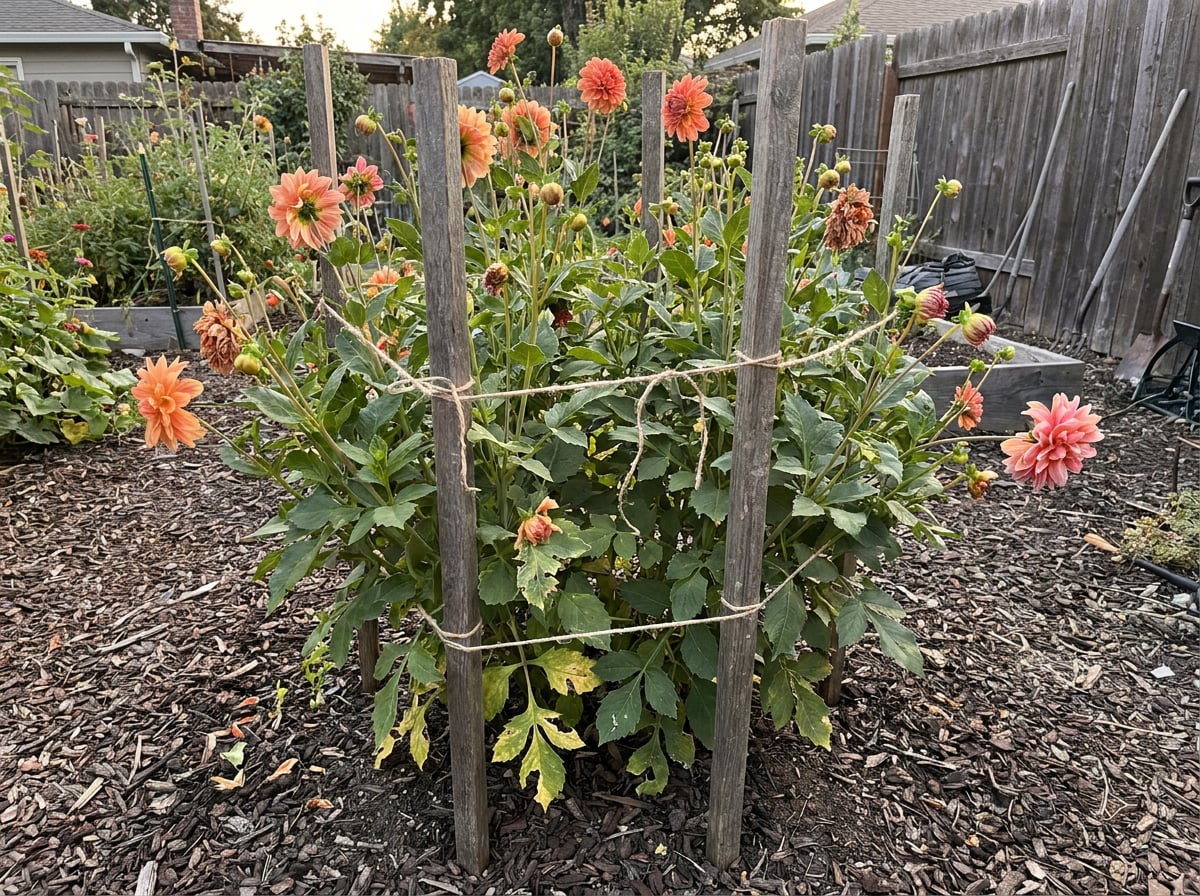
Mid-August rainstorms can flatten a top-heavy dahlia before you say “stake, what stake?” Rain-soaked blooms catch a sudden gust like an open sail, and unsupported stems can snap near ground level.
If I have to add a stake in August, I drive it a few inches from the main stalk so I don’t spear the tubers underground. Tie heavy branches separately with broad cloth strips or soft tape, and leave a little slack. The stems still need room to flex in a storm.
4. Water Deeply During Dry Weather
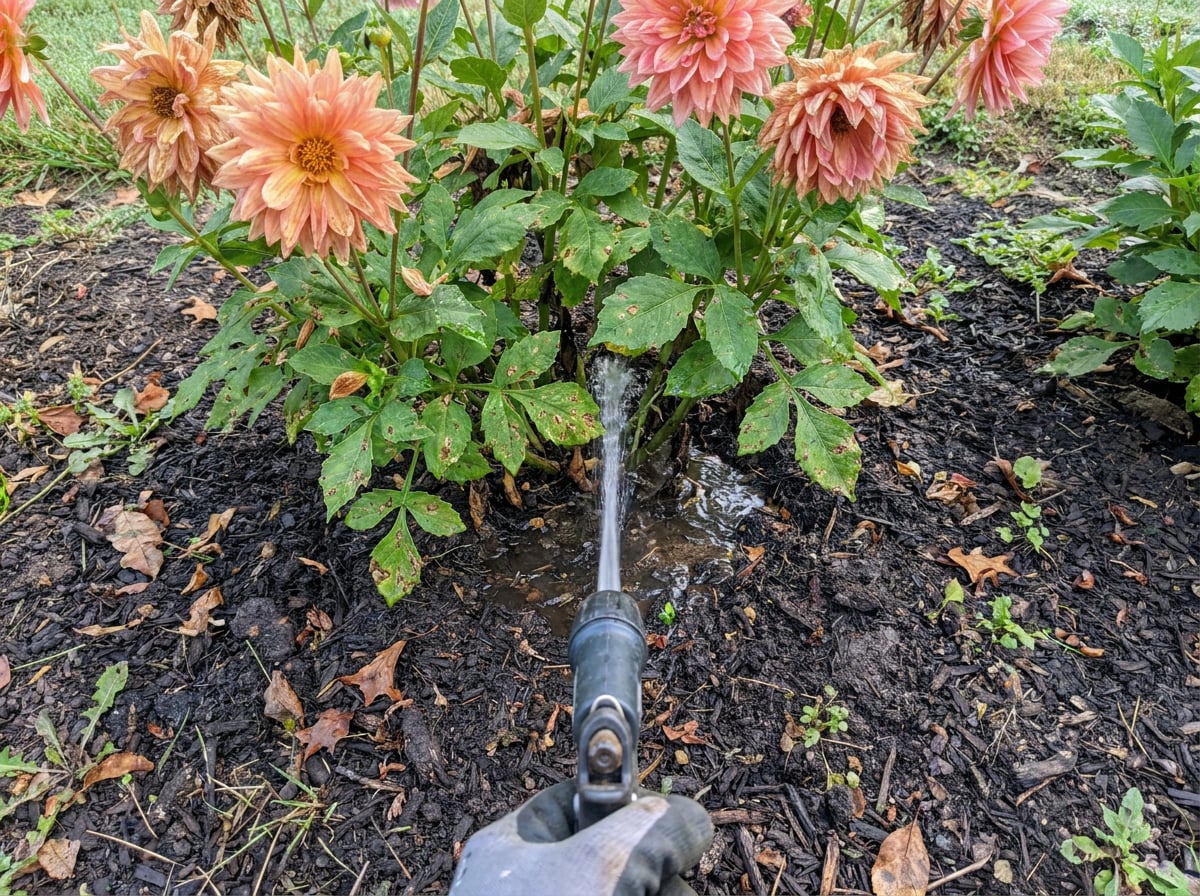
Run a soaker hose along the soil line until the water sinks about six inches into the root zone. Deep watering keeps leaves firm and reduces the stress that can make buds yellow or drop.
During hot, dry spells, I water deeply once or twice a week, depending on how quickly the soil dries.
Keep most of the water on the soil. Wet petals do not burn in the sun, but soaked blooms can become spotted, heavy, and slow to dry, giving botrytis an easy opening.
Quick tip: If you added mulch, check the soil underneath before watering. The surface can look bone-dry while the root zone still holds plenty of moisture.
5. Flush Out the Pests
Spider mites love dusty, bone-dry August leaves. Yet, you don’t love spider mites.
Blast the undersides of infested leaves with a firm spray from the hose every few days, preferably early in the morning so the foliage dries quickly. You’ll knock down their colonies without reaching straight for pesticides.
Earwigs creep out at night with one goal: tearing your best buds and petals to ribbons. Roll up a damp newspaper, place it near the main stalk, and leave it overnight. The next morning, shake those uglies into soapy water while they’re still hiding from daylight.
6. Begone, Diseased Foliage
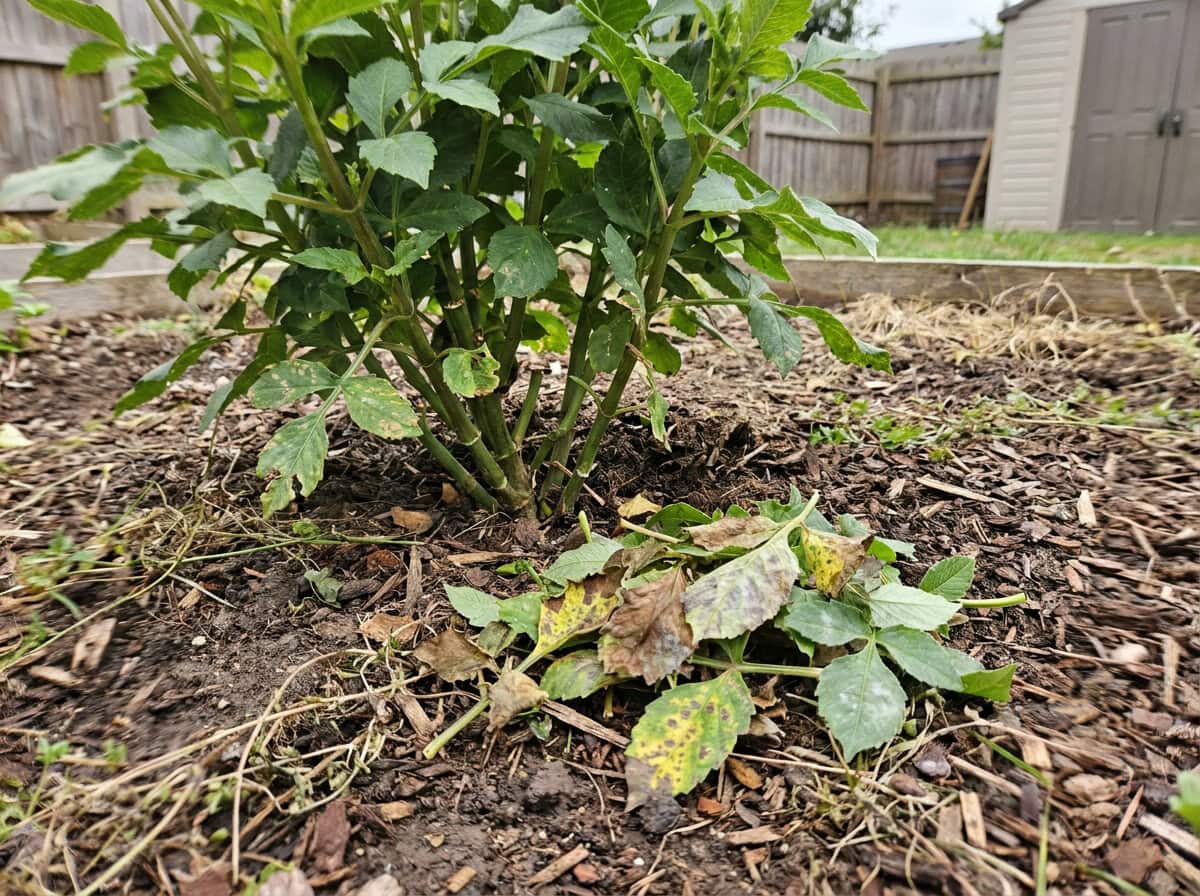
Yellow, damaged lower leaves do little good. They block airflow, catch splash-back soil, and hold moisture around the lower stems.
Snip off lower leaves that show black spots, gray powder, or serious yellowing using clean pruners. Clear out the bottom two or three sets of leaves, especially anything touching the soil, until you can see some daylight through the center frame.
Quick note: Sweeping more air through the bottom helps slow powdery mildew and other leaf problems. Dispose of diseased foliage with a vengeance.
7. No More Mr. Nitro Guy
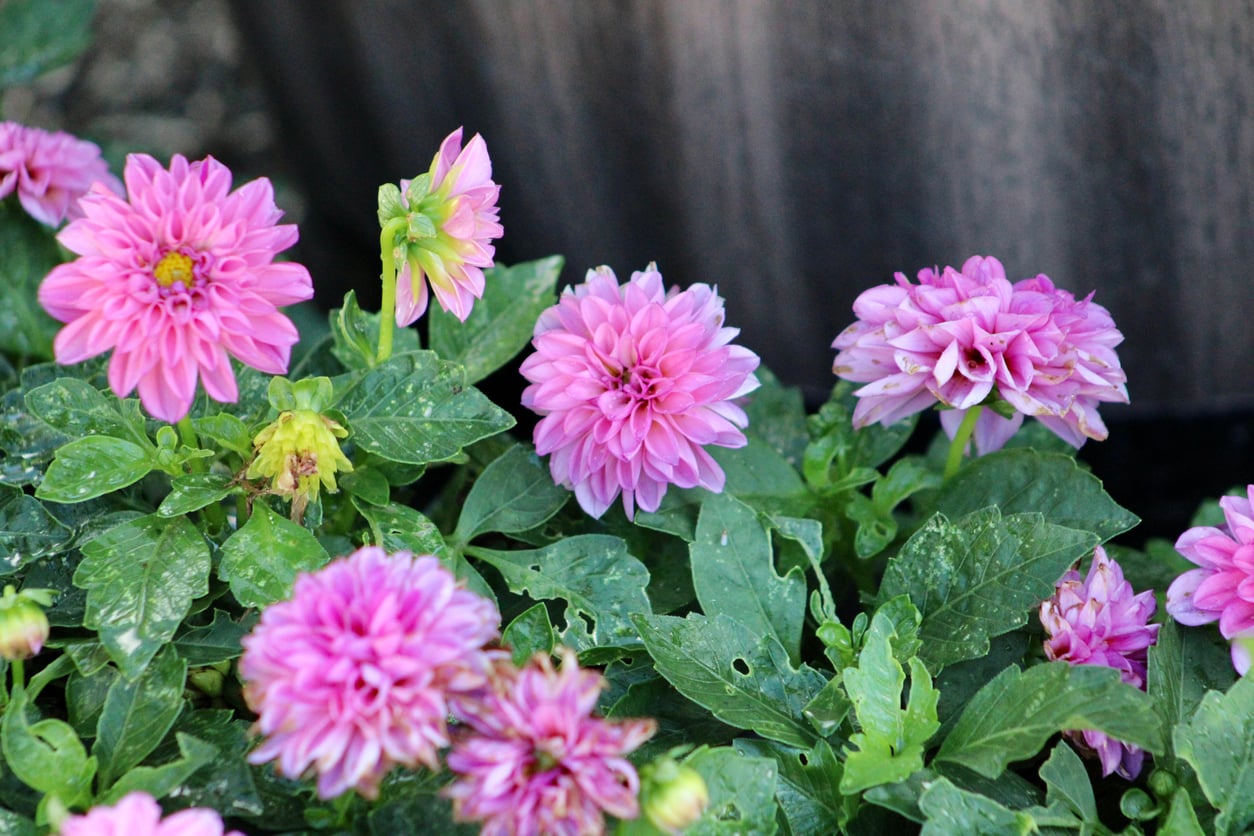
Feeding dahlias high nitrogen now just gets you lush, flopping leaves while the buds get put on hold. Soft new growth can also attract aphids.
If the plants still need feeding, put the high-nitrogen fertilizer away. Use a low-nitrogen bloom fertilizer at the label rate instead.
Prefer liquids? I use a half-strength bloom formula around the base every 14 days, then stop feeding by September so the tubers can start preparing for fall.
Disbudding’s a Word
I admit, the only time I’d heard about disbudding, it had nothing to do with flora but domesticated fauna. Different targets, same concept: stopping extra growth before it takes off.
Stripping off the two small side buds around a central bloom directs more of the plant’s energy into one larger flower.
Perfect if you’re chasing a huge centerpiece, though you’ll lose some of your overall bloom count. Pass if you prefer quantity over ginormity.
Once frost finally shuts down the flower show, we wrote a full guide on how to dig, store, and replant your dahlia tubers next spring.


