Tropical hibiscus bud drop is usually a stress response, pure and simple (though pests can cause it too). These plants will give up on perfectly good buds to save their own necks over the smallest change, dropping them onto the patio because the wind blew the wrong way. Among other things.
Here’s why those buds are dropping, and exactly what to do so the next round actually opens.
First, Check Whether the Flower Already Bloomed
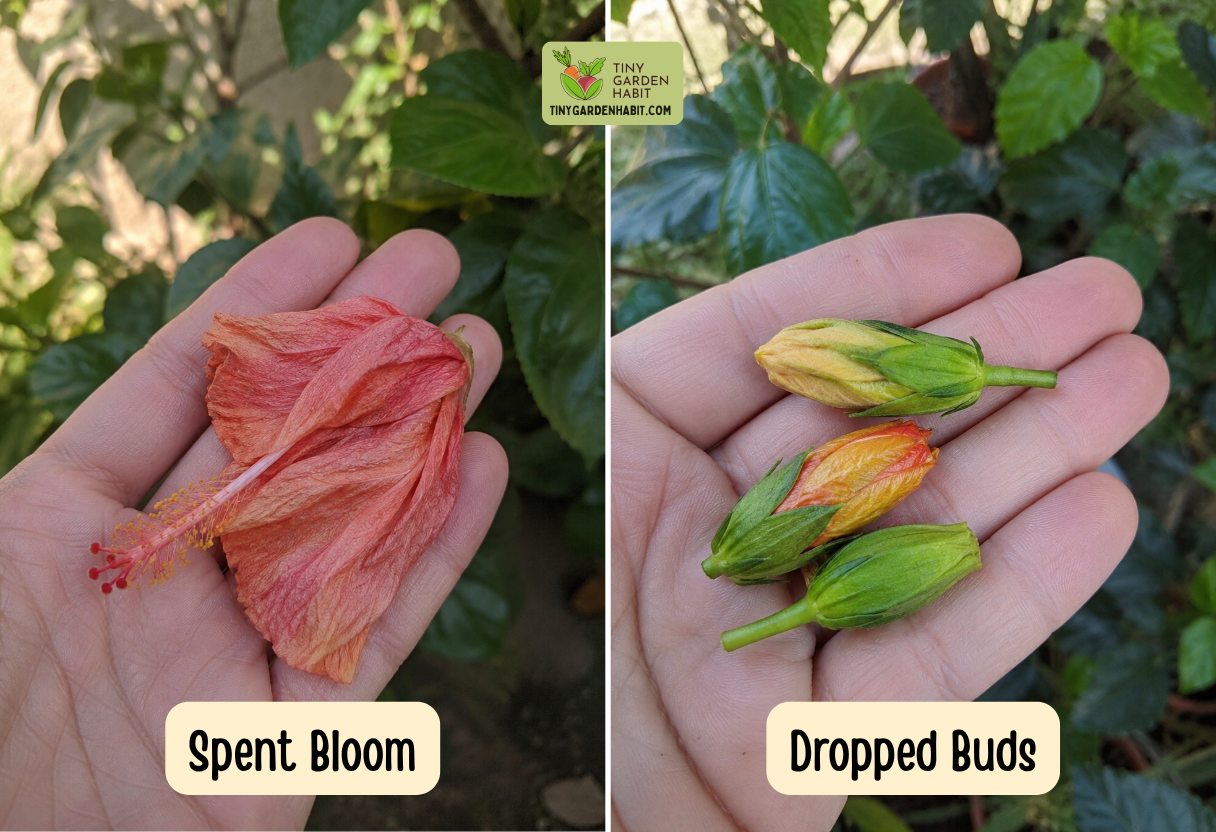
Stop obsessing over dead plant tissue until you actually identify what fell off.
Most tropical hibiscus blooms are one-day showpieces. They open in the morning, look spectacular for the day, collapse into a twisted tube by sunset, and soon afterward. That’s basic Hibiscus rosa-sinensis biology, not a crisis.
True bud drop looks different. The bud yellows, withers, and falls while it’s still locked tight as a bullet, sometimes snapping off cleanly at the swollen joint where the flower stalk meets the stem. That is the operational failure you need to fix.
Why Your Hibiscus Buds Keep Falling Off Before They Open? 5 Reasons
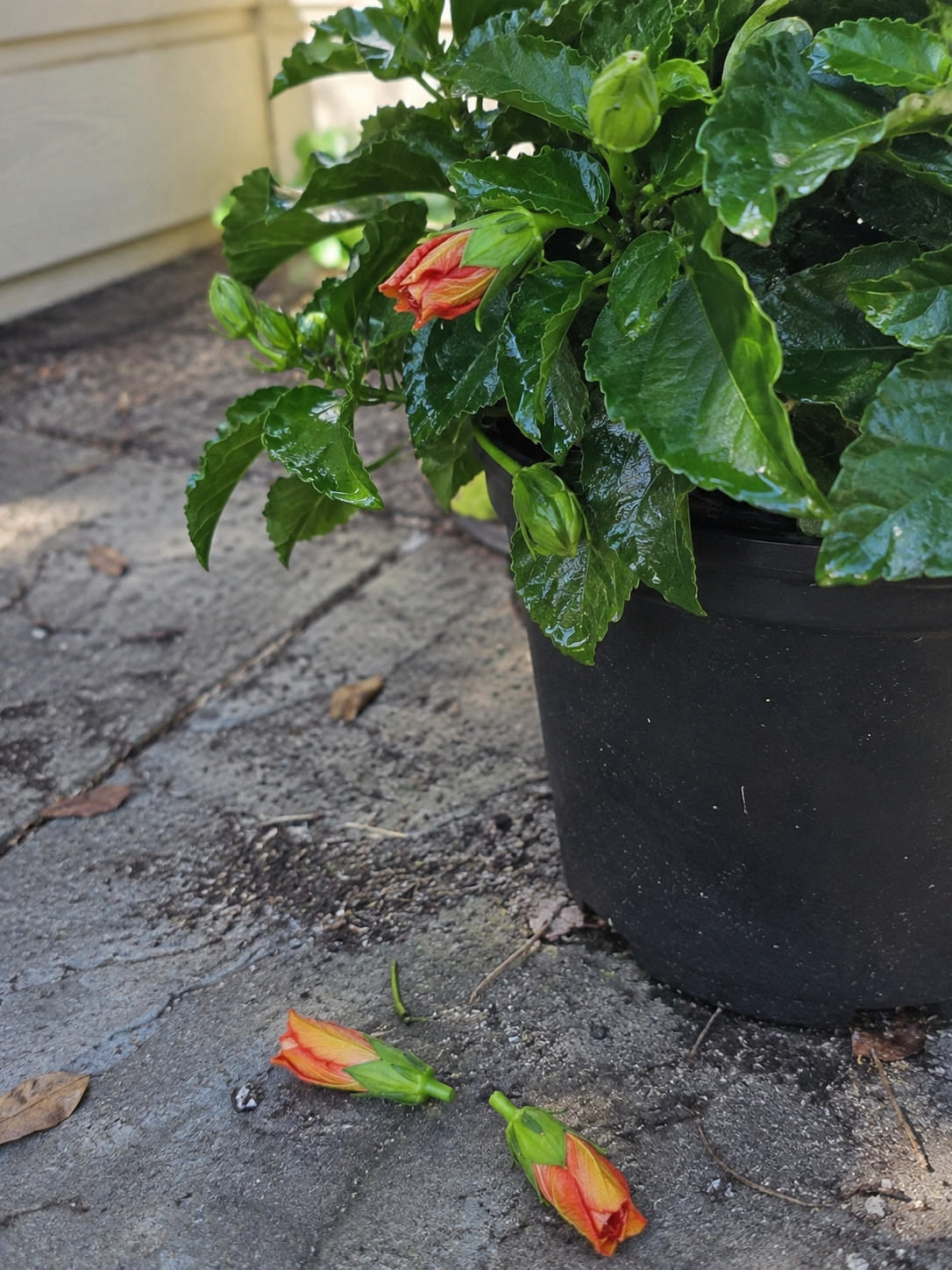
Now that you know the difference between a spent bloom and a bud that dropped before opening, here are the five most common reasons it happens, and what to do so the next round actually opens.
1. The Soil Is Drying Out Too Much
Hibiscus roots in black plastic pots can turn to kadayif by 2 PM in July. Miss one watering, the leaves hang to rags, and the plant starts sacrificing unopened buds to survive. It’s triage.
Then you dump a gallon of water on top, see it revive, and assume you dodged a bullet. You probably didn’t. The buds can still drop a day or two later anyway because the the drought stress has already interrupted their development.
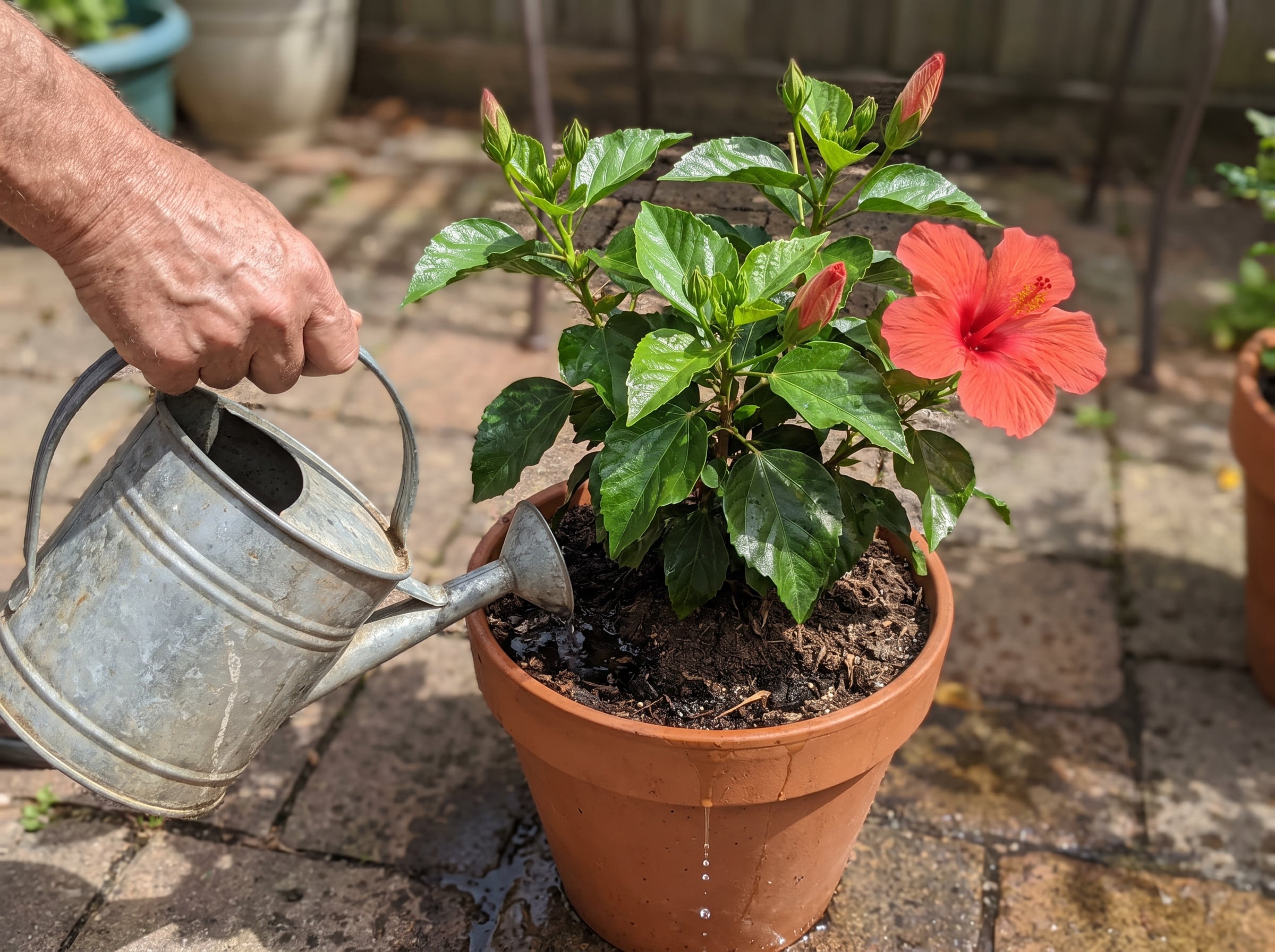
What to do instead: Check your pots daily during hot weather. When the top inch of soil feels dry, soak the pot until water runs freely from the drainage holes. If it repeatedly dries out by lunchtime, check whether the plant is rootbound and needs a container one size larger.
2. Sudden Temperature or Location Changes
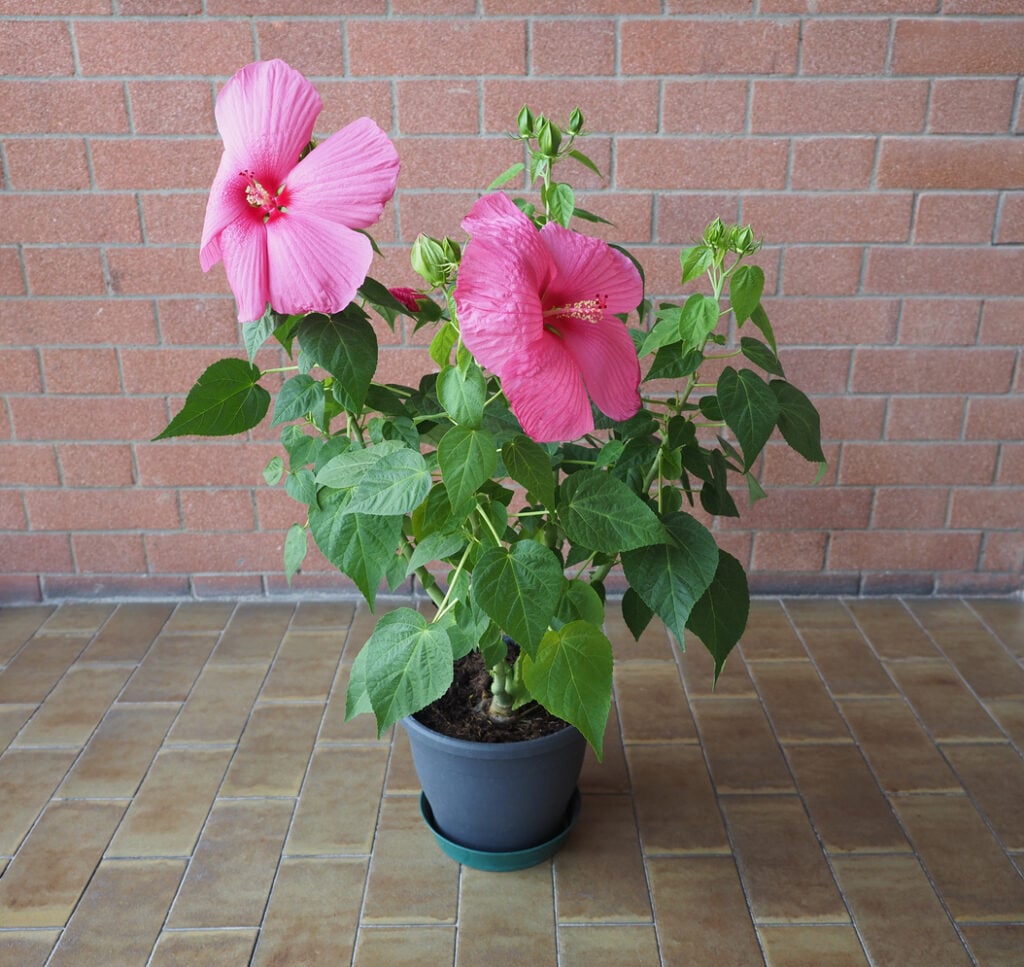
Hibiscus despises surprises. Dragged the pot four feet across the deck into different light? Pushed it under an overhang? Brought it indoors because the night air felt crisp? A fully budded plant may answer by dropping green buds before your cat even wakes you up.
Cold drafts, hot air blasting from an outdoor AC unit, sudden heat spikes, and abrupt changes in light, temperature, or humidity can all stress tropical hibiscus enough to sacrifice developing buds.
What to do instead: Pick one good spot and leave the plant there. If a seasonal move is unavoidable, acclimate it gradually over one to two weeks instead of forcing an overnight scare.
3. The Plant Is Not Getting Enough Light
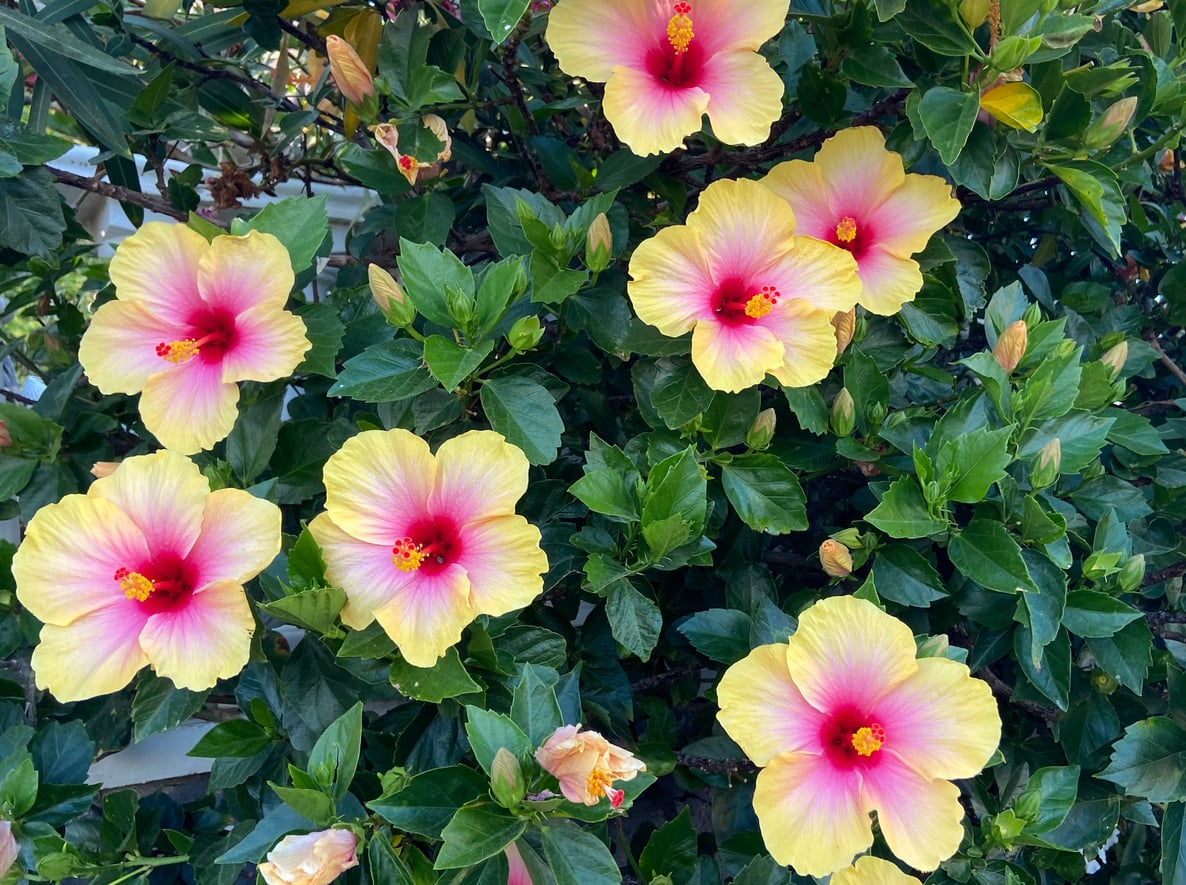
Flowers demand massive energy. Tropical hibiscus flowers best with around six hours of direct outdoor sun and too little light can leave developing buds stalled or dropping before they open.
But if it’s been parked in the dark, don’t just shove it into blazing midday sun tomorrow. The leaves can scorch before the plant has time to adjust. And stop expecting liquid fertilizer to offset low light. No amount of plant food replaces actual photons.
What to do instead: Move it into stronger light gradually over about a week. Aim for at least six hours of sun outdoors, although some afternoon protection can help during extreme heat. Indoors, give it your brightest south-facing window or supplement with a grow light.
4. You’ve Waterlogged Soil or Poor Drainage
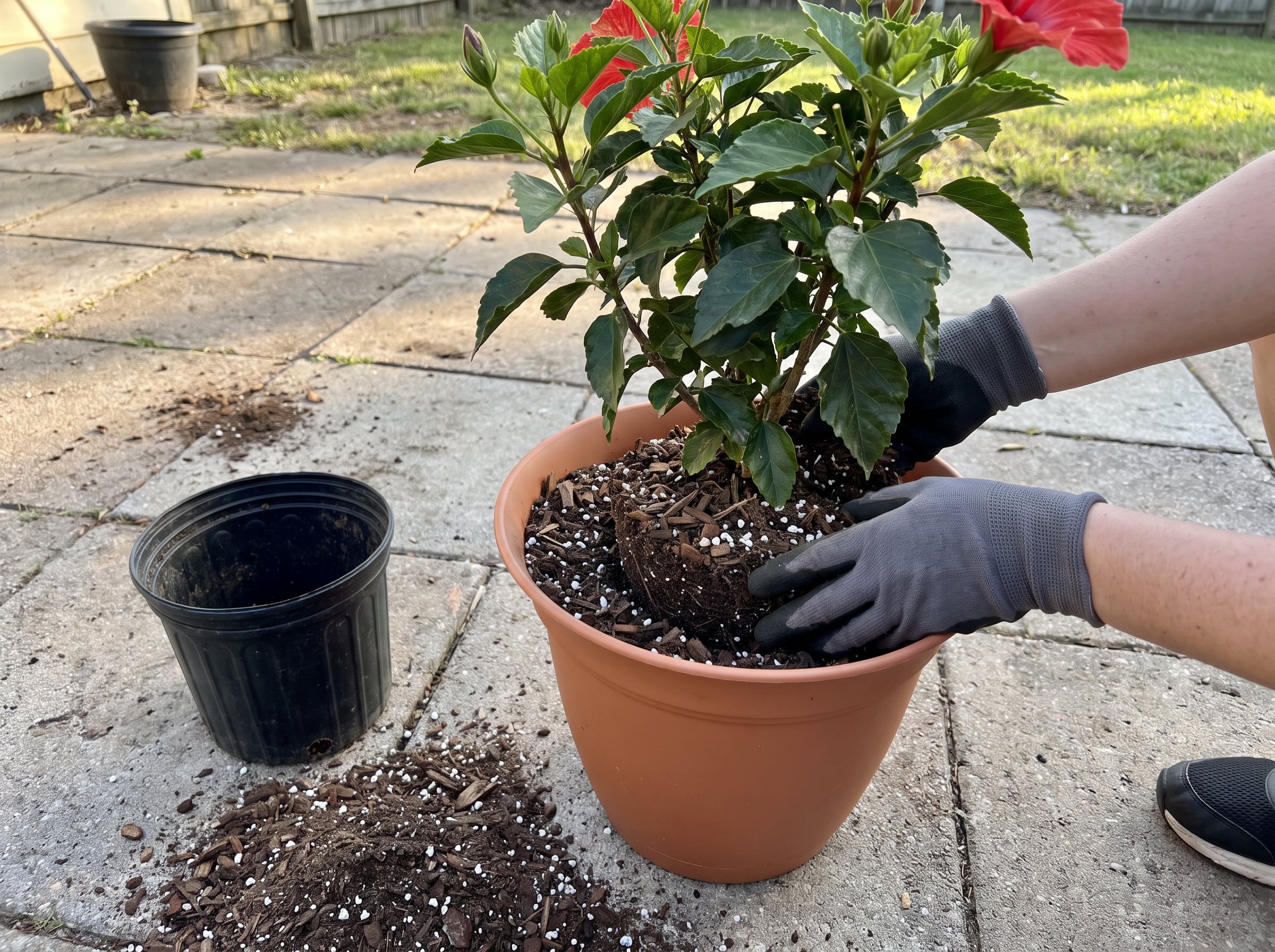
Drowning the root zone can trigger the same leaf-ditching, bud-dropping hysteria as drought.
Waterlogged soil pushes oxygen out of the root zone, and if it stays saturated long enough, the roots begin to rot. Once damaged roots can’t move water and nutrients properly, the plant starts sacrificing buds.
What to do instead: Verify that the pot actually has open drainage holes, and toss excess water out of the saucer instead of letting the plant sit in a putrid moat. If the soil stays soggy for days, repot in a loose, high-quality potting mix that holds some moisture but still drains freely.
If the buds are dropping and the foliage is yellowing too, we wrote a separate guide explaining the most common reasons hibiscus leaves turn yellow.
5. Fertilizing Much?
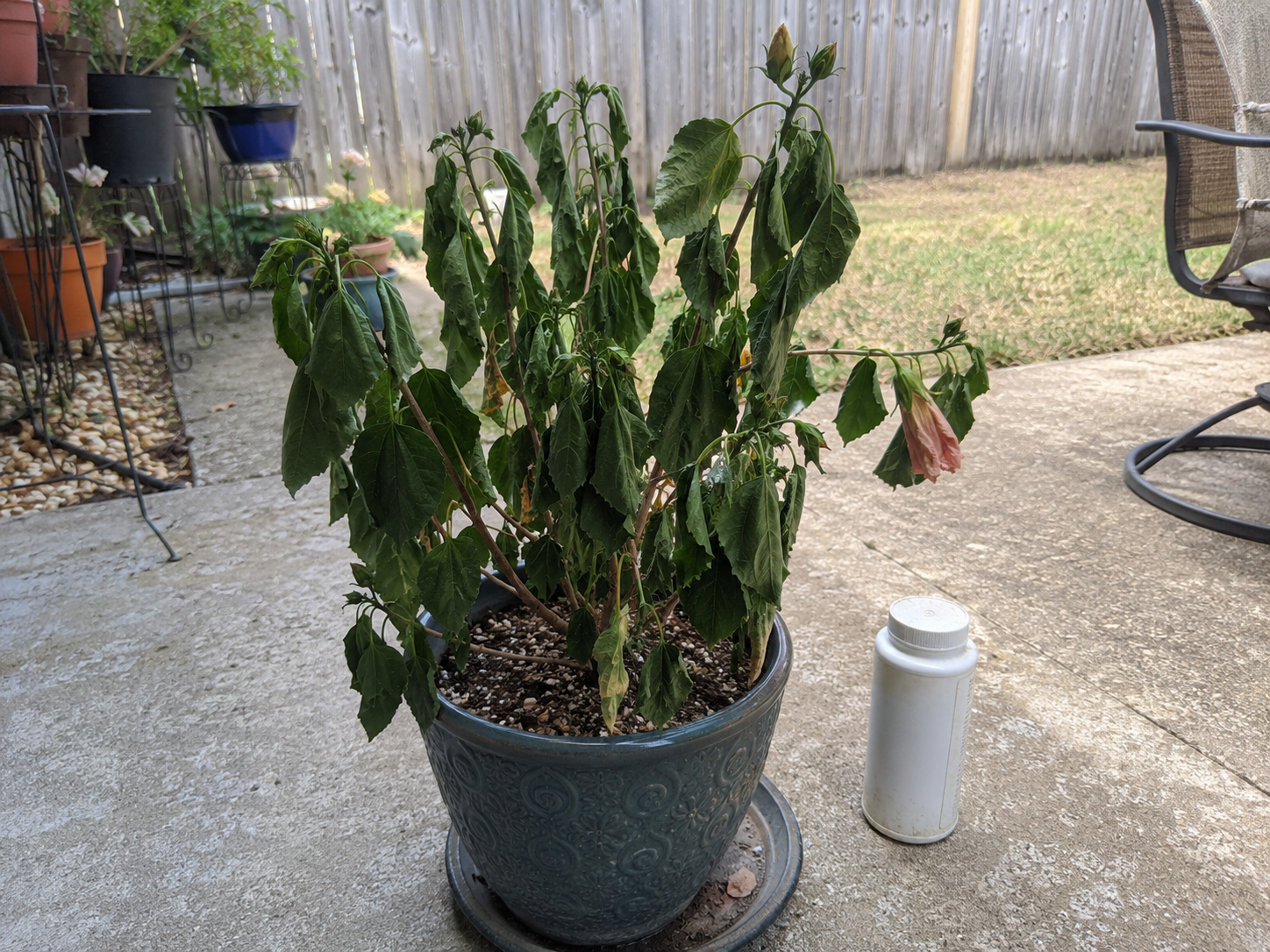
I see panicked growers reach for the fertilizer bottle as soon as the buds start dropping. If the plant is already stressed, you’re just burning the house down faster.
Too much nitrogen can push a flush of soft green growth at the expense of flowers, while overly concentrated fertilizer salts can scorch fragile feeder roots and trigger even more bud drop.
What to do instead: Never feed a dry, wilted, or otherwise stressed hibiscus. Water it normally and let it recover before fertilizing again. Skip the extra bloom booster for now.
How to Stop Hibiscus Bud Drop
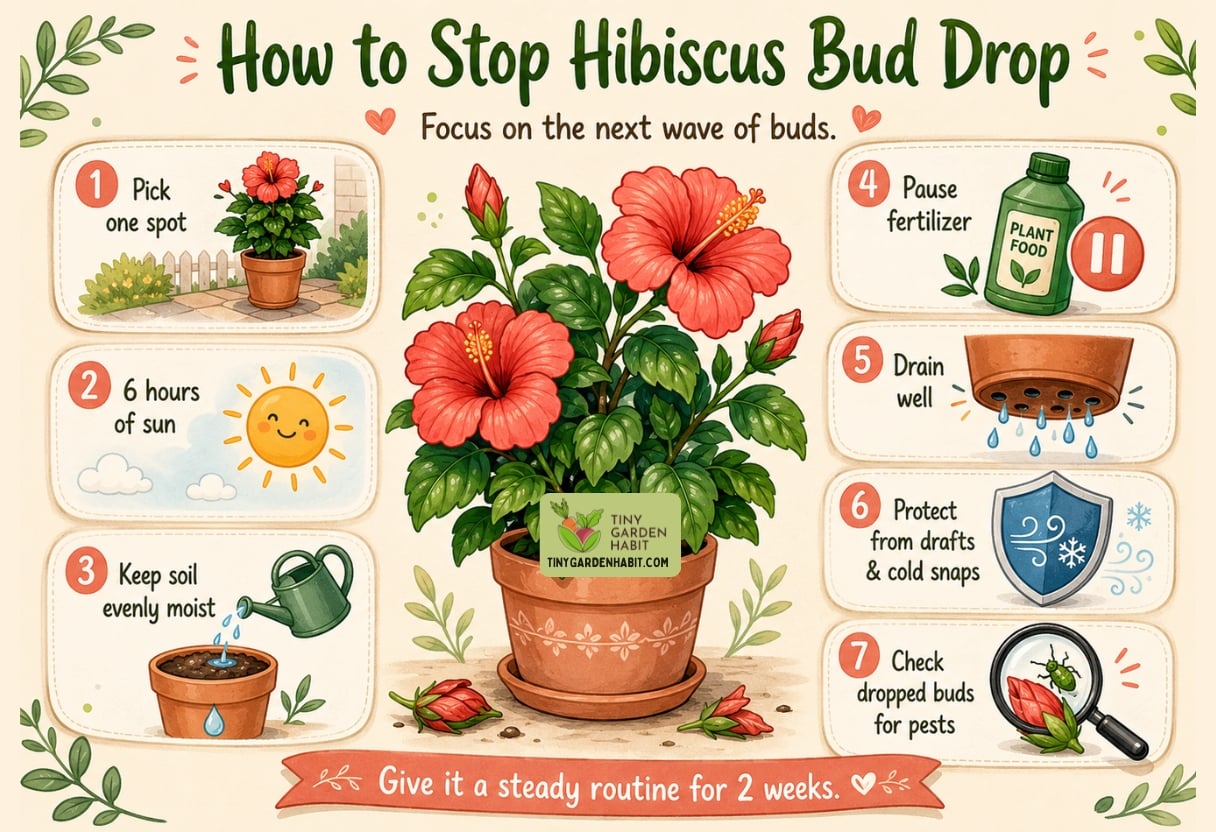
Accept the harsh reality: those yellowing buds hanging by a thread are already lost. No product, spray, or trick will reattach them. You’re fighting for the next wave. Here’s what you’re going to do next:
In other words, give the plant a couple of weeks on a steady routine. Once the source of stress is fixed, the next round of buds has a much better chance of opening.
Does the USDA Zone Matter?
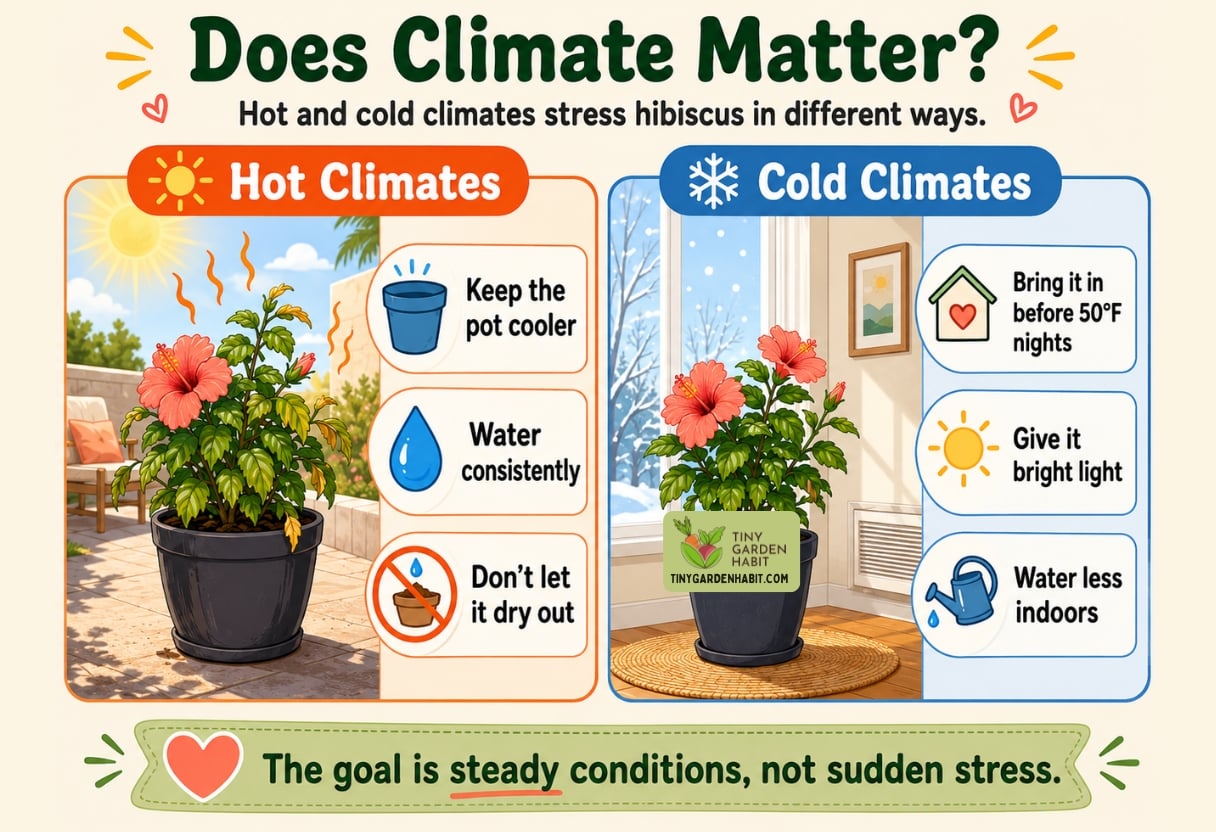
Climate dictates where the damage hits hardest, although USDA zone alone doesn’t tell the whole story.
In hot southern climates, blazing concrete, overheated pots, and rapid evaporation can cook the root zone within hours. Your primary fight is keeping the pot cooler and the soil consistently moist, not waiting for the plant to wilt and then flooding it.
In colder climates, mass bud drop often starts during the fall panic. The worst thing you can do is wait until it’s nearly freezing, then haul your hibiscus straight into a dark corner beside a radiator. That sudden change in light, temperature, and humidity freaks it out.
Bring tropical hibiscus indoors before nighttime temperatures regularly dip below about 50°F. Place it in your brightest spot, away from heating vents and cold drafts, and ease up on watering because lower indoor light slows root uptake. Just don’t let the soil dry out completely.
Stop the Drop, Drop the Panic
I’ve racked up a serious bud count by panicking and throwing every fix at the pot at once. Stop dragging the plant across the yard, pouring bloom booster on it, and drowning it all before brunch.
Fix the watering consistency first. Lock in the light. Rule out drainage problems and pests.
Then leave the plant in peace, stop over-managing it, and give the next cycle of buds form a chance to form under steadier conditions. Once the plant settles down, we also wrote a seasonal guide on how to keep hibiscus blooming through the rest of the growing season.