
Hydrangeas wilt because they lose water through those massive leaves faster than their roots can replace it, especially during hot, sunny afternoons. It happens almost as quickly as my favorite uncle can empty a bottle of brandy, so I know exactly how you feel right now.
Nothing can replace proper hydration, but there are a few practical things we can do to stop both from drinking us out of house and home just to stay upright.
No More Pour Decisions
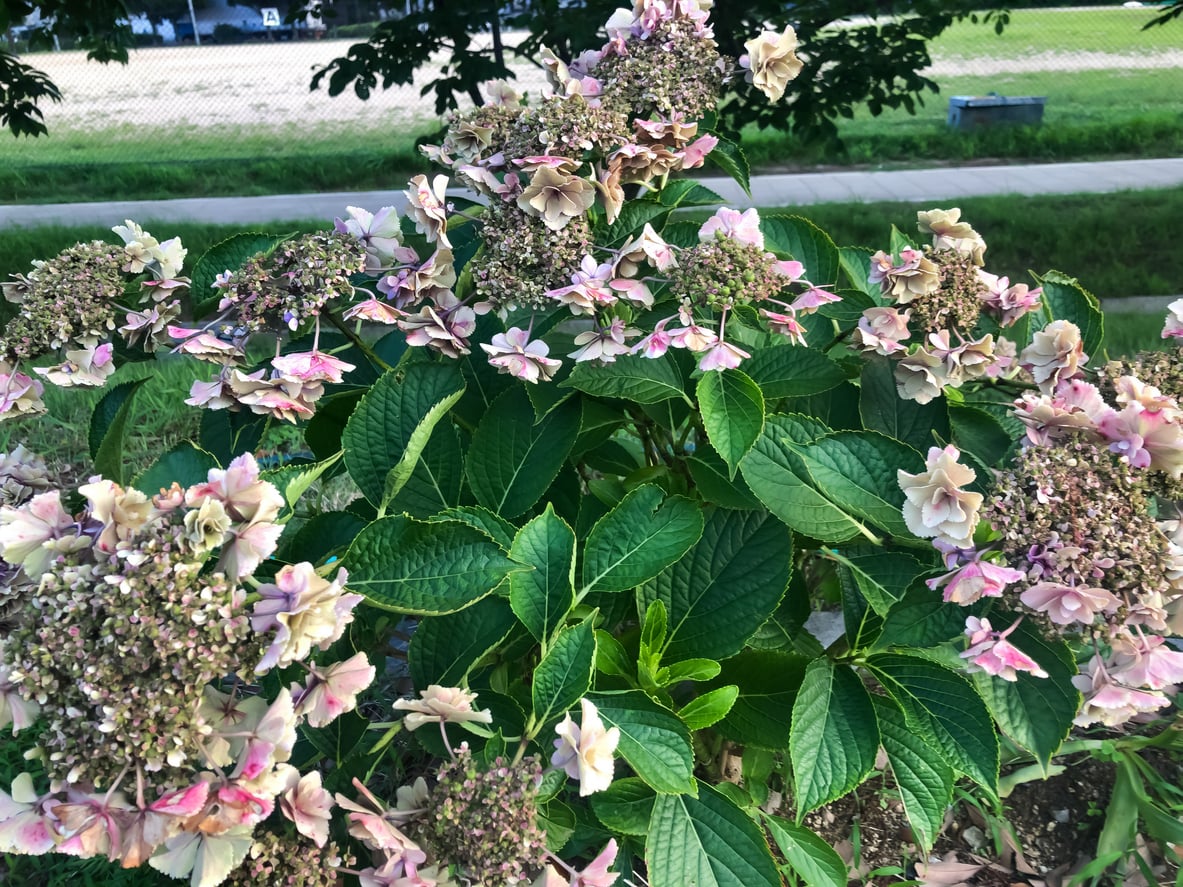
A hydrangea in July can look desperately thirsty, with drooping leaves by late afternoon and crispy brown edges after prolonged heat stress. That does not always mean it needs more water. Here are the seven things I do to help my hydrangeas cope with hot summer weather.
1: The Twelve-Inch Metal Deep Dive
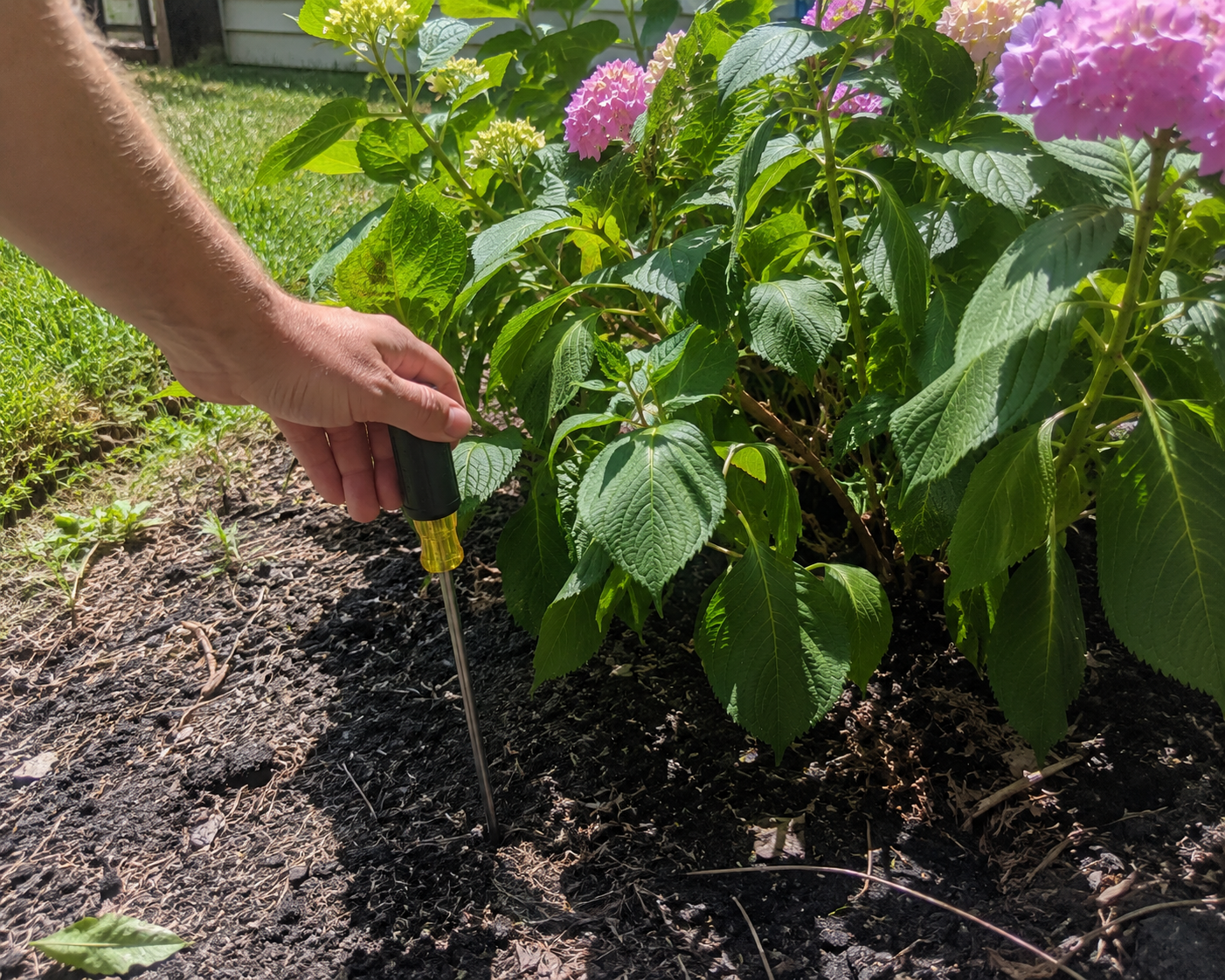
Your standard index-finger test is great for checking the topsoil, but midsummer heat demands a much deeper look. The surface can feel damp while the main root zone underneath is still bone-dry.
I use a 12-inch flathead screwdriver to see what is happening below the surface. Drive it straight into the soil at the shrub’s drip line.
Quick note: Dry ground may be the problem, but compacted soil, stones, and thick roots can also block the blade. Whenever I’m unsure, I test one or two more spots.
2: The Five-Gallon Gravity Bucket
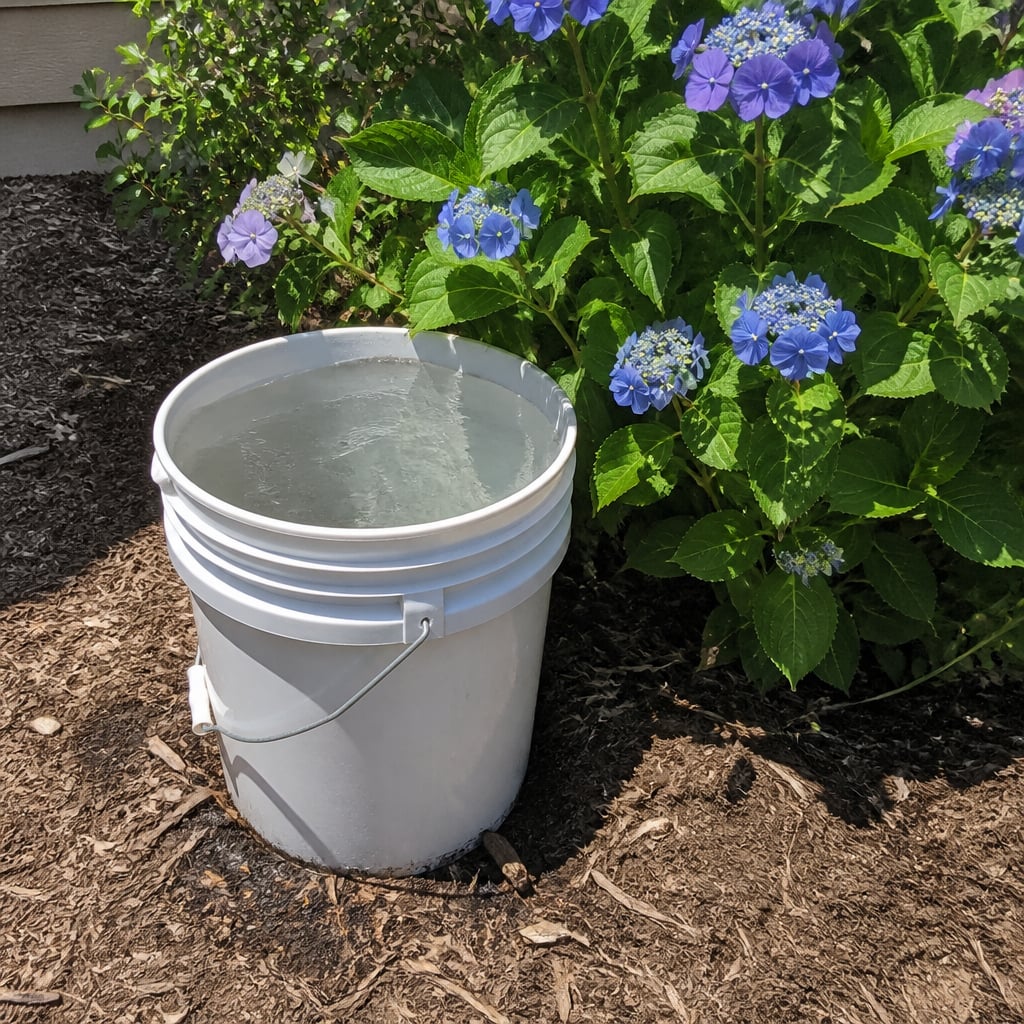
I drill one or two small holes through the bottom of a five-gallon bucket, then test how slowly it drains before taking it into the garden. The goal is a steady trickle.
Set the bucket beneath the shrub’s outer canopy rather than right against the main stems, then fill it up. The slow release gives the soil time to absorb the water deeper into the root zone instead of letting it run across the surface.
During stretches above 90°F, I check the soil every day or two and refill it only when the root zone is beginning to dry. I also move the bucket to a different spot each time so I am not soaking the same patch over and over.
Quick note: Sandy soil may need water more often, while heavy clay can stay wet much longer.
3: Throwing Shade on a Midday Slump
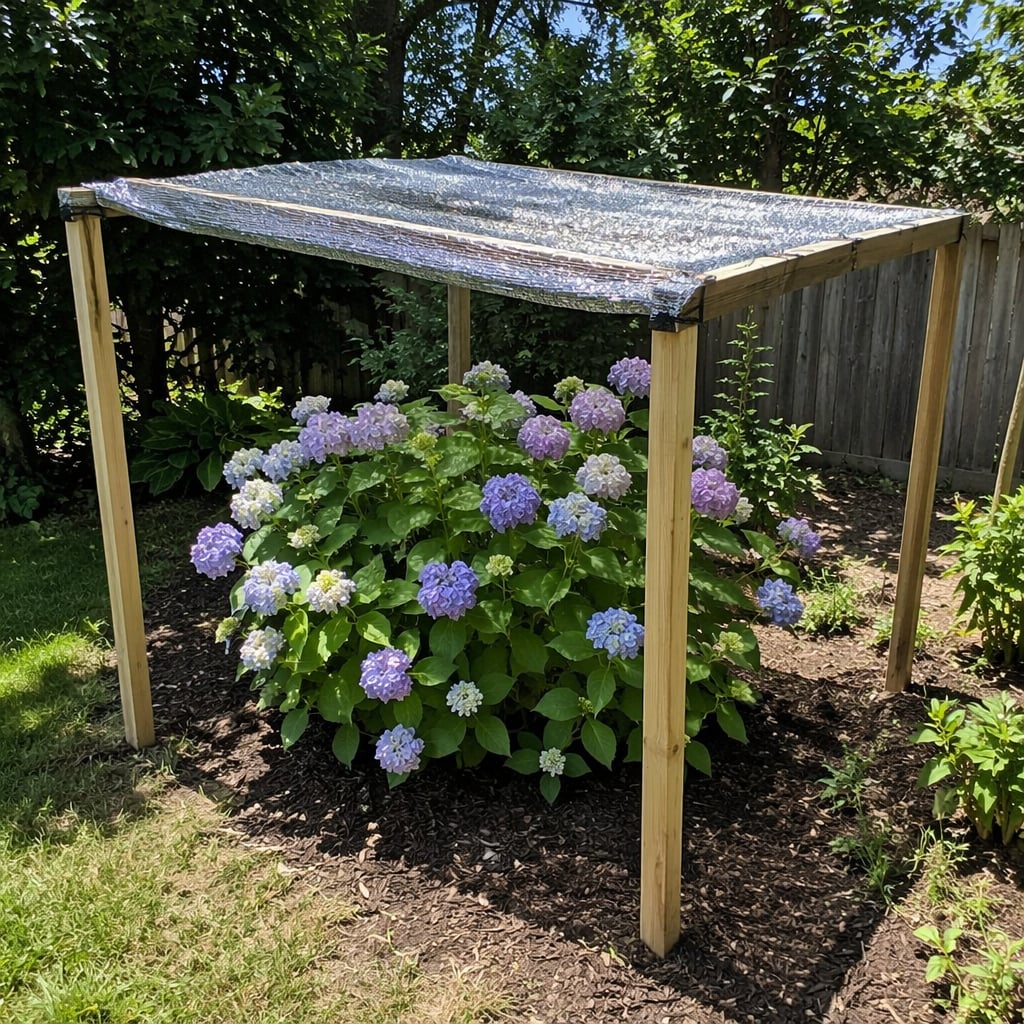
Black shade cloth can work, but I prefer 40% Aluminet during brutal summer heat because its reflective fibers help reduce the amount of heat reaching the foliage.
I secure it on the southwest side with a few sturdy wooden posts and zip ties, keeping the fabric above the shrub rather than resting it on the leaves. Leave the bottom foot open so hot air can escape.
It takes the edge off the harsh afternoon sun and helps prevent leaf and flower scorch without trapping heat around the plant.
As a bonus, it also temporarily blinds any peeping neighbors.
4: Cooling Soil With Thick Mulch
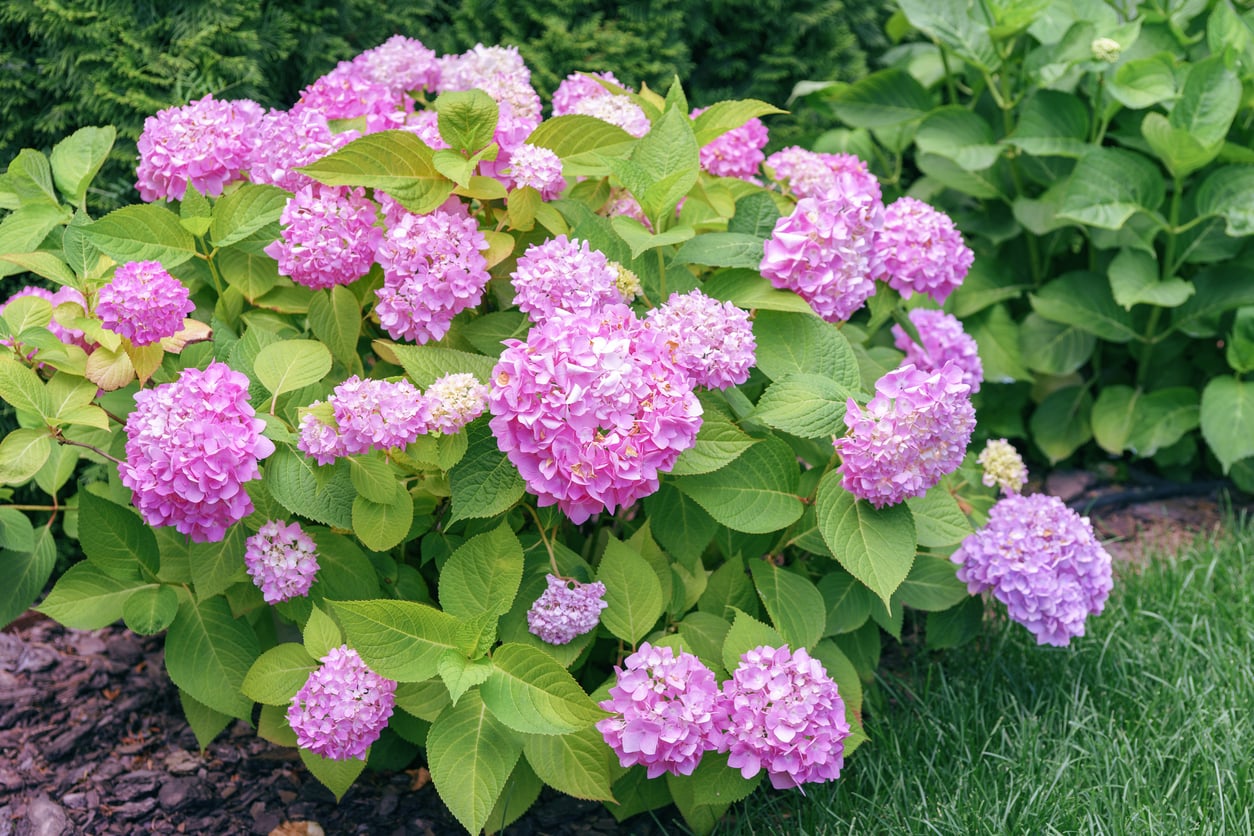
As someone who once actually put quality lipstick on a pig in my wild days, I can attest that a thin, decorative layer of wood chips around the base is just as silly and wasteful.
For real moisture retention, I spread about 3 inches of organic mulch across the entire root zone. Spread it wide, but leave a clear 2-inch breathing ring around the main woody stems.
That heavy blanket helps the water from your gravity bucket soak in and keeps the root zone from drying out so quickly.
Quick note: Coarse bark, wood chips, or shredded leaves all work. The mulch slows evaporation, keeps the soil cooler, and reduces soil splash onto the lower leaves.
5: Cutting Ties With High-Maintenance Blooms
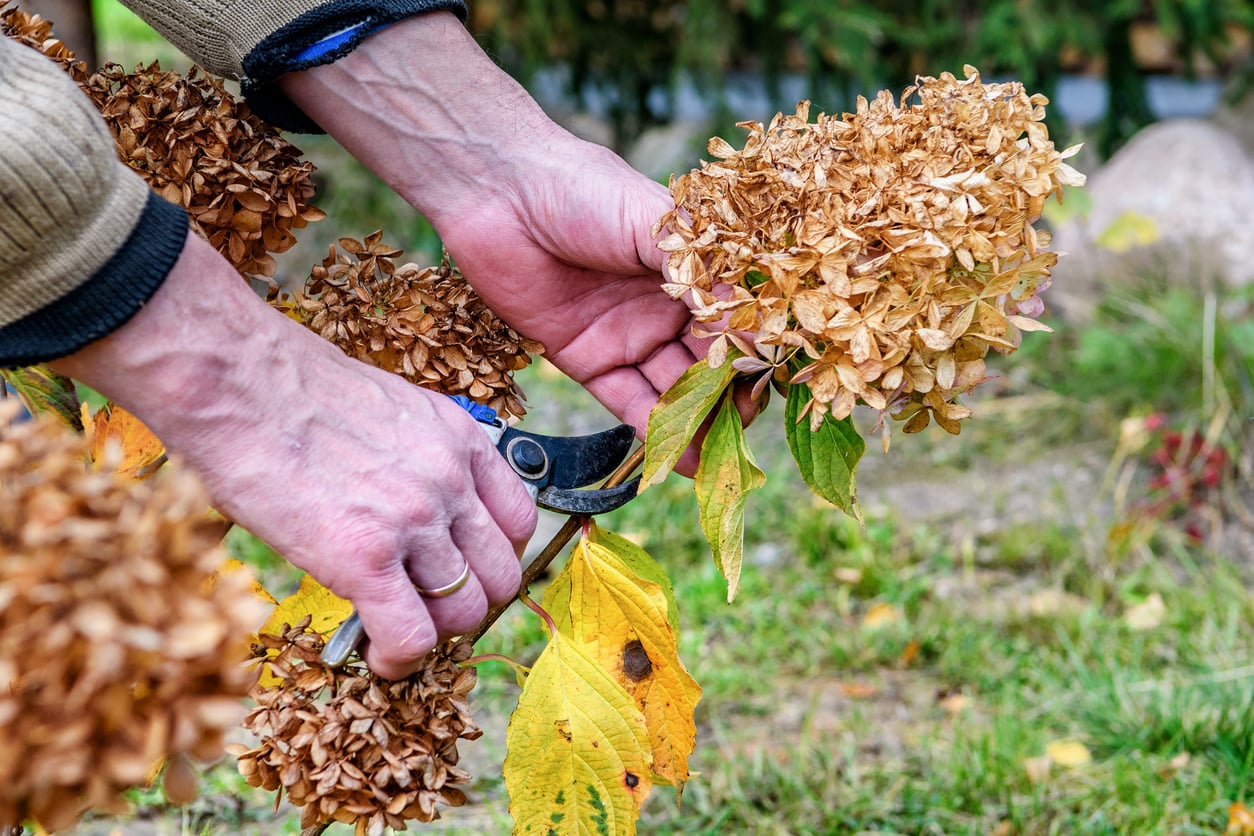
When midsummer heat leaves the flower heads faded and crispy, I like to remove them for a cleaner look.
Take sharp pruners and clip each spent bloom just above the first healthy pair of leaves or buds beneath it. Then put them down before you get carried away.
This is also the safest cleanup approach if you do not know which type of hydrangea you have. Old-wood varieties may already be forming next summer’s flower buds, so cutting too far down the stem could remove next year’s blooms before you ever get to enjoy them.
If you want to go any further than this light cleanup, we explain exactly when and how to prune each hydrangea type in our complete pruning guide.
6: Shutting Down the Summer Buffet
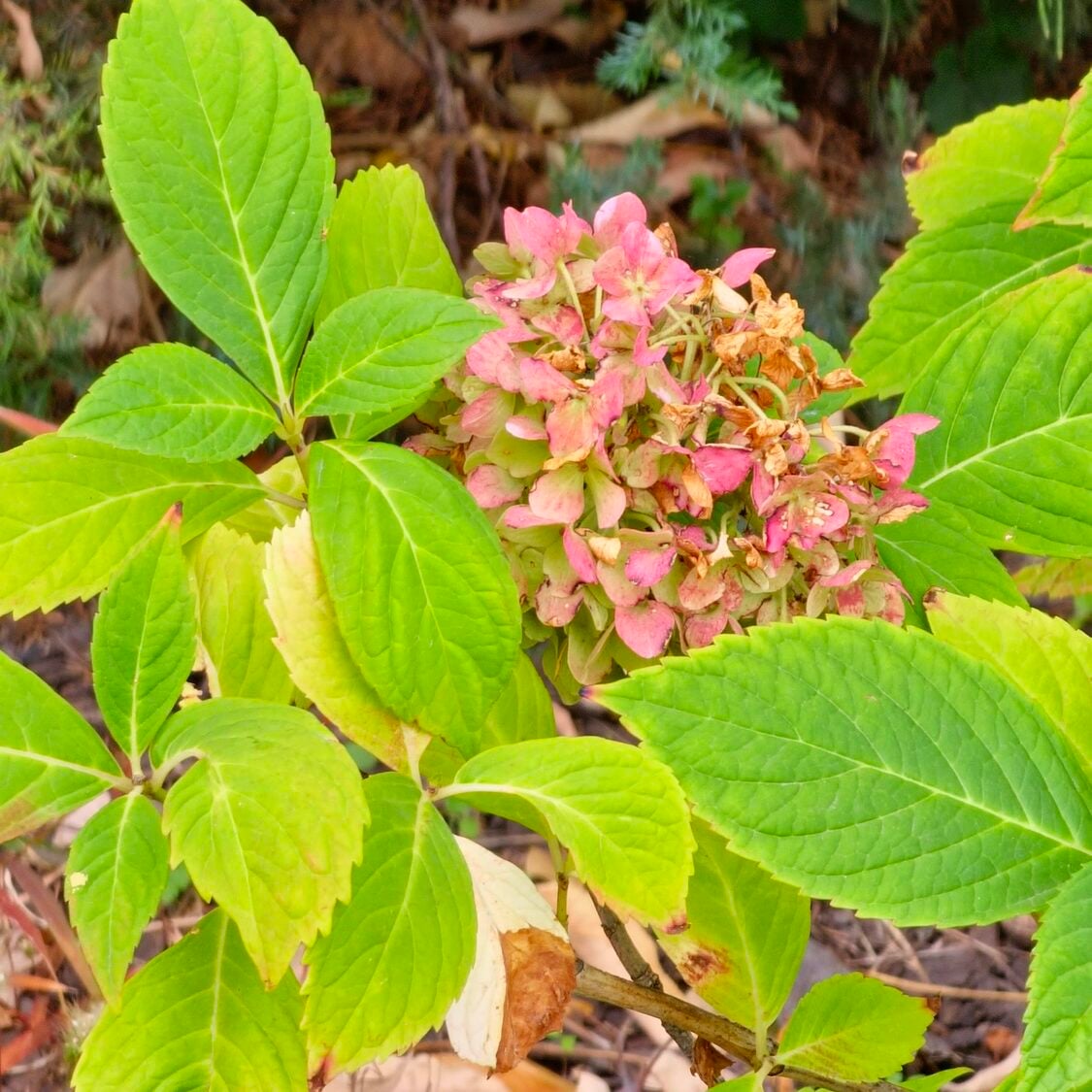
A high-nitrogen feeding pushes an explosion of tender leaves and thin sprouts that demand even more water. That is the last thing a heat-stressed hydrangea needs.
So I hold the fertilizer hostage. During brutal heat, I let it slow down and recover without forcing unnecessary growth. Right now, my only job is keeping the existing leaves hydrated and quiet.
Quick note: Fertilizer salts can also damage roots when the soil is dry. I wait until the weather cools and the plant is properly hydrated before considering feeding again.
Too much nitrogen is only one way to sabotage the show, so we also wrote a guide to the seven mistakes that keep hydrangeas from blooming and how to fix them.
7: Daylight Drinking Only
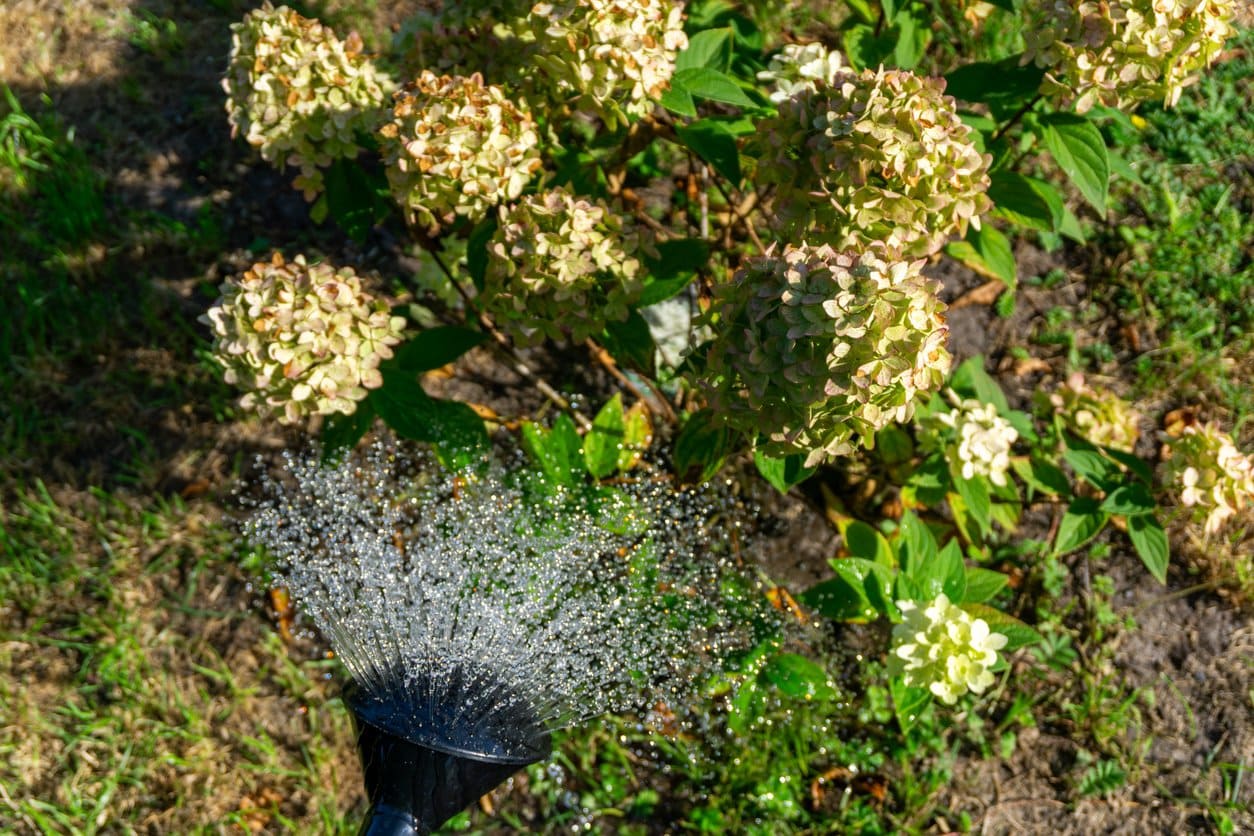
You can tell people who water at night are not early birds. Too bad, because unlike most Floridians, plenty of fungi enjoy warm, humid conditions. Wet leaves sitting for hours can encourage leaf spots and other fungal problems.
Early morning watering gives any stray splashes time to dry before nightfall. When I use the five-gallon gravity bucket, the time of day matters much less because the water drips directly into the soil without soaking the foliage.
If I have to use a hose after dark, which happens often enough since I am a night owl, I aim it at the root zone instead of showering the entire shrub.
But if your hydrangea is badly wilted and the soil is truly dry, do not make it suffer until morning. Water it when it needs it.
No More Cry-drangeas
You checked the soil? Rigged the shade? Spread the mulch? Drilled the bucket? Now trust those tools to do what they’re supposed to. My uncle always says the hardest part of any daily struggle is knowing when to close the tab.
Once yours is standing tall again, we also put together a guide to 19+ hydrangea landscaping ideas for making it the star of the yard.




My hydrangas are beautiful full and green leaves but no blooms all summer????
Hi Risa 🙂 Beautiful green growth with no flowers usually points to too much nitrogen, too much shade, or flower buds being pruned off or damaged over winter. I’d hold off on more fertilizer for now and check what type of hydrangea you have, since that makes a big difference in when it should be pruned.