Lettuce be honest: most gardeners want to beat the system with one productive, slightly crowded garden bed. And honestly, I get it. When space is limited, every inch matters. But, plants do have boundaries, and I’ve learned that the hard way!
Grouping the right plants together makes all the difference. These eight vegetables grow well as a team, creating a small, balanced ecosystem that actually thrives instead of competing for survival.
Why Your Garden Needs a Seating Chart
Planting randomly is one of the fastest ways to end up with crowded plants competing for light, water, and nutrients. Trust me, I’ve tried it, and it only led to uneven growth and a disappointing harvest.
These plant pairings work in most USDA growing zones, especially in Zones 4 through 9, which cover the majority of home vegetable gardens. You may need to shift planting dates depending on your climate, but the pairings themselves stay the same.
The Perfect Garden Bedmates
These pairings work for a reason. Each one grows well together on its own, and once you see how they behave, it becomes much easier to understand how they can all share one garden bed. I’ll explain each pair first, then show you how to put everything together.
1: Tomatoes and Basil
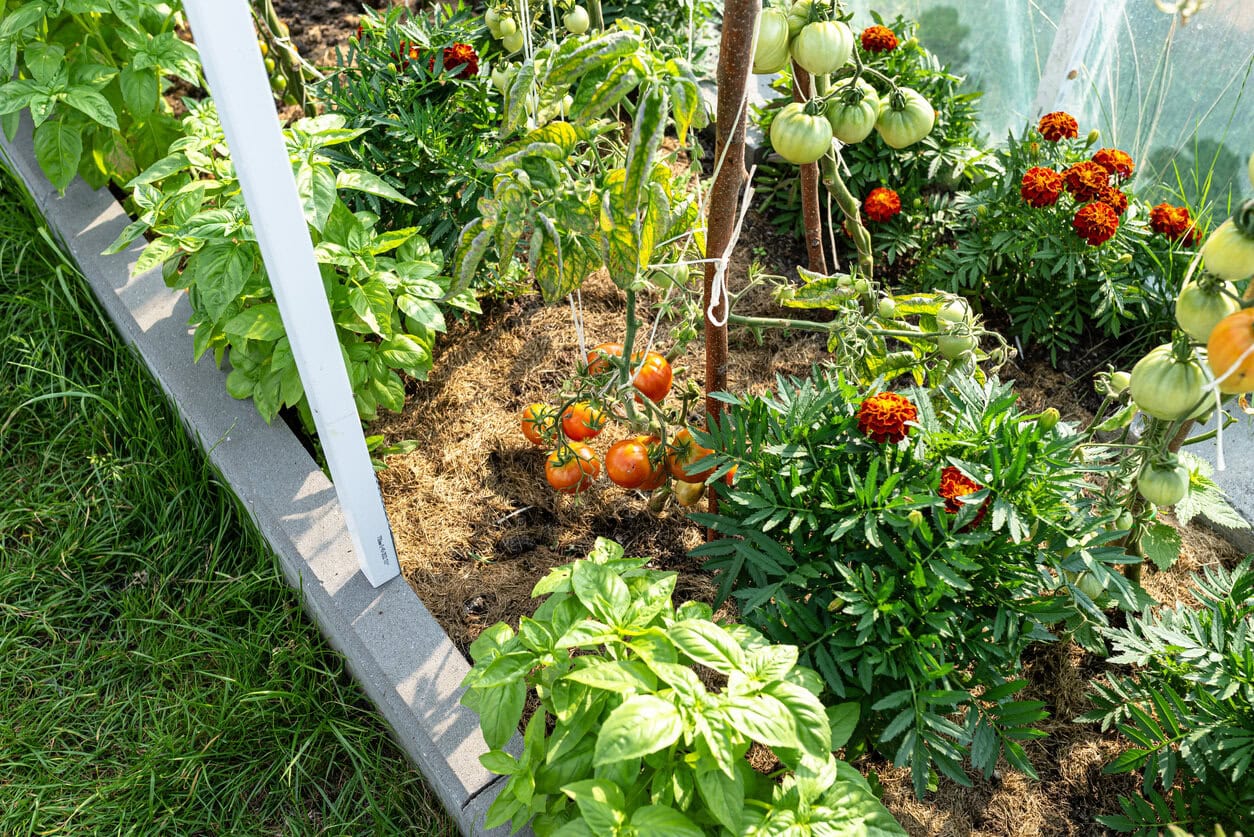
Tomatoes hog every available ray of sun and even act as a windbreak for smaller neighbors. Unfortunately, they also leave the soil at their base dangerously exposed, which I’ve noticed dries out faster in hot weather.
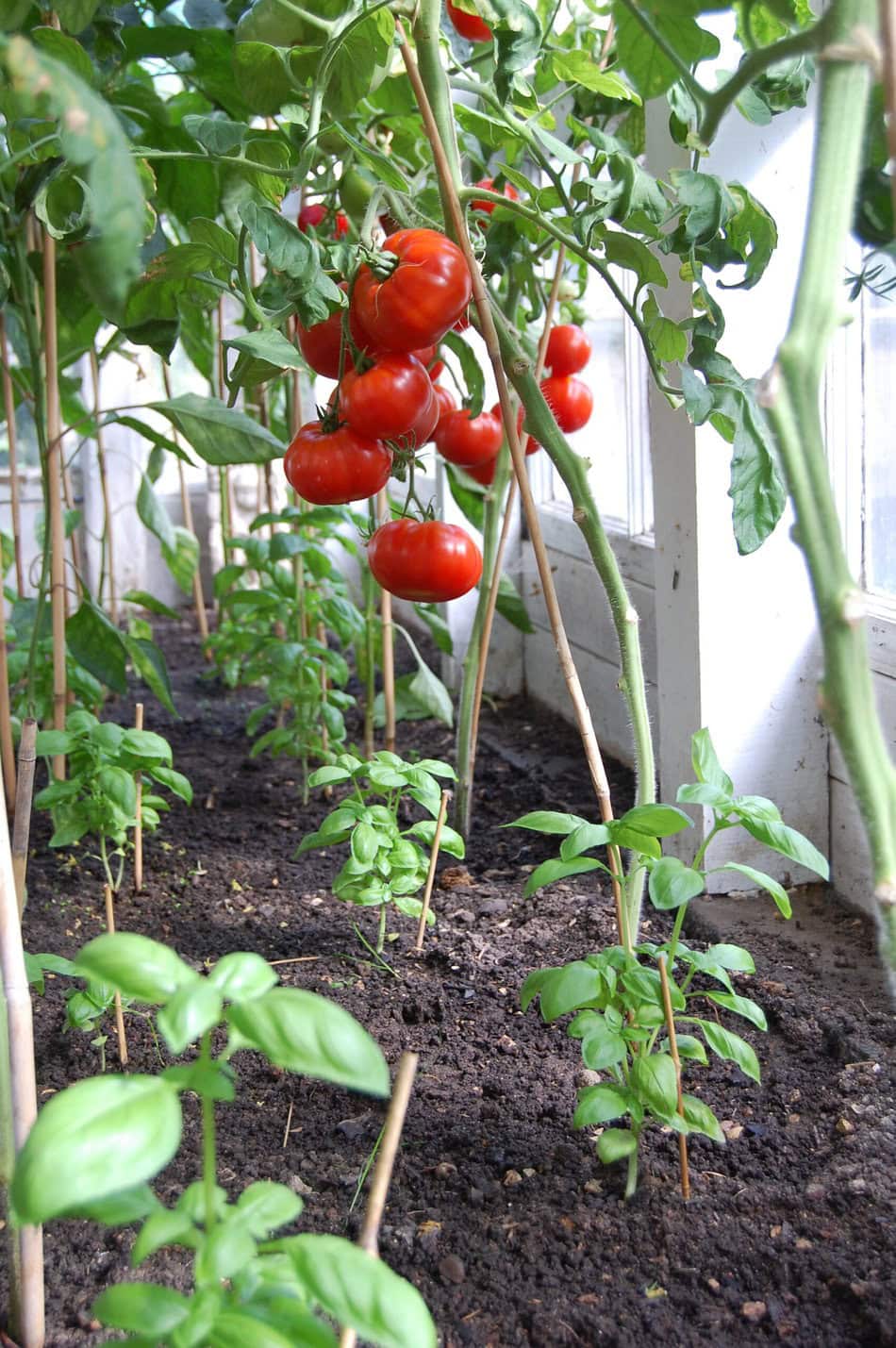
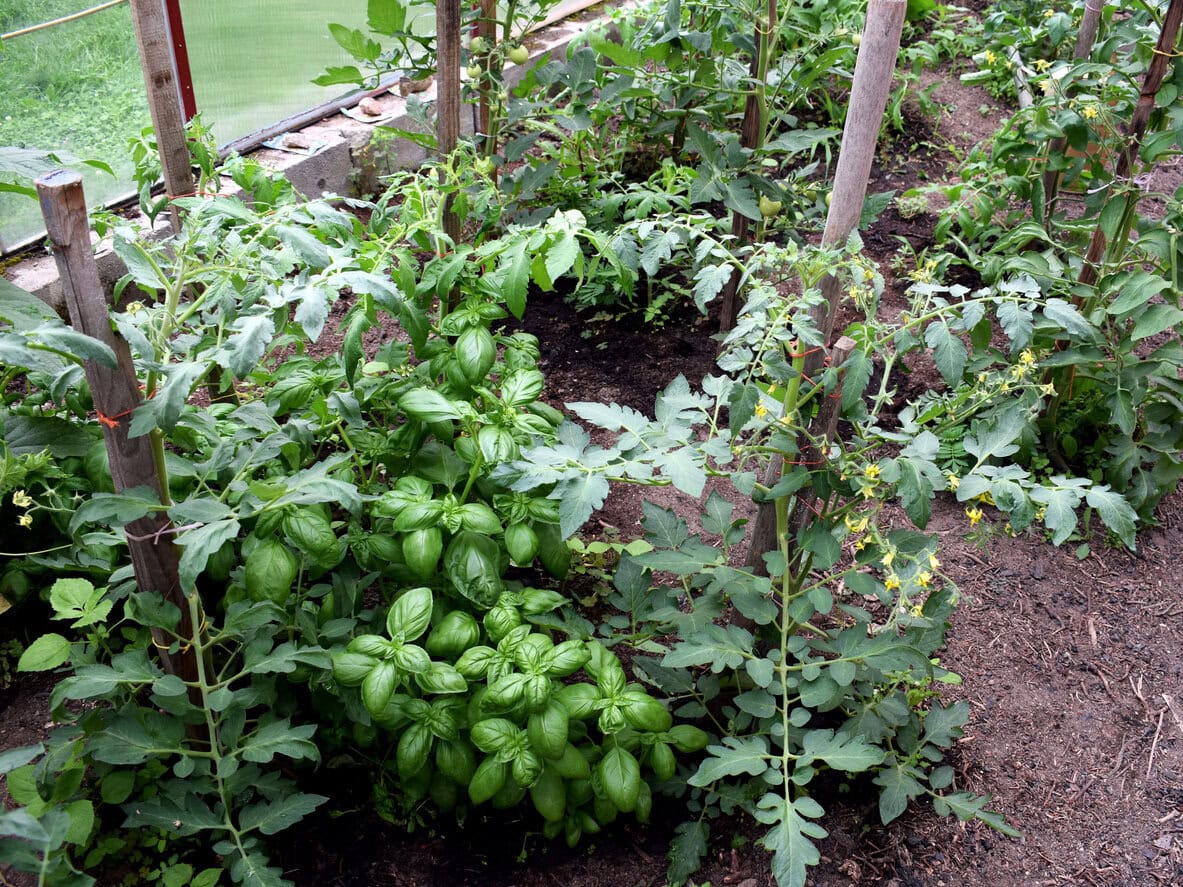
That exposed soil dries out quickly, which can stress nearby plants. Unless that plant is basil. These two make a perfect match because the basil helps shade the soil, keeping it cooler and slightly more moist, while the tomato plant offers protection from harsh afternoon sun.
Some gardeners swear basil improves tomato flavor. I don’t know if it’s a real effect or just a bit of garden placebo, but I swear my tomatoes taste better when basil is growing right next to them.
Quick tip: I like to trim the lower tomato branches so that the basil gets enough air.
If you want a deeper breakdown of why this pairing works so well, we explain everything in detail in another article we wrote about planting basil next to tomatoes.
2: Onions and Carrots
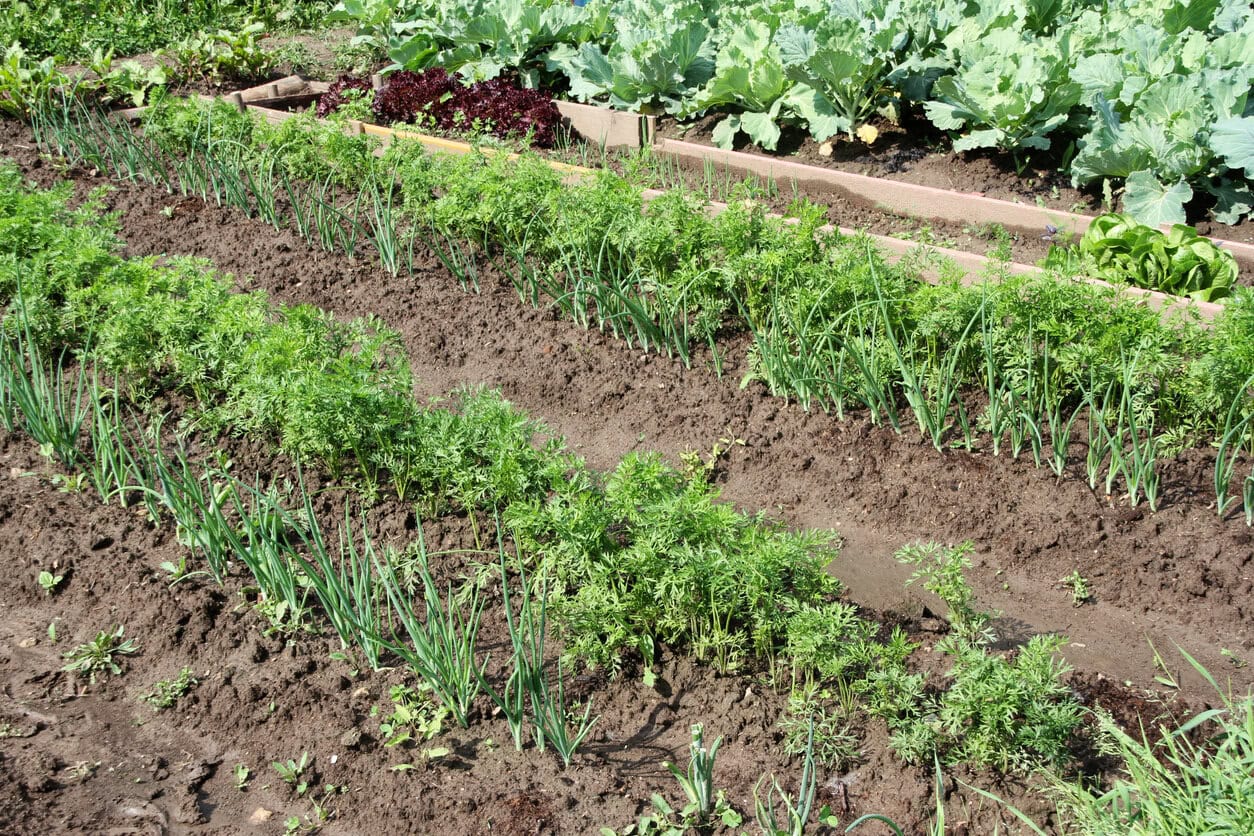
Onions and carrots are one of my favorite space-saving pairs. They’re a classic space-saving pair that yields a double harvest from a tiny space.
Many garden pests rely on scent to find their next meal. Onions have a strong smell that helps confuse carrot flies, which I’ve noticed makes a real difference in beds where both are growing. Carrots remain safe while their fragrant neighbors mask the scent of a snack.
They also share space well underground. Onions grow close to the surface, while carrots are deep-diving taproots. Because they’re using different layers of the soil, they can grow in the same square foot without competing for nutrients.
I’ve noticed onions tend to get along with quite a few crops, and we break down more good pairings in another article about companion plants for onions.
3: Peppers and Marigolds

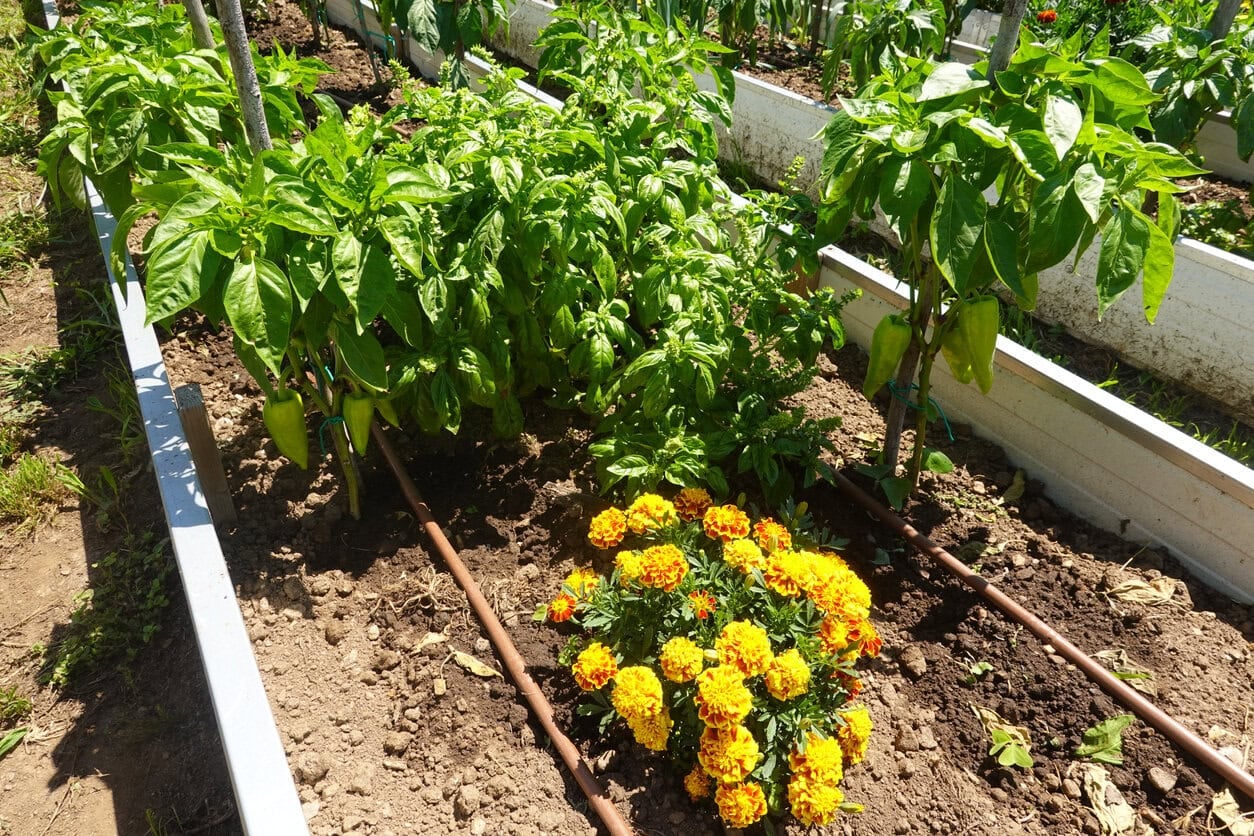
Peppers desire a peaceful and quiet life. Pests ruin the party anyway. Aphids and whiteflies are especially fond of pepper leaves, and once they show up, they tend to stick around.
Marigolds serve as kind of backup for your pepper patch. That’s why I like planting them nearby. Their strong scent can help discourage some pests, and the flowers attract beneficial insects like ladybugs, which feed on aphids.
French marigolds are often used in vegetable gardens because they’re associated with reduced nematode pressure in the soil. It’s not a guaranteed fix, but it’s another reason I reach for them when planting peppers.
Quick tip: Avoid the larger African marigolds, since their size can block sunlight and crowd the peppers as the season goes on!
Peppers pair well with more than just marigolds, and we’ve shared other reliable companions in a separate guide on companion planting for peppers.
4: Lettuce and Spinach
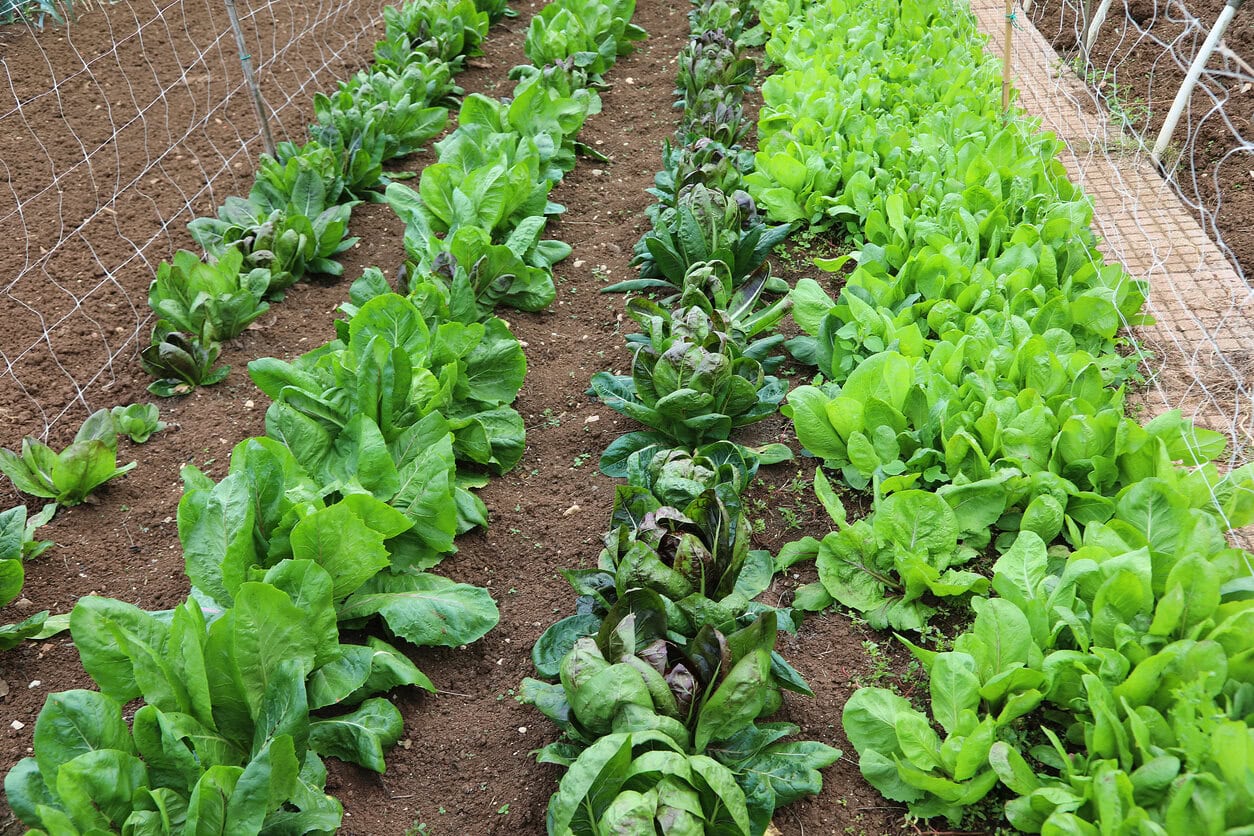
These leafy greens share a mutual love for cold breeze and gray clouds that keep the foliage fresh and sweet. They both appreciate consistently moist soil and don’t mind sharing a sheltered spot.
These greens grow quickly and stay fairly compact, which makes them easy to plant close together. And their short life cycles mean you harvest them before the summer heat turns the leaves bitter and tough. So, romaine calm and plant them in the dappled shade, where they’ll get some protection from strong sun.
Quick reminder: Slugs do love these tender leaves, though, so I keep an eye out early in the season and deal with them as soon as they show up.
Lettuce tends to play nicely with a lot of plants, and we’ve written more about lettuce good companions if you want to explore more options.
The Social Map

I’ve learned that where you place each group matters just as much as what you plant together. With a bit of planning, all four pairs can share one garden bed without competing for space.
Every Inch Counts
Tiny garden spaces require a sharp and clever plan. Give your veggies some room, or they might just beet it to a better yard:
Success stems from a plan that gives every sprout a chance to turn over a new leaf.
If your goal is to get the most food possible from a small space, I’ve also shared a list of vegetables I rely on for high-yield garden beds.
A Seasonal Schedule:
If you want to place all eight plants in a single garden, your success also depends on the calendar.
Checking your USDA zone can help you figure out when your local growing season really begins!
Soil Mate Hunt
Managing a tiny garden bed starts with a smart plan and ends with a full plate. Group the right greens, space them properly, and time the thaw. Don’t leaf the yard just yet. Clever matchmaking in your garden saves the day every time.
If you’re newer to gardening, I’ve also put together a guide on some of the easiest vegetables to grow in a garden bed.