These varieties offer maximum color without making your yard feel like a second job. Pick one that actually fits your USDA zone, sunlight, soil, and available space, then plant it and let it do the showing off. That’s it. They’ll bring the charm so you don’t have to fake it.
Nine Treemendous Choices
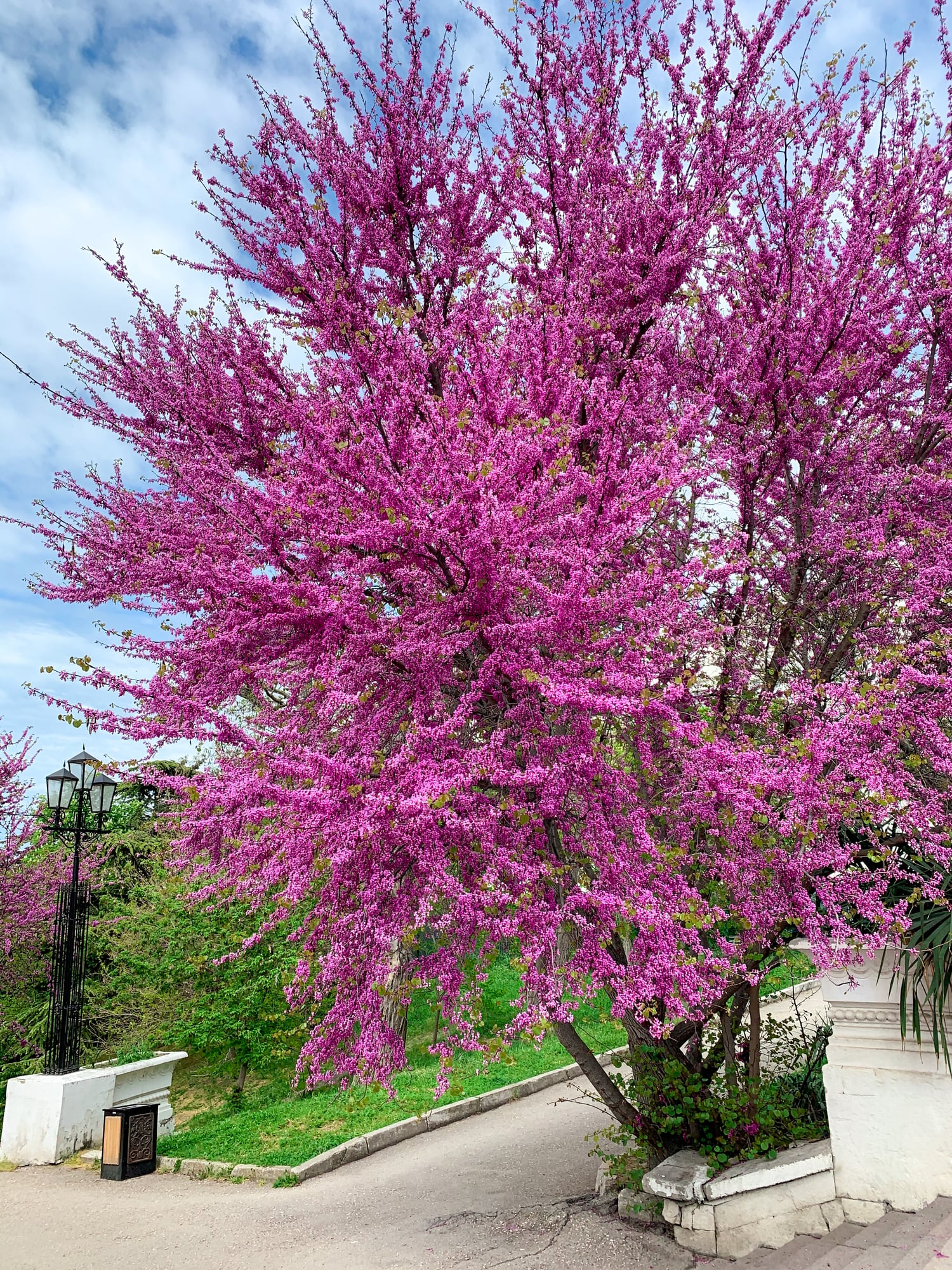
Don’t settle for a tree that just stands there looking leafy and responsible. These flowering favorites bring the color, the drama, and just enough garden bragging rights to make your plain old lawn feel underdressed.
1. Eastern Redbud (USDA zones 4-9)
Best for: Full sun to partial shade, well-drained soil, and smaller yards or woodland edges. In hotter Southern areas, a little afternoon shade helps.
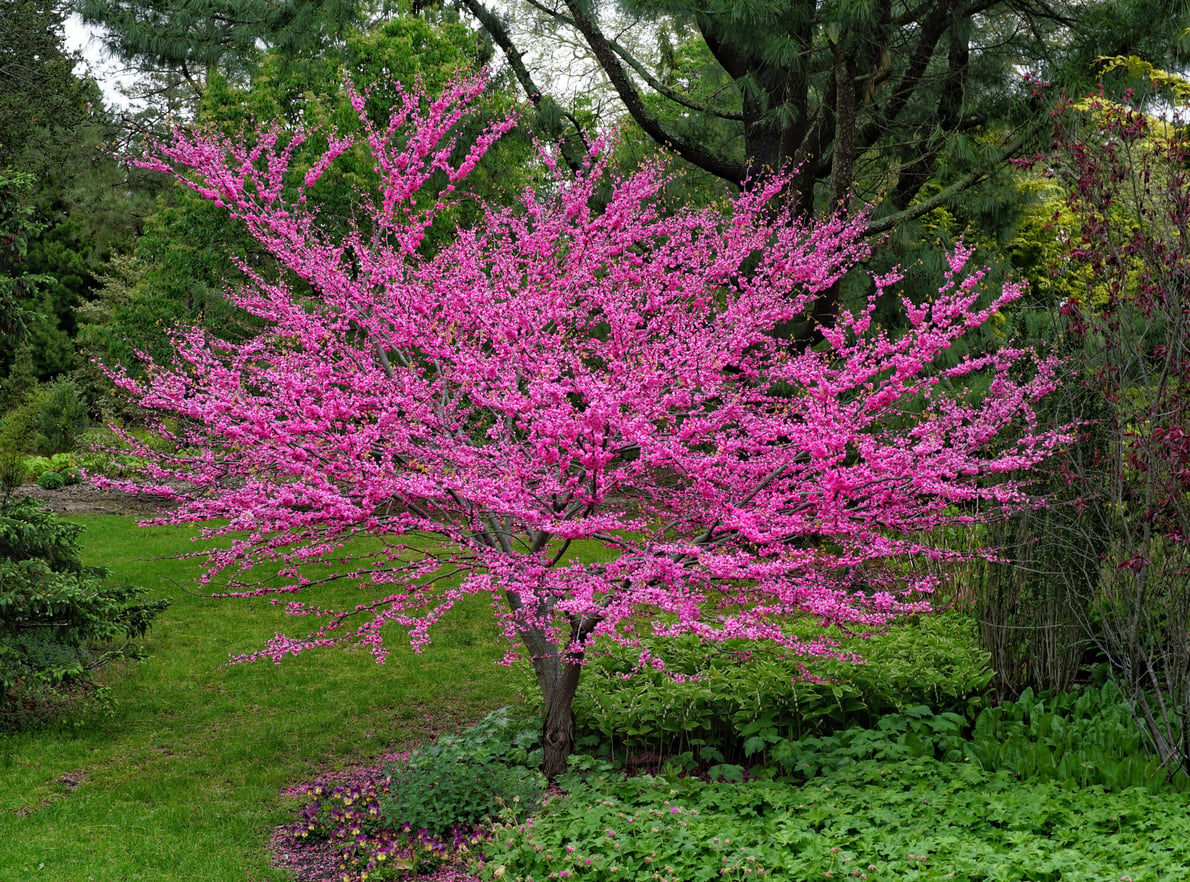
Eastern redbud (Cercis canadensis) doesn’t wait for leaves to join the party. It jumps straight into spring with pinkish-purple blooms on bare branches, often before the rest of the yard knows what month it is.
Flowers can sprout right from the trunk and older branches. It’s like wearing jewelry on your elbows, but the redbud pulls it off.
After the show, heart-shaped leaves take over. In fall, they may turn yellow before dropping, but think of that as a bonus, not a contract.
2. Magnolia (USDA zones 4-9)
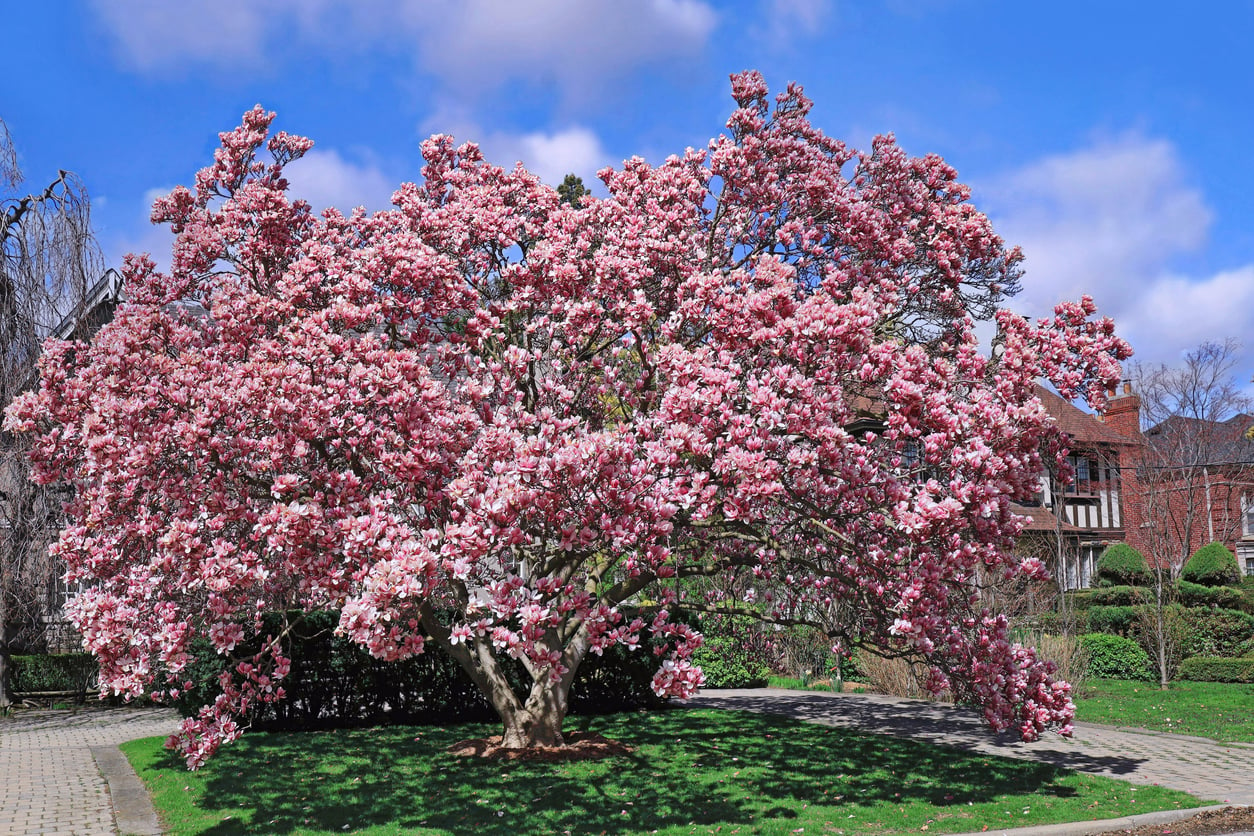
Best for: Full sun to partial shade, slightly acidic well-drained soil, and yards with room to spare. Choose Southern magnolia for warmer regions, or star/saucer magnolia for colder areas.
Huge blossoms get the attention, but on Southern magnolia, the glossy evergreen leaves carry plenty of weight too. They’re thick, shiny, and stubborn enough to look good when the rest of the yard gives up.
The scent is sweet and lemony, but give this tree space. Southern magnolia can spread 20 to 40 feet wide, and the dense shade can make grass struggle underneath. Mulch is usually the smarter bet.
3. Serviceberry (USDA zones 4-8)

Best for: Full sun to partial shade, well-drained soil, and smaller yards where you want more than one season of interest. It also works nicely near woodland edges.
Why waste space when one tree covers spring, summer, and fall? Serviceberry brings white blooms, edible berries, and orange-red foliage before calling it a year.
Amelanchier is pretty low-drama once established. Just keep an eye on the fruit. It’s a race against every beak in the county to taste those sweet, blueberry-almond berries. They do not wait for permission.
4. Crape Myrtle (USDA zones 7-9)

Best for: Full sun, well-drained soil, and hot summer areas where you want color when everything else is sweating.
Big clusters of crinkled blossoms take over from summer into early fall, depending on the variety. This tree knows exactly when the yard needs a little drama.
The trunk eventually steals some of the spotlight. As crape myrtle matures, the peeling bark creates a smooth, patchy look of salvaged driftwood.
Just ignore anyone suggesting crape murder! Pruning it into knobby stumps doesn’t help. It ruins the natural shape and can leave the tree weaker, uglier, and somehow still smug about surviving.
5. Tulip Tree (USDA zones 4-9)
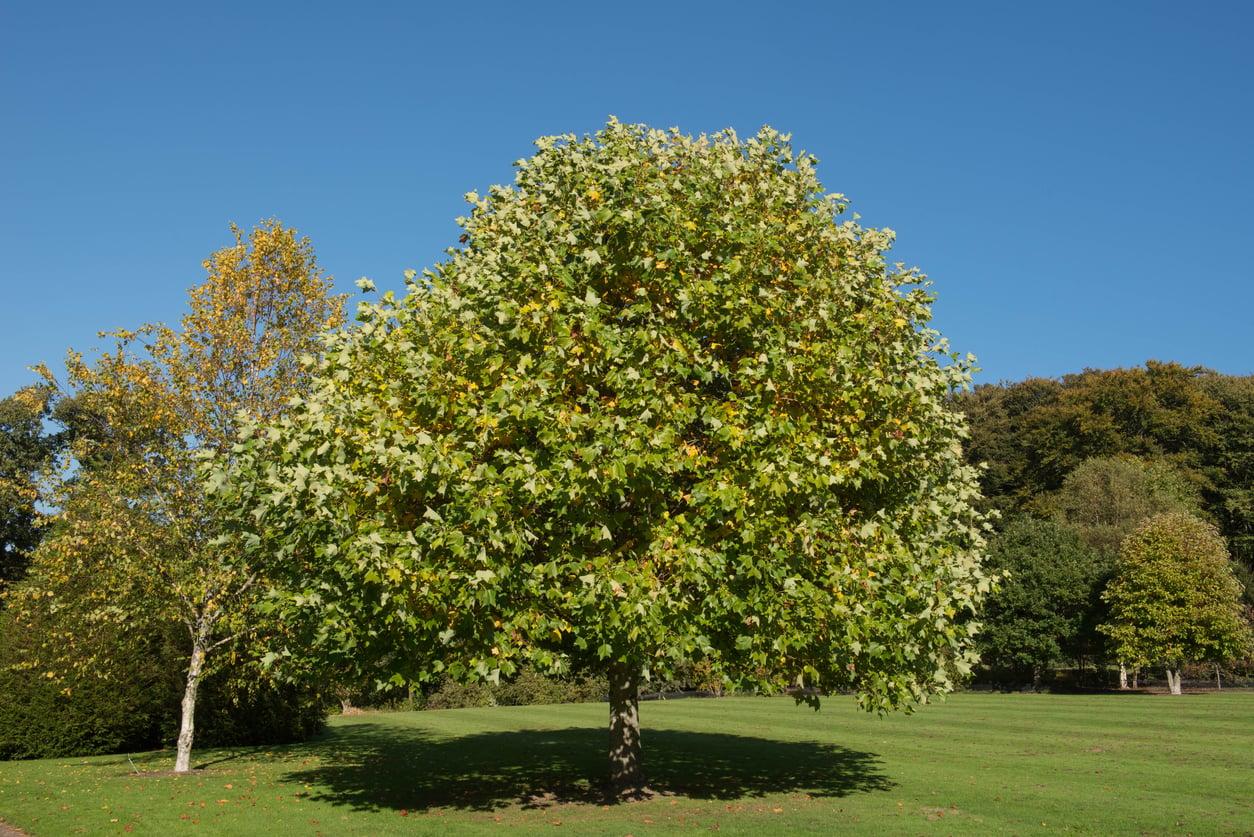
Best for: Full sun, deep well-drained soil, and large yards or open spaces. This is not a cute little patio tree unless your patio is in a park.
You’d think a tree named after tulips would make its flowers easy to admire. It does bloom with greenish-yellow, tulip-shaped flowers, but it shoots upward so fast you’ll need a drone to enjoy the show.
The leaves are just as weird. They look like a maple leaf that gave up halfway through or a cat’s silhouette if you squint.
They turn bright yellow in fall, which is lovely, but don’t squeeze one in a small yard. Plant Liriodendron tulipifera only if you have the space and a healthy desire to feel tiny.
6. Cherry Tree (USDA zones 5-9)
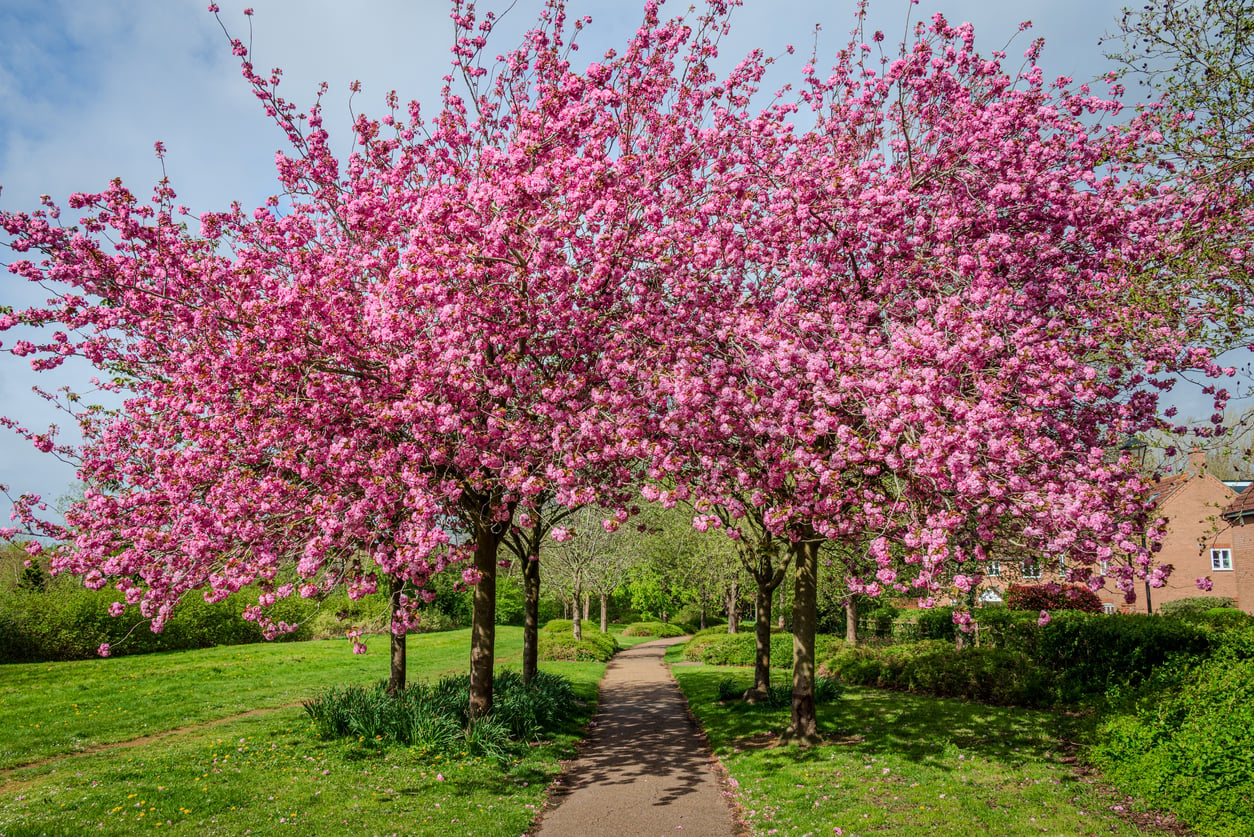
Best for: Full sun, well-drained soil, and a spot where you can enjoy the spring show without parking under it.
Most of the year, a Cherry Tree is just another green shape in the yard. Then spring hits, and suddenly it turns into a pink cloud that makes every camera in the neighborhood come out.
The show is gorgeous but short. One windy day and your driveway looks like a messy wedding exit. Give it good airflow, watch for borers and fungal issues, and don’t expect it to live forever because many ornamental cherries only give you a few good decades.
Want that classic D.C. look? Go with Yoshino. Want something fuller and frillier, like a pink carnation on a stick? That’s Kwanzan.
7. Golden Rain Tree (USDA zones 5-9)
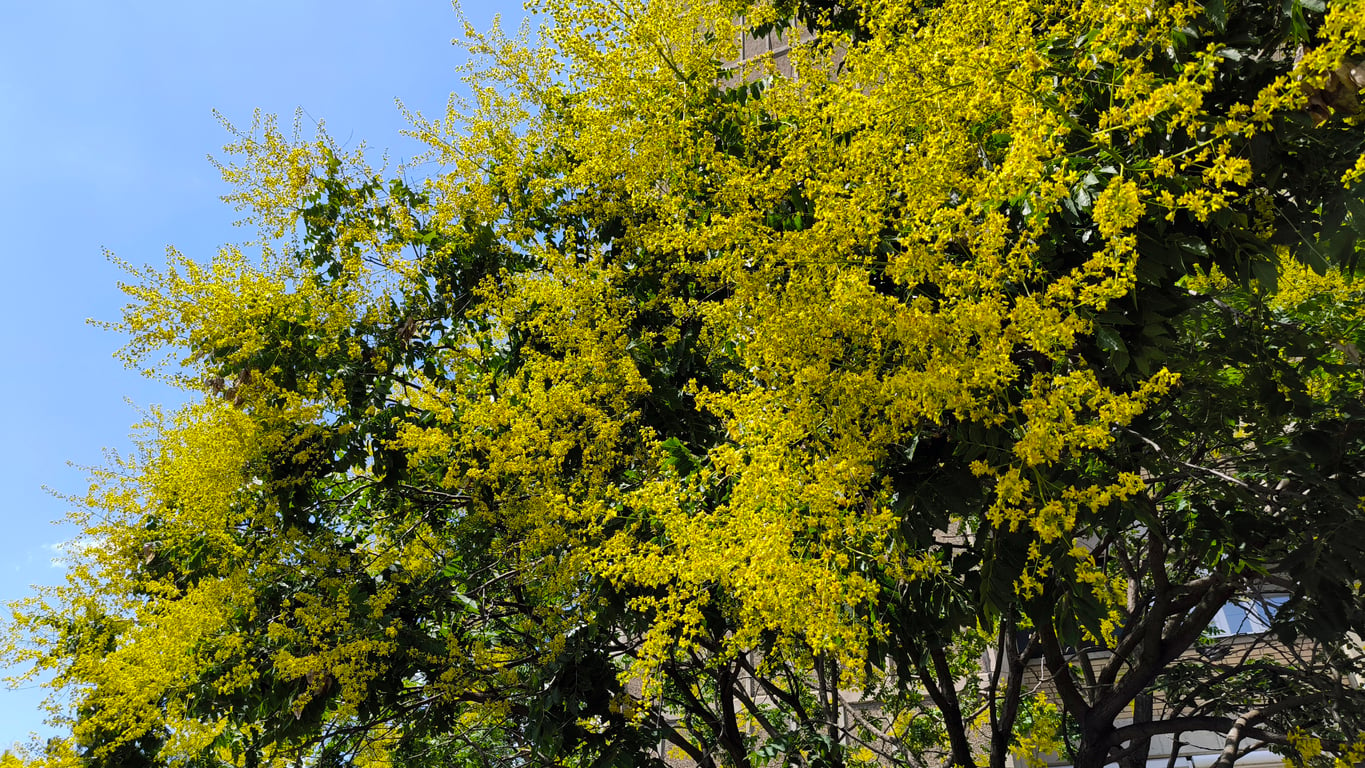
Best for: Full sun, well-drained soil, and tough spots where summer heat makes fussier trees tap out. Check local guidance first, since it can self-seed aggressively in some areas.
Koelreuteria paniculata is basically the mid-summer showoff, throwing upright clusters of bright yellow flowers when plenty of other trees are just sweating.
When the petals drop, they sprinkle the ground with gold, which is exactly how this lovely tree earned its name. The real party trick happens once the flowers fade. You’ll notice papery lantern-like pods, starting green and aging into toasted bronze by fall.
This tree is rugged, but it’s a little too good at making more of itself. Watch for seedlings unless you’re accidentally starting a tree nursery.
8. Jacaranda (USDA zones 10-11)
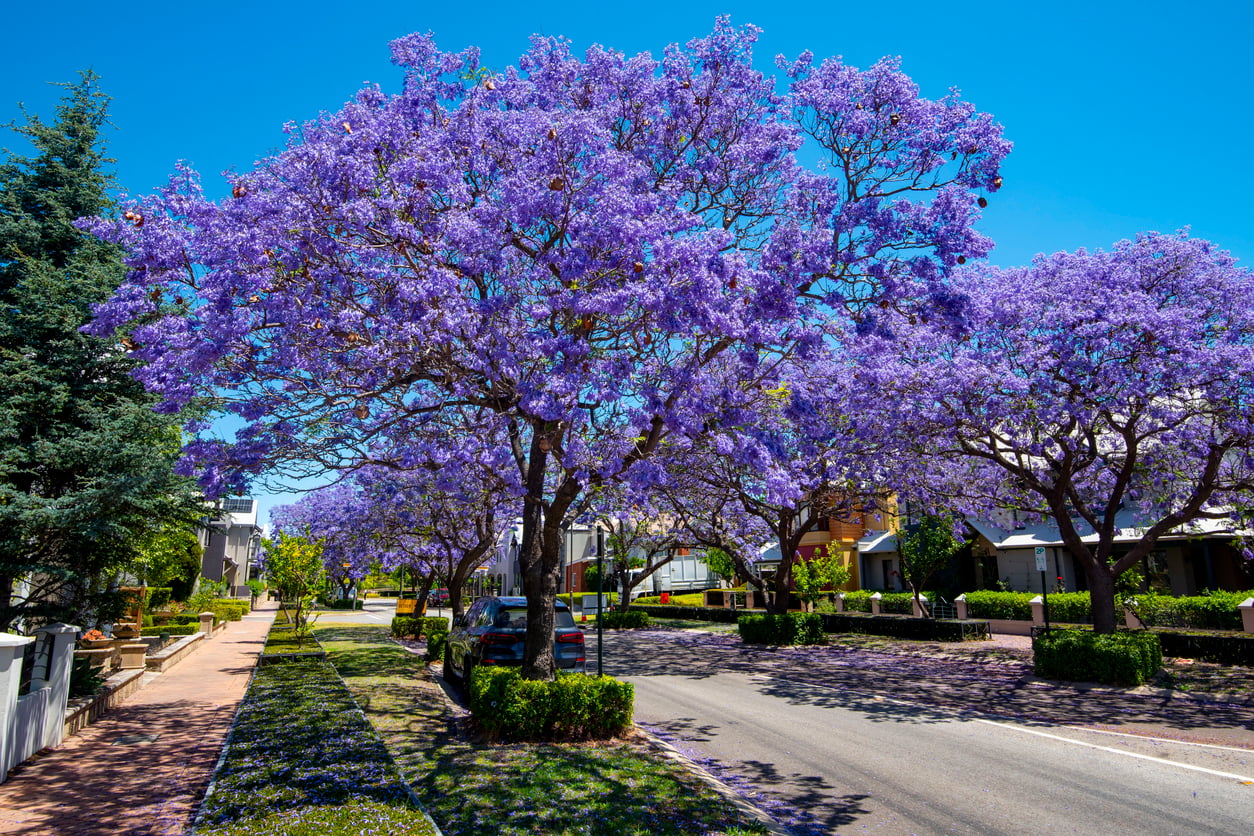
Best for: Full sun, well-drained soil, and warm climates like Southern California, Arizona, and parts of Florida. Plant it where falling blooms can land on soil or lawn, not your car.
Jacarandas don’t do subtle. In late spring, they replace their entire canopy with violet-blue, trumpet-shaped flowers. The fine and feathery leaves will be back, though.
For a few weeks in May, your house is the most photographed spot on the block. The show is gorgeous, but the cleanup is real. Those blooms drop fast and can get sticky, so don’t park underneath unless you enjoy scrubbing regret off your windshield.
The secret to living with Jacaranda mimosifolia is all about placement. The flowers should fall where they can break down naturally, not on patios or pools.
9. Dogwood (USDA zones 5-8)
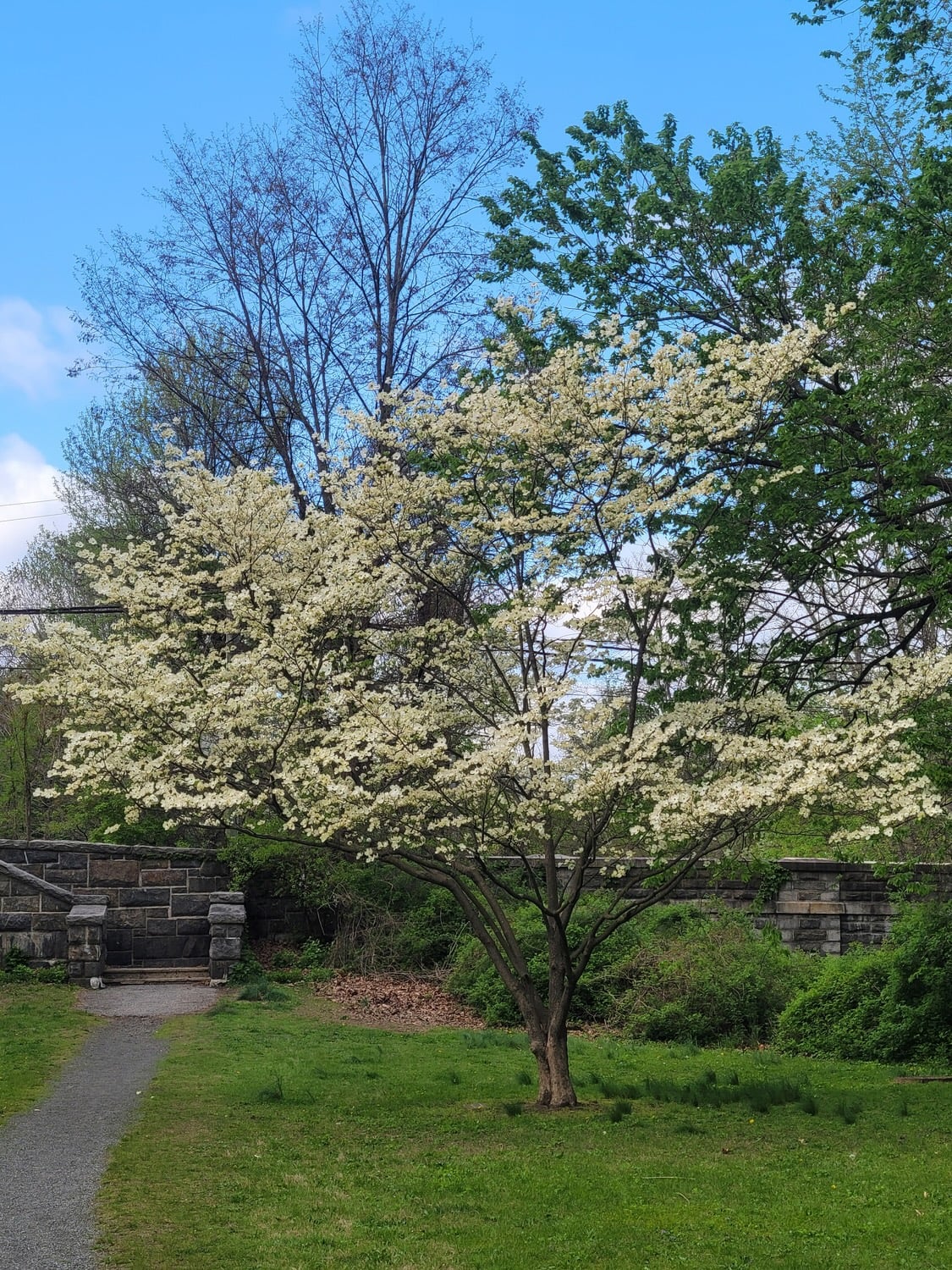
Best for: Partial shade, well-drained slightly acidic soil, and spots with afternoon relief from heat. Think woodland edge, not a blazing-hot driveway island.
Those white or pink “flowers” are actually bracts. The real flowers are the tiny greenish clusters tucked in the center, because apparently dogwood enjoys a technicality.
After that iconic spring show, the leaves transition into a beautiful burgundy in fall, with small red fruits that birds love.
It’s an understory tree at heart. Give it some shade, decent soil, and room to breathe, and it’ll act like it owns the place.
Before You Plant
One last bit of garden fine print: check your local extension office or invasive plant list before planting, especially with golden rain tree, which can self-seed aggressively in some parts of the U.S.
If you have pets, double-check plant safety before buying. Cherry trees deserve extra caution because the leaves, stems, and seeds can be toxic if chewed, especially when wilted.
Basically, plant the drama. Just don’t plant a future problem.
We also wrote a guide on plants you may regret planting if you want to avoid adding a beautiful nuisance to your yard.
Wood You Believe These?
The best time to plant a flowering tree was years ago, obviously. The second-best time is after you check your USDA zone, pick the right spot, and make sure you’re not planting a future giant five feet from the driveway.