Some houseplants are demanding. They need precise light levels, frequent watering, and careful monitoring to stay healthy. But there’s another group that’s far more forgiving—plants that manage well with minimal attention and adapt easily to indoor conditions.
If you’ve missed a few waterings or don’t want to make plant care part of your daily routine, these are worth considering.
What follows is a list of indoor plants that are both resilient and low-maintenance. They won’t thrive on neglect forever, but they tolerate a less structured approach and still offer the visual appeal that makes indoor greenery worthwhile.
Why Low-Maintenance Plants Are a Game-Changer

There’s a reason experienced growers tend to keep a few of these low-maintenance plants in their collection. If life gets busy or you’re away for a few days, these are plants that can handle some inconsistency without going into decline.
But it’s not just about convenience. For newer plant owners, having early success with something resilient can make all the difference. It’s easier to stay interested in indoor gardening when the plants are still healthy, even if the care hasn’t been perfect.
And for more seasoned gardeners, mixing in a few of these low-effort varieties can make managing a larger collection a lot more sustainable.
For outdoor growers, we also put together a great list of low-maintenance spring flowers for smaller spaces that are just as rewarding without all the fuss.
Easy Indoor Plants That Don’t Need Much Water or Attention
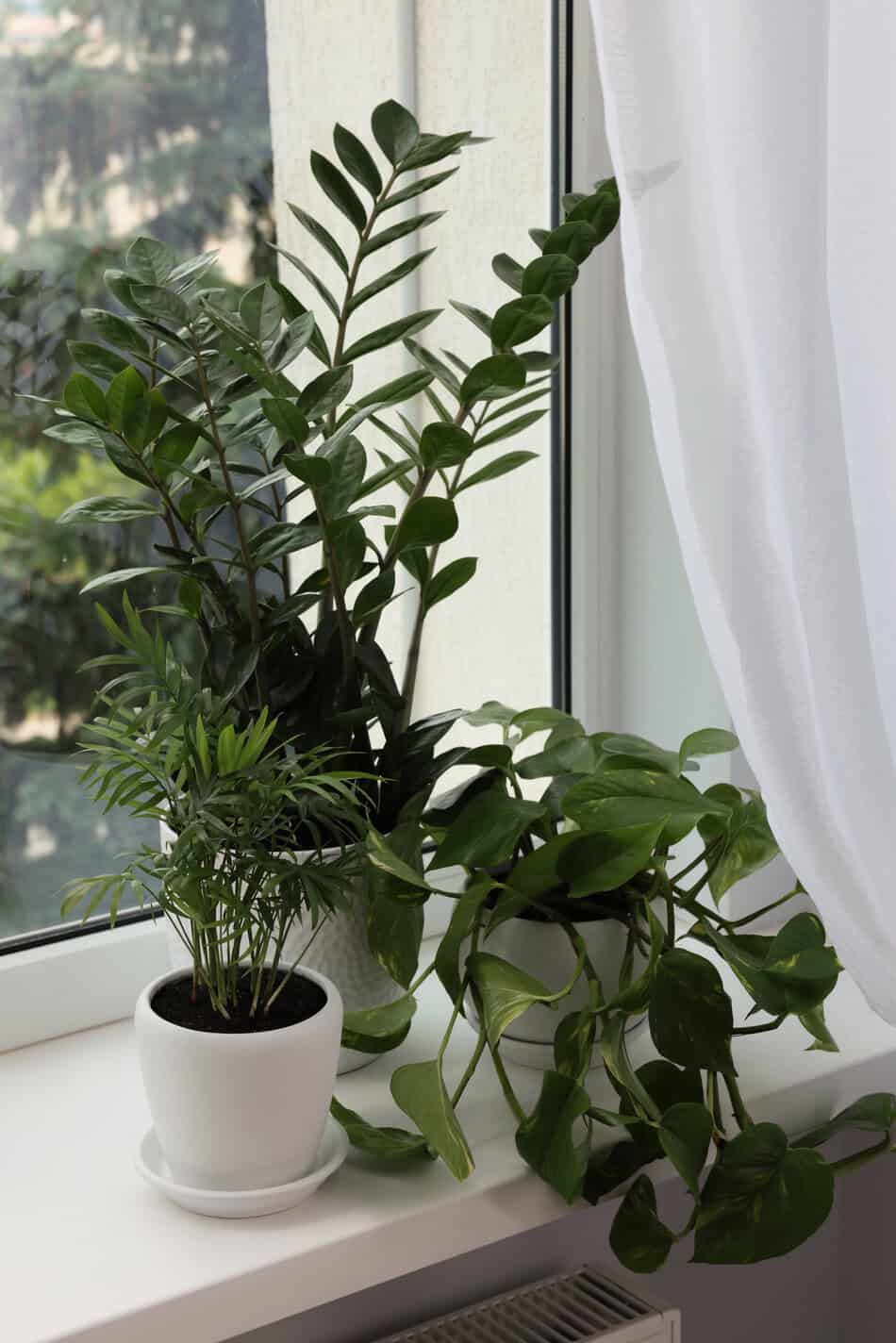
Here are 14 indoor plants that don’t need much water or attention…
But before we dive in, just a quick heads-up: not all of these are pet-safe. If you have curious cats or dogs at home, check out our guide on houseplants that are safe for pets before bringing new plants into your space.
1. ZZ Plant (Zamioculcas zamiifolia)

A tough, drought-tolerant plant with thick, glossy leaves and underground rhizomes that store water—ZZ plant handles long dry spells without complaint.
Native to the shaded understory of eastern Africa, it’s adapted to low light and infrequent rainfall, which makes it well suited to forgetful indoor gardeners.
It won’t grow quickly in dim corners, but it will hold its shape and stay green with minimal care. Just be sure not to overwater—this plant prefers dry soil between soakings.
2. Snake Plant (Sansevieria spp.)

This plant has thick, upright leaves hold water in their tissues, giving it a built-in reserve against neglect. It’s inconsistent watering, and variable light conditions—from bright sun to deep shade. Its growth may slow in dim corners, but it won’t decline outright.
Tip: Avoid growing your snake plant in overly humid environments, such as a bathroom.
3. Pothos (Epipremnum aureum)
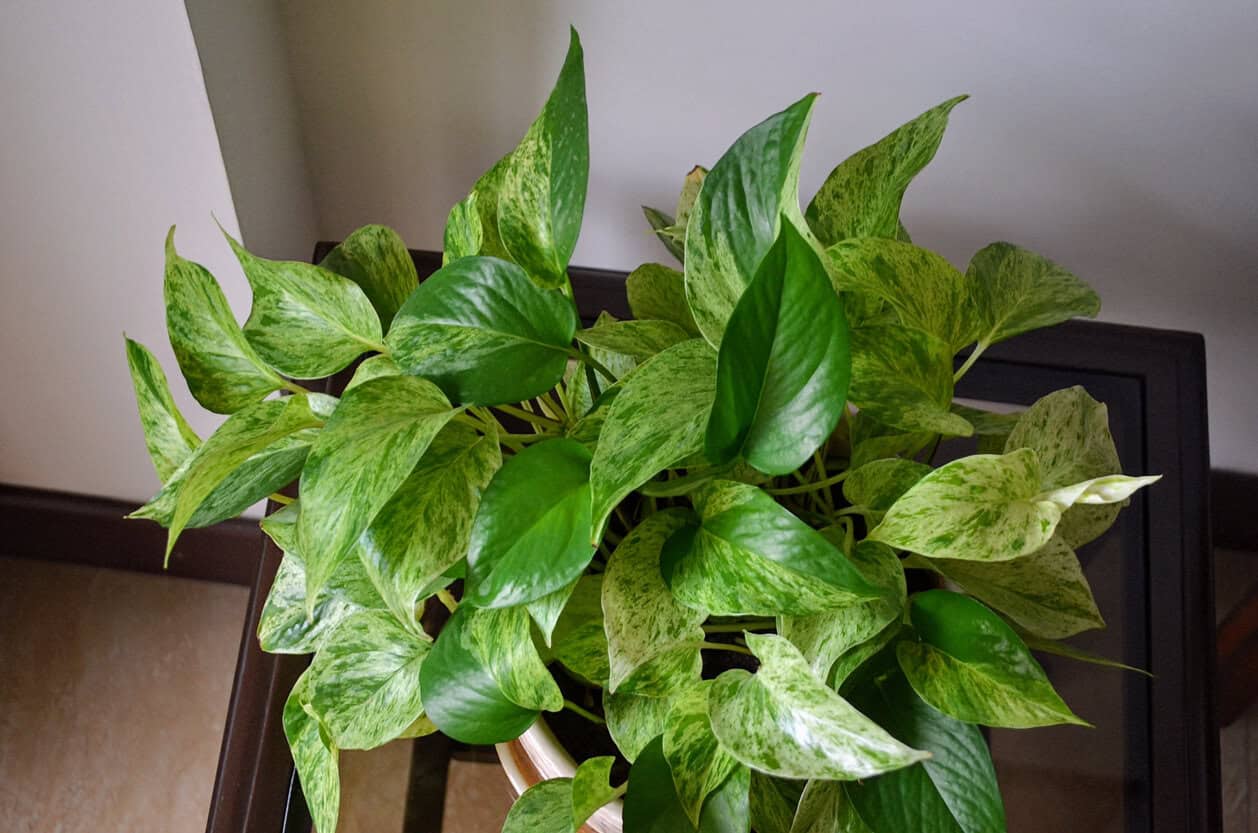
Pothos is a tropical vine by nature but surprisingly content with life indoors under artificial or inconsistent light. It doesn’t need frequent watering—just let the soil dry between drinks.
The trailing stems can be allowed to cascade or trained along a wall or support. Leaves may get larger in higher light, but even in a shaded room, the plant keeps growing. Cuttings root easily in water, so a single healthy plant can become many over time.
4. Spider Plant (Chlorophytum comosum)

Spider plants are tolerant of occasional forgetfulness and are comfortable in dry indoor air. Medium to bright indirect light is best, but they’ll keep going in less ideal spots too.
One of their more practical features is how they propagate themselves. Arching stems produce offsets—small “pups”—that can be left attached or rooted in their own pots. It’s an easy way to multiply your greenery without much effort.
5. Cast Iron Plant (Aspidistra elatior)

As its name suggests, this is a plant built for endurance. Once popular in Victorian-era homes with poor light and poor heating, it’s still one of the hardiest foliage plants available.
It prefers shade, grows slowly, and tolerates inconsistent care. Its broad, leathery leaves bring a quiet, steady presence to a room. No flowers, no fast growth—just dependable greenery in places where few other plants would thrive.
6. Aloe Vera

Technically a succulent, aloe stores water in its fleshy leaves, allowing it to go weeks between waterings. It does require lots of bright light—ideally a sunny windowsill—but in the right environment, it rarely demands attention. Just avoid overwatering—it’s far more tolerant of dry conditions than damp.
Tip: Beyond its easy-care nature, aloe is one of the few indoor plants with a functional use. Break a leaf and the gel inside can be applied to minor skin irritation.
7. Peace Lily (Spathiphyllum spp.)

Despite its soft appearance, the peace lily is well-suited to relatively low-maintenance care, preferring low to moderate light and moist soil.
This plant does need slightly more care than some of the others on this list, particularly when it comes to watering. However, it has a built-in signal for when it needs water: the foliage droops noticeably, then perks back up once rehydrated.
While it can produce white spathes (flower-like structures) in the right conditions, it’s often grown for its glossy green leaves alone.
We’ve also got a simple care guide for peace lilies if you want to keep yours thriving indoors.
8. Chinese Evergreen (Aglaonema spp.)
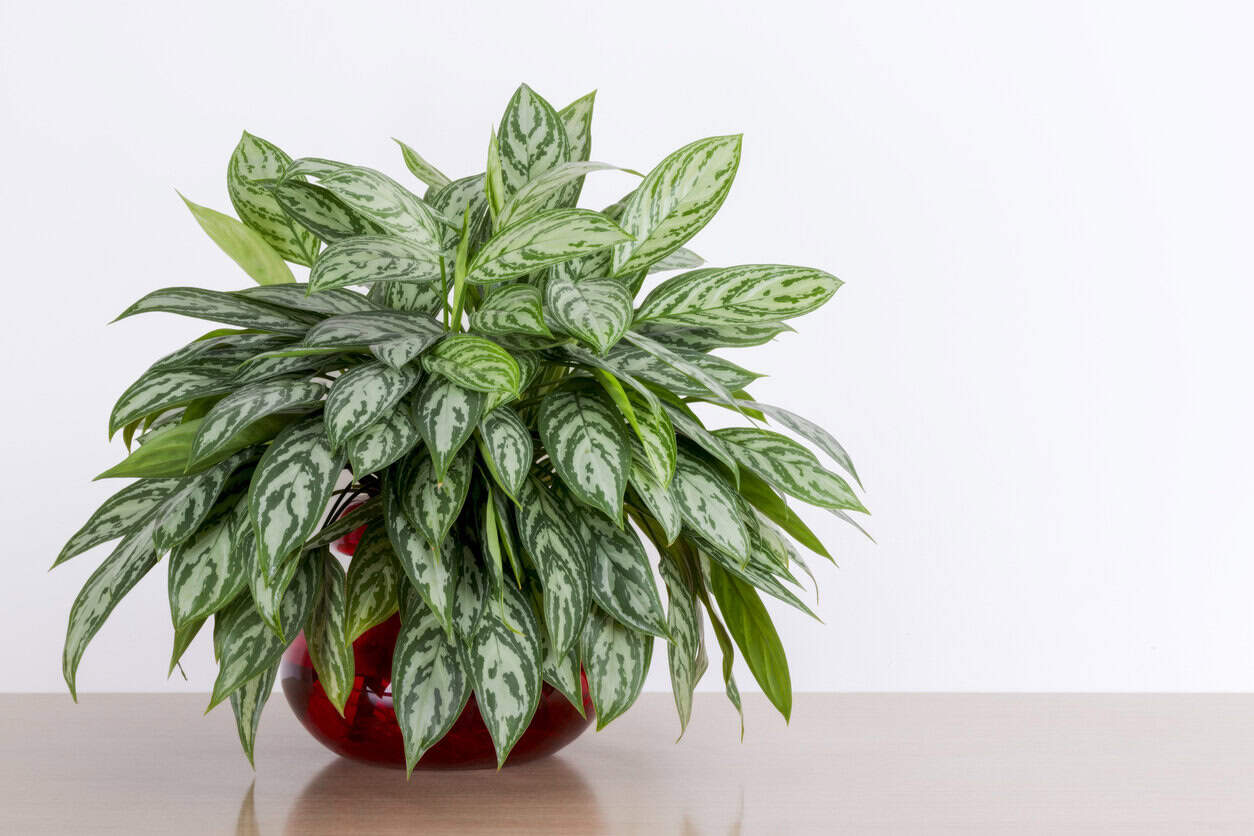
This is a foliage plant that balances durability with color. Some cultivars are silver and green; others include shades of red or pink.
It does well in low light, tolerates dry air, and doesn’t mind if you forget to water now and then. Its slow growth and high tolerance for indoor stressors make it particularly useful in offices or spots that get little attention.
9. Cactus (Various genera)
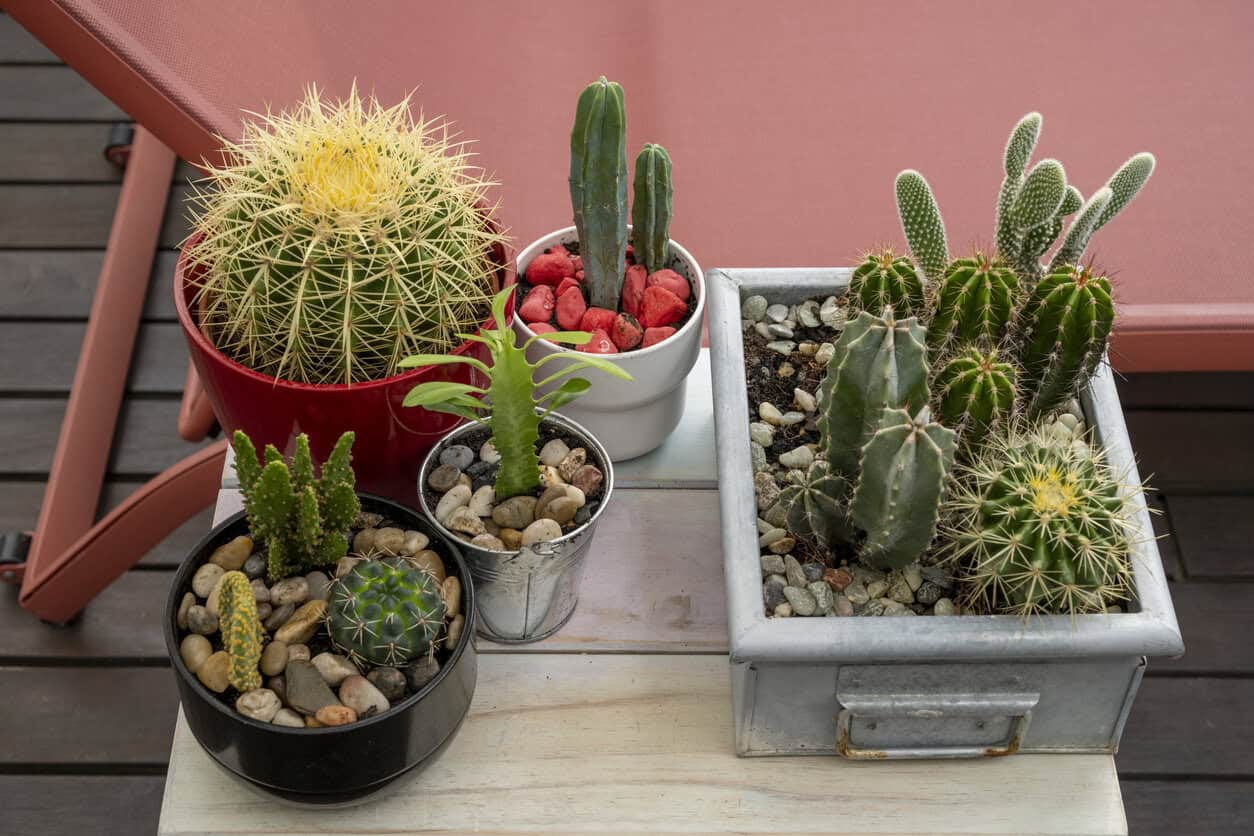
Cacti evolved to thrive in dry, exposed environments, which makes them well-suited to indoor life—provided they get ample light. A sunny windowsill is ideal.
The key is restraint: overwatering and poor light are the most likely causes of decline.
Shapes vary widely, from compact globes to tall columns, and many species stay small enough for shelves or desks.
10. Jade Plant (Crassula ovata)
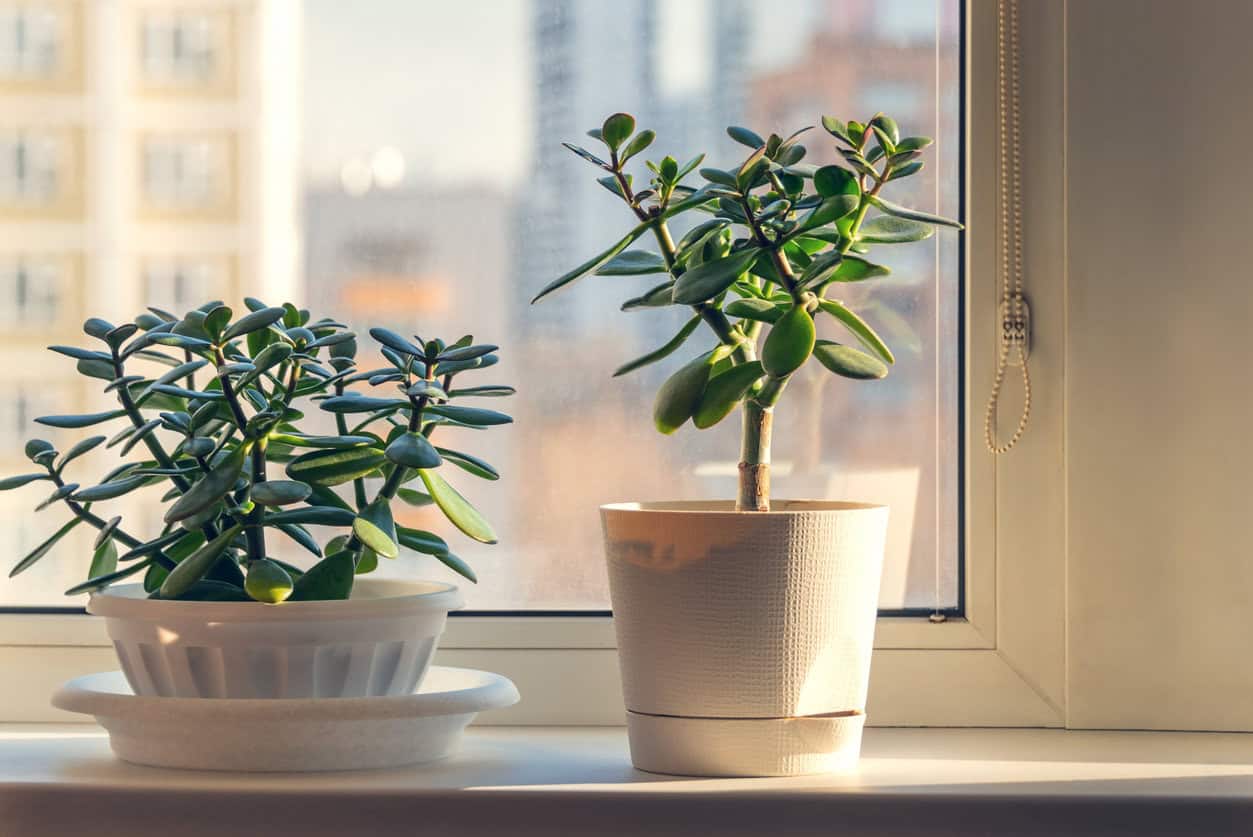
Jade is a thick-leaved succulent that stores water efficiently, allowing it to tolerate dry indoor air and infrequent watering. Let the soil dry completely before watering again—it’s more likely to suffer from too much moisture than too little.
Given bright light, it develops a sturdy, branching form and compact habit. Over time, older specimens can form a woody trunk, giving the plant a tree-like presence without the maintenance of a true bonsai.
11. Rubber Plant (Ficus elastica)

This is one of the larger plants on the list, but it’s no more demanding than its smaller counterparts. It grows upright with broad, leathery leaves that hold moisture well and resist minor environmental stress.
It prefers bright, indirect light but can adjust to lower levels over time. Water only when the top inch of soil is dry. If anything, it does better with slight neglect than overattention.
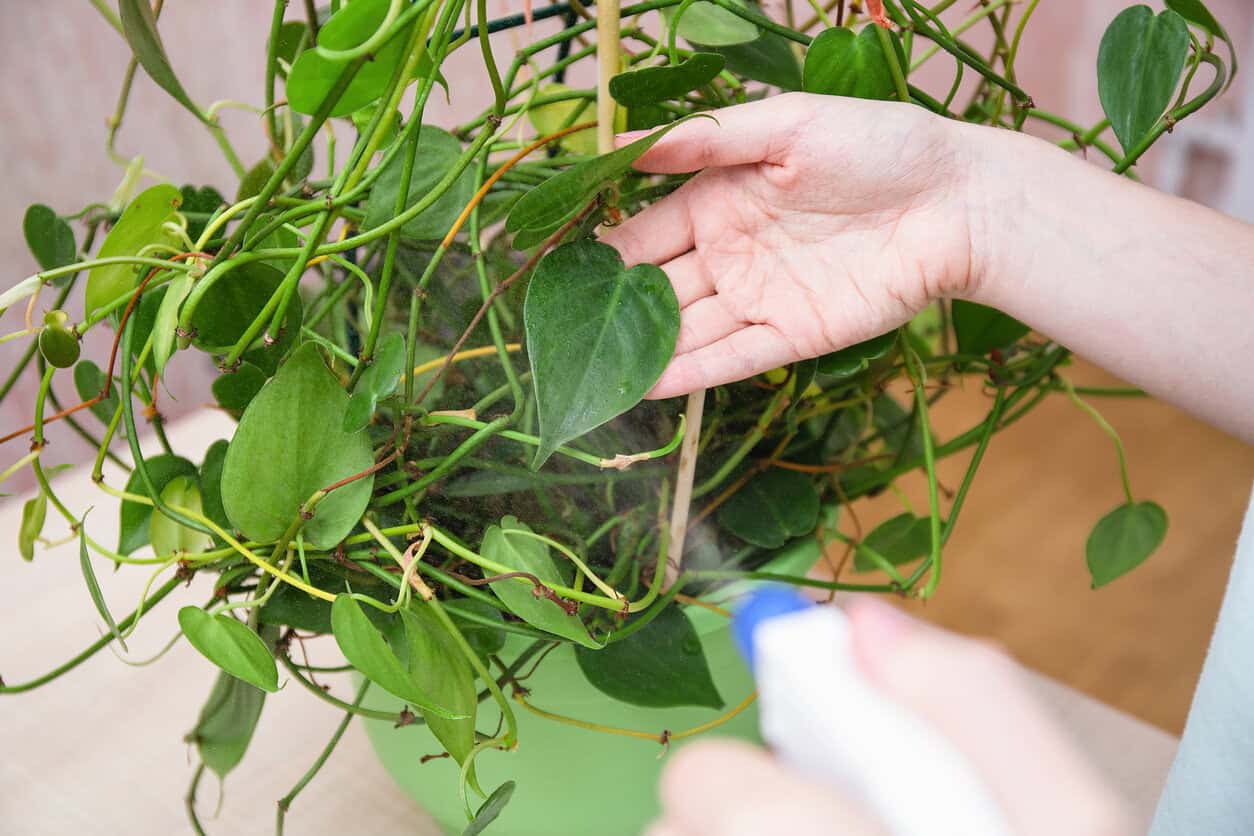
12. Philodendron (Heartleaf types especially)

This trailing vine is often confused with pothos, but it has a slightly softer texture and a matte finish to its leaves. It’s adaptable to a wide range of indoor conditions and doesn’t fuss about humidity or light—though it will grow faster in moderate light.
It can be left to trail naturally or trained up a support. Like pothos, it’s easy to propagate in water, making it a useful plant for filling space or sharing with others.
13. Ponytail Palm (Beaucarnea recurvata)
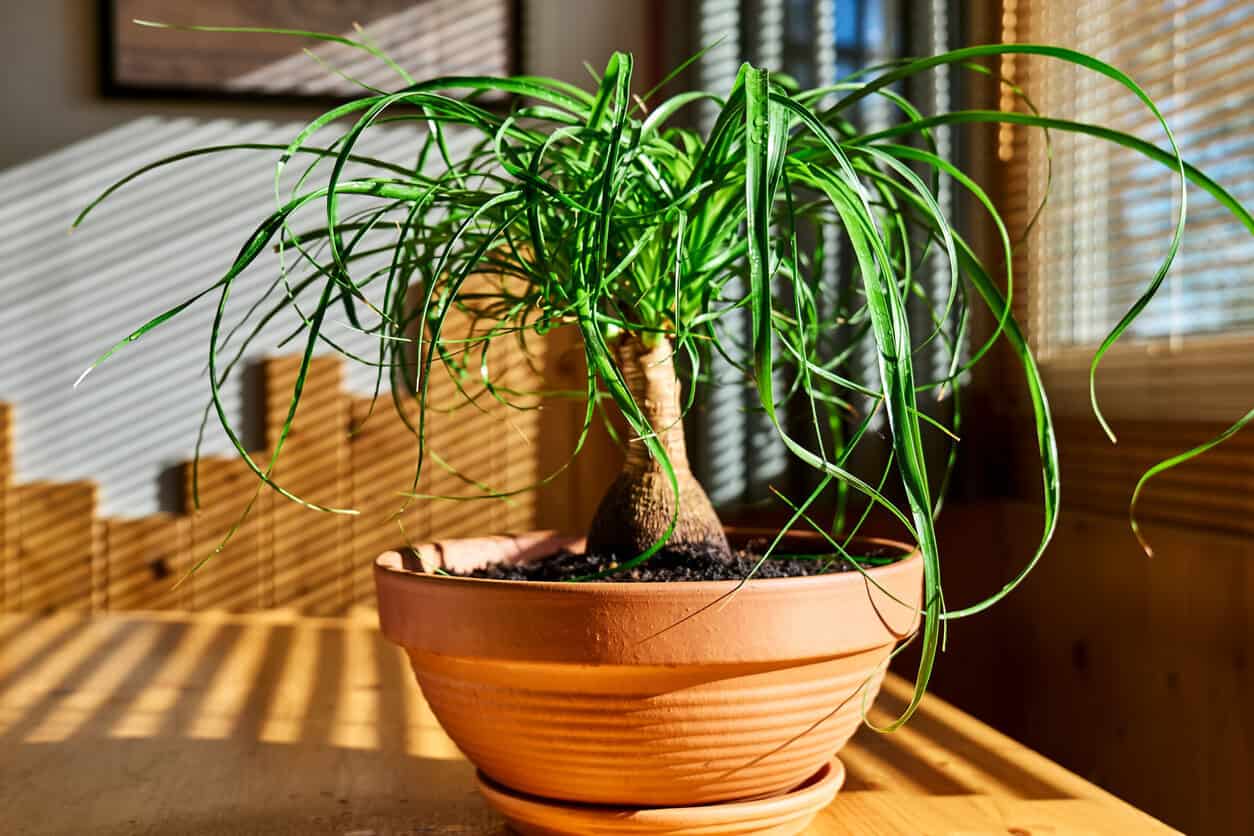
Not a true palm, but a dryland plant with a water-storing base and narrow, arching leaves. It grows slowly and prefers bright light, but its main strength is how little care it needs. It can go for weeks without watering thanks to the swollen base at its stem, which acts as a reservoir.
14. Haworthia
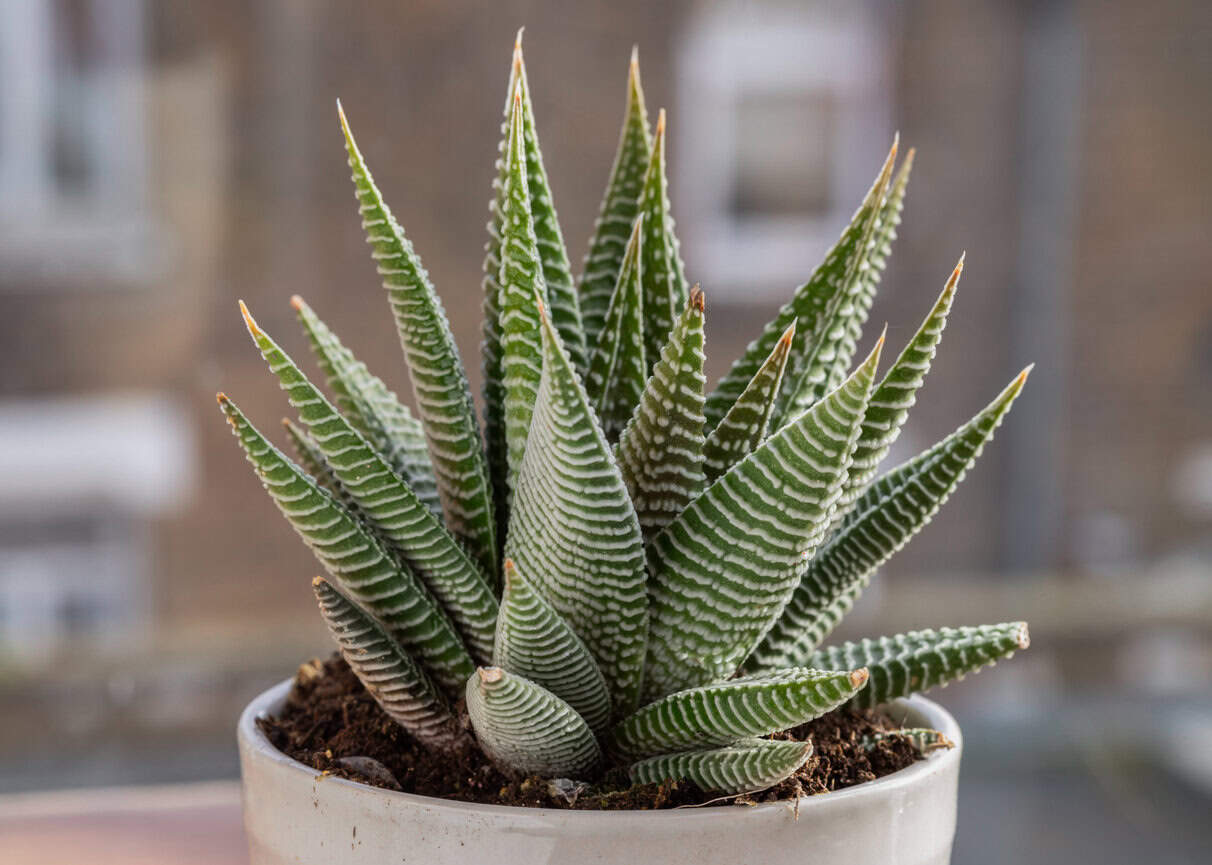
A small, low-growing succulent that holds its shape and color with minimal input. Haworthias can handle lower light than many succulents, making them suitable for offices or north-facing windows.
They require little water—once every few weeks is often enough—and rarely need repotting. With their dense, symmetrical rosettes, they bring a clean, structured look to small spaces without needing much in return.
For more ideas, check out our list of best plants for north-facing windows, Haworthia is just the beginning.
Final Thoughts
Before we wrap up, you might also find our indoor plant fertilizer guide helpful, it’s packed with tips to keep even low-maintenance plants thriving!
You don’t need to be a plant expert—or even especially attentive—to keep these species alive and looking good.
Most of them are tolerant of missed waterings, inconsistent light, and the general unpredictability of everyday life. That’s exactly what makes them useful.
If you’re short on time, still building confidence, or just want plants that don’t complicate things, these are practical choices. Give them a decent spot, water when dry, and they’ll carry on without fuss. For many people, that’s the kind of low-effort reliability that makes indoor gardening achievable.