Although rhubarb appears to be a very simple vegetable to grow, it’s actually not once you get into it. Beginners tend to experience common problems that keep them from experimenting with rhubarb again.
In today’s article, I’m going to help you navigate through these common problems and suggest solutions for every single one of them. So, stick around because you’re definitely going to need this knowledge at some point.
Let’s jump straight into it, shall we?
Common Rhubarb Problems & Their Solutions

1: Rhubarb Stalks Are Thin And Weak?
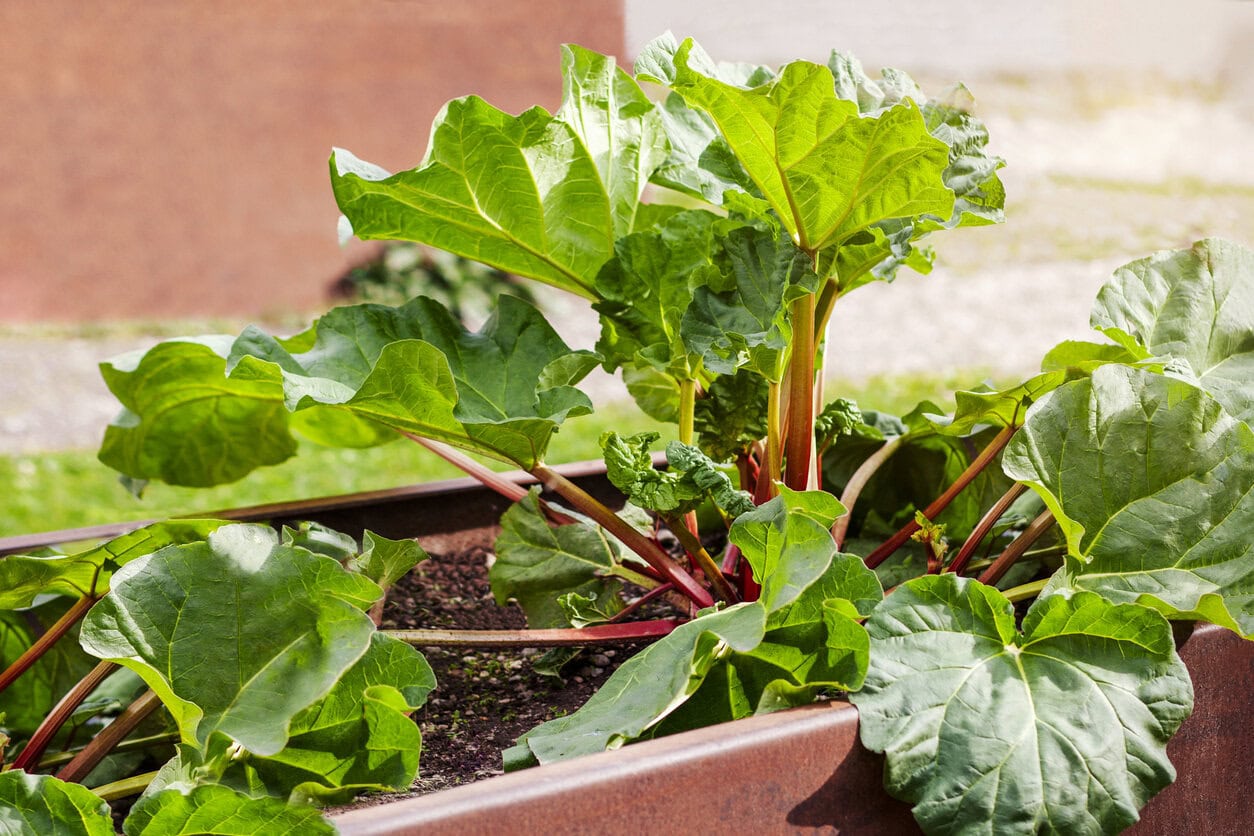
If you find that your rhubarb stalks seem super thin and weak, it might be because they are. This usually happens when the crowns get overly crowded in a tight space and there’s not enough sunlight to promote healthy growth.
Fix: A good fix for weak rhubarb stalks is to divide and replant them in a different bed or garden area once every 3-4 years. Ensure they’re not in the shade for long periods of time and get plenty of sunlight throughout the day.
And if you’re growing basil too, take a look at its common problems and how to fix them, you might spot a few similarities.
2: Leaves Are Turning Yellow Or Red Early?

Yellowing and discoloring leaves are often the result of a major nitrogen deficiency. This typically happens when you’re using basic garden soil to grow rhubarb and not catering to the plant’s specific nutrient needs.
Fix: Get your hands on a balanced fertilizer and feed your rhubarb with it consistently throughout the growing season. If the yellowing is due to overwatering, improve soil drainage by adding some sand to it, and make changes to your watering routine.
3: Rhubarb Plant Is Wilting Despite Moist Soil?
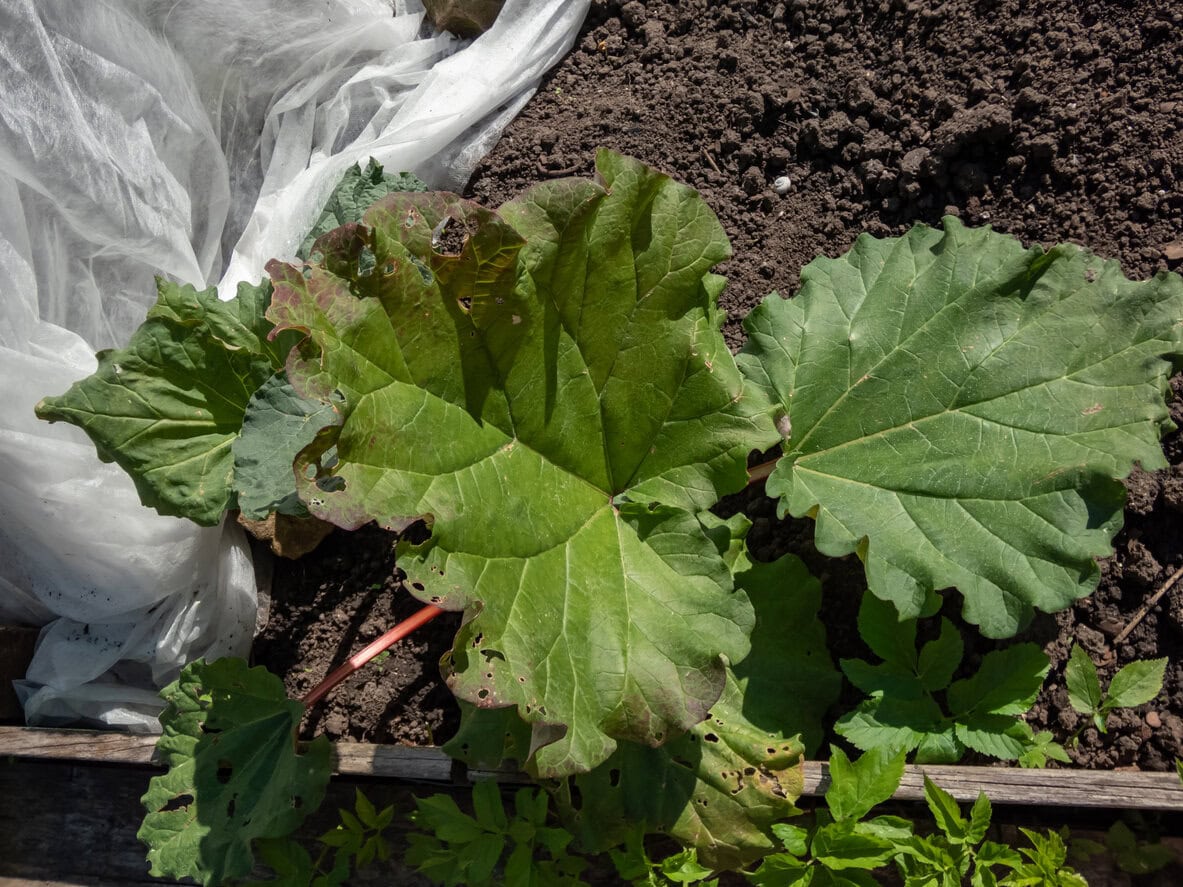
Crown rot, which is often fungal, can cause the rhubarb plant to start wilting early, even if the soil is sufficiently moist.
Fix: In this case, you want to address the issue head-on by removing all infected parts of the rhubarb and disposing them off far away from your garden. Also, when watering, try not to get the crown wet, as it can invite fungal diseases.
And if you’re growing peppers too, check out these common pepper problems and how to fix them, wilting despite moist soil is a red flag in more than one crop.
4: Rhubarb Is Flowering Too Early?
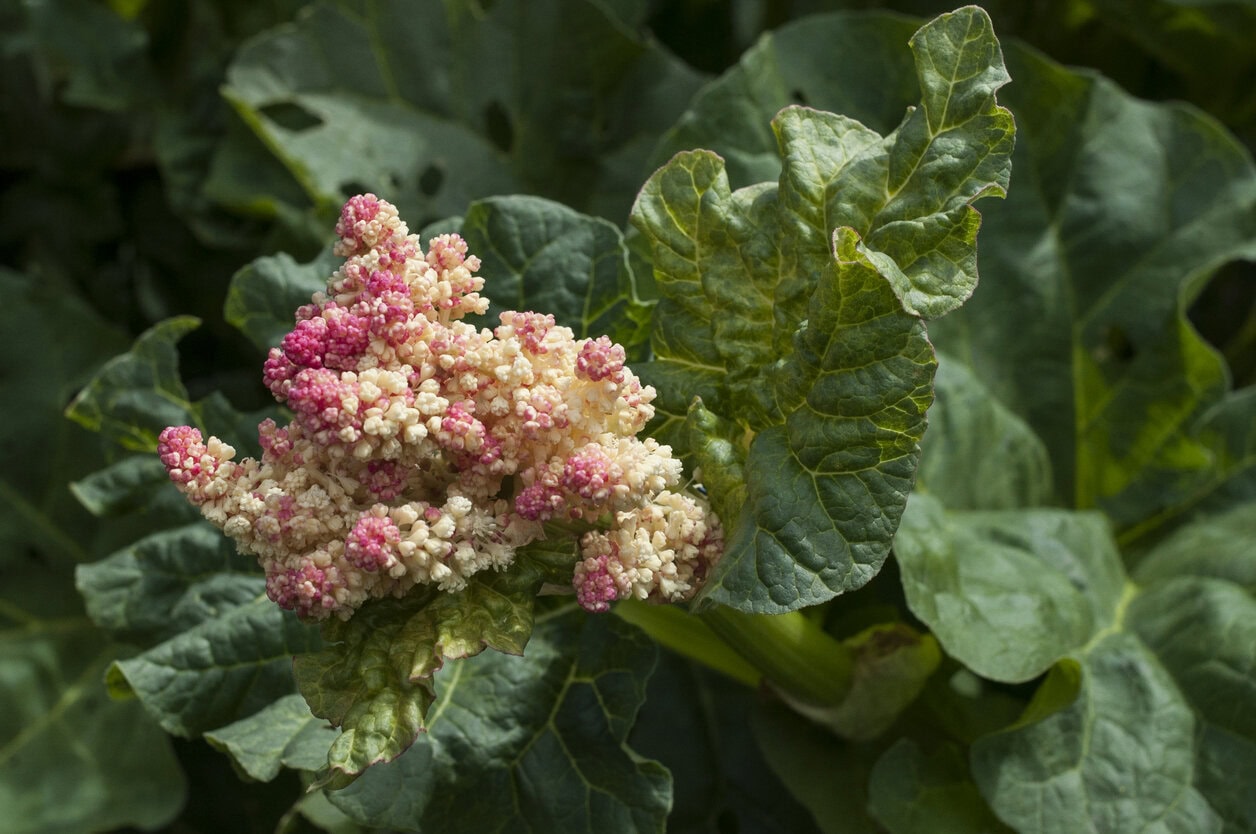
If your rhubarb is starting to bolt, it’s probably because of heat stress or overcrowding. Some even say that age contributes to early flowering, but that can be subjective.
Fix: Space out your rhubarb plants throughout the garden area and try not to delay the cutting of flower stalks.
5: Stalks Are Turning Mushy Or Rotting At The Base?
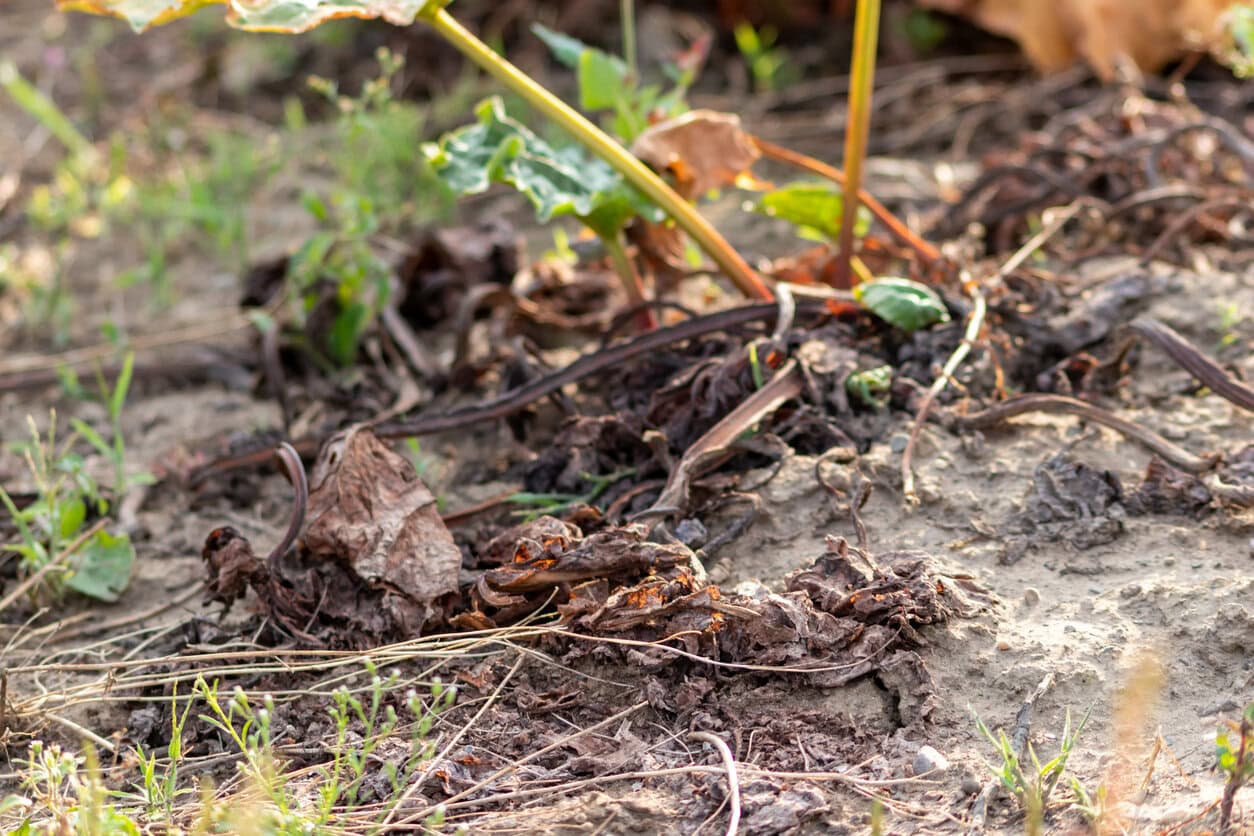
This is one of the most obvious signs of botrytis or crown rot, and it’s typically caused by overwatering and soggy soil.
Fix: The use of a high-quality fungicide is very important here. Remove all rotten stalks and get them as far away from other crops as possible. This is your sign to change up your watering routine, or else overwatering will continue to pose a threat to your rhubarb.
And if cucumbers are part of your garden too, here’s a quick guide to common cucumber problems and how to fix them, moisture issues can sneak up on those as well.
6: Leaf Spots Or Holes In Leaves?
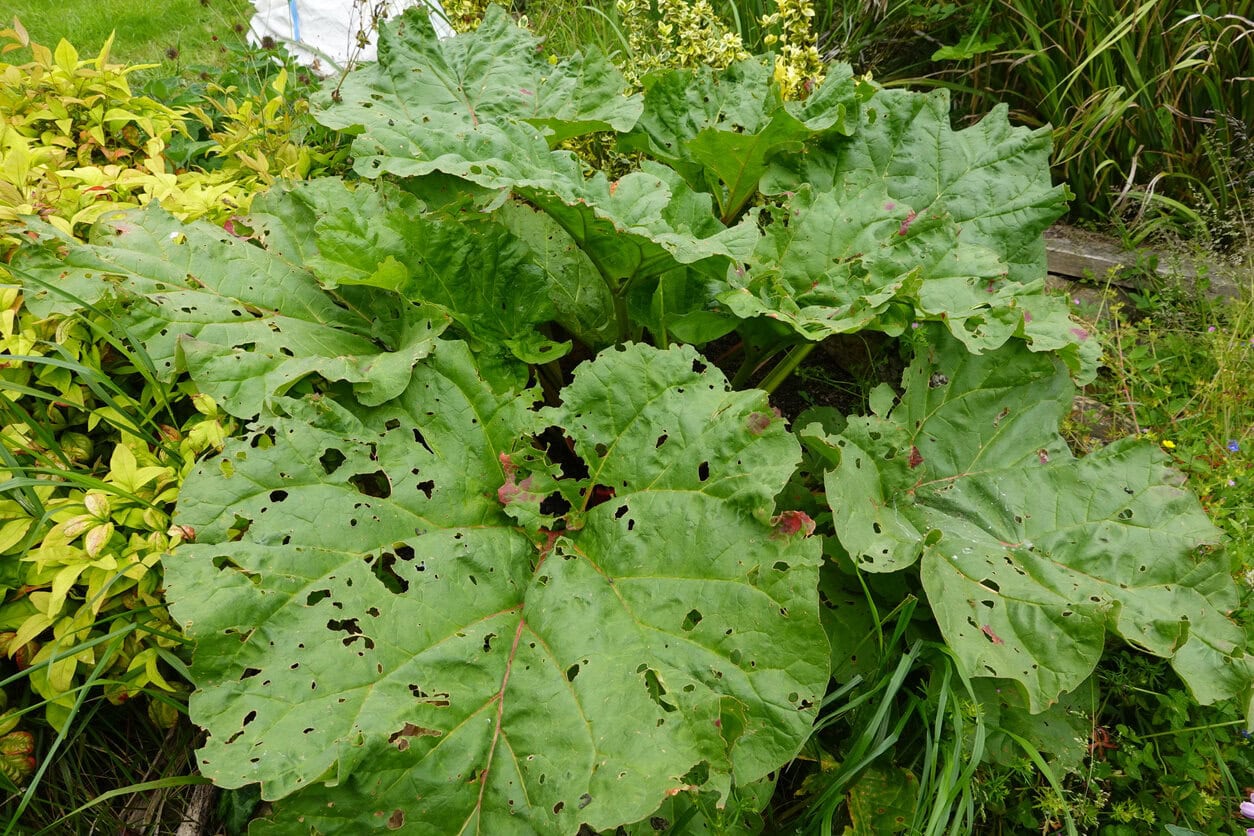
If you see visible holes and strange bite marks on your rhubarb leaves, pests like slugs and snails are what you’re looking for. Sometimes, these pests can cause even bigger problems than just leaf damage by spreading serious diseases like fungal leaf spot.
Fix: Sprinkle some diatomaceous earth (DE) powder around your rhubarb plants and try to avoid getting leaves wet as much as possible. If the affected leaves are beyond saving, remove them from the plant and dispose them off.
Companion planting can also help you grow stronger, more resilient rhubarb, take a look at these plant partners that work well with rhubarb.
7: Plant Isn’t Coming Back In Spring?
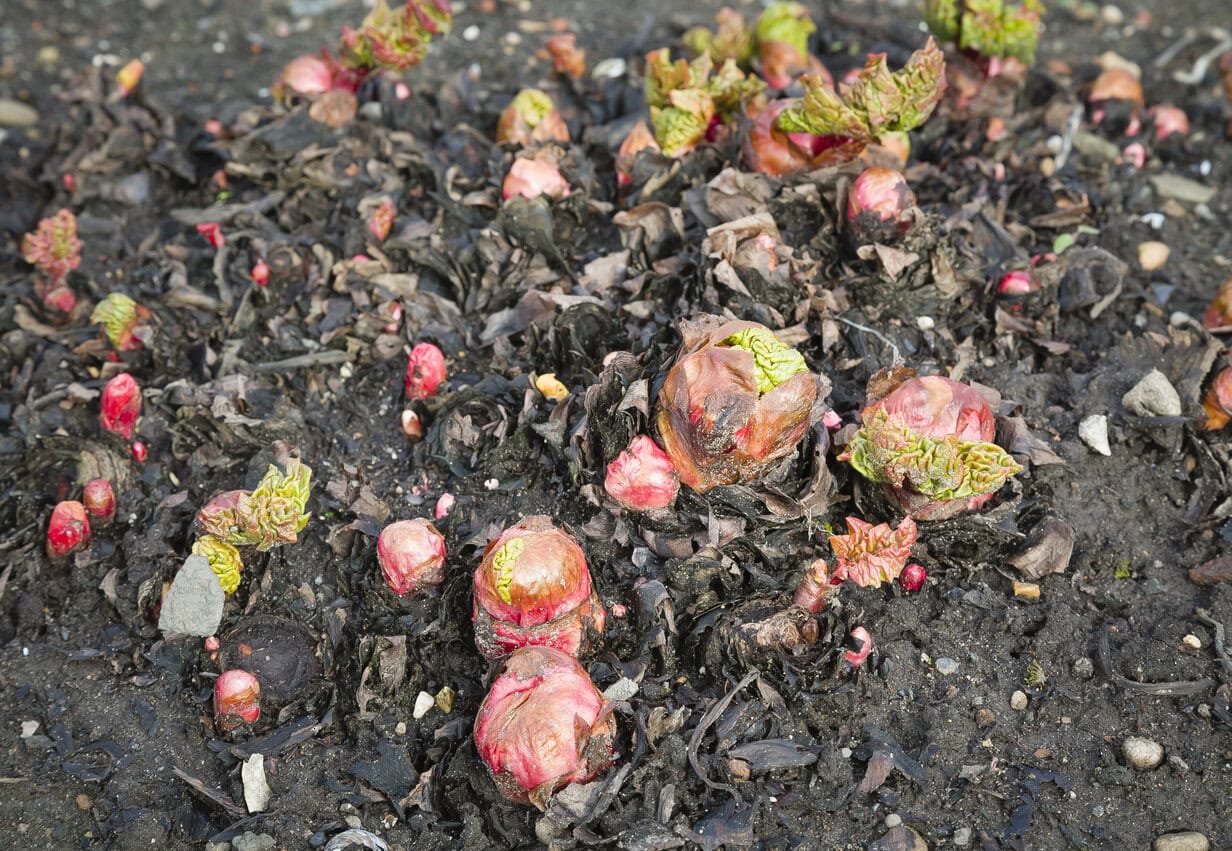
Well, typically, your rhubarb should be growing back around springtime, but if it doesn’t, crown rot or excessively deep planting might be the underlying cause.
Fix: Remove the tops and replant them into the ground just below surface level. Dividing your rhubarb plants can also help, but it will take slightly longer to show an effect.
8: Rhubarb Isn’t Producing Edible Stalks Yet?
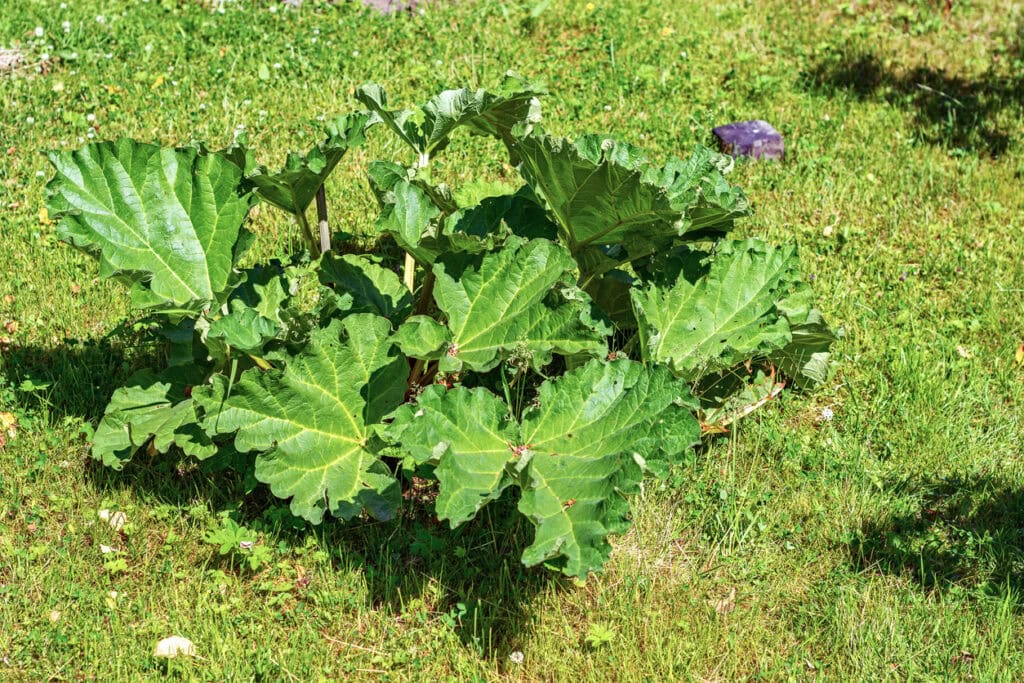
If you planted your rhubarb some time ago, but it still isn’t producing any meaningfully edible stalks, it might be because the plant is either too young or has been harvested too often.
Fix: Ideally, you should be letting your rhubarb grow undisturbed for the first 2-3 years. When harvesting, pick only one-third of the plant at a time and make sure not to become greedy and overharvest.
And if you’re also growing tomatoes, take a look at these common tomato problems and how to fix them, timing and patience matter there too.
Why Rhubarb Problems Often Go Unnoticed?

Well, if you didn’t already know, rhubarb is a perennial, and signs of stress in perennials tend to become apparent much more slowly.
Since gardeners are often growing multiple plants at a time, there’s a high chance that the rhubarb will be planted somewhere in a dark corner or along a fence where it’s super easy to ignore.
Additionally, one of the biggest reasons I believe rhubarb problems tend to go unnoticed is that people just don’t know what to look for and what’s normal and what isn’t. This uncertainty allows problems to develop till they become too big to just brush off.
And if you’re into growing perennial vegetables like rhubarb, take a look at these other perennial crops that keep giving year after year.
Let’s Conclude
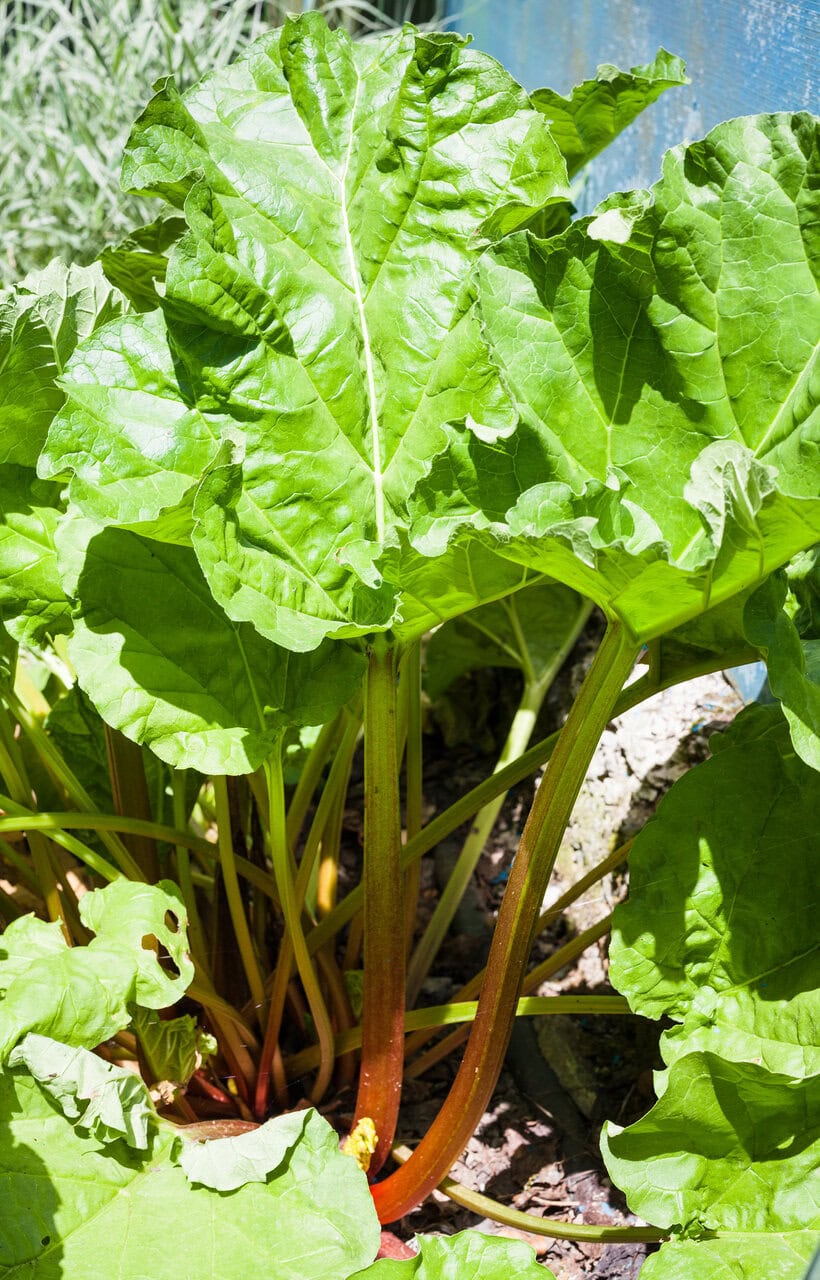
As convenient as it is to have rhubarb in the garden, one can get seriously stressed by the problems it may cause in the initial days of growth. However, as you learned, there are ways to mitigate these common problems just by being a little more sensible and aware of your rhubarb’s needs and stress signals.